Our readers keep the lights on and my smoothie glass nicely filled. As an Amazon Associate, I earn from qualifying purchases.
Nothing drains a backyard bird sanctuary faster than a bush that offers no food, no shelter, and no reason for a chickadee or cardinal to return. You watch birds pass through, but they never stay — because what you planted is purely decorative. The right shrubs change that, providing protein-rich berries, dense nesting cover, and caterpillar host plants that turn your yard into a year-round avian rest stop instead of a flyover zone.
I’m Mohammad Maruf — the founder and writer behind WellFizz. I’ve spent years analyzing live plant stock from online nurseries, comparing root structure, shipping viability, and bloom-to-berry conversion rates across dozens of suppliers to match the right bush with the right bird species.
Whether you need late-winter fuel for robins or summer caterpillar foliage for warblers, you’ll find the right fit in this guide to the best bushes for birds that actually deliver food, cover, and a reason for feathered visitors to stay.
How To Choose The Best Bushes For Birds
The secret to turning a yard into a bird magnet isn’t just dropping a feeder in the center — it’s layering shrubs that serve different seasonal needs. A bird’s life cycle demands high-protein insects in spring for nestlings, sugar-rich berries in fall for migration fuel, and persistent fruit in winter when everything else is frozen solid. Choose bushes that hit at least two of these windows.
Berry Persistence and Winter Value
Most berries disappear by October. The bushes that matter most for birds hold their fruit through December, January, and even into February — think winterberry holly (Ilex verticillata) or beautyberry. These late-season fruits are the difference between a yard that hosts birds and a yard that simply sees them pass overhead. Check customer photos from northern zones to confirm fruit retention before buying.
Host Plant Status for Caterpillars
Ninety-six percent of terrestrial bird species feed their young caterpillars, not seeds or berries. A shrub that hosts butterfly and moth larvae — such as native blueberry (Vaccinium) or willow — becomes a de facto bird nursery. If a bush only produces flowers and berries but supports zero caterpillar species, it is a snack bar, not a habitat. Prioritize host plants first, berry producers second.
Pollinator Pairing for Consistent Crops
Many fruiting shrubs are dioecious — individual plants are either male or female. A female winterberry or holly won’t produce a single berry unless a compatible male pollinator is growing within fifty feet. Read the product specs carefully: if the listing says “male pollinator necessary for berry production” and you plant only one, you will get a bush with no fruit and disappointed birds.
Quick Comparison
On smaller screens, swipe sideways to see the full table.
| Model | Category | Best For | Key Spec | Amazon |
|---|---|---|---|---|
| First Editions Wildfire Winterberry | Premium Shrub | Winter fruit for robins & bluebirds | #3 Container (12 lbs) — needs male pollinator | Amazon |
| Proven Winners Blue Chiffon Rose of Sharon | Mid-Range Flowering | Summer nectar for hummingbirds | 96-144″ mature height — blooms spring to fall | Amazon |
| Bushel and Berry Pink Icing Blueberry | Edible Shrub | Caterpillar host + berry source | 4 ft mature — yields sweet blueberries | Amazon |
| Perfect Plants Nanho Butterfly Shrub | Value Pollinator Bush | Nectar for butterflies & bees | 1 Gallon pot — hardy in zones 5-9 | Amazon |
| Proven Winners Pugster Amethyst Buddleia | Compact Butterfly Bush | Attracting hummingbirds to small spaces | 24″ tall — blooms spring to summer | Amazon |
In‑Depth Reviews
1. First Editions Wildfire Winterberry Shrub
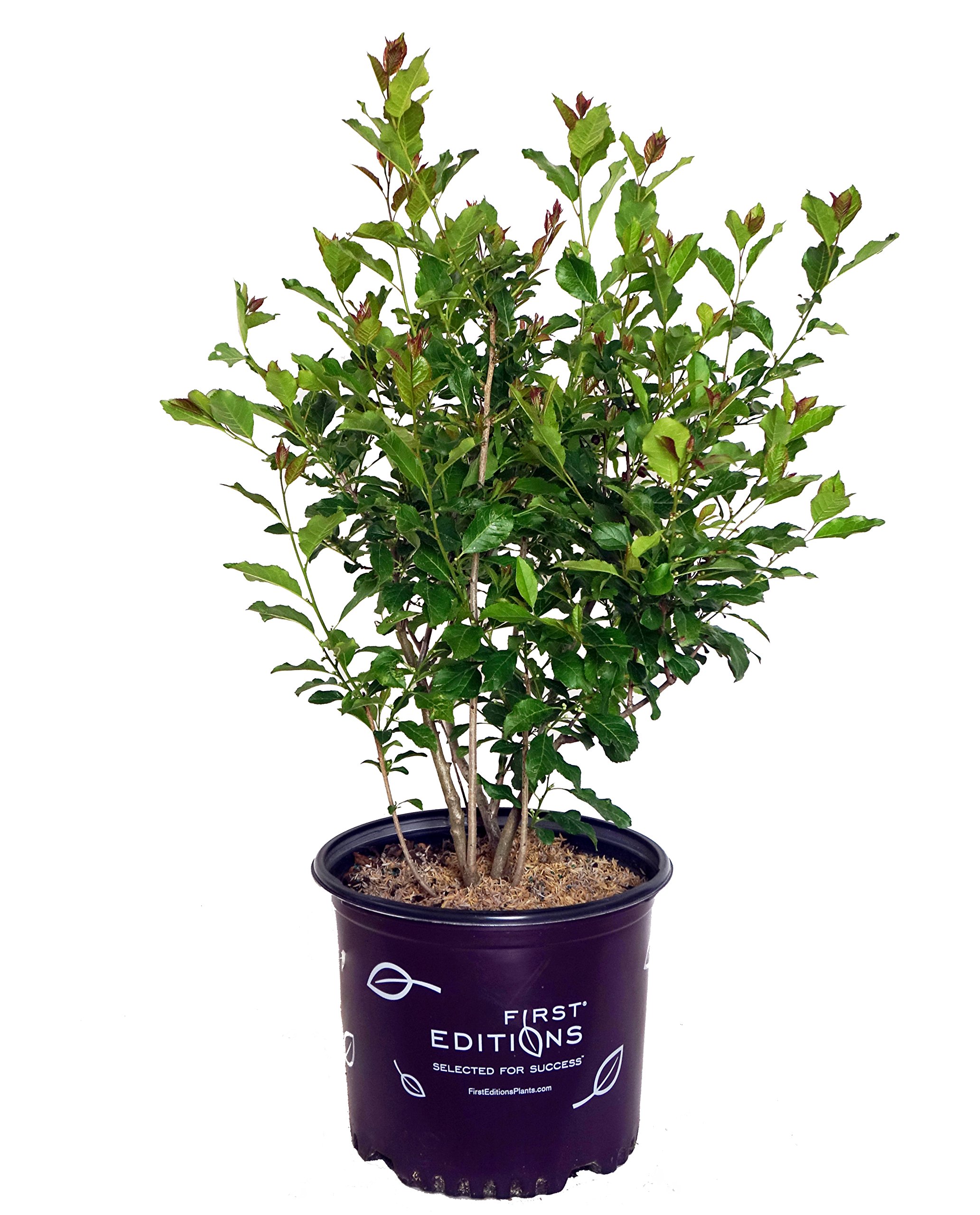
The First Editions Wildfire Winterberry is the closest thing to a winter emergency food supply for birds that ships in a #3 container. At 6 to 7 feet mature height with a heavy load of bright red berries that persist through late fall and early winter, it directly targets the season when natural food is scarcest. Multiple verified reviews confirm the shrub arrives with berries already present and is “packaged to perfection” with moist root balls intact, a critical detail for live plant survival after shipping.
This is a dioecious plant — female only. To see fruit, you must plant a male winterberry pollinator (like ‘Jim Dandy’ or ‘Blue Prince’) within 50 feet. The mature spread of 7 to 8 feet means this bush functions as both a food source and a dense winter cover thicket for sparrows, cardinals, and juncos fleeing predators. The berries are not palatable to humans, but robins, cedar waxwings, and bluebirds strip them clean by February.
Hardy in zones 4 through 8, the Wildfire handles full sun and moderate moisture. The plant will go dormant and lose leaves in winter — that is normal behavior. The leafless branches covered in scarlet berries create the exact visual signal birds recognize as a reliable food source. If you want a bush that matters most in the months when nothing else is growing, this is the pick.
Why it’s great
- Berries persist well into winter when natural food is scarce
- Large #3 container yields a more mature, established root system
- Healthy packaging with moist soil and intact branches confirmed by multiple buyers
Good to know
- Requires a separate male pollinator shrub for any berry production
- Plant arrives dormant (leafless) in late fall through spring, which can look dead to new gardeners
2. Proven Winners Blue Chiffon Rose of Sharon

Rose of Sharon is not a berry producer, but it is one of the most reliable late-summer nectar plants for ruby-throated hummingbirds preparing for migration. The Blue Chiffon variety from Proven Winners produces large, semi-double blue flowers from spring through fall, creating a consistent carbohydrate source when earlier-blooming perennials have faded. Verified buyers report that plants arrive with buds already formed and bloom within two weeks of planting — a strong signal of nursery health.
The mature dimensions are substantial: 8 to 12 feet tall with a 4 to 6 foot spread. That makes this shrub better suited for a back border or a corner focal point than a tight foundation planting. The deciduous nature means it loses leaves in winter, but the upright branching structure provides decent perching spots for birds surveying the yard. One critical note from a buyer: this is Hibiscus syriacus, not the tropical hibiscus, and it is fully hardy in zones 5 through 9.
Watering needs shift from twice weekly during establishment to once weekly for mature plants. If you overwater, yellow leaves appear — easily corrected by reducing frequency. The plant is shipped trimmed to promote branching, which can make the initial size look smaller than expected, but the vigorous growth rate fills in quickly by mid-summer. For hummingbird traffic in the dog days of July and August, this shrub delivers consistent flower volume.
Why it’s great
- Extended blooming period from spring through fall fuels migrating hummingbirds
- Large, showy blue flowers visible from a distance
- Well-packaged with moist soil and minimal transplant shock per buyer reviews
Good to know
- Reaches 8-12 feet tall — not suited for small spaces or under windows
- Deciduous; provides no winter food or dense cover for birds
3. Bushel and Berry Pink Icing Blueberry Shrub

The Bushel and Berry Pink Icing Blueberry is one of the best dual-purpose shrubs for bird habitat because it serves two completely different functions depending on the season. In spring, its foliage hosts native caterpillars — the primary protein source for chickadee and titmouse nestlings. In summer, it produces full-sized sweet blueberries that attract catbirds, thrashers, and towhees. The mature height of 3 to 4 feet makes it manageable for patio containers or the front of a mixed border.
Buyers consistently report that plants arrive “extremely well packaged” with moist soil, intact foliage, and even white flowers or small berries already forming. That level of nursery care matters because blueberry bushes are sensitive to root disturbance during shipping. The Pink Icing variety shows pink spring foliage that shifts to blue-green in winter, providing ornamental value beyond the fruiting season. Hardy in zones 5 through 10, it tolerates partial shade but produces the heaviest berry crop in full sun.
The soil pH must be acidic — between 4.5 and 5.5. If your native soil leans alkaline, you will need to amend with elemental sulfur or plant in a container with acidic potting mix. One buyer noted that their plant arrived “healthy and well-grown” but required an acid amendment to thrive in their local soil. This is a non-negotiable requirement for blueberry success. If you manage the pH, the bush rewards with both bird food and human harvestable berries from the same plant.
Why it’s great
- Host plant for native caterpillars AND produces berries — double bird value
- Compact 3-4 foot size fits small yards, patios, and container gardens
- Excellent packaging with healthy root systems reported by nearly all buyers
Good to know
- Requires acidic soil (pH 4.5-5.5); alkaline soil needs amendment or container planting
- Birds will eat the berries — do not plant as a primary human harvest bush without protective netting
4. Perfect Plants Nanho Butterfly Shrub
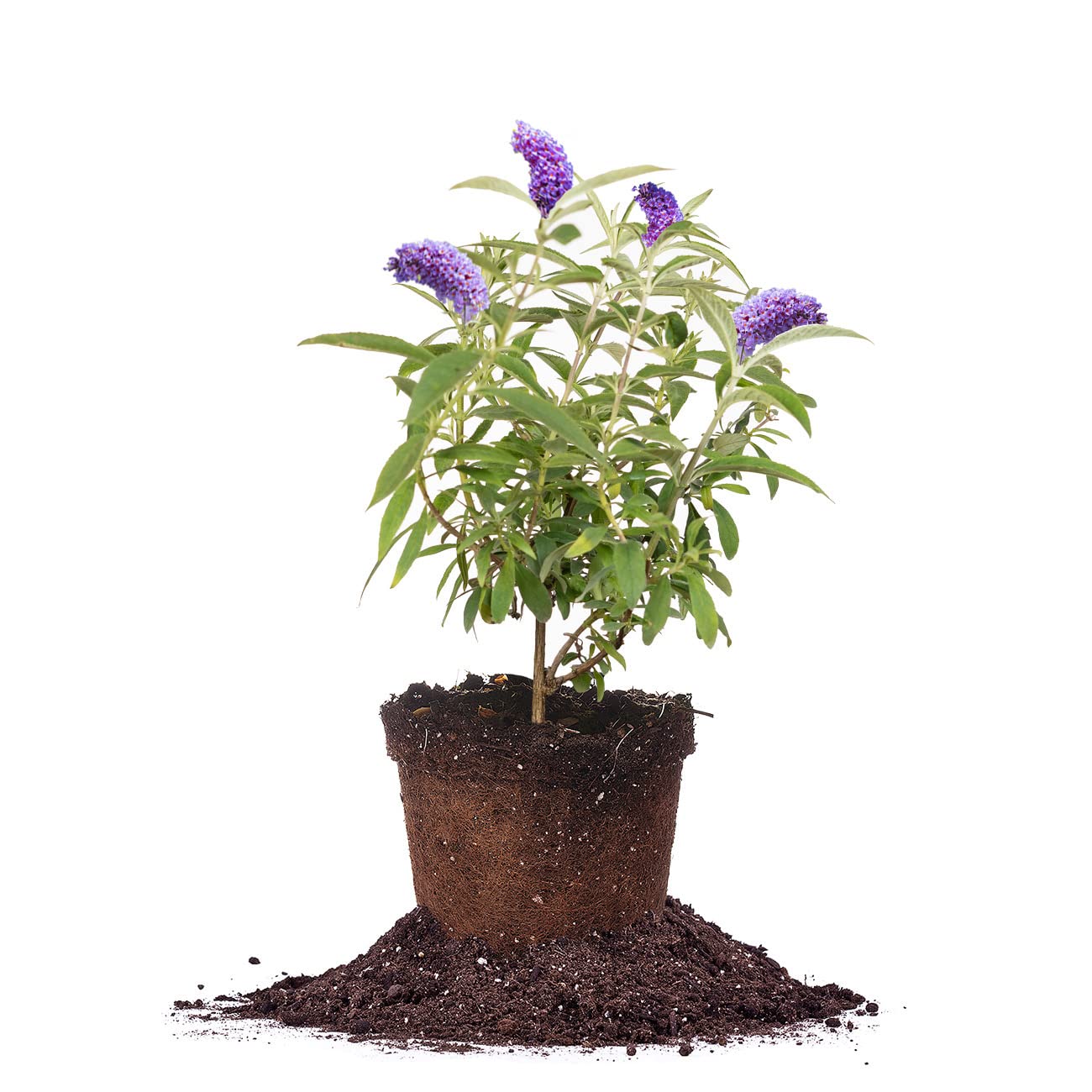
The Perfect Plants Nanho butterfly bush is an entry-level shrub specifically marketed for attracting pollinators — and it delivers on that promise with fragrant purple flower spikes that draw butterflies, bees, and hummingbirds throughout its bloom season. Shipped in a 1-gallon pot with soil intact (not bare root), the plant arrives fully rooted and ready for immediate planting. Multiple five-star reviews confirm blooms are present upon arrival and that the plants are “packaged securely” with protective sticks and soil covers.
Hardy in zones 5 through 9, this variety is classified as drought tolerant once established and loves the warm summers common in the southern United States. However, there is an important shipping restriction: the nursery cannot ship to Washington, California, or Arizona due to state agricultural laws. If your delivery address falls in those states, the order will be canceled and refunded. Check this before purchasing to avoid a delay.
Buddleia varieties are non-native and do not serve as caterpillar host plants, but they are excellent nectar sources for adult butterflies and hummingbirds. The Nanho cultivar stays more compact than standard butterfly bush — roughly 4 to 5 feet at maturity — making it suitable for smaller garden beds. One buyer reported a plant arrived wilted and did not recover, a reminder that live plant shipping always carries some risk. Order early in the growing season to give the shrub the best chance of establishing before heat stress sets in.
Why it’s great
- Fragrant purple flowers that reliably attract hummingbirds and butterflies
- Drought tolerant once established — low water needs for hot climates
- Comes potted and rooted, not bare root, reducing transplant shock
Good to know
- Cannot ship to WA, CA, or AZ — check your state before ordering
- Not a host plant for caterpillars; only provides nectar, not nesting food
5. Proven Winners Pugster Amethyst Buddleia

The Pugster Amethyst from Proven Winners is a dwarf butterfly bush that tops out at just 24 inches tall, making it the most space-efficient option for bird-friendly planting in courtyards, balconies, or small garden beds. Despite the compact stature, the flower size is full-scale — large amethyst-purple panicles that attract hummingbirds and swallowtail butterflies throughout the spring-to-summer bloom cycle. Verified buyers describe the plant as “beautiful, large bush that was thriving and ready to plant” upon arrival, with multiple blooms already open and buds set for continued flowering.
This Buddleia is hardy in zones 5 through 10 and requires full sun and moderate watering. It is deciduous, losing all leaves in winter before pushing new growth in spring. One critical timing issue: if you order between mid-fall and mid-spring, the plant will ship in a dormant state — leafless and brown — which can be alarming to first-time buyers. This is normal behavior, and the shrub will leaf out once temperatures warm consistently.
As with all Buddleia species, this bush does not serve as a caterpillar host plant for native Lepidoptera. Its ecological value for birds is indirect — it fuels the adult pollinators and hummingbirds that visit flowers, but it does not produce berries or support nesting bird food chains. The value here is concentrated on small-space nectar delivery. If you need a compact shrub that packs high flower density into a tight footprint and draws hummingbird traffic to a patio or deck, the Pugster Amethyst performs well with minimal maintenance.
Why it’s great
- Very compact 24-inch mature height — ideal for containers and small spaces
- Large, showy purple blooms that attract hummingbirds consistently
- Well-packaged with healthy roots and multiple buyers praising plant condition
Good to know
- Ships dormant and leafless if ordered mid-fall to mid-spring — looks dead but is not
- Not a host plant for caterpillars; no berry production for winter bird food
FAQ
Will a butterfly bush alone support backyard birds?
Do I need both a male and female winterberry to get red berries?
Final Thoughts: The Verdict
For most users, the best bushes for birds winner is the First Editions Wildfire Winterberry because it delivers persistent winter fruit during the season when birds need it most — and the #3 container size gives you a mature, established shrub that starts producing berries in its first year. If you want a dual-purpose shrub that hosts caterpillars and produces edible fruit, grab the Bushel and Berry Pink Icing Blueberry. And for hummingbird traffic on a patio or balcony, nothing beats the Proven Winners Pugster Amethyst Buddleia for compact, long-blooming nectar output.

Mo Maruf
I created WellFizz to bridge the gap between vague wellness advice and actionable solutions. My mission is simple: to decode the research and give you practical tools you can actually use.
Beyond the data, I am a passionate traveler. I believe that stepping away from the screen to explore new environments is essential for mental clarity and physical vitality.