Our readers keep the lights on and my smoothie glass nicely filled. As an Amazon Associate, I earn from qualifying purchases.
A bushcraft backpack isn’t just a bag; it’s the foundation of your entire mobile camp. It must carry an axe, a saw, a knife, a tarp, a cook kit, a sleeping system, and enough food and water for days — all while staying silent, balanced, and bombproof against brush, rain, and abuse. A standard hiking pack won’t cut it because its narrow focus on ultralight trekking ignores the heavy, awkward, scratchy gear that defines a bushcraft loadout.
I’m Mohammad Maruf — the founder and writer behind WellFizz. I’ve spent hundreds of hours cross-referencing material denier, frame architecture, pocket geometry, and suspension design across the most rugged packs on the market to find the ones that actually handle the specific abuse bushcrafters dish out.
After evaluating dozens of models, I’ve narrowed the field to the nine packs that deliver the real-world durability, load management, and modular organization a serious woodsman needs. This is the definitive guide to finding the best bushcraft backpack for your exact trip length, body type, and carry style.
How To Choose The Best Bushcraft Backpack
Choosing a bushcraft pack means making trade-offs between weight, capacity, durability, and organization. Unlike general hiking packs, a bushcraft bag is judged by how well it handles sharp metal tools, bulky sleeping systems, and the need to reach essentials without unpacking everything. Focus on these five factors to find the right match.
Frame Type: Internal vs. External vs. Frameless
The frame dictates how weight transfers from your shoulders to your hips. An internal frame (like the Osprey Aether 65) hugs your back and keeps heavy loads stable during scrambles — ideal for 30–50 pounds. An external frame (like the MT ALICE Pack) holds the load away from your body, which improves ventilation and lets you lash bulky items like a tarp or a deer carcass between the pack and the frame. Frameless packs (not included here) only work for loads under 20 pounds and are generally too floppy for the sharp, heavy gear bushcraft requires.
Fabric Denier and Durability
Bushcraft gear shreds nylon. A pack built with 1000D Cordura fabric (found on the Maxpedition Gyrfalcon and Tasmanian Tiger Raid) resists tears from saw teeth and axe heads far better than the 210D ripstop used on ultralight hiking bags. The trade-off is weight: a 1000D pack weighs about a pound more than a 500D version of the same size. For serious woods use, choose 840D or 1000D nylon; for shorter trips, 500D with a PU coating (like the Helikon-Tex Matilda) is a good balance.
Capacity and Trip Length
Bushcraft packs typically range from 35 liters to 65 liters. A 35-liter pack (like the Helikon-Tex Matilda) is perfect for a day outing with a saw, a fire kit, and a light tarp. A 50- to 65-liter pack (like the Osprey Rook 50 or the Badlands 2200) can carry a full three-season sleep system, a week’s worth of food, a backpacking tent, and a full set of bushcraft tools. Anything over 65 liters is overkill unless you’re packing in multiple days’ worth of food for a group or hauling heavy meat loads.
Hip Belt and Suspension Design
A padded, load-bearing hip belt is non-negotiable for bushcraft. You will carry an uneven load — an axe on one side, water on the other — and the belt must transfer that weight to your hips. Look for a belt with at least 1 inch of foam padding and a contoured shape that wraps around your iliac crest. The 5.11 RUSH 24 and the Osprey Aether 65 both excel here. Avoid packs with thin webbing belts (common on cheap ALICE clones) if you plan to carry more than 30 pounds.
Organization and Modularity
Bushcrafters need fast access to fire starters, knives, maps, and binoculars without digging through a black hole. MOLLE webbing (found on the Mardingtop 60L, 5.11 RUSH 24, and Tasmanian Tiger Raid) lets you attach pouches for specific tools. Dedicated pockets for a saw, a water bottle, and a map are critical. A sleeping bag compartment with a floating divider (like the Osprey Rook and Aether) separates wet gear from dry clothing. Avoid packs with only one cavernous main compartment — you’ll end up dumping everything to find your ferro rod.
Quick Comparison
On smaller screens, swipe sideways to see the full table.
| Model | Category | Best For | Key Spec | Amazon |
|---|---|---|---|---|
| Mardingtop 60L | Mid-Range | Budget tool carry | 60L expandable to 75L | Amazon |
| MT ALICE Pack | Mid-Range | Military‑grade durability | 1000D Oxford fabric | Amazon |
| 5.11 RUSH 24 2.0 | Mid-Range | EDC and weekend use | 37L / 1050D nylon | Amazon |
| Helikon-Tex Matilda | Mid-Range | Bushcraft day trips | 35L / ALICE layout | Amazon |
| Osprey Rook 50L | Mid-Range | Lightweight backpacking | AirSpeed suspension | Amazon |
| Maxpedition Gyrfalcon | Premium | Bug‑out / INCH bag | 36L / detachable 6L pack | Amazon |
| Osprey Aether 65L | Premium | Multi‑day heavy loads | Fit‑on‑Fly hipbelt | Amazon |
| Tasmanian Tiger Raid MKIII | Premium | Tall users / heavy gear | 52L / V2 Plus frame | Amazon |
| Badlands 2200 | Premium | Hunting / meat hauling | Built‑in meat shelf | Amazon |
In‑Depth Reviews
1. Osprey Aether 65L
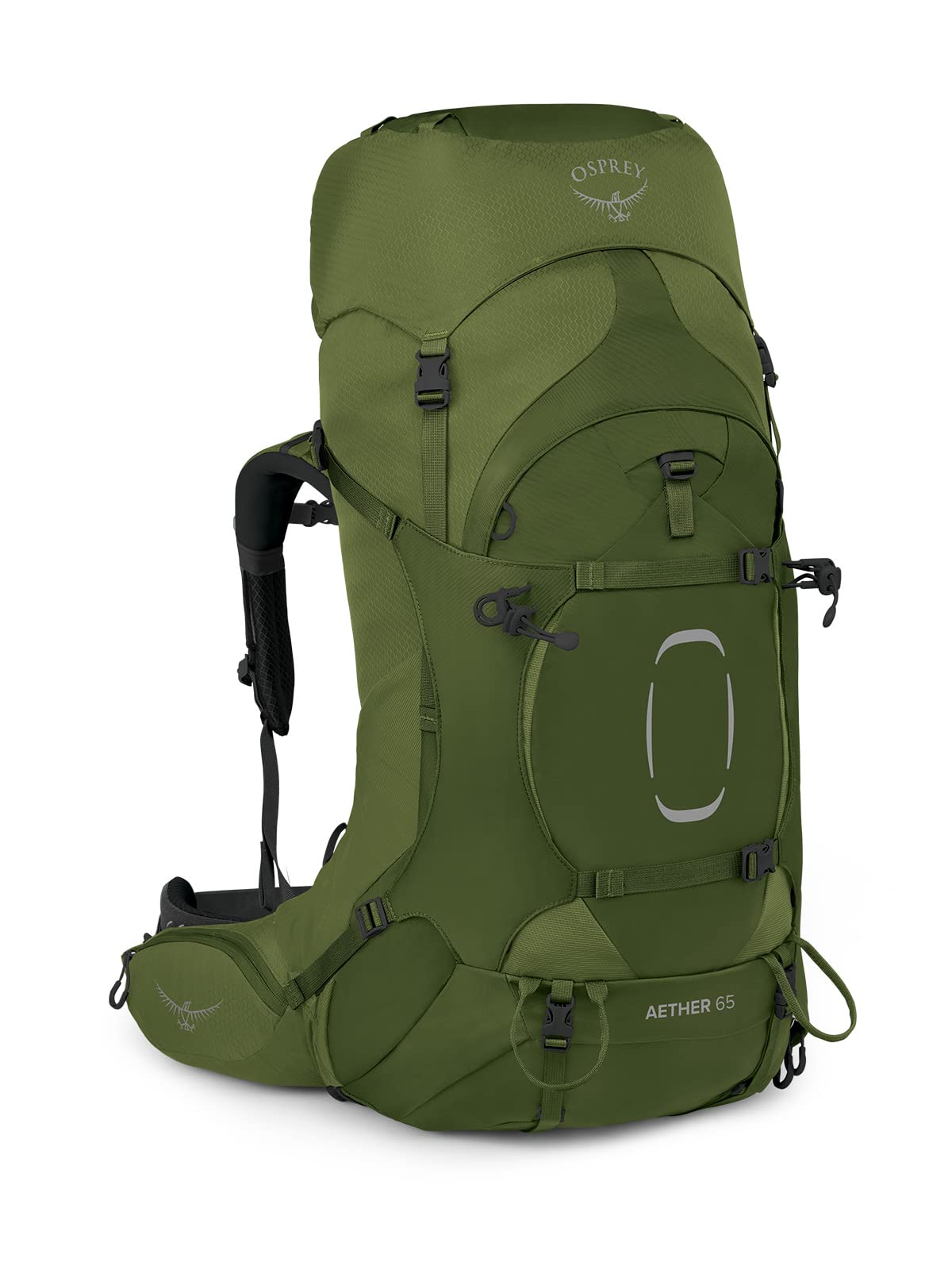
The Osprey Aether 65L is the gold standard for a bushcraft backpack that needs to carry a full shelter system, a week’s worth of food, and heavy tools over technical terrain. Its AirScape suspension uses an injection-molded foam backpanel that keeps heavy loads close to your spine, which dramatically improves stability when scrambling over deadfall or crossing a stream. The Custom Fit-on-the-Fly hipbelt extends up to 70 inches, so even bulky winter clothing doesn’t prevent a locked-in carry.
The 65-liter main compartment is paired with a zippered sleeping bag compartment that has a removable divider — perfect for isolating a wet tarp or a rain-soaked ground cloth from your dry clothing. An integrated rain cover is stashed in its own pocket, so you don’t have to fumble for a separate dry bag when a squall hits. The front panel zips fully open, giving you direct access to gear buried at the bottom without unloading the entire pack.
At 5.7 pounds, the Aether is not an ultralight pack, but the weight is justified by the load-carrying capability. Tall users (up to 6’4”) report that the extended torso adjustment and longer sternum strap eliminate the hip-belt bite that plagues shorter packs. For bushcrafters who haul 40–60 pounds on multi-day trips, this pack delivers unmatched comfort and organization.
Why it’s great
- Fit-on-the-Fly hipbelt accommodates a wide range of body types and heavy winter layers
- Full front-zip access lets you grab gear from the bottom without unpacking
- Integrated rain cover is stowed in its own dedicated pocket
- Removable sleeping bag divider keeps wet and dry gear separate
Good to know
- At 5.7 lbs, it’s heavier than simpler packs like the Osprey Rook
- No outer mesh pocket for stashing a wet rain jacket
- Drawstring toggle on the main closure is overly complex for gloved hands
2. Tasmanian Tiger Raid MKIII

The Tasmanian Tiger Raid MKIII is engineered for users who need a pack that survives military-level abuse while carrying a diverse load of bushcraft gear. The V2 Plus carrying system features an internal aluminum frame that shifts weight off your shoulders and onto your hips with remarkable efficiency. Reviewers over 6’2” specifically praise the height-adjustable back length — the torso can be fine-tuned to prevent the lower back chafing that ruins long days in the woods.
At 52 liters, the main compartment fits a large sleeping bag, a 3-liter hydration bladder, and enough clothing for a four-day trip. The MOLLE side panels are extensive, allowing you to attach a saw sheath, an axe holster, and a utility pouch without crowding the main zipper. The detachable hip strap converts into a Warrior Belt, which is a clever feature for short scouting missions where you want to leave the full pack behind but still carry a knife, fire kit, and map.
The 1000D Cordura fabric is what sets this pack apart. It resists snags from thorny brush and sharp tool edges far better than the 500D nylon used on standard camping packs. The only real complaint is the excess webbing strap length that can flap around — a quick trim with scissors solves it. For serious bushcrafters who demand a pack that handles 50-pound loads over long distances, the Raid MKIII is a top-tier choice.
Why it’s great
- Internal aluminum frame with adjustable torso length for tall users
- 1000D Cordura fabric resists abrasion from tools and brush
- Detachable hip strap converts into a standalone Warrior Belt
- Extensive MOLLE webbing for modular tool attachment
Good to know
- Excess strap length from the MOLLE system needs trimming
- Capacity could be 15L larger for extended expeditions
- No dedicated laptop or hydration hose retention sleeve
3. MT Military ALICE Pack

This modern take on the classic ALICE (All-purpose Lightweight Individual Carrying Equipment) design improves on the original in three critical ways: the external frame is a sturdier aluminum-and-iron hybrid, the fabric is 1000D Oxford with a PU coating that sheds water better than the old cotton duck, and the quick-release buckle lets you drop the entire pack in an emergency. The 55-liter main compartment, combined with the three lower external pockets, gives you the classic ALICE organization that bushcrafters have trusted for decades.
The frame keeps the pack off your back, which is a huge advantage for ventilation during hot, humid treks. You can lash a sleeping pad, a tarpaulin, or even a deer carcass between the pack and the frame — a capability that internal-frame packs can’t match. The kidney pad on the frame provides lower-back support, and the shoulder straps are padded enough for loads up to 50 pounds over moderate distances.
The drawbacks are the same as any ALICE-style pack: the side pouches are too narrow for modern Nalgene bottles, and the top flap is shaped poorly for shedding rain, which can lead to damp gear inside if you’re caught in a prolonged downpour. Still, at this price point, you’re getting a buy-it-for-life external-frame pack that outperforms cheap knockoffs by a wide margin.
Why it’s great
- Classic external frame design provides superior ventilation for hot weather
- 1000D Oxford fabric with PU coating is highly water- and abrasion-resistant
- Quick-release buckle enables emergency pack drop
- Spacious main compartment with classic ALICE organization
Good to know
- Side pouches are too narrow for wide water bottles
- Top flap design doesn’t shed rain effectively
- No bottom or side access to the main compartment
4. Helikon-Tex Matilda
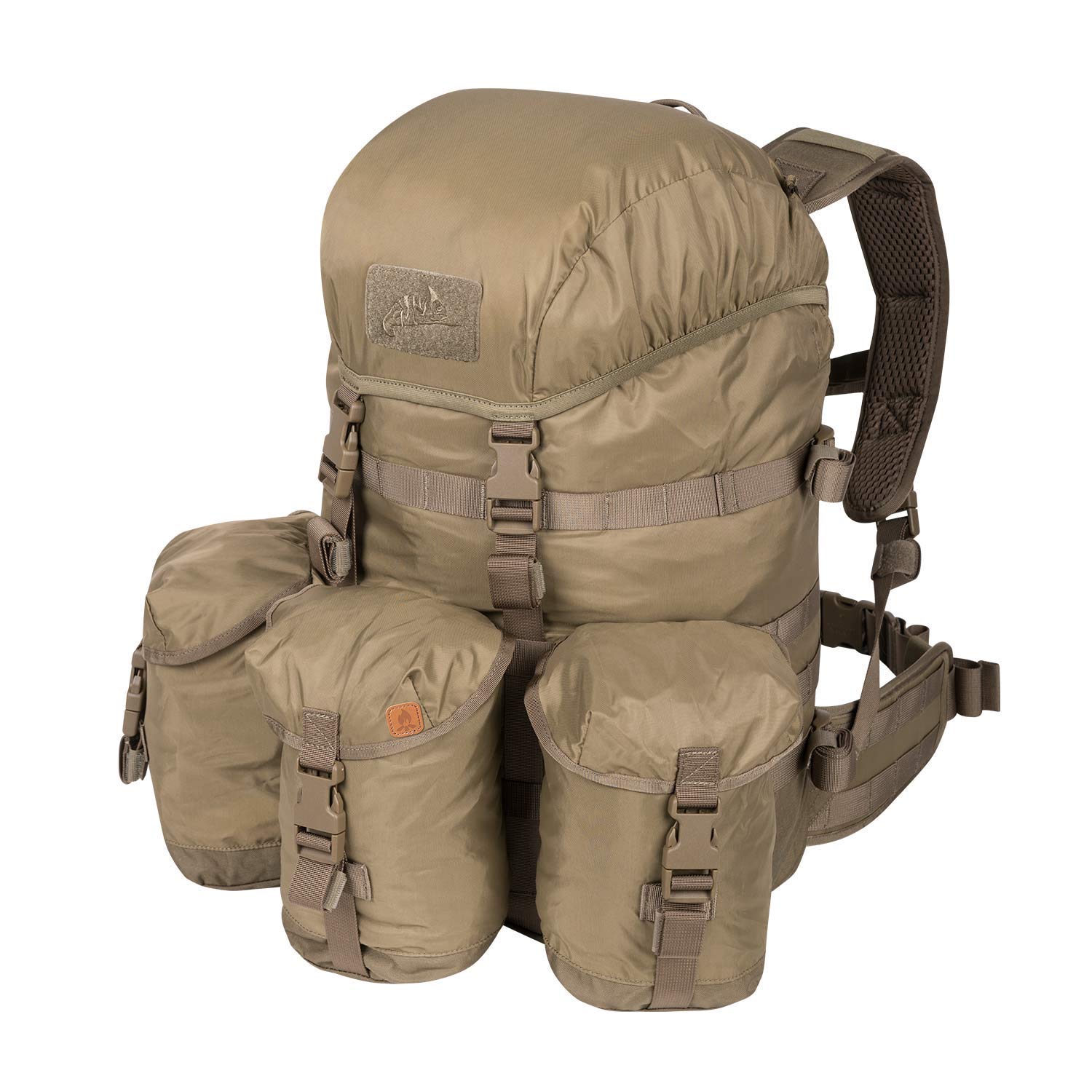
Helikon-Tex designed the Matilda specifically for bushcraft, and it shows in every detail. The pack follows the ALICE layout — three deep front pouches with drawstring sleeves — but replaces the heavy, saggy fabric with a lightweight, fairly water-resistant nylon that weighs only 3.7 pounds. The 35-liter main volume expands to roughly 50 liters total with the pouches, making it perfect for 1- to 3-day trips where you don’t want to carry a monster pack.
The back contains a plastic stiffener with an aluminum bar, which provides enough structure to support loads up to 30 pounds without collapsing. The shoulder straps are comfortable for most body types, though reviewers note that loads over 40 pounds start to dig in. The detachable hip belt is functional but thin — upgrading to a thicker aftermarket belt is a common mod. The MOLLE/PALS panels on the front let you attach pouches for a hatchet, a knife, or a first-aid kit.
What really makes the Matilda a great bushcraft pack is the pocket organization. Each front pouch has a through-hole at the bottom so you can store a folding saw handle-down or a long tool handle-up. The main compartment has a drawstring closure that compresses the load, keeping gear from shifting. For day trips and overnighters where you need quick access to tools, this pack is hard to beat.
Why it’s great
- Deep front pouches with tool drainage holes for saws and knives
- ALICE-inspired layout optimized for bushcraft tool access
- Lightweight construction at only 3.7 pounds
- Stiffened back panel with aluminum support bar
Good to know
- Hip belt is thin and may need an aftermarket upgrade for heavy loads
- Shoulder straps become uncomfortable over 40 pounds
- Limited MOLLE webbing compared to tactical packs
5. Osprey Rook 50L
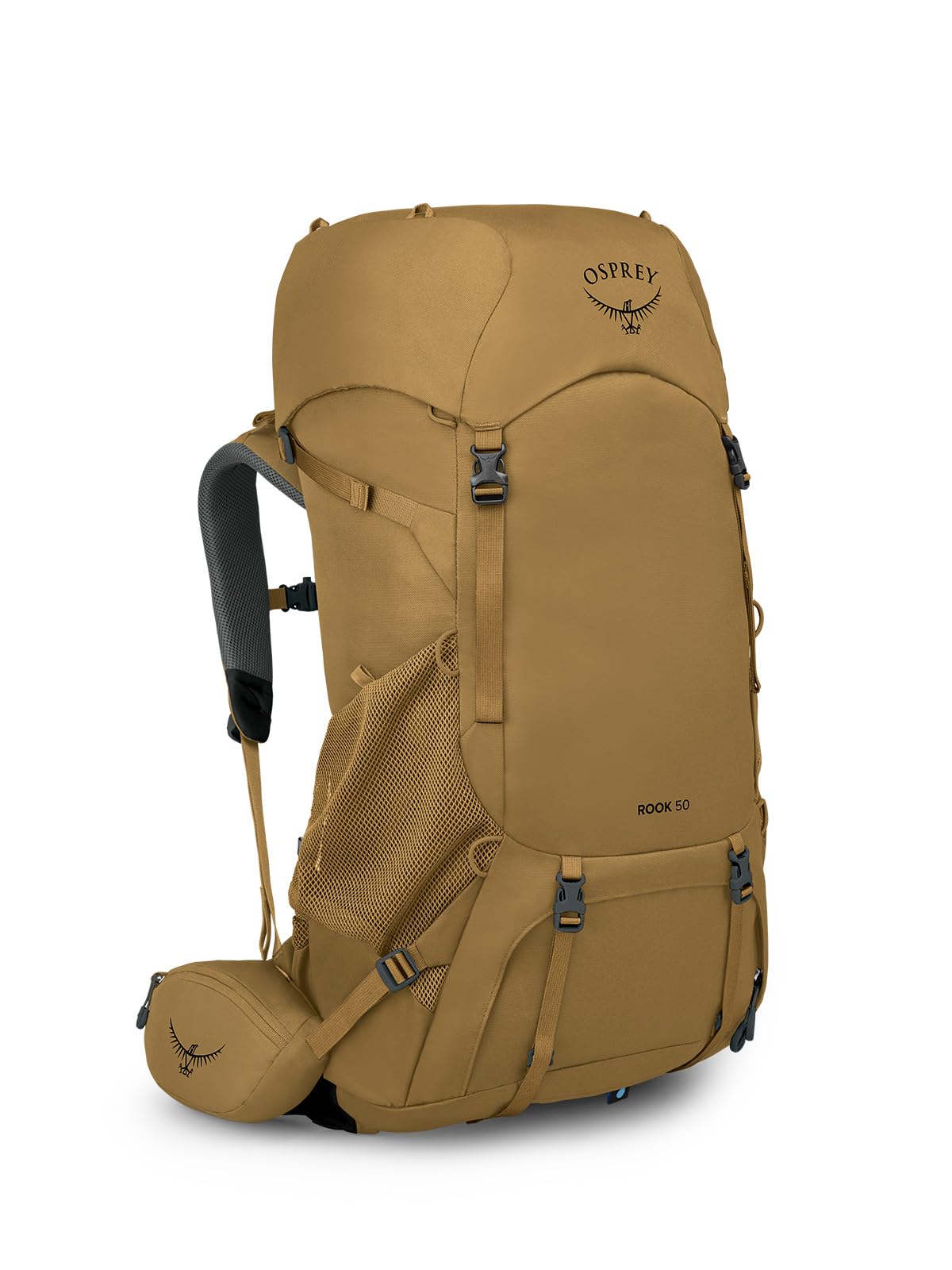
The Osprey Rook 50L bridges the gap between a lightweight hiking pack and a rugged bushcraft hauler. Its AirSpeed suspension features a tensioned mesh backpanel that creates a gap between your back and the pack, dramatically reducing sweat buildup on hot days. The LightWire frame transfers weight to the hipbelt efficiently, and at only 3.6 pounds, the Rook is one of the lightest framed packs in this class. That matters when you’re covering 10 or more miles with a full load.
Organization is straightforward but effective. The main compartment has a zippered sleeping bag compartment with a floating divider, and the integrated rain cover is stowed in a dedicated pocket on the bottom. Two angled water bottle pockets let you grab a bottle without removing the pack — a small detail that makes a big difference on long carries. The hipbelt is generously padded and contoured, and it’s comfortable up to about 35 pounds according to user feedback.
Where the Rook falls short for bushcraft is the lack of MOLLE loops or external attachment points. You can’t easily lash a saw or an axe to the outside, so you’ll need to stow those tools inside the main compartment. Also, there is no outer mesh pocket for stashing a wet tarp or rain jacket. For lightweight backpackers who don’t need to carry heavy tools, the Rook is a fantastic pack; for dedicated bushcrafters, it’s best for shorter trips with minimalist gear.
Why it’s great
- AirSpeed suspension provides excellent back ventilation for hot weather
- Lightweight design at only 3.6 pounds for a framed pack
- Integrated rain cover with dedicated stow pocket
- Angled water bottle pockets allow rehydration without removing the pack
Good to know
- No MOLLE webbing or external lash points for tools
- No outer mesh pocket for wet gear storage
- Hipbelt can cut into narrow hips on some body types
6. 5.11 RUSH 24 2.0

The 5.11 RUSH 24 2.0 is a 37-liter pack that packs more organization per cubic inch than almost anything in this comparison. The main compartment features a large front admin panel with slots for pens, a map, a multi-tool, and a flashlight. Dual top zippered pockets are perfect for a fire kit and a navigation set. The padded laptop sleeve fits up to a 15-inch laptop, but it also works well for storing a folded map or a notebook. This pack is designed for extended daily carry, not just camping.
The 1050D nylon fabric is ridiculously tough — it resists snags from barbed wire, sharp rocks, and the corners of a folding saw. The contoured yoke shoulder strap system and the ventilated back panel make it comfortable for all-day wear, even when fully loaded. The MOLLE webbing covers the entire front and the sides, giving you unlimited options for attaching pouches, sheaths, and a hydration bladder. A hidden center pocket and a back pocket for a flat water bladder add to the thoughtful design.
The downside is the size: 37 liters is tight for a multi-day bushcraft trip. You can fit a sleeping bag, a small tarp, a cook kit, and food for two days, but you won’t have room for bulky items like an axe or a full change of clothes. The laptop pocket is also snug for larger laptops. For a day in the woods or an overnight trip, the RUSH 24 is superb; for longer expeditions, look at the larger 5.11 RUSH 72.
Why it’s great
- Exceptional organization with admin panel, dual top pockets, and hidden compartments
- 1050D nylon fabric offers top-tier abrasion and tear resistance
- Comfortable contoured shoulder straps with ventilation channels
- Full MOLLE webbing for modular pouch attachment
Good to know
- 37L capacity is too small for multi-day bushcraft trips
- Laptop compartment is snug for larger 17-inch gaming laptops
- No dedicated tool lashing points on the exterior
7. Mardingtop 60L
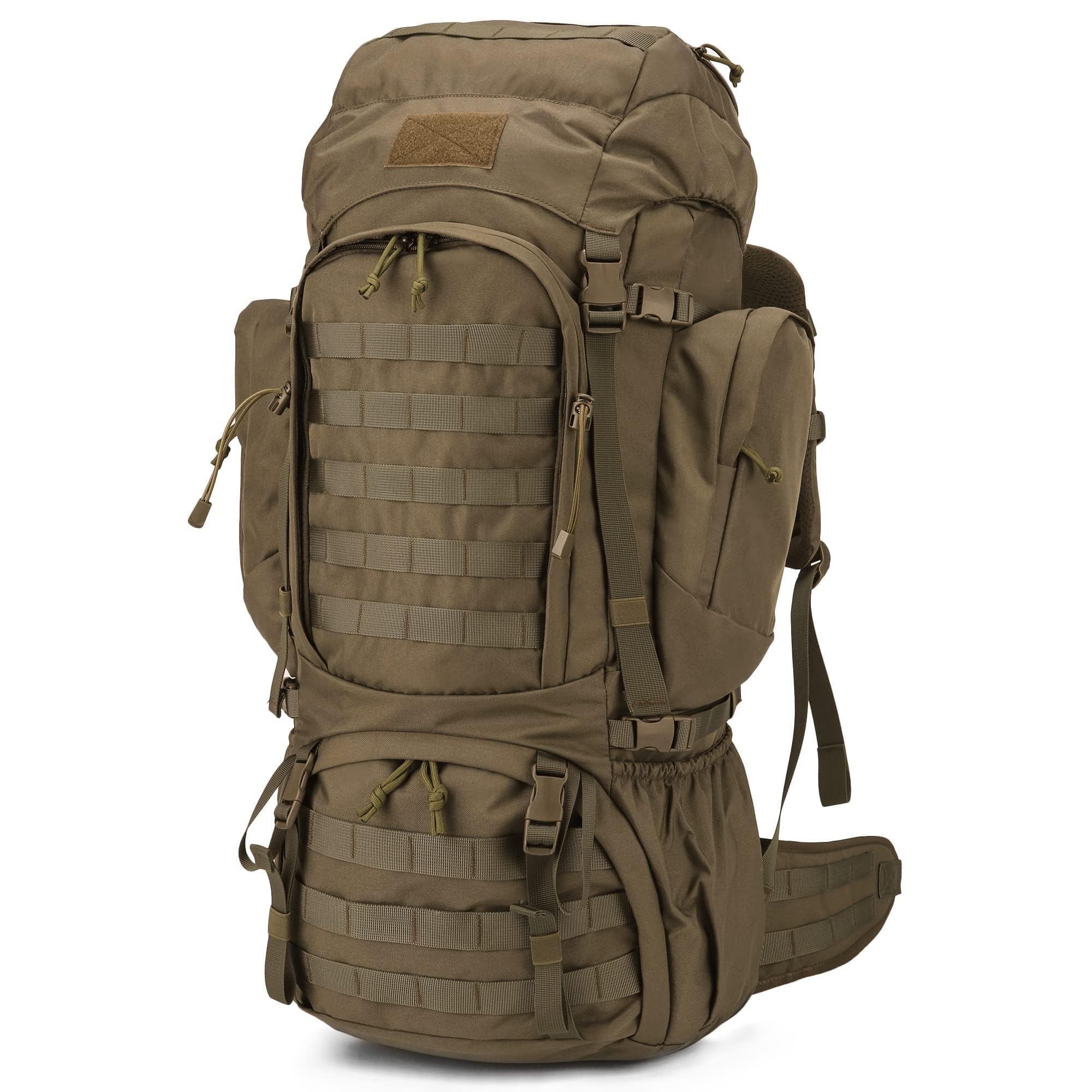
The Mardingtop 60L is the budget king for bushcraft beginners who need volume without a premium price tag. The 60-liter main compartment expands to 75 liters via the MOLLE system, giving you enough space for a full three-season sleep system, cooking gear, and tools. The internal frame provides enough structure for loads up to 50 pounds, though the hip belt is the weak point — it lacks sufficient padding and can cause chafing on longer carries. Reviewers note that it’s fine for 1–3 mile rucks or 20-mile hikes under 50 pounds.
What sets this pack apart at its price point is the hardware. YKK zippers glide smoothly and resist jamming. The buckle quality is solid, and the overall stitching holds up well under moderate abuse. The included rain cover is a nice bonus, though the elastic on it is cheap and may degrade quickly. The sleeping bag compartment at the bottom gives you a dedicated space for a bag or a wet tarp, keeping the main compartment organized.
The shoulder straps are narrow and can become painful when the pack is loaded near its 50-pound limit. For heavy loads over long distances, upgrading to a padded hip belt is almost mandatory. For the price, the Mardingtop 60L is an excellent starter pack that lets you get into bushcraft without a major investment. It’s not a buy-it-for-life pack, but it will serve you well for several seasons of weekend trips.
Why it’s great
- 60L expandable to 75L for great value per dollar
- YKK zippers and sturdy buckles for reliable daily use
- Includes a rain cover and sleeping bag compartment
- MOLLE webbing for modular add-ons
Good to know
- Hip belt lacks padding, causing chafing under heavy loads
- Shoulder straps are narrow and can dig in after a few miles
- Rain cover elastic is cheap and may wear out quickly
8. Maxpedition Gyrfalcon

The Maxpedition Gyrfalcon is a 36-liter tactical pack that crosses over into bushcraft territory thanks to its bombproof construction and versatile modular design. The main body is 1000D ballistic nylon with a Teflon coating that sheds water and resists abrasion from sharp brush and tool edges. Genuine YKK zippers with weather-resistant sealing keep dust and moisture out of the main compartment. The smaller 6-liter waist pack detaches and converts into a standalone fanny pack — perfect for carrying a fire kit and a knife on short scouts while leaving the main pack at camp.
The internal frame keeps the pack stable against your body, and the padded, contoured shoulder straps make the Gyrfalcon comfortable even when carrying 40–60 pounds. The MOLLE/PALS webbing is extensive, giving you plenty of real estate for attaching pouches for an axe, a saw, or a water bottle. The 36-liter capacity (2250 cubic inches) is enough for a one- to two-night trip with a compact sleep system, but you’ll need to be disciplined about packing light.
The biggest limitation is the fixed harness size — there is no torso adjustment, so the pack may not fit taller or shorter users optimally. The middle pouch can also make the lower back pouch hard to access when the pack is full. For users who want a compact, indestructible pack for short bushcraft trips and day hikes, the Gyrfalcon is a buy-it-for-life solution that will outlast several cheaper packs combined.
Why it’s great
- 1000D ballistic nylon with Teflon coating is virtually indestructible
- Detachable 6L waist pack converts into a standalone fanny pack
- Genuine YKK zippers with weather-resistant sealing
- Padded, contoured shoulder straps for heavy loads
Good to know
- No torso adjustment — fixed harness size may not fit all body types
- Middle pouch can block access to the lower back pouch
- 36L is tight for multi-day trips with bulky gear
9. Badlands 2200

The Badlands 2200 is purpose-built for hunters who need to pack in for a week and pack out meat. Its internal frame uses a proprietary magnesium alloy that is twice as strong as aluminum and lighter — a critical advantage when your pack is weighed down with 60 pounds of gear and game. The molded memory foam suspension conforms to your torso over time, and the reverse-tightening waist belt cinches inward rather than outward, giving you the leverage to lock the load onto your hips effectively.
The 2200’s standout feature is the integrated meat shelf — a platform inside the pack that keeps meat off the rest of your gear. The batwing straps and detachable Rifle/Bow Boot allow you to carry your weapon hands-free. The pack also features a hip belt pistol holster, a Bino Connect System for binoculars, and a waterproof fabric that stays silent when you brush against brush. The 5-pound weight is reasonable for a framed pack this capable.
The downsides are specific to its hunting focus: there is no external radio pocket, and the hydration bladder hose isn’t retained on the strap. The bladder and rain cover are sold separately, which adds to the overall cost. For non-hunters who won’t use the meat shelf or weapon carry system, this pack is overbuilt and over-specialized. But for a hunter who needs one pack to handle gear, weapon, and meat, the Badlands 2200 is a purpose-built beast.
Why it’s great
- Integrated meat shelf keeps game separate from gear
- Magnesium alloy frame is lighter and stronger than aluminum
- Molded memory foam suspension conforms to your body over time
- Detachable Rifle/Bow Boot for hands-free weapon carry
Good to know
- No external radio pocket or hydration hose retention
- Hydration bladder and rain cover are sold separately
- Specialized for hunting — not ideal for general bushcraft
FAQ
Is a military tactical pack the same as a bushcraft pack?
How many liters do I need for a 3-day bushcraft trip?
Final Thoughts: The Verdict
For most users, the best bushcraft backpack winner is the Osprey Aether 65L because it combines a load-bearing fit system, 65 liters of capacity, and full front-zip access in a pack that carries heavy loads comfortably over technical terrain. If you want a pack tailored specifically for modular tool organization and compact overnight trips, grab the Helikon-Tex Matilda. And for a bombproof, buy-it-for-life tactical pack that handles short missions and daily carry, nothing beats the Maxpedition Gyrfalcon.

Mo Maruf
I created WellFizz to bridge the gap between vague wellness advice and actionable solutions. My mission is simple: to decode the research and give you practical tools you can actually use.
Beyond the data, I am a passionate traveler. I believe that stepping away from the screen to explore new environments is essential for mental clarity and physical vitality.