Our readers keep the lights on and my smoothie glass nicely filled. As an Amazon Associate, I earn from qualifying purchases.
A bushcraft axe needs to do more than split wood—it must carve feather sticks, limb trees, and survive repeated impacts with hard knots without chipping or losing its edge. The wrong choice leaves you fighting a dull blade or a loose handle when you need reliability most.
I’m Mohammad Maruf — the founder and writer behind WellFizz. I’ve analyzed over 200 axes across seven major brands, comparing steel hardness ratings, handle grain orientation, head geometry, and heat-treatment consistency to separate tools from toys.
After evaluating forged carbon steel compositions, handle ergonomics, and edge retention across dozens of field reports, I’ve narrowed the field to the best options for serious woodsmen. This guide ranks the best bushcraft axe options by performance, durability, and real-world utility.
How To Choose The Best Bushcraft Axe
Choosing a bushcraft axe requires understanding that this tool is not a splitting maul or a felling axe—it is a hybrid designed for carving, notching, light chopping, and processing small-to-medium wood. Three factors separate a capable camp companion from a frustrating lump of steel.
Steel Type and Hardness
Carbon steel between 1045 and 1080 is the standard for bushcraft axes because it strikes the right balance between edge retention and ease of sharpening in the field. Higher carbon content (1080) holds an edge longer but requires more effort to sharpen. Hardness ratings between 50-56 HRC are ideal—softer steel dulls fast, harder steel chips on knots. The heat treatment matters more than the steel number alone; a well-treated 1055 can outperform a poorly treated 1080.
Head Weight and Handle Length
For bushcraft use, head weights between 1.5 and 2.25 pounds paired with handles from 18 to 24 inches offer the best balance of control and striking power. Shorter handles (18-20 inches) favor one-handed carving and close-quarters work, while 24-inch handles give enough leverage for two-handed chopping without becoming unmanageable in a pack. Heavier heads above 2.5 pounds become tiring for precision tasks like carving notches.
Grind Profile and Edge Geometry
A convex grind is the gold standard for bushcraft axes because it creates a gradual slope from the blade edge to the cheek, reducing friction and preventing the head from getting stuck in wood. Full-flat grinds slice well but bind more easily. The edge should come sharp enough to shave arm hair out of the box—any axe requiring significant work before first use adds friction to your setup time.
Quick Comparison
On smaller screens, swipe sideways to see the full table.
| Model | Category | Best For | Key Spec | Amazon |
|---|---|---|---|---|
| Hults Bruk Akka | Premium | Ultralight pack trips | 1.5 lb head, Swedish steel | Amazon |
| Helko Werk Black Forest | Premium | All-around woodsman tasks | 2.25 lb head, 24″ handle | Amazon |
| Snow & Nealley Hudson Bay | Mid-range | Traditional bushcraft feel | 1.75 lb head, 1080 steel | Amazon |
| Council Tool Hudson Bay | Mid-range | Budget-friendly American steel | 2 lb head, 18″ handle | Amazon |
| CRKT Berserker | Mid-range | Bearded axe design tasks | 1055 carbon steel, hickory | Amazon |
| Gerber Freescape Hatchet | Budget | Light pack carry | 17.5″ length, PTFE coated | Amazon |
| Fiskars 28″ Chopping Axe | Budget | Camp chores and kindling | 3.5 lb, alloy steel blade | Amazon |
In‑Depth Reviews
1. Hults Bruk Akka Foresters Premium Outdoor Axe

The Hults Bruk Akka is hand-forged from Swedish axe steel in a foundry that has been in operation since 1697. Its 1.5-pound head on a 24-inch curved hickory handle delivers exceptional balance for a pack axe, allowing you to carve notches, split kindling, and limb small trees with minimal fatigue. The convex grind is polished to a razor-sharp edge out of the box—users report it shaving arm hair immediately and holding that edge through multiple trips without needing a touch-up.
The tempered zone in the steel is designed to retain sharpness even after repeated sharpenings, which extends the usable life of the head significantly. The curved handle absorbs shock well, reducing vibration transfer to your hands during prolonged chopping sessions. The included leather sheath features Swedish decorative elements and protects the edge during transport.
Some users note that the hickory handle grain can be slightly angled on certain units, which is a minor quality-control variance at this price tier. The head weight is on the lighter side, meaning it is not ideal for felling larger trees—this axe is optimized for precision and portability, not brute force. The sheath is functional but not rugged enough for heavy bushwhacking.
Why it’s great
- Razor sharp convex grind out of the box, ready for carving
- Swedish steel holds edge well through extended field use
- Lightweight design ideal for backpacking and remote trips
Good to know
- Handle grain orientation can vary between units
- Light head weight limits heavy felling capability
2. 1844 Helko Werk Germany Traditional Black Forest Woodworker Axe

The Helko Werk Black Forest Woodworker is hand-forged in Germany from C50 high carbon steel hardened to 53-56 HRC, a sweet spot that resists chipping on knots while remaining field-sharpable with a file or stone. The 2.25-pound head on a 24-inch Grade A American hickory handle provides enough mass to chop through seasoned hardwood without being unwieldy for one-handed carving tasks. The open-face drop forging process individual to each head ensures consistent density and grain flow in the steel.
The handle is sanded to 150 grit and finished with boiled linseed oil, giving it a smooth, comfortable grip that improves with use. Users report the handle hangs perfectly from the factory, with proper wedging that prevents loosening even after extended use in wet conditions. The full-grain leather sheath and included Axe Guard protective oil add long-term value for maintenance.
Some users note the edge dulled faster than expected on the first outing, requiring a quick field sharpening session. The handle may feel wide for users with smaller hands. The head geometry is more suited to carving and light chopping than heavy splitting—it excels at debarking and notch work but struggles with large rounds.
Why it’s great
- C50 steel at 53-56 HRC offers excellent chip resistance
- Handle is hand-finished with linseed oil for smooth grip
- Includes premium leather sheath and protective oil
Good to know
- Edge may need a touch-up after first heavy use
- Handle width may not suit smaller hands
3. Snow & Nealley Hudson Bay Axe

The Snow & Nealley Hudson Bay Axe is a classic American-made tool with a 1.75-pound head forged from 1080 carbon steel, a higher-carbon alloy known for exceptional edge retention. The 24-inch hickory handle provides good leverage for two-handed chopping while remaining compact enough for bushcraft carry. Users describe the steel as taking a razor edge with minimal effort on a puck stone and holding that edge through extensive use.
The included genuine leather sheath is stitched and tight-fitting, offering solid protection for the edge during transport. The straight grain handle on most units is oriented well for strength, and the head fitment is tight with no wobble. The traditional Hudson Bay pattern head has a narrow bit that penetrates wood efficiently, making it a strong chopper for its weight class.
Some users note the head arrives with a courtesy grind that is usable but not shaving sharp—plan to spend 10-15 minutes refining the edge. The narrow blade profile makes it a weaker splitter compared to wedged designs, so don’t expect it to bust open large rounds easily. The leather sheath is functional but thin; heavy bushwhacking may wear it out faster than stiffer alternatives.
Why it’s great
- 1080 carbon steel holds a sharp edge through extended use
- Narrow bit design penetrates wood efficiently
- Tight-fitting leather sheath included
Good to know
- Edge may arrive dull and need hand sharpening
- Narrow head is less effective for splitting
4. COUNCIL TOOL Hudson Bay Camp Axe
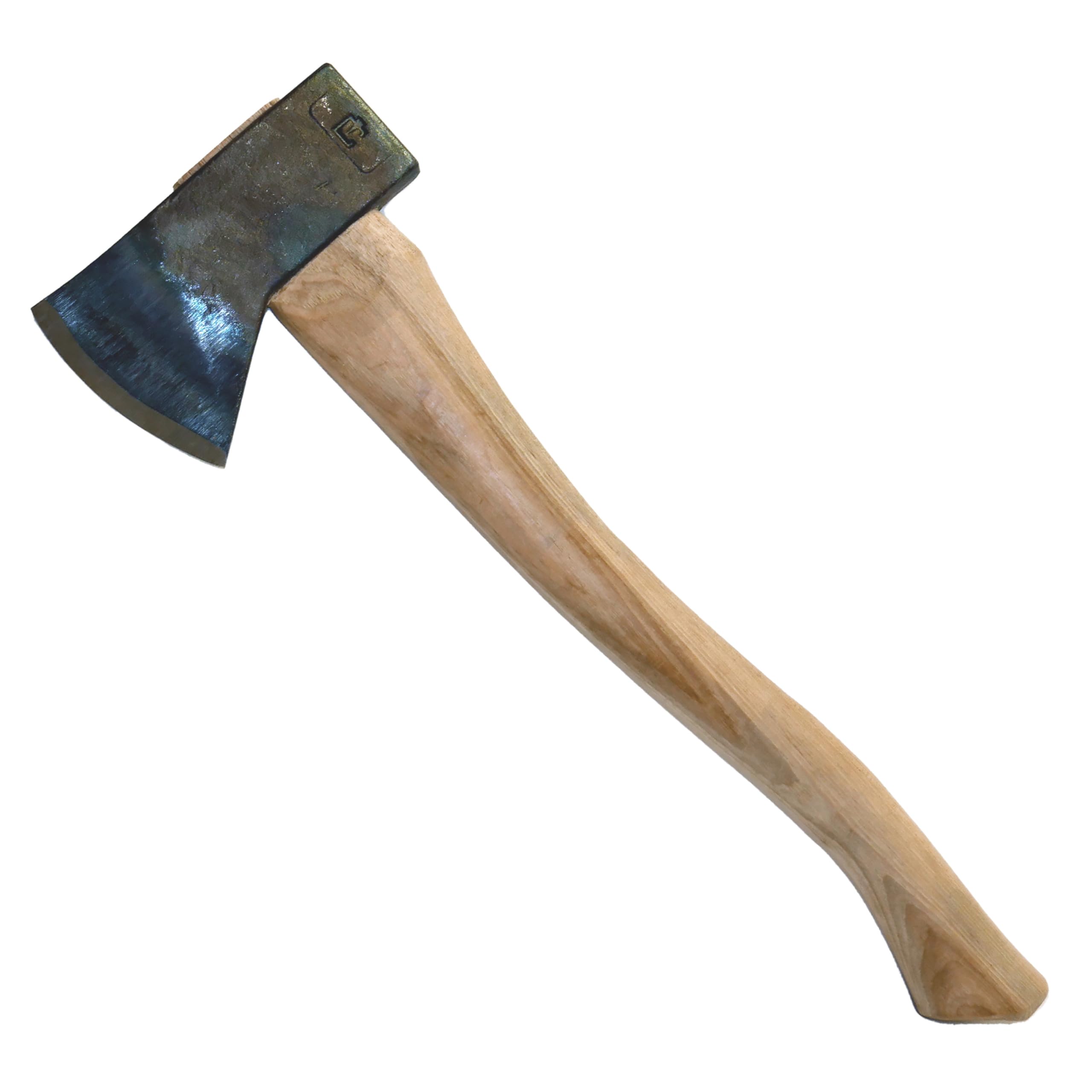
The Council Tool Hudson Bay Camp Axe offers a 2-pound forged steel head on an 18-inch curved hickory handle, all manufactured in the USA with domestically sourced materials. This shorter handle makes it ideal for one-handed use, giving you precise control for driving tent pegs, splitting kindling, and carving notches without over-swinging. The double wedge system secures the head tightly, and the hickory is dried below 10% moisture to minimize shrinkage and loosening over time.
The head features a hardened bit and poll for maximum performance and edge retention, and the hand-sharpened tapered bit delivers clean cutting action. Users report the blade arrives sharp enough for immediate light use, and a 10-15 minute session with a puck stone refines it to a razor edge. The traditional Hudson Bay pattern provides a good balance of chopping and splitting capability for its size.
Some units have minor handle grain runout or diagonal grain orientation, which can affect long-term durability under heavy use. The blade may come with a slightly uneven grind that requires flattening for optimal performance. The unpainted finish is preferred by many bushcraft users but needs regular oiling to prevent rust in humid conditions.
Why it’s great
- Made in the USA with forged steel and hickory
- Double wedge system prevents head loosening
- Short 18″ handle excels at one-handed precision work
Good to know
- Handle grain may have slight runout on some units
- Unpainted finish requires regular oiling
5. CRKT Berserker Axe
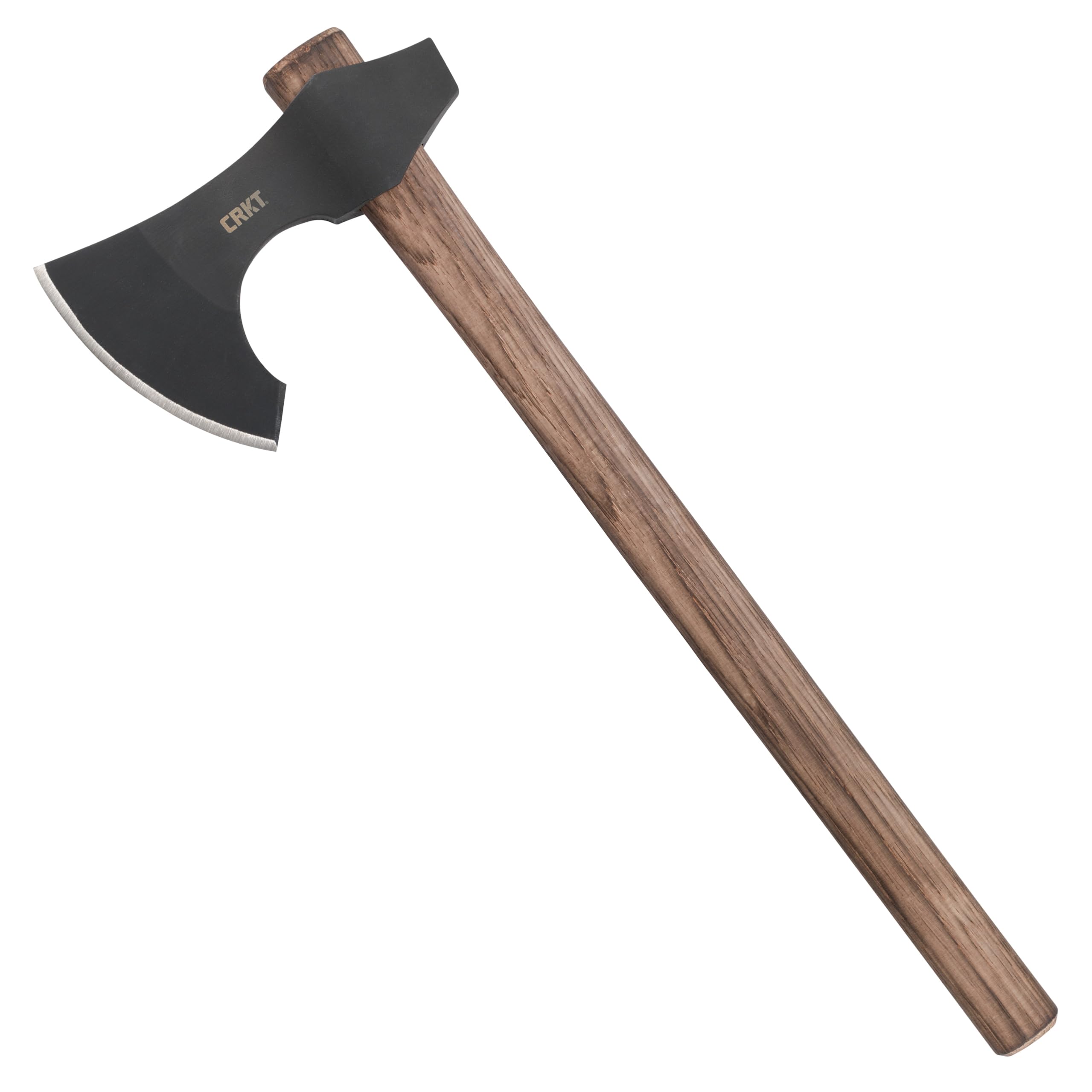
The CRKT Berserker is a two-handed bearded axe designed by Ryan Johnson of RMJ Tactical, featuring a 1055 carbon steel head with a manganese phosphate coating for corrosion resistance. The 19-inch Tennessee hickory handle is a dense, durable material that can withstand heavy use, and the beard on the axe head allows for choked-up grip for detailed carving and notch work. The 1055 steel is tough and takes a beating without chipping, making it a solid choice for rough field conditions.
Users report the head holds an edge well even after repeated impacts on hardwood, and the 2.1-pound total weight gives it a substantial feel for two-handed chopping. The bearded design provides more cutting surface near the handle, which is useful for precision tasks like carving feather sticks and notches. The manganese phosphate coating helps protect the steel from moisture and rust.
Several users report the handle arrives with a thin, splintery finish that can cause discomfort without gloves. The handle fit is often too snug with no room for wedges, requiring re-hanging for proper security. The edge may come dull out of the box, necessitating a sharpening session before first use. The bearded head design is unconventional for traditional bushcrafters.
Why it’s great
- 1055 steel offers excellent toughness and chip resistance
- Bearded design allows for precision carving grip
- Manganese phosphate coating resists corrosion
Good to know
- Handle may be splintery and require sanding or wrapping
- Edge often arrives dull and needs sharpening
6. Gerber Gear Freescape Hatchet

The Gerber Freescape Hatchet is a compact 17.5-inch tool with a forged steel head and a PTFE-coated blade that reduces friction and prevents sticking in green wood. The composite handle is designed to absorb shock, reducing hand strain during repeated chopping, and the soft-touch overmold improves grip security in wet conditions. The PTFE coating helps the blade glide through cuts with less resistance, making it efficient for its size.
At 32.6 ounces, this hatchet is lightweight enough to pack without adding significant weight to a backpack, and the included slim sheath allows for safe storage and transport. Users find it effective for splitting small firewood up to 3.5 inches in diameter and clearing trail debris. The forged steel head is durable for long-term use, and the composite handle won’t warp or crack like wood in humid environments.
The handle is slick when wet, which can compromise control during precise cuts. The blade cover is bulky and may need replacement with a leather sheath for compact packing. The 17.5-inch length limits two-handed chopping leverage, making it less effective for larger diameter wood compared to longer handles.
Why it’s great
- PTFE coating reduces friction and prevents sticking
- Composite handle absorbs shock effectively
- Lightweight at 32.6 ounces for pack carry
Good to know
- Handle becomes slick when wet
- Short length limits two-handed leverage
7. Fiskars 28″ Chopping Axe
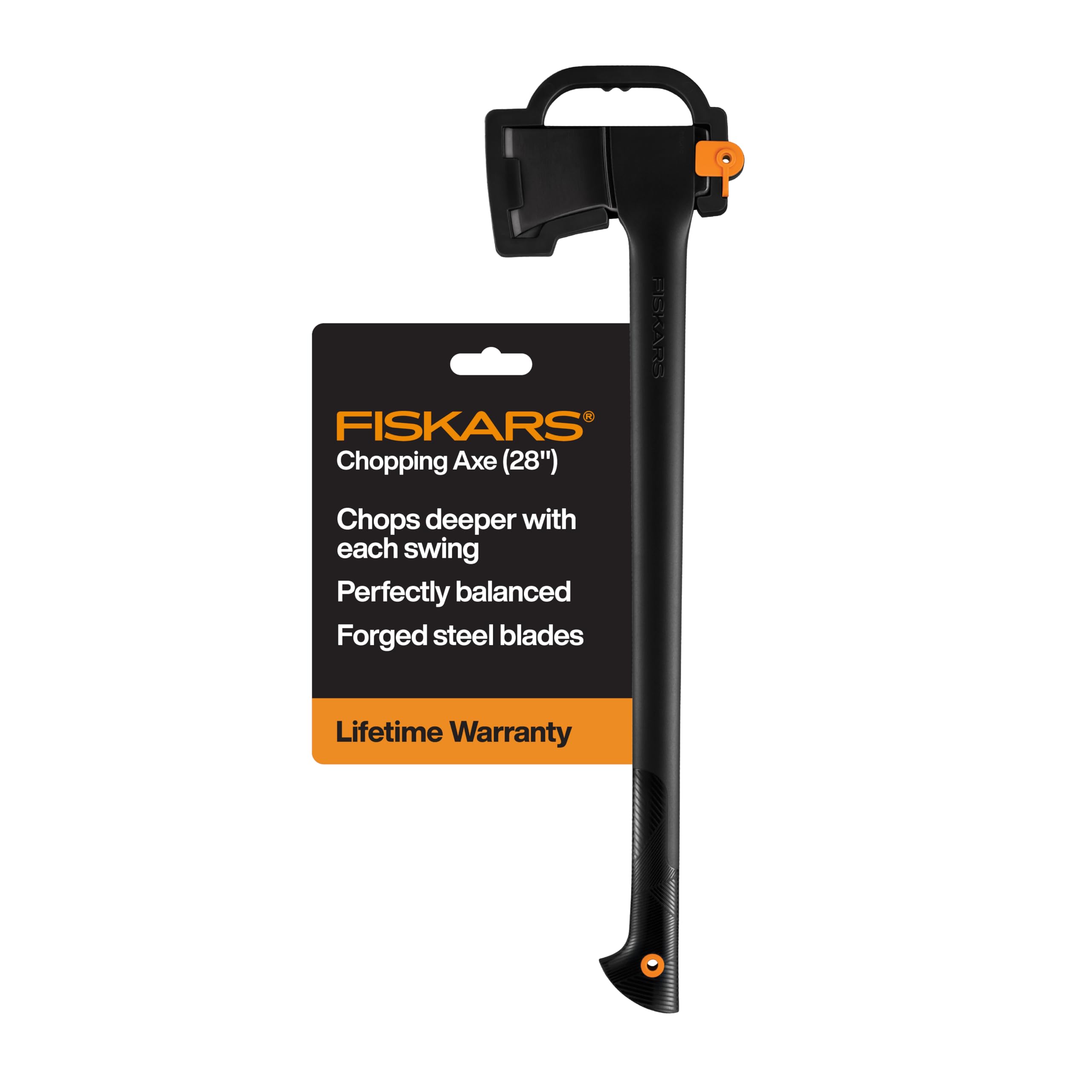
The Fiskars 28″ Chopping Axe stands out for its ultra-sharp alloy steel blade and precision-balanced design at 3.5 pounds, offering a low-friction coating that reduces drag and prevents the head from wedging in wood. This coating is particularly useful for green or resinous woods that tend to grab standard blades. The 28-inch length provides ample leverage for two-handed chopping, making it effective for felling small trees and splitting logs for campfires.
The handle is constructed from a steel and wood composite that is designed to minimize vibration transfer, reducing fatigue during extended use. Users report the blade stays sharp for years with basic file maintenance and that the low-friction coating makes each cut feel smoother and more efficient. The lifetime warranty from Fiskars adds peace of mind for long-term ownership.
The 28-inch length makes it less portable for backpacking and more suited to base camp or vehicle-based outings. The alloy steel is harder to sharpen in the field compared to carbon steel options if the edge becomes noticeably dull. The non-stick coating can wear off over time with heavy use on abrasive woods or dirty logs.
Why it’s great
- Low-friction coating prevents blade from sticking
- Ultra-sharp blade out of the box with long edge life
- Lifetime warranty provides long-term value
Good to know
- 28-inch length limits packability for backpacking
- Alloy steel is harder to field-sharpen than carbon
FAQ
Should I buy a bushcraft axe with a sheath included?
How often should I sharpen my bushcraft axe in the field?
What handle length is best for a first bushcraft axe?
Final Thoughts: The Verdict
For most users, the best bushcraft axe winner is the Hults Bruk Akka because its Swedish steel and convex grind offer a blend of edge retention and field sharpening that suits precision carving and light chopping equally. If you want a heavier head for more aggressive two-handed tasks, grab the Helko Werk Black Forest Woodworker. And for a budget-friendly entry point that still delivers forged quality and US manufacturing, nothing beats the Council Tool Hudson Bay Camp Axe.

Mo Maruf
I created WellFizz to bridge the gap between vague wellness advice and actionable solutions. My mission is simple: to decode the research and give you practical tools you can actually use.
Beyond the data, I am a passionate traveler. I believe that stepping away from the screen to explore new environments is essential for mental clarity and physical vitality.