Our readers keep the lights on and my smoothie glass nicely filled. As an Amazon Associate, I earn from qualifying purchases.
You sketch a perfect weekly spread, reach for your favorite fountain pen, and watch the ink bloom through to the next page. That single moment of bleed-through can sabotage weeks of careful planning in a bullet journal. The dot-grid notebook you choose is the single variable that determines whether your system feels like a pleasure or a chore—and paper quality, not brand loyalty, is what separates a usable journal from a frustrating one.
I’m Mohammad Maruf — the founder and writer behind WellFizz. I’ve spent years analyzing notebook paper densities, binding constructions, and real-world ink compatibility to understand exactly what makes a bullet journal hold up under daily use with markers, fountain pens, and highlighters.
Whether you’re building a habit tracker or logging daily tasks, finding the best bullet journal means evaluating paper thickness, page count, and layout features that actually support your system instead of fighting against it.
How To Choose The Right Bullet Journal
The bullet journal method relies on flexibility—an index, rapid logging, and collections that grow organically. Your notebook needs to support that structure, not fight it. Three specs determine whether a journal works: paper density, binding type, and page layout features.
Paper Density (GSM) — The Ghosting Gatekeeper
GSM stands for grams per square meter. A higher number means thicker, heavier paper. Journals at 80-100 GSM are standard—they work fine with ballpoint pens but show ghosting or bleed-through with fountain pens, water-based markers, and highlighters. At 160 GSM, the paper feels substantial and resists nearly every ink type. The trade-off: thicker paper means fewer pages in the same spine width, so you get 190-200 pages at 160 GSM versus 320 pages at 100 GSM.
Binding and Cover — Does It Lie Flat?
A bullet journal lives in your hands or on a desk, not on a shelf. Thread-bound or sewn binding allows the notebook to open completely flat, so you can write across the gutter without fighting the spine. A hardcover protects pages in a bag and provides a stable writing surface anywhere. Softcovers are lighter but bend over time.
Layout Features — Index, Numbered Pages, and Bookmarks
The original bullet journal method requires an index and numbered pages to locate your collections. Many journals now include pre-printed index pages, numbered sheets, two ribbon bookmarks (one for your current spread, one for the monthly log), a pen loop, and a back pocket for loose notes. These extras save setup time and make the system feel cohesive from day one.
Quick Comparison
On smaller screens, swipe sideways to see the full table.
| Model | Category | Best For | Key Spec | Amazon |
|---|---|---|---|---|
| Leuchtturm1917 A5 Hardcover | Premium | Fountain pen users needing reliable performance | 80 GSM acid-free paper, 251 pages | Amazon |
| TIEFOSSI Dot Journal | Premium | Heavy marker & watercolor users who hate ghosting | 160 GSM high-density paper, 190 pages | Amazon |
| RETTACY Dotted Journal | Mid-Range | Users wanting maximum page count with solid paper | 100 GSM acid-free paper, 320 pages | Amazon |
| OFFIGIFT Bullet Dotted Journal | Mid-Range | Beginners wanting structured features out of the box | 100 GSM paper, 312 numbered pages | Amazon |
| Moleskine Classic Soft Cover | Budget-Friendly | Minimalists who prefer a slim, iconic notebook | 70 GSM ivory paper, 192 pages | Amazon |
In‑Depth Reviews
1. Leuchtturm1917 Notebook Hardcover Medium A5
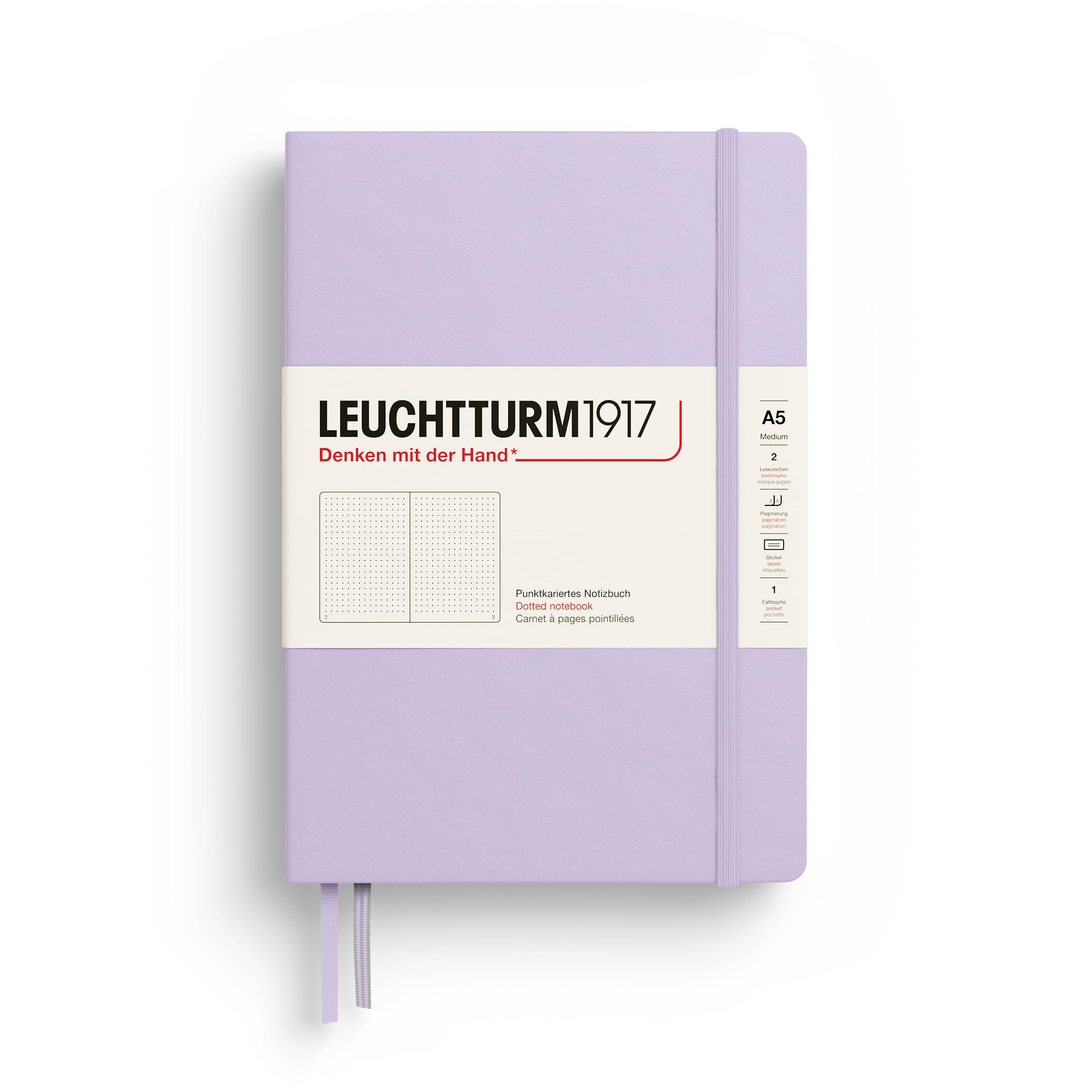
The Leuchtturm1917 has earned its reputation as a staple in the bullet journal community for good reason. Its 80 GSM acid-free paper strikes a careful balance—it resists bleed-through with most fountain pen inks and fine-liner pens, while keeping the notebook slim enough to carry everywhere. The 251 numbered pages, pre-printed table of contents, and eight perforated detachable sheets give you the entire bullet journal framework without any setup guesswork.
Thread-bound construction allows the hardcover to open completely flat, which is essential for rapid logging across a two-page spread. Two ribbon bookmarks let you mark your current weekly spread and your monthly log simultaneously. The expandable gusseted pocket in the back holds receipts, stickers, or loose index cards without distorting the spine.
Fountain pen users will appreciate the high ink compatibility—the paper handles wet nibs with minimal ghosting, though heavy swatches or water-based markers may show faint shadows. The FSC-certified paper and durable faux-leather cover in colors like lilac and dusty rose make this a notebook that performs as well as it looks, season after season.
Why it’s great
- Reliable 80 GSM paper that handles fountain pens without significant bleed
- Thread-bound lay-flat construction works perfectly for two-page spreads
- Two ribbon bookmarks, numbered pages, and index section are genuinely useful
Good to know
- 80 GSM paper will show ghosting with heavy markers or Tombow brush pens
- At 251 pages, the journal offers fewer sheets than some mid-range competitors
2. TIEFOSSI Dot Journal A5 Hardcover
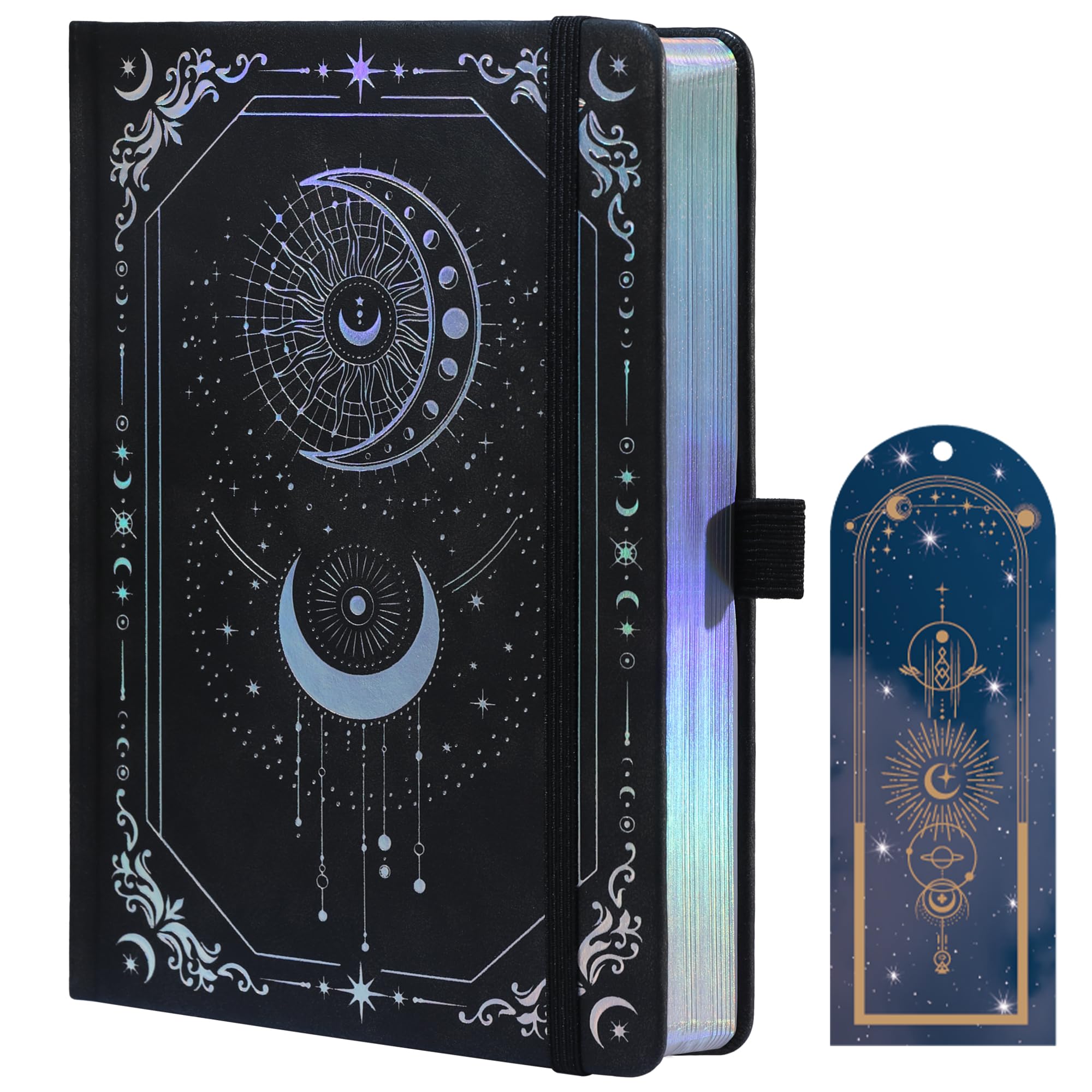
If you write with fountain pens, brush markers, or anything wetter than a ballpoint, the TIEFOSSI Dot Journal’s 160 GSM paper is your best defense against bleed-through. This is the thickest paper in this lineup—each sheet feels substantial and resists ink absorption so completely that you can use a heavy hand with a broad nib without worrying about the page behind it. The 5mm dot grid is subtle enough to guide layouts without dominating them.
The hardcover features a hot-stamped embossed design that gives the notebook a vintage, tactile feel. Two ribbon bookmarks, a back pocket, and a bonus sun-and-moon bookmark offer practical extras without clutter. The thread-bound binding opens flat, and the 190 numbered pages mean you have roughly a year’s worth of weekly spreads in a single volume.
One important note: the 160 GSM density limits the page count to 190 sheets, so you will fill this journal faster than a 320-page notebook. The thick paper also adds noticeable weight—this is a desk companion rather than a pocket journal. For artists, heavy pen users, or anyone who has sworn off ghosting forever, the trade-off is worth every millimeter of paper thickness.
Why it’s great
- 160 GSM paper virtually eliminates ghosting and bleed-through with all pen types
- Elegant hot-stamped cover design with a premium, durable feel
- Lays completely flat with no spine resistance on either side
Good to know
- 190 pages mean fewer sheets than standard 320-page journals
- Heavier paper makes this notebook less portable for daily carry
3. RETTACY Dotted Journal A5 Hardcover
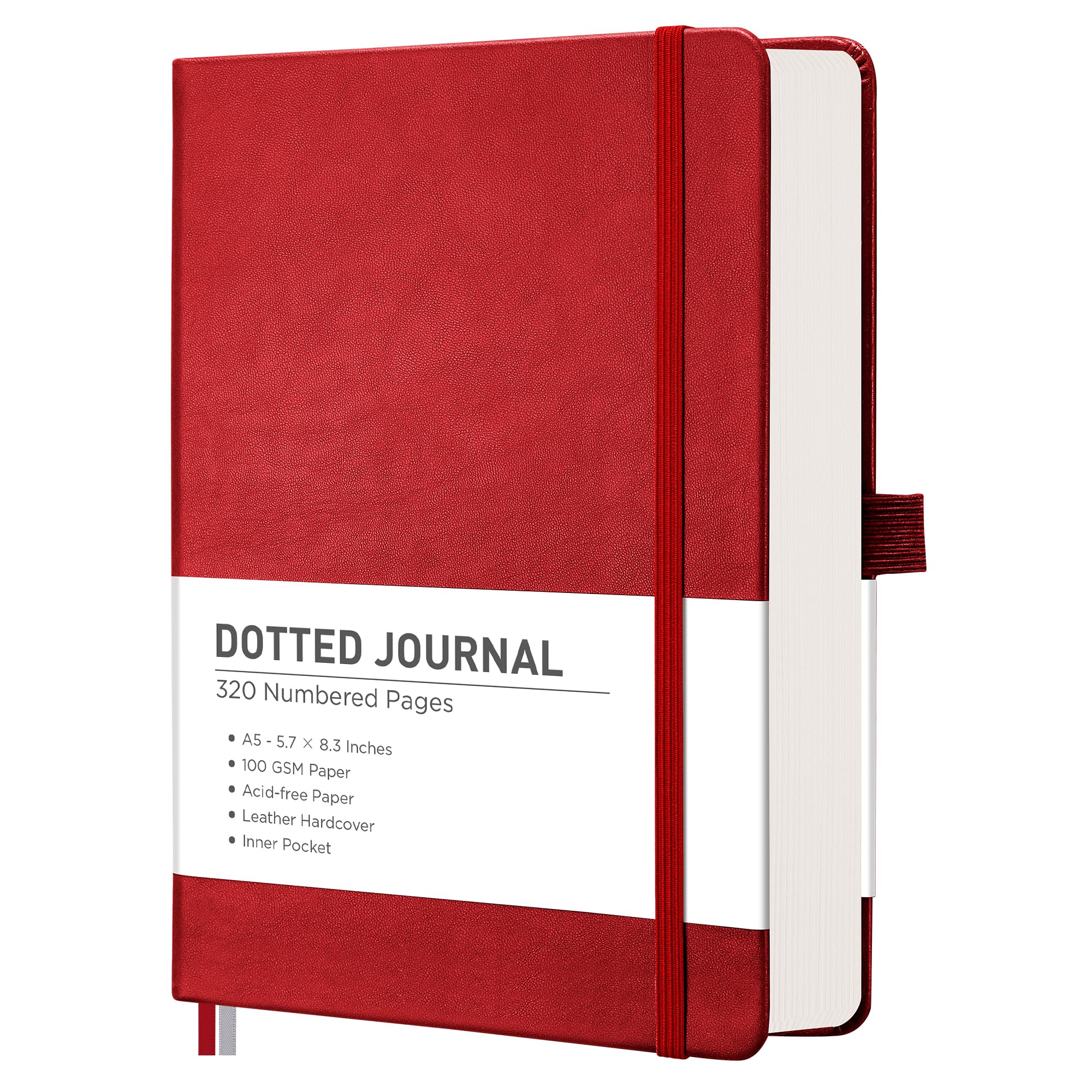
This combination makes it the best option for bullet journalists who work through notebooks quickly or run long-form collections like reading logs, mood trackers, and project planning all in one volume. The faux-leather hardcover feels smooth and protects pages well in a bag.
The 100 GSM paper handles fountain pens and fine-liners with minimal ghosting, though wetter markers like Tombow brush pens will show some shadow on the reverse side. The built-in index section and two ribbon bookmarks make navigation effortless. A pen holder, elastic closure band, and back pocket come standard, and the package includes two journaling stencils for creating consistent layouts.
The 180-degree lay-flat design works reliably across the entire notebook, letting you write comfortably at the edges. The A5 dimensions (5.7 by 8.3 inches) make it slightly wider than a classic A5, giving you a bit more horizontal space for habit trackers or weeklies. Users who need both high page count and decent paper density will find this the most balanced choice in the mid-range tier.
Why it’s great
- Generous 320 numbered pages provide months of uninterrupted journaling
- 100 GSM paper resists ghosting with most everyday pens and highlighters
- Includes pen holder, two bookmarks, back pocket, and bonus stencils
Good to know
- Wet markers and heavy ink applications will produce visible ghosting
- Bulky spine makes this less portable than slimmer notebooks
4. OFFIGIFT Bullet Dotted Journal A5 Hardcover

The OFFIGIFT notebook was designed specifically for bullet journaling, and it shows in the details. Pre-printed index and key pages let you start using the Ryder Carroll method immediately. Two subtle page markers on each sheet help you locate the center of rows and columns without counting dots—a small touch that saves time when drafting layouts. The 312 numbered pages (156 sheets) offer generous capacity for year-long use.
The 100 GSM paper performs well with gel pens, fine-liners, and most fountain pen inks, though user testing confirms that Sharpies and heavy brush pens will cause bleed-through. Eight perforated sheets are included for tearing out temporary notes or task lists without damaging the binding. The vegan leather hardcover has a textured finish that feels premium, though the cover itself is slightly flexible rather than rigid.
Two ribbon bookmarks, a pen loop, and a back pocket round out the feature set. The included stencils are basic but useful for creating consistent weekly spreads. The binding uses thread-bound construction that allows the journal to lay flat from the first page to the last. For beginners who want clear structure without designing their own index and key from scratch, this journal removes the friction of setup.
Why it’s great
- Pre-printed index, key, and page markers eliminate setup guesswork
- 312 numbered pages and 100 GSM paper offer strong capacity and decent ink resistance
- 8 perforated sheets and included stencils add practical utility
Good to know
- 100 GSM paper will bleed through with Sharpies and dense marker use
- Cover is somewhat flexible and may not hold up as well as rigid hardcovers
5. Moleskine Classic Soft Cover Notebook

The Moleskine Classic Soft Cover is the original notebook that many bullet journalists started with, and for some, its slim, portable design remains appealing. At 192 pages with 70 GSM ivory paper, this notebook prioritizes a compact form factor over ink resistance. The soft cover bends easily to fit in a back pocket or small bag, making it a viable option for minimalist logging on the go.
The elastic closure band keeps pages secure, and the expandable inner pocket in the back provides space for loose notes or cards. The dotted ruling is clean and subtle. However, the thinner 70 GSM paper presents real limitations: fountain pen ink bleeds through consistently, and even some gel pens cause ghosting on the reverse side. This is not the notebook for anyone using markers, water-based pens, or a wet-writing fountain pen.
Moleskine’s sewn binding and soft cover construction are durable over long-term use, and the brand’s iconic aesthetic still carries a certain appeal. For ballpoint-only users who want the thinnest possible journal for everyday carry, this fits a specific niche. But for the vast majority of bullet journalists who use a variety of pens and want clean reverse pages, the heavier-paper options above deliver a much better experience.
Why it’s great
- Slim, lightweight design fits easily in a bag or back pocket
- Sewn binding and elastic closure hold up well with daily use
- Classic aesthetic with recognizable brand heritage
Good to know
- 70 GSM paper bleeds and ghosts with fountain pens and markers
- Soft cover offers less protection and support than a hardcover
FAQ
Is 100 GSM paper thick enough for bullet journaling with fountain pens?
How long does a 320-page bullet journal typically last?
Can I use watercolor paints in a dot grid journal?
Final Thoughts: The Verdict
For most users, the best bullet journal winner is the Leuchtturm1917 A5 Hardcover because its 251 numbered pages, reliable 80 GSM paper, and thoughtful features give you a proven system that works immediately. If you want complete freedom from ghosting and use heavy markers or fountain pens, grab the TIEFOSSI Dot Journal with its 160 GSM paper. And for maximum page count and the best value per page, nothing beats the RETTACY Dotted Journal with 320 numbered sheets and solid 100 GSM paper.

Mo Maruf
I created WellFizz to bridge the gap between vague wellness advice and actionable solutions. My mission is simple: to decode the research and give you practical tools you can actually use.
Beyond the data, I am a passionate traveler. I believe that stepping away from the screen to explore new environments is essential for mental clarity and physical vitality.