Our readers keep the lights on and my smoothie glass nicely filled. As an Amazon Associate, I earn from qualifying purchases.
Planting a hundred tulip or daffodil bulbs by hand with a trowel is a recipe for a sore back, blistered palms, and inconsistent hole depths that leave bulbs exposed to frost or critters. The right tool transforms this annual chore into a swift, repeatable process—whether you are working a compact flower bed or a sprawling garden border. The difference comes down to handle length, core extraction mechanism, and soil type compatibility.
I’m Mohammad Maruf — the founder and writer behind WellFizz. I’ve spent years analyzing garden tool specifications, reading user reports across dense clay, sandy loam, and rocky ground, and comparing the engineering that separates a one-season gadget from a decade-long workhorse.
This guide breaks down five top contenders side by side so you can confidently choose the best bulb planting tool for your soil, your body, and the scale of your planting projects.
How To Choose The Best Bulb Planting Tool
Your choice hinges on three factors: the physical scale of your planting, the soil you work with most often, and whether you prefer a manual tool or a power-assisted auger. Each design trades off between speed, ergonomics, and versatility across different bulb sizes.
Handle Length and Your Posture
Short-handled bulb planters (9–15 inches) require you to kneel or squat, which is fine for small beds but punishing for large-scale plantings. Long-handled models (36 inches or more) allow you to work from a standing position, using your body weight to drive the tool into the ground without bending. Look for a T-grip or padded handle if you plan to dig more than 50 holes in a session.
Soil Release Mechanism
A spring-loaded handle squeezes two halves together to release the soil core—quick but requires hand strength. A foot-pedal release system lets you step on a raised pedal to eject the plug, keeping your hands on the handle. Auger drill bits rely on the drill’s rotation to lift soil out of the hole; they are fast but demand a corded or high-voltage cordless drill for dense ground.
Quick Comparison
On smaller screens, swipe sideways to see the full table.
| Model | Category | Best For | Key Spec | Amazon |
|---|---|---|---|---|
| Colwelt Bulb Planter Long Handle | Standing Digger | Stand-up planting, rocky soil | 3.5″ diameter, 4.7″ depth | Amazon |
| Power Planter Auger 3×24 | Drill Auger | High-volume, fast planting | 3″ diameter, 24″ shaft | Amazon |
| Berry&Bird Bulb Planter | Manual Cylinder | Small beds, annuals | 12.6″ length, steel/ash handle | Amazon |
| TABOR TOOLS 3-Piece Set | Multi-Tool Kit | Versatility, varied bulb sizes | 2.5″ base, spring-loaded release | Amazon |
| NAFOGAR Garden Auger 2-Pack | Drill Auger Set | Mixed hole diameters, light soil | 1.6″ and 3.5″ augers | Amazon |
In‑Depth Reviews
1. Colwelt Bulb Planter Tool Long Handle

The Colwelt is the rare stand-up planter that genuinely works in rocky or clay-heavy soil without requiring you to hand-dig the plug out. Its serrated base cuts through compacted ground more effectively than a smooth-edged cylinder, and the dual-pedal design—one foot step to drive it in, a second raised pedal to eject the soil core—keeps the process fluid. The powder-coated steel body resists rust, and the 37-inch handle with a soft T-grip lets you maintain a natural standing posture.
You get a consistent 3.5-inch diameter hole with a maximum depth of about 4.7 inches, which fits the vast majority of tulip, daffodil, and lily bulbs. The tool weighs 4.4 pounds, so it feels substantial but not exhausting to lift and reposition repeatedly. Assembly is minimal, and Colwelt includes a pair of gloves in the box.
Some users note that the single foot flange requires a firm push and a twist to sink the tool in very dry clay, but once the technique is dialed, the efficiency gain over a short-handled planter is dramatic. The raised pedal for core ejection takes a few tries to master, but it eliminates the need to bend over and manually clear the cylinder.
Why it’s great
- Serrated base slices through roots and stones with less resistance than smooth cylinders
- Stand-up operation saves your knees and lower back during big planting sessions
- Two-pedal release system lets you eject soil without taking your hands off the handle
Good to know
- Requires body weight and a twist to penetrate dense, dry clay on the first push
- 4.7-inch maximum depth may be shallow for extra-long bulbs like some alliums
2. Power Planter Extended Length Garden Auger, 3″ x 24″

The Power Planter auger is in a different league when raw speed is the priority. Its 10-gauge spiral flighting cuts through loam, sand, and even clay at a rate that manual planters cannot match—users report planting 1,000 bulbs in about 90 minutes with a powerful drill attached. The 24-inch shaft allows deep holes for large bulbs or bedding plants, and the abrasion-resistant tip extends the bit’s life several times over cheaper alternatives.
This is a contractor-grade tool built for serious volume. The 1/2-inch non-slip hex drive fits most corded or 18V+ cordless drills, though the manufacturer recommends a heavy-duty drill with a side handle to manage torque. The bit weighs 3 pounds and measures 24 inches long, giving you the reach to work from a standing position without bending.
The obvious trade-off is that you must own or purchase a compatible drill powerful enough to drive it. In rocky ground, the auger can grab and twist, so a drill with a clutch and a handle is non-negotiable. The open spiral flighting also tends to accumulate compacted soil between the vane and shaft in sticky clay, requiring occasional cleaning.
Why it’s great
- Dramatically cuts planting time—hundreds of holes in minutes rather than hours
- Solid steel shaft and extra-thick flighting handle tough soil without bending
- Abrasions-resistant tip extends usable life well beyond budget auger bits
Good to know
- Requires a powerful drill with a side handle; lower-voltage cordless drills may overheat
- Can grab unexpectedly when hitting roots, so a clutch-equipped drill is strongly recommended
3. Berry&Bird Garden Bulb Planter with 6 Inches Depth Mark

Berry&Bird’s bulb planter is a classic manual cylinder design refined with good materials. The stainless steel barrel resists rust and holds a sharp edge on the notched tip, which bites into soil without requiring excessive force. The FSC-certified ash wood handle is shaped to fit the palm comfortably, and depth markings up to 6 inches help you plant each bulb at the correct level for consistent sprouting.
At 12.6 inches long and weighing 1.4 pounds, this is a compact, lightweight tool suited to smaller beds, container planting, and gardeners who prefer a direct hand feel. The cylinder diameter is about 2.5 inches, which is ideal for single tulip or daffodil bulbs but too narrow for large alliums or clumps of bulbs. The wood handle will develop a smoother patina over years of use.
The main limitation is that the handle can detach under heavy repetitive use—one user reported the handle coming loose after planting 300 sod plugs. This tool shines in loose, well-prepared soil for moderate volumes. In heavy clay or for sessions exceeding 100 holes, a longer-handled or auger-style tool will serve you better.
Why it’s great
- Sharp stainless cutting edge penetrates soft to medium soil with minimal twisting
- Clear depth markings help you achieve consistent planting depth for even bulb emergence
- FSC-certified ash handle is comfortable and becomes smoother with use over time
Good to know
- Handle may loosen under high-volume or heavy-duty use in dense soil
- Compact 12.6-inch length requires kneeling or squatting; not ideal for long sessions
4. TABOR TOOLS 3-Piece Bulb Planting Garden Tool Set D123A
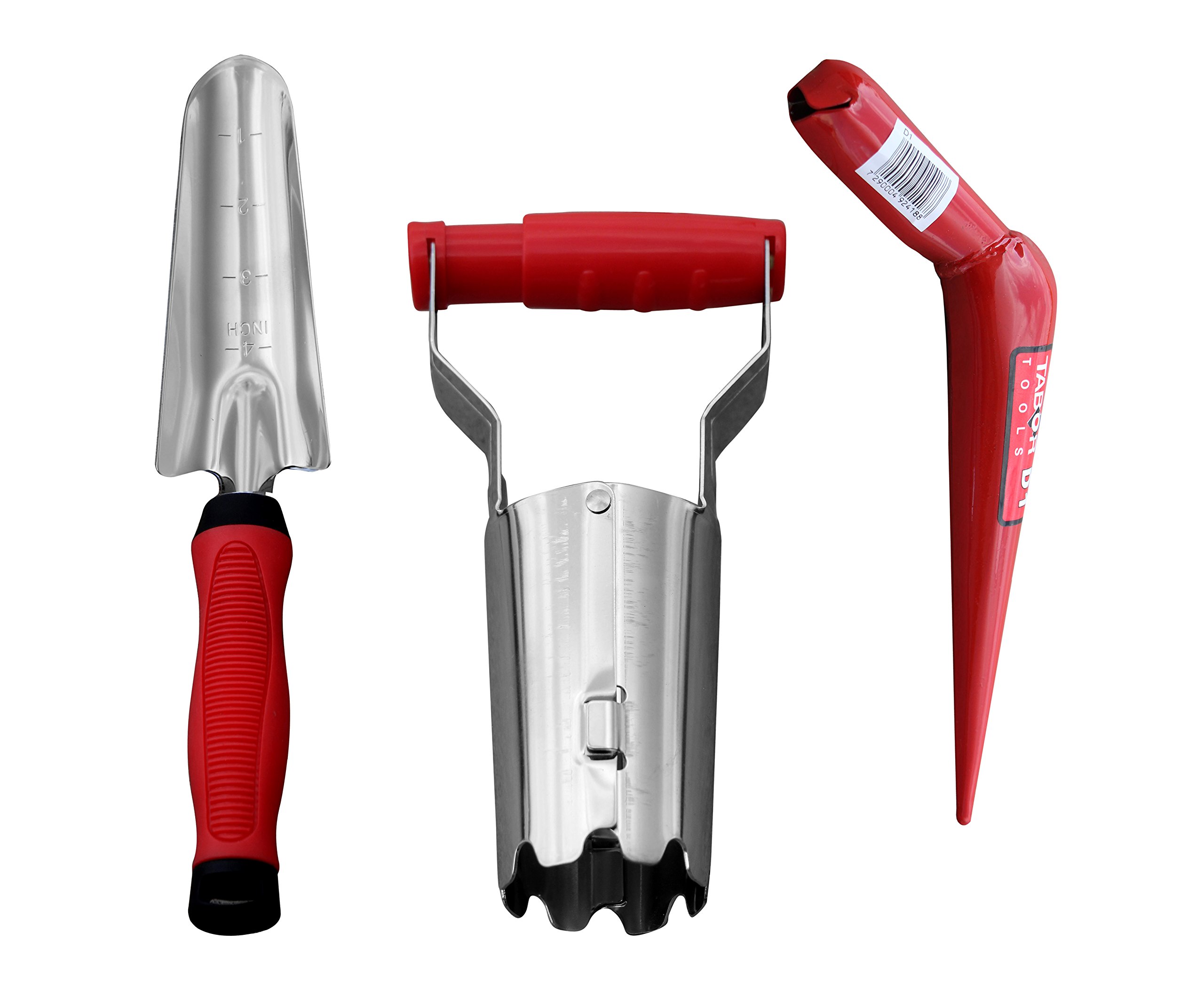
TABOR TOOLS bundles three specialized tools into one set: a bulb planter, a dibber, and a transplanter. The bulb planter uses a spring-loaded handle that squeezes the barrel halves together to release the soil core, which is faster than prying the plug out manually. The dibber is a sharp metal spike for making precise deep holes in compacted soil, and the transplanter features a polished cast-aluminum head with depth gradations for moving seedlings.
The spring-loaded release mechanism on the bulb planter works well in moist, loamy soil but can jam if the soil is very wet and sticky. The reinforced steel barrel resists bending, and the padded rubber grips on all three tools reduce hand fatigue. The set covers a wide range of gardening tasks beyond bulb planting, making it a versatile addition to any shed.
None of the three tools has a long handle, so all require kneeling or squatting. The bulb planter’s 2.5-inch diameter hole is fine for standard bulbs but won’t accommodate large clumps. For a gardener who wants a complete hand-tool kit and plants a mix of bulbs, seeds, and annuals, this set offers excellent flexibility.
Why it’s great
- Spring-loaded mechanism releases soil plugs quickly without bending over to empty the barrel
- Three tools cover bulb planting, dibbling, and transplanting in one purchase
- Padded grips and cast-aluminum transplanter head reduce fatigue and resist rust
Good to know
- All three tools are short-handled, requiring kneeling or squatting during use
- Spring-loaded release can clog in overly wet, sticky soil conditions
5. NAFOGAR Garden Auger Drill Bit Pack of 2
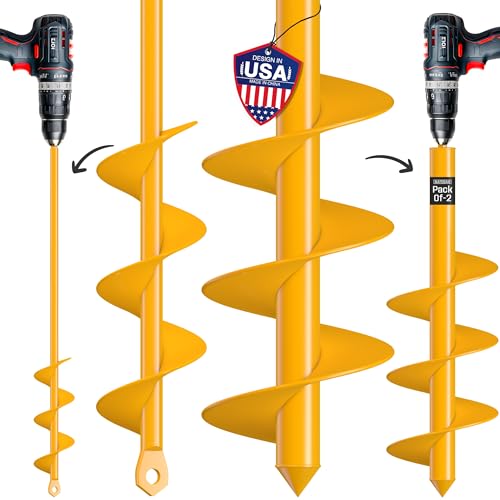
The NAFOGAR 2-pack gives you two auger sizes—a 1.6-inch by 16.5-inch bit for small bulbs and seeds, and a 3.5-inch by 16-inch bit for larger bulbs and bedding plants—all in one box. Both bits are made from painted alloy steel with a 3/8-inch hex shank that fits most standard cordless drills. The smaller bit is excellent for drilling starter holes in hard-packed soil or for planting sets of small bulbs like crocus and grape hyacinth.
Users consistently note that this set cuts planting time by half compared to manual digging, especially in sandy loam or moderately soft garden soil. The painted coating helps resist rust, though the finish will wear with heavy use in abrasive ground. The 16-inch length is sufficient for most bulb depths and allows you to work from a standing position without excessive bending.
These augers are lighter-duty than the Power Planter: the alloy steel is adequate for regular garden soil but may show bending if forced through heavy clay with roots or large rocks. For a home gardener planting a few dozen bulbs each season, this set delivers excellent value. For heavy clay, large-scale projects, or contractor-level durability, step up to the Power Planter auger.
Why it’s great
- Two auger sizes cover small bulbs and large bedding plants in one affordable set
- Hex shank fits standard cordless drills with no adapter needed
- Dramatically reduces planting time and eliminates hand fatigue from manual digging
Good to know
- Alloy steel and painted finish are less durable than heavy-duty augers in rocky clay
- Requires a drill with enough torque; low-voltage models may stall in dense soil
FAQ
Can a bulb planting tool handle rocky or clay soil?
What size bulb planter do I need for daffodils versus alliums?
Is an auger drill bit faster than a manual bulb planter?
Final Thoughts: The Verdict
For most users, the best bulb planting tool winner is the Colwelt Long Handle Bulb Planter because its serrated base, dual-pedal release, and stand-up design deliver the best balance of ergonomics, soil penetration, and reliability across different ground conditions. If you want to plant hundreds of bulbs in under an hour, grab the Power Planter 3×24 Auger. And for a versatile kit that handles bulbs, dibbling, and transplanting on a budget, the TABOR TOOLS 3-Piece Set is a solid choice.

Mo Maruf
I created WellFizz to bridge the gap between vague wellness advice and actionable solutions. My mission is simple: to decode the research and give you practical tools you can actually use.
Beyond the data, I am a passionate traveler. I believe that stepping away from the screen to explore new environments is essential for mental clarity and physical vitality.