Our readers keep the lights on and my smoothie glass nicely filled. As an Amazon Associate, I earn from qualifying purchases.
Nothing signals defeat quite like the scuttle of a roach across the kitchen floor after you thought you had them all. The core challenge with roaches is that they breed faster than you can spot-kill, which is why the best roach sprays aren’t just contact killers — they leave a residual barrier that keeps working for weeks. Whether you are treating an active infestation or laying down a preventive perimeter, the active ingredients, residual duration, and application method on the label determine whether you win the war or merely delay the next sighting.
I’m Mohammad Maruf — the founder and writer behind WellFizz. I have spent hundreds of hours analyzing insecticide labels, reviewing third-party efficacy data, and cross-referencing real-world user reports to separate the sprays that truly suppress German and American cockroach populations from those that only offer a temporary knock-down effect.
Understanding which formula stops a roach on contact and which one carries a long-lasting invisible barrier is the difference between a clean kitchen and a recurring problem, and this guide to the best bug spray for roaches breaks down the top five contenders so you can make a decision based on hard specs, not marketing claims.
How To Choose The Best Bug Spray For Roaches
Roach sprays vary widely in active ingredients, residual duration, and application style. Choosing wrong means either re-treating every week or exposing your family to unnecessary chemical odor. Focus on the three factors that matter most for this specific pest.
Residual Action Duration
Roaches are nocturnal and often stay hidden during daylight hours. A spray that only kills on contact relies on you seeing the roach and hitting it directly. That is impractical for a hidden population. Look for a formula labeled with a residual window of at least two weeks, ideally three months or longer. The best bug sprays for roaches create a thin invisible film over treated surfaces that continues to kill long after the initial application dries.
Active Ingredient Profile
Not all pyrethroids are equal when it comes to roach behavior. Bifenthrin and lambda-cyhalothrin offer strong residual activity on non-porous surfaces while remaining odorless after drying. Imiprothrin provides rapid knock-down but breaks down faster. For heavy roach populations in warm climates, the longer-lasting synthetics produce better results. Avoid formulas relying solely on natural pyrethrins for roach control — they degrade too quickly in interior conditions.
Application Format
Ready-to-use aerosol cans offer immediate convenience for spot treatments and crack-and-crevice application. Concentrate formulas that mix with water and apply through a tank sprayer deliver better coverage for large perimeters and multiple rooms. Aerosol is ideal for a quick targeted blast behind the refrigerator; concentrate suits a whole-home barrier treatment. Choose based on the size of the area you need to protect and the severity of the infestation.
Quick Comparison
On smaller screens, swipe sideways to see the full table.
| Model | Category | Best For | Key Spec | Amazon |
|---|---|---|---|---|
| Ortho Home Defense Concentrate | Concentrate | Perimeter barrier treatment | 12-month residual on non-porous surfaces | Amazon |
| BASF PT 221L Aerosol | Aerosol | Crack and crevice professional-grade | Non-repellent 0.05% cyhalothrin | Amazon |
| Raid Max Perimeter Spray | Aerosol | Long-term indoor barrier | Up to 18 months residual for roaches | Amazon |
| Black Flag Ant & Roach Killer | Aerosol | Quick contact kill with residual | 3-month residual on German roaches | Amazon |
| Raid Ant & Roach Lavender | Aerosol | Low-odor spot treatment | 13-week residual on roaches | Amazon |
In‑Depth Reviews
1. Ortho Home Defense Insect Killer Concentrate

This concentrate delivers the strongest value proposition in the roach spray category. Each 32-ounce bottle makes up to four gallons of finished spray — enough to treat an entire home perimeter multiple times. The dual-active formula of bifenthrin and zeta-cypermethrin creates a tough, long-lasting barrier that specifically targets roaches, ants, and spiders. Users consistently report that one proper application around baseboards, under sinks, and along door thresholds eliminates roach activity for months.
The residual protection claims up to twelve months on non-porous surfaces. In real-world conditions with moderate roach pressure, expect effective suppression for at least six to eight months between treatments. Unlike many aerosol sprays that dissipate quickly on porous surfaces like drywall, the diluted concentrate penetrates small cracks and dries into an invisible crystalline deposit that roaches cannot detect. This non-repellent property is critical — roaches that walk through the treated zone carry the poison back to the nest.
The main trade-off is that you need a separate tank sprayer for application. The concentrate itself is virtually odorless once dry, making it safe for kitchens and bathrooms when applied according to the label. For anyone dealing with a recurring roach problem across multiple rooms, this is the most cost-effective and coverage-efficient solution available at this tier.
Why it’s great
- Makes up to 4 gallons — covers an entire home with one bottle
- Non-repellent formula lets roaches carry poison back to harborage
- Dries odorless and won’t stain baseboards or trim
Good to know
- Requires a separate tank sprayer for application
- Mixing must be done carefully — too weak won’t hold residual long enough
2. BASF PT 221L Pressurized Insecticide

This is the same formula used by professional exterminators for crack-and-crevice treatments. At 0.05% cyhalothrin, the active ingredient concentration is precisely calibrated for maximum residual effect without repelling the roach. The non-repellent mechanism is the deciding factor for heavy infestations — roaches cannot detect the treated zone and will walk freely across it, absorbing a lethal dose that takes effect hours later, often after they have returned to the nest and spread the poison to other roaches.
The pressurized delivery system allows pinpoint application into weep holes, behind appliances, under sink cabinets, and along wall voids. Users who purchased this after failed attempts with store-brand aerosols report a dramatic reduction in visible roaches within 48 hours. The 14-ounce can lasts a surprisingly long time because you apply thin lines rather than broadcast spraying. Many households report a single can lasting well over a year for maintenance treatments.
The aerosol nozzle design has received mixed feedback — some users find the spray pattern difficult to control in tight spaces. Additionally, reapplication intervals for commercial food-handling environments are every 21 days, though home users with moderate infestations find a single treatment holds for three to four months. If you want the exact tool that pest control pros reach for, this is it.
Why it’s great
- Non-repellent formulation — roaches don’t avoid the treated area
- Used by commercial exterminators for sensitive environments
- Very low odor once dry; safe for homes with proper application
Good to know
- Nozzle can be finicky — some users report inconsistent spray pattern
- Higher unit cost than mainstream retail brands
3. Raid Max Perimeter Protection Spray
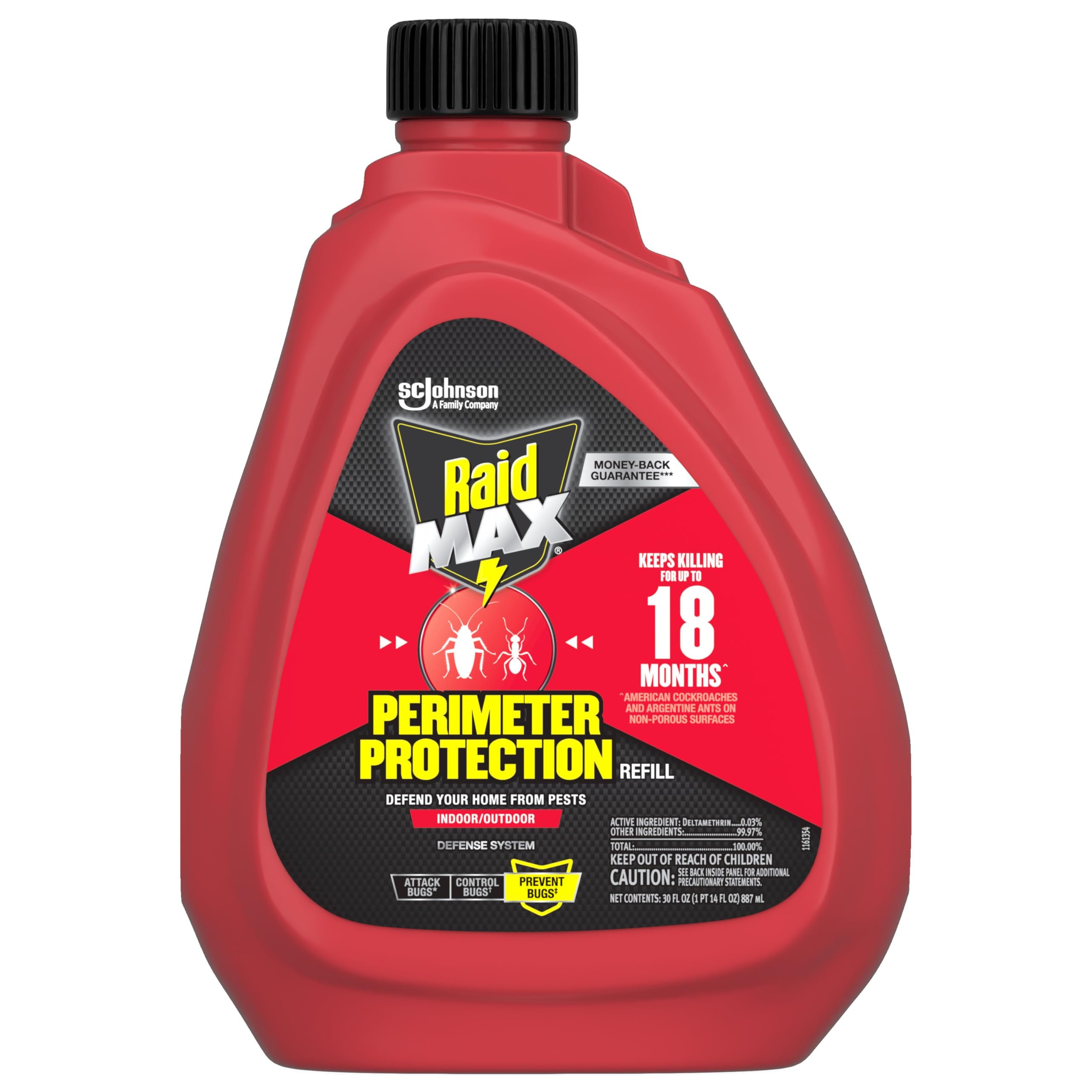
Raid Max Perimeter Protection pushes the boundary of aerosol residual claims with an advertised eighteen-month protection window against roaches and ants. In practice, the odorless, non-staining formula creates a continuous barrier that holds up well on hard, non-porous surfaces like tile, laminate, and finished baseboards. The aerosol can features a battery-powered trigger that sprays up to three to four feet, making it easy to reach into the gap behind a refrigerator or stove without moving the appliance.
The 30-ounce can is a refill for Raid’s battery-powered spray system, but it also works as a standalone aerosol with the included trigger. Users consistently highlight the absence of any lingering chemical smell as a major advantage — you can treat the kitchen in the morning and prepare food on the same counters by afternoon (once the spray is completely dry). The formula kills more than fifty types of listed bugs, but its strength is clearly in long-term suppression of roach and ant populations rather than instant knock-down.
Because of the narrow spray straw, this product works best as a preventive perimeter treatment rather than a heavy-contact killer. For active infestations where you see roaches daily, a direct-contact aerosol like Black Flag or the conventional Raid spray may deliver faster visible results. But for maintaining a roach-free home after the exterminator has left, this is the set-and-forget option.
Why it’s great
- Industry-leading 18-month residual claim for roaches on non-porous surfaces
- Truly odorless — no chemical smell during or after application
- Battery trigger system reaches deep into appliance gaps without spraying your face
Good to know
- Slower knock-down than standard Raid — better as a barrier than a contact spray
- Refill system requires the separate battery-powered handle for optimal use
4. Black Flag Ant and Roach Killer
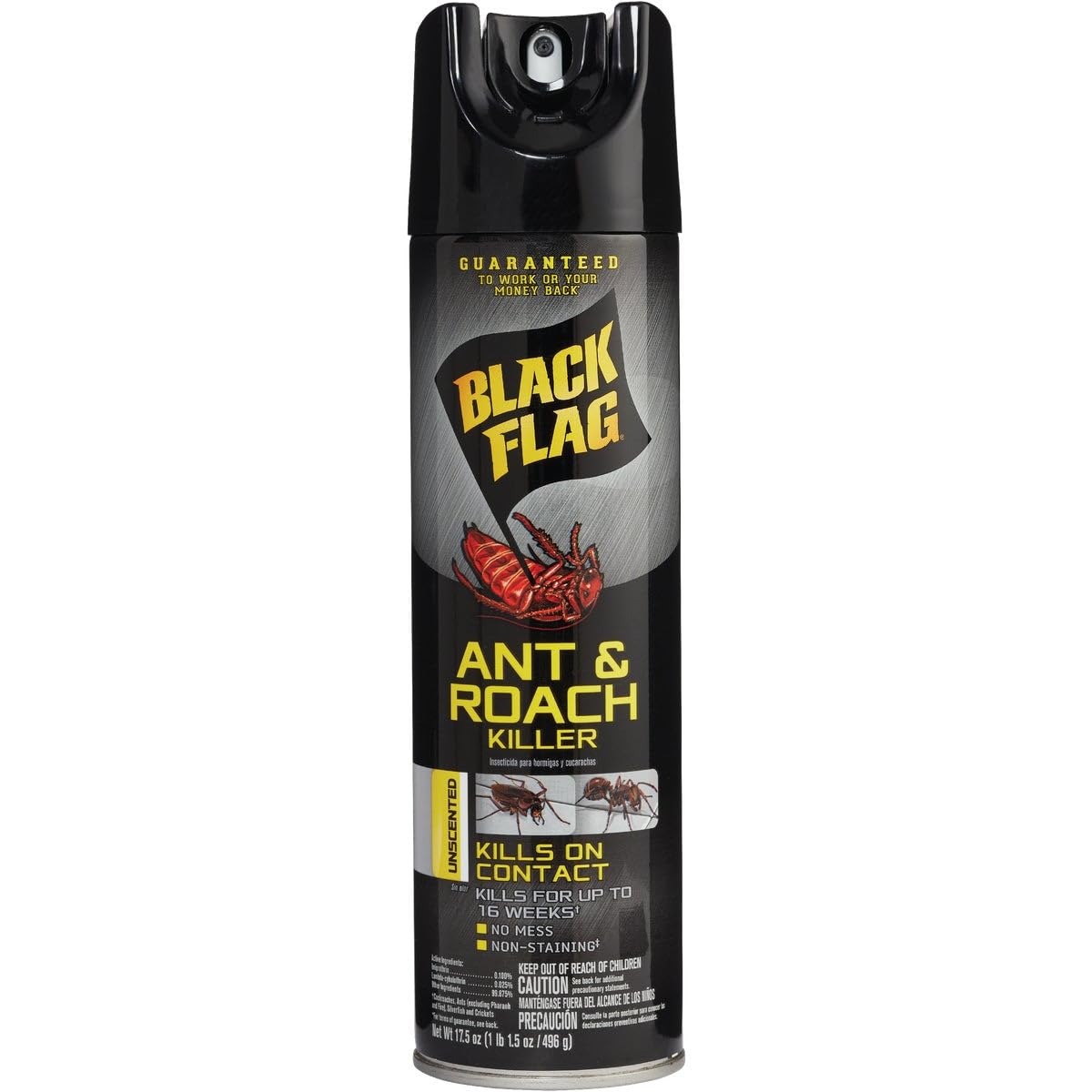
Black Flag offers the rare combination of a strong 0.1% imiprothrin and 0.025% lambda-cyhalothrin active blend in an aerosol that actually claims to be unscented. Early user reports describe the initial spray as having a noticeable chemical odor that dissipates fully within minutes of drying. The 17.5-ounce can is larger than most standard roach sprays in this price tier, giving you more coverage per purchase for spot treatments around baseboards, under sinks, and behind large appliances.
The residual claim of up to three months against German cockroaches is realistic based on the lambda-cyhalothrin content, which is the same active ingredient used in many professional perimeter products. The spray deposits a non-staining film that remains active on surfaces roaches walk across. Users treating mild to moderate infestations report that a single application around the kitchen perimeter suppresses roach sightings for six to eight weeks before needing a touch-up.
The biggest complaint across user reviews is the aerosol’s potency during application — several people recommend wearing a mask and opening windows while spraying, particularly in enclosed spaces. Once the spray dries, however, the odor fades completely. For anyone sensitive to fragrance or who wants a spray that won’t leave a lavender or citrus scent masking the chemical smell, this unscented option is the cleanest choice in the lineup.
Why it’s great
- Dual-active ingredient blend provides fast knock-down plus residual effect
- Unscented after drying — no lingering fragrance or chemical smell
- 17.5-ounce can offers more volume than standard 12-ounce competitors
Good to know
- Initial spray has a strong chemical odor — ventilate and mask during application
- Some users report the propellant smell irritates sensitive lungs
5. Raid Ant & Roach Killer Lavender Scent
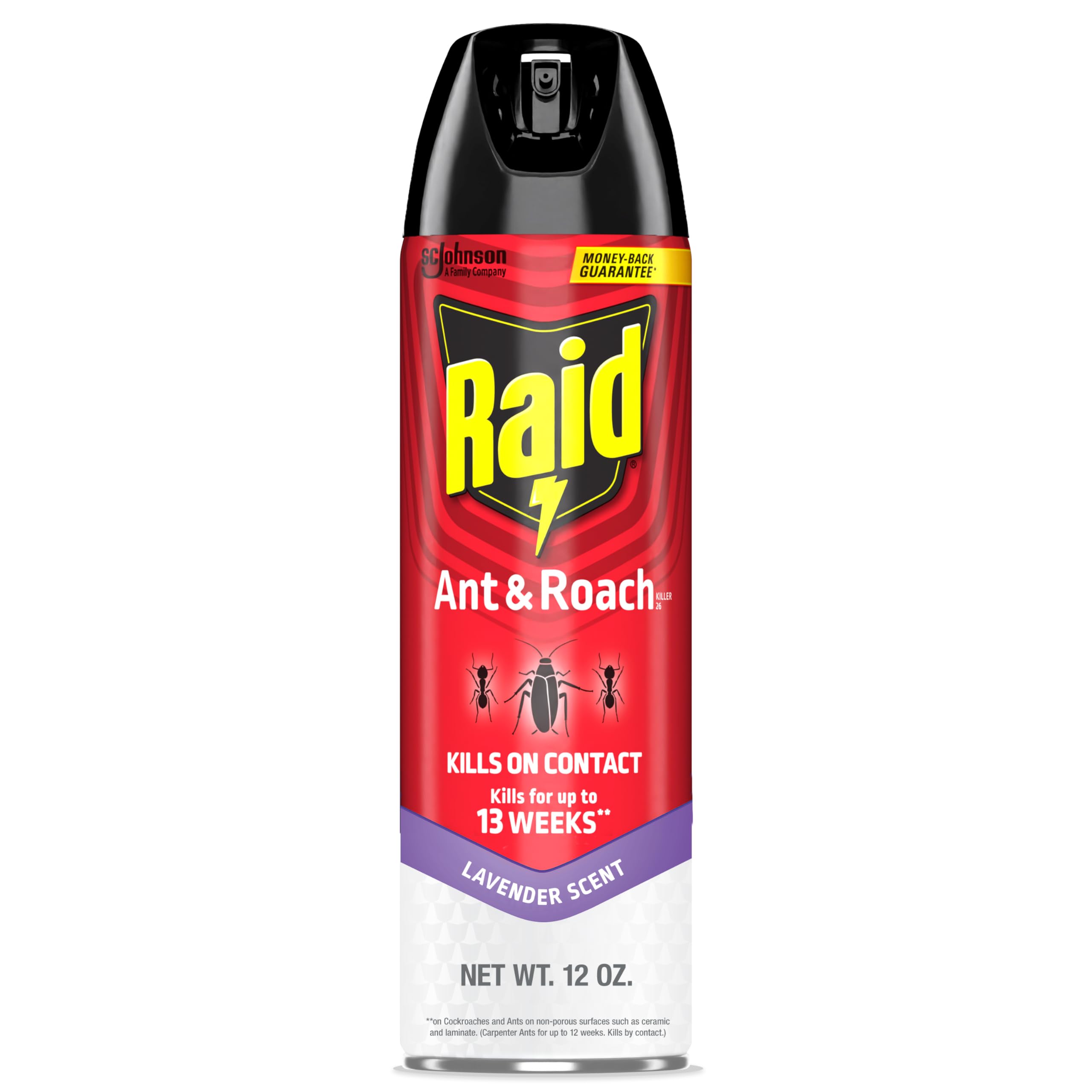
This is the spray that most households reach for when they spot a roach in the middle of cooking dinner. The lavender-scented formula was specifically designed to address the biggest complaint about traditional roach sprays: the overpowering chemical odor. Raid’s masking fragrance does not eliminate the pesticide smell entirely, but it covers it well enough that the kitchen feels usable within ten minutes of spraying. The residual action is advertised at thirteen weeks for roaches, which is more than sufficient for maintenance between deep cleanings.
The active ingredient profile targets a wide range of crawling insects including waterbugs, palmetto bugs, silverfish, and earwigs, making this a versatile option for homes in warm climates where multiple pest species appear. Users confirm that a direct spray causes immediate knock-down within seconds, and the residual film continues killing roaches that crawl across treated surfaces for weeks. The 12-ounce can is compact enough to store under the kitchen sink without taking up much space.
The lavender scent can be a drawback for those with fragrance sensitivities or households that prefer zero added scents. Additionally, the residual claim of thirteen weeks requires a fairly heavy initial application and may need a refresh every four to six weeks in high-traffic areas where the spray film gets wiped away during cleaning. For the price, this is the most accessible and user-friendly option for reactive spot treatment combined with basic preventive coverage.
Why it’s great
- Lavender scent masks the chemical odor better than any unscented formula
- Kills on contact instantly — perfect for spot treatments when you see a roach
- Thirteen-week residual offers solid preventive value for the price
Good to know
- Lavender fragrance may not suit households that prefer truly unscented products
- Residual film can be wiped away by regular cleaning — reapplication needed in high-traffic zones
FAQ
Should I use an aerosol spray or a concentrate for roach control?
How long after spraying is it safe to be in the room?
Why does the roach spray smell like chemicals even after it dries?
Can I use roach spray on kitchen countertops where food is prepared?
Final Thoughts: The Verdict
For most users, the best bug spray for roaches winner is the Ortho Home Defense Concentrate because it provides the best balance of coverage area, residual duration, and cost per treatment — one bottle makes four gallons of spray and suppresses roach activity for up to twelve months. If you want professional-grade non-repellent technology that kills roaches without them knowing, grab the BASF PT 221L Aerosol. And for immediate spot-kill with a pleasant lavender scent that won’t stink up your kitchen, nothing beats the Raid Ant & Roach Lavender Spray.

Mo Maruf
I created WellFizz to bridge the gap between vague wellness advice and actionable solutions. My mission is simple: to decode the research and give you practical tools you can actually use.
Beyond the data, I am a passionate traveler. I believe that stepping away from the screen to explore new environments is essential for mental clarity and physical vitality.