Our readers keep the lights on and my smoothie glass nicely filled. As an Amazon Associate, I earn from qualifying purchases.
That moment when you spot a leaf skeletonized overnight and realize something has been chewing through your tomatoes, roses, and herbs while you were sleeping — that is the exact frustration a reliable garden spray is meant to eliminate. Choosing the right formulation for your specific pest pressure, plant type, and stage of growth is the difference between a thriving harvest and a wasted season.
I’m Mohammad Maruf — the founder and writer behind WellFizz. My research into garden pest control focuses on matching active ingredients to specific insect life cycles, application methods that minimize plant stress, and the measurable difference between coating oils, bacterial agents, and contact fungicides.
After analyzing hundreds of verified gardener reports and comparing the real-world efficacy of oil-based sprays, bacterial concentrates, and multi-purpose fungicides, I’ve narrowed the field down to the five most effective options on the shelf today for your bug spray for gardens.
How To Choose The Best Bug Spray For Gardens
Garden sprays differ primarily in their active ingredient and how that ingredient interacts with the pest’s biology. A spray that works on soft-bodied aphids will do nothing against a hard-shelled caterpillar, and a fungicidal oil applied in full sun can scorch tender leaves. Matching the chemistry to the pest and the plant’s current life stage is the critical step most beginners skip.
Understand the Three Main Active Ingredient Families
Horticultural oils, such as mineral oil or neem oil extract, work by smothering insect eggs, larvae, and soft-bodied adults while also coating fungal spores to prevent their germination. Bacterial agents like Bacillus thuringiensis (Bt) produce a protein that only disrupts the digestive system of caterpillars and worm-type larvae — it leaves bees, earthworms, and beneficial predators unharmed. Contact insecticides with synthetic active ingredients offer fast knockdown but often require careful timing to avoid harming pollinators or leaving residues on edible crops.
Match the Application Method to Your Garden Size
Ready-to-use trigger sprayers work well for small raised beds and container plants, letting you spot-treat specific foliage. Hose-end sprayers are faster for larger plots but often suffer from poor calibration, causing uneven coverage or premature emptying. Concentrates that you mix in a pump sprayer give you the most control over dilution and coverage — ideal for a garden with multiple plant types and varying pest pressures. Always verify whether the product label instructs you to spray in the cool morning hours or avoids the heat of the day to prevent leaf burn.
Check the Harvest Interval and Organic Certification
If you plan to spray vegetables, herbs, or fruit, the waiting period between application and harvest matters. Some formulations allow same-day harvest, while others require a week or more. OMRI-listed products ensure the formula meets organic standards and typically leave no persistent toxic residues in the soil or on the produce. For ornamental-only gardens, these restrictions matter less, but they still affect how safe the product is around pets and beneficial insects.
Quick Comparison
On smaller screens, swipe sideways to see the full table.
| Model | Category | Best For | Key Spec | Amazon |
|---|---|---|---|---|
| Garden Safe Fungicide3 | Neem Oil / Multi-Purpose | Preventing powdery mildew and aphids on ornamentals | Neem oil extract; 128 oz ready-to-use | Amazon |
| Monterey B.t. | Bacterial / Larvicide | Caterpillar and worm control on vegetables | Bacillus thuringiensis; 32 oz ready-to-use | Amazon |
| Earth’s Ally Disease Control Concentrate | Organic Fungicide | Black spot and blight on roses and ornamentals | Citric acid; 10 gal concentrate yield | Amazon |
| BioAdvanced Tomato & Vegetable | Contact Insecticide | Quick knockdown on cutworms in raised beds | Fast-acting formula; harvest-day safe | Amazon |
| Bonide All Seasons Horticultural Oil | Mineral Oil / Smothering | Year-round dormant and growing season protection | Mineral oil; 32 oz hose-end ready | Amazon |
In‑Depth Reviews
1. Garden Safe Fungicide3
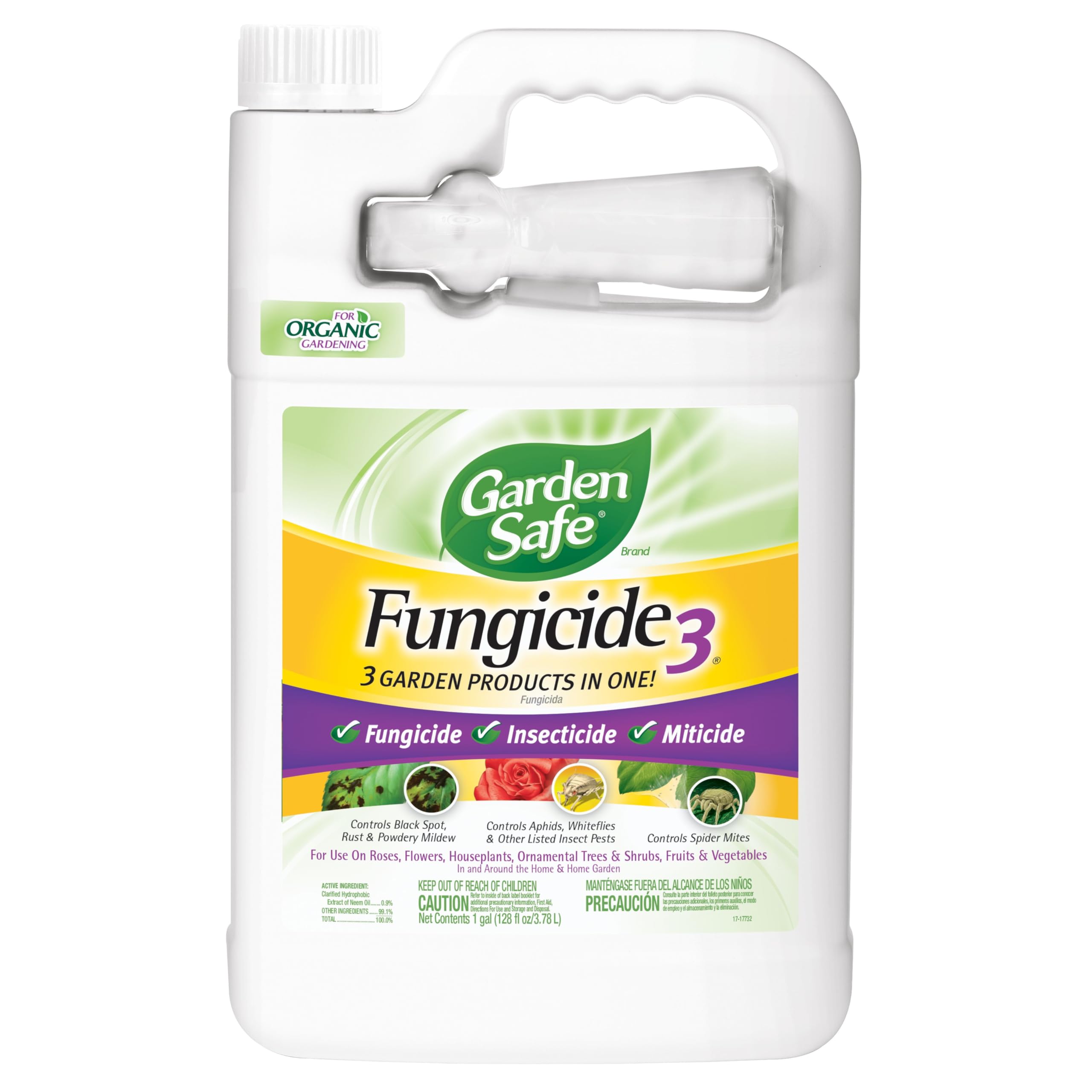
The gallon-sized bottle of Garden Safe Fungicide3 combines a fungicide, insecticide, and miticide into one neem oil extract formula, making it the most versatile single product for a mixed garden of ornamentals, vegetables, and fruit plants. The clarified hydrophobic extract of neem oil coats leaf surfaces and smothers fungal spores, aphid eggs, and spider mite larvae simultaneously — a genuine three-in-one for gardeners juggling multiple pest problems at once. Users report dramatic recovery on mildew-ridden hibiscus, roses, and tomatoes with consistent weekly application.
One important consideration from the field: the attached sprayer design leaves only a short coiled hose, forcing you to bend awkwardly toward low plants. Several experienced gardeners recommend transferring the liquid to a separate pump sprayer for better reach and more even coverage. The neem oil can also burn tender foliage if applied during high heat or at full strength — half the recommended dose works for sensitive varieties like orchids and young tomato transplants.
The organic formulation complies with organic gardening standards and leaves no persistent toxic residues, which matters for anyone spraying vegetables up until the day of harvest. With weekly use throughout the growing season, this product acts as both a cure for active infections and a preventive shield against recurrence. For the gardener who wants one reliable bottle that covers the most common garden diseases and soft-bodied insects, this is the strongest all-season answer.
Why it’s great
- Three functions in one — kills fungus, insects, and mites with a single neem oil application
- Gallon jug offers the best cost-per-ounce for medium to large gardens
- Safe for use on vegetables up to harvest day when used as directed
Good to know
- The integrated sprayer has a short hose and is prone to poor calibration; a pump sprayer upgrade is recommended
- Neem oil can burn sensitive leaves in full sun — apply early morning or late evening
- Starting at half strength is safer for orchids, ferns, and young transplants
2. Monterey B.t.
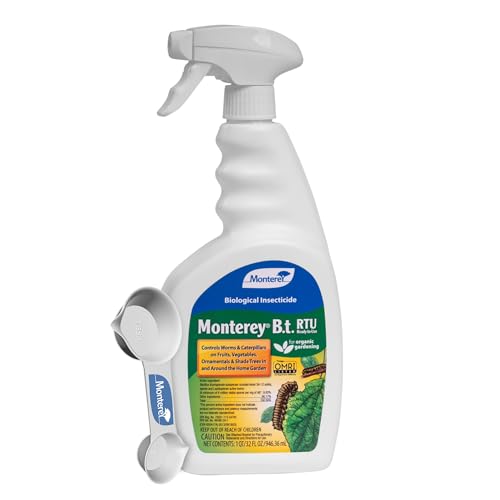
Monterey B.t. is the go-to spray when the problem is caterpillars, loopers, bagworms, or any other worm-type larvae chewing holes through leaves. The active ingredient — Bacillus thuringiensis — is a naturally occurring soil bacterium that produces a protein crystal toxic only to the digestive systems of caterpillars. It is completely harmless to honeybees, earthworms, ladybugs, and birds, making it the most ecologically selective spray in this lineup.
Gardeners have reported rapid results against cabbage loopers that had devoured entire beds of flower seedlings, and against the small caterpillars that skeletonize Texas Mountain Laurel foliage. The ready-to-use trigger bottle lets you target specific plants without mixing or measuring, and the Bt protein remains effective for several days after drying on leaf surfaces. You need to reapply after heavy rain, but the short reapplication cycle is a fair trade for zero collateral damage to beneficial insects.
The product is OMRI-listed for organic gardening and works on a wide range of edibles including broccoli, lettuce, tomatoes, melons, and leafy greens. The only limitation is its narrow pest range — it does nothing for aphids, mites, beetles, or fungal diseases. But when you need a targeted solution for lepidoptera larvae in a pollinator-friendly garden, this is the precise tool for the job.
Why it’s great
- Selectively kills only caterpillars and worm larvae without harming bees or beneficial insects
- OMRI-listed and safe for vegetables, fruit, and herbs up until harvest day
- Ready-to-use trigger sprayer allows quick spot treatment without mixing
Good to know
- Narrow spectrum — only works on caterpillar-type pests, not aphids or mites
- Bacterial protein degrades in direct sunlight; apply in late afternoon or evening
- Reapply after rain for continued protection
3. Earth’s Ally Disease Control Concentrate
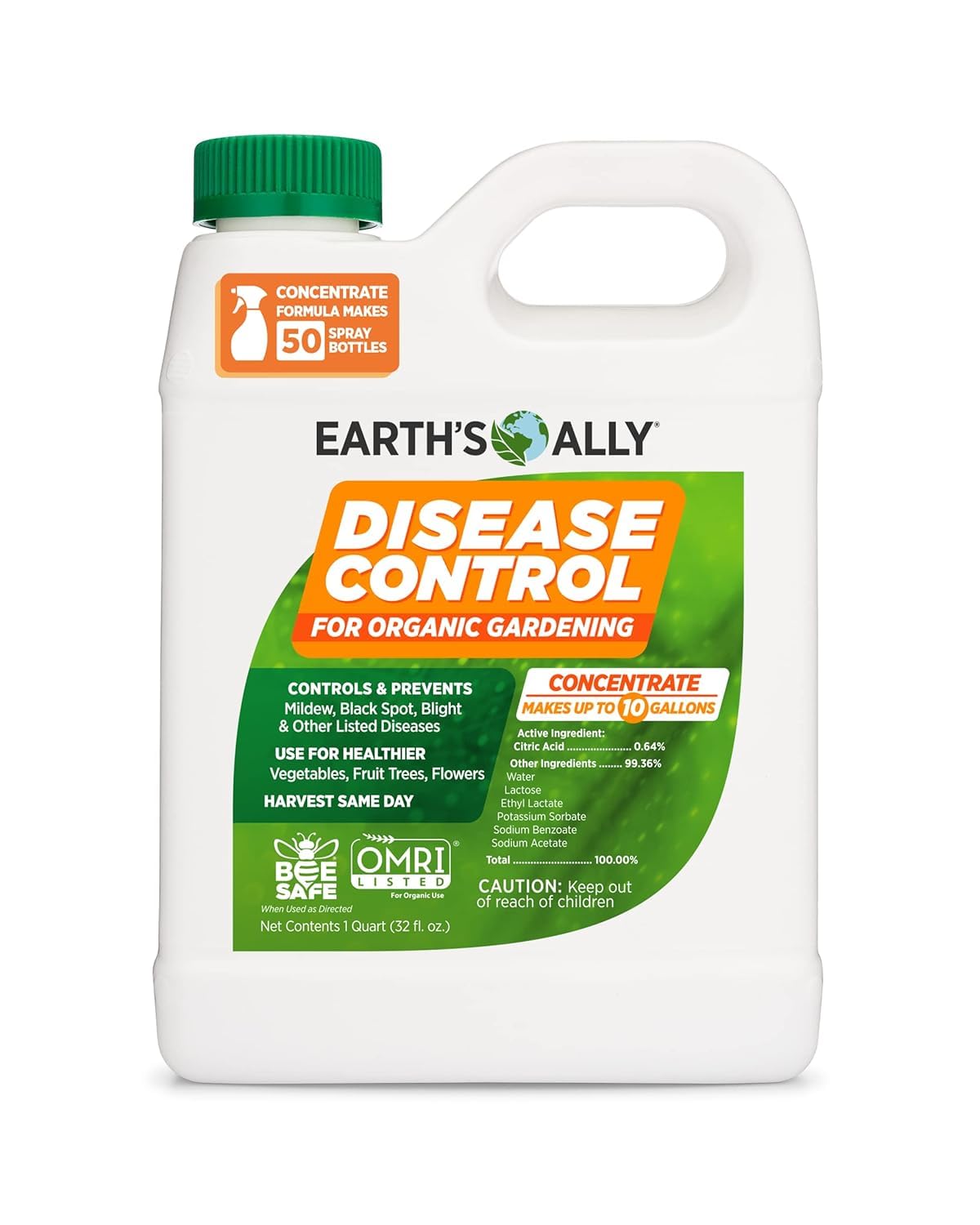
Earth’s Ally Disease Control Concentrate stands apart because its active ingredient is citric acid — a simple, food-grade compound that disrupts fungal cell membranes on contact without leaving harsh chemical residues. This is not a smothering oil or a synthetic fungicide; it is a pH-driven approach that targets powdery mildew, downy mildew, blight, black spot, and leaf spot. The 32-ounce jug makes up to ten gallons of ready-to-use product when you mix six tablespoons per gallon of water, offering remarkable value for gardeners with large plots or heavy disease pressure.
Verified users have seen visible improvement in rose foliage plagued by black spot and powdery mildew, with leaves looking noticeably healthier after just a couple of applications. Because citric acid works by altering the leaf surface pH rather than building up in the plant tissue, you can spray fruits and vegetables up until the day of harvest without concern. The OMRI listing confirms compliance with organic standards, and the concentrated formula means you are shipping less water — reducing both cost and environmental footprint.
The main consideration is that this product is a fungicide first and does not control insects. If your problem is aphids, caterpillars, or mites, you will need a separate spray. Additionally, the concentrate must be thoroughly mixed in a pump sprayer to ensure even dilution — using it straight or with poor agitation can lead to spotty coverage. For any gardener struggling with recurring fungal infections in a humid climate, this is the most economical and residue-free solution available.
Why it’s great
- Citric acid formula is food-grade and leaves no toxic persistant residues on edible crops
- One bottle makes 10 gallons of spray, offering exceptional value per treatment
- OMRI-listed for organic gardening and safe for use up until harvest day
Good to know
- Fungicide only — does not control insect pests like aphids or caterpillars
- Concentrate requires careful mixing with a pump sprayer for even coverage
- May need weekly reapplication during periods of high humidity or rain
4. BioAdvanced Tomato & Vegetable Insect Killer

When you spot cutworms chewing through the base of your tomato transplants or aphids clustering on pepper stems, BioAdvanced Tomato & Vegetable delivers the fastest visible knockdown of any spray in this group. The contact-action formula begins disrupting insect nervous systems on contact, and its residual activity keeps protecting leaves for days after application. Gardeners with multiple raised beds have praised the ease of spraying large areas quickly, especially when using the ready-to-use bottle on a nozzle that reaches across wide rows.
The standout feature here is the harvest-interval flexibility: the label allows spraying tomatoes up until the very day of harvest, eliminating the waiting period required by many synthetic insecticides. This matters immensely for anyone who wants to treat an outbreak in late summer without sacrificing the ripening fruit on the vine. Reviews confirm its effectiveness against lantern flies on grapevines and against general pest pressure on peppers and carrots, though some users note that very heavy infestations may require a second application after a few days.
One caveat is that the strong chemical formulation is not organic — it leaves a synthetic residue that requires washing produce thoroughly before consumption. It also does not distinguish between pests and pollinators, so it should never be sprayed on open flowers during the day when bees are active. For the vegetable gardener who needs fast relief from a sudden pest surge and is comfortable with conventional chemistry, this spray offers the speed and convenience that organic oils cannot match.
Why it’s great
- Fast contact knockdown on cutworms, aphids, and other listed vegetable pests
- Allows same-day harvest on tomatoes after spraying
- Ready-to-use sprayer simplifies application across multiple raised beds
Good to know
- Synthetic active ingredient is not suitable for organic gardening
- Harms pollinators if sprayed on open blooms during the day
- Heavy infestations may require follow-up treatment for full control
5. Bonide All Seasons Horticultural Oil

Bonide All Seasons Horticultural Oil is a mineral oil-based spray designed to smother insects and fungal spores across all four seasons — from dormant winter applications to green-tip spring and active growing-season use. The oil coats the bodies of adelgids, aphids, mites, scale insects, and certain moth larvae, suffocating them without introducing synthetic neurotoxins into the garden. This makes it one of the most versatile low-cost options for the gardener who wants a single spray for both pest and disease pressure.
The 32-ounce hose-end sprayer connects directly to your garden hose, making it easy to treat large trees, shrubs, and perimeter plantings in one pass. Users have reported overnight elimination of black cherry aphids and successful treatment of bark scale on azaleas within days. The low viscosity compared to other horticultural oils means it spreads more easily across leaf surfaces and handles better through the sprayer — though the hose-end sprayer itself is poorly calibrated, often emptying the container faster than intended and leaving an oily residue on nearby surfaces.
This oil is OMRI-listed and approved for organic gardening, breaking down without leaving toxic residues that persist in the soil. The key to success is applying it with a pump sprayer instead of the included hose-end attachment, and timing the application for cool weather to avoid leaf burn. For the budget-conscious gardener who wants year-round protection without a cabinet full of separate bottles, this mineral oil concentrate covers the broadest range of scenarios for the lowest cost.
Why it’s great
- Single product works from dormant season through active growth as both insecticide and fungicide
- Low-viscosity mineral oil spreads easily and smothers eggs, larvae, and adult insects
- OMRI-listed and leaves no persistent toxic residues in the garden
Good to know
- Included hose-end sprayer is poorly calibrated and prone to leaking or emptying prematurely
- Can burn fresh foliage if applied in direct sunlight or high heat
- Multiple user reports recommend swapping to a dedicated pump sprayer for best results
FAQ
Can I use neem oil spray on vegetables up until the day of harvest?
Will Bacillus thuringiensis kill bees if I spray it near flowers?
Why did my horticultural oil burn the leaves on my tomato plants?
Final Thoughts: The Verdict
For most users, the bug spray for gardens winner is the Garden Safe Fungicide3 because its neem oil extract tackles fungus, insects, and mites in one application, and the gallon jug offers the best coverage for mixed ornamental and vegetable gardens. If you need a targeted caterpillar solution that protects bees, grab the Monterey B.t.. And for the budget-minded gardener who wants year-round dormant-to-growing-season protection, nothing beats the value of Bonide All Seasons Horticultural Oil when paired with a good pump sprayer.

Mo Maruf
I created WellFizz to bridge the gap between vague wellness advice and actionable solutions. My mission is simple: to decode the research and give you practical tools you can actually use.
Beyond the data, I am a passionate traveler. I believe that stepping away from the screen to explore new environments is essential for mental clarity and physical vitality.