Our readers keep the lights on and my smoothie glass nicely filled. As an Amazon Associate, I earn from qualifying purchases.
Nothing ruins a backcountry traverse like a tick embedded in your calf after a long day on the trail. The difference between a trip remembered for its views and one remembered for its doctor visit often comes down to a single choice: what you sprayed on your clothes before you left the trailhead.
I’m Mohammad Maruf — the founder and writer behind WellFizz. I’ve spent the last 15 years analyzing outdoor gear formulations, from permethrin bond strengths to picaridin evaporation rates, to find what actually holds up under a sweaty pack strap.
This guide breaks down the top performers by application style and active ingredient, so you can pick the best bug repellent for backpacking without testing a dozen bottles yourself.
How To Choose The Best Bug Repellent For Backpacking
The right repellent for a backpacking trip depends on three variables: the insect threat level in your destination, how many days you’ll be out, and whether you prefer treating gear or applying directly to skin.
Active Ingredient: Permethrin vs Picaridin vs DEET
Permethrin is a synthetic insecticide that bonds to fabric fibers and kills ticks and mosquitoes on contact. It lasts through multiple wash cycles but must be applied to clothing, not skin. Picaridin (20%) offers 12-hour protection against both ticks and mosquitoes, smells mild, and is safe for use on skin and gear. DEET (30%) is the gold standard for extreme mosquito pressure but can damage synthetic fabrics and backpack zipper coatings over time.
Application Format for the Trail
Aerosol sprays are fast for pre-trip gear treatment at home. Pump sprays offer better control for on-trail reapplication. Concentrates let you mix your own solution to treat large batches of clothing before a season. Wipes are the most packable and TSA-friendly option for a multi-day trip where you need to reapply on the move without carrying a bottle.
Duration and Reapplication Interval
Permethrin-treated clothing stays effective for up to 6 weeks or 6 washes, making it the best choice for multi-day trips. Skin-applied Picaridin lasts up to 12 hours per application, while DEET wipes typically last around 7 hours. If you’re crossing a river or sweating heavily, reapply skin repellents sooner than the label suggests.
Quick Comparison
On smaller screens, swipe sideways to see the full table.
| Model | Category | Best For | Key Spec | Amazon |
|---|---|---|---|---|
| Ben’s Tick Repellent 20% Picaridin | Skin Spray | Long days on the trail | 12 hours protection | Amazon |
| Sawyer Permethrin | Fabric Treatment | Pre-trip gear prep | 6 weeks fabric bond | Amazon |
| Ben’s 30% DEET Wipes | Skin Wipes | Packable reapplication | 7 hours per wipe | Amazon |
| Grandpa Gus’s Plant-Based | Natural Spray | DEET-free families | 8 hours tick protection | Amazon |
| Martin’s Permethrin Concentrate | DIY Concentrate | Home gear treatment | 13.3% concentrate | Amazon |
In‑Depth Reviews
1. Ben’s Tick Repellent 20% Picaridin
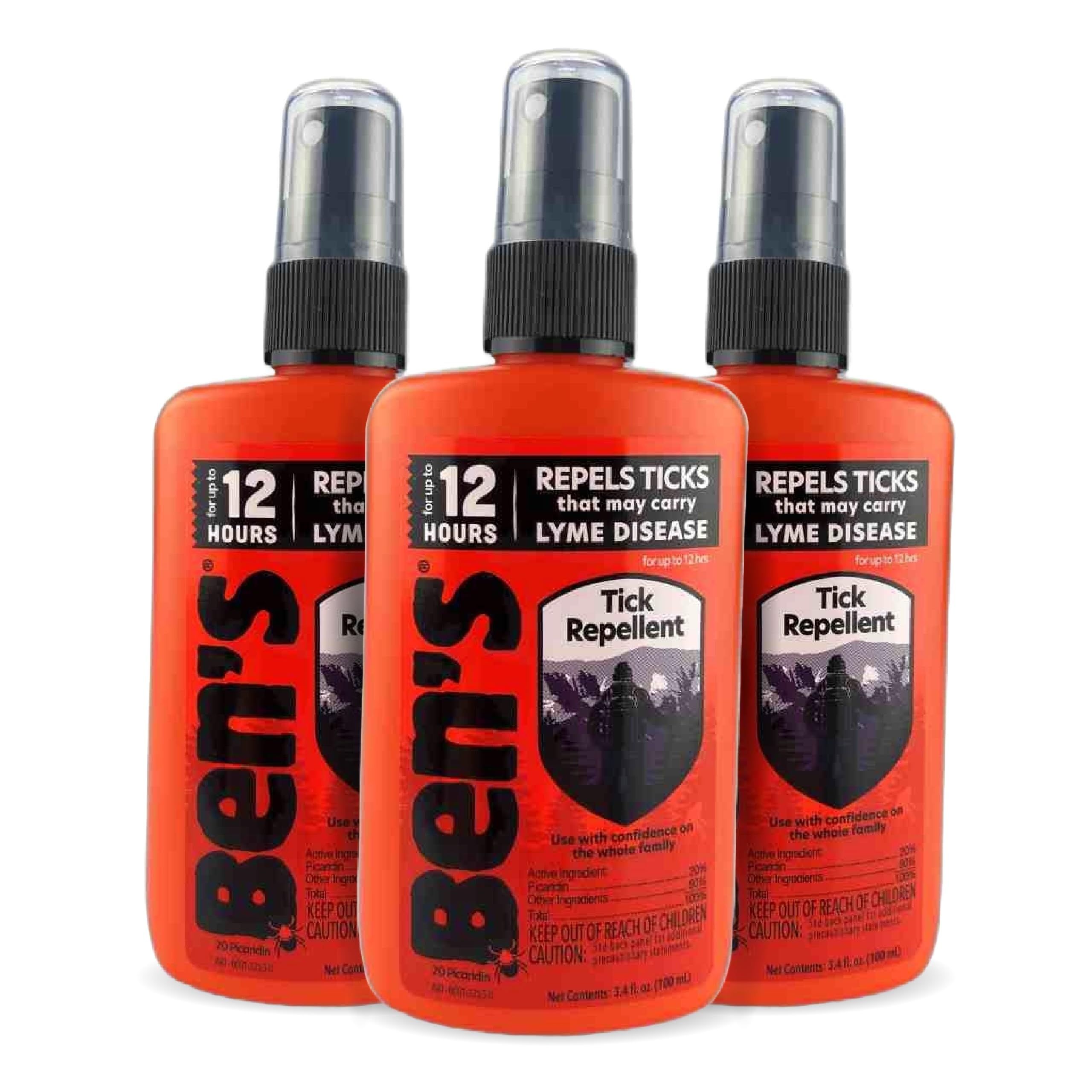
This is the single most versatile repellent for a backpacker who wants one product that works on both skin and gear. The 20% Picaridin concentration matches the CDC’s recommended level for effective tick and mosquito deterrence without the plastic-melting side effects of high-concentration DEET. Tests from New Hampshire’s White Mountains back up the 12-hour claim — a full day of hiking with no reapplication needed.
The 3.4 fl oz pump bottle is TSA-compliant and fits into a hip-belt pocket without adding noticeable weight. Unlike aerosols, the pump delivers a targeted stream that doesn’t drift in a breeze, which matters when you’re applying on a windy ridgeline. Users report that it performs better than DEET for tick prevention, especially in regions with Lyme disease prevalence.
One downside: the bottle runs out faster than expected if you’re covering both arms, legs, and the back of your neck. For a week-long trip, you’ll want the 3-pack to avoid rationing. But for a three-day weekend, one bottle is perfect.
Why it’s great
- Full 12-hour protection per application reduces pack weight from extra bottles
- Safe for use on synthetic hiking pants and rain jackets without damage
Good to know
- Small bottle size may require a multi-pack for extended trips
- Pump spray can drip if not held at the right angle
2. Sawyer Products Permethrin

This is the benchmark for pre-trip clothing treatment. A single application bonds to fabric fibers and survives up to 6 weeks or 6 wash cycles, which means one treatment before a month-long expedition covers your entire kit. The formula is fragrance-free and won’t stain technical fabrics, nylon tents, or waterproof zippers.
The 24-ounce aerosol can treats roughly four full outfits (shirt, pants, socks) — enough for a group of four or one person’s entire week-long wardrobe. A University of Rhode Island study found that treating shoes and socks with permethrin reduces tick bite likelihood by 73.6 times, making this the single most effective preventive measure you can take. Pair it with a skin-applied picaridin repellent for full-body protection.
Application must be done outdoors to avoid inhaling the mist, and the spray has a noticeable chemical odor that fades as it dries. You cannot apply this directly to skin — it’s exclusively for gear. But for the weight-conscious backpacker, treating your clothes at home means you carry zero liquid repellent on the trail.
Why it’s great
- Lasts through 6 washes, making it ideal for multi-week trips
- 73.6x reduction in tick bites when applied to footwear
Good to know
- Must be applied to clothing only, never to bare skin
- Degrades with UV exposure; treat clothes before you head out
3. Ben’s 30% DEET Wipes

For backpackers who hate carrying liquid bottles that might leak in their pack, these individually wrapped wipes are a game-changer. Each wipe delivers a measured dose of 30% DEET — enough to cover both arms and legs — and the water-based formula leaves no greasy residue. The 4-pack provides 48 wipes, covering a two-week trip with daily reapplication.
The wipe format eliminates the risk of spray drift or inhaling aerosol particles, which is especially valuable if you’re applying in camp near cooking areas. Users in high-pressure mosquito zones like the Houston swamp report zero bites after application, and the alcohol-free formula doesn’t sting on sunburned shoulders.
DEET at 30% provides roughly 7 hours of protection, which means you’ll need to reapply after a full day of hiking or if you’re sweating heavily. The wipes are slightly damp, not soaking wet, so they don’t drip or leave your hands sticky. They’re TSA-compatible and fit into a pocket or hip-belt pouch without bulk.
Why it’s great
- Individually wrapped wipes prevent leaking and save pack space
- Non-greasy, alcohol-free formula feels mild on sensitive skin
Good to know
- DEET can degrade synthetic zipper coatings and waterproof membranes
- Requires reapplication after 7 hours in heavy insect pressure
4. Grandpa Gus’s Natural Tick & Mosquito Spray
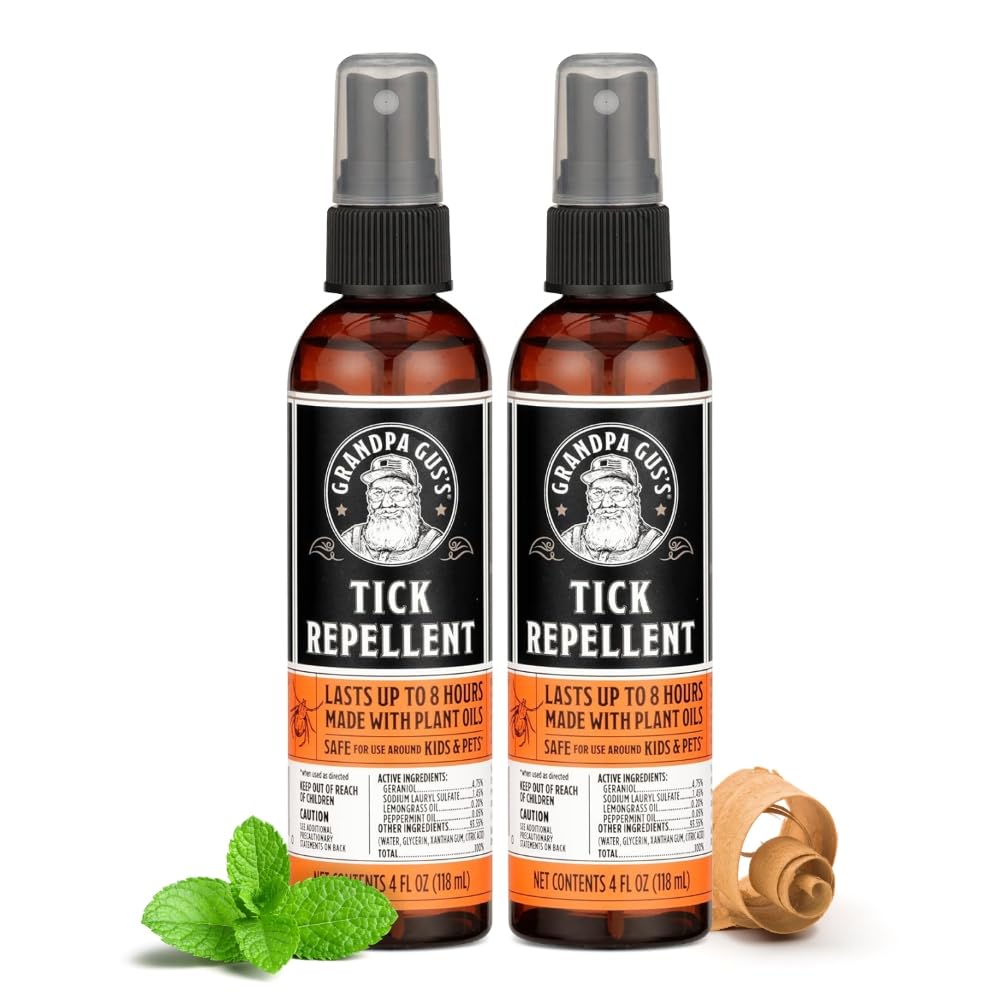
This is the best option for backpackers who want to avoid synthetic actives without sacrificing protection against ticks. The formula uses geraniol, lemongrass, and peppermint oils to repel ticks for up to 8 hours and mosquitoes for up to 6 hours. It’s dermatologist-tested and non-irritating, making it a solid pick for families with children.
The spray has a pleasant herbal scent that fades quickly after application, and it won’t stain nylon or polyester fabrics. Users in heavily wooded areas report zero ticks when applying generously to both exposed skin and pant legs, with some claiming it outperforms DEET-based products for tick prevention specifically.
The biggest limitation is duration — the 6-hour mosquito window means you’ll need to reapply mid-afternoon on a long hike. The 4 oz bottles are small enough to carry two for a week-long trip, but you’ll go through them faster than a synthetic alternative. Also, some users find the mosquito protection less reliable than the tick protection, so consider pairing it with a picaridin spray for high-pressure mosquito zones.
Why it’s great
- Plant-based formula is safe for kids when applied by an adult
- Pleasant scent without the harsh chemical odor of DEET
Good to know
- Mosquito protection may not match synthetic repellents in high-pressure areas
- Requires more frequent reapplication than Picaridin or DEET
5. Martin’s Permethrin 13.3% Concentrate
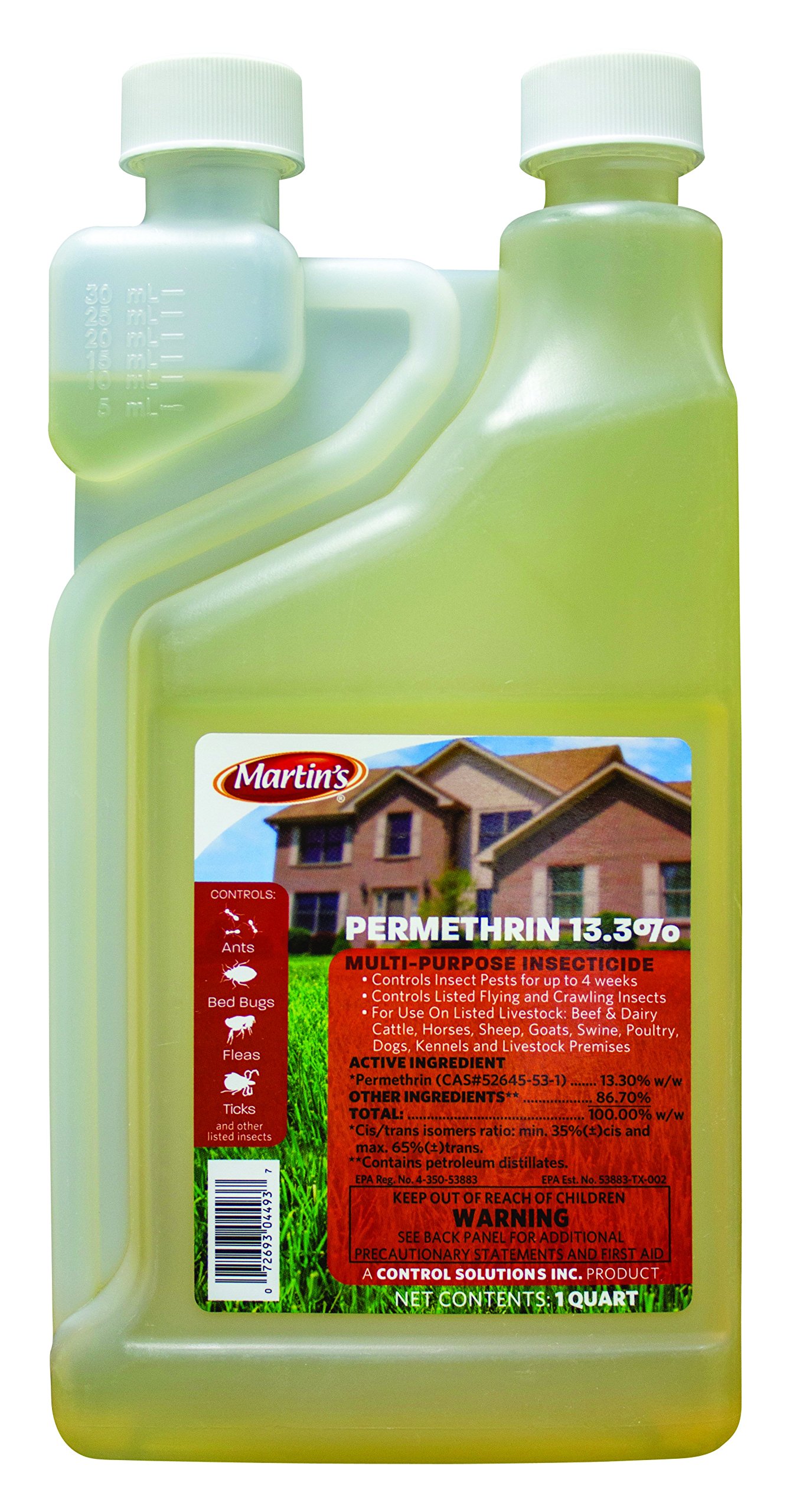
This concentrate is for the serious backpacker who wants to treat an entire season’s worth of gear in one afternoon. At 13.3% permethrin, it’s significantly stronger than the Sawyer aerosol, so you mix 4 ounces of concentrate with water to make a gallon of ready-to-use solution. That single gallon treats 800 to 1,000 square feet of fabric — enough to treat a closet full of shirts, pants, socks, and a tent floor.
The primary advantage here is cost efficiency and control. You can dial in your concentration for specific applications: a 3-ounce-per-gallon mix for clothing delivers a powerful barrier that users say allows walking through brush with an “invisible tick shield.” It also works as a perimeter spray around camp for tick control lasting 4 to 6 weeks.
The downsides are real: the concentrate has a strong chemical smell (one user compared it to paint thinner) and requires careful handling with gloves and a dedicated spray bottle. You must mix and apply outdoors, and it’s not suitable for direct skin contact. But if you’re treating gear for a group or planning multiple trips per season, this is the most economical and effective route.
Why it’s great
- One 32 oz bottle makes 8 gallons of ready-to-use solution
- Allows custom concentration for clothing vs. camp perimeter treatment
Good to know
- Strong chemical odor requires outdoor mixing and application
- Not pre-diluted; requires measuring and a dedicated spray bottle
FAQ
Can I apply permethrin directly to my skin?
How often should I reapply Picaridin on a backpacking trip?
Will DEET damage my backpacking gear?
Final Thoughts: The Verdict
For most backpackers, the best bug repellent for backpacking winner is the Ben’s Tick Repellent 20% Picaridin because it delivers 12-hour protection on both skin and gear without damaging synthetic fabrics. If you want zero liquid weight on the trail, Sawyer Permethrin lets you pre-treat your entire kit at home for weeks of protection. And for the ultralight packer who needs compact reapplication, nothing beats the Ben’s 30% DEET Wipes for packability and leak-free convenience.

Mo Maruf
I created WellFizz to bridge the gap between vague wellness advice and actionable solutions. My mission is simple: to decode the research and give you practical tools you can actually use.
Beyond the data, I am a passionate traveler. I believe that stepping away from the screen to explore new environments is essential for mental clarity and physical vitality.