Our readers keep the lights on and my smoothie glass nicely filled. As an Amazon Associate, I earn from qualifying purchases.
When aphids suck the life from your tomato leaves and powdery mildew coats your roses, reaching for a chemical bomb feels like the only move. But the best first move is an oil-based formula that smothers pests on contact while keeping your harvest safe to eat. The right spray targets insects, mites, and fungal spores without dragging harsh toxins into your garden.
I’m Mohammad Maruf — the founder and writer behind WellFizz. I’ve analyzed the specs, active ingredients, and real-world test results on dozens of plant sprays to find the ones that actually work without harming your soil or your family.
Whether you are fighting spider mites on houseplants or black spot on heirloom roses, this guide ranks the top contenders for the title of best bug killer for plants using measurable metrics like neem oil concentration, coverage area, and formula safety.
How To Choose The Best Bug Killer For Plants
Picking the wrong spray wastes money and can damage your plants. Focus on these three factors to narrow your options.
Active Ingredient Type
Mineral oil and neem oil are the heavy hitters. Mineral oil smothers pests and fungal spores by coating them, making it ideal for dormant-season use on fruit trees. Neem oil disrupts insect hormones and feeding cycles while also treating powdery mildew — a true dual-purpose ingredient for year-round prevention.
Concentration and Form
Ready-to-use (RTU) sprays are pre-diluted and convenient for small gardens, but you pay for water. Concentrated formulas require mixing but let you dial in strength for tough infestations — a 2% neem RTU handles active outbreaks better than a 0.5% solution. Check the label for percentage of active ingredient.
Plant Safety Window
Oil sprays can burn foliage if applied in direct sun or high heat. Look for products that specify safe temperature ranges and allow day-of-harvest application on edibles. Avoid sulfur-based fungicides if you plan to use oil sprays — the combination can damage leaves.
Quick Comparison
On smaller screens, swipe sideways to see the full table.
| Model | Category | Best For | Key Spec | Amazon |
|---|---|---|---|---|
| Harris Neem Oil Spray | Premium RTU | Large gardens with trees & vegetables | 128 oz, 2% neem oil | Amazon |
| Monterey Neem Oil RTU | Premium RTU | Edible gardens and fungus control | 32 oz, multi-purpose neem | Amazon |
| Garden Safe Fungicide3 | Mid-Range RTU | Large-volume organic gardening | 128 oz, neem oil extract | Amazon |
| Mighty Mint Peppermint Spray | Mid-Range Repellent | Indoor pest prevention near pets | 16 oz, plant-based oil | Amazon |
| Bonide All Seasons Oil | Budget Concentrate | Year-round tree and shrub care | 32 oz, mineral oil concentrate | Amazon |
In‑Depth Reviews
1. Harris Neem Oil Spray for Plants, 128 oz
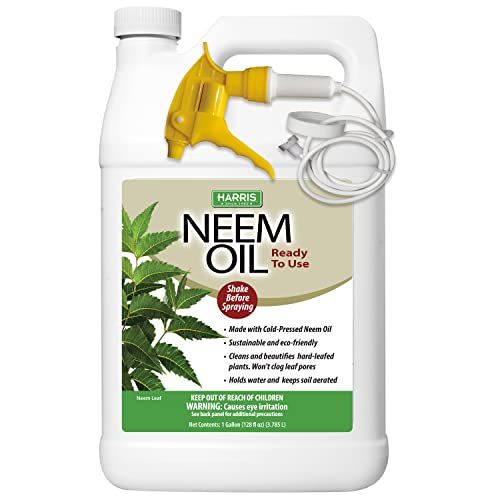
Harris delivers the largest ready-to-use volume on this list — a full gallon of 2% cold-pressed neem oil that covers up to 52 trees or a sizable vegetable patch. The concentration hits the sweet spot for both prevention and active treatment, smothering aphids, whiteflies, and spider mites without requiring mixing. Users report spraying monthly from January through October saw great results against whitefly pressure.
The formula includes an eco-friendly emulsifier that helps the oil coat leaf surfaces evenly, and it leaves a natural shine on foliage that aids photosynthesis. Many growers note that the sprayer included with the jug is unreliable, but the value per ounce remains unbeatable for serious gardeners who already own a pump sprayer. Apply in the evening to avoid leaf burn during hot weather.
Harris is the top pick for anyone managing a mid-to-large garden who wants a single bottle that handles the entire growing season. The cold-pressed neem oil retains more of its natural azadirachtin compounds compared to heat-extracted alternatives, which translates to better pest disruption.
Why it’s great
- 128 oz covers large gardens without mixing
- 2% cold-pressed neem is effective against aphids and whiteflies
- Leaves no residual taste on edible produce
Good to know
- Included sprayer tip is prone to failure
- Overuse can cause leaf droop — rinse with water if needed
- Heavy container at 9 pounds
2. Monterey Neem Oil RTU, 32 oz
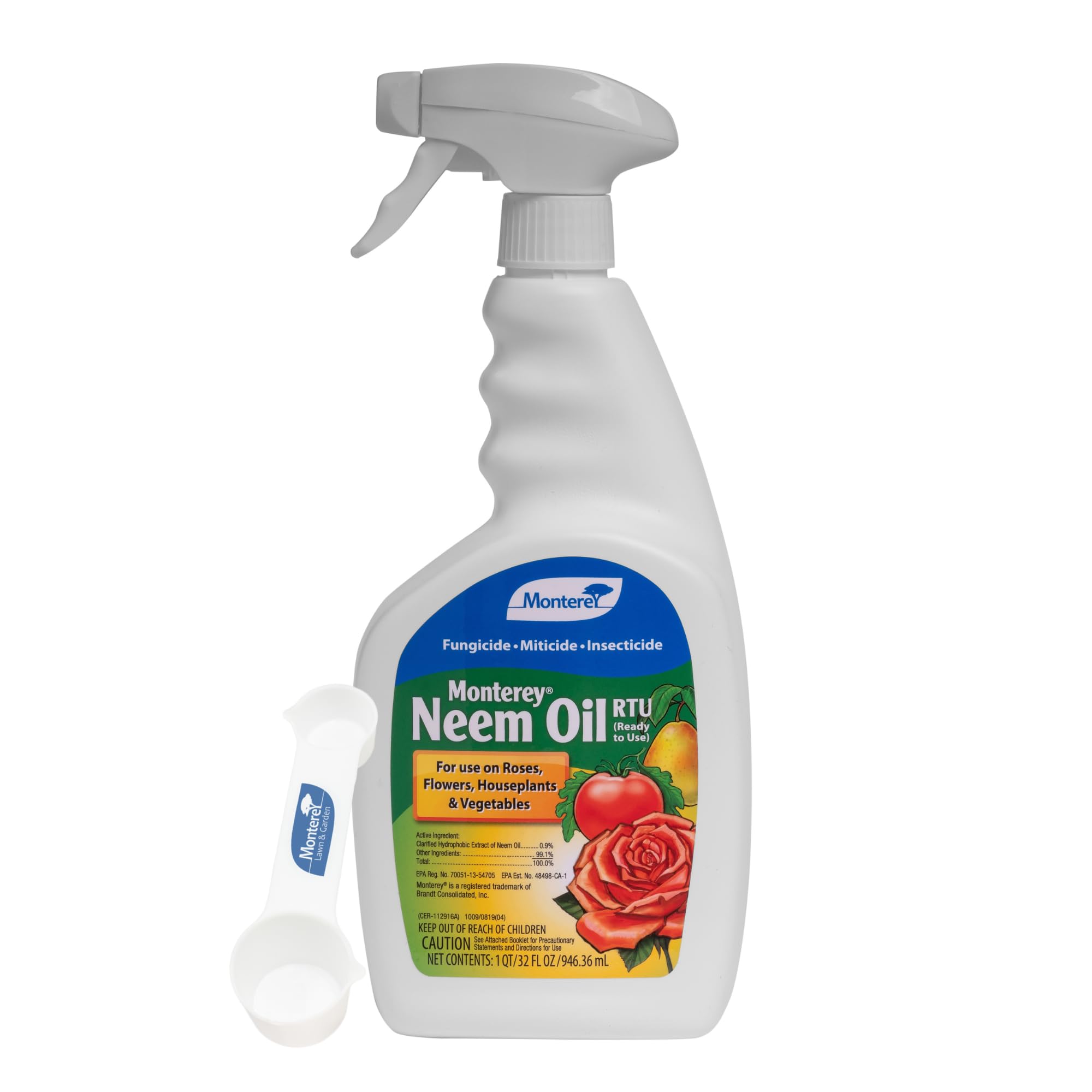
Monterey’s ready-to-use neem oil doubles as a fungicide, insecticide, and miticide in one bottle, making it an efficient tool for edible gardens. It controls black spot, powdery mildew, aphids, whiteflies, and even disrupts the fungus gnat life cycle by sterilizing adults. The formula is safe to apply up to the day of harvest on fruits, vegetables, and herbs — a key advantage for kitchen gardeners who want protection without waiting periods.
The strong neem odor is a common complaint, but users note the smell dissipates once the spray dries. Some reviews mention that the sprayer quality could be better, though the included garden measure spoon adds value. It works well against caterpillars and powdery mildew on tomatoes, and it is effective in small container gardens where mixing concentrates is impractical.
While it is pricier per ounce than bulk options, the 32 oz size is ideal for targeted applications on roses, ornamentals, and container vegetables. Monterey is also about half the cost of comparable Dyna-Gro products while delivering equivalent results.
Why it’s great
- Safe to spray on edibles up to harvest day
- Controls both insects and fungal diseases
- Includes a measure spoon for precise use
Good to know
- Strong neem odor that lingers until dry
- Ineffective against heavy spider mite infestations
- Bottle has leaked in transit for some buyers
3. Garden Safe Fungicide3, 1 Gallon
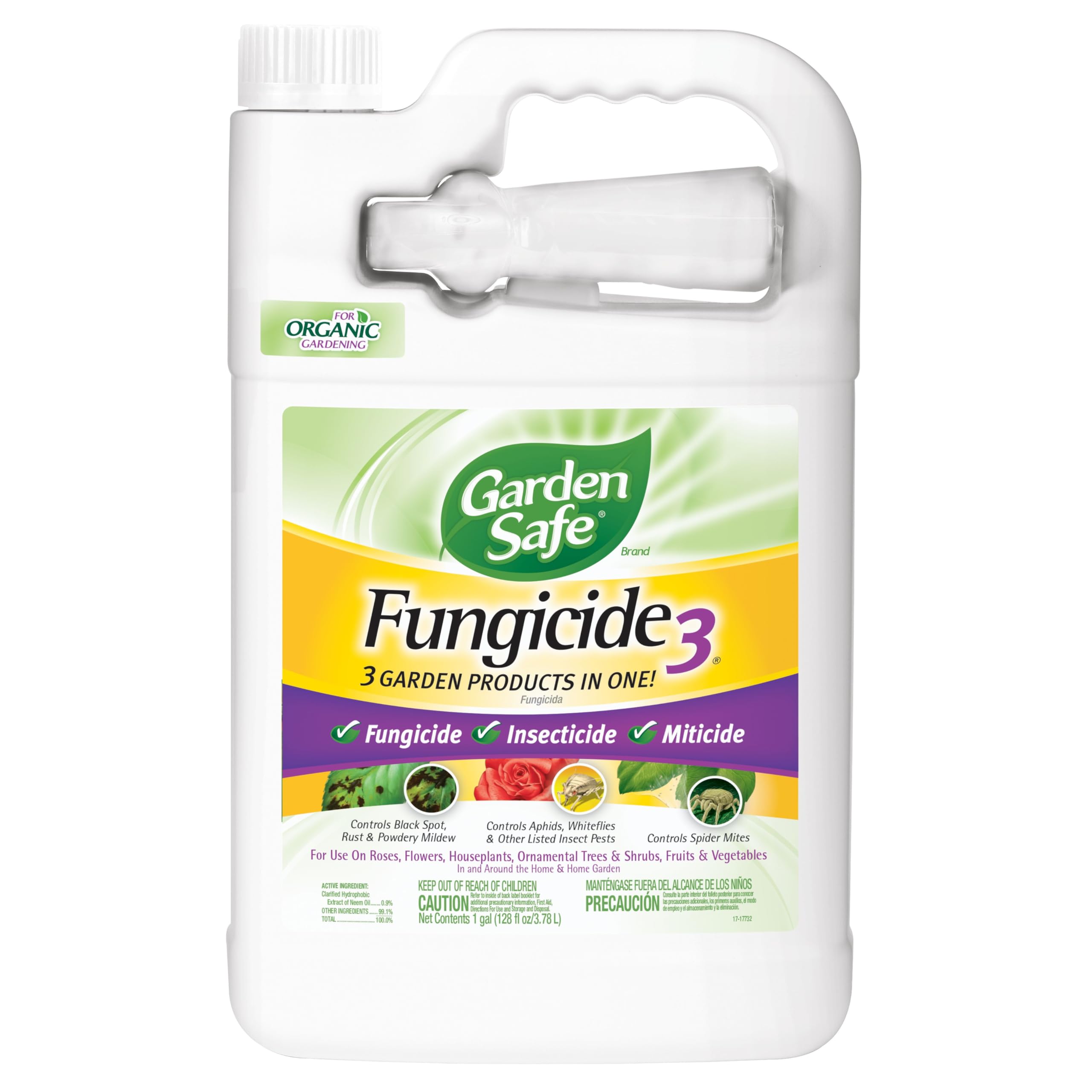
Garden Safe packs a full gallon of neem oil extract that functions as a fungicide, insecticide, and miticide, making it a cost-effective choice for large beds and vegetable gardens. The formula contains clarified hydrophobic neem oil, which kills eggs, larvae, and adult stages of listed pests while preventing fungal attack on plant tissues. Users report great results on orchids, roses, tomatoes, and blueberries — with weekly applications curing powdery mildew and boosting foliage growth.
The integrated sprayer is convenient but frustrating: the coiled hose only extends about four inches, forcing you to hold the heavy gallon jug close to your plants. Many experienced gardeners recommend decanting into a separate pump sprayer for better reach and control. The product is organic-friendly and registered with the EPA for use on edibles.
Some users found the formula potent enough to burn leaves at the recommended dose — cutting the concentration in half during hot weather prevents damage. Despite the sprayer flaw, the value per gallon makes it a favorite for budget-conscious growers who need volume.
Why it’s great
- Gallon size covers extensive garden areas
- Kills eggs, larvae, and adult pests
- Effective against mildew on a wide range of plants
Good to know
- Attached sprayer has poor reach and design
- Can burn foliage if used at full strength in sun
- Strong neem odor during application
4. Mighty Mint Peppermint Oil Insect Repellent, 16 oz

Mighty Mint takes a different approach — it is a repellent rather than a contact killer, using extra-concentrated peppermint oil to deter spiders, ants, roaches, flies, and other pests. The formula is safe around dogs, cats, and children, making it a top choice for indoor plant parents who want non-toxic protection. Users report dramatic drops in earwig populations and effective roach deterrence around electronics and baseboards.
The 16 oz bottle is ready-to-use and designed for spot treatments in kitchens, patios, and living spaces. The mint scent is potent for about 20 to 30 minutes after spraying, then fades to a mild freshness that most households find pleasant. It does not stain surfaces and is free from synthetic fragrances.
This spray works best as a maintenance tool or repellent barrier, not as a cure for established infestations. Some users found it ineffective against ants and noted that spiders returned quickly after the scent faded. It performs best against flies, gnats, moths, and mosquitoes when applied weekly.
Why it’s great
- Safe for households with pets and children
- Pleasant mint scent after initial strong odor fades
- Effective against roaches, earwigs, and flying insects
Good to know
- Repellent only — does not kill existing infestations
- Strong peppermint odor for first 30 minutes
- Less effective on ants and spiders long-term
5. Bonide All Seasons Horticultural & Dormant Spray Oil, 32 oz

Bonide All Seasons Oil is a concentrated mineral oil spray that works year-round — from dormant winter applications on fruit trees to growing-season use on vegetables and ornamentals. It smothers adelgids, aphids, scale insects, mites, mealybugs, and certain moth species, while also controlling powdery mildew, rust, and greasy spot. The active ingredient leaves no toxic residues and is approved for organic gardening.
The 32 oz bottle makes a large amount of ready-to-use spray when diluted, but the included hose-end sprayer is the weak link. Multiple users report it is poorly calibrated, wasteful, and messy — a standard pump sprayer works much better and uses less product. When applied correctly, many pests disappear overnight, including black cherry aphids and lace bugs.
Bonide is best suited for gardeners who already own spray equipment and want a concentrated, versatile oil for trees, shrubs, and edibles. The mineral oil is less viscous than neem, making it easier to spread evenly over large surfaces. It is the most budget-friendly option per application despite the upfront concentrate price.
Why it’s great
- Concentrate formula covers more area per dollar
- Safe for use on edibles and around pets
- Effective at dormant and growing-season stages
Good to know
- Hose-end sprayer is inaccurate and wastes product
- Requires thorough pre-soaking for large plants
- Mineral oil needs careful temperature timing to avoid burn
FAQ
Can I spray bug killer on my vegetable garden the same day I harvest?
Why did my plant leaves get burned after using neem oil?
Does peppermint oil spray actually kill bugs or just repel them?
How often should I spray neem oil on my plants?
Final Thoughts: The Verdict
For most users, the best bug killer for plants winner is the Harris Neem Oil Spray because its 2% cold-pressed neem concentration and gallon-size value handle everything from aphids to mildew on large properties. If you want day-of-harvest safety on edibles, grab the Monterey Neem Oil RTU. And for budget-friendly indoor prevention near pets, nothing beats the Mighty Mint Peppermint Spray.

Mo Maruf
I created WellFizz to bridge the gap between vague wellness advice and actionable solutions. My mission is simple: to decode the research and give you practical tools you can actually use.
Beyond the data, I am a passionate traveler. I believe that stepping away from the screen to explore new environments is essential for mental clarity and physical vitality.