Our readers keep the lights on and my smoothie glass nicely filled. As an Amazon Associate, I earn from qualifying purchases.
A lawn that looks healthy from the street can hide a war underground. Grubs chew through roots, ants raise volcanoes of dirt, and mole tunnels turn your turf into a minefield. The wrong bug killer wastes a season and leaves you re-applying every few weeks. The right granular insecticide works for months—or even years—without constant maintenance.
I’m Mohammad Maruf — the founder and writer behind WellFizz. I’ve spent hundreds of hours analyzing active-ingredient concentrations, coverage rates, and residual durations across lawn insecticides to separate what actually works from what just sounds good on the label.
After combing through feedback on seven leading formulations, I’ve narrowed down the best bug killer for lawns based on real-world control of ants, grubs, ticks, and surface-feeding insects across different yard sizes and pest pressures.
How To Choose The Best Bug Killer For Lawns
Granular insecticides are not all the same. The active ingredient, the granule carrier, and the residual duration determine whether you apply once per season or once per month. Understanding these three factors will prevent you from buying a product that fails against your specific pest.
Active Ingredient: Bifenthrin vs. Imidacloprid vs. Bacillus Popilliae
Bifenthrin is a pyrethroid that kills a broad spectrum of surface insects—ants, ticks, fleas, armyworms—on contact. It works fast and remains active for up to three months on the grass blade and thatch layer. Imidacloprid is a systemic neonicotinoid that targets root-feeding grubs specifically; it moves into the soil and is taken up by the turf root system, poisoning the grub as it feeds. Bacillus Popilliae (Milky Spore) is a biological bacterium that infects Japanese beetle grubs and multiplies in the soil over years—it is slow to establish but offers long-term control without re-application.
Coverage Area and Bag Weight
A 15-pound bag at the wrong spreader setting covers 5,000 square feet; the same weight product designed for professional turf may cover 20,000 square feet. Always check the label’s coverage rate per pound, not just the bag size. Over-applying wastes money and can harm soil biology. Under-applying leaves pest refuges that reinfest within two weeks.
Residual Duration and Rain Resistance
Short-residual products (two to three weeks) require monthly re-application during peak pest season. Medium-residual products (four to eight weeks) fit a two-application schedule in spring and fall. Long-residual products like Talstar PL claim two to four months, and Milky Spore delivers multi-year control after establishment. Granules with sand-core carriers resist wash-off better than clay-based granules in heavy rain.
Quick Comparison
On smaller screens, swipe sideways to see the full table.
| Model | Category | Best For | Key Spec | Amazon |
|---|---|---|---|---|
| Ortho BugClear | Granule | Broad control above & below ground | 20,000 sq. ft. per bag | Amazon |
| Bayer Merit 0.5 G | Systemic Granule | Grub elimination and mole prevention | Imidacloprid 0.5%—30 lb bag | Amazon |
| Talstar PL Granules | Granule | Longest residual—2 to 4 months | Sand-core bifenthrin—no watering needed | Amazon |
| Bifen Granules | Economical Granule | Professional-grade broad control | Bifenthrin 0.2%—25 lb bag | Amazon |
| Sevin Lawn Insect Granules | Granule | Budget pick for ants and ticks | 20 lb bag—kills 30+ listed pests | Amazon |
| Ortho Bug B Gon RTU | Hose-End Spray | Immediate contact control of 235 insects | 32 fl oz—treats 5,300 sq. ft. | Amazon |
| St. Gabriel Milky Spore | Biological Granule | Organic grub control—up to 15 years | Bacillus Popilliae—15 lb bag | Amazon |
In‑Depth Reviews
1. Ortho BugClear Lawn Insect Killer, 20 lb
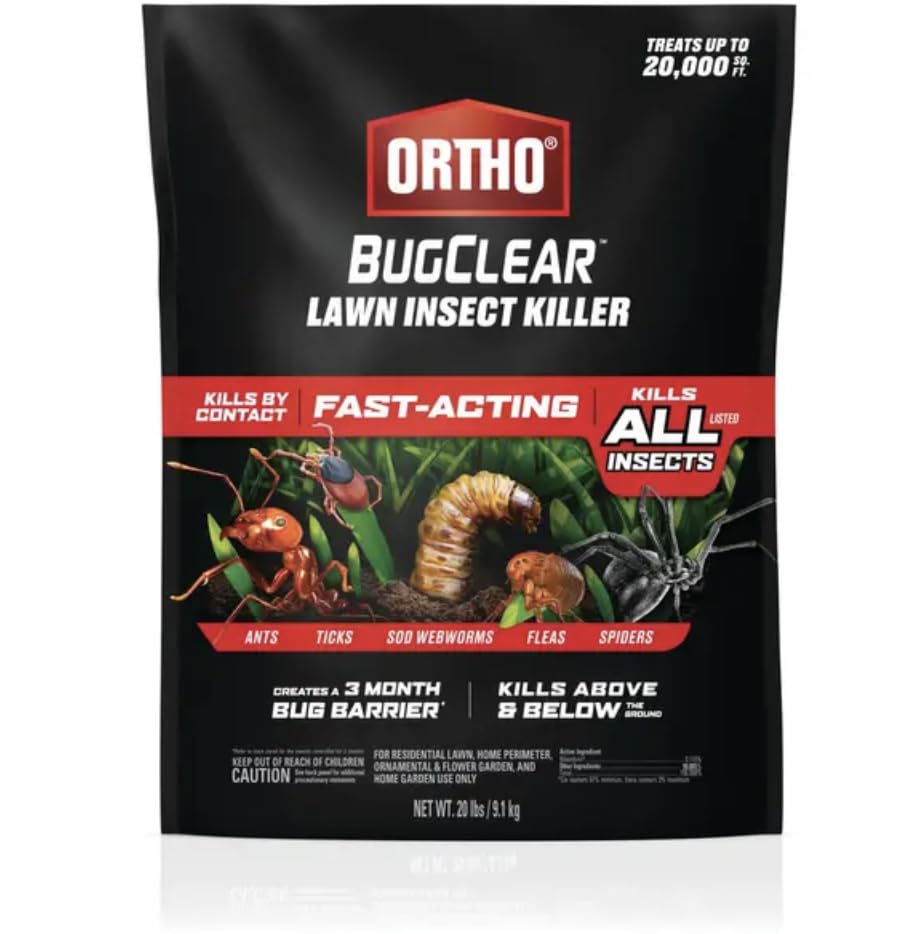
Ortho BugClear strikes the best balance between coverage area and speed. The granular formulation kills both above-ground insects like ants and spiders and below-ground pests like sod webworms and armyworms on contact. One 20-pound bag covers up to 20,000 square feet, making it a strong match for quarter-acre lawns that need a single-pass treatment. The label specifies use with a Scotts drop or rotary spreader, which simplifies application for homeowners who already own that hardware.
Real-world users report seeing results within 24 hours—gnats and mosquitoes disappear the day after application, and users battling crane flies noticed a significant drop within the same timeframe. The barrier effect keeps crawling insects from migrating indoors, which is especially useful for perimeter treatments around foundations and flower beds. The product is unscented and designed to be watered in after spreading to activate the active ingredient.
One recurring note from long-term users in high-pest regions like Florida: the product has kept lawns bug-free for several consecutive years when applied twice annually (early spring and late fall). A few reviewers mention that fleas returned after the two-month mark in heavy pressure zones, suggesting that extreme infestations may require a supplementary spray between granular applications.
Why it’s great
- Covers 20,000 sq. ft.—enough for most standard lawns in a single bag
- Kills above and below the ground simultaneously
- Fast-acting; visible pest reduction within 24 hours
Good to know
- Granules can clump in high humidity if the bag is not resealed tightly
- Some users report reduced effectiveness on fleas after two months
2. Bayer Merit 0.5 Granular Systemic Insect Control, 30 lb

Bayer Merit 0.5 G is the professional-standard systemic grub control that lawn care operators have trusted for years. The active ingredient, imidacloprid at 0.5 percent concentration, is absorbed by turf roots and moves through the plant tissue—grubs eating the roots ingest a lethal dose that stops feeding almost immediately. The 30-pound bag is the heaviest in this roundup, designed for larger properties or multi-season use.
The systemic nature means Merit works best when applied before grub damage becomes visible. Users who applied it in early spring and again in late summer report completely eliminating the grub population that attracts moles and skunks. Several reviewers specifically noted that their mole tunnels disappeared after a single season because the grubs—the moles’ primary food source—were gone. The granules are fine enough to pass through most broadcast spreaders without clogging when set to the recommended opening.
The major trade-off is cost—this is the most expensive product per pound in the lineup. The EPA-registered label also limits total application to 80 pounds per acre per year, which means you cannot double-apply for faster knockdown. For homeowners managing a typical suburban lot, one application per season is sufficient for grub control, but surface insects like ants and ticks require a separate contact insecticide.
Why it’s great
- Systemic absorption provides long-lasting protection through the root zone
- Highly effective against white grubs and surface-feeding larvae
- Eliminates the mole food chain—stops digging damage indirectly
Good to know
- Must be applied before grubs are established for best results
- Does not kill ants, ticks, or adult surface insects on contact
3. Talstar PL Granules Insecticide
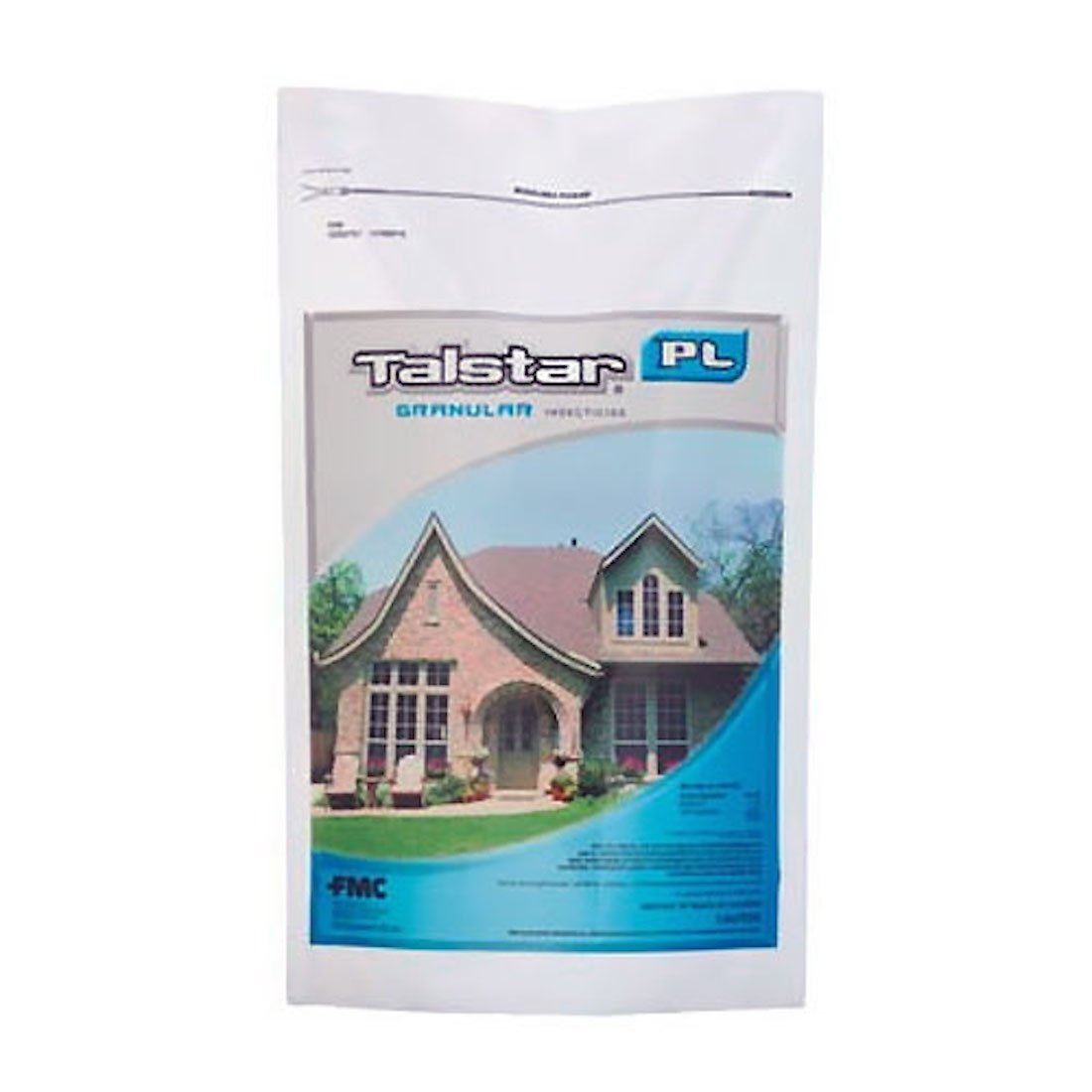
Talstar PL uses a sand-core granule structure that resists wash-off and provides the longest residual of any granular product currently on the market—two to four months depending on rainfall, grass height, and pest pressure. The bifenthrin active ingredient at 0.2 percent concentration kills ants, fleas, ticks, and crickets on contact. Because the sand granules fall through thick grass and mulch to reach the soil surface, no watering-in is required, which saves time and prevents runoff.
Users with persistent ant problems have reported complete elimination within two weeks after broadcasting Talstar. One long-term reviewer noted that after 20 years of battling ants inside the house, a single application of granules plus liquid Talstar around the foundation kept the home ant-free for two months for the first time. The product also kills black widows and earwigs, and the manufacturer claims it is safe for beneficial spiders that prey on pest species.
The trade-off is that Talstar PL is not effective against grubs or below-ground larvae. Its strength is in surface contact control, so it works best as a perimeter defense and broadcast treatment for lawns that primarily suffer from ants, fleas, and ticks. The bag size (25 pounds) treats roughly 10,000 to 15,000 square feet, and the sand texture can feel coarser than clay-based granules in the spreader hopper.
Why it’s great
- Longest residual of any granule—up to 4 months per application
- Sand-core resists rain wash-off and requires no watering in
- Kills a wide spectrum of surface insects including black widows
Good to know
- Does not target grubs or soil-dwelling larvae
- Coarse sand texture may require a spreader setting adjustment
4. Bifen Granules, 25 lb

Bifen Granules deliver the same bifenthrin chemistry used by professional turf managers at a lower cost per pound than most retail brands. The 0.2 percent concentration is identical to Talstar PL, but Bifen uses a different carrier that some users find easier to spread through a standard rotary spreader. The label covers lawns, turf farms, golf courses, parks, and sports fields—applications that require reliable broad-spectrum control without frequent re-spraying.
Users who have used Bifen for years report that ant piles never form on treated lawns when the product is applied every six months. The sand-like granules have no detectable odor, and they hold up well in rain once watered in. Several reviewers mention using a hand-held seeder to spot-treat fire ant mounds, with quick knockdown of the mound within 48 hours. The residual is roughly three weeks on dry grass in summer conditions, which means monthly application may be needed in high-heat zones.
The primary difference from Talstar PL is residual duration—Bifen lasts about three weeks versus Talstar’s eight to sixteen weeks. For users who prefer a lighter upfront cost and are willing to apply monthly, Bifen is the more economical choice. One reviewer noted that the product is highly effective for ant control but required re-application after every heavy rain event, which is consistent with its shorter residual profile.
Why it’s great
- Professional-grade bifenthrin at a lower price per pound
- Stops ant mounds and fire ants quickly
- Odorless and easy to spread with most seeders
Good to know
- Residual lasts approximately three weeks—needs monthly re-application
- May wash off faster in heavy rain than sand-core granules
5. Sevin Lawn Insect Granules, 20 lb

Sevin Lawn Insect Granules have been a household name for decades, and the 20-pound bag remains one of the most accessible entry-level lawn insecticides on the market. The active ingredient is carbaryl, a broad-spectrum carbamate that kills over 30 listed pests including ants, ticks, fleas, and armyworms. The label allows use on lawns, ornamentals, vegetable gardens, and around the home perimeter, making it a versatile option for novice users who want a single product for multiple areas.
Real-world feedback is split. Enthusiastic users describe spreading the granules annually around trees to stop ant infestations that were killing the trees, with visible results within a week. Others report that the product did not work at all on their specific pest population. This inconsistency is typical of carbaryl—it has a shorter soil half-life than bifenthrin or imidacloprid and degrades faster in hot, sunny conditions. Users who apply generously and re-water the granules into the soil see better results than those who rely on surface contact alone.
The 20-pound bag treats approximately 5,000 square feet at the label rate, which is roughly half the coverage of Ortho BugClear despite a similar bag weight. The smaller coverage area combined with shorter residual means Sevin is best suited for targeted spot treatments rather than whole-lawn broadcast, unless you are willing to buy multiple bags per season.
Why it’s great
- Very affordable entry price for new lawn owners
- Kills a broad range of surface and soil insects
- Can be used on vegetable gardens and ornamentals
Good to know
- Shorter residual than bifenthrin or systemic products
- Coverage is about half of comparable bags—5,000 sq. ft.
6. Ortho Bug B Gon Insect Killer, 32 fl. oz.
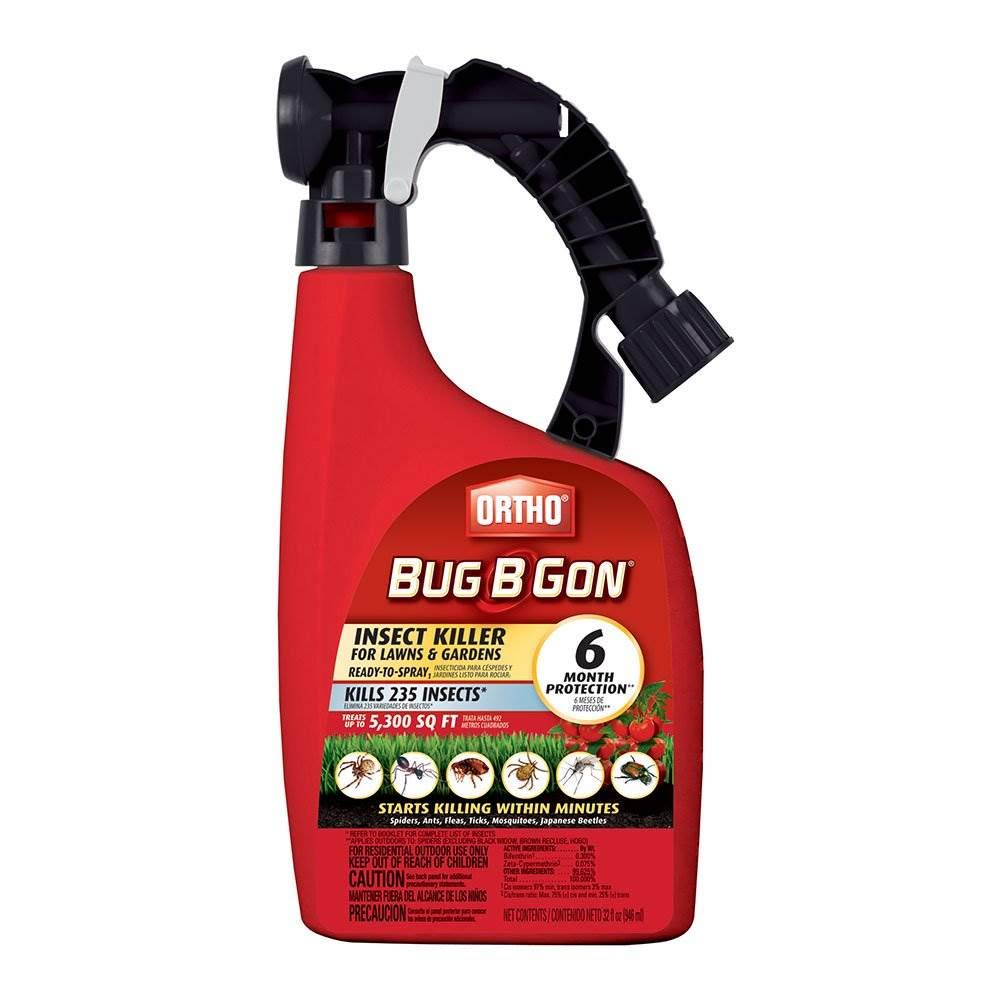
The Ortho Bug B Gon Ready-to-Spray is not a granular product, but its hose-end application makes it a fast alternative for homeowners who need immediate knockdown of visible insects without spreading and watering in granules. The concentrated liquid treats up to 5,300 square feet per 32-ounce bottle when attached to a standard garden hose, and the label claims protection for up to six months against spiders (excluding black widow, brown recluse, and hobo species).
Users consistently confirm that mosquitoes vanish the same day after spraying bushes and lawn edges. One Southern California reviewer reported that the product eliminated mosquitoes and flies immediately after spraying the entire backyard. The formula also kills Japanese beetles, fleas, and ticks on contact, which makes it a strong supplement to granular treatments that may not reach the leaf canopy of shrubs and flower beds.
The major downside is bee and aquatic toxicity. Multiple reviewers caution that the spray is highly toxic to bees, butterflies, fish, frogs, and praying mantises. If you have blooming flowers, a pollinator garden, or a koi pond, you must avoid spraying those areas. The residual also fades faster on exposed grass blades than granules embedded in the soil, so re-application every four to six weeks is typical during peak mosquito season.
Why it’s great
- Immediate visual knockdown of mosquitoes and flying insects
- Hose-end attachment is fast and requires no mixing
- Treats up to 5,300 sq. ft. per bottle
Good to know
- Highly toxic to bees and aquatic life—avoid blooms and water
- Residual is shorter than granules on exposed grass
7. St. Gabriel Organics Milky Spore, 15 lb

St. Gabriel Organics Milky Spore is a completely different approach from chemical insecticides. It uses Bacillus Popilliae, a naturally occurring bacterium that infects and kills Japanese beetle grubs as they feed in the soil. Once established, the bacteria self-replicate in the soil environment and can remain effective for up to 15 years without re-application. The product is USDA-certified organic and non-toxic to pets, beneficial insects, birds, and humans.
The biggest challenge with Milky Spore is patience. It takes one to three years of consistent application—typically three times per year for two years—for the spore population to build to an effective threshold. Users who followed the protocol report dramatic reductions in Japanese beetles and the grubs that attract moles. One reviewer noted that after two years, they found only five grubs in over 1,000 square feet of dug soil. Another reported that moles completely left the treated areas after the grub population collapsed.
Milky Spore only works on Japanese beetle grubs and closely related scarab species. It will not kill ants, ticks, fleas, armyworms, or any surface-feeding insect. The granular form must be applied when soil temperatures are above 60°F for the bacteria to remain viable, and the spores need moisture to move into the soil. Users in cooler climates may need to wait until late spring for the first application of the season.
Why it’s great
- One application can provide grub control for up to 15 years
- Completely organic and non-toxic to pets, bees, and people
- Self-replicates in soil—becomes more effective over time
Good to know
- Requires 1–3 years of consistent application for full effect
- Only targets Japanese beetle grubs—not general insect control
FAQ
Can I use grub control and broad-spectrum bug killer at the same time?
How do I know if my lawn has grubs vs. surface insect damage?
Will bug killer granules also get rid of ticks and mosquitoes?
Final Thoughts: The Verdict
For most users, the best bug killer for lawns winner is the Ortho BugClear Lawn Insect Killer because it combines fast knockdown, both above-ground and below-ground action, and the largest coverage area per bag at a reasonable cost. If you want systemic grub control that eliminates mole diggers long-term, grab the Bayer Merit 0.5 G. And for an organic, multi-year solution to Japanese beetles that respects pollinators, nothing beats the St. Gabriel Milky Spore.

Mo Maruf
I created WellFizz to bridge the gap between vague wellness advice and actionable solutions. My mission is simple: to decode the research and give you practical tools you can actually use.
Beyond the data, I am a passionate traveler. I believe that stepping away from the screen to explore new environments is essential for mental clarity and physical vitality.