Our readers keep the lights on and my smoothie glass nicely filled. As an Amazon Associate, I earn from qualifying purchases.
The difference between a muddy, distant voice and a crisp, professional-sounding broadcast often comes down to a single desk appliance: your microphone. For streamers, podcasters, and remote workers on a tight budget, navigating the sea of cheap USB microphones means separating genuine value from flashy specs that don’t translate to cleaner audio.
I’m Mohammad Maruf — the founder and writer behind WellFizz. I’ve spent countless hours analyzing frequency response charts, polar pattern data, and real-world noise rejection reports to build this guide for budget-conscious creators who refuse to compromise on voice clarity.
Whether you’re starting a podcast, leveling up your Twitch stream, or just want to sound better on Zoom without a complex setup, finding the right budget usb microphone means focusing on polar pattern isolation, bit-depth resolution, and build integrity over gimmicks.
How To Choose The Best Budget USB Microphone
Buying a cheap microphone doesn’t mean you have to accept poor audio. The key is knowing which specs matter most for your specific use case, whether that’s eliminating room echo for gaming or capturing vocal nuance for podcasting.
Polar Pattern and Noise Rejection
Cardioid and supercardioid patterns are your friends in untreated rooms. These patterns reject sound from the sides and rear, meaning your keyboard clicks, mouse slams, and fan hum stay out of the final recording. Some dynamic microphones take this further by offering better room noise suppression than condensers, though they require more gain to achieve sufficient volume.
Sample Rate and Bit Depth
While 44.1kHz/16-bit is standard for podcasts, 96kHz/24-bit capture provides more headroom for dynamic voices and lets you clean up audio during editing without introducing noticeable noise. A 24-bit mic is especially helpful for streamers who shout one moment and whisper the next—you can adjust levels in post without that gravelly distortion.
Build Quality and Mounting Flexibility
A metal chassis and built-in shock absorber reduce handling noise and accidental thumps that destroy a take. Look for standard threading (3/8″ or 5/8″) so you can upgrade to a boom arm later. A foldable tripod stand is fine for starters, but desk vibrations often travel through it, making a boom arm a worthwhile long-term add-on.
Quick Comparison
On smaller screens, swipe sideways to see the full table.
| Model | Category | Best For | Key Spec | Amazon |
|---|---|---|---|---|
| HyperX SoloCast 2 | Premium Condenser | Gaming & Streaming | 24-bit / 96kHz recording | Amazon |
| Razer Seiren V2 X | Premium Condenser | Streaming & Clear Voice Chat | 25mm condenser capsule | Amazon |
| Behringer Bigfoot | Mid-Range Condenser | Versatile Recording Modes | 4 selectable polar patterns | Amazon |
| MAONO PD100U | Mid-Range Dynamic | Reducing Room Noise | Dynamic capsule, 60Hz-14kHz | Amazon |
| Razer Seiren V3 Mini | Mid-Range Condenser | Compact Desk Setup | Supercardioid, tap-to-mute | Amazon |
| ZealSound Podcast Mic | Budget Condenser | All-in-One Beginner Kit | 96kHz sampling, RGB lighting | Amazon |
| FIFINE K669W | Entry-Level Condenser | Plug-and-Play Basics | Cardioid, 20-20kHz range | Amazon |
In‑Depth Reviews
1. HyperX SoloCast 2
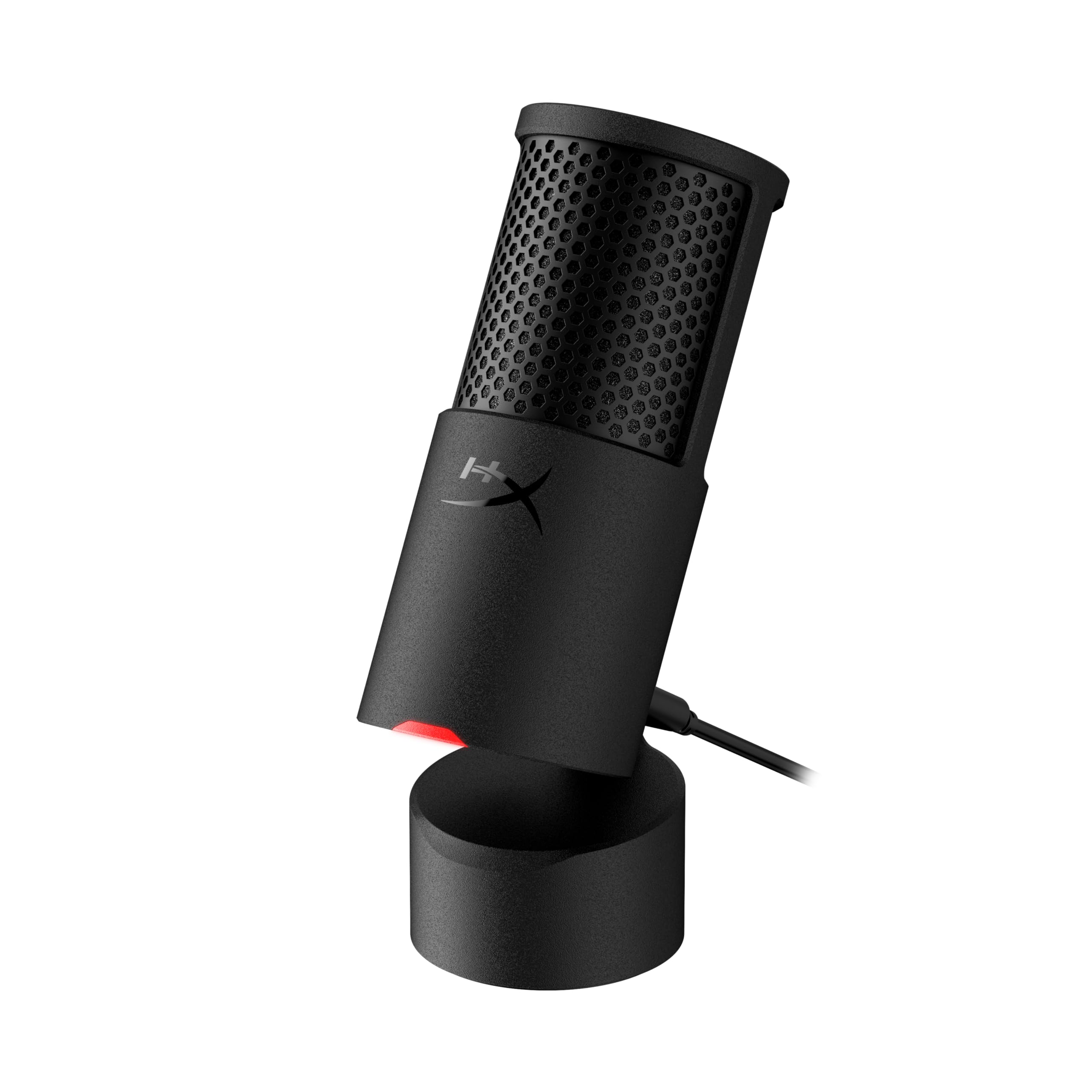
The HyperX SoloCast 2 delivers a premium audio foundation with its 24-bit / 96kHz recording capability, giving content creators enough headroom to edit without introducing audible noise. The built-in suspension system acts as an internal shock mount, effectively dampening desk vibrations that plague other desktop microphones. Its cardioid polar pattern focuses on front-facing voice capture while rejecting keyboard and mouse sounds from the sides.
Tap-to-mute with a clear red LED indicator provides instant status feedback during live streams or meetings, and the customizable audio filters via HyperX NGENUITY software let you apply high-pass, low-pass, or voice enhancement profiles directly to the microphone. The tiltable stand includes both 3/8″ and 5/8″ threads for easy boom arm mounting, making it adaptable for any desk layout.
While the absence of an onboard gain control limits real-time level adjustment without going into system settings, and the USB-C port placement on the lower back can be finicky with cable movement, the SoloCast 2’s studio-quality recording and internal shock isolation make it the most polished all-rounder for serious budget-conscious creators.
Why it’s great
- Internal shock mount eliminates desk vibration noise
- 24-bit/96kHz recording for professional-level audio editing
- Customizable audio filters via NGENUITY software
Good to know
- No onboard gain control knob
- USB-C port can disconnect with cable tension
2. Razer Seiren V2 X

The Razer Seiren V2 X packs a 25mm condenser capsule and a supercardioid pickup pattern that aggressively suppresses side and rear noise, making it a strong contender for streamers in shared or noisy rooms. Its integrated digital limiter automatically prevents audio clipping during sudden shout peaks, a lifesaver for high-energy gaming moments. The built-in shock absorber further dampens bumps and stand vibrations that would otherwise ruin a take.
Front-mounted gain control and mute buttons give you tactile, real-time audio management without fumbling through software menus. Microphone monitoring via the headphone jack ensures you hear exactly what your audience hears, allowing subtle positioning adjustments on the fly. Its USB-C connectivity and robust cable provide a reliable connection to PC or Mac with zero driver installation needed.
The all-plastic body feels lighter than its metal competitors, and the desk stand is a bit short for taller users, making a boom arm a necessary upgrade for optimal mouth positioning. Despite these physical compromises, the V2 X’s audio intelligence—especially the limiter and supercardioid rejection—justifies the premium price for dedicated streamers.
Why it’s great
- Digital limiter prevents audio clipping during loud peaks
- Supercardioid pattern effectively blocks side noise
- Easy-access gain and mute controls on the mic body
Good to know
- Plastic construction feels less durable than metal alternatives
- Desk stand is short; a boom arm is recommended
3. Behringer Bigfoot

The Behringer Bigfoot stands out in this price range by offering four selectable polar patterns—cardioid, stereo, omnidirectional, and bidirectional—giving you the flexibility to record interviews, room ambience, or solo vocals with a single microphone. Its multi-capsule condenser design produces a clean signal with a low noise floor, performing particularly well for spoken word in untreated rooms when set to cardioid mode.
Plug-and-play simplicity means you can connect directly to your PC or Mac via USB and start recording immediately without external drivers. The built-in headphone jack enables zero-latency monitoring, letting you hear your voice in real-time to adjust projection and distance. The sturdy metal construction with a heavy base keeps the microphone planted firmly on a desk, and the universal thread mount accommodates most boom arms.
User reports note that the omnidirectional mode is less effective at rejecting noise, and achieving optimal audio in a DAW may require installing an ASIO driver like ASIO4ALL for low-latency performance. The Bigfoot’s shape also makes it incompatible with some standard windscreens. For the price, the pattern versatility and clean preamps make it an excellent choice for podcasters who record multiple scenarios.
Why it’s great
- Four selectable patterns cover recording interviews, music, and ambience
- Sturdy metal build with universal mounting thread
- Zero-latency monitoring via headphone jack
Good to know
- Omnidirectional mode picks up significant room noise
- ASIO driver recommended for DAW low-latency use
4. MAONO PD100U

The MAONO PD100U is a USB dynamic microphone, a rarity in the budget bracket, offering built-in voice-isolating technology that excels at suppressing room echo and ambient hum. Its 192kHz/24-bit internal sound chip captures a flat frequency response from 60Hz to 14kHz, delivering a warm, mid-forward tone that flatters deep male vocals and reduces sibilance. The dual-layer physical noise reduction (woven nets and anti-spray sponge) further cuts breath pops and airflow noise at the source.
A convenient gain knob on the body lets you tweak sensitivity on the fly, turning it down to eliminate background chatter or up to capture softer speech. The sturdy metal construction with a detachable 2.36-inch height adapter and non-slip rubber feet ensures stable positioning, and the 180-degree adjustable mount helps find the perfect recording angle. Its USB-C connectivity and plug-and-play operation require no drivers for Windows, Mac, iOS, or Android devices.
The dynamic capsule inherently requires more gain than a condenser, meaning you’ll often need to max the gain knob and potentially boost levels in your recording software. Some users report handling noise and a need for a separate pop filter for the best results. Despite needing extra gain, the PD100U’s room noise rejection is unmatched at this price, making it ideal for creators recording in less-than-perfect spaces.
Why it’s great
- Dynamic capsule suppresses room echo better than condensers
- Onboard gain knob for quick sensitivity adjustment
- Durable all-metal body with anti-slip base
Good to know
- Requires high gain; may need software amplification
- Handling noise can transfer through the stand
5. Razer Seiren V3 Mini

The Razer Seiren V3 Mini brings a supercardioid pickup pattern to a remarkably small footprint, making it the best space-saving option for cramped desk setups. Its tap-to-mute sensor with an LED status indicator is one of the most satisfying implementations in this class—one tap instantly silences the mic, and the bright red glow confirms you’re muted. The custom condenser capsule delivers impressive sensitivity for its size, capturing vocal detail cleanly while rejecting keyboard and mouse clicks from the sides.
The built-in shock absorber in the tiltable stand dampens accidental desk knocks, and the detachable design allows for easy boom arm mounting. Plug-and-play setup via USB-C means you’re recording within seconds on PC or Mac, and the mic integrates seamlessly with Discord, OBS Studio, and XSplit without additional drivers. Razer Synapse software unlocks customizable sample rates and separate volume mixes for monitoring and broadcast.
Background noise dampening is less effective than larger condenser options, and the lack of an onboard volume or gain control means adjustments must be made through software. The mute sensor can occasionally be over-sensitive, registering a tap from a light brush. For streamers who prioritize desk space and a clean aesthetic, the V3 Mini’s supercardioid focus and touch mute make it a compelling ultra-compact choice.
Why it’s great
- Ultra-compact size fits even the smallest desks
- Tap-to-mute sensor with clear LED indicator
- Supercardioid pattern reduces side and rear noise
Good to know
- No onboard volume or gain control
- Background noise dampening less effective than larger mics
6. ZealSound Podcast Microphone

The ZealSound Podcast Microphone delivers an all-in-one starter bundle purpose-built for gamers and first-time streamers. It includes a scissor boom arm, foldable tripod stand, shock mount, detachable pop filter, and both Lightning and USB-C adapters for mobile device compatibility. The cardioid pickup combined with a built-in noise reduction chip produces a cleaner signal than bare-bones mics, effectively filtering out low-level background hum. Its 96kHz sampling rate captures enough detail for clear voice chat and basic podcasting.
Zero-latency monitoring through the 3.5mm headphone jack lets you hear your voice in real-time to adjust distance and projection. The one-touch mute button triggers a red RGB indicator that’s visible on camera, preventing hot-mic moments during streams. The bottom-mounted gear-textured gain knob avoids accidental bumps that plague side-mounted controls. RGB lighting with multiple solid colors and dynamic effects adds visual flair to your stream setup, with a long-press to turn it off for professional calls.
Build quality leans more toward ABS plastic than all-metal, and the boom arm clamp fits only desks up to 1.8 inches thick. Some users note that the noise reduction chip introduces slight compression artifacts at very high gain settings. For the price, the included accessories and multi-device adapters make it the best value bundle for a complete starter setup.
Why it’s great
- Comprehensive kit includes boom arm, tripod, pop filter, and adapters
- Zero-latency monitoring for real-time voice control
- RGB lighting with mute indicator visible on camera
Good to know
- Plastic build feels less premium than all-metal alternatives
- Noise reduction may compress audio at high gain
7. FIFINE K669W

The FIFINE K669W is the definition of an entry-level condenser mic that simply works. Its true plug-and-play design—recognized instantly by Windows 11, Mac, and even PS4 without driver installation—removes all technical barriers for first-time users. The cardioid polar pattern effectively isolates your voice while reducing background noise from typing and fan hum, delivering clear audio that surpasses any built-in laptop mic. The frequency range of 20Hz to 20kHz covers the full vocal spectrum for spoken word applications.
An onboard volume knob gives you direct control over input level, eliminating the need to dig into system settings mid-session. The sturdy metal construction with a weighted tripod stand prevents accidental tipping and adds vibration resistance during recording. Its sleek white design is a refreshing departure from the all-black standard, and the compact footprint fits easily into any desk layout. Users consistently report reliable performance even after years of daily use, with no paint chipping or connection degradation.
Mic placement is critical—speaking too close introduces plosive pops, and the provided stand lacks height adjustment for optimal positioning. There is no mute button or headphone jack for monitoring, which can be limiting for live streaming or interviews. For pure, no-frills vocal capture at the lowest possible entry point, the K669W delivers the most reliable baseline audio quality in the budget segment.
Why it’s great
- True plug-and-play works immediately on Windows, Mac, and PS4
- Cardioid pattern provides clean voice isolation for the price
- Sturdy metal build and volume knob for direct control
Good to know
- No mute button or headphone monitoring jack
- Placement-critical; requires practice to avoid plosive pops
FAQ
Does a dynamic USB microphone need phantom power?
Can I use a budget USB microphone for professional podcasting?
Why does my budget USB microphone pick up so much background noise?
Final Thoughts: The Verdict
For most users, the budget usb microphone winner is the HyperX SoloCast 2 because it combines 24-bit/96kHz recording with a built-in shock mount and internal vibration rejection that competitors at this price simply don’t offer. If you want aggressive noise isolation for recording in a noisy room, grab the MAONO PD100U and its dynamic capsule design. And for the best all-in-one starter kit with boom arm and mobile compatibility, nothing beats the ZealSound Podcast Microphone.

Mo Maruf
I created WellFizz to bridge the gap between vague wellness advice and actionable solutions. My mission is simple: to decode the research and give you practical tools you can actually use.
Beyond the data, I am a passionate traveler. I believe that stepping away from the screen to explore new environments is essential for mental clarity and physical vitality.