Our readers keep the lights on and my smoothie glass nicely filled. As an Amazon Associate, I earn from qualifying purchases.
Nothing ruins a camping trip faster than waking up in a puddle. A budget tent doesn’t have to mean a wet sleeping bag, but the sub- market is a minefield of flimsy poles, unsealed seams, and rainflies that flap uselessly in the first gust of wind. The difference between a dry, comfortable shelter and a waterproof disaster comes down to three things: fabric coating, seam sealing, and pole geometry.
I’m Mohammad Maruf — the founder and writer behind WellFizz. I’ve spent years analyzing outdoor gear specs, comparing build quality across dozens of entry-level tents, and filtering through thousands of user reports to separate the genuinely durable from the disposable.
Whether you’re car camping with the family or hiking into a backcountry site, finding a shelter that balances weight, weather protection, and cost is the real challenge. This is the definitive guide to the best budget tent options that deliver real value without leaving you exposed.
How To Choose The Best Budget Tent
The biggest mistake new campers make is buying based on capacity alone. A 4-person tent sounds great until you realize you cannot fit two standard sleeping pads side by side. On a budget, every spec tradeoff matters. Here is what to look for.
Waterproofing: Look Past the “Waterproof” Label
At this price point, almost every tent uses polyester or nylon with a polyurethane (PU) coating. The real measure is the hydrostatic head rating, measured in millimeters. A 2000mm coating handles moderate rain. Ratings below 1500mm are risky in a downpour. Also check whether the floor seams are taped — taped seams prevent water from seeping through needle holes. Untaped seams are the number one leak source on cheap tents.
Pole Construction: Fiberglass vs. Steel
Budget tents almost always use fiberglass poles. Fiberglass is heavy and can splinter under stress, but it is cheap. Steel poles are heavier still but far more durable. If you camp in windy areas, look for tents with more pole intersections — a taller dome or cabin shape resists wind better than a shallow dome.
Floor Fabric and Ventilation
Floor fabric weight is listed in grams per square meter (GSM) or by denier (D). 120 GSM or 210D is the minimum for durability on rocky ground. Below that, you will need a separate footprint. Ventilation is equally critical — a tent that traps condensation will leave you damp even in dry weather. Look for mesh panels on the upper walls and at least one vent on the rainfly.
Quick Comparison
On smaller screens, swipe sideways to see the full table.
| Model | Category | Best For | Key Spec | Amazon |
|---|---|---|---|---|
| Coleman Sundome | Dome | Family car camping | WeatherTec welded floor | Amazon |
| Night Cat 2-Person | Backpacking | Lightweight solo or duo trips | PU 3000mm rainfly | Amazon |
| Clostnature 4-Person | Dome | Compact family camping | PU 2000mm coated seams | Amazon |
| UNP Cabin 4-Person | Cabin | Standing room car camping | 72-inch center height | Amazon |
| AYAMAYA 3-Person | Dome | Entry-level backpacking | 210D waterproof fabric | Amazon |
| Amazon Basics 2-Person | Dome | Budget weekend camping | Welded polyester seams | Amazon |
| XL 4-Person Dome | Dome | Spacious fair-weather camping | PU 2000mm coating | Amazon |
In‑Depth Reviews
1. Coleman Sundome Camping Tent with Rainfly

The Coleman Sundome is the closest thing to a safe bet in the budget tent world. Its WeatherTec system includes welded corners and inverted seams that stop water from creeping in at the weakest points. The continuous pole sleeves make setup intuitive — you can have the frame standing without stakes in under five minutes, which is a huge advantage when the weather turns quickly.
The floor is a sturdy tarp-like Polyguard material that holds up against gravel and roots better than most tents in this price tier. Ventilation is handled by large mesh wall panels and a ground-level vent, which keeps condensation manageable even when the rainfly is fully deployed. The rainfly itself is basic but effective — it keeps the tent dry as long as you stake it out properly.
Capacity-wise, the Sundome runs a full person smaller than labeled. The 4-person version comfortably fits two adults on air mattresses plus gear. At over 10 pounds, it is strictly a car camping tent. The stakes are flimsy and the included carry bag is tight, but those are the only real compromises at this price point.
Why it’s great
- Welded floor corners prevent seam leaks better than taped seams alone
- Freestanding dome design stays upright without staking
- Large mesh panels provide excellent airflow
Good to know
- Weighs over 10 pounds — not for backpacking
- Included stakes are low quality and should be upgraded
- Repacking into the original bag can be difficult
2. Night Cat Upgraded Backpacking Tent 1-2 Person

The Night Cat stands out for its dual-pole rainfly design, which creates 20 percent more headroom than a standard single-pole backpacking tent. This is a meaningful difference when you are changing clothes or waiting out a storm inside. The clip attachment system speeds up setup significantly compared to sleeve-style tents — you can have the body hanging from the poles in two minutes.
The hydrostatic head rating of 3000mm on the fly is well above the entry-level standard and explains why owner reports are overwhelmingly positive about rain performance. The 210T taffeta polyester body is lightweight but feels substantial, and every seam comes from the factory with waterproof tape. The tub floor uses a 210D Oxford fabric with another 3000mm coating for solid ground protection.
At this price, the space is tight. The 2-person version is genuinely comfortable for one adult with gear. Two adults will be cozy. The included stakes are standard wire types that bend easily in hard soil. A thoughtful touch is the zippered cord port for running a charging cable into the tent without leaving the fly open.
Why it’s great
- High 3000mm hydrostatic head rating on both fly and floor
- Dual-pole rainfly adds noticeable headroom
- Clip setup is faster than sleeve-style assembly
Good to know
- Fits one adult comfortably, two is very tight
- Stakes are low gauge and prone to bending
- Rainfly coverage leaves some mesh exposed
3. Clostnature Camping Tent 4-Person

The Clostnature 4-person tent punches above its weight with dual-layer fabric corners reinforced with a second layer of waterproofing. This is a spot where cheaper tents fail first — the corners of the floor sit on the ground and soak up moisture from puddled water. Factory-sealed seams run across the entire structure, not just the floor perimeter.
The setup is genuinely fast. Exterior rod clips let you attach the poles without threading through sleeves, and the cross-pole dome structure self-erects once you stake the corners. The N-shaped double-layer door gives you options — mesh-only for warm nights or fully closed for cold weather. The mesh top panel breathes well, which keeps condensation low even with two people inside.
Size-wise, this is a true 4-person tent if the people are children or small adults. Two full-size adults will find it comfortable with room for duffels. Users above 6 feet will brush the sloping walls. The storage sack is compact at 16 inches long, making it a reasonable fit inside a larger backpack for short carries.
Why it’s great
- Reinforced dual-layer waterproof corners resist ground moisture
- Exterior pole clips enable fast single-person setup
- Mesh top and double-layer door control condensation well
Good to know
- Too short for campers over 6 feet tall
- Fits two adults plus gear, not four full-size adults
- Stakes and guylines are entry-level quality
4. UNP 4-Person Cabin Tent

The UNP cabin tent trades pack weight for vertical space in a way that car campers will appreciate. The 72-inch center height means a person of average height can stand up straight inside. The near-vertical walls eliminate the sloped-edge wasted space you get with a dome, making the 8-by-7-foot footprint feel genuinely roomy.
The structure is built around four steel leg poles and a rectangular roof frame. Steel poles add significant weight — this tent weighs 13 pounds — but they also provide real wind resistance. Reports from users who weathered severe thunderstorms and 50-mile-per-hour winds without structural failure confirm the stability. The top rainfly covers the roof and upper walls but leaves some mesh area exposed on the sides.
Setup is straightforward for two people, though one person can manage in about five minutes. The floor fabric is thick enough to handle gravel sites without a separate footprint. The lack of interior storage pockets is a noticeable oversight at this price. The zipper flaps are also a common friction point — they catch in the track and require careful handling.
Why it’s great
- Full standing height at 72 inches eliminates stooping
- Steel pole frame delivers excellent wind stability
- Straight walls maximize usable floor space
Good to know
- Weighs 13 pounds — strictly car camping
- No interior pockets or lantern hook included
- Zipper flaps tend to catch and need care
5. AYAMAYA 2-3 Person Tent
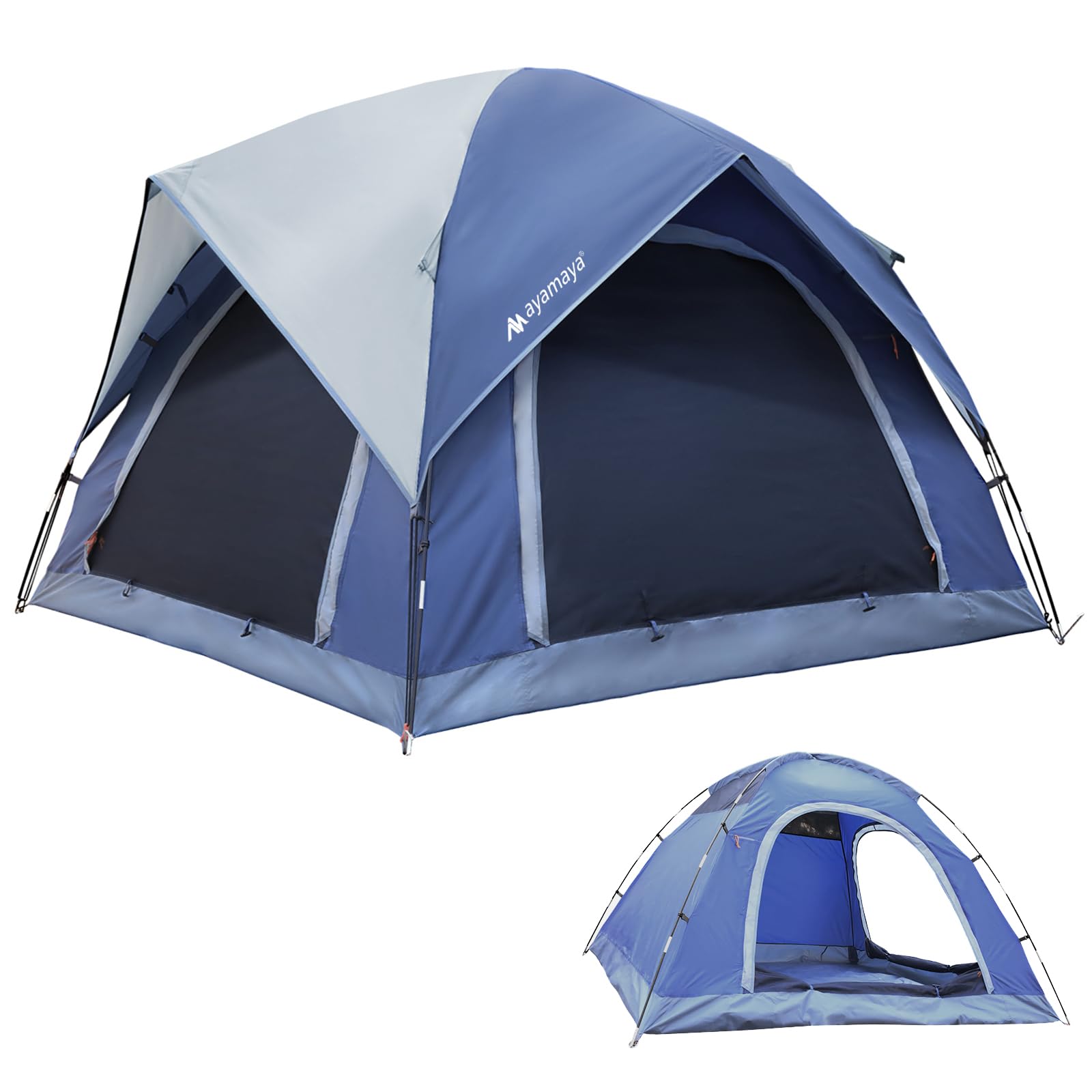
The AYAMAYA tent uses a single-pole dome design that makes setup remarkably quick — one person can have it standing in under five minutes. The 210D waterproof fabric is a step up from the 190T polyester used on many budget domes, offering better tear resistance and a higher hydrostatic head. The floor is a generous 86.6 inches square, which gives three sleeping pads room to fit without overlapping.
The double-door design improves on the single-door layout common at this price, giving each occupant their own exit and improving cross-ventilation. The top mesh panel is large enough for stargazing and helps hot air escape on warm nights. The removable rainfly covers the roof and extends partway down the walls, but does not create a vestibule for gear storage.
The listed weight is 8 pounds, but user reports consistently place the actual weight closer to 5.7 pounds without stakes and bag. That is competitive for a 3-person dome. The main compromises are the lack of a footprint, a single mesh pocket, and rainfly attachment points that use fabric ties instead of Velcro. These are minor conveniences at this price level.
Why it’s great
- Generous 86.6-inch square floor fits three sleepers
- Dual doors improve ventilation and access
- Single-pole design enables fast setup
Good to know
- Rainfly uses fabric ties instead of durable Velcro
- No footprint included for ground protection
- Only one interior mesh pocket provided
6. Amazon Basics Camping Tent 2-Person

The Amazon Basics 2-person tent is built for simplicity. The shock-corded fiberglass poles slide through snag-free sleeves, and the dome structure pops into shape without any tricky alignment. Setup time is genuinely under four minutes, which is faster than most tents in any price bracket. The welded polyester seams eliminate the needle holes that cause leaks on stitched-only tents.
The 7-by-5-foot footprint with a 45-inch center height makes it a true 2-person tent for average-sized adults. Users report fitting two full-size air mattresses inside the larger 4-person version, a testament to the efficient rectangular layout. The removable rainfly includes a back window and a cool-air port, which helps manage condensation better than a solid fly.
The tradeoffs are clear at this price. There is no vestibule, so wet gear either comes inside or stays outside. The single door means one person has to crawl over the other to exit. The polyester fabric is water-resistant rather than fully waterproof — adequate for light showers but not extended rain. This is a weekend-warrior tent, not a backcountry investment.
Why it’s great
- Ultra-fast setup under 4 minutes with snag-free sleeves
- Welded seams prevent water ingress through stitch holes
- Rainfly includes a cool-air port for improved airflow
Good to know
- No vestibule means wet gear has no covered storage
- Single door is disruptive for the inside sleeper
- Pole bungee durability is average at best
7. XL 4/6 Person Camping Tent
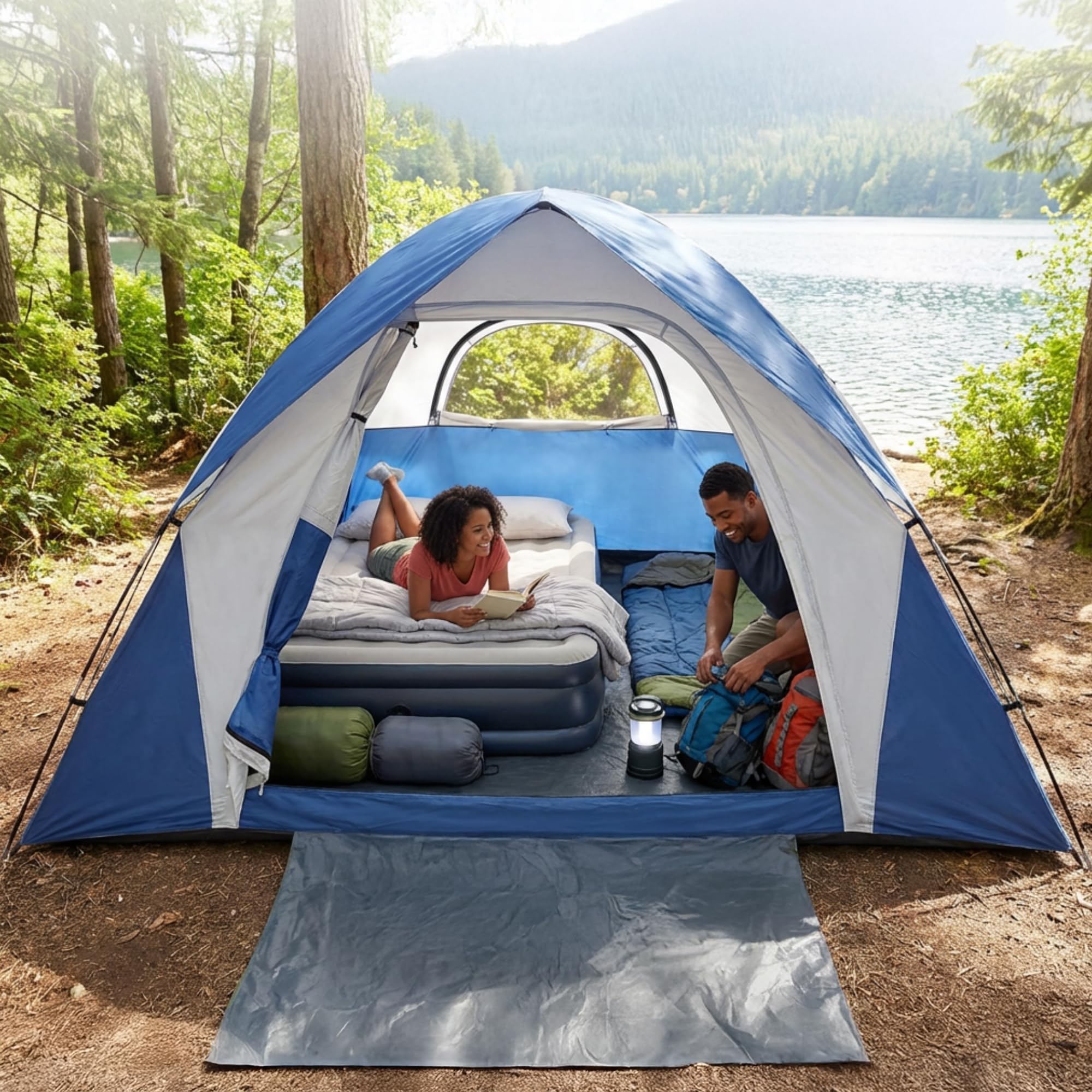
The XL dome tent offers the largest raw footprint in this group at 82.6 by 106 inches, translating to roughly 61 square feet of floor space. This makes it the best option for a group of three or four campers who want separate sleeping areas. The dome roof shape adds a degree of wind deflection that flat-topped cabin tents lack.
The 190T polyester body with PU 2000mm coating and a 120-gram PE ground cloth gives it respectable weather resistance on paper. The 9.5mm fiberglass poles are thicker than the 8.5mm poles found on many budget tents, which adds some rigidity. The removable mesh storage bag that hangs from the ceiling is a genuinely useful feature for keeping small items organized in a large space.
The reality from user reports is more mixed. The tent handles dry weather well, but multiple owners report leakage through unsealed seams during sustained rain. The zippers are the most common complaint — they bind and catch frequently, which is a real problem when you need to exit quickly. This tent demands a separate footprint and seam-sealing treatment before it is trustworthy in wet conditions.
Why it’s great
- Largest usable floor area in the budget category
- Thicker 9.5mm fiberglass poles improve stability
- Hanging mesh storage bag keeps gear organized
Good to know
- Seams are not fully taped — leaks reported in rain
- Zippers are low quality and prone to snagging
- A separate footprint and seam sealing are essential
FAQ
How long should a budget tent last with regular use?
Can I seal a budget tent myself to make it waterproof?
Final Thoughts: The Verdict
For most users, the best budget tent winner is the Coleman Sundome because its welded floor and freestanding design deliver reliable weather protection without complexity. If you want a lightweight shelter for solo or duo backpacking, grab the Night Cat. And for a family car camping setup that offers standing room and real wind stability, the UNP Cabin Tent is the spacious choice.

Mo Maruf
I created WellFizz to bridge the gap between vague wellness advice and actionable solutions. My mission is simple: to decode the research and give you practical tools you can actually use.
Beyond the data, I am a passionate traveler. I believe that stepping away from the screen to explore new environments is essential for mental clarity and physical vitality.