Our readers keep the lights on and my smoothie glass nicely filled. As an Amazon Associate, I earn from qualifying purchases.
Finding a robot vacuum that actually cleans without draining your wallet can feel like a trap—most cheap models bump around blindly, miss entire sections of a room, and leave you questioning why you bothered. The reality is that modern budget-tier robots now pack real LiDAR navigation, self-emptying bases, and enough suction to handle pet hair on carpets, but only if you know exactly which corners to cut and which specs to protect.
I’m Mohammad Maruf — the founder and writer behind WellFizz. For the past several years, I’ve been deep-diving into the consumer robotics market, analyzing specification sheets, user reliability reports, and long-term performance data to separate the genuine value plays from the flashy disappointments.
After testing dozens of models and sifting through thousands of verified owner experiences, I’ve assembled the definitive guide to the best budget robot vacuum that delivers a genuinely clean floor without demanding a premium price.
How To Choose The Best Budget Robot Vacuum
When your budget is tight, every feature decision matters. The cheapest robot vacuums often sacrifice the one spec that makes a robot actually useful: reliable navigation. Here are the key considerations to guide your choice.
LiDAR vs. Gyroscopic Navigation
The biggest differentiator in this price tier is how the robot finds its way around. LiDAR navigation uses a rotating laser to map your entire home in real time, enabling row-by-row cleaning, room selection, and accurate no-go zones. Gyroscopic navigation relies on inertial sensors and is far less precise—these bots bump off walls, miss spots, and take twice as long to cover the same area. In a budget vacuum, LiDAR is the feature worth paying extra for. Without it, you’re buying a random-bounce machine.
Self-Emptying Base Real Capacity
Many budget models now include a self-emptying base, but the advertised “days of hands-free cleaning” can be misleading. A 3-liter dust bag might genuinely last 60 days in a small, low-traffic home, but a house with two shedding dogs will fill that same bag in two weeks. Look for the actual liter capacity (3L, 3.5L, 5L) and compare it to your household’s debris volume. Larger bags mean fewer replacements and lower ongoing cost.
Suction Power and Floor Transitions
Budget vacuums often advertise peak suction numbers (6000Pa is common), but peak suction is only available in max mode, which drains the battery faster. What matters more is the standard-mode suction and the robot’s ability to transition from hard floors to low- and medium-pile carpets. If you have thick, high-nap rugs, a budget robot will struggle regardless of its peak Pa rating. Prioritize models with a “carpet boost” feature that automatically increases suction when sensors detect a rug.
Battery Runtime and Recharge-Resume
A budget robot with only 90 minutes of runtime will rarely finish a full floor in one pass. Look for at least 120 minutes, and confirm the robot has auto-recharge-and-resume—meaning it goes back to the dock, recharges, and returns to the exact spot it stopped. Without this feature, your robot will clean half the living room and then park itself, leaving the rest untouched.
Quick Comparison
On smaller screens, swipe sideways to see the full table.
| Model | Category | Best For | Key Spec | Amazon |
|---|---|---|---|---|
| iRobot Roomba 105 | Mid-Range | Smart home integration | 200 min battery | Amazon |
| Lefant M2L Plus | Mid-Range | Precision object avoidance | 6000Pa suction | Amazon |
| Tikom L8000 Plus | Mid-Range | Hands-off self-emptying | 3L dust bag | Amazon |
| uninell UR3 | Mid-Range | Pet hair on carpet | 7000Pa boost | Amazon |
| Bagotte Robot Vacuum | Mid-Range | Quiet daily cleaning | 6000Pa suction | Amazon |
| eufy C10 | Premium | Tight spaces & corners | 2.85-inch height | Amazon |
| Shark Navigator RV2120AE | Premium | Bagless self-emptying | Bagless base | Amazon |
| SHELIKI D60S MAX | Premium | Large home coverage | 220 min runtime | Amazon |
| DREAME D20 Plus | Premium | Maximum suction power | 13,000Pa suction | Amazon |
In‑Depth Reviews
1. Shark Navigator Robot RV2120AE

Shark takes the top spot because it addresses the single biggest hidden cost of robot vacuums: replacement dust bags. The bagless self-empty base holds up to 60 days of debris with zero bag purchases, which is a rare feature in this price tier. The Spot LiDAR navigation provides row-by-row cleaning that approaches 99% coverage, and the anti-hair wrap brushroll genuinely reduces the weekly maintenance most other robots require.
With 50% more suction than the competitor’s previous generation, the Navigator handles pet hair on hard floors and low-pile carpets with ease. The 120-minute battery covers most single-floor homes, and recharge-and-resume ensures it finishes the job. Obstacle detection adapts to everyday changes—forget to pick up a shoe, and the robot will work around it rather than getting stuck.
Where it slips is on medium-pile and thick carpet, where suction drops noticeably and navigation becomes less confident. Some early units had mapping issues, but Shark’s warranty support seems responsive. The reusable dust bin means you will still have to dump the main bin occasionally, but the bagless base eliminates the bulk of the mess.
Why it’s great
- Bagless self-empty base means zero ongoing bag costs.
- Spot LiDAR navigation delivers precise row-by-row cleaning.
- Anti-hair wrap brushroll reduces maintenance for pet owners.
- Obstacle detection adapts to daily clutter.
Good to know
- Struggles with medium-pile and thick carpet.
- Mapping can be inconsistent on some early units.
- Replacement parts can be tricky to source.
2. DREAME D20 Plus
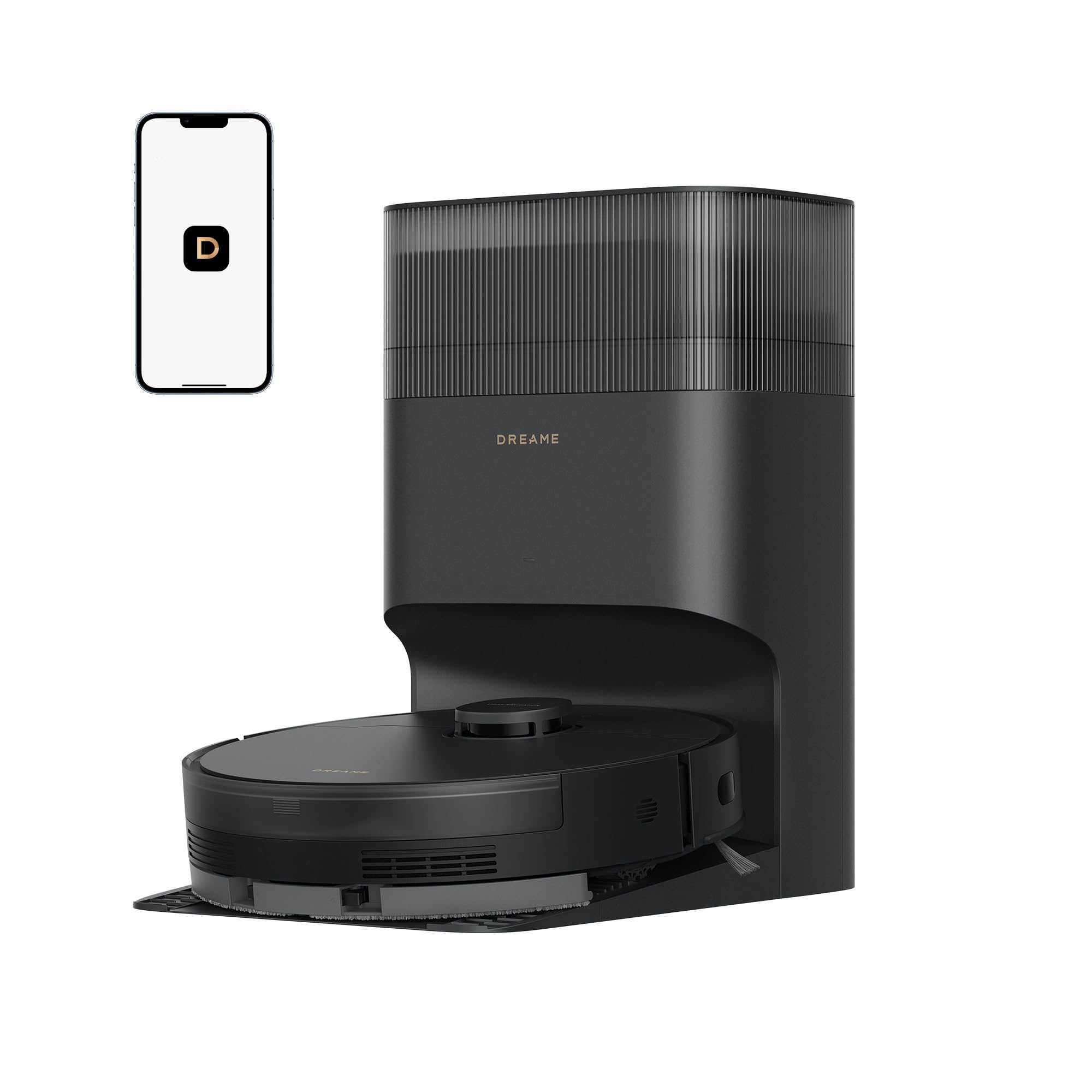
The DREAME D20 Plus is the only robot in this lineup that reaches 13,000Pa of peak suction, putting it in a completely different class for deep carpet cleaning. The DuoBrush design uses two counter-rotating brushes that actively untangle long hair and pet fur, which is a genuine relief for owners of shedding breeds. The self-emptying base uses a massive 5-liter dust bag rated for up to 150 days of hands-free operation.
Pathfinder mapping technology creates editable multi-floor maps with no-go zones, and the app gives you 32 levels of water flow adjustment for the mopping feature. The 180-minute runtime is generous, and the robot reliably recharges and resumes. Works with Alexa, Siri, and Google Assistant, so voice control is fully integrated.
The trade-off comes in initial setup—the D20 Plus requires a 2.4GHz WiFi connection, and some users report that the app interface is less intuitive than competitors. A small number of units have had charging dock alignment issues, and the mopping feature, while adjustable, is still a damp pad rather than a scrubbing action. For raw power and dust capacity, though, it dominates its bracket.
Why it’s great
- Industry-leading 13,000Pa peak suction for deep carpet cleaning.
- 5-liter dust bag enables up to 150 days of self-emptying.
- DuoBrush anti-tangle system handles long hair effectively.
- 32-level water adjustment for mopping customization.
Good to know
- Requires 2.4GHz WiFi; no 5GHz support.
- App interface can be clunky for new users.
- Occasional charging dock alignment issues reported.
3. SHELIKI D60S MAX
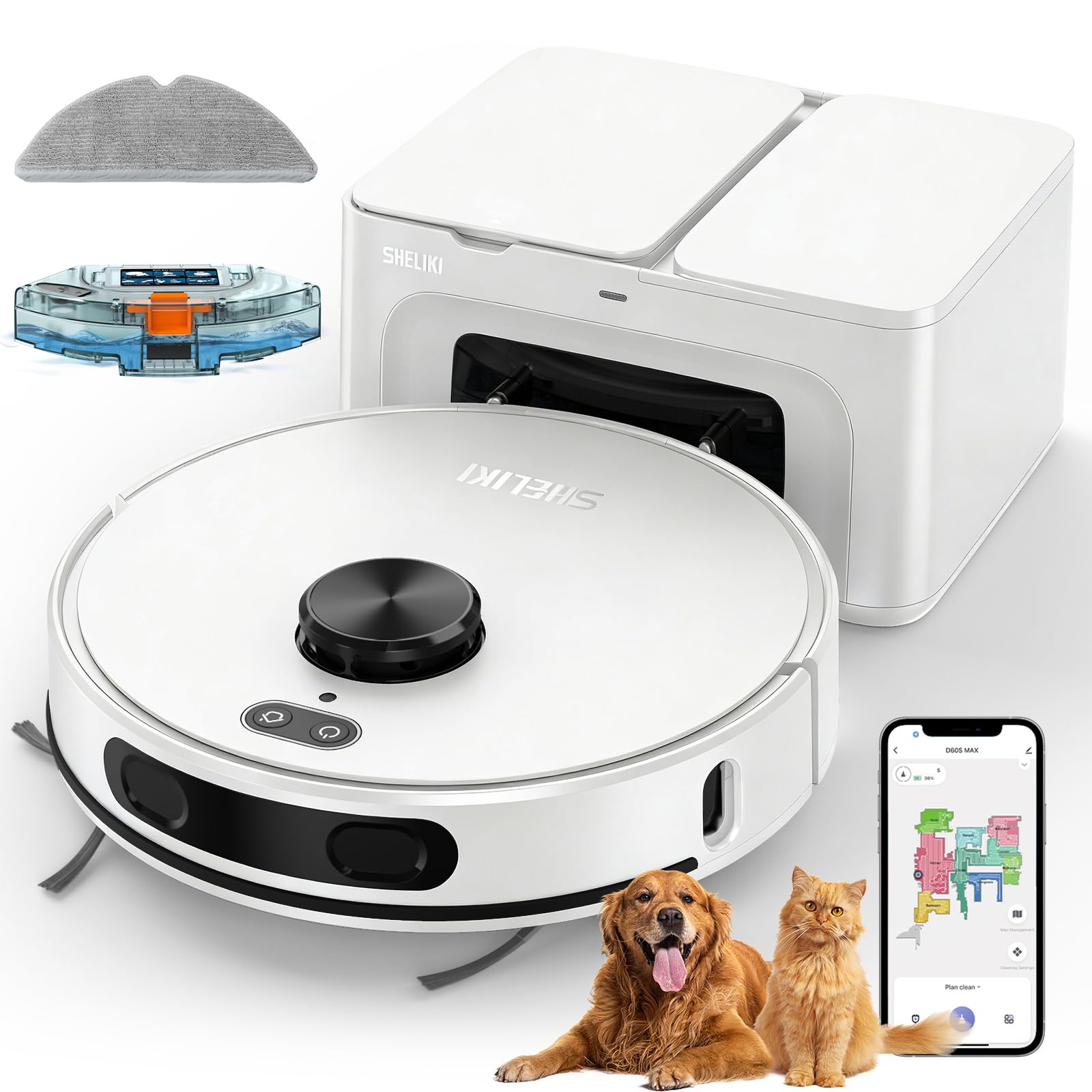
Battery anxiety is the hidden frustration of budget robot vacuums—most shut down after cleaning half the house. The SHELIKI D60S MAX tackles this head-on with a 220-minute runtime, enough to cover up to 2,500 square feet without recharging. When it does need a boost, it recharges to 80% and resumes exactly where it stopped, so you never find a dead robot stranded in the middle of a room.
The 3-in-1 sweep, vacuum, and mop system offers four suction modes from 800Pa quiet mode up to 6000Pa max, giving you flexibility for daily touch-ups versus deep cleans. The self-emptying base uses a large disposal compartment that holds several weeks of debris, and the LiDAR navigation creates accurate maps with support for up to 14 no-go zones across five saved floor plans.
On the downside, the mopping pad is a basic damp cloth that struggles with dried-on messes, and the robot can be louder than average during the self-emptying cycle. Some users note that it occasionally gets confused around desk legs and thin rug edges. For a large, open-concept home that needs uninterrupted cleaning, though, the sheer runtime makes it a standout choice.
Why it’s great
- Industry-leading 220-minute runtime for large homes.
- Smart recharge-resume at 80% battery level.
- Supports up to 14 no-go zones and 5 floor maps.
- Versatile 4-mode suction system.
Good to know
- Loud during the self-emptying cycle.
- Basic mop pad struggles with dried-on dirt.
- Can get confused around desk legs and rug edges.
4. eufy C10
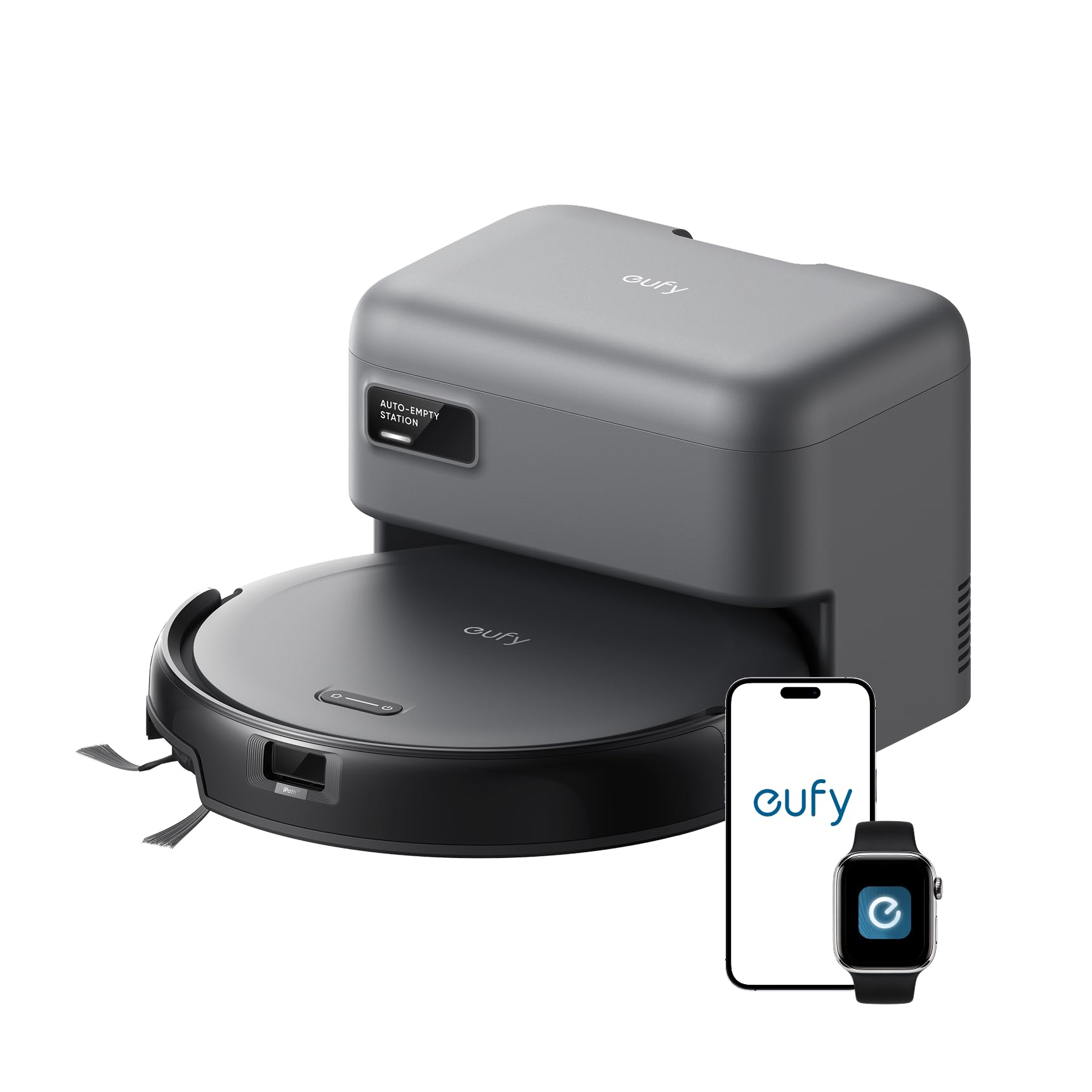
If your home is packed with low-profile furniture—platform beds, couches with low clearance, media consoles—the eufy C10 is the one that fits where others jam. At only 2.85 inches tall, it slides under desks and sofas that block every other robot in this guide. The unique Corner Rover arm extends the side brush to sweep debris from baseboards and corners that a round robot normally misses.
The 4000Pa suction is lower than the competition on paper, but eufy prioritizes quiet operation and battery efficiency—most users report that standard mode is enough for daily maintenance on hard floors and low-pile carpet. The self-emptying base holds a 3-liter bag, rated for about 60 days of debris. LiDAR navigation creates accurate maps, and the app supports custom cleaning schedules and no-go zones.
The weaker suction means it struggles with high-pile carpet and large debris like cereal or cat litter. The self-emptying process is also notably loud, and replacement dust bags are proprietary and more expensive than generic options. For an apartment or home with primarily hard floors and tight furniture gaps, the slim profile and corner cleaning make it a uniquely valuable tool.
Why it’s great
- Ultra-slim 2.85-inch profile fits under low furniture.
- Corner Rover arm cleans edges and baseboards effectively.
- Quiet operation suits daily cleaning routines.
- Reliable LiDAR navigation with app scheduling.
Good to know
- 4000Pa suction is weaker than competitors.
- Loud self-emptying cycle.
- Proprietary dust bags are expensive to replace.
5. iRobot Roomba 105

iRobot’s Roomba 105 proves that the brand has finally brought its mapping and suction technology down to an accessible price point. With 70x more power-lifting suction compared to the Roomba 600 series, the 105 actually devours dust bunnies and pet hair on the first pass. The ClearView LiDAR navigation is genuinely competitive with what you’d find on models twice the price—it maps rooms quickly and cleans in neat, efficient rows without the random bouncing that plagued earlier Roomba models.
The 200-minute battery life is the best in this lineup, meaning even a large home gets fully cleaned in one session. The app supports room targeting, scheduling, and keep-out zones, and voice control works with Alexa, Siri, and Google Assistant. The single-brush design is surprisingly effective—some testers found it outperformed dual-brush models on hard floors by channeling debris directly into the suction path.
Reliability reports are mixed. A small number of units have developed spinning or recalibration errors after a few months, though iRobot’s customer support generally handles replacements smoothly. The 0.22-quart dust bin is tiny compared to self-emptying competitors—you will be emptying it manually after every run. The app’s map editing tools are also less polished than newer brands.
Why it’s great
- 200-minute battery life leads the budget category.
- ClearView LiDAR provides precise row-by-row navigation.
- Excellent power-lifting suction for a budget unit.
- Voice control with all major assistants.
Good to know
- Small dust bin requires manual emptying after each run.
- Some units experience reliability issues after 2-3 months.
- App map editing is less intuitive than competitors.
6. Lefant M2L Plus
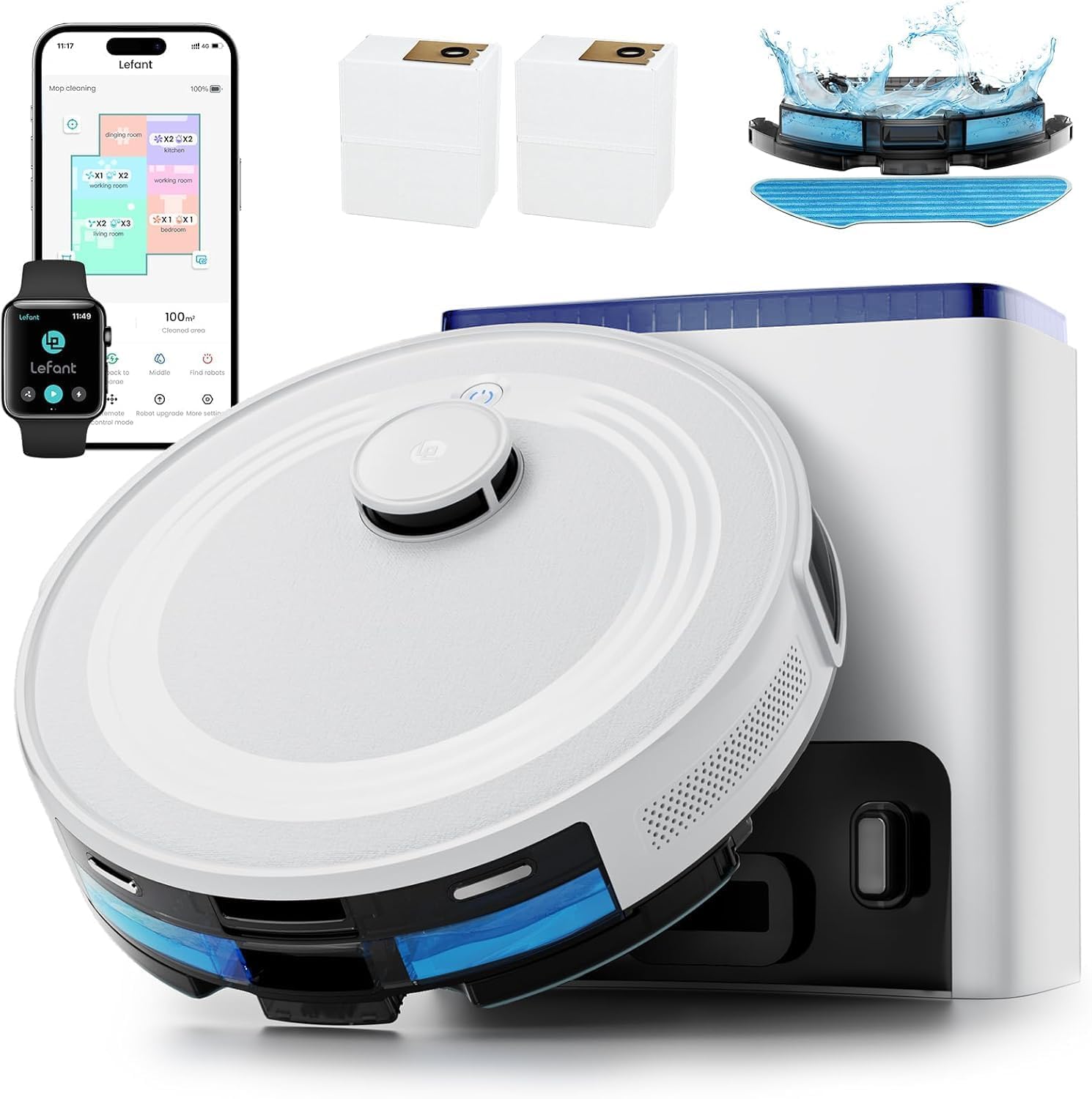
The Lefant M2L Plus brings a level of precision object detection that is rare at its price point. The nine triangulation distance sensors and 190-degree wide detection angle, powered by PSD technology, allow it to detect and avoid objects as close as 1.6 inches away. This means it navigates around pet bowls, charging cables, and scattered shoes without getting stuck or pushing items around the room.
With 6000Pa of peak suction and a 75-day self-emptying base, the M2L Plus delivers a well-rounded feature set. The 360-degree LiDAR navigation scans and maps multi-floor homes, and the app supports room-specific cleaning customization. Dual-band WiFi (2.4G and 5G) ensures reliable connectivity even in homes with many competing devices, and the carpet detection feature automatically boosts suction when moving from hard floors to rugs.
The mopping function is basic—the 300ml water tank with three adjustable flow levels damp-mops effectively but won’t scrub stuck-on messes. Some users report that after a few weeks, the robot develops navigation glitches where it fails to find its base or starts ramming walls. The sponge filter requires regular cleaning, and the self-emptying dock can be loud during the evacuation cycle. For object avoidance and mapping accuracy, though, it punches well above its weight.
Why it’s great
- Advanced PSD sensors detect objects as close as 1.6 inches.
- 6000Pa suction with auto carpet boost.
- Dual-band WiFi ensures stable connectivity.
- Multi-floor mapping with room-specific cleaning.
Good to know
- Mopping pad is damp-only, not a scrubbing action.
- Some units develop navigation glitches after a few weeks.
- Self-emptying dock is louder than average.
7. uninell UR3
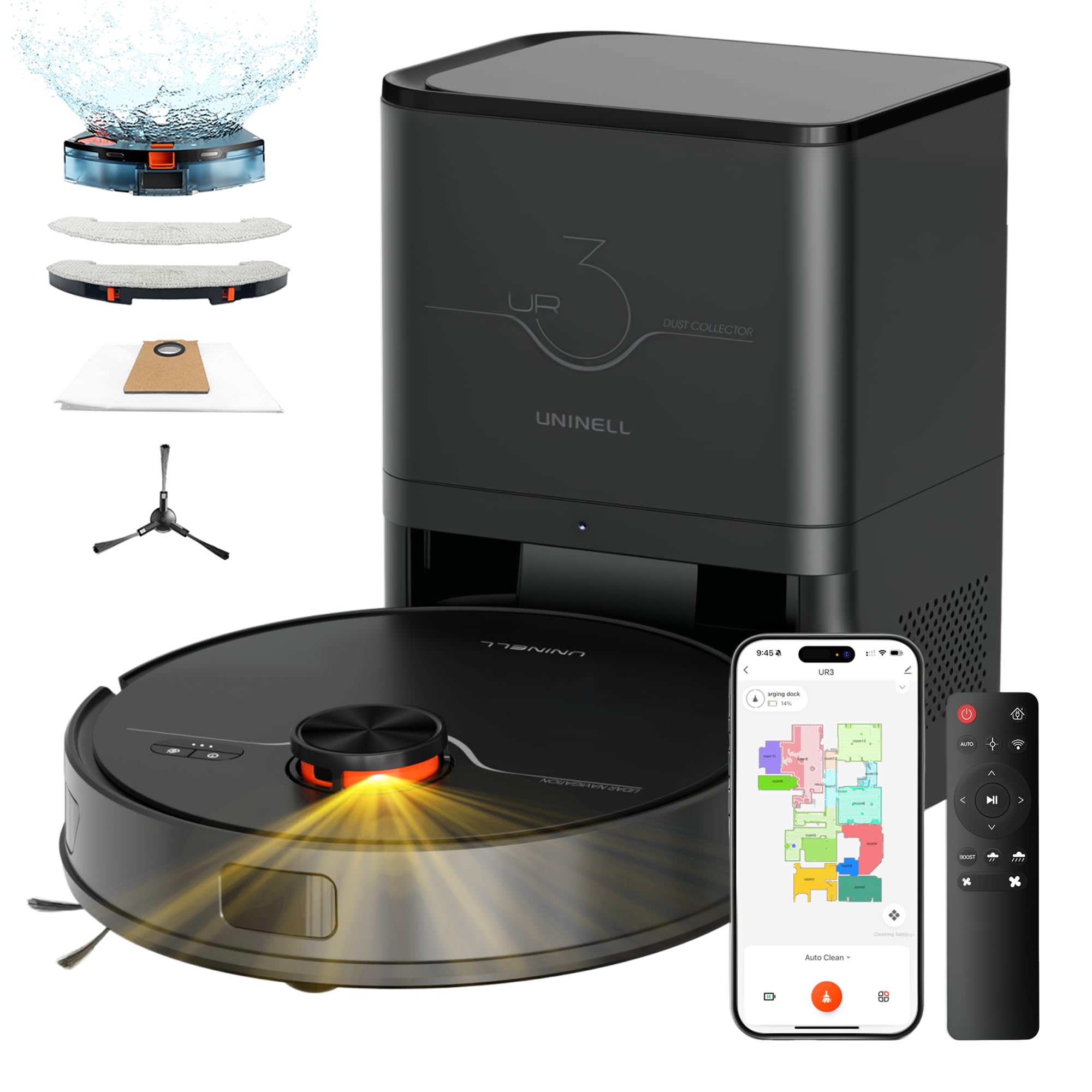
The uninell UR3 is engineered specifically for pet owners who are tired of cutting hair off brush rollers. The tangle-free design actively prevents hair wrap, which is the single most annoying maintenance task for anyone with shedding dogs or cats. The 7000Pa cyclone suction with auto carpet boost digs deeply into rug fibers to extract embedded dander and fur that lower-suction robots miss entirely.
The 3.5-liter self-emptying base holds up to 90 days of dirt and pet hair, and the bag sealing mechanism ensures you never smell last week’s fur when the base cycles. LiDAR navigation creates accurate maps with no-go zones to protect pet feeding stations, and the 180-minute runtime covers large homes in a single session. The included remote control is a thoughtful addition for users who prefer not to use a smartphone app.
The foam and sponge filter system is less sophisticated than HEPA alternatives, meaning some fine allergens may be recirculated. The self-emptying cycle is abrupt and loud, startling pets that are already suspicious of the robot. A few users report that the tangle-free design isn’t perfect—long hair can still wrap around the drum if not trimmed. For a pet-focused budget robot, though, the combination of suction and anti-hair wrap is compelling.
Why it’s great
- Tangle-free design actively prevents hair wrap on the roller.
- 7000Pa peak suction with automatic carpet boost.
- 180-minute runtime covers large homes in one pass.
- Includes remote control for app-free operation.
Good to know
- Foam and sponge filter isn’t HEPA-grade.
- Self-emptying cycle is loud and can startle pets.
- Long hair can still wrap if not trimmed before cleaning.
8. Tikom L8000 Plus
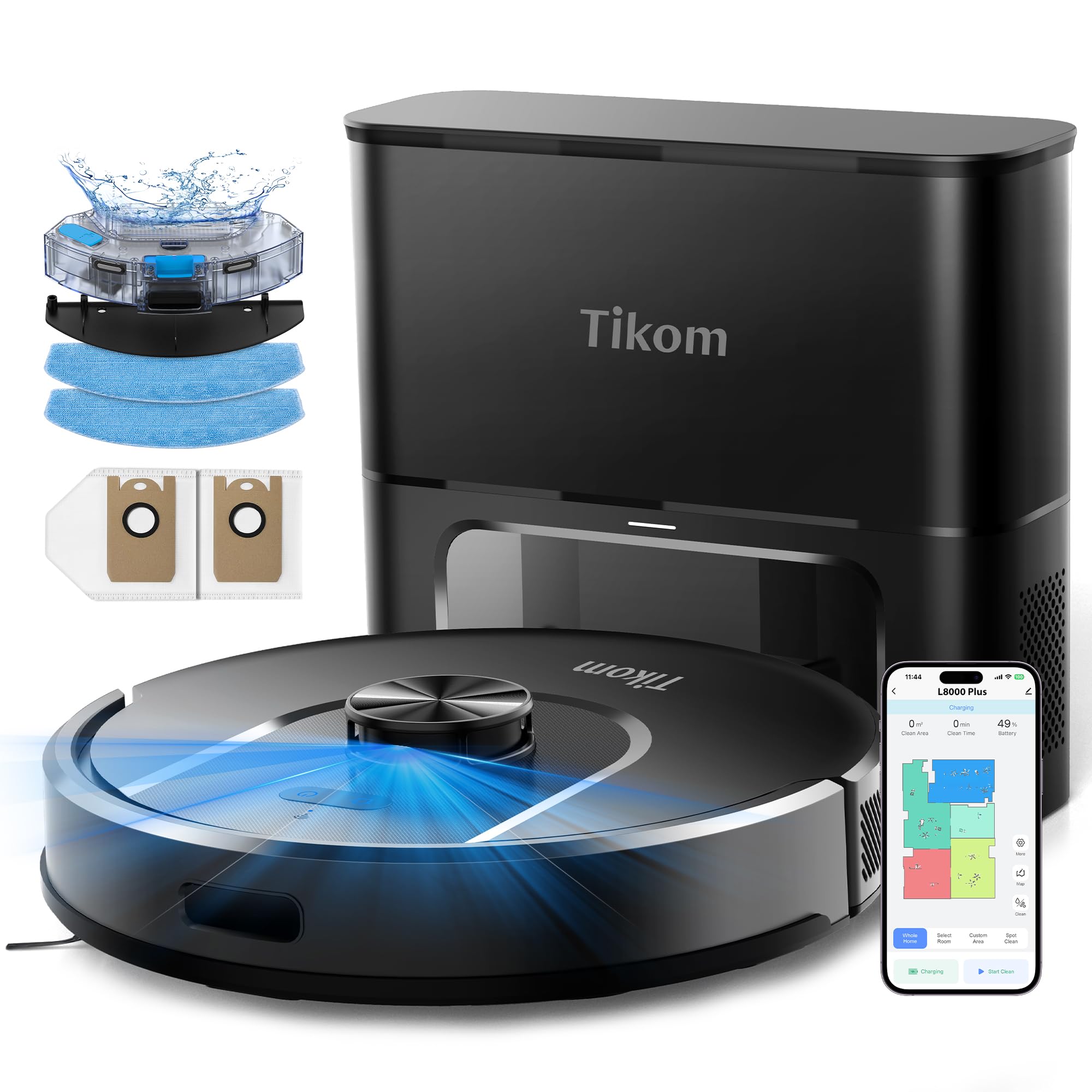
The Tikom L8000 Plus is the quietest robot in this guide during its normal cleaning cycle, making it a strong candidate for households where noise sensitivity matters—WFH offices, nurseries, or open-plan apartments. The 6000Pa peak suction is competitive, but the real story is the self-emptying base with a 3-liter dust bag that holds up to 90 days of debris, reducing hands-on maintenance to near zero.
LiDAR navigation maps up to five floor plans and supports room-specific cleaning, no-go zones, and virtual walls through the app. The 150-minute runtime in gentle mode is enough for most single-level homes. Auto carpet boost increases suction when transitioning from hard floors to rugs, and the cliff sensors reliably prevent stair falls.
The mopping function is the weakest aspect—it uses a basic damp microfiber pad that wets the floor lightly but won’t handle dried spills or adhesive messes. The self-emptying process, while quieter than most, still creates a noticeable suction burst. A few users note that the app’s map editing can be finicky, especially when trying to merge or split rooms. For daily, quiet maintenance cleaning with minimal interaction, it delivers excellent value.
Why it’s great
- Quiet cleaning operation suits noise-sensitive environments.
- 3-liter self-emptying base for 90-day maintenance.
- LiDAR navigation with multi-floor map support.
- Auto carpet boost for effective rug cleaning.
Good to know
- Mopping is a basic damp pad, not for tough messes.
- App map editing can be finicky and slow.
- Self-emptying is still audible despite quiet cleaning.
9. Bagotte Robot Vacuum
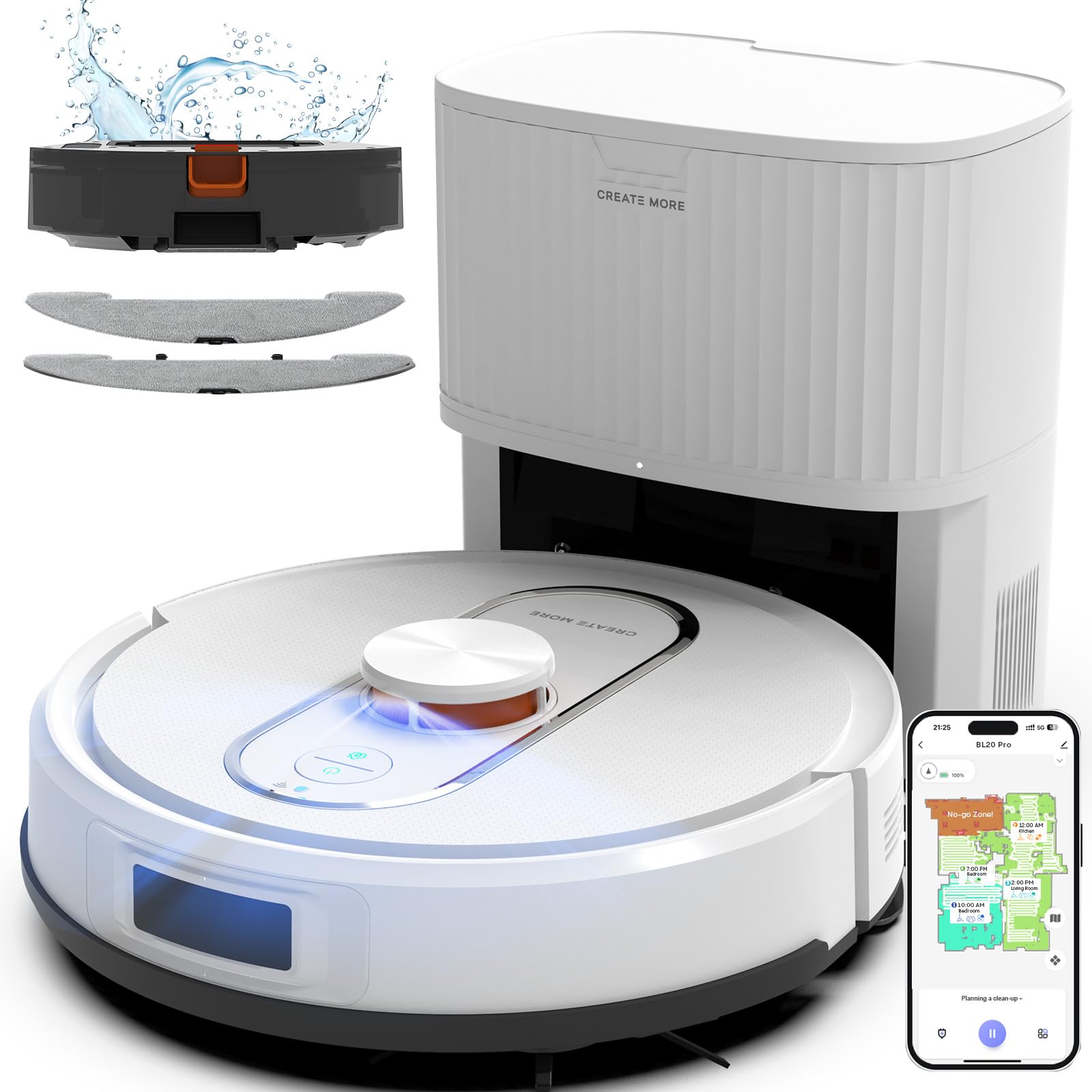
The Bagotte Robot Vacuum is the entry-level option that still includes genuine LiDAR navigation and a self-emptying station, making it a compelling choice for a first-time robot buyer on a tight budget. The 6000Pa maximum suction is competitive on paper, and tests confirm it picks up daily debris—crumbs, dust, cat hair—on hard floors and low-pile carpets effectively. The self-emptying base uses a sealed bag that stays odor-free for weeks.
The compact design, at 11.8 inches in diameter and 3.8 inches tall, allows it to fit under many furniture pieces that larger robots can’t reach. The app supports custom scheduling, room selection, and no-go zones, and the vacuum works with Alexa for voice control. The 120-minute runtime is adequate for small to mid-sized homes, though it may require a recharge for a full floor plan in a large open layout.
The mopping attachment is basic and requires manual refilling—there is no auto-refill or sophisticated water control. The app setup can be frustrating during the initial WiFi pairing, and some users report that the robot occasionally loses its map after a cleaning cycle, requiring a remap. If you are willing to accept a few quirks in exchange for a self-emptying LiDAR robot at the lowest accessible price, the Bagotte delivers where it counts.
Why it’s great
- Most affordable LiDAR robot with a self-emptying base.
- Compact 3.8-inch height fits under most furniture.
- 6000Pa suction handles daily debris effectively.
- Sealed dust bags prevent odor during storage.
Good to know
- Mopping is basic and requires manual water refills.
- WiFi setup can be finicky during initial pairing.
- Occasional map loss requires remapping.
FAQ
Will a budget robot vacuum handle pet hair without tangling the brush?
Can I use a cheap robot vacuum on high-pile or shag carpet?
How important is app support for a budget robot vacuum?
Why does my budget robot vacuum need a 2.4GHz WiFi connection?
Final Thoughts: The Verdict
For most users, the best budget robot vacuum winner is the Shark Navigator RV2120AE because it combines a bagless self-emptying base with precise Spot LiDAR navigation, eliminating both the ongoing cost of replacement bags and the frustration of random-bounce cleaning. If you want maximum raw suction for carpet-heavy homes, grab the DREAME D20 Plus. And for a tight budget that still demands true LiDAR mapping and a self-emptying dock, nothing beats the Bagotte Robot Vacuum.

Mo Maruf
I created WellFizz to bridge the gap between vague wellness advice and actionable solutions. My mission is simple: to decode the research and give you practical tools you can actually use.
Beyond the data, I am a passionate traveler. I believe that stepping away from the screen to explore new environments is essential for mental clarity and physical vitality.