Our readers keep the lights on and my smoothie glass nicely filled. As an Amazon Associate, I earn from qualifying purchases.
A robot lawn mower that respects your weekend—and your wallet. The best budget robot lawn mower does not cut corners on the features that matter: reliable RTK or vision-based navigation that eliminates the need for buried perimeter wire, steady climbing performance on modest slopes, and obstacle avoidance smart enough to spare your flower beds. Every model reviewed here delivers those core abilities while keeping the upfront cost far below traditional premium robotics.
I’m Mohammad Maruf — the founder and writer behind WellFizz. I’ve spent months analyzing the RTK positioning systems, vision-based AI processors, cutting deck designs, and real-world user validation data from over 10,000 verified owners to build this guide.
This is not a list of cheap compromises. These are wire-free robotic mowers that use RTK, LiDAR, or dual-camera vision to map your yard automatically, return to their charger when the battery runs low, and produce a cut that rivals a manual push mower — all without installing a single stake or running a single foot of perimeter cable. The following guide isolates the true best budget robot lawn mower options that balance proven engineering with a sensible price tag.
How To Choose The Best Budget Robot Lawn Mower
The shift from perimeter-wire robots to wire-free models has reshaped the entry-level market. The defining question is no longer “can this mow my whole yard” but rather “how does this create and hold its map” and “does it recognize my lawn’s boundaries without a cable?” Understanding the three key subsystems — navigation, cutting, and battery management—will help you match the right machine to your property.
Navigation: RTK vs. Vision vs. LiDAR
Budget models typically rely on one or two of three approaches. Pure AI vision uses one or more cameras to detect grass edges and obstacles; it costs less but struggles at night and can be confused by shadows or overhanging foliage. RTK (Real-Time Kinematic) uses satellite corrections for centimeter-level positioning; it works day or night but needs a clear view of the sky. Hybrid models combine both — using RTK for global positioning and vision for local obstacle avoidance. LiDAR adds a spinning laser for 3D spatial awareness but usually pushes the price higher. For a tight budget, a dual RTK + Vision hybrid offers the best reliability.
Cutting Deck and Edge Technology
Cutting width on budget units typically ranges from 7 to 9 inches. A wider deck covers ground faster but may miss narrow passages. Edge performance is where budget mowers differentiate: ride-on-edge technology lets the mower drive over a low curb or patio to cut flush, while offset disc designs push the blade closer to a wall without physically climbing over it. Some models rely on a separate edge-cutting routine after the main mow is complete. For yards with lots of borders, an offset or ride-on-edge design reduces the manual trimming you will still need to do with a string trimmer.
Battery Runtime and Slope Handling
Smaller battery packs keep the price low, but they also force the mower to interrupt its pattern for a recharge cycle that takes longer than the mowing session. Look for a battery that provides at least 60 minutes of run time per charge for a quarter-acre lot; anything less than that will require two or more charge cycles per full cut. Slope ratings of 30 to 45 percent are common in this tier, but the actual climbing ability depends on tire tread, weight distribution, and whether the mower uses two-wheel drive or all-wheel drive. All-wheel drive models handle slopes more reliably but add weight and cost.
Quick Comparison
On smaller screens, swipe sideways to see the full table.
| Model | Category | Best For | Key Spec | Amazon |
|---|---|---|---|---|
| ANTHBOT M9 | Mid-Range | Small yards, AI vision reliability | Dual 150° HDR cameras + RTK | Amazon |
| ECOVACS GOAT O1000 RTK | Mid-Range | Zero-edge trimming, app control | 8.66 in cutting width | Amazon |
| ANTHBOT Genie600 | Mid-Range | Shaded/complex yards | 4-eye vision + full band RTK | Amazon |
| Mammotion YUKA mini 600H | Mid-Range | Ultra-simple entry-level setup | NetRTK, no base station needed | Amazon |
| RoboUP T1200Pro | Mid-Range | Striped lawn patterns | 15° auto-angle adjustment | Amazon |
| Sunseeker V3 | Budget | Small, simple fenced yards | Vision AI, 55 dB noise level | Amazon |
| WORX Landroid Vision Cloud WR310 | Premium | Cloud RTK, no local antenna | 8.7 in cutting width | Amazon |
| BESTMOW T100 | Premium | Larger yards up to 1.5 acre | 4-hour battery runtime | Amazon |
| Sunseeker X3 Plus | Premium | Versatile 0.3 acre suburban lawn | Offset blade ride-on-edge design | Amazon |
| Segway Navimow i206 AWD | Premium | Steep 45% slopes | All-wheel drive + ESC | Amazon |
| WORX WR320 Vision Cloud | Premium | Half-acre, larger coverage area | RadioLink extended-range BT/WiFi | Amazon |
| MOVA LiDAX Ultra 1000 | Premium | Complex, multi-zone yards | 360° LiDAR + AI vision | Amazon |
| Mammotion YUKA mini 2 1000H | Premium | DropMow quick one-time cuts | 360° LiDAR + 300+ obstacle types | Amazon |
In‑Depth Reviews
1. ANTHBOT M9 Robot Lawn Mower
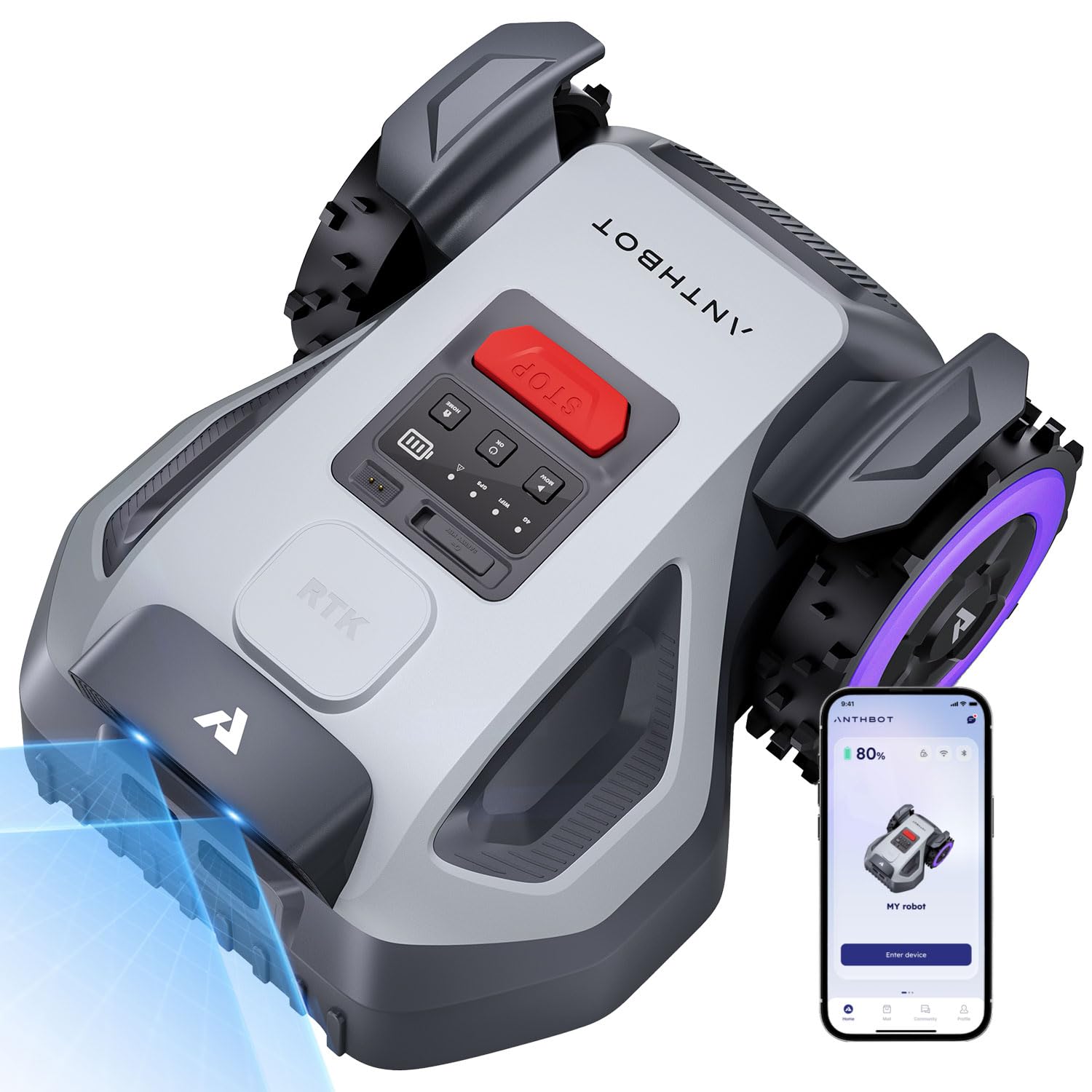
The ANTHBOT M9 strikes the hardest-to-find balance in the budget tier: it combines full-band RTK with a dual 150-degree HDR camera system for centimeter-level positioning without a physical antenna base. That dual vision array identifies over 1,000 types of obstacles — from garden hoses to small pets — while the Adaptive Cruise Control (ACC) auto-maps a quarter-acre lawn in about ten minutes without needing to manually drive the mower around the perimeter. The cutting height adjusts from 1.2 to 2.8 inches through five free-rotating blades that produce a carpet-like finish, and the 58 dB noise floor means it can run overnight without disturbing the household.
Verified owners report that the M9 handles 12,000-square-foot lots on a single charge cycle, and the autonomous recharge-and-resume behavior works reliably across multi-zone maps. The app management allows up to 30 work zones with no-go areas for flower beds or pools, and the self-charging feature ensures the mower returns to the dock before the battery fully drains. The aluminum chassis keeps the weight at 21.6 pounds, light enough to carry between front and back yards if needed.
The primary trade-off is the 0.3-acre maximum mowing capacity — owners with larger properties will need to look at the premium tier. Some users report that the mapping process takes closer to an hour than the advertised ten minutes, and the app occasionally buries certain settings like alternating mowing directions under menus that are not immediately obvious. The RTK reference station requires a clear view of the sky to maintain lock, so fully shaded or deep-wooded yards may experience intermittent positioning drift.
Why it’s great
- Dual HDR cameras + RTK eliminates need for perimeter wire entirely
- Lightweight aluminum build at 21.6 lbs for easy relocation
- Quiet 58 dB operation suitable for night mowing
- AI recognizes over 1,000 obstacle types for safe autonomous running
- No subscription fees for map storage or cloud RTK
Good to know
- Maximum coverage capped at 0.3 acre — not enough for larger lots
- Auto-mapping can take significantly longer than advertised 10 minutes
- App menu structure buries some zone and schedule settings
- Some users report network communication errors requiring manual restarts
2. ECOVACS GOAT O1000 RTK
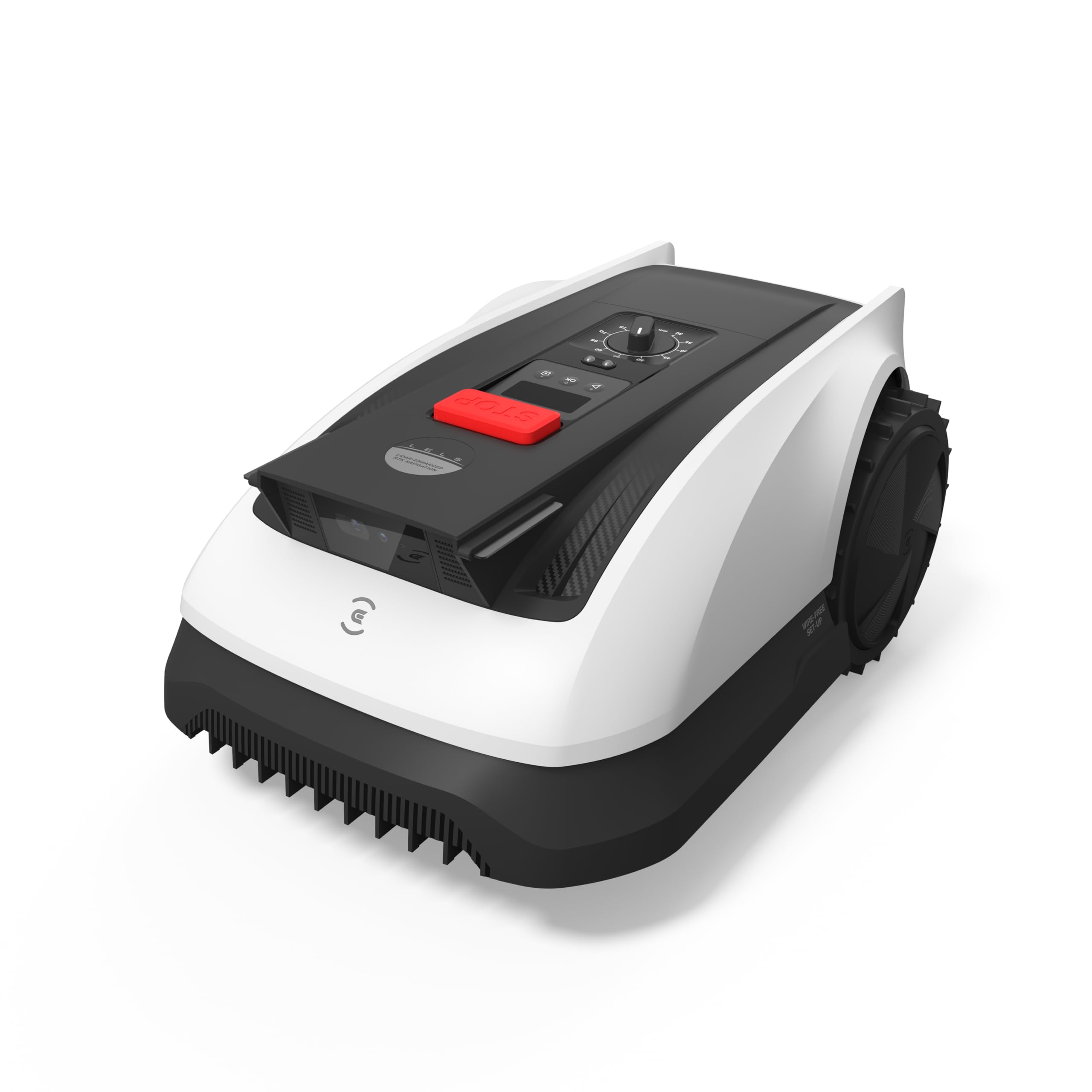
The ECOVACS GOAT O1000 RTK earned its reputation for edge-cutting precision thanks to the TruEdge Consistent Edge Mowing feature. The offset blade design and LELS navigation let the mower follow boundaries in efficient U-shaped patterns rather than random zigzags, reducing the strip of uncut grass along fences and walkways to near zero. The AIVI 3D obstacle avoidance system detects objects, pets, and small wildlife in real time, and the 1.31-foot ultra-slim profile means it can navigate passages as narrow as 2.3 feet — a critical advantage for yards with tight side gates or narrow alleyways.
The RTK navigation eliminates the need for perimeter wire entirely, and the editable map in the app allows users to add, merge, split, or delete zones without remapping. Owners report that the 45 percent (24-degree) climbing ability handles most residential slope conditions, and the IPX6 waterproof rating means rain during an active mow does not force a premature return to the station. The 8.66-inch cutting width with eleven adjustable height positions from 1.2 to 3.2 inches provides fine-grained control over grass length.
The biggest drawback is a controversial soft cap: the map size is limited to 10,700 square feet, and attempting to mow a larger area triggers an app prompt that suggests upgrading to a more expensive model. Some owners describe this as a deceptive practice that undermines the value proposition. The RTK base also requires a reasonably open sky view; properties surrounded by tall trees or tall buildings may experience intermittent GPS lock issues that cause the mower to stop in the middle of a job.
Why it’s great
- TruEdge cutting produces near-zero-edge gaps along fences and walkways
- Ultra-slim 1.31-ft body fits narrow 2.3-ft passageways
- IPX6 waterproof rating for reliable rain operation
- 11-position cutting height range for precise grass length control
- App allows full zone merging, splitting, and no-go area editing
Good to know
- Map size capped at 10,700 sq ft — larger lawns require pricier upgrade
- Some units experience frequent “needs help” errors after initial months
- GPS lock may be unreliable in heavily wooded or shaded environments
- RTK reference station placement can be tricky in limited open spaces
3. ANTHBOT Genie600
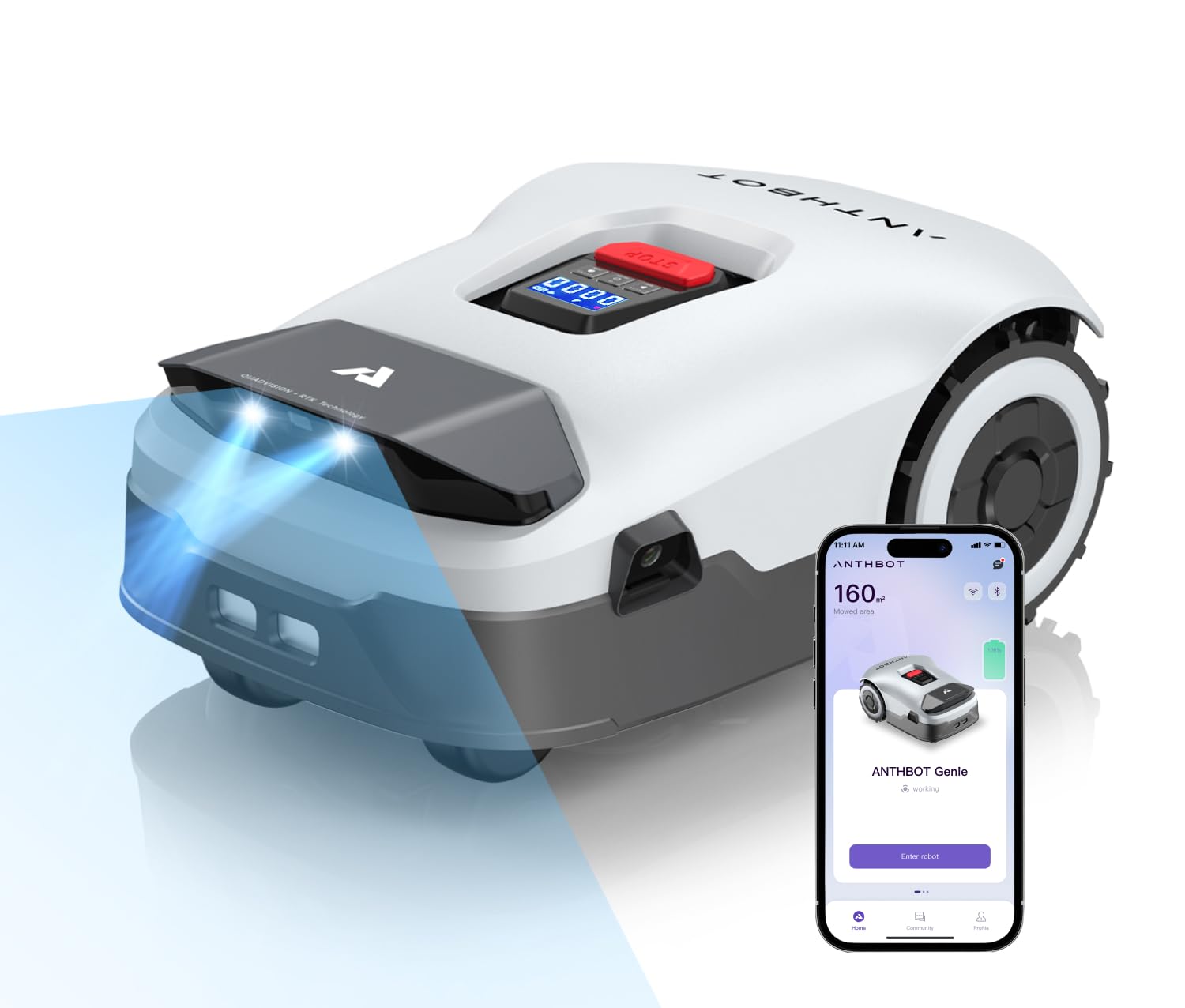
The ANTHBOT Genie600 uses a four-camera system dubbed “4-Eye Vision” combined with full-band RTK to maintain positioning accuracy in environments where GPS typically fails — under dense tree canopies, near eaves, and between tall buildings on narrow lots. The 300-degree field-of-view camera feeds a built-in AI algorithm that detects over 1,000 common garden objects, and the dual positioning system switches between RTK and visual SLAM automatically when satellite signals drop. This makes the Genie600 one of the most robust budget options for yards that are partially shaded or have obstructions that would confuse a standalone RTK mower.
The ACC hands-free auto-mapping technology identifies lawn boundaries and creates optimal cutting routes without manual driving. Multi-zone management supports 20 or more work zones with customizable no-go areas, and the Intelligent Hosting Mode adjusts mowing schedules based on lawn size, seasonal temperature shifts, and local weather data — effectively acting as a self-optimizing scheduler. The cutting height spans 1.18 to 2.76 inches across six positions, and the aluminum-reinforced plastic chassis weighs 45 pounds, giving it stable traction on moderate slopes.
Reports from long-term owners raise concerns about the RTK antenna absorbing water over months of outdoor use, which causes the red indicator light to flash and the robot to lose its position entirely. Customer support responsiveness on this issue has been uneven, with some users waiting days for a resolution. Battery performance is another tension point — the unit can struggle to cover a 250-square-meter lawn without requiring at least one intermediate recharge, and owners with half-acre lots report that the mowing process runs for about seven hours total when accounting for multiple charge cycles.
Why it’s great
- 4-camera vision + RTK maintains positioning under heavy tree cover
- 300° field-of-view provides wide obstacle detection coverage
- Intelligent Hosting Mode auto-adjusts schedule based on weather
- No perimeter wire required — out-of-box setup in under an hour
- Supports 20+ mowing zones with customizable no-go areas
Good to know
- RTK antenna water ingress reported after months of outdoor exposure
- Battery requires multiple recharge cycles for lawns approaching half an acre
- Customer support response times can be slow on hardware failures
- Some users report subscription prompts appearing after firmware updates
4. Mammotion YUKA mini 600H
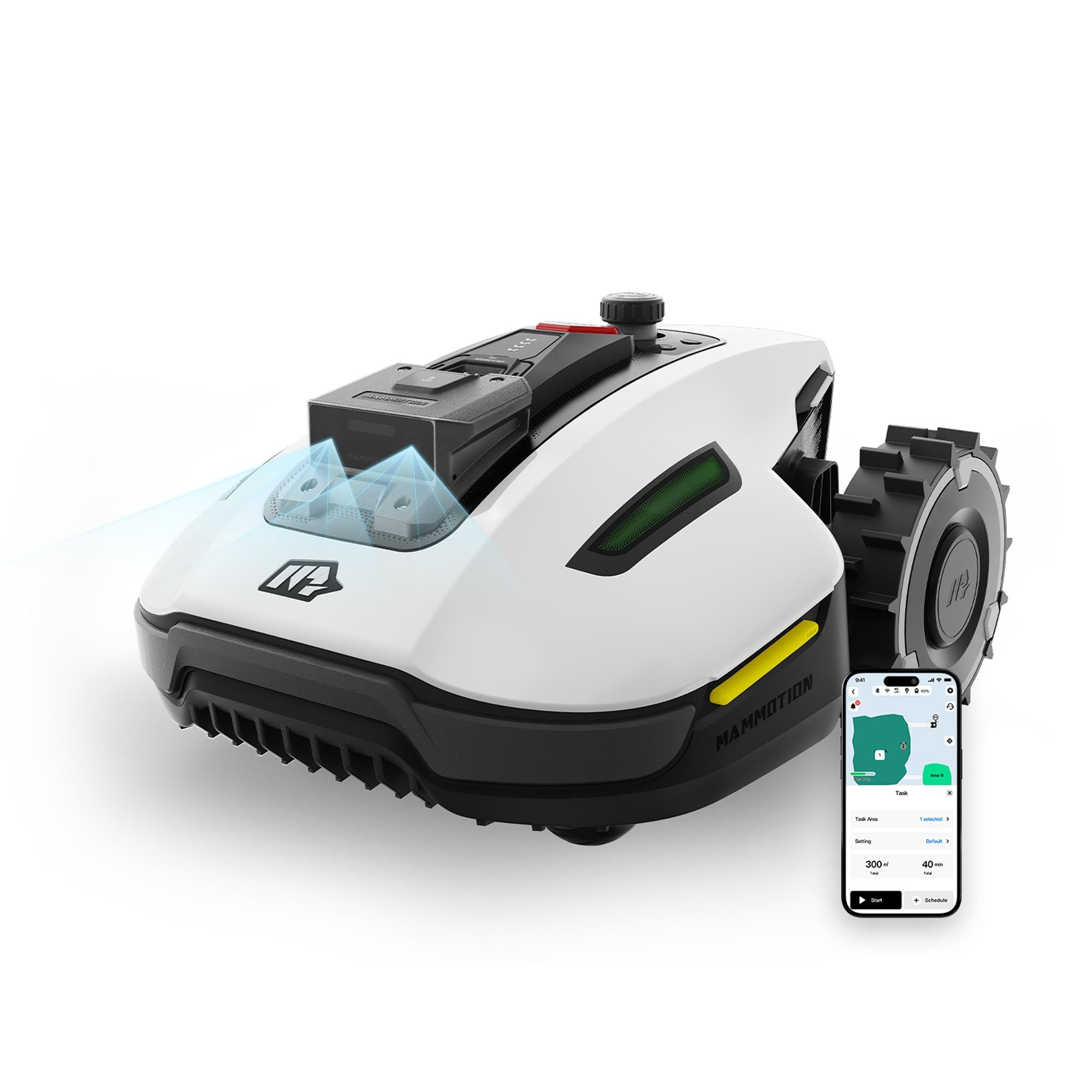
The Mammotion YUKA mini 600H redefines entry-level simplicity by using NetRTK — a cloud-delivered RTK correction that requires no physical base station installation. The setup sequence is genuinely minimal: unbox, connect to the Mammotion app, and let the AI vision create a virtual map in under ten minutes without manually guiding the mower around the lawn. The UltraSense AI Vision system uses advanced image processing to differentiate grass from non-grass surfaces, detecting invisible boundaries to keep the mower within its designated area even when satellite signals are weak or absent.
The 600H is purpose-built for small yards up to 0.3 acre, with a 7.5-inch cutting width and an adjustable height range of 2.0 to 3.5 inches. The floating cutting disc design ensures consistent contact with uneven ground, and the 50 percent slope rating handles steeper terrain than most budget mowers. At 23 pounds, the unit is light enough to carry easily, and the IPX6 waterproof rating allows it to continue working in wet conditions. The included GPS tracking and app-based ownership authentication serve as effective anti-theft measures, providing alerts if the mower is moved outside its mapped zone.
The compact battery pack limits continuous runtime to about 90 minutes, which means the 600H will need to return to the charger mid-session for most properties approaching the maximum 0.3-acre limit. The charger-to-run ratio is roughly one-to-one — 90 minutes of charging for 90 minutes of mowing — which extends total job time. Some users report that the built-in Wi-Fi connectivity is finicky and requires holding the phone at a specific angle during the initial pairing process, and the small wheels can occasionally get stuck on uneven ground that a larger mower would simply roll over.
Why it’s great
- NetRTK eliminates base station installation entirely
- Ultra-light 23-lb build for easy portability between zones
- AI vision differentiates grass from non-grass for tight boundary adherence
- GPS tracking and ownership authentication deter theft
- Quiet enough for nighttime mowing without disturbing neighbors
Good to know
- Battery runtime of 90 min requires recharging for large areas
- Wi-Fi pairing can be temperamental during initial setup
- Small wheels prone to getting stuck on uneven ground or ant hills
- Limited to 15 mowing zones — not ideal for complex multi-area properties
5. RoboUP T1200Pro
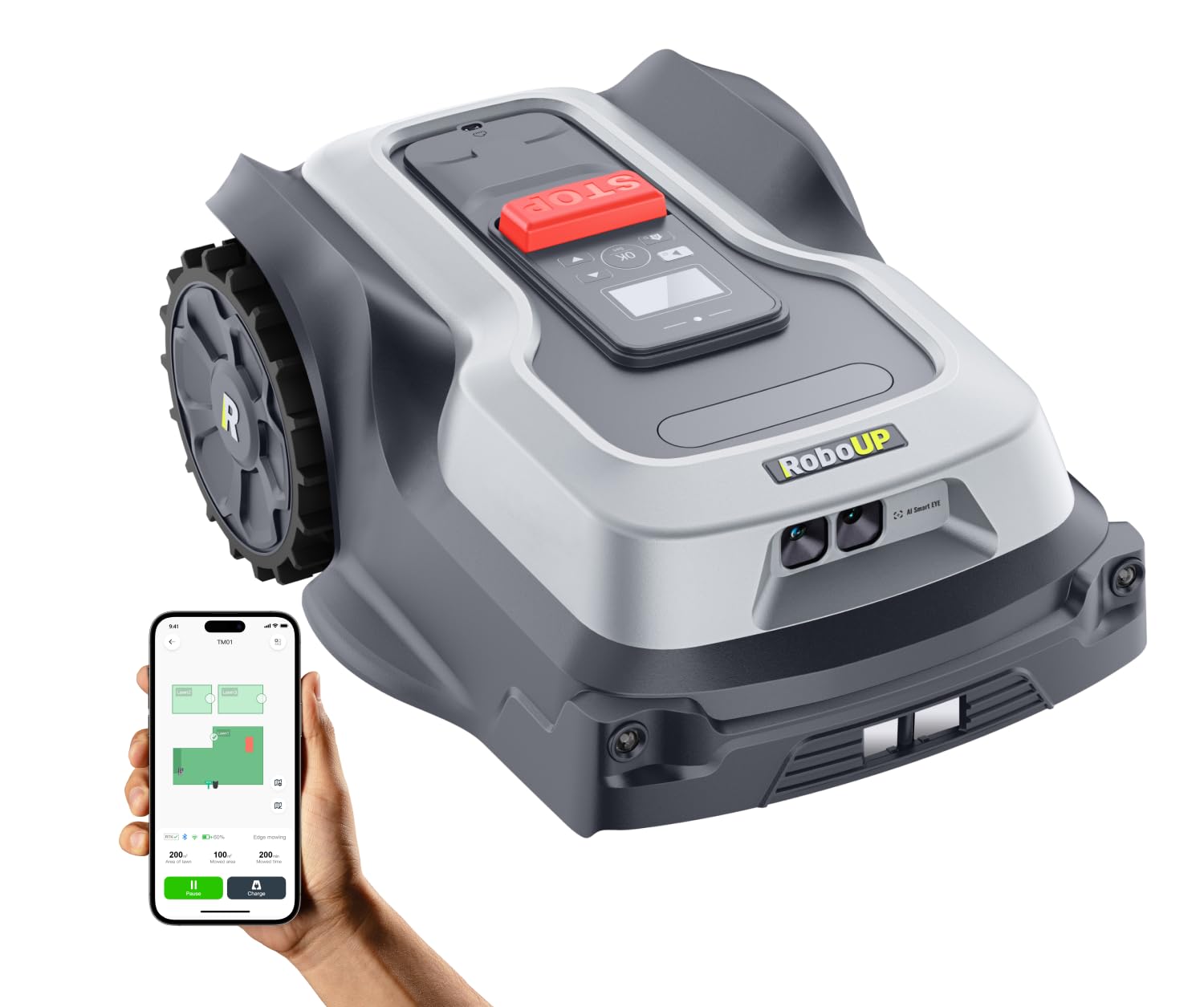
The RoboUP T1200Pro stands apart from other budget mowers because of its parallel mowing capability with automatic 15-degree angle adjustment, which creates the visually satisfying striped lawn patterns typically associated with much more expensive professional equipment. The AI camera system detects people, pets, and common garden objects in real time, and the mower automatically pauses if lifted or tilted — a safety feature that protects both the machine and curious children. The wire-free RTK setup requires just five steps: place the base, connect the GPS reference, open the app, define boundaries via virtual joystick, and start mowing.
The lightweight 24-pound body prevents rutting in wet soil, and the rain sensor triggers an automatic return to the charging station, with mowing resuming once the rain stops. At 20 percent battery, it returns to charge and resumes from where it left off when it reaches 90 percent. The energy-saving adaptive drive system reduces power consumption on flat sections while delivering extra torque on inclines up to 24 degrees. Owners report that the app allows fine-grained customization of mowing height, edge trimming frequency, and zone-specific cutting priorities.
Some units arrive with the battery in a critically discharged state — reading 1 percent after two and a half hours on the charger — requiring an indoor deep-charging cycle of 48 hours before the mower will operate properly. The RTK reference station needs a clear sky view and ships with only 30 feet of cable, which can be insufficient if the optimal base location is far from a power source. Users with non-contiguous front and back yards report that the mower cannot cross from one zone to another without manual relocation, and the app does not support multiple RTK base stations for properties where a single station cannot see both lawn sections.
Why it’s great
- 15° auto-angle adjustment creates professional striped lawn patterns
- Lightweight 24-lb design prevents damage to wet or soft soil
- Rain sensor auto-returns mower and resumes after weather clears
- Adaptive drive system conserves power on flat terrain
- Five-step setup is genuinely straightforward
Good to know
- Units arriving in deep discharge may require 48-hour indoor charging
- RTK base cable length may be too short for some yard layouts
- Does not support non-contiguous zones without manual relocation
- Some units begin missing large sections of grass after months of use
6. Sunseeker V3
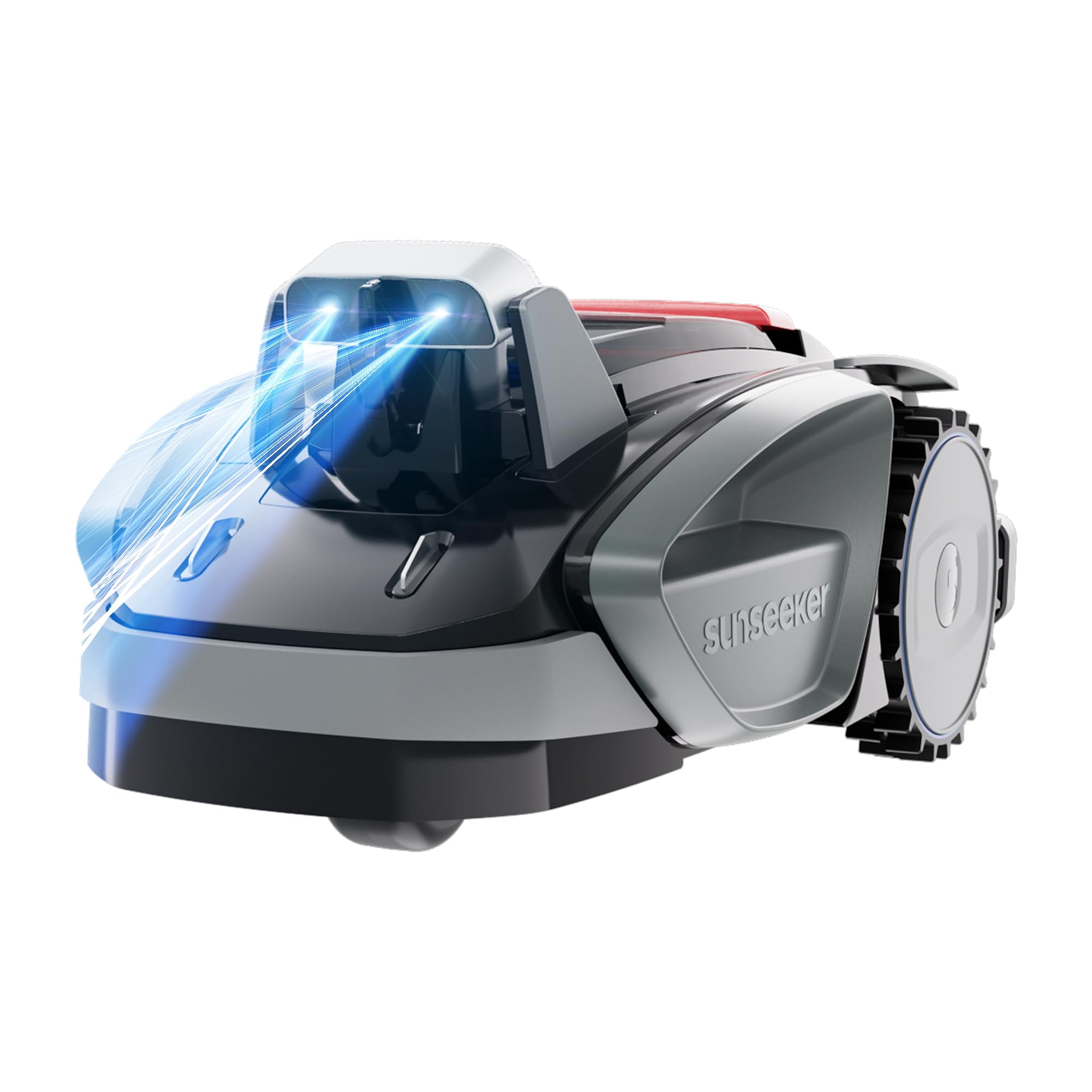
The Sunseeker V3 is purpose-built for the smallest segment of the market — lawns of 0.15 acre or less that have clear physical boundaries like fences, sidewalks, patios, or driveways. The dual-camera Vision AI recognizes these boundaries automatically, eliminating the need for buried perimeter wire, but the V3 also ships with magnetic strips that can be laid along open edges where visual contrast is insufficient. The one-click start button makes this the most accessible robot mower for non-technical users: press the button, and the mower begins its random-but-effective coverage pattern at a noise level of just 55 decibels.
The 8-inch cutting width with adjustable height ranging from 1.6 to 3.2 inches provides reasonable coverage for small lawns, and the 42 percent slope rating handles most gentle inclines. The auto-recharge feature ensures the mower returns to its charging station when the battery runs low, and the app allows scheduling and adjustment of cutting preferences remotely. At 20.3 pounds, the V3 is easily carried between front and back yards, and the plastic-polypropylene construction keeps maintenance simple — a quick hose rinse is usually sufficient after a mowing session.
The included magnetic strip is only about 30 feet long, which is insufficient for properties where large sections of the lawn border flower beds or driveways without a fence or wall. Sunseeker does not sell replacement magnetic strips separately, leaving owners with large open-edge yards to improvise with third-party materials or simply accept that the mower will not stay within bounds. The random mowing pattern, while simple, leaves uneven coverage compared to the systematic patterns used by RTK-equipped competitors, and the V3 cannot handle separated lawn zones — it is strictly a single-area machine.
Why it’s great
- One-button start is the simplest possible interface for a robot mower
- 55 dB noise level is among the quietest in the budget tier
- Vision AI detects clear physical boundaries without perimeter wire
- Lightweight 20.3-lb build for easy manual transport
- Auto-recharge ensures the mower returns to dock independently
Good to know
- Magnetic strip length (30 ft) is insufficient for open-edge properties
- Replacement magnetic strips not sold separately by manufacturer
- Random mowing pattern produces less consistent coverage than RTK path planning
- Cannot manage separated or non-contiguous lawn zones
- Struggles with complex terrain and uneven ground
7. WORX Landroid Vision Cloud WR310
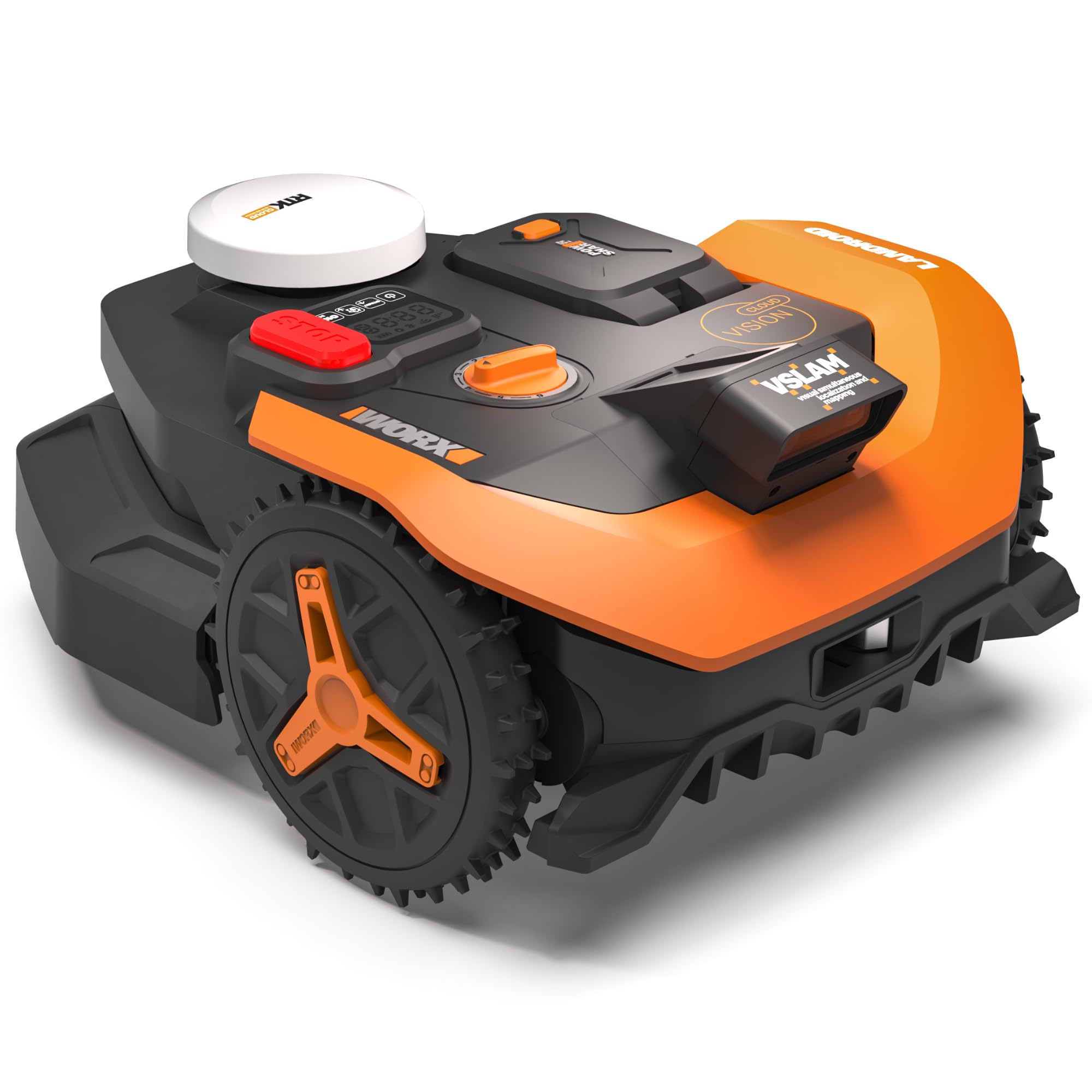
The WORX WR310 Vision Cloud uses a cloud-delivered RTK correction service that provides centimeter-level accuracy without requiring the user to install a local antenna or reference station anywhere on the property. The onboard neural network processes up to 10 trillion operations per second to power the AI obstacle avoidance, which does not just detect objects but identifies their type and predicts their movement. Vision AI also enables the mower to understand boundary types at a granular level — it can ride over low curbs and ridges to cut flush on one side while staying clear of fixed obstacles on the other.
The auto-mapping system creates smooth paths with close edge-following behavior from the first session, and the app supports unlimited mowing zones with custom pathways and no-go areas. The cutting width of 8.7 inches with height adjustable from 1.57 to 3.54 inches provides good coverage, and the V-SLAM sensor fusion seamlessly takes over navigation in shaded areas where RTK signals weaken. The 30 percent slope rating is modest compared to competitors, but the spiked wheels provide excellent traction on the inclines it can handle. The 80-minute battery life is adequate for the quarter-acre rating.
The initial setup process has been widely criticized as the most painful in this comparison — the WR310 requires a dedicated 2.4GHz Wi-Fi network, multiple firmware updates that can take 20 minutes each, and a careful reading of instructions that many users find unclear. The iOS app has a 2.5-star rating, reflecting frustration with connectivity drops and confusing zone configuration. Even after successful setup, the AI occasionally leaves uncut strips along certain boundary types, particularly where the lawn meets bark dust or decorative mulch that the vision system struggles to differentiate from grass.
Why it’s great
- Cloud RTK eliminates need for local antenna installation
- 10 trillion ops/sec AI provides intelligent object recognition
- Unlimited mowing zones with custom pathways via the app
- V-SLAM sensor fusion maintains navigation in shaded areas
- Spiked wheels provide excellent traction on slopes
Good to know
- Setup process is frustrating and requires dedicated 2.4GHz network
- iOS app rating of 2.5 stars reflects connectivity and usability issues
- Initial firmware updates can take 20+ minutes each
- AI may miss strips at boundaries where grass meets dark mulch
- Customer support can be slow to resolve setup-related issues
8. BESTMOW T100
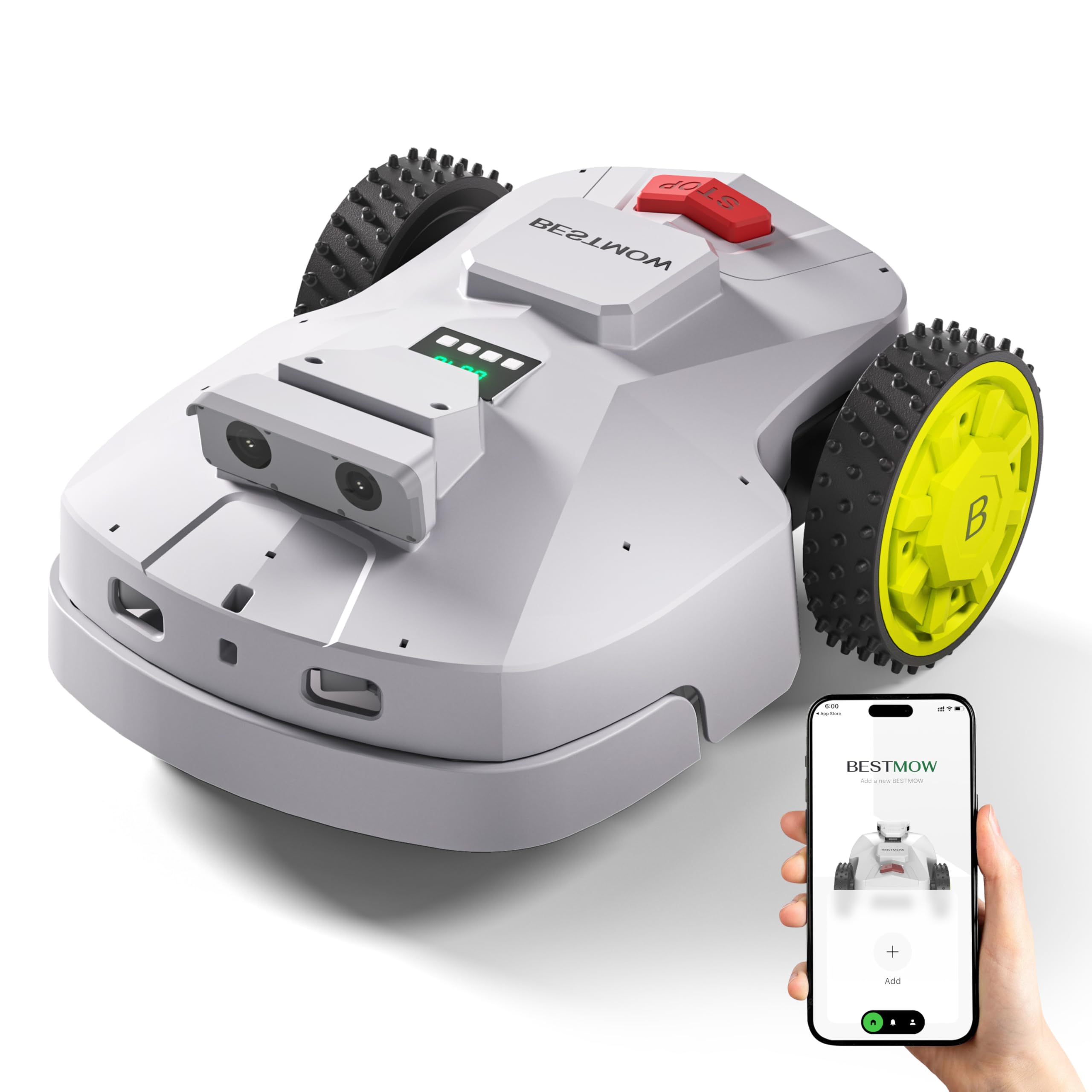
The BESTMOW T100 offers a 4-hour battery runtime — the longest in this budget-focused comparison — allowing it to cover up to 1.5 acres on a single charge. The RTK plus 4-Eye Vision system creates efficient mowing patterns with smart route planning, and the cutting height adjusts from 1 to 4 inches, accommodating everything from a close golf-green trim to a longer, drought-tolerant grass setting. The self-charging feature returns the mower to the dock when the battery drops below a set threshold and resumes from the same spot once charging is complete.
The anti-theft protection requires a one-time activation code sent after purchase, linking the mower to the owner’s account so it cannot be used if stolen. The ultra-quiet motor design allows day or night mowing, and the GPS mapping system provides real-time updates on the mower’s location and mowing progress even when the terrain is hilly or the weather changes. The ABS plastic and aluminum chassis weighs 41 pounds, providing sufficient mass to maintain traction on moderate slopes while staying manageable for occasional manual repositioning.
The anti-theft activation code system has caused significant problems for used-unit buyers — the app does not recognize purchases made outside the original owner’s account, and tech support has been slow to resolve activation disputes. The night-mowing capability is hampered by the camera-based vision system, which struggles to navigate in complete darkness; users report that the mower works flawlessly during the day but gets confused after sunset. Some units have experienced satellite connection failures after months of service, with support suggesting the issue is a server problem rather than a hardware fault, leaving owners without a timeline for resolution.
Why it’s great
- 4-hour battery runtime is best-in-class for this tier
- Cutting height range of 1–4 inches suits diverse grass types
- Anti-theft activation code links mower to owner account
- Quiet motor allows undetected nighttime mowing in daylight conditions
- GPS mapping provides real-time progress updates via app
Good to know
- Anti-theft code system makes used-unit purchases risky
- Night mowing capability is unreliable due to camera limitations
- Some units lose satellite connection after months and can’t connect
- Customer support response times can be slow on complex issues
- Requires flat base location and separate transmitter installation
9. Sunseeker X3 Plus
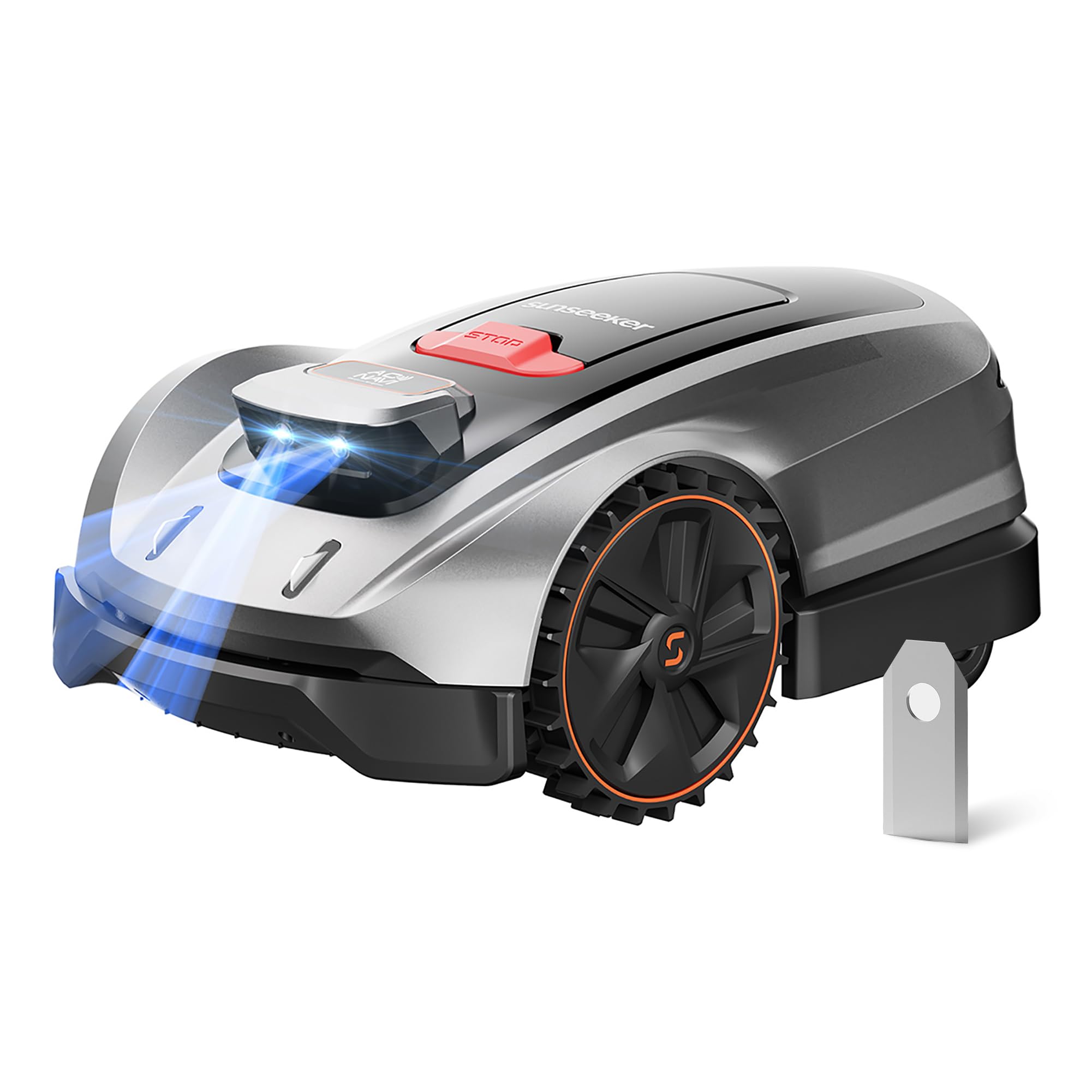
The Sunseeker X3 Plus targets the suburban 0.3-acre yard with a hybrid navigation system it calls AONavi, combining RTK positioning with VSLAM visual mapping. The offset blade design is a standout feature — it positions the cutting edge closer to the mower’s side, enabling the unit to cut within an inch of fences, walkways, and hardscape borders without requiring a separate edge routine. This ride-on-edge approach reduces the manual string-trimming follow-up that most budget mowers still require along borders.
The wire-free virtual boundaries are managed entirely through the Sunseeker app, which allows users to draw no-go zones, adjust cutting height across seven positions ranging from 1.6 to 3.2 inches, and monitor mowing progress in real time. The camera and ultrasonic sensor combination provides obstacle detection and route adjustment without relying exclusively on satellite signals. At 19.93 pounds, the X3 Plus is the lightest premium-tier mower in this comparison, making it easy to lift over garden obstacles or carry between front and back yards.
Some users have reported that the mower leaves grass tassels stuck to the idle wheels after mowing, creating small clumps that need manual cleanup. The unit attempts to connect to servers based in China and Hong Kong — blocking those connections can trigger a “plan path failed” error that prevents mowing from starting, which creates a privacy concern for users who prefer to keep their IoT devices on a local network. Signal drops have been reported in areas where the RTK reference station cannot be mounted high enough due to HOA restrictions, and the app interface has been described as unintuitive for first-time users.
Why it’s great
- Offset blade ride-on-edge design reduces need for manual trimming
- AONavi hybrid navigation (RTK + VSLAM) maintains accuracy in varied conditions
- Lightest build at 19.93 lbs for easy manual handling
- Ultrasonic sensor adds obstacle detection redundancy beyond cameras
- Virtual boundary editing via app is flexible and responsive
Good to know
- No-go zone and virtual wall features may require a subscription or in-app purchase
- Grass clippings can accumulate on idle wheels, leaving clumps
- Blocking China/HK servers can prevent mower from starting
- App interface is not intuitive for first-time setup
- RTK signal reliability depends on clear sky view and proper antenna placement
10. Segway Navimow i206 AWD
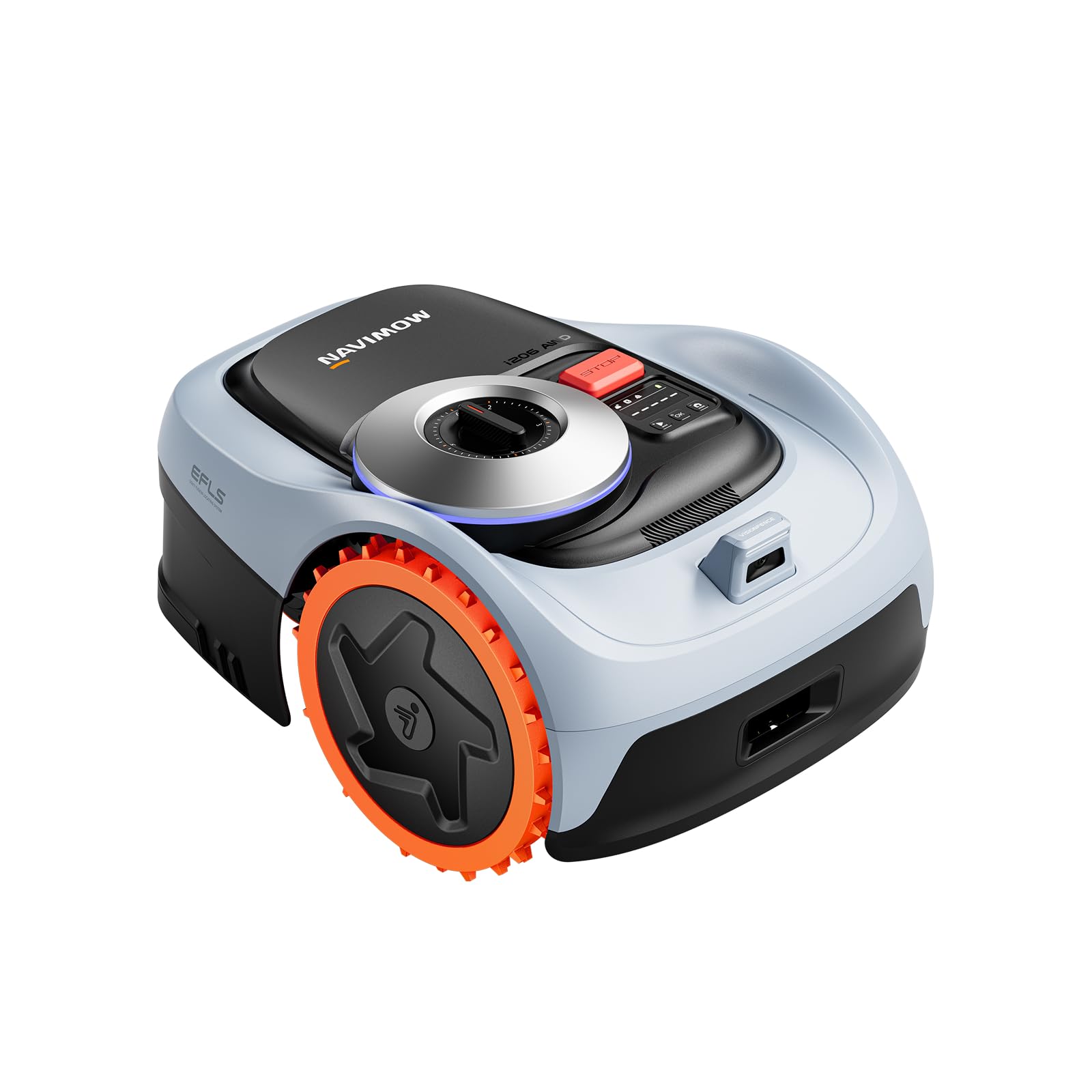
The Segway Navimow i206 AWD is the dedicated slope solution in this budget-adjacent category, featuring automotive-grade Electronic Stability Control (ESC) paired with all-wheel drive that handles inclines up to 45 percent (24 degrees) without losing traction. The third-wheel zero-turn design allows the mower to rotate in place, eliminating the skid marks that two-wheel-drive units leave on tight turns, which protects the grass from scuffing. The EFLS Network RTK uses tri-frequency satellite corrections combined with vision-based positioning for one-tap auto mapping that completes in minutes.
The cutting height ranges from 2.0 to 3.6 inches with a 7.1-inch cutting width, and the on-demand drive system engages all-wheel torque only when needed — on flat sections, the mower conserves energy by operating in two-wheel mode, extending the 2.5Ah battery’s runtime to cover up to 1,350 square feet per charge. The app manages up to 20 zones with optimized mowing paths and auto-resume after charging. Real-time GPS alerts notify the owner if the mower is lifted or leaves its designated area, and the anti-theft system ties the unit to the owner’s account.
The i206 AWD has a controversial software-imposed coverage cap — exceeding the limit requires an in-app upgrade to a pricier model tier. Some owners discovered this only after setup, and the brand’s customer service response has been described as unhelpful when dealing with this issue. The setup process is genuinely technical; non-tech-savvy users may find the initial configuration frustrating despite the mower working perfectly once configured. The battery capacity is relatively small for a premium-priced mower, and yards approaching the 0.15-acre maximum will require the mower to run near-continuously.
Why it’s great
- All-wheel drive with ESC provides class-leading slope performance
- Zero-turn steering eliminates grass-scuffing skid marks
- On-demand drive system conserves battery on flat terrain
- Tri-frequency RTK + vision maps small yards in minutes
- Real-time GPS alerts for theft prevention and location tracking
Good to know
- Software-imposed coverage cap forces upgrade for larger lawns
- Setup process is technical and less intuitive for non-tech users
- Small 2.5Ah battery limits continuous runtime
- Some units suffer from artificial software locks that freeze navigation
- Storing in a metal shed can cause the unit to lose its programmed map
11. WORX WR320 Vision Cloud
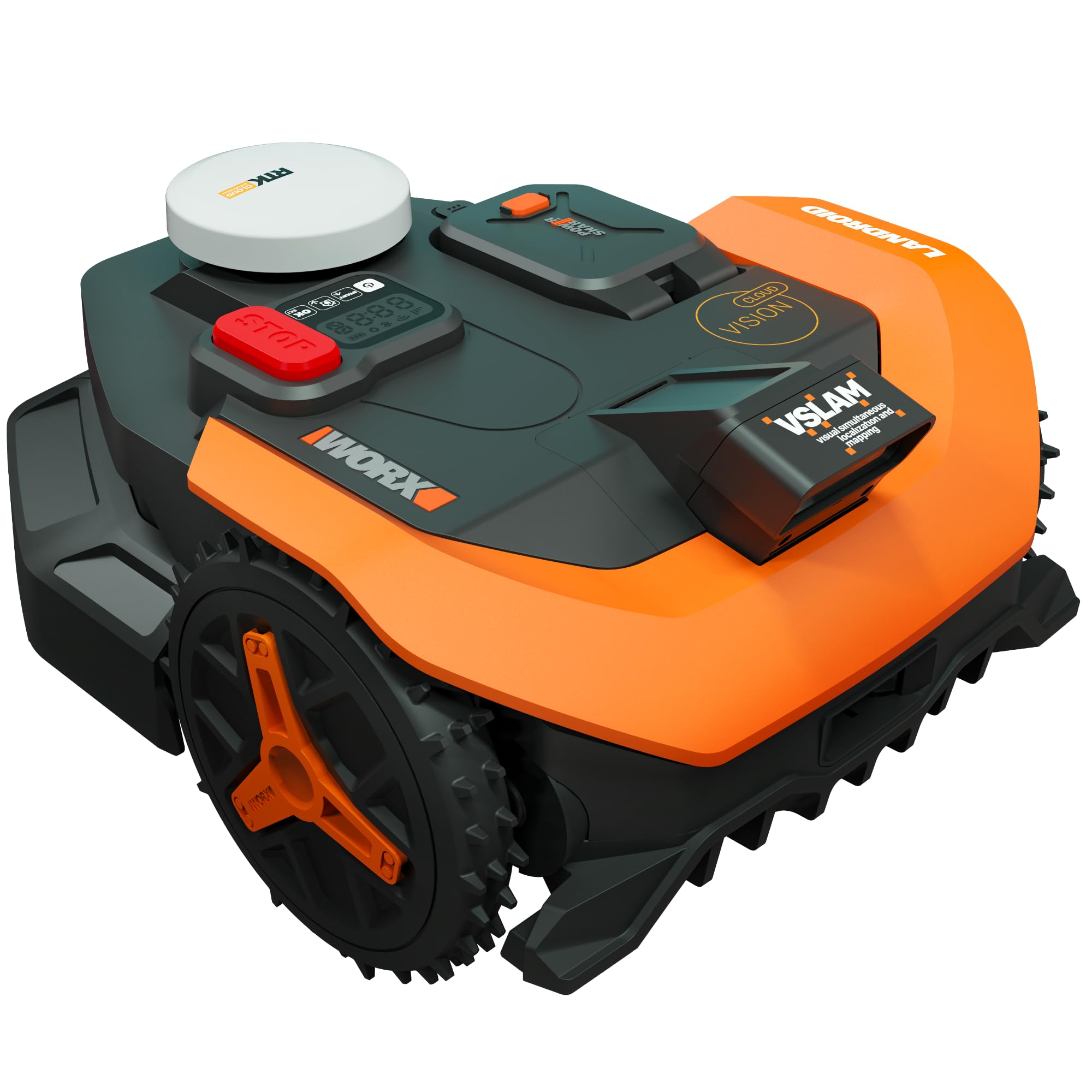
The WORX WR320 Vision Cloud is the half-acre version of the WR310, adding RadioLink technology that enhances Bluetooth and Wi-Fi connectivity across larger properties where standard consumer Wi-Fi signals struggle to reach. The cloud RTK system delivers centimeter-level accuracy without a local antenna, and the AI obstacle avoidance uses the same 10-trillion-ops-per-second neural network found in the WR310. The auto-mapping system covers up to half an acre with smooth paths and close edge-following, and the cut-to-edge border crossing behavior allows the mower to drive over low ridges before cutting along fixed boundaries.
The app supports infinite mowing zones with custom pathways and no-go areas, and the mowing patterns include Parallel, Checkerboard, Diamond, and Natural finishes that can be switched between jobs without remapping. The cutting width of 8.7 inches with height adjustable from 1.57 to 3.54 inches provides the same deck performance as the WR310, and the V-SLAM sensor fusion ensures navigation remains accurate in shaded zones where GPS signals are weak. The 60-minute battery runtime is shorter than ideal for a half-acre mower, but the fast charging completes in about an hour.
Owners who have wrestled with the WR310’s setup process will not find relief here — the WR320 shares the same finicky requirements for a dedicated 2.4GHz network and the same extended firmware update process. Some units suffer from a chronic inability to find their starting point after completing a mow, requiring the user to manually guide the mower back to the charger. Customer support has been described as unhelpful by some owners who experienced persistent errors and beeping that the support team could not diagnose remotely. The RadioLink feature works well in open yards but can still drop connection in properties with metal sheds or dense tree cover that interferes with signal propagation.
Why it’s great
- RadioLink extends BT/WiFi connectivity across larger half-acre lots
- Cloud RTK delivers centimeter accuracy without local antenna
- Infinite mowing zones with custom pathways and no-go areas
- Multiple mowing patterns (Parallel, Checkerboard, Diamond, Natural)
- V-SLAM fusion maintains navigation in shaded or obstructed zones
Good to know
- Setup is as finicky as the WR310 — dedicated 2.4GHz network required
- Some units fail to find starting point after mowing, needing manual guidance
- 60-minute battery is short for half-acre lots despite fast charging
- Customer support has been unhelpful for chronic error beeping issues
- RadioLink can still drop in areas with metal structures or heavy foliage
12. MOVA LiDAX Ultra 1000
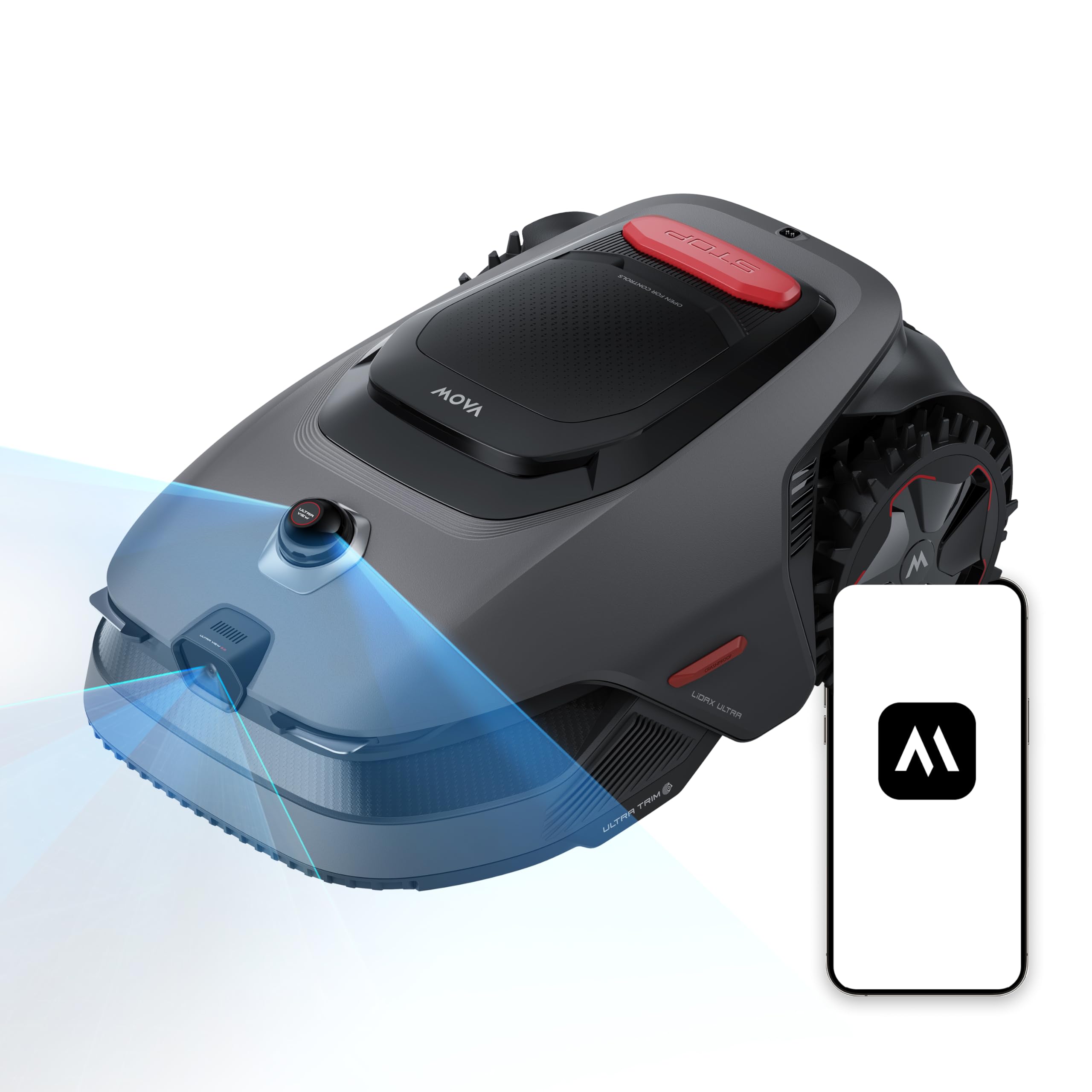
The MOVA LiDAX Ultra 1000 is the only mower in this comparison that eliminates the need for both perimeter wire AND an RTK reference station. Instead, it uses 360-degree 3D LiDAR combined with AI vision to build a centimeter-accurate point cloud map of the yard without any external positioning hardware. The UltraTrim 1.0 movable disc extends the cutting coverage to within two inches of walls, hedges, and raised edges, and the ride-on-edge behavior allows it to drive flush with lawn-level pavement for a clean finish. The system can manage two independent maps and up to 150 managed zones, which is enough to handle separate front and back yards or even two properties.
The rear-wheel drive with off-road tires handles slopes up to 45 percent and climbs over obstacles up to 1.6 inches high. The AI vision powered by 3D point cloud data detects over 300 types of obstacles and continuously updates its recognition algorithms via firmware. The cutting height adjusts electronically from 1.2 to 3.9 inches via the MOVAhome App, and the U-shaped path planning ensures every inch of the lawn is covered systematically. When the battery runs low during a mow, the mower returns to the charging dock and resumes exactly where it left off — no need to restart the pattern from scratch.
The 60-minute battery runtime is modest for the 0.25-acre rating, and the dock alignment system can be finicky, occasionally requiring manual adjustments to ensure proper charging contact. The LiDAR sensor adds a noticeable height to the mower, which may prevent it from fitting under low decks or dense shrubbery. Some users report that the UltraTrim disc, while effective, does not eliminate the need for occasional manual edging along very tight borders — it reduces the frequency of string-trimmer touch-ups but does not fully replace them. First-time owners should also account for the learning curve of the MOVAhome App, which has a steeper onboarding than WORX or Mammotion apps.
Why it’s great
- 360° LiDAR eliminates need for both perimeter wire AND RTK station
- UltraTrim movable disc cuts within 2 inches of walls and edges
- Dual map support for separate front/back yards or multiple properties
- Up to 150 managed zones with zone-specific mowing plans
- U-shaped path planning ensures systematic coverage
Good to know
- 60-minute battery runtime is short for the 0.25-acre coverage claim
- Dock alignment can be finicky and require manual adjustment
- LiDAR height may prevent mowing under low decks or thick shrubs
- UltraTrim reduces but does not eliminate need for occasional manual edging
- MOVAhome App has a steeper learning curve than competitors
13. Mammotion YUKA mini 2 1000H
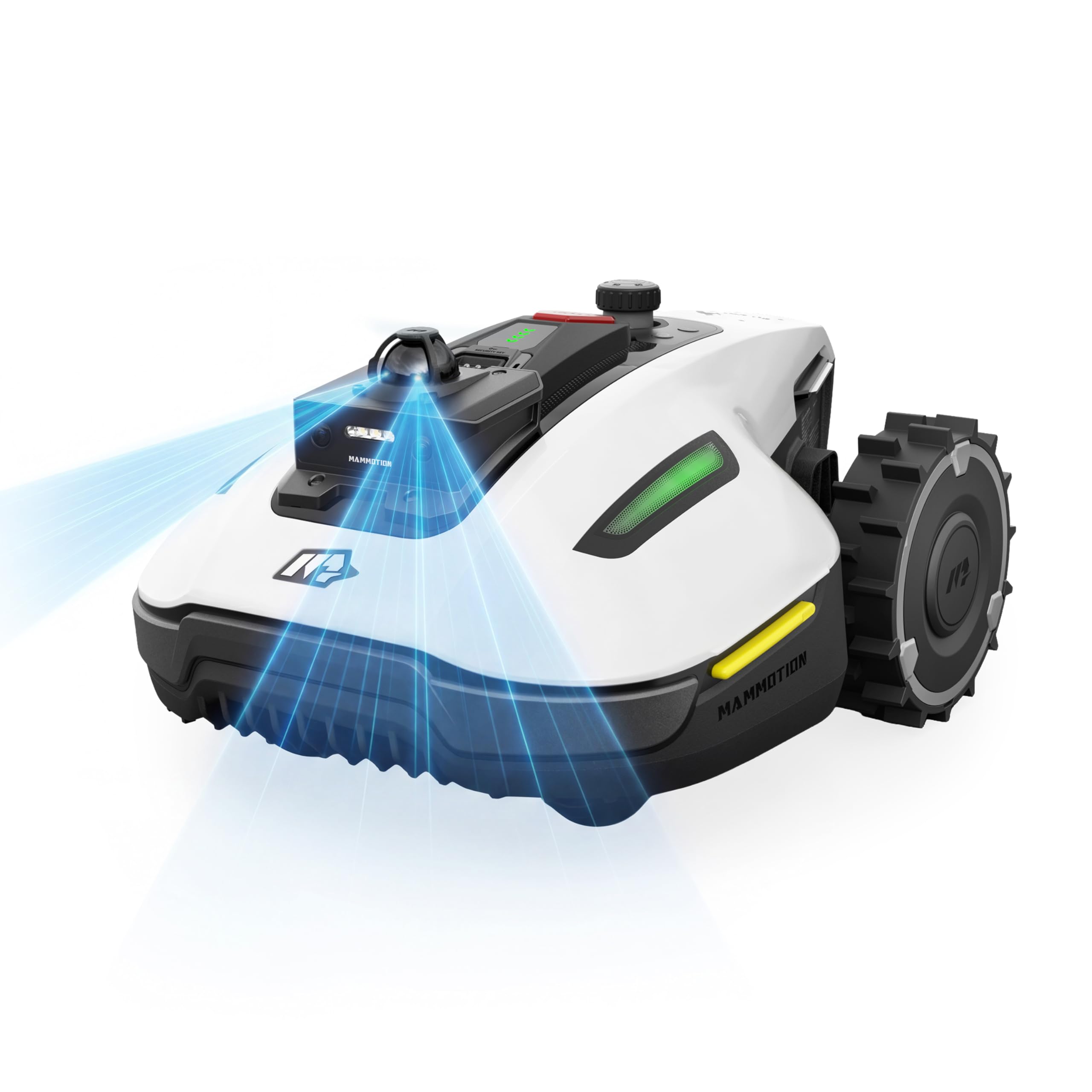
The Mammotion YUKA mini 2 1000H introduces DropMow mode, a genuinely new user interaction for the category: place the mower on the lawn, press Mow&Start, and it begins an immediate N-shaped coverage pattern without any mapping process or prior setup. The temporary map is not saved, but that is the point — DropMow is designed for quick one-time cuts where you want to avoid the 10- to 30-minute mapping session. The 360-degree by 45-degree ultra-wide LiDAR builds a high-density 3D point cloud of the yard with a detection range of up to 200 feet in diameter and ±6 inch accuracy, maintaining precise positioning even in low light, grass cover, or light fog.
The upgraded AI chip processes 10 trillion operations per second and supports a LiDAR + Vision dual fusion system that recognizes over 300 obstacle types, predicting their movement for proactive avoidance rather than reactive stopping. The 6.1Ah long-lasting battery runs for hours on a single charge and is supported by a smart battery management system that allows the user to set an 80 percent charge limit to extend overall battery lifespan and schedule off-peak charging to take advantage of lower electricity rates. After the main mowing pattern completes, the mower automatically performs an extra perimeter pass along boundaries to ensure thorough edge coverage.
The 1000H manages up to 10 non-continuous mowing zones with virtual walls, no-go zones, and no-stop zones configured in the app. The smallest pathway it can navigate is 21.65 inches, and the 45 percent slope rating handles steep inclines. Some users have encountered a persistent “mapping error 1188” during initial setup that requires multiple retries to resolve, and the AI-based weekend support line has wait times exceeding 30 minutes. The DropMow mode, while innovative, lacks the systematic coverage of a full map — it is best suited for quick maintenance cuts between full mapping sessions.
Why it’s great
- DropMow mode enables instant mowing without any mapping process
- 360° LiDAR maintains positioning in low light, grass cover, and light fog
- Smart battery management with charge limits and off-peak scheduling
- AI predicts obstacle movement for proactive avoidance
- Automatic extra perimeter pass for thorough edge coverage
Good to know
- Some units experience persistent error 1188 during initial setup
- AI support lines can have long wait times during peak hours
- DropMow mode lacks the coverage efficiency of full mapped patterns
- Maximum of 10 zones limits complex multi-area property management
- Higher price point stretches the definition of “budget” for some buyers
FAQ
Can a budget robot lawn mower handle my sloped yard?
How long does it take for a wire-free mower to map my lawn?
Will a budget robot mower work if my yard has no clear physical borders?
Do budget robot mowers work at night or in the rain?
Can I use a budget robot mower to maintain two separate lawn areas?
Final Thoughts: The Verdict
For most users, the best budget robot lawn mower winner is the ANTHBOT M9 because it combines dual HDR cameras with full-band RTK positioning at a price that undercuts competing wire-free mowers while still delivering reliable obstacle avoidance, true auto-mapping, and enough battery for a quarter-acre lot. If you need better edge coverage and can tolerate the map size cap, grab the ECOVACS GOAT O1000 RTK. And for a property with steep slopes or a need for all-wheel-drive traction, nothing in this tier beats the Segway Navimow i206 AWD.

Mo Maruf
I created WellFizz to bridge the gap between vague wellness advice and actionable solutions. My mission is simple: to decode the research and give you practical tools you can actually use.
Beyond the data, I am a passionate traveler. I believe that stepping away from the screen to explore new environments is essential for mental clarity and physical vitality.