Our readers keep the lights on and my smoothie glass nicely filled. As an Amazon Associate, I earn from qualifying purchases.
Picking a budget-friendly all-in-one printer and scanner means navigating a market where the purchase price is just the opening bid. Every model promises a low buy-in, but the real cost of ownership — from ink cartridge replacement intervals to paper tray capacity — determines whether a cheap printer stays cheap. The wrong choice leads to frustrating reconnection loops, smudged scans, and cartridges that run dry mid-project.
I’m Mohammad Maruf — the founder and writer behind WellFizz. After analyzing the spec sheets and user-reported longevity data across seven of the most talked-about budget-friendly all-in-one units, I’ve separated the machines that deliver reliable output from those that only look good on paper.
This guide focuses on the best budget printer and scanner options that balance low entry cost with durable print quality and scan performance for home and small office workflows.
How To Choose The Best Budget Printer And Scanner
Choosing a cost-effective all-in-one printer and scanner requires looking past the price tag and examining three key factors that define real-world performance: ink cost per page, scan functionality, and connectivity reliability. Budget models often cut corners in one of these areas, turning an apparent bargain into a long-term expense.
Ink Cost Versus Purchase Price
The cheapest printer frequently uses the most expensive ink. Look for models with individual color cartridges so you replace only the empty color, not the whole set. Entry-level models often ship with “starter” cartridges that expel far fewer pages than standard refills, skewing the first-year cost. Printers with subscription ink services can lower per-page expense if your volume is steady, but lock you into proprietary cartridges. For truly low-main ownership, check the page yield of the standard cartridge (not the starter) and multiply by the expected annual print volume.
Scanner Specs That Save Time
An Automatic Document Feeder (ADF) transforms scanning from a page-by-page chore into a multi-page batch operation. Budget-friendly scanners often omit this, forcing you to lift the lid every time. For home office users who digitize contracts, receipts, or multi-page documents, an ADF is non-negotiable. Optical resolution of 600 dpi is sufficient for text and most photo scans; anything below produces visibly soft edges. If duplex scanning is critical, you’ll need to check whether the model supports automatic two-sided scanning or only manual flipping.
Connectivity That Works Out of the Box
Wireless reliability is the single biggest headache reported by budget printer owners. Dual-band Wi-Fi (2.4 GHz and 5 GHz) offers more stable connections than single-band 2.4 GHz only, which is prone to interference from neighboring networks. Touchscreen interfaces and dedicated mobile apps reduce setup friction, while support for Apple AirPrint and Mopria ensures direct printing from phones without proprietary software. Models that require compulsory account registration for basic functions add a log-in barrier that many casual users find frustrating.
Quick Comparison
On smaller screens, swipe sideways to see the full table.
| Model | Category | Best For | Key Spec | Amazon |
|---|---|---|---|---|
| Brother MFC-J1410DW | Mid-Range | Touchscreen & high-speed office | 16 ppm black, 2.7″ touchscreen | Amazon |
| HP OfficeJet Pro 8125 | Premium | High-volume home office | 20 ppm black, 225-sheet tray | Amazon |
| Brother MFC-J1360DW | Mid-Range | Budget office with ADF | 16 ppm black, 20-sheet ADF | Amazon |
| Epson WF-2930 | Mid-Range | Voice-activated & reliable office | 10 ppm black, auto duplex | Amazon |
| Canon PIXMA TR7120 | Mid-Range | Hybrid workers needing ADF & duplex | 14 ppm black, auto document feeder | Amazon |
| Canon PIXMA TS7720 | Mid-Range | Home photo and fast document printing | 15 ppm black, 2.7″ touchscreen | Amazon |
| HP DeskJet 2855e | Budget | Ultra-low entry for light home printing | 7.5 ppm black, manual duplex | Amazon |
In‑Depth Reviews
1. Brother MFC-J1410DW
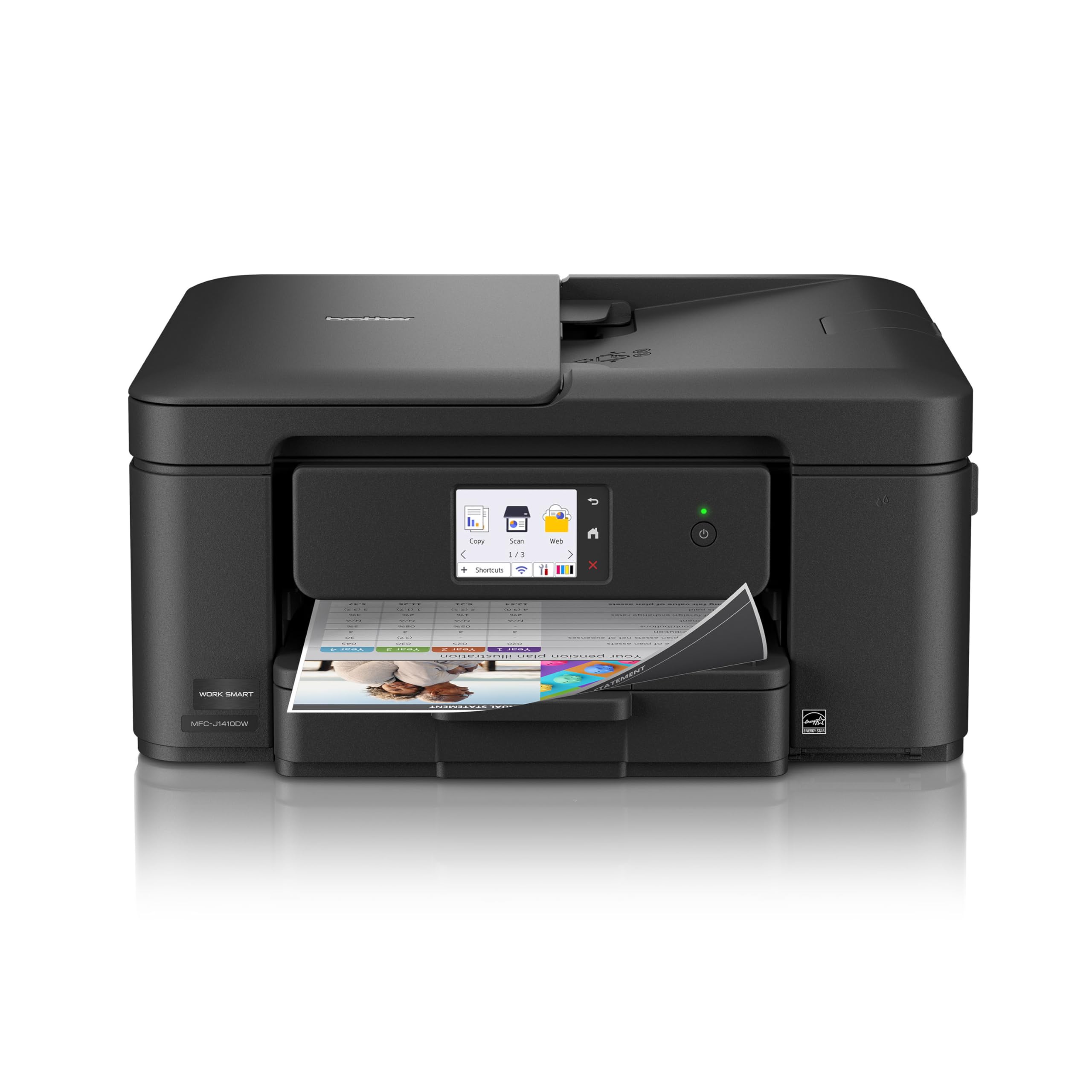
The Brother MFC-J1410DW delivers the best overall balance of speed, feature set, and long-term value. With print speeds hitting 16 ppm in black and 9 ppm in color, it competes with more expensive office-class machines while maintaining a compact footprint suitable for a home desk. The 2.7-inch color touchscreen provides intuitive navigation through cloud app scanning, copy adjustments, and network settings, reducing the reliance on a smartphone for basic tasks. Users consistently report that the Brother Mobile Connect app handles wireless printing and scanning without the constant re-pairing that plagues many budget all-in-ones.
Scanning benefits from a 20-sheet Automatic Document Feeder (ADF), which automates multi-page digitization and works in tandem with automatic duplex printing for paper-saving two-sided output. The 150-sheet input tray handles moderate-volume workloads, and the individual LC501 ink cartridges mean you replace only the exhausted color rather than a combined tri-color unit. Feedback highlights that the initial page print time — approximately 6.2 seconds for black — keeps quick document jobs moving without the lengthy warm-up seen in older inkjet designs.
Some users report that firmware updates can be a multi-step process and that the plastic chassis feels noticeably lighter than premium-office models. The ADF is single-sided only, so duplex scanning requires manual page flipping. For those who prioritize a dependable wireless print center with strong mobile integration and controllable ink costs, the MFC-J1410DW sets the standard in this price tier.
Why it’s great
- Fast 16 ppm black print speed with crisp text output
- Large 2.7-inch touchscreen simplifies settings and cloud scanning
- Individual ink cartridges reduce wasted color when one channel empties
Good to know
- ADF is single-sided only; no automatic duplex scanning
- Firmware updates can be confusing and require multiple attempts
- Build is lightweight and may feel less substantial under heavy daily use
2. HP OfficeJet Pro 8125
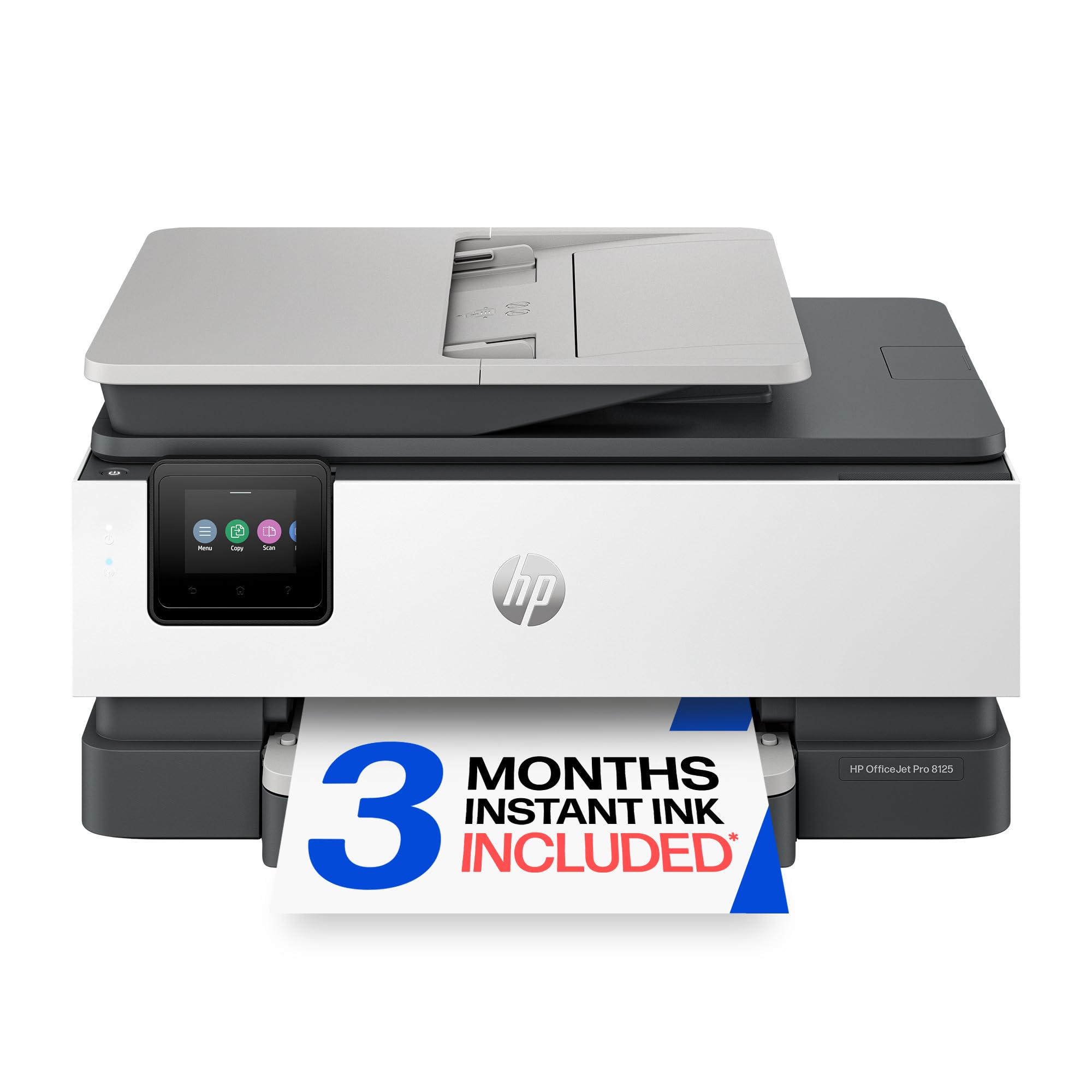
The HP OfficeJet Pro 8125 targets home offices that push higher monthly page counts. Its 20 ppm black print speed is the fastest in this group, and the 225-sheet input tray cuts down on refill interruptions during long document runs. The 2.7-inch touchscreen uses a phone-like interface that responds quickly, and the auto document feeder handles batch scanning and copying without user supervision. The built-in dual-band Wi-Fi (2.4 GHz and 5 GHz) resolves many of the connectivity dropouts reported on single-band budget models — users with PC and phone setups both connect without the constant re-association that frustrates some earlier HP units.
The HP Smart app delivers robust mobile functionality, and the AI-assisted print formatting automatically strips unwanted web page clutter before printing. The Instant Ink trial lowers per-page cost for the first three months, but after that, the HP 923 cartridges carry a higher replacement expense than many competitors’ standard options. The printer supports Ethernet and USB alongside wireless, making it a viable choice for wired office networks that demand consistent uptime. Users highlight the easy guided setup and the reliable duplex mechanism that never misfeeds when flipping letter-size sheets.
Critics note the build feels lighter and smaller than previous OfficeJet generations, and the requirement to use only HP chipped cartridges (firmware actively blocks third-party alternatives) introduces long-term cost constraints. The scanner delivers clean 600 dpi resolution, and the ADF supports up to 35 sheets. For those who need maximum speed and a high-capacity tray under the budget ceiling, the OfficeJet Pro 8125 provides genuine office-class throughput.
Why it’s great
- Fastest black print speed at 20 ppm for heavy document output
- Large 225-sheet paper tray reduces frequent refills
- Dual-band Wi-Fi and Ethernet options for stable networking
Good to know
- Proprietary cartridge chip enforcement blocks all third-party ink
- Build quality is lighter than prior OfficeJet Pro models
- Initial PC setup can require multiple software installation attempts
3. Brother MFC-J1360DW
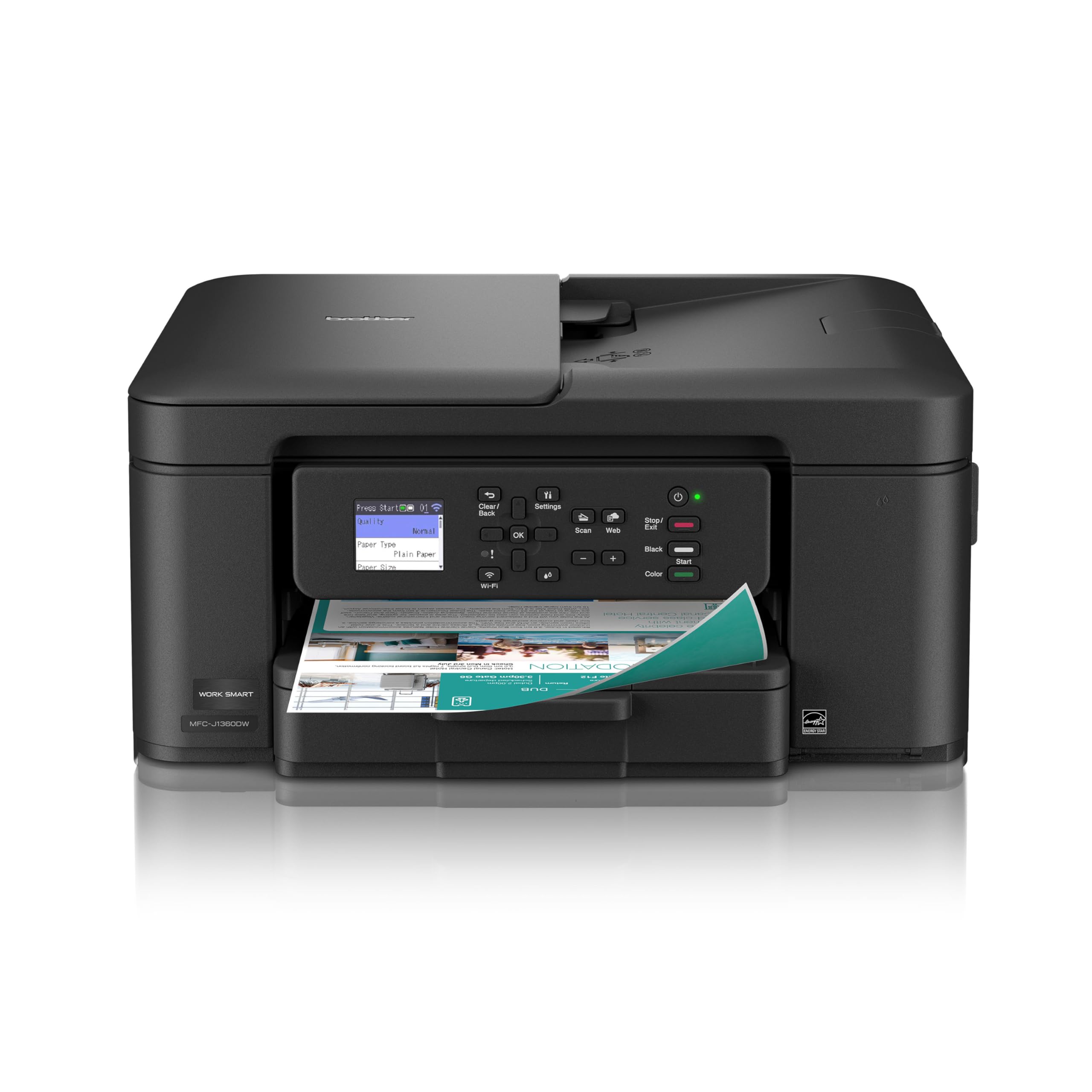
The Brother MFC-J1360DW strips away the touchscreen (using a 1.8-inch color display with physical buttons) to hit a lower price point while keeping the core office features that matter most: a 20-sheet ADF, automatic duplex printing, and cloud app connectivity. Users report that the wireless setup through the Brother Mobile Connect app is one of the most reliable implementations in this class — once configured, the printer stays connected without daily re-pairing. Print speeds of 16 ppm black and 9 ppm color match the more expensive MFC-J1410DW, so there is no performance trade-off for the lower entry cost.
The 150-sheet paper tray is standard for this tier, and the USB 2.0 port provides a fallback for wired-only environments. Scanning to email, Google Drive, or OneDrive works directly from the display without needing a computer turned on, a convenience that saves time for remote workers. The LC501 series ink cartridges offer competitive page yields, and individual color cartridges prevent the forced replacement of still-full cyan when magenta runs dry. Several long-term users mention owning multiple Brother printers and cite consistent reliability over years of intermittent use.
Setup can be finicky — the EasySetup software sometimes fails, requiring a full driver package download via the support site, and some users note that the plastic casing feels cheap compared to business-class models. The small monochrome display limits what you can do without the app. For home office users seeking proven reliability and the scanning convenience of an ADF at the lowest possible price, the MFC-J1360DW offers the best value proposition in the lineup.
Why it’s great
- 20-sheet ADF enables hands-free multi-page scanning
- Reliable wireless connectivity maintains connection without daily resets
- Individual ink cartridges and competitive page yields reduce per-print cost
Good to know
- Setup software can fail; full driver download may be required
- 1.8-inch display is small and not touchscreen
- Plastic chassis feels less durable than premium office printers
4. Epson WorkForce WF-2930
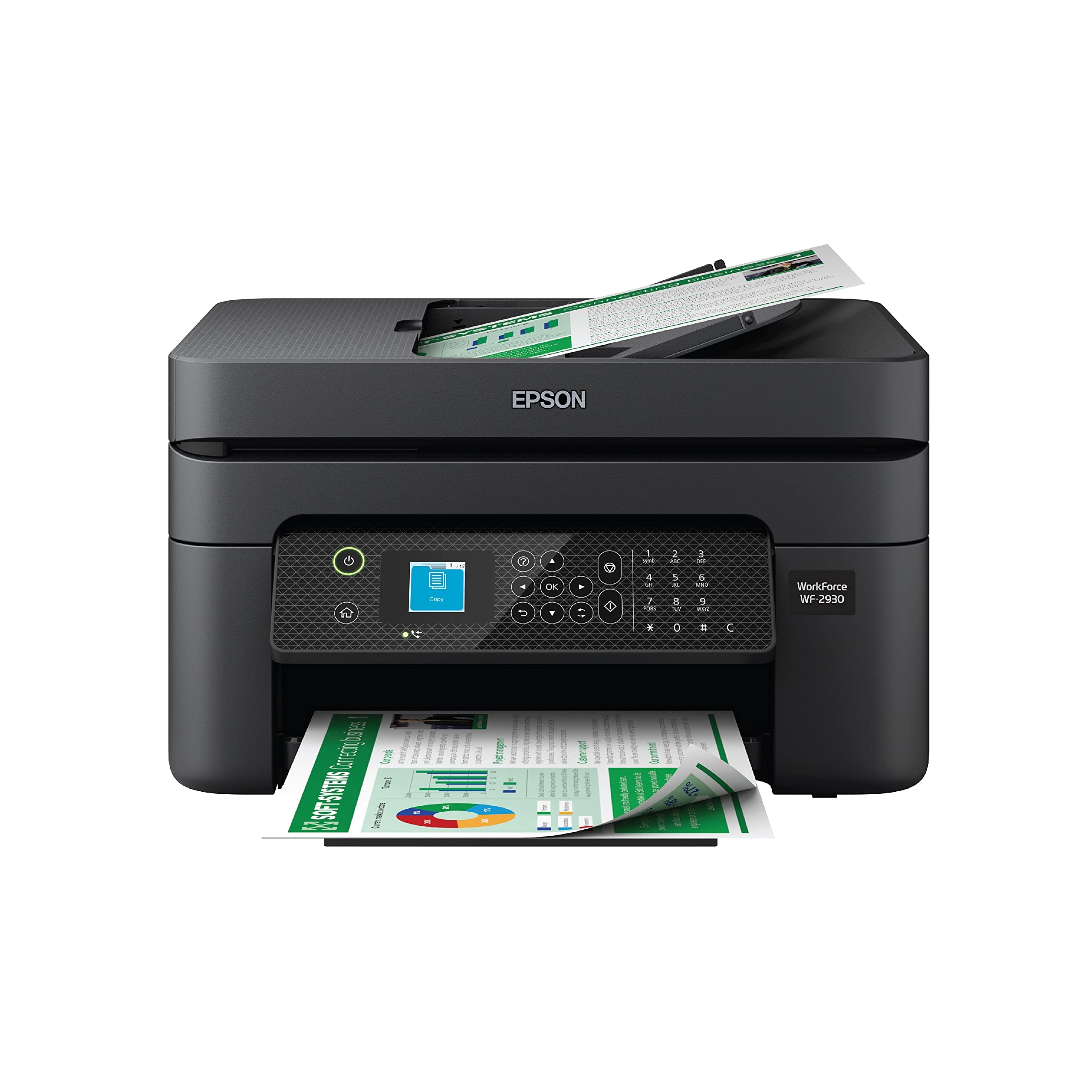
The Epson WorkForce WF-2930 distinguishes itself with voice-activated printing through Alexa and Siri, a feature rare at this price level. The 1.4-inch color display is modest but sufficient for navigating network settings and checking ink levels, and the Epson Smart Panel app handles most operations from a phone. PrecisionCore printhead technology delivers sharp black text at 10 ppm and vibrant color graphics at 5 ppm — not the fastest in the roundup, but the output quality is noticeably smooth, with fine text edges that avoid the feathering common in cheaper inkjets. The automatic duplex printing is reliable and saves paper without manual flipping.
The scanner, powered by the Epson ScanSmart software, produces searchable PDFs and JPEGs at 48-bit color depth, retaining detail in shadows and highlights. The ADF accommodates up to 30 sheets, making it suitable for batch digitization of contracts and receipts. Users highlight that the individual ink cartridges (Claria 232 series) mean you only replace what’s empty, and the printer uses a permanent printhead that’s designed to last the life of the machine — a design choice that sidesteps the head-clogging issues of disposable printhead cartridges. The Epson Ink and Paper subscription program offers automatic replenishment for those who want set-and-forget supply management.
Some users report that a firmware update forcibly disabled the printer after detecting non-genuine cartridges, and reversing the update requires a special USB cable and keyboard sequence. The physical build is also described as flimsy, with a lightweight plastic body that flexes under pressure when loading paper. For those who value head quality, voice printing, and durable long-term printhead design, the WF-2930 delivers reliable output if you stick with genuine Epson ink.
Why it’s great
- Voice-activated printing via Alexa and Siri for hands-free operation
- Permanent PrecisionCore printhead designed for the printer’s lifespan
- 48-bit color depth scanner for detailed document and photo digitization
Good to know
- Firmware updates can enforce cartridge restrictions and require rollback steps
- Physical build feels lightweight and flimsy
- Print speed (10 ppm black) is slower than some peers in this list
5. Canon PIXMA TR7120

The Canon PIXMA TR7120 packs an Auto Document Feeder (ADF) and automatic duplex printing into a chassis that measures just 13.5 inches deep, making it one of the most space-efficient printers in the group. The dual-band Wi-Fi (both 2.4 GHz and 5 GHz) solves the connection stability issues that plague single-band units — users report it stays connected without requiring daily reconfiguration. The 1.42-inch monochrome OLED display provides glanceable ink level monitoring and printer status without a full touchscreen interface. Print speeds of 14 ppm black and 9 ppm color place it solidly in the mid-range of this list, and the two-cartridge hybrid ink system (one black pigment, one tri-color) delivers sharp text and vivid color for mixed document and photo workloads.
The ADF supports up to 20 sheets, enabling batch scanning and copying without manual page feeding, and the automatic duplex function conserves paper without intervention. Users note that setup is straightforward — Canon’s PRINT app walks through wireless pairing in minutes, and Apple AirPrint support allows direct printing from iOS devices without any additional software. The starter ink cartridges included in the box produce around 100–150 pages before needing replacement, which is typical for this class, and the standard Canon PG-285/CL-286 cartridges offer a reasonable per-page cost if you stick to genuine supplies.
Ink replacement expense is the most common complaint — tri-color cartridges mean you throw away cyan and yellow when magenta runs out, and off-brand alternatives are scarce. The paper tray capacity, listed at 50–100 sheets, is lower than the Brother and HP models, requiring more frequent refills for heavy users. For hybrid workers who need ADF scanning and reliable wireless connection in a tight desk space, the TR7120 offers a thoughtfully compact design that doesn’t compromise on core office features.
Why it’s great
- Space-saving footprint with ADF and duplex in a compact frame
- Dual-band Wi-Fi (2.4 & 5 GHz) for stable wireless connections
- Easy setup through Canon PRINT app with Apple AirPrint support
Good to know
- Tri-color cartridge forces replacement of still-full colors when one channel empties
- Paper tray capacity (50–100 sheets) is low for high-volume workflows
- Starter ink cartridges provide limited page yield before replacement
6. Canon PIXMA TS7720

The Canon PIXMA TS7720 prioritizes print speed and touchscreen convenience over scanning features like an ADF. Its 15 ppm black and 10 ppm color speeds make it one of the faster homes-first printers in this group, and the 2.7-inch LCD touchscreen provides responsive navigation through copy settings, photo layouts, and network configuration without a mobile phone. The two-cartridge ink system (one PG-285 black pigment, one CL-286 color) produces crisp text documents and vibrant color photos — several users note that Canon’s color reproduction outperforms the more expensive five-ink models for glossy photo prints on 4×6 and 5×7 paper. The automatic duplex printing saves paper without manual flipping, and the compact white chassis fits unobtrusively on a home desk or shelf.
Wireless setup generally works within minutes through the Canon PRINT app, but some users report that the TS7720 disconnects after the default four-hour auto power-off setting, requiring manual power-on before the next job (this can be adjusted in the Preferences menu). The paper input tray sits at the bottom and must be pulled out fully before printing; if the printer was powered off, forgotten expandable trays cause some confusion. The 60-sheet input capacity is the smallest in the lineup, limiting its suitability for batch jobs without frequent refilling.
The absence of an ADF means every multi-page scan requires opening the lid and placing each page individually — a frustrating bottleneck for office document workflows. Ink costs are moderate, and the PG-285/CL-286 cartridges are widely available, but the tri-color cartridge again wastes partially full channels. For home users who print mostly documents and occasional photos, value a large touchscreen, and don’t need batch scanning, the TS7720 delivers fast reliable output in a clean compact form.
Why it’s great
- Fast 15 ppm black print speed for rapid document production
- 2.7-inch LCD touchscreen provides intuitive menu navigation
- Excellent color photo reproduction for a two-cartridge ink system
Good to know
- No Automatic Document Feeder — manual scanning only
- 60-sheet paper tray requires frequent refills for moderate volumes
- Auto power-off default can cause missed jobs until preference is changed
7. HP DeskJet 2855e
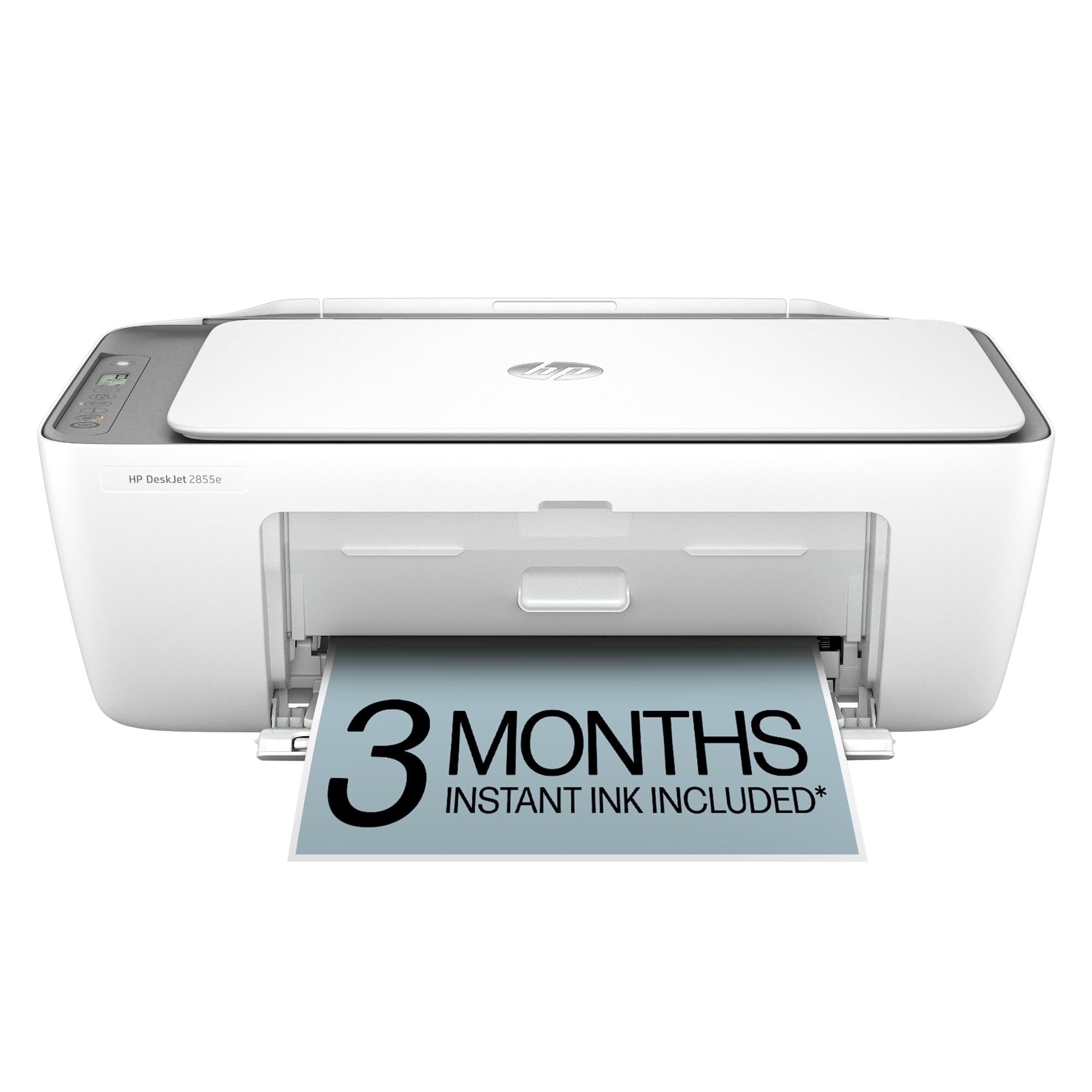
The HP DeskJet 2855e is the entry-level anchor of this list, carrying the lowest buy-in cost of the seven units reviewed. Print speeds of 7.5 ppm black and 5.5 ppm color are adequate for occasional letters, recipes, and to-do lists, but they lag noticeably behind the rest of the roundup for any multi-page document run. The 60-sheet input tray matches the Canon TS7720 and is fine for light home use but will be empty quickly if you batch-print school projects or financial statements. The AI-powered print formatting in the HP Smart app automatically strips unwanted web clutter, saving paper and ink on web-page printouts, and the 3-month Instant Ink trial provides a low-risk introduction to the subscription model.
Scanning is functional at standard 600 dpi resolution, but the flatbed design requires manual page placement — there is no ADF, so multi-page scanning is a slow lid-lift process. The single-band 2.4 GHz Wi-Fi is the weakest connectivity implementation among the models tested; several users report frequent disconnections, slow data transfer, and the need for multiple setup attempts before the printer stays on the network. The manual duplex printing means you must flip pages yourself to print on both sides, and the small LCD display shows only basic status icons rather than full menus.
Ink costs are the biggest long-term concern — the HP 67 cartridges are small and expensive per page relative to the Brother LC501 or Canon PG-285 series, and the firmware will block non-HP cartridges after updates. Setup through the HP Smart app requires creating an account, which many casual users find intrusive. For someone who prints fewer than 30 pages per month, values the lowest possible entry price, and is comfortable with HP’s software ecosystem, the DeskJet 2855e fills the role. For anyone scanning frequently or printing more than occasional documents, the higher-tier models in this list save money and time within the first year.
Why it’s great
- Lowest buy-in cost for ultra-light home printing needs
- AI-powered web print formatting reduces wasted ink and paper
- Compact white design fits easily into small spaces
Good to know
- Single-band 2.4 GHz Wi-Fi is prone to disconnections and slow speeds
- Slow print speeds (7.5 ppm black) struggle with multi-page documents
- Small HP 67 cartridges produce high per-page cost over time
FAQ
How often do I need to replace ink on a budget inkjet printer?
Does a low-cost printer scanner produce good quality scans?
What wireless standard should I look for to avoid connection problems?
Final Thoughts: The Verdict
For most users, the best budget printer and scanner winner is the Brother MFC-J1410DW because it combines fast print speeds, a large touchscreen, automatic duplex, and an ADF at a competitive price without resorting to tri-color ink cartridges. If you prioritize the fastest black print speed and highest paper capacity for a busy home office, grab the HP OfficeJet Pro 8125. And for a space-saving design that still offers ADF scanning and dual-band Wi-Fi reliability, nothing beats the Canon PIXMA TR7120.

Mo Maruf
I created WellFizz to bridge the gap between vague wellness advice and actionable solutions. My mission is simple: to decode the research and give you practical tools you can actually use.
Beyond the data, I am a passionate traveler. I believe that stepping away from the screen to explore new environments is essential for mental clarity and physical vitality.