Our readers keep the lights on and my smoothie glass nicely filled. As an Amazon Associate, I earn from qualifying purchases.
Paper planners remain the single most effective tool for impulse control and financial awareness. A dedicated notebook forces you to physically write down every transaction, creating a tactile memory anchor that digital apps simply cannot replicate. The right layout transforms a chaotic month of receipts into a clear, actionable roadmap for your money.
I’m Mohammad Maruf — the founder and writer behind WellFizz. I’ve spent countless hours analyzing the paper thickness, binding durability, and category-specific layout structures of budget planners to separate the genuinely useful from the visually pretty.
This guide breaks down exactly which layouts, paper weights, and binding styles deliver real results so you can confidently choose the best budget planner for your specific financial tracking habits.
How To Choose The Best Budget Planner
Not all budget planners are created equal. A pretty cover hides nothing if the paper bleeds or the binding breaks by month three. Focus on these three factors to ensure your planner survives daily use and actually helps you change your spending behavior.
Paper Quality and Binding Durability
Paper thickness is measured in gsm (grams per square meter). Anything below 80gsm will likely show ink ghosting or bleed-through when you use a gel pen or marker. For a budget planner you will flip through hundreds of times, 100gsm is the sweet spot. Twin-wire or spiral binding lets the book lay completely flat so you can write near the center seam without fighting the spine.
Layout Structure and Column Density
A monthly overview with 34 columns and 33 lines gives you granular control over individual expenses but demands consistent data entry. Simpler layouts with monthly budget and review sections work better for people who prefer big-picture tracking over itemized logs. Look for a planner that includes a dedicated bill payment checklist and a monthly budget review page — that reflective step is where real financial awareness builds.
Cover Material and Portability
Polypropylene covers resist spills and daily scuffs, while PU leather offers a more professional hand feel. Espresso users and commuters should prioritize a flexible but sturdy cover and an elastic closure to keep loose receipts contained. Size matters: 8.5 x 11 inches offers maximum writing space, whereas compact 5.8 x 8.3-inch formats slip into a work bag more easily.
Quick Comparison
On smaller screens, swipe sideways to see the full table.
| Model | Category | Best For | Key Spec | Amazon |
|---|---|---|---|---|
| Adams Home Office Budget Book | Premium | Detailed weekly/monthly itemization | 34 columns per double-page spread | Amazon |
| Getvow Budget Planner | Premium | Yearly goal-oriented planning | 100gsm paper with PU leather cover | Amazon |
| Pukka Pad Carpe Diem Budget Planner | Mid-Range | Creative budgeting with sticker motivation | 3 expense tracker pages per month | Amazon |
| Yaridar Bill Tracker Notebook | Mid-Range | Bill payment tracking with 3680 entry lines | 127 pages with 29 lines per page | Amazon |
| Hadley Designs Budget Planner | Budget | Compact A5-sized monthly tracking | 170 pages including debt and savings logs | Amazon |
In‑Depth Reviews
1. Adams Home Office Budget Book

The Adams Home Office Budget Book uses a double-page spread that gives you 34 columns and 33 lines per page. This dense layout lets you track individual expenses across multiple categories for the entire month on a single spread. The large 10 x 7 inch paper size provides generous writing space for detailed entries without feeling cramped.
Polypropylene cover resists coffee spills and daily bag abrasion, and the spiral binding allows the book to fold back on itself completely. The interior print uses softer tone colors designed to reduce eye strain during long budgeting sessions. Annual summary pages at the end simplify tax preparation by keeping your yearly totals in one place.
Veteran users report purchasing this model for decades, citing its consistent layout and durable construction. The only adjustment required is writing custom category labels in the blank headers since the forms are generic. If you prefer a granular, itemized approach to tracking every dollar, this format delivers unmatched detail density.
Why it’s great
- Massive 34-column spread for hyper-detailed expense tracking
- Annual summary pages simplify year-end tax review
- Durable poly cover and lay-flat spiral binding
Good to know
- Blank column headers require manual category setup each month
- Data-heavy layout may overwhelm simple-tracker users
2. Getvow Budget Planner

The Getvow Budget Planner uses thick 100gsm paper that handles fountain pens and gel inks without bleed-through. At 8 x 9.5 inches, the page size provides ample room for monthly budget sheets, daily expense logs, and the dedicated debt and savings tracker sections. The flexible PU leather cover feels substantial without adding unnecessary bulk to your bag.
Twin-wire binding lays completely flat on a desk, and the elastic closure keeps loose bills and receipts secure inside the back pocket. A unique color-coded trapezoid system on the page edges lets you flip directly to any of the twelve months at a glance. The undated format means you can start in January or July without wasted pages.
Each month includes a budget goals page, a strategy section, a daily expense tracker, and a monthly budget review page — that review page is the key differentiator because it forces a reflection step most planners skip. Users consistently praise the high-quality paper and the professional, minimalist design that works equally well in a home office or a corporate cubicle.
Why it’s great
- 100gsm paper eliminates ink ghosting even with heavy markers
- Monthly budget review section builds accountability
- Color-coded page edges for quick month navigation
Good to know
- Undated format requires manual date entry
- Daily expense section may feel redundant for monthly-only trackers
3. Pukka Pad Carpe Diem Budget Planner

The Pukka Pad Carpe Diem includes three expense tracker pages per month, which is more dedicated tracking space than most planners allocate. The hardcover construction with reinforced edges protects the interior pages during transit, and the metal spiral binding stays rigid even after twelve months of daily flipping. The 8 x 8 inch square format offers a balanced writing surface that fits comfortably on a crowded desk.
Coated tabbed dividers split the planner into distinct sections for budget overview, bank information, and monthly tracking. Two sticker sheets add a visual reward element that keeps the budgeting process engaging rather than tedious. The savings goals and tracker pages provide structured motivation for specific financial targets like a new car or a vacation fund.
Users who buy this planner repeatedly cite the simple, effective layout that breaks income, expenses, and savings into uncomplicated weekly and monthly views. The hardcover protects pages well enough that the planner survives the full year without cover warping or page tears.
Why it’s great
- Hardcover spiral binding withstands heavy daily wear
- Three expense tracker pages per month for detailed logs
- Included sticker sheets add motivational engagement
Good to know
- Learning curve for the layout structure
- Sticker design may not appeal to minimalist users
4. Yaridar Bill Tracker Notebook
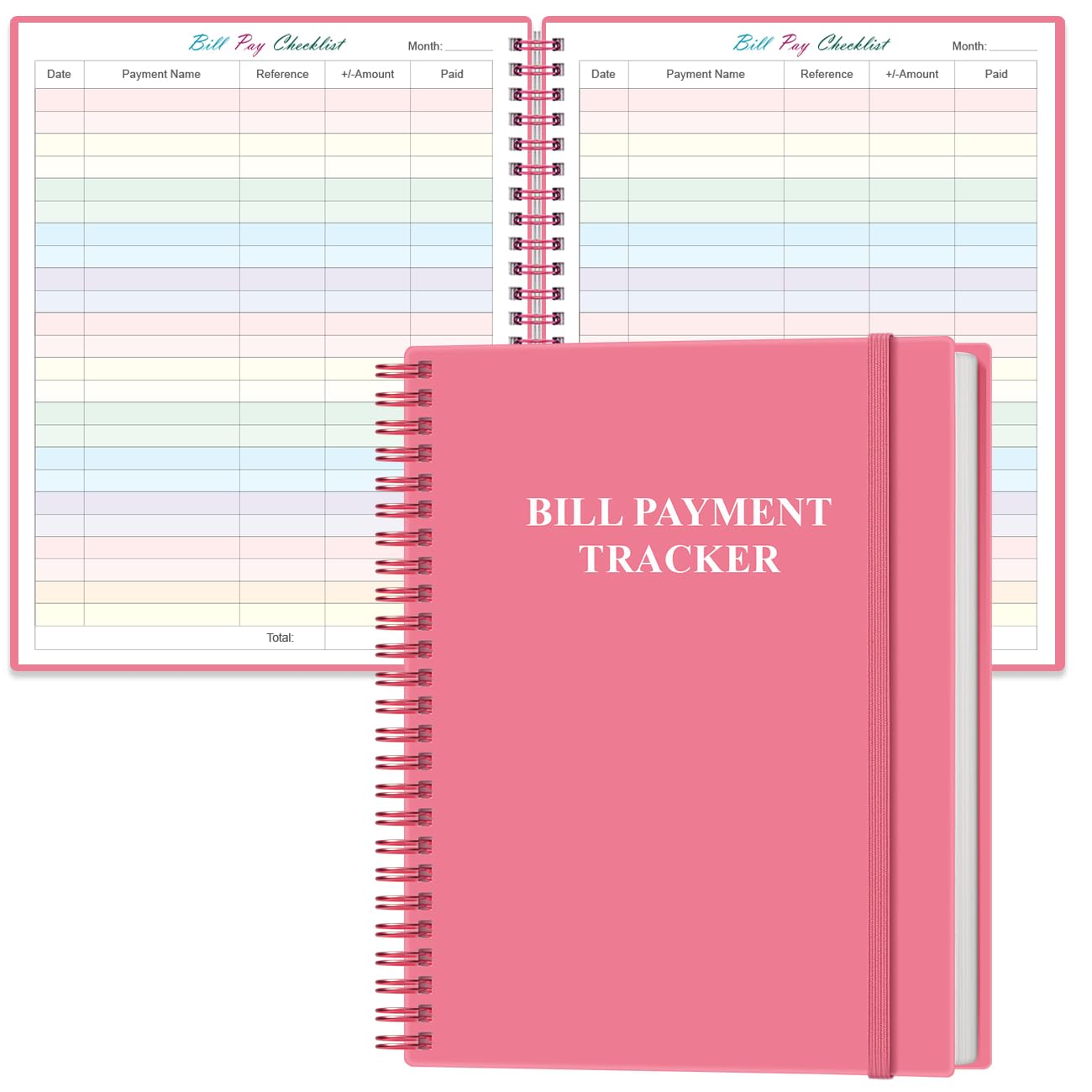
The Yaridar Bill Tracker Notebook packs 127 pages with 29 lines per page for a total of 3680 entry lines. This massive capacity means you can track every payment, due date, and amount for the entire year without running out of space. The colorful inner paper design makes it easy to visually distinguish different months or categories at a glance.
At 8.5 x 11 inches, the page size provides generous room for writing, and the polypropylene cover resists spills and daily handling. The elastic band keeps the notebook closed between sessions, and the back pocket stores receipts and paid bill confirmations. Each page uses 100gsm paper that holds up well to gel pens and fine-tip markers without show-through.
Reviewers specifically praise the colored line layout that helps separate different payees and payment methods clearly. If your primary need is a simple, high-capacity bill payment log rather than a full financial planning system, this notebook delivers maximum trackable space with minimal complexity.
Why it’s great
- 3680 total entry lines for year-long bill tracking
- 100gsm paper resists ink bleed through
- Colorful page design aids visual organization
Good to know
- No dedicated budget goals or savings tracker sections
- Focuses strictly on bill payments, not overall expense tracking
5. Hadley Designs Budget Planner
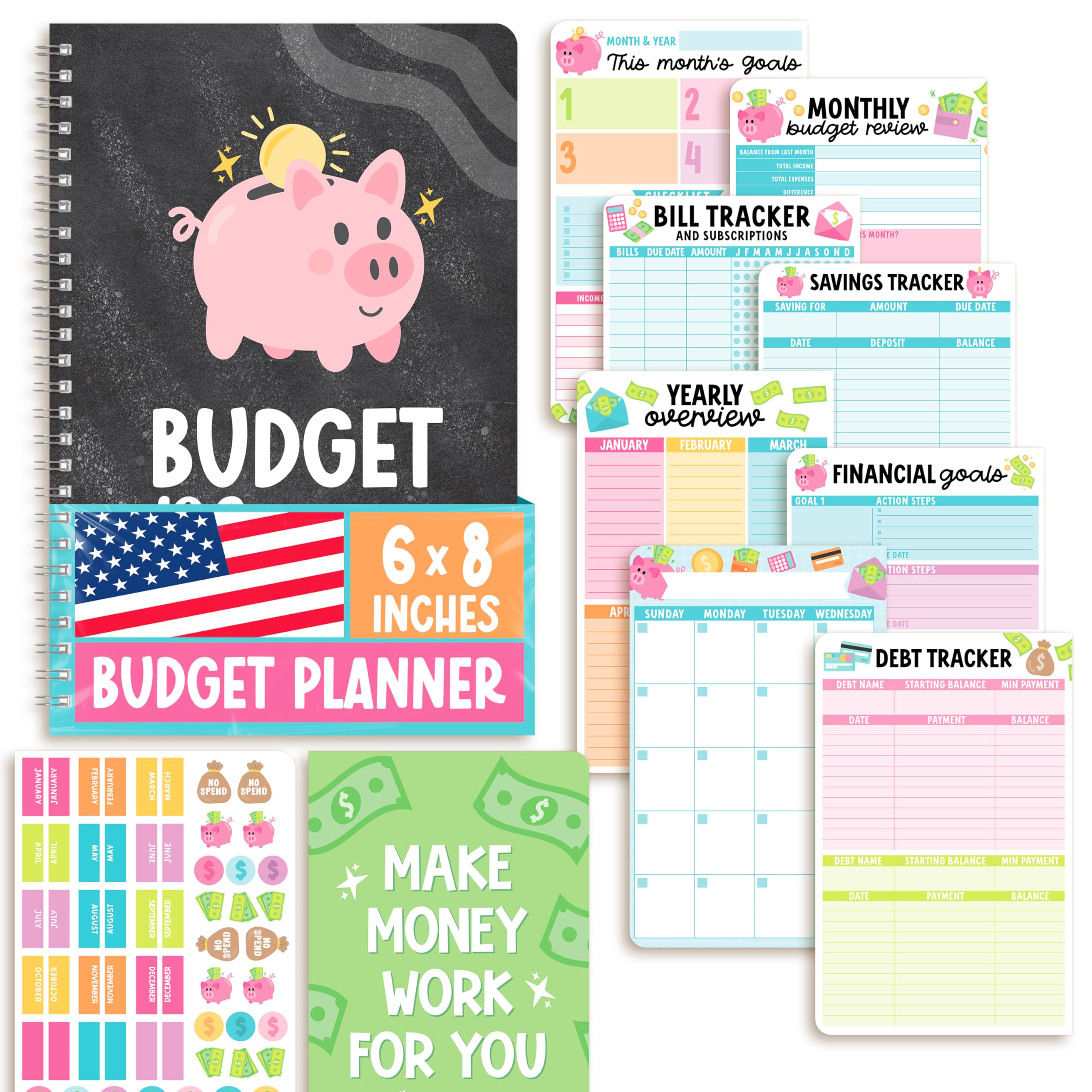
The Hadley Designs Budget Planner fits a 5.8 x 8.3 inch format that slides easily into a purse or small work bag without adding weight. Despite the compact size, it crams 170 pages of content including monthly bill planners, expense trackers, debt payoff logs, and savings goal sections. The spiral coil binding allows the planner to fold back completely for comfortable single-handed writing.
Cardstock cover material keeps the weight down while providing enough rigidity to protect pages during daily commute use. The included sticker sheet offers visual motivation and personalization options for users who enjoy the creative side of budgeting. Monthly budget review pages help close the loop each month by comparing planned spending against actual results.
Users appreciate the A5 compact format for portability, though some note that the narrow columns require small handwriting to fit all entries. If your priority is a lightweight planner you can carry everywhere and still access debt trackers, savings logs, and bill organization, this design delivers excellent compression of features into a small footprint.
Why it’s great
- Compact A5 size for easy daily carry
- Includes debt trackers, savings logs, and monthly reviews
- Spiral coil binding lays completely flat
Good to know
- Narrow columns require smaller handwriting
- Some users prefer fewer section repetitions for simplicity
FAQ
How many columns do I need in a budget planner?
Does paper weight matter for budget planners?
Should I choose a dated or undated budget planner?
What is the advantage of a monthly budget review page?
Can a budget planner help with debt payoff?
Final Thoughts: The Verdict
For most users, the best budget planner winner is the Adams Home Office Budget Book because its 34-column double-page spread offers the most granular tracking capability for detailed expense itemization. If you want a professional look and reflective monthly reviews, grab the Getvow Budget Planner. And for a creative, sticker-motivated approach, nothing beats the Pukka Pad Carpe Diem Budget Planner.

Mo Maruf
I created WellFizz to bridge the gap between vague wellness advice and actionable solutions. My mission is simple: to decode the research and give you practical tools you can actually use.
Beyond the data, I am a passionate traveler. I believe that stepping away from the screen to explore new environments is essential for mental clarity and physical vitality.