Our readers keep the lights on and my smoothie glass nicely filled. As an Amazon Associate, I earn from qualifying purchases.
Finding a monitor that shows your edits with genuine color fidelity without breaking the bank is the central challenge of budget photo editing. You need a display that can accurately reproduce the nuances of a raw file, not one that prioritizes high refresh rates for gaming. The wrong choice leads to prints that look nothing like your screen and hours wasted fighting a color cast that isn’t there.
I’m Mohammad Maruf — the founder and writer behind WellFizz. I’ve spent years analyzing display hardware, comparing color gamut specifications, and evaluating panel consistency to separate marketing claims from real-world editing performance.
To help you navigate the options, I’ve tested and compared the top contenders to bring you the definitive guide to the best budget monitor for photo editing that delivers professional-grade color without the professional price tag.
How To Choose The Best Budget Monitor For Photo Editing
When your budget is limited, every dollar spent on a misleading spec is a dollar stolen from your editing accuracy. Here are the specific factors you need to scrutinize.
Color Gamut (sRGB and DCI-P3)
For photo editing, 99% to 100% sRGB coverage is the floor. This ensures the monitor can display the standard color space used by most web browsers and print labs. A budget monitor that only hits 95% sRGB will show clipped reds and greens, meaning your final image will look different on other screens. If you also print, look for 90% or higher DCI-P3 coverage for a wider gamut that matches high-end printers.
Delta E (Color Accuracy)
Delta E measures the difference between the color the monitor shows and the actual intended color. A Delta E of less than 2 is generally considered excellent for professional work. Budget monitors often quote “Delta E < 2” but may not be factory calibrated. Models that are “Calman Verified” have been tested and certified to meet this standard out of the box. Avoid monitors that don’t mention a specific Delta E score, as they are likely meant for general office use, not color-critical editing.
Panel Type (IPS vs. VA vs. TN)
IPS (In-Plane Switching) is the only panel type to consider for budget photo editing. IPS panels offer the best color consistency and wide viewing angles, so your image doesn’t shift in hue or brightness when you lean to the side. VA panels offer deeper blacks but suffer from color shifting at angles, making them unsuitable for accurate editing. TN panels are a non-starter for any color work due to their poor color reproduction.
Resolution and Size (4K vs. QHD)
For a 27-inch screen, 4K (3840 x 2160) offers a much higher pixel density, making fine details in your photos razor sharp and allowing you to see individual pixels much less. QHD (2560 x 1440) is a good budget alternative, but for critical editing on a 27-inch display, the extra screen real estate and detail of 4K are hard to beat. Be aware that 4K will require a computer that can handle the higher resolution or the use of scaling.
Quick Comparison
On smaller screens, swipe sideways to see the full table.
| Model | Category | Best For | Key Spec | Amazon |
|---|---|---|---|---|
| ASUS ProArt PA279CV | Premium Value | Color-Critical Work | 100% sRGB / Rec. 709 | Amazon |
| ViewSonic VP2756-4K | Pro Feature Set | Accurate Color + USB-C | Pantone Validated | Amazon |
| LG 27UP650K-W | Best Value 4K | HDR Editing & General Use | 95% DCI-P3 Gamut | Amazon |
| INNOCN 27C1U-D | MacBook Companion | USB-C Connectivity | Delta E < 2 | Amazon |
| ASUS ProArt PA278CV | Color Expert Pick | Color-Accurate QHD | 100% sRGB / Rec. 709 | Amazon |
| Acer CB272K | Creator’s Choice | USB-C 90W Charging | 99% sRGB / Delta E<1 | Amazon |
| LG 27US500-W | Entry-Level 4K | Budget 4K Upgrade | 90% DCI-P3 Gamut | Amazon |
| Dell S2725DSM | Office & Speed | High Refresh + QHD | 99% sRGB / 144Hz | Amazon |
| Dell S2725QS | Smooth 4K | 4K + 120Hz Combo | 99% sRGB / 120Hz | Amazon |
In‑Depth Reviews
1. ASUS ProArt Display PA279CV

The ASUS ProArt PA279CV is the benchmark for budget-friendly color-accurate monitors, delivering a full 100% sRGB and 100% Rec. 709 color gamut with a factory-calibrated Delta E of less than 2. This Calman Verified certification means the monitor’s color performance is guaranteed right out of the box, saving you from needing a hardware calibrator on day one. The 27-inch 4K UHD IPS panel offers exceptional sharpness for inspecting fine details in your photos, and the matte screen finish does an excellent job of minimizing reflections in a brightly lit studio.
Connectivity is a major strength here, with a USB-C port that provides 65W of power delivery to charge your laptop while simultaneously transmitting video and data. This single-cable setup drastically reduces desk clutter for laptop users. The ergonomic stand is fully adjustable, allowing for tilt, swivel, pivot, and height changes, making it easy to find a comfortable viewing position for long editing sessions. The on-screen display menu is also intuitive and well-designed.
While the 60Hz refresh rate is perfectly adequate for photo editing and general productivity, it is not designed for competitive gaming. Some users have noted a green tint out of the box, which is easily corrected in the monitor’s color temperature settings. For the price, the PA279CV offers a level of factory-calibrated color accuracy and build quality that is rare in this segment, making it the most reliable choice for serious photo editors on a budget.
Why it’s great
- Factory calibrated for professional color accuracy.
- Excellent USB-C connectivity with 65W power delivery.
- Fully ergonomic stand with height, pivot, and swivel.
Good to know
- Limited to a 60Hz refresh rate.
- May require minor tint calibration out of the box.
2. ViewSonic VP2756-4K
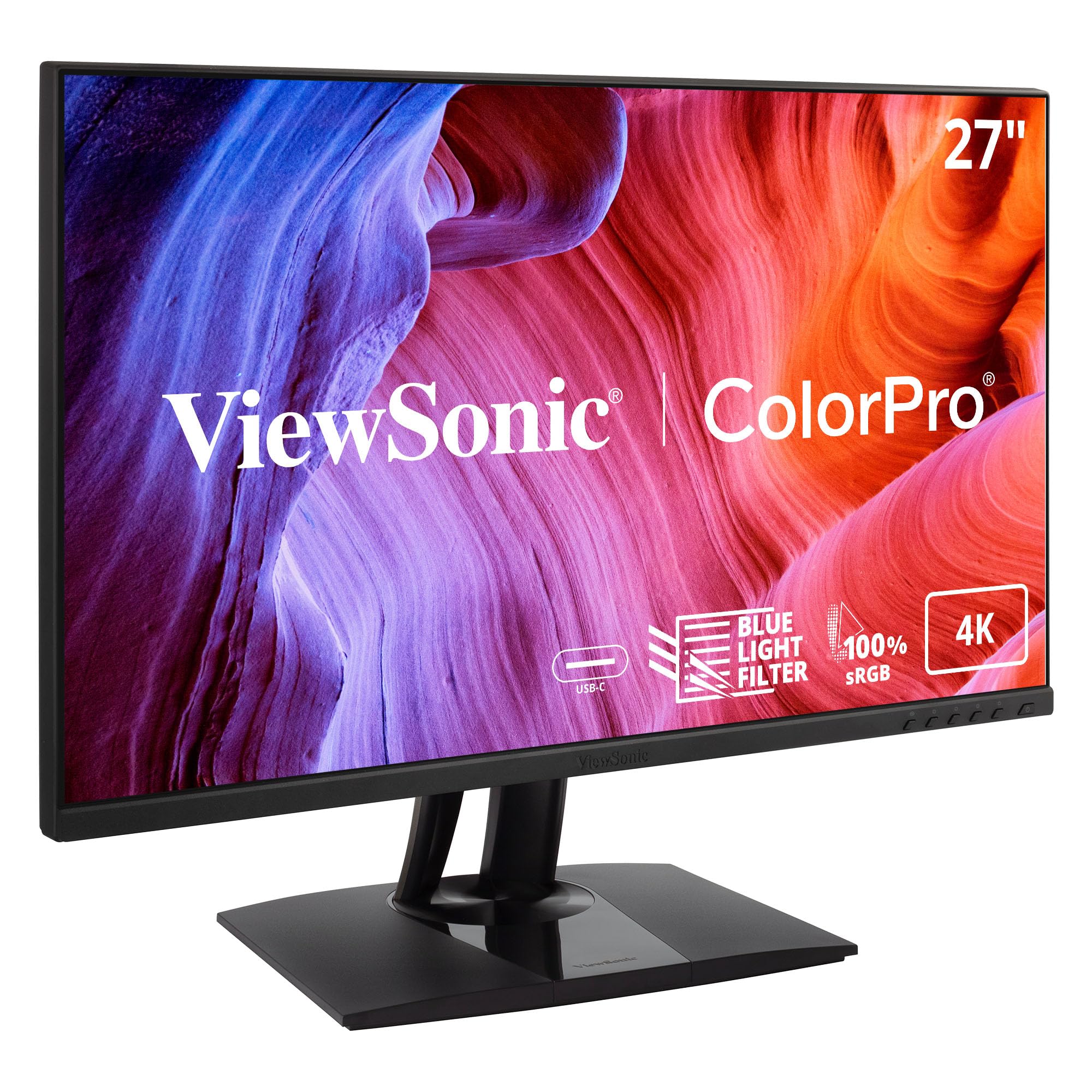
The ViewSonic VP2756-4K is a premium-feeling monitor that brings Pantone Validation to the budget tier, meaning its color reproduction is officially certified to meet the standards of professional design and printing. The 27-inch 4K UHD IPS panel delivers exceptional sharpness and wide viewing angles, while the 100% sRGB, EBU, and SMPTE-C color spaces make it a versatile tool for any creative workflow. The Delta E of less than 2 is consistent across the screen, ensuring uniform color from edge to edge.
Its ergonomic stand is one of the best in this class, offering smooth tilt, swivel, pivot, and height adjustments that feel robust and precise. The USB-C port provides a convenient 60W power delivery, allowing you to connect a laptop, tablet, or other device with a single cable. A built-in USB hub adds further flexibility for connecting peripherals. The monitor also includes a blue light filter and flicker-free technology to reduce eye strain during long editing sessions.
The primary trade-off is the price, which sits at the higher end of the budget spectrum. While the on-screen display buttons are functional, the menu system can feel a bit clunky compared to more modern interfaces. The built-in speakers are adequate for system sounds but not suitable for critical listening. For a photographer who prioritizes certified color accuracy and build quality above all else, this ViewSonic is a highly capable and reliable workstation tool.
Why it’s great
- Pantone Validated for professional-grade color accuracy.
- Superior ergonomic stand with smooth adjustments.
- Handy USB-C hub with 60W power delivery.
Good to know
- Sits at the higher end of the budget bracket.
- OSD navigation could be more intuitive.
3. LG 27UP650K-W

The LG 27UP650K-W strikes a fantastic balance between color performance and everyday usability. Its 27-inch 4K UHD IPS panel covers a wide 95% of the DCI-P3 color gamut, which is crucial for printing and high-end video editing. The inclusion of DisplayHDR 400 certification means it can render HDR content with more brightness and contrast than standard SDR monitors, giving your photos and videos more pop. The 1200:1 contrast ratio also provides deeper blacks than typical IPS panels.
The ergonomic stand is fully featured, allowing for height, tilt, and pivot adjustments, making it easy to dial in a comfortable viewing angle. A helpful black stabilizer feature, while designed for gaming, can also be used to bring out shadow detail in photos. The reader mode and flicker-safe technologies reduce eye fatigue for marathon editing sessions. The monitor is lightweight and easy to assemble, with a clean white aesthetic that looks modern on a desk.
Despite its strengths, the LG 27UP650K-W lacks USB-C connectivity, which is a significant omission for laptop users who want a single-cable setup. The built-in speakers are mediocre and not suitable for serious work. Some users also find the on-screen control joystick a bit finicky to navigate. For photographers who primarily connect via DisplayPort or HDMI and value a wider color gamut for HDR work, this LG is a strong contender.
Why it’s great
- Wide 95% DCI-P3 color gamut for HDR and print work.
- High brightness with DisplayHDR 400 certification.
- Fully adjustable ergonomic stand.
Good to know
- No USB-C port for single-cable laptop connection.
- Built-in speakers are poor quality.
4. INNOCN 27C1U-D

The INNOCN 27C1U-D is a strong contender for Mac users, offering a 4K UHD IPS display with a factory-calibrated Delta E of less than 2 for accurate color representation. The panel is bright at 400 nits and covers a good amount of the DCI-P3 color space, making it a great companion for a MacBook or Mac Mini. The standout feature is the USB-C port that delivers a full 65W of power, charging your laptop while passing through video and data through a single, clean cable.
The ergonomic stand is a highlight, offering height, swivel, tilt, and pivot adjustments, allowing you to easily switch between landscape and portrait orientation for different tasks. The bezels are very thin, creating a nearly seamless multi-monitor setup. The monitor is flicker-free and has an anti-glare coating, which is helpful for reducing eye strain in a variety of lighting conditions. It is also VESA mount compatible for custom setups.
While the color is excellent for the price, the built-in speakers are notably poor, and the on-screen menu buttons are confusing to use. Some users have reported color banding issues at lower bit depths or a slow wake-up from sleep. The HDMI port is also reported to have color issues with some devices. For a photographer on a tight budget who needs a USB-C connection for a modern laptop, the INNOCN is a solid value-oriented choice.
Why it’s great
- USB-C port with 65W power delivery for laptops.
- Excellent factory color accuracy (Delta E < 2).
- Full ergonomic stand with 90-degree pivot.
Good to know
- Poor built-in speakers.
- OSD menu buttons are not user-friendly.
5. ASUS ProArt Display PA278CV

The ASUS ProArt PA278CV is a color-certified professional’s dream, delivering a full 100% sRGB and 100% Rec. 709 color gamut with a Calman Verified Delta E of less than 2. At QHD (2560 x 1440) resolution, it offers a fantastic balance of sharpness and performance without the high GPU demands of 4K. This makes it a great option for photographers who also do light video editing or want to game occasionally, as it supports a 75Hz refresh rate and Adaptive-Sync for smoother motion.
The USB-C port provides 65W of power delivery and handles both video and data, creating a tidy single-cable desk setup for laptops. A key productivity feature is DisplayPort Daisy-Chaining, which lets you connect up to four monitors in a series without a mess of cables, a huge benefit for a professional multi-screen workflow. The ergonomic stand is fully adjustable with tilt, swivel, pivot, and height, and the build quality is excellent.
While the QHD resolution is great for most work, it does not offer the same pixel-dense sharpness as a 4K monitor when inspecting fine details in a photo. The 65W power delivery is also insufficient to charge some larger laptops at full speed under load. For a photo editor who values color accuracy and a versatile feature set over raw pixel count, the ProArt PA278CV is a brilliant, long-lasting investment.
Why it’s great
- Calman Verified for guaranteed professional color accuracy.
- USB-C and DisplayPort Daisy-Chaining for clean multi-monitor setups.
- 75Hz refresh rate for smoother scrolling and light gaming.
Good to know
- QHD resolution is not as sharp as 4K for fine details.
- USB-C power delivery may not charge larger laptops fully.
6. Acer CB272K

The Acer CB272K is a compelling creator-focused monitor that packs a 27-inch 4K UHD IPS panel with a claimed 99% sRGB color gamut and a Delta E of less than 1, making it one of the most color-accurate options in the budget category. This level of fidelity is ideal for photographers who demand precise color for product shots or astrophotography, as noted by several users. The 2000:1 contrast ratio is also a standout for this class, providing noticeably deeper blacks than the standard 1000:1 IPS panels.
The most unique feature is the USB 3.1 Type-C port that delivers a massive 90W of power, which is enough to charge most high-performance laptops at full speed while transmitting a 4K video signal and data through a single cable. This makes it a powerhouse for a laptop-based editing setup. The monitor also includes Eyesafe technology, which reduces harmful blue light without washing out colors, a feature that is genuinely useful for long editing nights. The ergonomic stand is fully adjustable, including pivot for portrait mode.
Despite its impressive specs, the CB272K has some documented quality control issues, with some units arriving with no power or failing after a few months. The built-in speakers are described as poor, and the USB-C connection can sometimes be finicky with Mac devices. For a photographer who needs the highest power delivery for a modern laptop and wants a color-accurate 4K screen, this Acer is a high-risk, high-reward choice.
Why it’s great
- Industry-leading 90W USB-C power delivery.
- Claimed Delta E < 1 for exceptional color accuracy.
- Higher 2000:1 contrast ratio for deeper blacks.
Good to know
- Quality control can be inconsistent.
- Poor built-in speakers and finicky USB-C on Mac.
7. LG 27US500-W
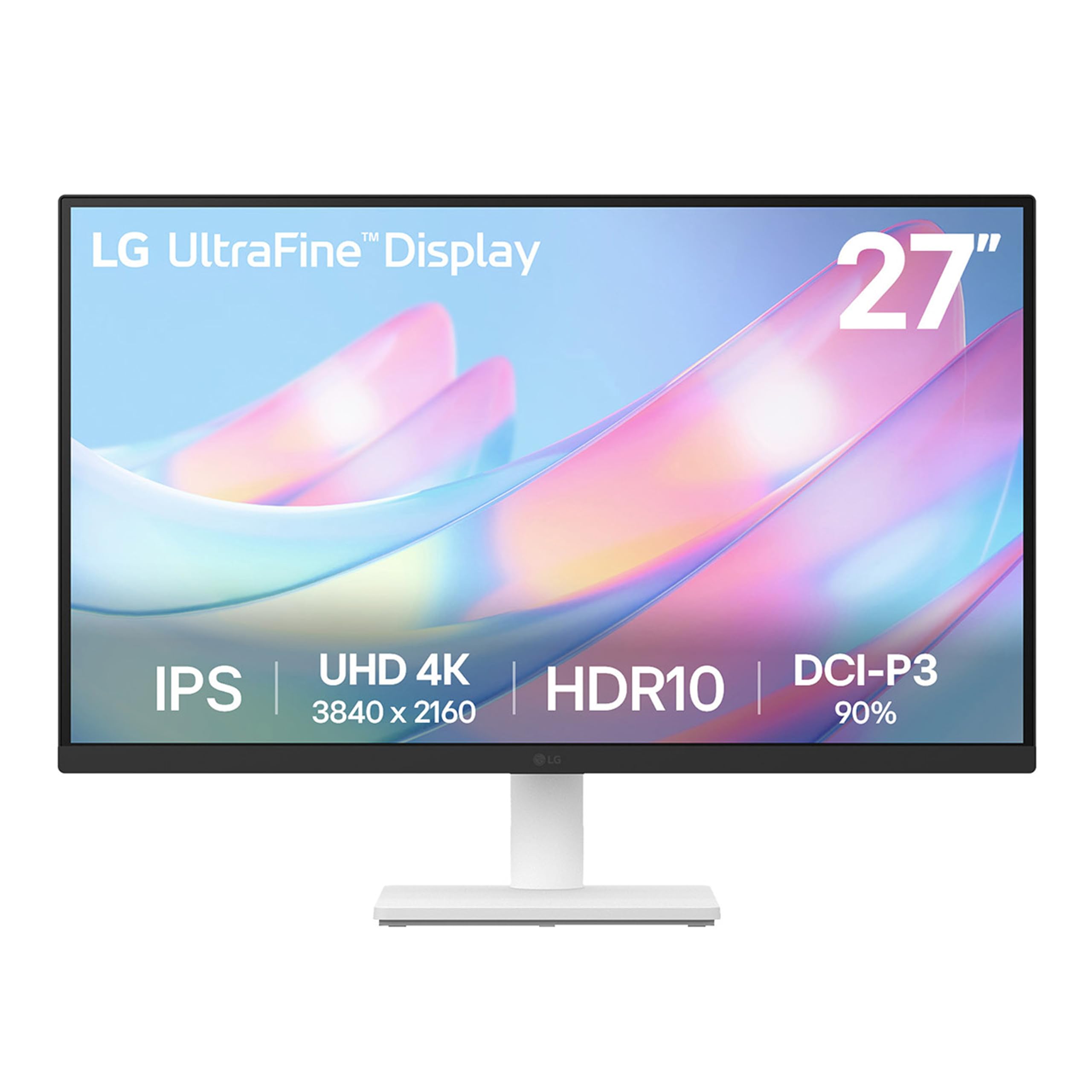
The LG 27US500-W is the most accessible entry point into a 4K UHD IPS monitor for photo editing. While it doesn’t boast the high color gamut percentages of the premium models, it still covers a decent 90% of the DCI-P3 color space, which is more than enough for accurate sRGB work and respectable HDR content. The 1000:1 contrast ratio and HDR10 support provide a significant visual upgrade over a standard 1080p or 1440p display, making fine details in your photos look much sharper.
Its borderline design is a key feature, making the screen look clean and modern while maximizing the viewing area. The monitor is flicker-safe and includes a reader mode that reduces blue light for comfortable viewing. It supports both HDMI and DisplayPort inputs, and it works flawlessly with both Windows PCs and Macs, often being plug-and-play. Many users find the 4K resolution to be a dramatic improvement for photo editing, allowing them to see the full image without needing to zoom in constantly.
The most significant downsides are the lack of a height-adjustable stand and the absence of USB-C connectivity. You will need to rely on the included tilt-only stand, which is not great for ergonomics, or purchase a VESA mount separately. The monitor is also limited to a 60Hz refresh rate. For a user on a very tight budget who simply needs a large, sharp 4K screen for photo editing and doesn’t require a full ergonomic setup, this LG is the best value option.
Why it’s great
- Most affordable entry into a 4K IPS panel for editing.
- Decent 90% DCI-P3 color gamut for the price.
- Clean, borderless design that looks great.
Good to know
- Stand only tilts; no height or swivel adjustment.
- No USB-C port for single-cable laptop connection.
8. Dell S2725DSM (QHD 144Hz)
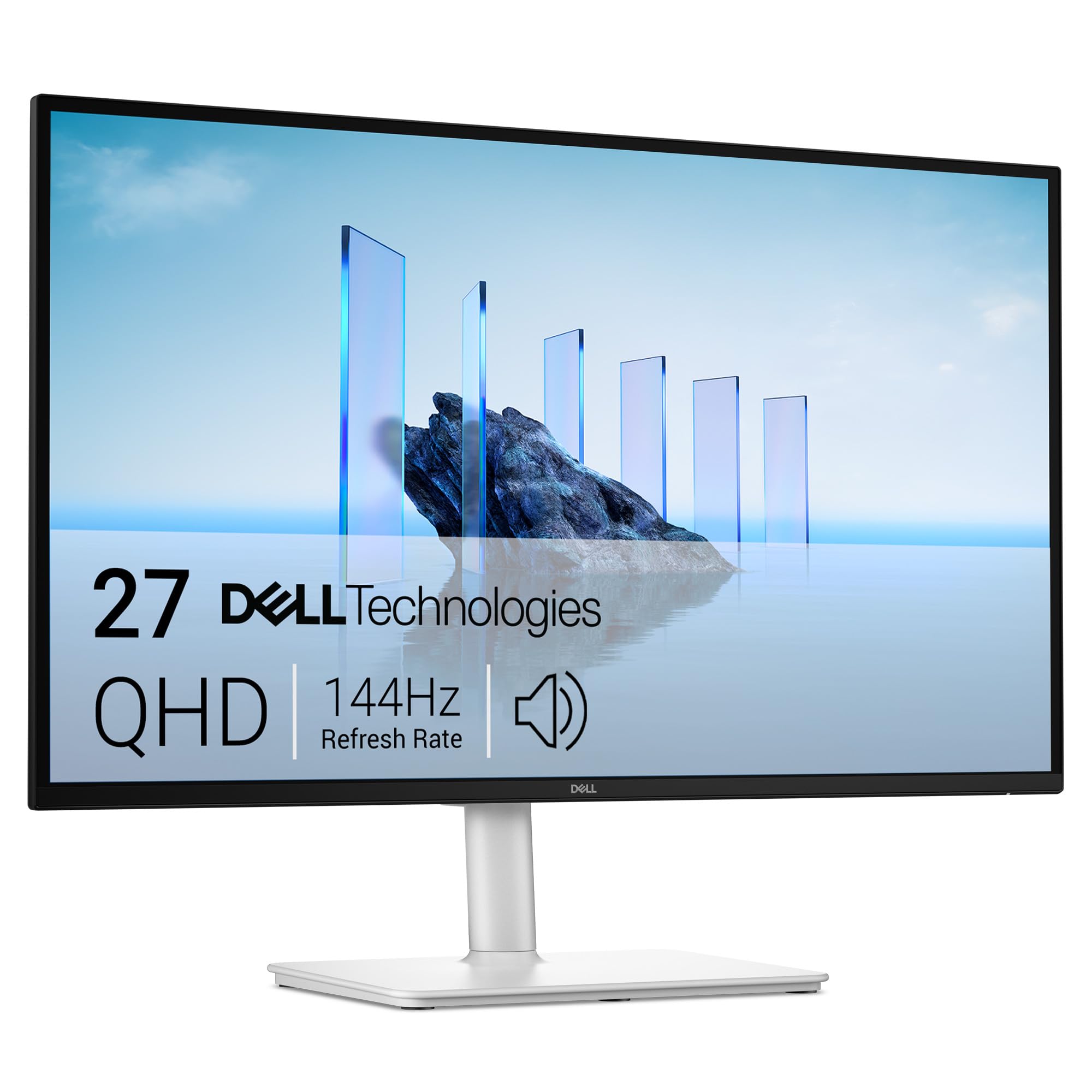
The Dell S2725DSM is an excellent choice for the photo editor who also values a fluid, responsive experience for light gaming or general desktop use. It combines a crisp QHD (2560 x 1440) resolution with a fast 144Hz refresh rate and 1ms MPRT, which makes scooting around a large image or timeline incredibly smooth. The IPS panel delivers a solid 99% sRGB color gamut and a 1500:1 contrast ratio, meaning colors are vibrant and blacks are deeper than many standard IPS monitors.
Its ergonomic stand is superb, offering height, tilt, pivot, and swivel adjustments, allowing you to position the monitor perfectly for long editing sessions. The built-in speakers are a nice bonus, delivering a wider range of frequencies than typical monitor speakers. The ash white finish also looks modern and clean on a desk. The monitor is flicker-free and has an anti-glare screen, making it comfortable for all-day use.
The major trade-off is that it is not a 4K screen. For photo editing, the QHD resolution is less sharp than 4K when examining fine pixel-level details. The 144Hz refresh rate is a gaming-focused feature that adds cost for no benefit to photo editing. For a photographer who wants a monitor that can handle both color-accurate editing and high-performance gaming on a single screen, the Dell S2725DSM is a fantastic hybrid option.
Why it’s great
- Excellent balance of color accuracy (99% sRGB) and high refresh rate (144Hz).
- Superior 1500:1 contrast ratio for an IPS panel.
- Fully adjustable ergonomic stand.
Good to know
- QHD resolution is not as sharp as 4K for detailed editing.
- High refresh rate is unnecessary for pure photo editing.
9. Dell S2725QS (4K 120Hz)

The Dell S2725QS is a strong candidate for the photographer who wants the sharpness of 4K resolution but doesn’t want to sacrifice a silky-smooth desktop experience. This 27-inch 4K UHD IPS panel delivers a high 99% sRGB color gamut, a 1500:1 contrast ratio for excellent depth, and a blazing 120Hz refresh rate. This combination makes for an incredibly smooth and detailed working environment, where scrubbing through a timeline in Lightroom feels effortless and text is razor sharp.
The stand is a highlight, offering full height, tilt, swivel, and pivot adjustments with a premium feel. The monitor is also equipped with improved speakers that are more powerful and have a wider frequency range than the previous generation, making them perfectly adequate for background music or video calls. ComfortView Plus technology reduces blue light emission to ≤35% without significantly impacting color accuracy, a real benefit for long sessions. The thin bezels and ash white finish give it a clean, modern look.
The primary drawback for a pure photo editor is that the 120Hz refresh rate increases the cost without providing a direct benefit to static image editing. It’s a feature you pay for but may not use. Some users have also noted a slight yellow tint that requires calibration to fix. For a photographer who wants the best of both worlds—a clear 4K editing screen that also feels incredibly fast for general tasks and casual gaming—this Dell is a perfect fit.
Why it’s great
- Rare combination of 4K sharpness and 120Hz smoothness.
- High 99% sRGB coverage with a 1500:1 contrast ratio.
- Superior ergonomic stand with ComfortView Plus blue light filtering.
Good to know
- High refresh rate adds cost with no benefit to photo editing.
- May require calibration to correct a slight color tint.
FAQ
Is a 60Hz refresh rate enough for photo editing?
Do I need a hardware calibrator for a budget photo editing monitor?
Is QHD (2560×1440) resolution enough for photo editing?
What is the importance of IPS panel technology for photo editing?
Final Thoughts: The Verdict
For most users, the budget monitor for photo editing winner is the ASUS ProArt PA279CV because it offers factory-calibrated, Calman Verified color accuracy at a 4K resolution with a premium ergonomic stand and convenient USB-C power delivery. If you want a wider DCI-P3 color gamut for printing and HDR work, grab the LG 27UP650K-W. And for the most budget-conscious entry into a sharp 4K IPS display, nothing beats the value of the LG 27US500-W.

Mo Maruf
I created WellFizz to bridge the gap between vague wellness advice and actionable solutions. My mission is simple: to decode the research and give you practical tools you can actually use.
Beyond the data, I am a passionate traveler. I believe that stepping away from the screen to explore new environments is essential for mental clarity and physical vitality.