Our readers keep the lights on and my smoothie glass nicely filled. As an Amazon Associate, I earn from qualifying purchases.
Finding wired in-ear monitors on a budget means navigating a sea of muddy bass, brittle treble, and driver configurations that promise more than they deliver. The real challenge isn’t just finding something cheap — it’s identifying the one model that gets the tuning right while offering the durability and accessory kit needed for daily use, whether you’re practicing drums, mixing at home, or just trying to hear the layers in your favorite track.
I’m Mohammad Maruf — the founder and writer behind WellFizz. Over years of analyzing driver topologies, crossover circuits, and frequency response graphs across hundreds of IEM models, I’ve learned exactly where budget gear cuts corners and which corners are worth accepting.
This guide cuts through the noise to identify the models that deliver genuine HiFi performance without breaking your wallet, helping you find the very best budget iems for music monitoring, production, and everyday listening.
How To Choose The Best Budget IEMs For Music
Selecting a budget IEM is about balancing driver count, tuning profile, build materials, and cable standards. The best affordable models deliver a coherent sound signature without cheaping out on the shell or connectors, ensuring they hold up to daily use on stage or at your desk.
Driver Configuration: Single DD vs. Hybrid vs. All-BA
A single dynamic driver (DD) can produce cohesive, natural bass and mids at a low cost, but often struggles with treble extension and detail layering. Hybrid models pair one or two DDs with balanced armature (BA) drivers to split the workload — DDs handle low-end punch and fullness, while BAs manage midrange clarity and high-frequency sparkle. All-BA configurations (like the KZ AS10) offer exceptional detail retrieval and a very wide soundstage but can sound thin or analytical if not tuned well. For most budget buyers, a hybrid design provides the best balance of musicality and resolution.
Cable Standards and Detachability
A detachable cable is arguably the most important long-term value feature in a budget IEM. If the cable frays or breaks, a replaceable cable saves the entire earphone. Two common connector types dominate the market: MMCX (a circular snap-on connector) and 0.78mm 2-pin (a rectangular plug). MMCX allows 360-degree rotation for a better fit around the ear, but some users report loosening over time. The 2-pin design is more mechanically secure and is the standard for upgrade cables. Look for a silver-plated copper cable — it improves signal conduction and resists tangling better than standard copper wire.
Noise Isolation and Eartip Fit
Budget IEMs typically use passive noise isolation, meaning the physical seal of the eartip blocks ambient sound. A good seal is critical for bass response and soundstage depth — without it, even the best-tuned IEM will sound thin and hollow. Most premium-tuned models include 6 to 12 pairs of silicone and memory foam tips in various sizes and bore widths. Silicone tips offer a more consistent seal with less insertion effort, while memory foam tips conform to the ear canal for maximum isolation and bass tightness. If you plan to use IEMs for live monitoring or travel, prioritize models that include foam tips or are compatible with standard aftermarket foam tips.
Quick Comparison
On smaller screens, swipe sideways to see the full table.
| Model | Category | Best For | Key Spec | Amazon |
|---|---|---|---|---|
| Moondrop LAN | Mid-Range | Neutral-balanced listening, gaming | 10mm Beryllium-plated composite DD | Amazon |
| Kiwi Ears Cadenza II | Mid-Range | Reference-neutral tuning, vocal clarity | 10mm Titanium-coated PET DD | Amazon |
| CCA C12 | Mid-Range | Warm, balanced hybrid soundstage | 5BA + 1DD hybrid driver | Amazon |
| KZ ZS10 PRO 2 | Premium | Customizable tuning, high-res detail | 1DD + 4BA with 4-level tuning switch | Amazon |
| Audiovance Vibes 202 | Mid-Range | Bass-forward monitoring, gym use | 1-Tesla dynamic driver, MMCX | Amazon |
| KZ AS10 | Premium | All-BA detail, wide soundstage | 5 Balanced Armature drivers | Amazon |
| BASN MMCX | Premium | Triple-driver stage monitoring | 2DD + 1BA hybrid, MMCX cable | Amazon |
In‑Depth Reviews
1. Moondrop LAN

The Moondrop LAN sets a new benchmark for entry-level HiFi with its 10mm beryllium-plated dome composite diaphragm, delivering a remarkably balanced and non-fatiguing sound signature. This single dynamic driver IEM produces tight, extended sub-bass with minimal bloat, a clean and articulate midrange that makes vocals breathe, and smooth treble that avoids the harsh peaks common at this price. The bass remains polite yet textured, making the LAN a fantastic choice for analytical listening and competitive gaming where positional audio matters.
The shell is crafted from stainless steel using MIM powder metallurgy, giving it a dense, premium weight that belies its price. The 0.78mm 2-pin detachable cable is a major upgrade over Moondrop’s earlier Chu model — it’s replaceable, pre-formed with earhooks, and terminates in a standard 3.5mm plug. The small, ergonomic housing sits flush in the ear without causing pressure points, making long sessions comfortable. The included spring tips provide a decent seal, though some users prefer aftermarket foam options for maximum isolation.
For musicians and audiophiles seeking a reference-neutral platform under , the LAN is hard to beat. Its imaging is precise enough to track instrument placement across a wide soundstage, and its tonal balance works well across genres, from acoustic jazz to electronic. The only compromise is at the very top — treble extension is polite rather than sparkling, which may leave detail fanatics wanting a bit more air. But for a cohesive, fatigue-free listen that costs so little, that trade-off is easy to accept.
Why it’s great
- Reference-neutral tuning with superb imaging and soundstage width
- Stainless steel MIM shell feels and looks premium
- Detachable 0.78mm cable fixes the biggest flaw of earlier budget Moondrop models
Good to know
- Treble is smooth and polite, lacking the sparkle of BA-driven IEMs
- Stock spring tips may not seal well in all ear shapes
2. Kiwi Ears Cadenza II
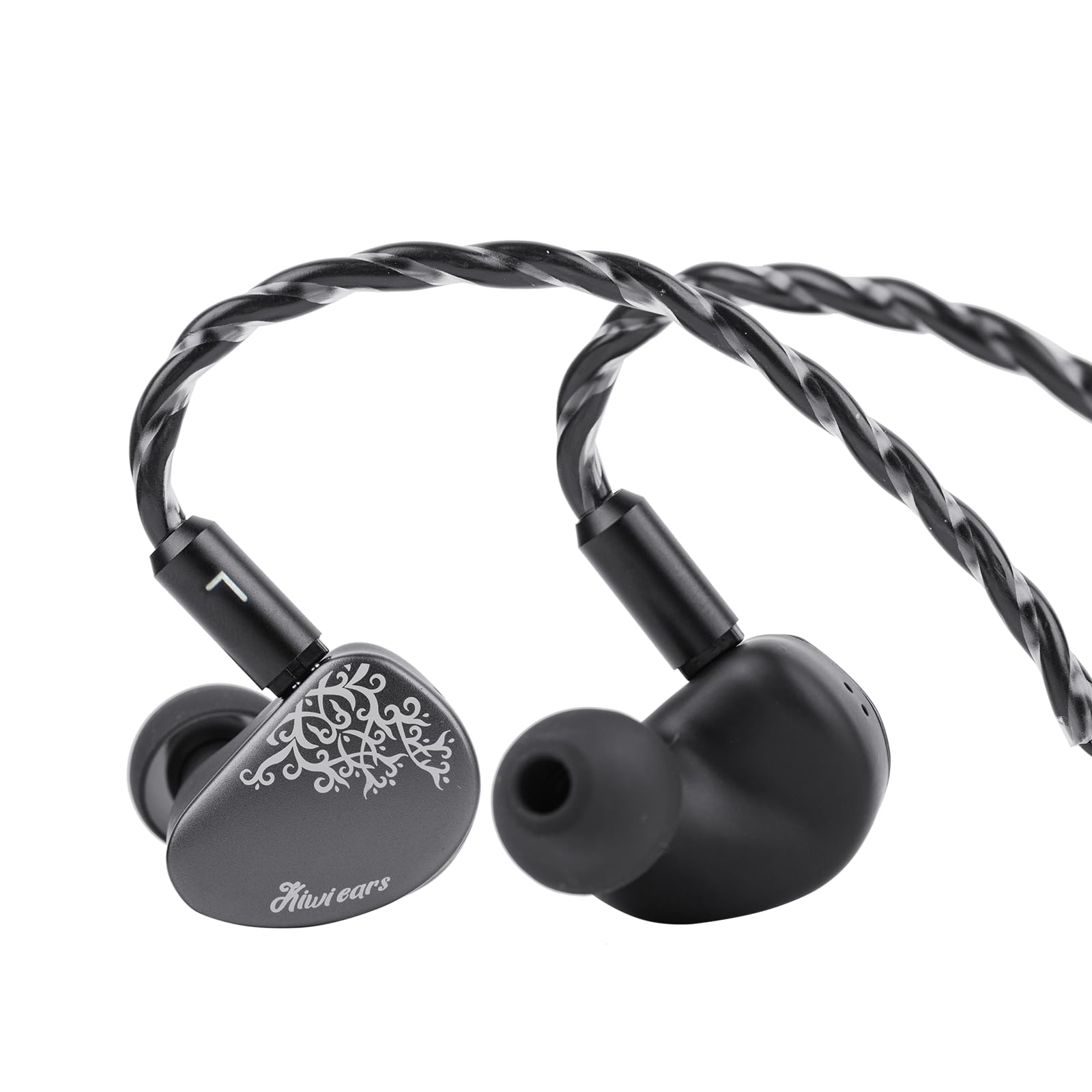
The Cadenza II represents the pinnacle of single-dynamic-driver engineering in the budget space, leveraging a new titanium-coated polyethylene terephthalate diaphragm and Kiwi Ears’ second-generation Acoustic Resonance System (KARS 2.0). The result is an exceptionally clean sub-bass response that cuts off sharply at 200Hz, avoiding midbass bleed that clouds vocals. The midrange receives a gentle 300–400Hz hump that adds vocal warmth without sacrificing neutrality, making the Cadenza II feel lush yet accurate across acoustic and vocal-heavy music.
Build quality is a highlight — the shell uses a durable polycarbonate composite with a velvet-like texture, while the CNC-machined aerospace-grade aluminum faceplate features a laser-engraved honeycomb pattern. The included single-crystal oxygen-free copper 0.78mm cable is among the best stock cables at this price, delivering noise-free signal transmission with minimal microphonics. The earpieces are lightweight and ergonomic, with a shape that fits deeply without causing discomfort, even during multi-hour mixing or practice sessions.
While the treble is slightly relaxed compared to BA-driven competitors, the Cadenza II’s imaging and instrument separation are outstanding for a single-DD IEM. It’s particularly suited for classical, jazz, and male vocals, where its smoothness prevents fatigue while still revealing micro-detail. For studio monitoring and critical listening where tonal accuracy matters most, this IEM delivers performance that rivals more expensive units. The lack of built-in L/R labeling on the earpieces is a minor annoyance during initial setup.
Why it’s great
- Near-perfect neutral tuning with precise sub-bass cut and vocal warmth
- Superior stock cable with single-crystal oxygen-free copper wire
- Aluminum faceplate and composite shell offer a premium feel
Good to know
- Treble extension is gentle — detail seekers may prefer a hybrid design
- No L/R markings on the earpieces, requiring careful initial attachment
3. CCA C12

The CCA C12 packs five balanced armature drivers and one dynamic driver per side into a hybrid configuration that delivers an expansive, layered soundstage with an overall warm tilt. This tuning is immediately satisfying — bass has authority and texture from the dedicated 10mm dynamic driver, mids are rich and open with excellent vocal presence, and highs extend with detail without crossing into sibilance. The coherence between drivers is impressive for the price, with no noticeable crossover dip between the BA and DD sections.
The shell uses a zinc alloy cover over a resin inner body, providing solid durability and a slightly weighty feel that reassures build quality. The detachable 2-pin cable is an 8-strand low-impedance design that minimizes signal interference, but it lacks a sliding cinch, which some users find necessary for a secure over-ear fit. The ergonomics are generally good, though the shell is slightly larger than all-resin models, so users with smaller ears may need to experiment with tip sizes to achieve a flush seal. A proper seal is critical here — without it, the bass can sound disconnected from the mids.
Musicians and live performers have reported that the CCA C12 easily replaces IEMs costing several times more, offering sufficient clarity and separation for stage monitoring across rock, pop, and electronic genres. The noise isolation is excellent with the right silicone tips, cutting out crowd and stage noise effectively. The stock ear tips are serviceable, but memory foam replacements significantly improve bass tightness and isolation. For buyers who want hybrid driver complexity without the premium price, the C12 remains a top contender.
Why it’s great
- Six-driver hybrid delivers wide, layered soundstage with excellent bass punch
- Warm, non-fatiguing tuning that works across genres
- Zinc alloy and resin shell is durable for daily use
Good to know
- Sound quality is highly dependent on getting a proper seal with the right eartips
- Cable lacks a sliding cinch for cinching behind the head
4. KZ ZS10 PRO 2

The KZ ZS10 PRO 2 is an evolved hybrid featuring a 10mm super-linear dynamic driver paired with dual 31736 balanced armature drivers, plus a 4-level custom tuning switch that lets users adjust the sound signature on the fly. This physical switch system is rare at this price point and allows you to toggle between settings that emphasize bass, vocals, or treble detail, making the PRO 2 adaptable to different genres and listening preferences. The default, switch-off mode is the most balanced, offering a V-shaped signature with punchy bass, articulate mids, and crisp highs.
Build quality sees a significant upgrade over the original ZS10 Pro — the translucent black shell reveals the internal drivers and circuitry, and the fit is more ergonomic with a shorter nozzle that sits comfortably. The 3-way electronic crossover ensures clean driver integration, preventing frequency overlap muddiness. The detachable silver-plated cable is functional but a bit thin; users upgrading to a thicker aftermarket cable may notice improved microphonics. The tuning switches are small but click positively, and they are recessed to prevent accidental activation during movement.
The PRO 2 excels in detail retrieval and treble sparkle, making it ideal for instrument separation in complex mixes. The bass is polite even with the switches engaged, which may disappoint bassheads but rewards those who prefer tight, controlled low-end. For musicians and podcasters who need to hear every nuance without ear fatigue, the PRO 2 delivers exceptional clarity. The provided ear tips are generic and can cause discomfort — aftermarket memory foam tips are a recommended investment to unlock the full bass performance and isolation potential.
Why it’s great
- 4-level tuning switch offers genuine sound customization without EQ
- Electronic 3-way crossover ensures clean driver integration
- Excellent treble detail and instrument separation for critical listening
Good to know
- Stock ear tips are uncomfortable and may need replacement
- Bass is polite even with switches engaged — not for sub-bass enthusiasts
5. Audiovance Vibes 202

The Audiovance Vibes 202 takes a different approach from the neutral-leaning picks on this list, offering a deliberately bass-boosted sound signature that is noticeably dark and warm. The 1-Tesla dynamic driver produces deep, aggressive sub-bass extension that bottoms out around 50Hz with satisfying heft, making this IEM ideal for genres like EDM, hip-hop, and rock where low-end impact matters. The mids are recessed relative to the bass, but remain clear enough for vocal intelligibility, while the highs are rolled off to avoid sibilance, resulting in a fatigue-free listening experience that is forgiving of poorly recorded tracks.
The shell uses a semi-transparent durable resin with a sleek finish, available in ten vibrant colors. The MMCX connector allows 360-degree rotation, improving the over-ear fit, and the silver-plated Litz-braided cable is tangle-resistant and detachable. With six pairs of eartips included (two colors, three sizes), achieving a stable seal is straightforward. The included rigid carrying case with a carabiner is a practical bonus for on-the-go use. The cable is long at 63 inches, which provides freedom of movement but may require management when used with portable devices.
For musicians, the Vibes 202 works well as a stage monitor where bass presence and isolation are prioritized over analytical balance. The strong noise isolation — helped by the deep-insertion nozzle — makes it a solid choice for drummers and guitarists who need to cut through loud stage noise. The dark tuning, however, may not suit classical or acoustic purists who prefer a more neutral frequency response. The included memory foam tips are crucial for getting the best isolation and bass tightness; silicone tips alone may not achieve a perfect seal.
Why it’s great
- Powerful sub-bass response with deep, tactile low-end extension
- Fatigue-free, dark tuning ideal for long listening sessions
- MMCX connectors and Litz-braided cable enhance durability and fit
Good to know
- Mids are recessed — not suitable for critical vocal or acoustic monitoring
- Treble extension is rolled off, reducing air and sparkle
6. KZ AS10

The KZ AS10 is an all-balanced-armature IEM with five BA drivers per side, designed to extract maximum detail and imaging precision. Unlike hybrid designs, the AS10 does not use a dynamic driver for bass — instead, it employs a dedicated large BA driver for low frequencies, which produces a bass response that is fast and textured rather than boomy and warm. The result is a V-shaped sound signature with punchy, articulate bass, a slightly recessed but clear midrange, and extended highs that reveal fine details without harshness. The soundstage is impressively wide, with precise instrument placement that benefits live monitoring and competitive gaming.
The build is compact and lightweight, using a translucent black resin shell that shows the internal drivers. The detachable 2-pin cable is the same standard found across KZ’s lineup, making replacements and upgrades easy to find. The fit is comfortable for most ear shapes, though the nozzle is slightly thicker than some competitors, which may require larger eartips for a proper seal. The stock cable is functional but thin; an upgrade to a thicker, braided cable can improve longevity and reduce microphonics. Some users have reported unit-to-unit variation, with a small number receiving pairs that sound imbalanced or have reduced bass output.
For musicians and mixers who need to hear texture and separation above all else, the AS10’s BA transparency is a clear advantage. The speed of the BA drivers makes it excellent for fast-paced music like metal and electronic, where transient response matters. The lack of a dynamic driver means bass depth is less visceral than hybrid designs, but the clarity and definition in the low end are superior. The AS10 is best paired with a source that provides enough power — smartphones may sound anemic, while a USB DAC or audio interface unlocks the full dynamic range.
Why it’s great
- Five BA drivers deliver exceptional detail retrieval and wide soundstage
- Fast, textured bass response outperforms many hybrid competitors in clarity
- Compact, lightweight shell comfortable for extended use
Good to know
- Bass lacks the visceral punch of dynamic driver or hybrid designs
- Some reported unit-to-unit consistency issues and treble harshness
7. BASN MMCX

The BASN MMCX offers a unique triple-driver hybrid configuration with two dynamic drivers handling low and mid frequencies, coupled with a single balanced armature for high-frequency extension. This architecture produces a rich, full-bodied sound with substantial bass presence — the dual DDs give the low end a weight and solidity that single-DD hybrids struggle to match. The mids are warm and present, with vocals sitting naturally in the mix, while the BA delivers treble that is detailed but never harsh. This tuning is designed for stage monitoring, providing enough clarity and separation to hear individual instruments without piercing the ears during long performances.
The accessory package is generous, including two detachable MMCX cables: one standard cable with an inline microphone and volume control, and an upgraded silver-plated cable for improved signal quality. The kit also includes twelve pairs of eartips — nine silicone in various sizes and three memory foam pairs — ensuring a customizable seal for any ear shape. The adjustable memory earhooks can be shaped to fit behind the ear securely, keeping the IEMs in place during active use. The artistic translucent shell design is visually striking and resists scratches well over time.
Where the BASN MMCX falls slightly short is in absolute technical detail compared to BA-heavy competitors — the dual DDs introduce a slight warmth that can muddy very complex, fast-paced passages. The BA driver’s treble extension is polite rather than sparkly, which reduces fatigue but may leave detail enthusiasts wanting more air. Some users have reported reliability issues, with one channel failing after several weeks of use, though customer service resolved the issue promptly. For drummers, bassists, and live performers who prioritize full-range monitor sound and isolation over surgical precision, this is a fantastic choice.
Why it’s great
- Dual dynamic drivers deliver rich, full-bodied bass and warm mids
- Two detachable MMCX cables (mic + silver-plated) included in the box
- Twelve pairs of eartips offer extensive seal customization
Good to know
- Occasional reliability concerns reported — verify return policy before purchase
- BA treble is polite and lacks the sparkle of all-BA designs
FAQ
What driver configuration is best for live music monitoring on a budget?
How important is the impedance rating when choosing budget IEMs for a smartphone or laptop?
Can I use budget IEMs for mixing and audio production, or do I need studio monitors?
Final Thoughts: The Verdict
For most users, the budget iems for music winner is the Moondrop LAN because it delivers a reference-neutral tuning, premium stainless steel build, and a replaceable 0.78mm cable at an entry-level price that beats everything else in coherence and comfort. If you want a hybrid with a wider soundstage and warmer tonality, grab the CCA C12. And for live stage use where full-bodied bass and a generous accessory kit matter most, nothing beats the BASN MMCX.

Mo Maruf
I created WellFizz to bridge the gap between vague wellness advice and actionable solutions. My mission is simple: to decode the research and give you practical tools you can actually use.
Beyond the data, I am a passionate traveler. I believe that stepping away from the screen to explore new environments is essential for mental clarity and physical vitality.