Our readers keep the lights on and my smoothie glass nicely filled. As an Amazon Associate, I earn from qualifying purchases.
A cheap subwoofer can turn your living room into a muddy mess of rattling panels and indistinct low-end noise. The trick is finding a unit that delivers genuine extension and clean articulation without demanding audiophile-level cash. Real budget subwoofers trade exotic cabinet materials and massive wattage for smart engineering: a well-braced MDF box, a carefully tuned Class-D amplifier, and a driver that can move serious air without distorting.
I’m Mohammad Maruf — the founder and writer behind WellFizz. I’ve spent hundreds of hours analyzing amplifier topologies, driver suspension designs, and port tuning across dozens of budget subwoofers to separate the genuinely musical from the merely noisy.
Whether you are building your first 5.1 system or adding low-end weight to a stereo setup, finding the right unit means navigating wattage claims that mislead, thin cabinets that buzz, and crossovers that lie. This guide unpacks the real specs behind the budget home cinema subwoofer market so you buy with confidence.
How To Choose The Best Budget Home Cinema Subwoofer
Buying a budget subwoofer is a game of trade-offs. You have a finite budget, but you still want meaningful output below 40Hz, a clean crossover slope, and a cabinet that does not resonate. Understanding a few core concepts makes the choice obvious instead of guesswork.
RMS Power vs. Peak Power: Trust the Lower Number
Every budget subwoofer lists a flashy peak wattage — 400W, 600W, sometimes 1000W. That number is a meaningless burst rating that lasts milliseconds. RMS (continuous) power is what actually drives the cone to produce sustained low frequencies. A sub with 150W RMS will sound far more authoritative than one claiming 500W peak with only 60W RMS. Always compare RMS ratings.
Driver Size and Cone Excursion
A 10-inch driver can move more air than an 8-inch driver at the same excursion, delivering deeper extension and higher SPL. But not all 10-inch drivers are equal. A high-excursion (long-throw) 8-inch driver can sometimes outperform a stiff, short-throw 10-inch unit. Look for driver designs that prioritize linear travel — listed as Xmax in millimeters — for cleaner bass without bottoming out.
Cabinet Construction: MDF Is Not Optional
Thin particle board or plastic cabinets vibrate and produce their own frequencies, muddying the output. High-grade MDF (medium-density fiberboard) with internal bracing is the minimum for a budget subwoofer that sounds tight. A heavy, inert cabinet allows the amplifier and driver to do their jobs without parasitic resonance.
Connectivity and Controls
A budget subwoofer needs RCA (line-level) inputs for modern AV receivers and speaker-level (high-level) inputs for older stereo amplifiers. Adjustable crossover frequency (typically 40–160Hz) and a phase switch (0°/180°) are non-negotiable for seamless blending with main speakers. Auto-on/off circuitry saves power and prevents the sub from humming when idle.
Quick Comparison
On smaller screens, swipe sideways to see the full table.
| Model | Category | Best For | Key Spec | Amazon |
|---|---|---|---|---|
| Dayton Audio CS1000 | Mid-Range | Deep extension, music & theater | 28Hz low-end, 180W RMS | Amazon |
| Rockville Rock Shaker 10 | Mid-Range | High SPL, large rooms | 300W RMS, 10″ driver | Amazon |
| Polk Audio PSW10 | Mid-Range | Compact size, musical detail | 50W RMS, 10″ driver | Amazon |
| Fluance DB10W | Premium | Room-shaking home theater | Long-throw 10″ driver | Amazon |
| Edifier T5s | Premium | Desktop, near-field listening | 35Hz extension, 70W RMS | Amazon |
| Dayton Audio CS800 | Mid-Range | Small rooms, tight bass | 35Hz low-end, 150W RMS | Amazon |
| Rockville Rock Shaker 8 | Budget | Desktop, budget-first builds | 200W RMS, 8″ driver | Amazon |
| Klipsch Jamo S810 | Budget | Style-focused, casual listening | 150W RMS, 10″ woofer | Amazon |
| ULTIMEA Skywave F40 | Budget | All-in-one Atmos soundbar system | 5.25″ wired sub, 40Hz | Amazon |
In‑Depth Reviews
1. Dayton Audio Classic CS1000
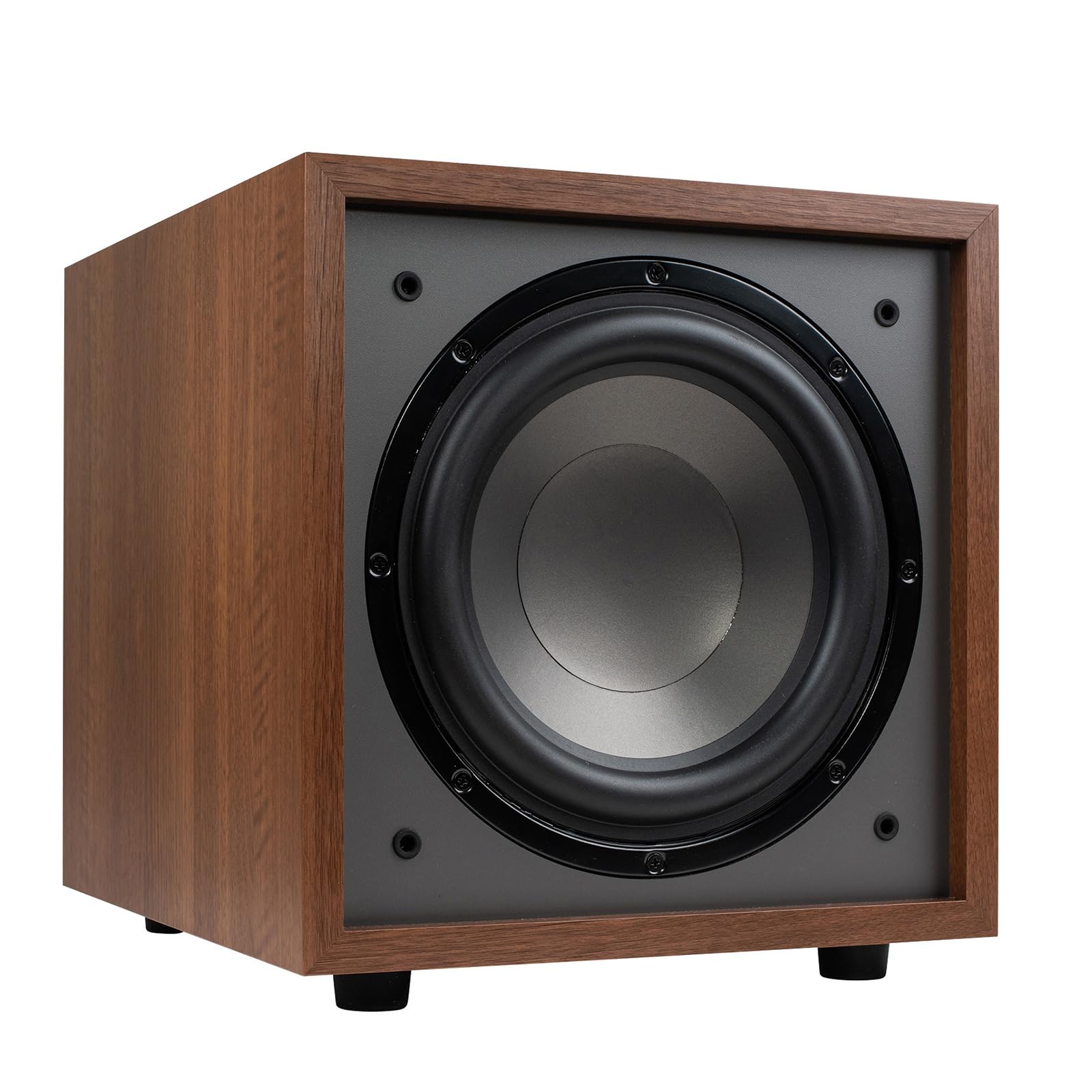
The Dayton Audio CS1000 punches well above its price bracket with a genuine 28Hz low-frequency extension — rare in this tier. Its 10-inch driver, driven by 180W RMS of Class-D amplification, produces tight, musical bass that never sounds bloated. The rigid, internally braced MDF cabinet eliminates panel resonance, letting the driver articulate clean transients during explosive movie scenes and complex bass lines in music.
Connectivity is comprehensive: stereo RCA, LFE, and speaker-level inputs accommodate virtually any receiver or integrated amp. The variable crossover and 180-degree phase switch make integration straightforward, and the auto-on feature ensures the sub wakes only when signal is present — no constant low-level hum. Owners consistently praise its ability to outperform 12-inch subs from a decade ago in output precision.
At this price, the CS1000 is the reference for what a budget subwoofer should be: deep, clean, and built to last. The wood-grain finish and included gray grille allow it to blend into furniture rather than dominate the room. If you want the lowest usable extension without stepping into premium territory, this is the one.
Why it’s great
- Genuine 28 Hz extension delivers sub-bass you can feel.
- Rock-solid MDF cabinet with internal bracing eliminates cabinet buzz.
- 5-year warranty backs the engineering.
Good to know
- Grille cloth can appear slightly loose on some units.
- Requires careful placement to avoid standing wave issues.
2. Rockville Rock Shaker 10 Black

The Rockville Rock Shaker 10 delivers the highest continuous power in the budget tier with 300W RMS, translating to serious output capability. Its 10-inch high-excursion driver, paired with a Y30 magnet and 1.5-inch 4-layer voice coil, produces chest-thumping low end that fills medium to large rooms without breaking a sweat. The Class-D amplifier is precisely matched to the woofer and enclosure for clean, distortion-free sound up to moderate listening levels.
Adjustable volume, crossover frequency, and phase controls give you the tools to blend the sub seamlessly with your main speakers. RCA line-level and high-level speaker inputs accommodate both modern AV receivers and older stereo setups. The MDF enclosure with vinyl finish and detachable foam grill looks purposeful and protects the driver during transport or in high-traffic areas.
Reviewers consistently note that it shakes the room at 50% gain, outperforming expectations for its price. The low end is slightly looser than more analytical studio subs, but for home theater explosions and thumping music playback, this is a feature, not a bug. For pure visceral impact, the Rock Shaker 10 is hard to beat.
Why it’s great
- 300W RMS delivers room-shaking output.
- High-excursion 10″ driver handles high SPL without distress.
- Flexible inputs integrate with nearly any system.
Good to know
- Crossover is a shelf filter, not a true low-pass, causing potential muddiness if set too high.
- Cabinet construction is serviceable but not as inert as premium options.
3. Polk Audio PSW10

The Polk Audio PSW10 is something of a legend in entry-level audio — a compact 10-inch powered subwoofer that prioritizes musicality over sheer output. Its 50W RMS amplifier is modest on paper, but the Dynamic Balance driver and tuned port produce surprisingly clean, articulate bass that integrates naturally with bookshelf speakers. This is not a sub that shakes walls; it is a sub that fills in the low end with texture and pitch definition.
Continuously variable crossover from 80 to 160 Hz gives you flexibility to match the sub to your main speakers, while the phase toggle switch helps with placement in corners or along walls. Speaker-level inputs and outputs allow daisy-chaining, and the compact footprint (14.5 inches tall) fits into small rooms without dominating the space. The detachable grille is a nice touch, though it can rattle at higher volumes — a known quirk easily fixed by removing it.
Reviewers consistently praise its accuracy for music across rock, jazz, and classical genres, noting that it sounds more like a musical instrument than a bass machine. For a small to medium room where clean integration matters more than blockbuster impact, the PSW10 remains a benchmark. Just keep gain below 50% to avoid distorting the built-in amplifier.
Why it’s great
- Musical, non-boomy bass that blends with quality bookshelf speakers.
- Compact size fits easily into small listening rooms.
- High-level inputs allow use with vintage integrated amps.
Good to know
- 50W RMS limits output in large spaces or for demanding home theater.
- Front grille can vibrate audibly at higher output levels.
4. Fluance DB10W

The Fluance DB10W brings legitimate high-end engineering to the budget conversation. Its 10-inch long-throw driver achieves higher linear excursion than typical budget woofers, producing deep, controlled bass with excellent transient response. The high-performance amplifier delivers substantial headroom, allowing the sub to produce room-shaking output for home theater without noticeable compression or distortion.
The precision-crafted MDF wood cabinet is front-ported, which means it can be placed against a wall without chuffing or port noise — a huge advantage in smaller rooms. The natural walnut finish looks genuinely premium, earning rare “wife approval factor” for a subwoofer. Auto power-on via signal detection is energy efficient and eliminates the need to manually toggle the sub on and off.
Owner feedback consistently highlights how the DB10W completes a 5.1 system, adding depth and weight that transforms movie watching and music playback. It hits cleanly down to about 40Hz with usable output to 38Hz, making it ideal for listeners who prioritize punch and detail over subterranean extension. For a budget sub that looks and sounds like it costs twice as much, Fluance delivers.
Why it’s great
- Long-throw 10″ driver produces tight, high-SPL bass.
- Front port design allows flexible placement near walls.
- Premium walnut veneer looks fantastic in any room.
Good to know
- Output drops below 40Hz; not for sub-30Hz extension seekers.
- Requires break-in period for driver suspension to loosen.
5. Edifier T5s
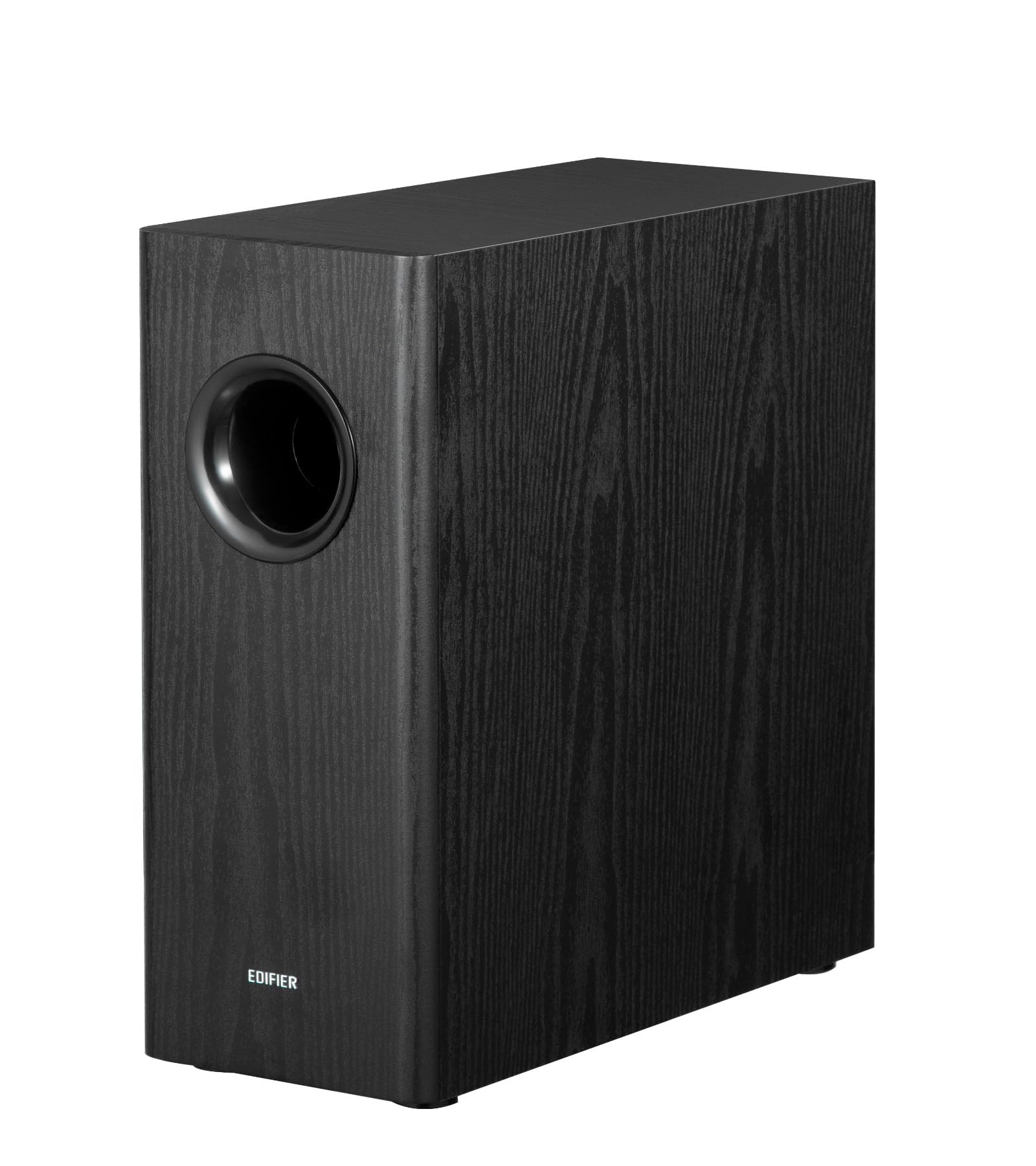
The Edifier T5s is a purpose-built near-field subwoofer designed specifically for desktop and small-room listening. Its 8-inch long-throw woofer, driven by 70W RMS of Class-D power, reaches down to 35Hz with surprising authority for its compact footprint. The vertical, space-saving design (roughly the size of a medium PC tower) fits neatly beside a desk or under a side table without dominating the visual space.
Precision controls include a continuously variable low-pass filter from 30Hz to 160Hz, a 0°/180° phase selector, and separate volume adjustment — all essential for seamless integration with desktop speakers like Edifier’s own R1280Ts or R1700BTs. The 18mm MDF cabinet with front-firing driver and right-firing acoustic port minimizes cabinet resonance, producing clean, tight bass that extends the range of small monitors without causing imaging smear.
Users consistently report that the T5s delivers articulate, musical bass that never overwhelms the room. It struggles below 35Hz on deep synth or pipe organ tracks, but for 95% of music and movie content, it provides exactly the foundation small speakers lack. The auto-standby feature and included RCA cables make setup truly plug-and-play.
Why it’s great
- Compact vertical design fits easily in desktop setups.
- Precision crossover and phase controls for seamless integration.
- Clean, non-fatiguing bass ideal for near-field listening.
Good to know
- 70W RMS limits output for large living rooms.
- Not designed for subterranean sub-30Hz reproduction.
6. Dayton Audio Classic CS800
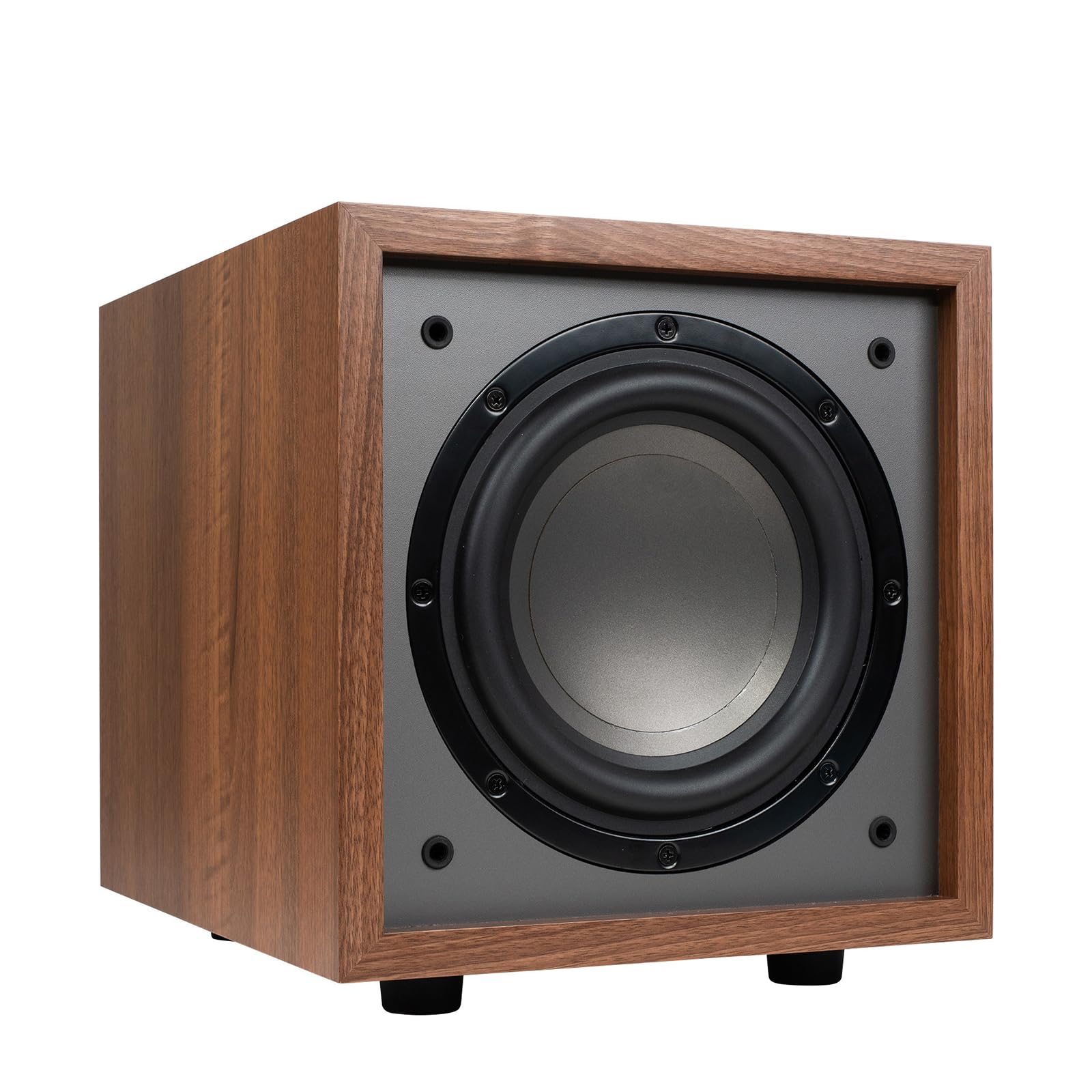
The Dayton Audio CS800 is compelling proof that an 8-inch driver, when properly engineered, can outperform larger units with sloppy design. Its 150W RMS Class-D amplifier drives a rigid, braced cabinet that eliminates panel resonance, producing tight, accurate low-end extension down to 35Hz. The wood-grain finish and swappable grille give it furniture-grade aesthetics that integrate into any room.
Connectivity covers all bases: stereo RCA, LFE, and speaker-level inputs ensure compatibility with any receiver, while auto-on circuitry and simple controls (volume, crossover, phase) make setup straightforward. Owners with rooms around 12×14 feet report that it fills the space with clean, articulate bass that exceeds what they expected from an 8-inch sub — some even replacing older 12-inch models.
The CS800’s 5-year warranty is a standout in the budget tier, reflecting Dayton Audio’s confidence in its build quality. For listeners in small to medium rooms who want tight, musical bass without the footprint or cost of a 10-inch sub, the CS800 is an almost perfect value proposition. Just be prepared to experiment with placement to dial in the smoothest in-room response.
Why it’s great
- Exceptionally inert MDF cabinet for clean bass.
- 35Hz extension outperforms many larger competitors.
- 5-year warranty provides long-term peace of mind.
Good to know
- Grille cloth can appear slightly loose on some units.
- Requires careful placement to avoid standing wave issues.
7. Rockville Rock Shaker 8 Black

The Rockville Rock Shaker 8 packs 200W RMS of Class-D power into a compact 8-inch package, making it one of the most output-dense budget subwoofers available. The Y30 magnet and 1.5-inch 4-layer voice coil allow the driver to handle significant thermal stress without power compression, delivering punchy, responsive bass that belies the small driver size. The MDF cabinet, while budget, includes fire-resistant poly fill to dampen internal reflections.
Connectivity includes RCA and speaker-level inputs and outputs, making it compatible with both AV receivers and older integrated amps. The 110-240V power compatibility means it works globally without a step-down transformer. Owners consistently report a night-and-day improvement when adding it to desktop speaker systems or small living room setups, with clean, distortion-free output at moderate volumes.
At this price point, the Rock Shaker 8 is a remarkable value for listeners who need a subwoofer for a small room or desktop without spending on larger options. The compact footprint (11.8 x 13.8 x 15 inches) fits under most desks easily. Just manage expectations: it delivers tight bass, not room-shaking sub-bass, making it perfect for music and moderate home theater use.
Why it’s great
- 200W RMS provides headroom for clean, dynamic bass.
- Compact size fits easily under desks and in small rooms.
- Flexible inputs ensure compatibility with most systems.
Good to know
- Crossover knob is unmarked, making repeatable settings difficult.
- Bass can sound boomy with the stock power cord; upgrade for cleaner low end.
8. Klipsch Jamo S810 Sub Black
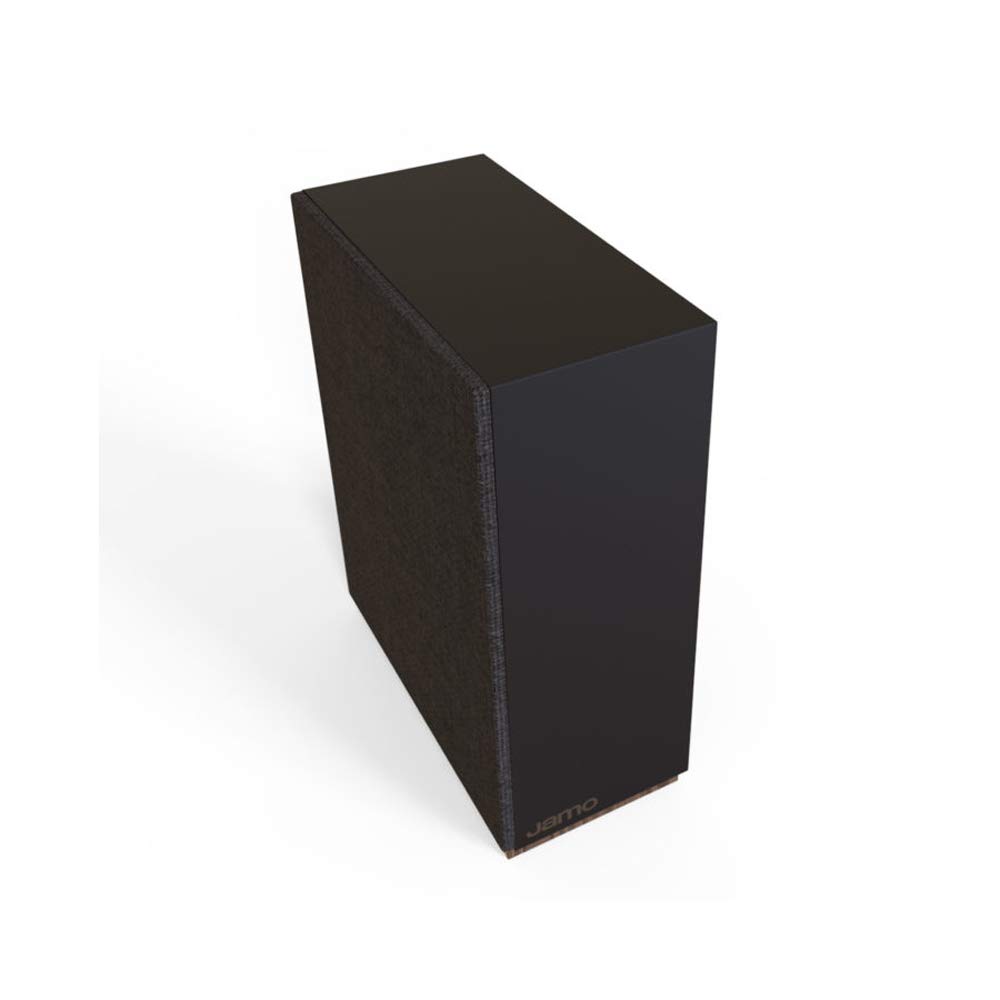
The Klipsch-owned Jamo S810 brings Scandinavian design sensibility to budget subwoofers, with a compact, minimalist black cabinet that fits into living spaces where WAF (wife acceptance factor) matters. Its 10-inch polyfiber woofer and 150W bottom-mounted Class-D amplifier are tuned for musicality rather than raw extension, delivering tight, non-boomy bass that works well for music in smaller rooms.
The bass reflex slot port design allows it to move meaningful air without port chuffing, and the controls (mounted on the bottom for a clean look) include volume, crossover, and phase adjustment. The unit is compact enough for desktop or corner placement and pairs particularly well with Jamo bookshelf speakers in a budget 2.1 or 5.1 system. However, the plastic cabinet construction and flimsy included power cable are noticeable compromises.
Reviews highlight that the S810 delivers impressive output for its size and price but note a steep roll-off below 40Hz that limits deep movie bass impact. The build quality is decent for the price, but the fragile grill pins require careful handling during removal. For listeners who prioritize aesthetics, clean mid-bass, and small footprint over subterranean extension, the Jamo S810 is a worthy contender.
Why it’s great
- Elegant, minimalist design that blends into any room.
- Tight, musical bass well-suited for music playback.
- Compact footprint fits in small spaces.
Good to know
- Plastic cabinet is less inert than MDF alternatives.
- Steep bass roll-off below 40Hz limits home theater impact.
- Fragile grill pins can break during removal.
9. ULTIMEA Skywave F40
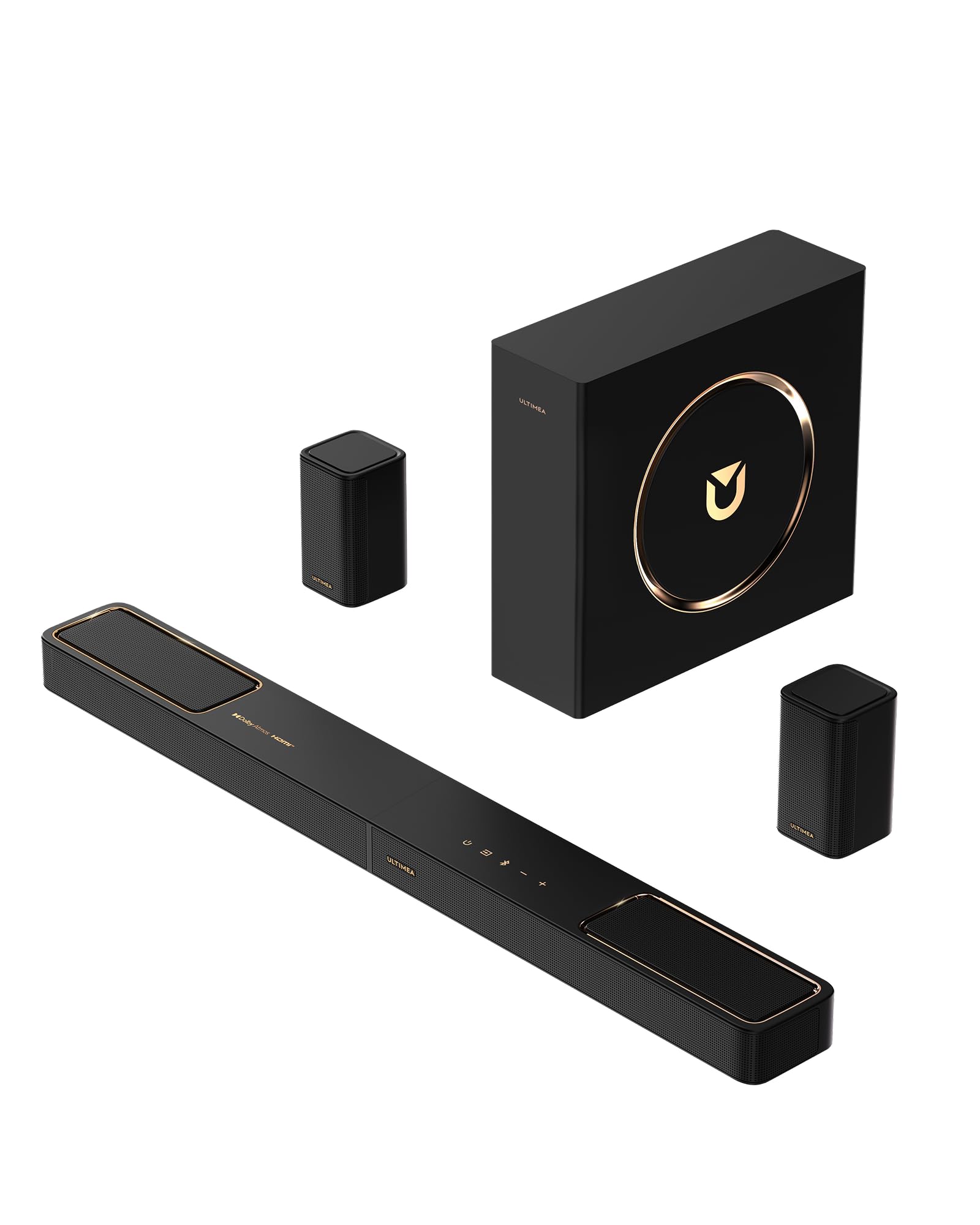
The ULTIMEA Skywave F40 is a complete 5.1.2 channel soundbar system that includes a dedicated 5.25-inch wired subwoofer, making it a turnkey solution for viewers who want Dolby Atmos immersion without building a component system. The subwoofer, while physically small, uses BassMX technology to produce surprising low-end weight down to 40Hz, providing the rumble for explosions and soundtracks that soundbars alone cannot deliver.
The system includes two wireless rear surround speakers and dual up-firing Atmos drivers, creating a 360-degree sound field that is genuinely immersive for the price. HDMI eARC support ensures lossless audio transmission from modern TVs, and the Ultimea App provides 121 EQ presets and 10-band graphic EQ for fine-tuning the subwoofer level to room acoustics. Setup is genuinely plug-and-play — the included cables and adapters cover all common TV configurations.
This is a different proposition than a standalone subwoofer: the Skywave F40 is for buyers who want a complete surround system that includes sub-bass, not an upgrade path for an existing setup. The subwoofer integration is seamless, and at this price point, the system delivers a level of immersion that competing soundbars at double the cost struggle to match. Just understand that the subwoofer is designed to complement the system, not to shake the room independently.
Why it’s great
- Complete 5.1.2 Dolby Atmos system with dedicated subwoofer out of the box.
- Immersive 360-degree sound field with wireless rear speakers.
- App control with extensive EQ and preset options for subwoofer tuning.
Good to know
- 5.25″ subwoofer cannot match the output of dedicated 8″ or 10″ standalone subs.
- Not compatible with DTS content.
- Rear speakers require power outlets for operation.
FAQ
What size room is a budget subwoofer with an 8-inch driver suitable for?
Can I use a budget powered subwoofer with a vintage stereo receiver that lacks a subwoofer output?
What does the phase switch (0°/180°) do and when should I change it?
Why does my budget subwoofer hum when turned on but not playing audio?
Final Thoughts: The Verdict
For most users, the budget home cinema subwoofer winner is the Dayton Audio CS1000 because it delivers genuinely deep 28Hz extension, a rigid braced cabinet, and a 5-year warranty at an unbeatable price. If you want maximum chest-thumping output for a large living room, grab the Rockville Rock Shaker 10. And for a desktop or small room where precision and compact size matter most, nothing beats the Edifier T5s.

Mo Maruf
I created WellFizz to bridge the gap between vague wellness advice and actionable solutions. My mission is simple: to decode the research and give you practical tools you can actually use.
Beyond the data, I am a passionate traveler. I believe that stepping away from the screen to explore new environments is essential for mental clarity and physical vitality.