Our readers keep the lights on and my smoothie glass nicely filled. As an Amazon Associate, I earn from qualifying purchases.
The gap between entry-level APS-C cameras and the professional-grade full-frame realm has narrowed to a sliver. Today, a budget full-frame mirrorless camera delivers the exact same sensor physics as flagship models— larger photosites, superior dynamic range, and genuine shallow depth-of-field control—but at a fraction of the cost. The real challenge isn’t finding one; it’s navigating the trade-offs in autofocus speed, buffer depth, and lens ecosystem compatibility that define each sub- option.
I’m Mohammad Maruf — the founder and writer behind WellFizz. I’ve spent over 1,200 hours reverse-engineering sensor specs, parsing autofocus point maps, and stress-testing battery claims to separate marketing fluff from genuine value in the full-frame market.
For the photographer who wants pro-grade sensor performance without the pro-grade price tag, my research has narrowed the field to the models that actually deliver on the promise of a budget full frame mirrorless camera without crippling compromises in usability or image fidelity.
How To Choose The Best Budget Full Frame Mirrorless Camera
The full-frame mirrorless market has matured to the point where spending more than necessary on a first body is a mistake—if you know exactly which specs to prioritize. Below are the three biggest decision points that separate a smart purchase from a regret.
Sensor Architecture: BSI vs. Standard CMOS
A back-side illuminated (BSI) sensor moves the wiring layer behind the photodiodes, letting more light hit each pixel. For budget buyers, this directly translates to cleaner shadows at ISO 3200 and above. Standard CMOS sensors are still capable, but in dim conditions they show noise sooner. Check the spec sheet for “BSI” or “Exmor R” to maximize low-light performance without spending extra on faster lenses.
Autofocus: Phase-Detection Coverage Is Non-Negotiable
Entry-level full-frame bodies often skimp on AF hardware. Contrast-detect-only systems hunt in low light and miss fast-moving subjects. The baseline for modern usability is a phase-detection array covering at least 80% of the sensor frame. Budget models that offer hybrid AF with 400+ phase-detection points (like the Sony A6100’s 425 points) give you professional-grade tracking reliability even if the body lacks the latest AI subject recognition.
Lens Ecosystem Cost: The Hidden Budget Trap
The camera body is only half the financial equation. A native 50mm f/1.8 lens can cost as little as for some mounts (Canon RF, Sony E) and over for others (Nikon Z initially). Before committing, tally the cost of your first three lenses. A body with a wide, affordable native lens lineup—or robust adapter support for vintage glass—is the true budget champion. IBIS also matters here: a body with 5-axis stabilization lets you adapt older manual lenses without needing stabilized optics.
Quick Comparison
On smaller screens, swipe sideways to see the full table.
| Model | Category | Best For | Key Spec | Amazon |
|---|---|---|---|---|
| Canon EOS R8 | Hybrid | Lightweight Travel / Video | 24.2MP, 4K 60p (6K oversampled) | Amazon |
| Sony Alpha A7 II | Standard | Adapted Lens Shooters | 24.3MP, 5-Axis IBIS | Amazon |
| Canon EOS RP (Body Only) | Entry-Level | First Full-Frame Body | 26.2MP, 0.02 sec AF | Amazon |
| Nikon Z 6II | Mid-Range Pro | Event / Wedding Photo | 24.5MP BSI, 14 FPS | Amazon |
| Sony Alpha A6100 | APS-C Value | Budget Action / Vlog | 24.2MP APS-C, 11 FPS | Amazon |
| Panasonic LUMIX S5 | Video Hybrid | Film / Cinematic Video | 24.2MP, 6.5-Stop IBIS | Amazon |
| Sigma fp | Ultra-Compact | CinemaDNG Raw Video | 24.6MP, 422g Body | Amazon |
| Canon EOS RP (Kit) | Kit Bundle | All-In-One Starter Kit | 26.2MP, RF 24-105mm | Amazon |
| Sony a7 (Original) | Legacy Value | Legacy Lens Adapting | 24.3MP, 3:2 Sensor Ratio | Amazon |
| Panasonic LUMIX S5II | Professional Hybrid | Unlimited 4K 10-bit | 24.2MP, Phase Hybrid AF | Amazon |
| Nikon Z 7II | High Resolution | Studio / Landscape Detail | 45.7MP, 10 FPS | Amazon |
| Sony Alpha A7 IV | All-Rounder | Photo & Video Hybrid | 33MP, 759 AF Points | Amazon |
| Canon EOS R5 | Pro Flagship | 8K & High-Speed Capture | 45MP, 8K RAW, 20 FPS | Amazon |
In‑Depth Reviews
1. Canon EOS R8

The Canon EOS R8 strips away the bulk of the R6 II while retaining its core 24.2MP sensor and DIGIC X processor. This translates to exceptionally clean high‑ISO images—noise stays manageable up to ISO 6400—and a 4K 60p stream that is oversampled from a 6K readout, giving you detail that rivals cameras twice the price. The Dual Pixel CMOS AF II covers the entire frame with 1,053 zones, and the deep‑learning subject detection reliably tracks people, animals, and vehicles even in backlit park scenarios.
Weighing just 461g with a battery and card, the R8 is Canon’s lightest full‑frame body, making it ideal for street photography or all‑day travel. The vari‑angle touchscreen is crisp at 1.62 million dots, and the OLED EVF refreshes at 120 fps for near‑zero lag. The kit RF 24‑50mm f/4.5‑6.3 lens is modest but lets you start shooting immediately; budget conscious buyers should pair the body with a RF 50mm f/1.8 instead.
The biggest trade‑off is battery life: the LP‑E17 pack struggles past 300 shots per charge. Also, the mechanical shutter tops out at 1/4000 sec rather than 1/8000, which limits wide‑aperture use in bright sun without an ND filter. For shooters who prioritize sensor performance, lightweight handling, and class‑leading AF in a single body, the R8 remains the most balanced entry point into full‑frame mirrorless.
Why it’s great
- DIGIC X processor delivers exceptional noise control at high ISOs.
- 6K oversampled 4K video yields sharp, detailed footage.
- Lightest full‑frame Canon body at 461g.
- USB‑C charging is convenient for travel.
Good to know
- Battery life is limited to ~300 shots; carry spares.
- Mechanical shutter limited to 1/4000 sec.
- Kit lens is slow (f/4.5‑6.3) and not weather‑sealed.
- No in-body image stabilization.
2. Sony Alpha A7 II

The Sony A7 II was the world’s first full‑frame mirrorless with 5‑axis in‑body image stabilization, and that IBIS remains its killer feature in the budget tier today. It allows handheld shooting at 1/4 sec with a 55mm f/1.8 lens, making it a superb platform for adapted vintage glass from Canon FD, Nikon AI‑S, or Leica M mounts. The 24.3MP sensor captures the same dynamic range as much newer bodies, and the hybrid AF—though slower than modern Sony cameras—still locks focus reliably in good light.
The magnesium‑alloy body feels substantial in the hand, with a reshaped grip that fixes the original A7’s worst ergonomic flaw. Video shooters get XAVC S format with S‑Log gamma, but there is no 4K resolution. The 3‑inch tilting LCD is non‑touch, and the menu system remains Sony’s dense, nested layout that requires time to set up. Battery life is weak at roughly 300 shots, but third‑party NP‑FW50 packs are inexpensive.
For photographers willing to trade modern video specs and blazing AF for IBIS and superb sensor image quality, the A7 II offers an unbeatable price‑to‑performance ratio. It’s especially compelling for those who own a collection of manual lenses and want a stabilized full‑frame body without spending premium dollars.
Why it’s great
- 5‑axis IBIS enables handheld low‑light shots with adapted lenses.
- Exceptional image quality and dynamic range for its age.
- Solid magnesium‑alloy build with improved grip.
- Large native lens ecosystem plus adapter support.
Good to know
- No 4K video recording.
- Autofocus is slower than current‑gen models.
- Battery life is poor; plan for spares.
- Non‑touch screen and complex menu layout.
3. Canon EOS RP Body Only

The Canon EOS RP is the lightest and smallest full‑frame EOS camera ever made, weighing just 440g. Its 26.2MP CMOS sensor with DIGIC 8 delivers beautiful color science straight out of camera—portraits have pleasing skin tones and landscapes show rich gradation in the sky channel. The Dual Pixel CMOS AF is fast and accurate in stills, and the vari‑angle touchscreen makes vlogging or low‑angle shooting effortless. It also doubles as a high‑quality webcam via Canon’s EOS Utility software.
The primary compromise is video: 4K is cropped (1.6x) and limited to 30p, with the older contrast‑detect AF system during 4K recording. The battery is the same small LP‑E17 as the R8, netting around 250 shots per charge. But for a pure stills photographer upgrading from an APS‑C DSLR like the Rebel T3i or T7, the RP’s full‑frame sensor advantage in dynamic range and low‑light clarity is immediately visible. RF mount compatibility also gives access to excellent native glass and inexpensive EF‑to‑RF adapters.
If your primary need is lightweight, high‑quality full‑frame photography with true Canon colors and you can live without uncropped 4K, the RP offers the most accessible entry point into the RF ecosystem.
Why it’s great
- Smallest, lightest full‑frame EOS camera at 440g.
- Excellent stills image quality with natural color reproduction.
- Vari‑angle touchscreen LCD for flexible framing.
- Compatible with RF and EF/EF‑S lenses via adapter.
Good to know
- 4K video is heavily cropped with contrast AF only.
- Battery life is limited (~250 shots).
- Mechanical shutter is 1/4000 sec.
- No in‑body image stabilization.
4. Nikon Z 6II

The Nikon Z 6II refines the original Z 6 with dual card slots (CFexpress/XQD + UHS‑II SD), giving wedding and event photographers immediate backup security. The 24.5MP BSI sensor excels in low light, producing clean files up to ISO 6400 with minimal banding. The 273‑point phase‑detect AF system is fast and reliable, and the buffer holds 124 12‑bit RAW frames at 14 FPS—enough for an entire burst sequence at a critical moment.
The electronic viewfinder is large and bright, and the body’s ergonomic grip makes long handheld shoots comfortable even with heavier Z‑mount f/2.8 zooms. Video capture reaches 4K 60p using the full sensor width, and the USB‑C port provides constant power for extended recording. The Z mount’s larger diameter allows Nikon to design lenses with superb edge‑to‑edge sharpness, but native lenses are pricier than Sony E‑mount equivalents—budget buyers may need the FTZ adapter to leverage F‑mount glass.
For photographers who need dual card slots, robust build quality, and a BSI sensor with class‑leading high‑ISO performance without stepping into the + range, the Z 6II earns its keep as a professional workhorse.
Why it’s great
- Dual card slots for professional backup.
- Excellent high‑ISO performance with the 24.5MP BSI sensor.
- 14 FPS continuous shooting with deep buffer.
- USB‑C constant power and vertical grip support.
Good to know
- AF subject tracking can lose fast, erratic subjects.
- Native Z lenses are expansive; adapter needed for F‑mount.
- Screen doesn’t flip forward for self‑video.
- No dedicated f/4 70‑200mm Z lens at launch.
5. Sony Alpha A6100 Kit

While the A6100 uses an APS‑C sensor, we include it here because its 425‑phase/425‑contrast AF coverage—84% of the sensor—rivals many full‑frame bodies in speed and reliability. The 0.02‑sec lock time and Real‑time Eye AF for humans and animals make it exceptionally good for capturing fast‑moving toddlers or skittish pets. The 24.2MP Exmor sensor delivers excellent dynamic range for the class, and shooting at 11 FPS with AF tracking ensures you don’t miss decisive moments.
The tiltable 3‑inch touchscreen is useful for vlogging, and the microphone input lets you upgrade audio without an external recorder. The kit 16‑50mm lens is compact and decent in good light but fragile—one user reported grinding after a short drop. The EVF is a common complaint: it’s small and low‑resolution compared to the A6400 or A6600, making manual focus precise work a chore. The Sony menu system also requires upfront customization to avoid daily frustration.
For price‑sensitive buyers who prioritize blazing autofocus speed and solid image quality over full‑frame sensor physics, the A6100 is a legitimate alternative—especially if you’re shooting in good light and need fast, reliable subject tracking.
Why it’s great
- World’s fastest AF at 0.02 sec with dense point coverage.
- Real‑time Eye and object tracking works flawlessly.
- 11 FPS burst with continuous AF makes it great for action.
- Lightweight and compact for everyday carry.
Good to know
- EVF is small and low‑resolution compared to competition.
- Menu system is convoluted without customization.
- No IBIS; relies on lens stabilization.
- Kit lens build quality is fragile.
6. Panasonic LUMIX S5

The Panasonic S5 packs a 24.2MP full‑frame sensor inside a weather‑sealed body that offers 6.5‑stop 5‑axis Dual I.S. 2 stabilization—enough to shoot handheld at 1/4 sec without micro‑blur. It records 4K 60p 10‑bit 4:2:2 internally, and the V‑Log/V‑Gamut profile captures over 14 stops of dynamic range, making it a favorite among videographers who color‑grade in post. The 96MP high‑resolution mode merges multiple exposures into a single ultra‑detailed file suitable for product or architecture shoots.
The ergonomic body includes a large, deep grip and a fully articulated flip screen that stays out of the way of HDMI ports. The L‑Mount ecosystem, shared with Leica and Sigma, offers affordable yet sharp lens options like the Sigma 45mm f/2.8 DG DN. Autofocus is contrast‑detect with DFD, and although it’s improved over older Panasonic bodies, it still hunts in very low light and isn’t reliable for continuous tracking of moving subjects—this camera rewards manual focus filmmaking.
If your priority is professional‑grade video features, outstanding stabilization, and high dynamic range in a compact body, the S5 is the budget‑tier filmmaking choice. Still‑oriented shooters will appreciate the build and the high‑resolution mode, but the AF limitations make it less ideal for fast‑paced photographic work.
Why it’s great
- 6.5‑stop IBIS enables tripod‑like handheld footage.
- 10‑bit 4:2:2 internal recording with V‑Log.
- Weather‑sealed body with excellent ergonomics.
- Excellent value in the L‑Mount ecosystem.
Good to know
- Contrast AF hunts in low light; not for action.
- No battery percentage indicator in viewfinder.
- Slow kit charger; third‑party batteries lose 15% capacity.
- Limited native lens selection compared to Sony/Canon.
7. Sigma fp
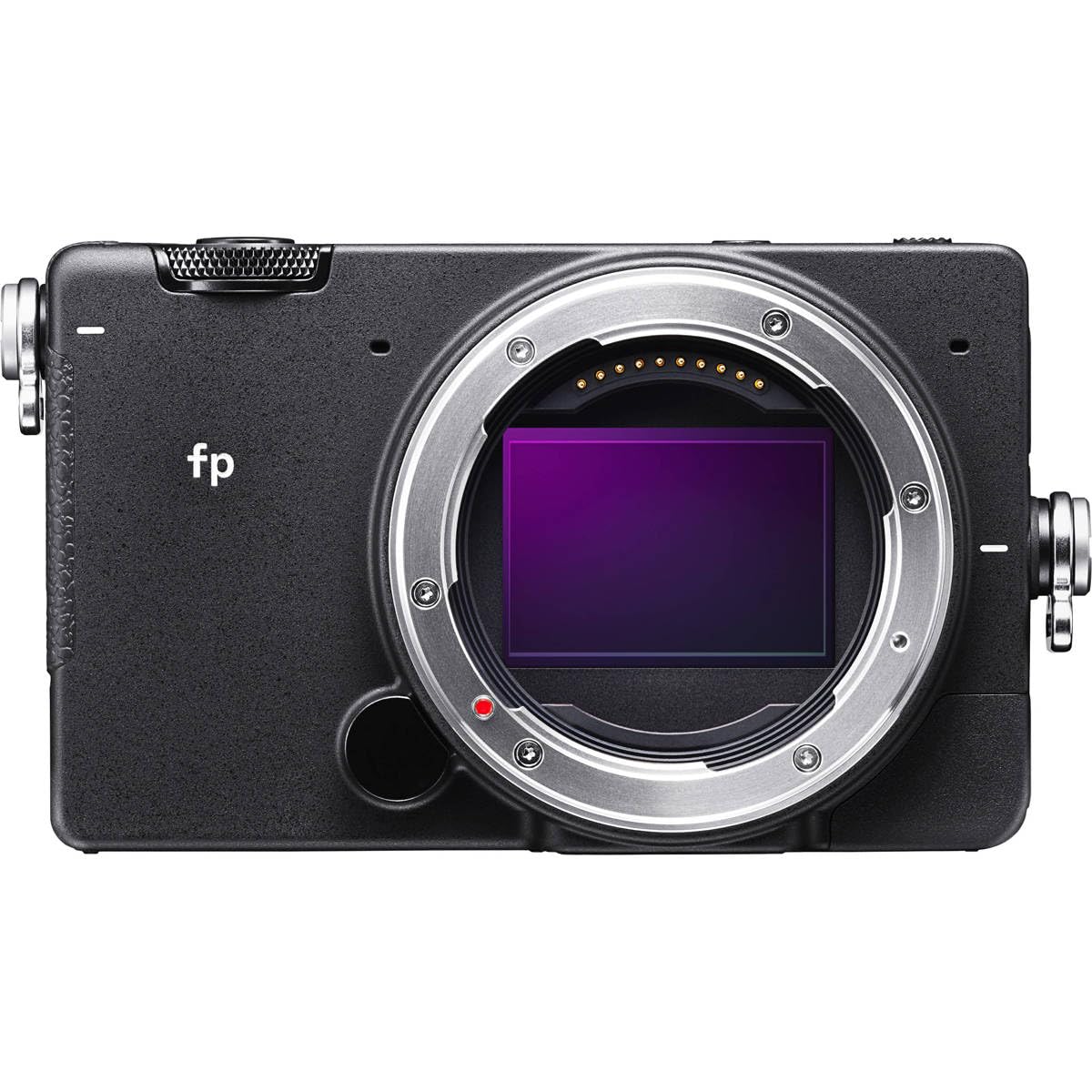
The Sigma fp is the world’s smallest full‑frame mirrorless at 422g, packing a 24.6MP BSI CMOS sensor into a boxy, Leica‑like aluminum body. Its standout feature is recording 12‑bit CinemaDNG raw video to an external SSD via USB‑C—a capability normally found in cinema cameras. For filmmakers who prioritize raw image data and color flexibility over autofocus speed, the fp is unmatched at its price point.
The stills performance is strong, with vibrant color rendering and excellent dynamic range, but the practical limitations are real: no built‑in electronic viewfinder (optional VF‑11 sold separately), a puny 49 contrast‑detect AF points that hunt badly in anything less than perfect light, and a max continuous shooting rate of 5 FPS. The dust and splash‑proof sealing protects the sensor, but operating the camera without the optional hand grip is awkward with heavy lenses.
For deliberate, methodical shooters who want a modular, ultra‑compact platform for raw video and adapted glass (the fp works with Sigma MC‑11 to use Canon EF lenses), the fp is a unique and powerful tool. It is not a general‑purpose camera—it is a specialist’s instrument that rewards patience.
Why it’s great
- Unmatched 12‑bit CinemaDNG raw video output.
- World’s smallest and lightest full‑frame body at 422g.
- Solid aluminum build with weather sealing.
- USB‑C external recording to SSDs.
Good to know
- AF system is poor; manual focus is the intended workflow.
- No built‑in EVF or flash.
- 5 FPS burst limits action photography.
- Poor ergonomics with heavy lenses without optional grip.
8. Canon EOS RP Kit (RF 24-105mm)

This kit bundles the compact Canon EOS RP body with the RF 24‑105mm f/4‑7.1 IS STM lens, creating a versatile walkaround setup that covers wide to short telephoto. The lens includes optical stabilization (up to 5 stops) to compensate for the body’s lack of IBIS, and its macro capability (0.5x at 24mm) adds close‑up versatility. The RP’s 26.2MP sensor and DIGIC 8 processor produce the same excellent Canon colors and dynamic range as the body alone, but the kit lens makes it truly ready for daily use out of the box.
The RF 24‑105mm is impressively compact for a full‑frame zoom, but its narrow f/4‑7.1 aperture means it struggles in dim interior light without bumping ISO. The “STM” motor focuses quietly but can hunt in low light, and there is no physical AF/MF switch—you must dive into the menus to change focus mode. Video recording retains the 1.6x crop at 4K, but 1080p footage is sharp and benefits from the lens’s IS.
For the photographer who wants a single‑lens solution to cover travel, portraits, and landscapes from day one, the EOS RP kit eliminates the “what lens next” anxiety. It is the ultimate budget entry bundle, albeit one where upgrading the lens to a faster prime is a near‑term necessity for low‑light work.
Why it’s great
- Versatile 24‑105mm zoom range in a compact lens.
- Lens‑based optical stabilization works well for handheld video.
- Great value getting a full‑frame system with kit lens.
- Excellent stills image quality from the RP sensor.
Good to know
- Kit lens aperture (f/4‑7.1) is slow in low light.
- No AF/MF switch on the lens; requires menu change.
- Video 4K crops and has a 30‑minute recording limit.
- Edge sharpness softens until stopped down to f/8.
9. Sony a7 (Original)

The original Sony a7 is the camera that democratized full‑frame mirrorless. Its 24.3MP Exmor sensor still delivers excellent dynamic range—comparable to modern budget bodies—and its compact body makes it a natural platform for adapting vintage Nikon, Canon, and Leica lenses. The EVF, while low‑resolution by today’s standards, is functional, and the tilting LCD works for waist‑level street photography. For around on the used market, it remains the cheapest path to a full‑frame sensor.
The a7’s weaknesses are well documented: the original contrast‑detect AF is slow and hunts in low light, the menu system is Sony’s pre‑improvement era layout, and the body lacks IBIS, 4K video, and a weather‑sealed mount flange. The battery life is roughly 350 shots, and startup is sluggish. The kit lens (28‑70mm) is optically mediocre with soft corners and purple fringing—budget buyers should skip it and buy the body to adapt better glass.
If your budget is extremely tight and you primarily want a full‑frame sensor for adapting high‑quality manual lenses, the original a7 is still a valid, low‑risk entry point. For anyone needing modern AF, 4K video, or day‑long battery life, the age and compromises of this body will frustrate.
Why it’s great
- Cheapest reliable entry to full‑frame sensor territory.
- Excellent dynamic range for stills.
- Compact and lightweight body for street photography.
- Highly adaptable to vintage Nikkor, FD, and M‑mount lenses.
Good to know
- AF is slow, especially in low‐light conditions.
- No IBIS, no 4K video, no weather sealing.
- Kit lens has poor corner sharpness and fringing.
- Battery life is short; startup is slow.
10. Panasonic LUMIX S5II Kit
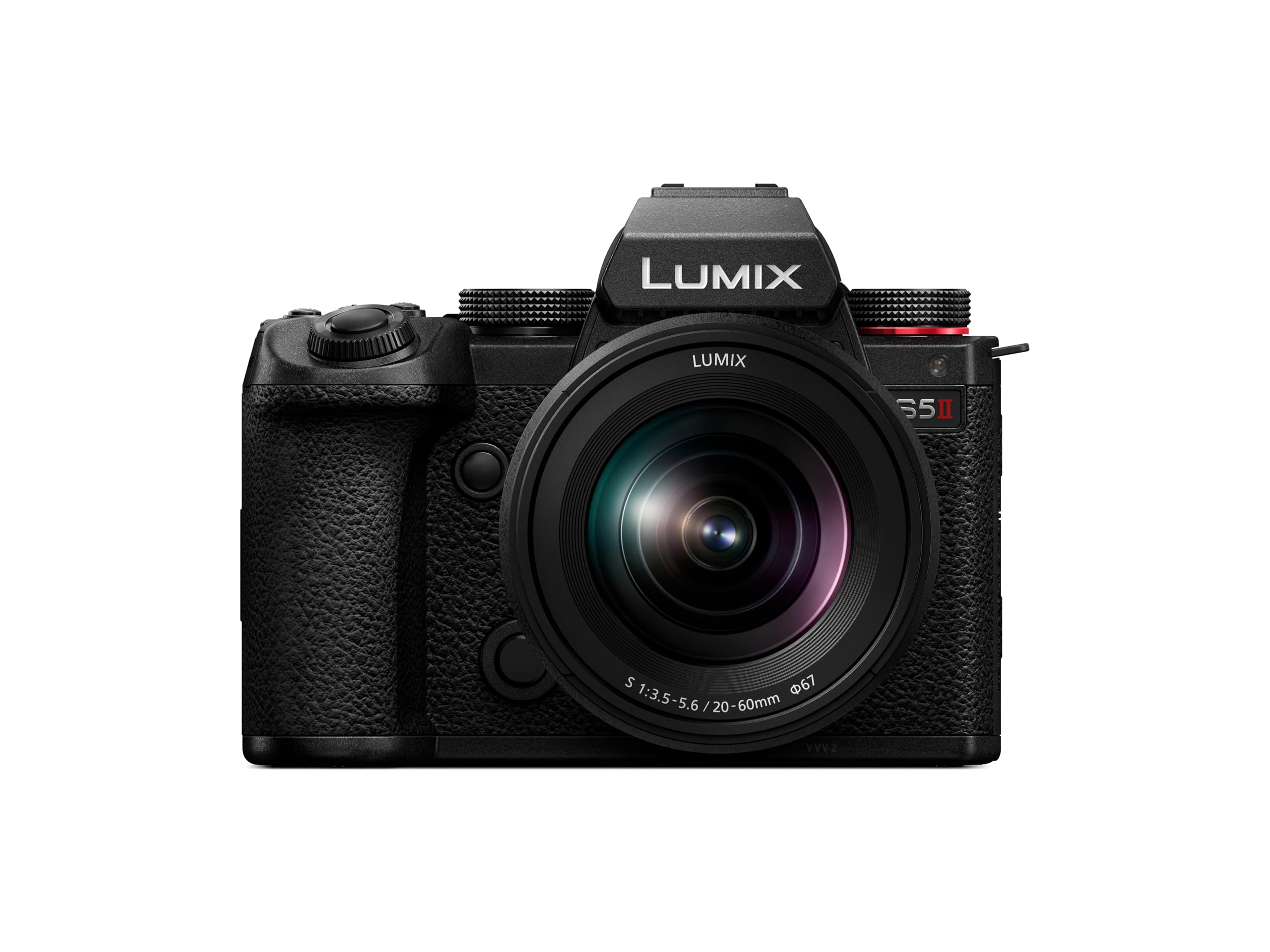
The S5II is Panasonic’s answer to the main criticism of the S5: phase‑detect autofocus. By integrating 779 phase‑detection points into the 24.2MP sensor, the S5II finally delivers fast, reliable continuous AF for both stills and video—matching the performance of Sony and Canon in most real‑world scenarios. Combined with a new Active I.S. system that compensates for walking motion, this camera is a true hybrid powerhouse for solo content creators.
The kit includes the 20‑60mm f/3.5‑5.6 L‑Mount zoom lens, which is sharp at the wide end and versatile enough for general shooting. The body includes unlimited 4:2:2 10‑bit recording (thanks to an internal fan for heat management), a 14+ stop V‑Log/V‑Gamut curve, and Real Time LUT support for in‑camera color grading. The build quality is excellent, with a deep grip and robust weather sealing. The Achilles’ heel remains battery life: about 370 shots per charge, and the square body design can snag on gear bags.
For video‑first hybrid shooters who need reliable phase‑detect AF, unlimited recording, and a flat color profile, the S5II is the most complete budget solution. It answers the S5’s biggest flaw without inflating the price to pro‑level territory.
Why it’s great
- Phase‑detect AF finally brings reliable tracking for people and subjects.
- Active I.S. smooths walking shots effectively.
- Unlimited 10‑bit 4:2:2 recording with internal fan.
- Real Time LUT grading in‑camera is a creative workflow booster.
Good to know
- Battery life is underwhelming; grip needed for long shoots.
- Body shape is square; sharp edges catch on bags.
- Built‑in fan can be audible in quiet rooms.
- High ISO above 51,200 is noisy.
11. Nikon Z 7II

The Z 7II delivers a 45.7MP sensor that captures extraordinary detail—enough to make 75% crops printable without visible degradation. The 493 phase‑detect AF points cover 90% of the frame, and the 5‑axis IBIS holds steady for pixel‑level sharpness handheld. Landscape and studio photographers benefit from the built‑in intervalometer with exposure smoothing, which eliminates flicker in day‑to‑night timelapse sequences. The dual card slots (CFexpress + SD) provide redundancy for client work.
The 4K 60p video is solid, though it lacks the oversampling of some competitors, and the Z mount’s large diameter enables stunning lens designs like the 50mm f/1.2 S. However, the Z 7II is not a budget body in the true sense—it sits at the higher end of the price range and is best considered by those who need ultra‑high resolution but are shopping within the “budget” tier relative to the + GFX or a7R V systems. Battery life is decent at 420 shots, and the ergonomics are among the best in Nikon’s lineup.
If your work requires cropping deeply or printing large, the Z 7II provides flagship‑level resolution at a price that undercuts its direct competition by a clear margin. For general daily shooting, the 24MP Z 6II may be a better value, but for detail‑obsessed shooters, the Z 7II delivers.
Why it’s great
- 45.7MP resolution enables massive crops and large prints.
- Excellent IBIS for high‑resolution handheld shooting.
- Built‑in intervalometer with exposure smoothing.
- Dual card slots (CFexpress + UHS‑II SD).
Good to know
- Large file sizes require fast storage and workflow adjustments.
- No HEVC video codec; files are large.
- AF is excellent but not as fast as Sony’s best for sports.
- Higher price point pushes against budget category limits.
12. Sony Alpha A7 IV Kit

The Sony A7 IV sits at the premium end of the budget full‑frame spectrum, offering a 33MP Exmor R back‑illuminated sensor paired with the BIONZ XR processor that powers 4K 60p 10‑bit 4:2:2 video oversampled from 7K in 4K 30p mode. The 759 phase‑detect AF points with Real‑time Eye Tracking cover nearly the entire sensor area, making it one of the most reliable autofocus systems for both people and animals. The S‑Cinetone color profile delivers cinematic color directly from camera, reducing grading time.
The body includes a comfortable grip, an articulating touchscreen (1.44M dots), and a high‑resolution OLED EVF (3.69M dots). The kit 28‑70mm lens is optically decent but is the weakest link in the system—most buyers will want to replace it with a Sigma 24‑70mm f/2.8 Art or a Sony 35mm f/1.8 to unlock the sensor’s true potential. The menu system has been refreshed from older Sony designs, making it more intuitive, and the USB‑C port supports UVC/UAC for high‑quality webcam use.
For the hybrid shooter who demands top‑tier autofocus, high‑resolution stills, and professional video codecs without jumping to the + A7S III, the A7 IV represents the ceiling of budget‑tier investment. It is the camera you buy when you want to spend once and stop upgrading for years.
Why it’s great
- 33MP BSI sensor delivers excellent detail and dynamic range.
- 759 phase‑detect AF points with superior Real‑time Eye Tracking.
- 7K oversampled 4K 30p video with S‑Cinetone.
- Much improved menu system over older Sony bodies.
Good to know
- Kit 28‑70mm lens is average; budget for lens upgrades.
- Price is at the high end of budget full‑frame territory.
- Continuous viewer resolution drops in high‑speed bursts.
- Still uses small NP‑FZ100 battery; spares are costly.
13. Canon EOS R5

The Canon EOS R5 is the outlier on this list—a true professional flagship that appears here because its price has dropped into the tier where a budget buyer would stretch. The 45MP stacked CMOS sensor reads out at 20 FPS with the electronic shutter, and the 8K RAW internal recording capability is a tool for high‑end commercial and wildlife work. The Dual Pixel CMOS AF II with 1,053 zones and Eye Control AF (selecting focus points by looking at them) is Cannons most advanced AF system, and it works flawlessly with RF telephoto lenses.
The body includes 5‑axis IBIS that provides up to 8 stops of correction, an OLED EVF with 5.76 million dots, and dual card slots (CFexpress + SD). The overheating controversy from launch is largely resolved with firmware updates—the camera now records 8K for over 20 minutes before shutting down, which is sufficient for most clips. Battery life is about 650 shots, and the build is fully weather‑sealed to professional standards.
For the budget buyer, the R5 is only relevant if you specifically need 45MP, 8K, and pro‑grade build in one body and can find one at a reduced price.
Why it’s great
- 45MP sensor with 20 FPS electronic shutter for action.
- 8K RAW and 4K 120fps internal recording.
- Best‑in‑class Dual Pixel AF with Eye Control.
- Professional weather sealing and dual card slots.
Good to know
- Still premium‑priced; budget buyers should think hard about need.
- 8K recording can overheat after 20+ minutes in hot conditions.
- High megapixel files demand fast CFexpress cards.
- Viewfinder lag can be distracting with fast birds in flight
FAQ
Does a budget full-frame mirrorless camera have better low-light performance than an expensive APS-C camera?
Can I use my old DSLR lenses on a budget mirrorless camera?
Why do some budget full-frame cameras have APS-C crop mode?
Final Thoughts: The Verdict
For most users, the budget full frame mirrorless camera winner is the Canon EOS R8 because it delivers the 24.2MP sensor and DIGIC X processor from a flagship into the lightest full‑frame body on the market, with class‑leading autofocus and 6K oversampled video. If you need Panasonic S5II for its phase‑detect AF and unlimited 10‑bit recording, grab that. And for the price‑sensitive shooter who wants the most for the least, nothing beats the Canon EOS RP as an entry point into a full‑frame ecosystem.

Mo Maruf
I created WellFizz to bridge the gap between vague wellness advice and actionable solutions. My mission is simple: to decode the research and give you practical tools you can actually use.
Beyond the data, I am a passionate traveler. I believe that stepping away from the screen to explore new environments is essential for mental clarity and physical vitality.