Our readers keep the lights on and my smoothie glass nicely filled. As an Amazon Associate, I earn from qualifying purchases.
The gap between a phone video and a filmic image is wider than most new creators realize. Shallow depth of field, reliable color science, and manual control over exposure and audio — a dedicated body delivers all three in ways a smartphone simply cannot. That leap in quality is exactly what draws serious beginners toward a dedicated rig.
I’m Mohammad Maruf — the founder and writer behind WellFizz. Each camera here was evaluated on sensor performance, codec flexibility, lens system depth, and real-world usability for narrative or documentary-style shoots.
Whether you are shooting interviews, run-and-gun docs, or narrative shorts, this guide isolates the standout bodies for achieving professional-grade footage without breaking the bank. After hours of cross-referencing specs and user reports, these picks define the current best budget filmmaking camera landscape.
How To Choose The Best Budget Filmmaking Camera
The term “filmmaking camera” implies a tool designed for narrative, documentary, or commercial video work rather than casual snapshots. That changes what you should prioritize. Sensor size determines how much you can separate a subject from the background. A capable codec ensures your footage survives color grading without falling apart. The lens mount dictates your long-term glass investment. And stabilization — whether in-body or via gimbal — directly affects your B-roll quality. These four pillars separate a true filmmaking workhorse from a general-purpose camera that happens to shoot video.
Sensor Size and Low-Light Behavior
An APS-C or Super 35 sensor strikes the most practical balance for budget work. You get genuine shallow depth-of-field compared to Micro Four Thirds, while full-frame bodies at the same price tend to sacrifice codec options or build quality. In dim interiors or golden hour exteriors, a larger physical pixel area collects more light, meaning cleaner shadows and less noise when you push the ISO up for a darker scene.
Codec and Color Depth
An 8-bit 4:2:0 recording can produce lovely images in good light, but as soon as you push the shadows or try a heavy color grade you will see banding and artifacts. A 10-bit or 12-bit codec — especially Log or RAW — gives you room to match shots, recover highlights, and pull detail from dark areas. Cameras that offer ProRes, Blackmagic RAW, or a 10-bit internal option are better suited for narrative post-production workflows.
Lens System and Mount Compatibility
A versatile lens mount like Canon RF, Sony E, Micro Four Thirds, or EF gives you access to used lenses, third-party autofocus glass, and vintage manual primes. Look for a mount that has a large installed base of affordable wide-aperture lenses — a 50mm f/1.8 or 35mm f/1.8 can transform a morning shoot from average to cinematic almost instantly. Interchangeable lenses are a non-negotiable feature for any serious filmmaking tool.
Stabilization and Support Gear
In-body image stabilization allows smooth handheld walking shots and reduces the need for a gimbal on many locked-off or slow-moving scenes. If the camera lacks IBIS, you will need to budget for a gimbal or rely exclusively on tripod and shoulder rig shots. For run-and-gun documentary work, IBIS is a huge time-saver. For narrative tripod-based work, it matters far less.
Quick Comparison
On smaller screens, swipe sideways to see the full table.
| Model | Category | Best For | Key Spec | Amazon |
|---|---|---|---|---|
| Sony Alpha ZV-E10 | Mirrorless | Vlogging & YouTube | 4K oversampled from 6K | Amazon |
| Canon EOS R8 | Full-Frame | Entry full-frame cinema | Uncropped 4K/60p from 6K | Amazon |
| Panasonic LUMIX G85 | Mirrorless | IBIS & value | 5-axis IBIS + OIS | Amazon |
| Sony Alpha a6400 | Mirrorless | Fast hybrid AF | 425 phase-detection points | Amazon |
| Blackmagic Pocket Cinema 6K | Cinema | Narrative RAW work | 6K Super 35 RAW | Amazon |
| Nikon Z 30 | Mirrorless | Livestream & vlog | Unlimited 4K/30p | Amazon |
| Panasonic LUMIX G100 | Mirrorless | Compact audio capture | Built-in tracking mic | Amazon |
| DJI Osmo Pocket 3 | Gimbal Cam | Run-and-gun vlogging | 1” CMOS + 3-axis gimbal | Amazon |
| Canon EOS R100 | Mirrorless | Budget photo-to-video | 24.1MP APS-C sensor | Amazon |
| DJI Osmo Nano | Action Cam | POV & sports | 128GB internal storage | Amazon |
| Nikon D850 | DSLR | High-res hybrid | 45.7MP BSI sensor | Amazon |
In‑Depth Reviews
1. Sony Alpha ZV-E10 (Body)
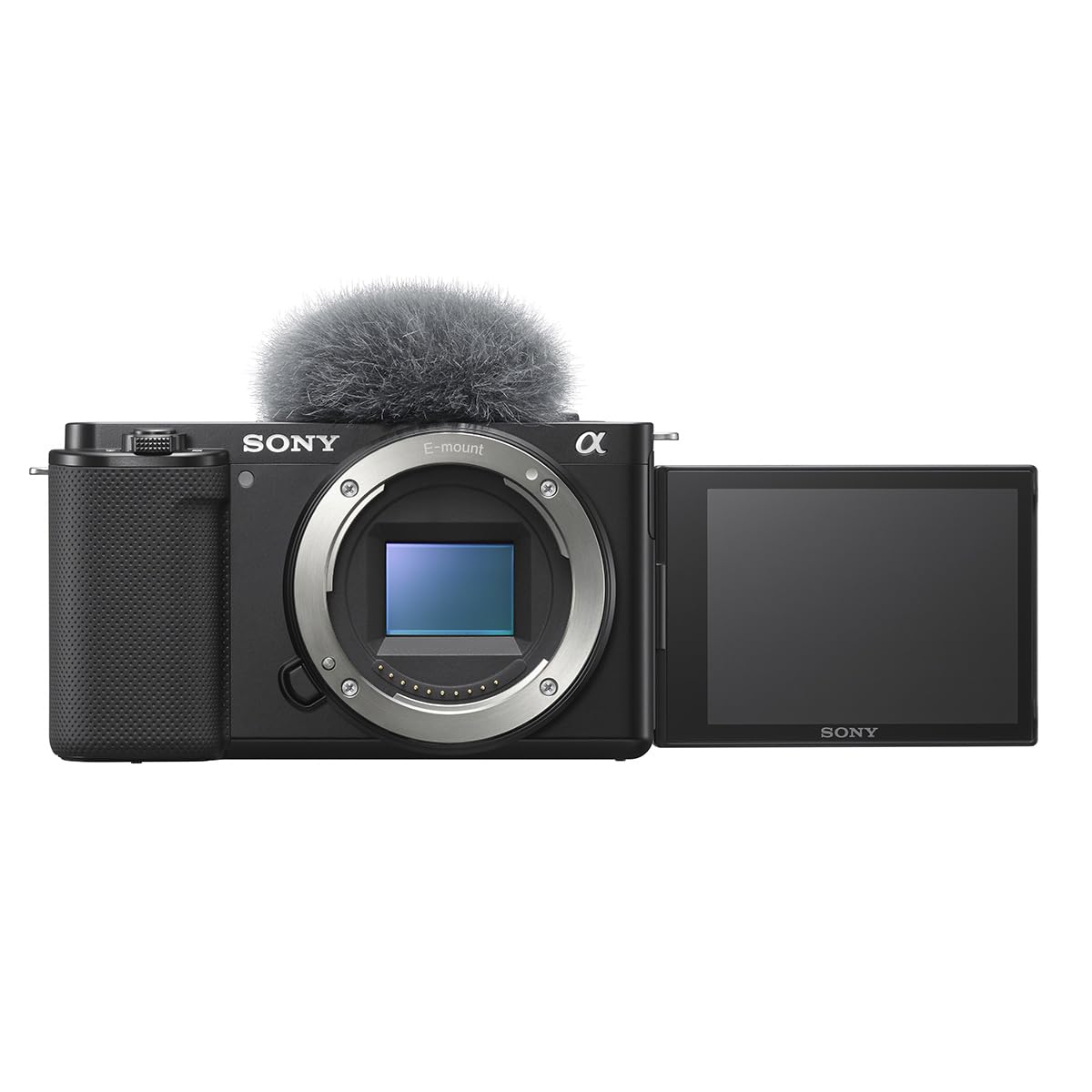
The ZV-E10 takes the APS-C Exmor CMOS sensor and BIONZ X processor from the a6100 line and wraps them in a body optimized for video-first use. Its 4K capture is oversampled from a 6K readout with full pixel readout and no binning, producing noticeably sharper files than many competitors at this level. The Real-Time Eye AF tracks a subject’s eye in video mode with reliability that rivals much pricier bodies.
The Product Showcase Setting is a niche but genuinely useful feature — it pulls focus from a face to a held object instantly, saving a lot of manual racking during demo-style content. The Background Defocus button toggles the aperture open or closed with one press, which is handy for quick shallow-depth-of-field shots. On the down side, there is no in-body stabilization, so you will want a gimbal or a stabilized lens for walking shots.
Battery life in 4K runs about thirty minutes before a swap, and the LCD is small enough that many users add an external monitor for framing. Rolling shutter is visible on fast pans. But for a sub-premium body that delivers excellent color science and class-leading autofocus, the ZV-E10 remains a standard recommendation for solo creators.
Why it’s great
- 4K oversampled from 6K readout
- Fast, reliable Real-Time Eye AF
- Lightweight and compact body
Good to know
- No IBIS; requires gimbal or OSS lens
- Small LCD; external monitor helps
- Noticeable rolling shutter in 4K
2. Canon EOS R8 (Body)

The R8 is essentially a lighter, more affordable version of the EOS R6 Mark II. It shares the same 24.2MP full-frame sensor and DIGIC X processor, delivering uncropped 4K/60p oversampled from a 6K readout. The Dual Pixel CMOS AF II covers 100% of the frame with 1,053 zones and can detect people, animals, and vehicles including aircraft and trains — a level of AI subject recognition that simplifies focus during solo shooting.
Canon Log 3 and HDR PQ are available internally, giving you 10-bit color depth for grading. The vari-angle touchscreen and 0.39-inch OLED EVF with a 120 fps refresh rate make framing adaptable whether you are handheld or on a tripod. Electronic shutter reaches 40 fps with full AF, excellent for capturing fast action like cars or sports.
The trade-offs are significant: no IBIS, a small LP-E17 battery that drains quickly (expect roughly one hour of 4K recording or 500 stills), and a single UHS-II SD card slot. The mechanical shutter is limited to 6 fps. For a filmmaker who wants full-frame shallow depth-of-field and is willing to pack extra batteries and a gimbal, the R8 is a gateway to professional-grade imagery at a mid-range price.
Why it’s great
- Uncropped 4K/60p oversampled from 6K
- Canon Log 3 for 10-bit grading
- Very lightweight full-frame body
Good to know
- No IBIS; needs lens or gimbal stabilization
- Small battery, quick drain in video
- Single SD card slot
3. Panasonic LUMIX G85 with 12-60mm Lens

The G85 remains a favorite among budget-conscious videographers because it delivers 5-axis in-body image stabilization that works with any Micro Four Thirds lens — even non-stabilized glass. That IBIS allows smooth handheld walking shots and steady telephoto frames without needing a gimbal. The 16MP sensor omits the low-pass filter, resulting in slightly sharper fine detail than earlier 16MP MFT sensors.
The kit lens, a 12-60mm Power O.I.S., covers a 24-120mm full-frame equivalent and pairs its optical stabilization with the IBIS for excellent dual stabilization. 4K video is capped at 30p, and the 4K Photo mode lets you grab 8MP stills at 30 fps. The articulating touchscreen and OLED live viewfinder make framing easy in bright sunlight. Weather sealing on the magnesium-alloy build adds durability for outdoor shoots.
Autofocus in low-light 4K can hunt, especially compared to phase-detect systems, and the G85 lacks a headphone jack for audio monitoring. The 16MP sensor also limits stills resolution compared to 24MP APS-C rivals. But for pure video value with stabilization that punches above its weight, the G85 is still a competitive option years after its release.
Why it’s great
- Excellent 5-axis IBIS for smooth handheld video
- Weather-sealed magnesium alloy body
- Great value with kit lens
Good to know
- Contrast-detect AF hunts in low light
- No headphone jack for audio monitoring
- 4K capped at 30p
4. Sony Alpha a6400 (Body)

The a6400 shares the same 24.2MP APS-C sensor as the ZV-E10 but adds a flip-up LCD and a built-in flash for stills. Its 425 phase-detection points covering 84% of the sensor deliver the same fast subject tracking that makes Sony E-mount a strong choice for video. Continuous shooting at 11 fps with full AF support is useful for any hybrid photo-video workflow.
Video features include 4K at up to 30p with full pixel readout and no binning, S-Log and S-Gamut profiles, and slow/quick motion settings without post-processing. The tilting screen rotates 180 degrees upward, which works for self-recording but blocks the hotshoe if you use a microphone. The body is compact enough for small gimbal rigs.
The biggest drawbacks are the lack of IBIS and a notoriously complex menu system. Rolling shutter in 4K is more pronounced than on the ZV-E10. No headphone jack means audio monitoring requires an external recorder or USB-C adapter. Battery life is moderate — about 30 minutes of continuous 4K. For a shooter who prioritizes autofocus speed and lens selection over stabilization, the a6400 remains a capable workhorse.
Why it’s great
- Lightning-fast 0.02s autofocus with tracking
- 4K oversampled with S-Log support
- Flip-up screen for self-recording
Good to know
- No IBIS; rolling shutter is visible
- No headphone jack
- Complex menu navigation
5. Blackmagic Design Pocket Cinema Camera 6K (EF Mount)
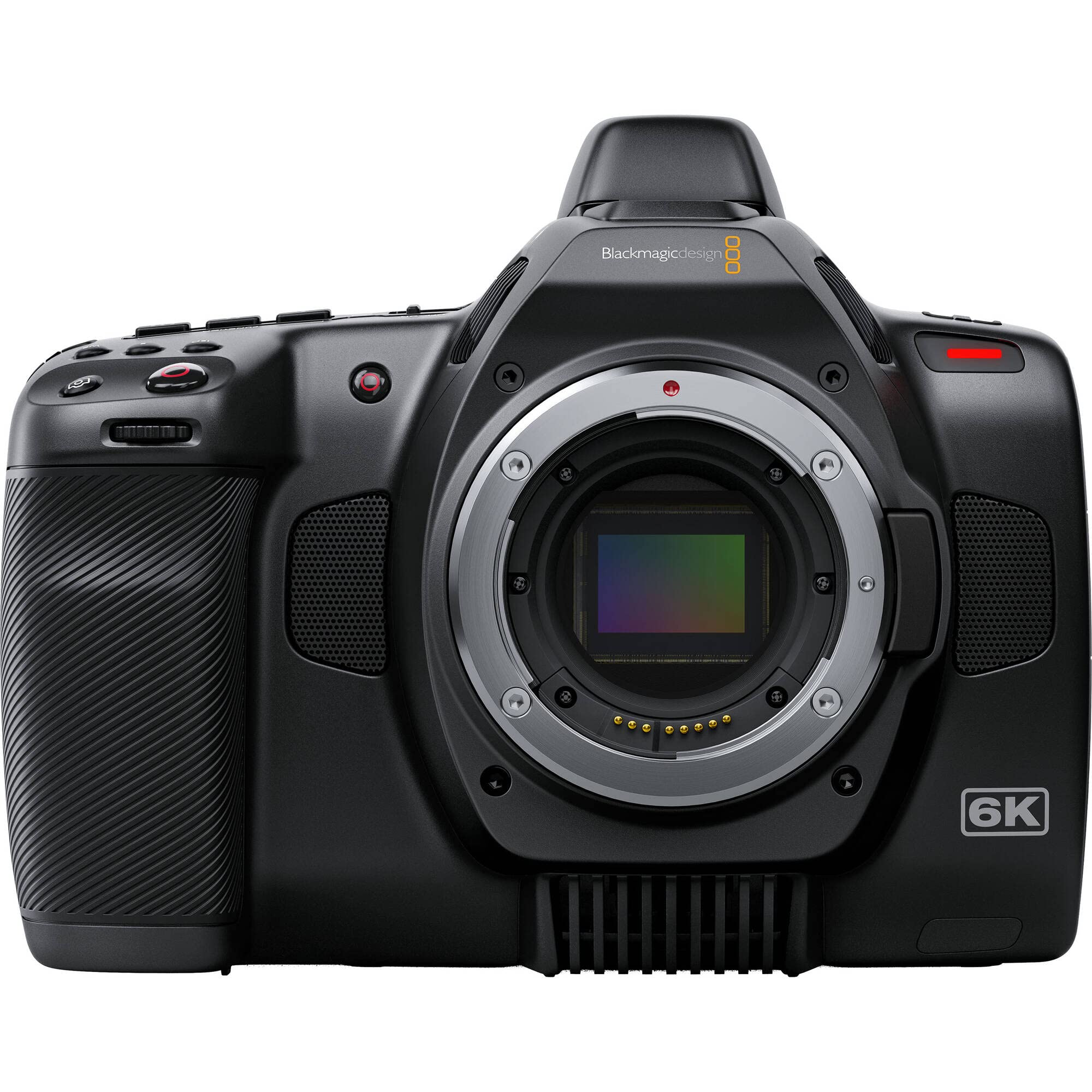
The BMPCC 6K is built for narrative filmmaking. Its Super 35 sensor records up to 6K resolution in Blackmagic RAW, giving you a massive color grading latitude that 8-bit cameras cannot touch. The EF lens mount gives you access to a vast selection of used Canon glass and professional cinema lenses. Frame rates go up to 50 fps at 6K, 60 fps at 4K DCI, and 120 fps at 2.8K and 1080p.
The body includes a 5-inch touchscreen for monitoring focus and exposure, two XLR audio inputs via the optional side handle, and dual card slots (CFast + SD). DaVinci Resolve Studio is bundled, so you have a professional post-production tool out of the box. The form factor is bigger than a mirrorless body — closer to a compact cinema rig — and battery life is short without an external V-mount battery.
Autofocus is contrast-detect and unreliable for video, so this is a manual-focus camera. The user interface is designed for filmmakers who understand exposure tools like false color and zebras. Overheating can be an issue in hot environments, and the LCD image can be misleading compared to the final file. For anyone serious about cinematic color and RAW flexibility, the BMPCC 6K delivers results that rival cameras costing several times more.
Why it’s great
- 6K Blackmagic RAW for extensive grading latitude
- EF lens mount with huge affordable glass selection
- Includes DaVinci Resolve Studio license
Good to know
- No reliable autofocus; manual focus only
- Short internal battery life
- Prone to overheating in warm conditions
6. Nikon Z 30 with 16-50mm Lens

Nikon designed the Z 30 specifically for creators. It uses the same 20.9MP DX sensor and EXPEED 6 processor as the Z 50 but omits the viewfinder to reduce size and cost. The result is one of the lightest interchangeable-lens video bodies available, weighing under 13 ounces. The flip-out touchscreen faces forward for vlogging, and the red REC light on the front lets you know the camera is rolling.
4K video records at up to 30p with no record limit — you can film interviews or livestreams continuously without the camera stopping. Full HD at 60p offers smooth high-frame-rate options. The built-in stereo microphone has adjustable sensitivity, and the smartphone app provides remote control. For webcam use, plug-and-play over USB-C delivers Full HD at 60p, while HDMI outputs 4K/30p.
The kit 16-50mm f/3.5-6.3 VR lens is decent but slow — you will want a fast prime for shallow depth-of-field in low light. There is no IBIS, so stabilization depends on the lens VR or a gimbal. The lack of a viewfinder is a non-issue for video but limits stills shooting in bright sunlight. For streaming, education, and vlogging, the Z 30 offers a reliable, compact package with Nikon’s excellent color science.
Why it’s great
- Unlimited 4K/30p recording
- Very lightweight and compact design
- Plug-and-play USB-C webcam mode
Good to know
- No viewfinder; LCD only
- No IBIS; relies on lens VR
- Kit lens aperture is slow for low light
7. Panasonic LUMIX G100 with 12-32mm Lens

The G100 is a Micro Four Thirds body designed around sound. Its built-in microphone uses Nokia OZO technology to track audio directionally — it adjusts pickup pattern based on zoom and framing, which is useful for run-and-gun interview situations. The 20.3MP sensor delivers 4K 24p and 30p with good color rendition. The kit 12-32mm f/3.5-5.6 lens is compact and retractable, making the whole setup pocketable.
V-Log L recording is available for color grading, and the 5-axis Hybrid I.S. reduces shake for stable footage. The frame marker overlay helps you compose for social media aspect ratios instantly. The camera doubles as a UVC/UAC webcam over USB, simplifying livestream workflows. Intelligent Auto mode handles exposure decently for beginners.
The 4K recording time is very limited — the camera shuts down after a few minutes of 4K video, which significantly hampers its use for long-form filmmaking. The contrast-detect autofocus is slower than phase-detect systems and can miss in low light. For short-form content where audio is the priority and recording duration is not critical, the G100 offers unique mic features in a tiny body.
Why it’s great
- Built-in tracking audio from Nokia OZO
- Compact retractable kit lens
- V-Log L and 5-axis hybrid stabilization
Good to know
- Very short 4K recording time limit
- Contrast-detect AF can be slow
- Small lens selection for MFT mount
8. DJI Osmo Pocket 3 Creator Combo

The Pocket 3 packs a 1-inch CMOS sensor and a built-in 3-axis mechanical gimbal into a body that slides into a jeans pocket. The 2-inch rotatable touchscreen allows instant switching between horizontal and vertical framing, which is useful for cross-platform content creation. 4K resolution at 120 fps produces smooth slow-motion footage without the crop of many action cameras.
ActiveTrack 6.0 keeps the subject centered while the camera is on a tripod or mounted to a moving object. D-Log M and 10-bit color depth give you room to grade the footage more aggressively than standard Rec.709. The Creator Combo adds the DJI Mic 2 transmitter, Battery Handle, Wide-Angle Lens, and Mini Tripod — a complete mobile production kit in one box. Audio from the included wireless mic is clear and pairs automatically.
The limitations matter: the 1-inch sensor cannot match the shallow depth-of-field of APS-C or larger bodies. The fixed lens limits compositional flexibility, and the gimbal mechanism is fragile — one drop on a hard surface can misalign it. Battery life is about 90 minutes of continuous recording. For mobile creators who prioritize stabilization and portability above all else, the Pocket 3 is an unmatched tool.
Why it’s great
- Built-in 3-axis gimbal for ultra-smooth handheld shots
- 1-inch sensor with 10-bit D-Log M color
- Creator Combo includes wireless mic and wide lens
Good to know
- Fixed lens limits focal length options
- Gimbal mechanism is fragile and expensive to repair
- Smaller sensor than interchangeable-lens cameras
9. Canon EOS R100 with RF-S 18-45mm Lens

The EOS R100 is Canon’s most affordable RF-mount body, designed for people moving from a smartphone or a compact point-and-shoot. Its 24.1MP APS-C sensor and DIGIC 8 processor produce stills with natural color and good detail. For video, it records 4K at 24 fps and Full HD up to 60 fps. The 18-45mm kit lens is small and matches the camera’s compact footprint.
The Dual Pixel CMOS AF covers 143 zones with human face and eye detection, delivering reliable autofocus for both stills and video. Continuous shooting at 6.5 fps in One-Shot AF is adequate for general use. The camera body is the lightest in the EOS R series, making it easy to carry on long shoots. Wi-Fi and Bluetooth allow quick file transfer to a smartphone.
4K video is limited to 24 fps — a frustrating constraint for creators who want smooth 30p or 60p playback. The buffer is shallow, and the 4K crop factor is heavier than on higher-end R bodies. There is no IBIS or headphone jack, and the LCD is a fixed panel with no touch functionality. For the lowest possible entry point into the Canon RF system, the R100 works, but filmmaking-specific features are minimal.
Why it’s great
- Lowest-cost entry to Canon RF mount system
- Dual Pixel CMOS AF with eye detection
- Very lightweight and compact
Good to know
- 4K limited to 24 fps with heavy crop
- No IBIS or headphone jack
- Fixed non-touch LCD screen
10. DJI Osmo Nano Standard Combo (128GB)
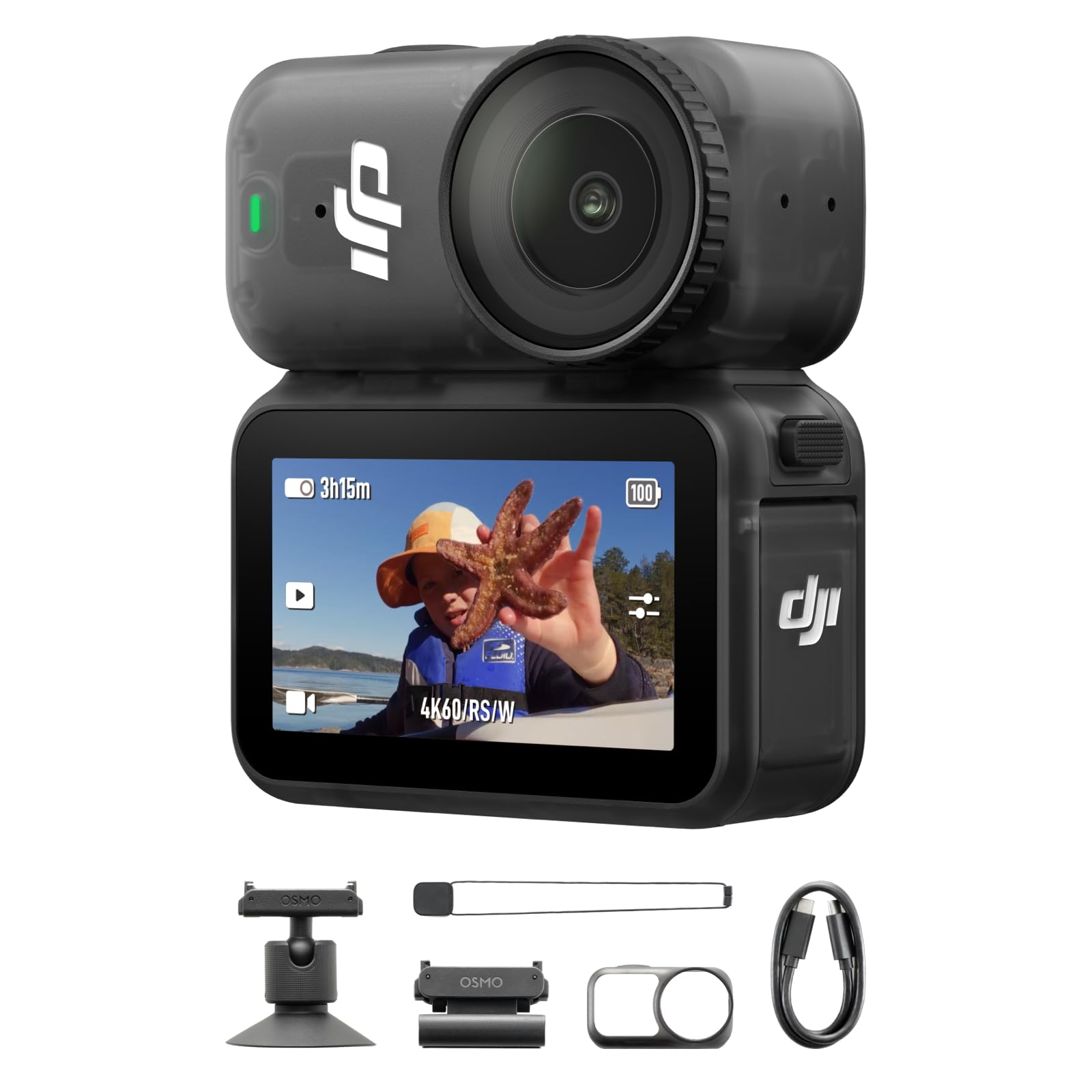
The Osmo Nano is a magnetic action camera with a 1/1.3-inch sensor that records 4K/60fps video at a 143-degree field of view. Its body is compact and attaches via magnetic mounts to hats, lanyards, or the included Vision Dock. 128GB of built-in storage is enough for hours of footage, and microSD expansion is available for longer shoots. 10-bit D-Log M color lets you pull more data from highlights and shadows during editing.
The magnetic mount system includes a hat clip, ball-joint adapter, and lanyard for hands-free POV shots. The camera is waterproof to 10 meters without a housing, which works for snorkeling or rain shoots. Battery life reaches up to 200 minutes in low-resolution modes, though 4K drains faster. Direct mic support via OsmoAudio eliminates the need for an external recorder in many vlogging scenarios.
The lack of a screen on the camera body itself means you must use the DJI Mimo app on your phone for framing — this drains phone battery and adds setup time. The small sensor cannot produce the shallow depth-of-field of a larger interchangeable-lens camera. Heat buildup during high-res recording triggers overheat protection. This is a specialized POV tool, not a general-purpose filmmaking camera.
Why it’s great
- 128GB internal storage ready out of the box
- Magnetic hat clip for stable POV footage
- 10-bit D-Log M and waterproof to 10m
Good to know
- No built-in screen; must use phone app
- Small sensor limits shallow depth-of-field
- Overheating protection can stop recording
11. Nikon D850 (Body)

The D850 is a professional-grade DSLR with a 45.7MP back-side-illuminated full-frame sensor and no optical low-pass filter, producing enormous resolution for stills and 4K UHD video. Its 153-point phase-detect autofocus system is fast and reliable for both photo and video use. The tilting touchscreen and focus shift shooting mode are useful for product and macro work.
4K video is available at up to 30 fps, and the camera can generate 8K time-lapse sequences in-camera. 1080p slow-motion reaches 120 fps. The Expeed 5 processor handles large files well, and the optical viewfinder remains one of the best for stills photography. Battery life is excellent when Live View is used sparingly.
As a video body, the D850 has limitations: no IBIS, a large and heavy chassis, and video autofocus that falls behind mirrorless competitors. The XQD/QD card slot is fast but the SD slot is slower, and there is no headphone jack. The D850 is best suited for a hybrid shooter who prioritizes stills resolution and wants competent 4K video in the same body, not for a dedicated narrative or vlog workflow.
Why it’s great
- 45.7MP BSI sensor for extraordinary stills resolution
- 8K time-lapse and 4K UHD video
- Excellent optical viewfinder and build quality
Good to know
- Heavy DSLR body; not ideal for run-and-gun video
- No IBIS; relies on lens stabilization
- Video AF is inferior to modern mirrorless cameras
FAQ
Is a 4K 24 fps camera fine for narrative work?
Should I prioritize IBIS or a faster lens?
Can I use vintage manual lenses on a modern mirrorless body?
What is the minimum audio setup for a budget filmmaking camera?
Final Thoughts: The Verdict
For most users, the best budget filmmaking camera winner is the Sony Alpha ZV-E10 because it delivers excellent 4K quality, reliable autofocus, and a huge lens ecosystem at a mid-range price. If you want full-frame shallow depth-of-field and Log color grading, grab the Canon EOS R8. And for pure narrative RAW work, nothing beats the Blackmagic Pocket Cinema Camera 6K.

Mo Maruf
I created WellFizz to bridge the gap between vague wellness advice and actionable solutions. My mission is simple: to decode the research and give you practical tools you can actually use.
Beyond the data, I am a passionate traveler. I believe that stepping away from the screen to explore new environments is essential for mental clarity and physical vitality.