Our readers keep the lights on and my smoothie glass nicely filled. As an Amazon Associate, I earn from qualifying purchases.
A budget drone with camera is no longer a toy that drifts uncontrollably in a breeze. The current wave of sub- quadcopters packs GPS-assisted return-to-home, brushless motors for stability, and 4K cameras that capture share-worthy footage. The real challenge is separating the models that hold altitude reliably from those that lose satellite lock at the worst moment.
I’m Mohammad Maruf — the founder and writer behind WellFizz. I have spent over a decade analyzing drone hardware specifications, comparing flight controller algorithms, and tracking real-world user feedback on aerial camera stability across budget price tiers.
Choosing the right budget drone with camera means understanding which GPS modules lock quickly, which batteries deliver advertised flight times without unexpected voltage sag, and which camera sensors capture usable footage rather than noisy, washed-out frames.
How To Choose The Best Budget Drone With Camera
Selecting a budget drone with camera requires weighing flight safety features against image quality. The cheapest models often omit GPS modules, which means no automatic return home when the signal drops — a critical failure mode for first-time pilots. Focus on three core pillars: reliable GPS functionality, motor type, and camera stabilization approach.
GPS Reliability and Return-to-Home Logic
A drone equipped with a GPS module can lock its position, hold altitude, and navigate back to the takeoff point automatically. Budget models vary widely in how quickly they acquire satellite lock and whether the return-to-home algorithm handles low battery warnings safely. Models that require more than nine satellites before arming tend to have more predictable auto-return behavior.
Brushless Versus Brushed Motors
Brushed motors wear out after roughly 50 to 100 flight hours and deliver less torque in wind. Brushless motors, now common even in entry-level drones, produce higher thrust, run quieter, and last hundreds of flights without performance degradation. A brushless motor also enables level 5 wind resistance, which keeps the camera steady during typical outdoor flying.
Camera Sensor and Stabilization Approach
Many budget drones claim 4K resolution but implement it with small sensors that produce noisy footage in low light. Genuine 4K capture at 30 frames per second with a wide aperture lens (F2.0 or wider) yields usable daytime footage. Electronic image stabilization (EIS) helps smooth out minor vibrations, but a physical gimbal — even a 2-axis model — outperforms EIS alone in reducing jello effect during turns and descents.
Quick Comparison
On smaller screens, swipe sideways to see the full table.
| Model | Category | Best For | Key Spec | Amazon |
|---|---|---|---|---|
| Potensic ATOM LT | Entry Premium | Long flight range and EIS stability | 3000mAh battery / 80 min total | Amazon |
| DJI Neo 2 | Premium Compact | Obstacle avoidance and palm takeoff | 151g / omnidirectional sensing | Amazon |
| SIMREX GPS Drone | Mid-Range | Beginner GPS with Follow Me | 2296 ft max range | Amazon |
| REDRIE HK33 (Black) | Mid-Range | 45 min flight with vibration reduction | 1800mAh x 2 / 45 min total | Amazon |
| Oddire HK11 | Mid-Range | Robust 7.7V battery and 5G transmission | 7.7V 1800mAh / 48 min total | Amazon |
| REDRIE HK33 (Grey) | Mid-Range | 2-axis gimbal for shake-free footage | 2-axis gimbal / 4096x3072P | Amazon |
| suangrc X9 | Value | Built-in 4.5-inch LCD screen | 4.5″ screen / no phone needed | Amazon |
| PLEGBLE PL715 | Value | 46 min total with Beginner Mode | 2700mAh x 2 / 46 min total | Amazon |
| WeFone WF30 | Entry Value | Durable first drone under | 249g / 300m transmission | Amazon |
In-Depth Reviews
1. Potensic ATOM LT

The Potensic ATOM LT stands apart in the budget drone category because it pairs a Sony sensor with electronic image stabilization (ShakeVanish 2.0) and a PixSync 2.0 transmission system that maintains a smooth feed up to 4 kilometers. The 3000mAh intelligent batteries deliver an honest 40 minutes of flight time per battery, bringing the total to 80 minutes — a figure that few competitors in this price tier match.
Its 2.5K resolution at 30 fps produces footage that holds up well on social media, and the 118-degree field of view captures expansive landscapes without fisheye distortion. The quad-GNSS support (GPS, GLONASS, Galileo, BeiDou) ensures fast satellite lock even in partially wooded areas, and the SurgeFly 2.0 control system offers three flight modes that scale with pilot skill.
This drone weighs under 249 grams, so no FAA registration is required, and the fold-away design fits into a pocket. The included Type-C and Lightning adapter cables eliminate the Bluetooth pairing hassle common in budget models. Users consistently report that Potensic customer support replaces defective units promptly, which adds significant peace of mind for a first-time buyer.
Why it’s great
- 80 minutes total flight time with two 3000mAh batteries
- 4-kilometer FPV transmission range with minimal latency
- Quad-GNSS positioning for fast satellite acquisition
Good to know
- Camera resolution is 2.5K rather than true 4K
- Requires good daylight for optimal stabilization performance
- Satellite lock can be slow in deep tree cover
2. DJI Neo 2
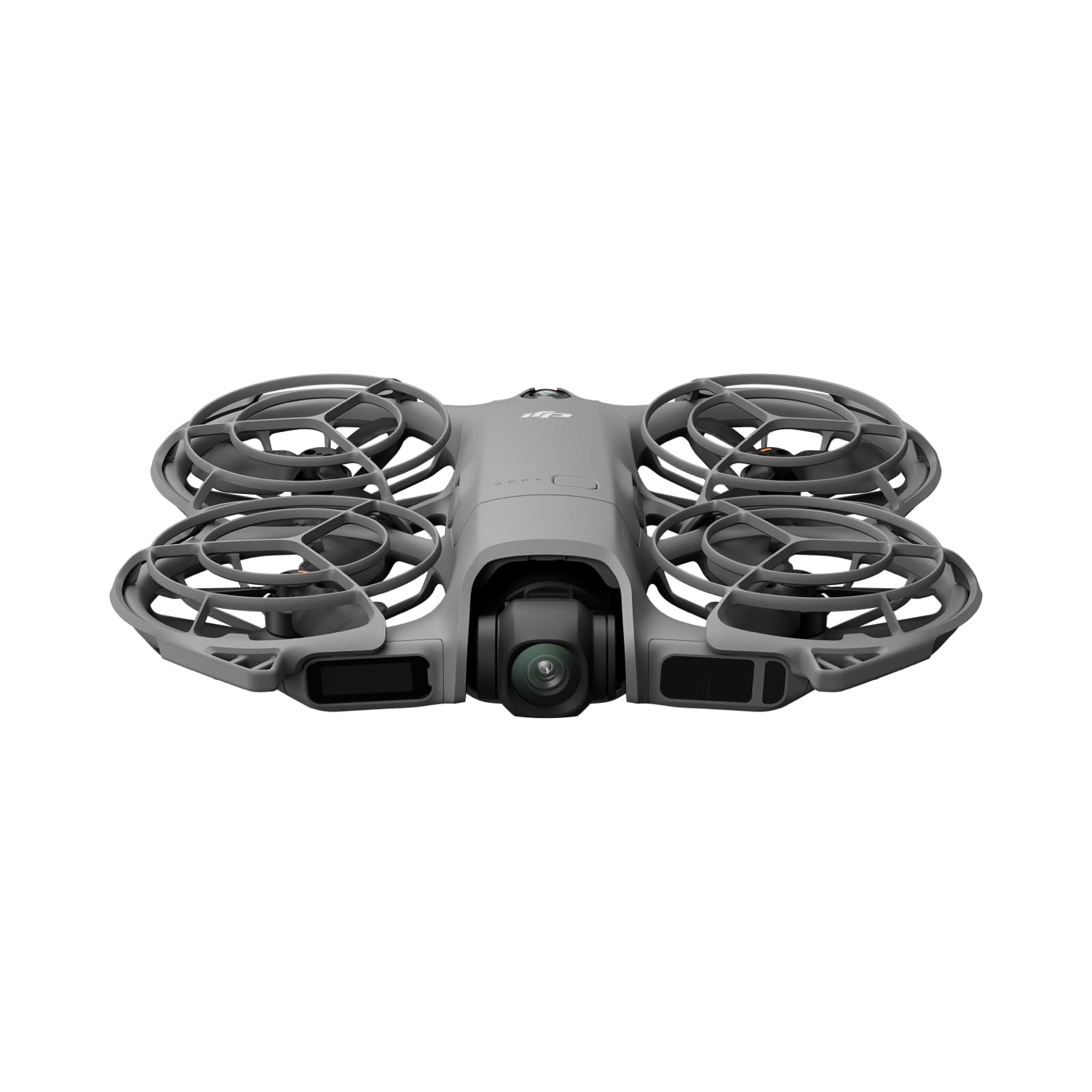
The DJI Neo 2 shatters the ceiling for what a budget drone with camera can do by cramming omnidirectional obstacle sensing, ActiveTrack, and palm takeoff into a 151-gram airframe. The 4K imaging system produces sharp, vibrant footage straight out of the box, and the gimbal stabilization outperforms any electronic-only solution in this price range.
Gesture control allows hands-free operation: raise your palm to launch, wave to capture a selfie, and the drone lands back in your hand without any app interaction. The full-coverage propeller guards make it safe to fly in tighter spaces, and the C0 certification means you can fly it in controlled airspace zones in many regions without extra paperwork.
Battery life sits at 18 to 19 minutes per charge, which is shorter than the competition, but the trade-off is a drone that fits in a jacket pocket and can be deployed in under 10 seconds. The built-in storage eliminates the need for a microSD card for short clips, and Apple Watch integration lets you monitor the live feed from your wrist.
Why it’s great
- Omnidirectional obstacle sensing prevents crashes
- Palm takeoff and landing with no remote needed
- True 4K imaging with physical gimbal stabilization
Good to know
- Flight time is shorter than competitors at 18 to 19 minutes
- No dedicated remote included in the base kit
- Requires DJI Fly app download from DJI website (not Google Play)
3. SIMREX GPS Drone

The SIMREX GPS Drone delivers an impressive 2296-foot FPV transmission range, making it one of the farthest-reaching options among entry-level aircraft. The 90-degree electrically adjustable 4K camera captures usable daytime footage, and the optical flow positioning system locks the drone in place even without a strong GPS signal — useful for flying under tree canopies or near structures.
Brushless motors keep the noise level low and provide enough thrust to handle moderate wind gusts. The Find My Drone feature, accessible via the app, displays the drone’s last known location on a map — a practical safety net for new pilots who might lose orientation at distance. The foldable arms collapse into a compact footprint that slides into the included carrying case.
Smart flight modes such as Follow Me, Waypoint Flight, and Circle Around are easy to activate from the app interface. Gesture control works reliably for selfie captures, and the altitude hold function maintains height within a few feet during hovering. The USB-C charging batteries reduce cable clutter and charge faster than older Micro-USB designs.
Why it’s great
- FPV transmission out to nearly 2300 feet
- Optical flow positioning aids stability without GPS
- Find My Drone feature protects against loss
Good to know
- 4K footage can appear soft in low-light conditions
- App interface can be confusing for absolute beginners
- Build quality feels slightly less robust than premium models
4. REDRIE HK33 (Black)
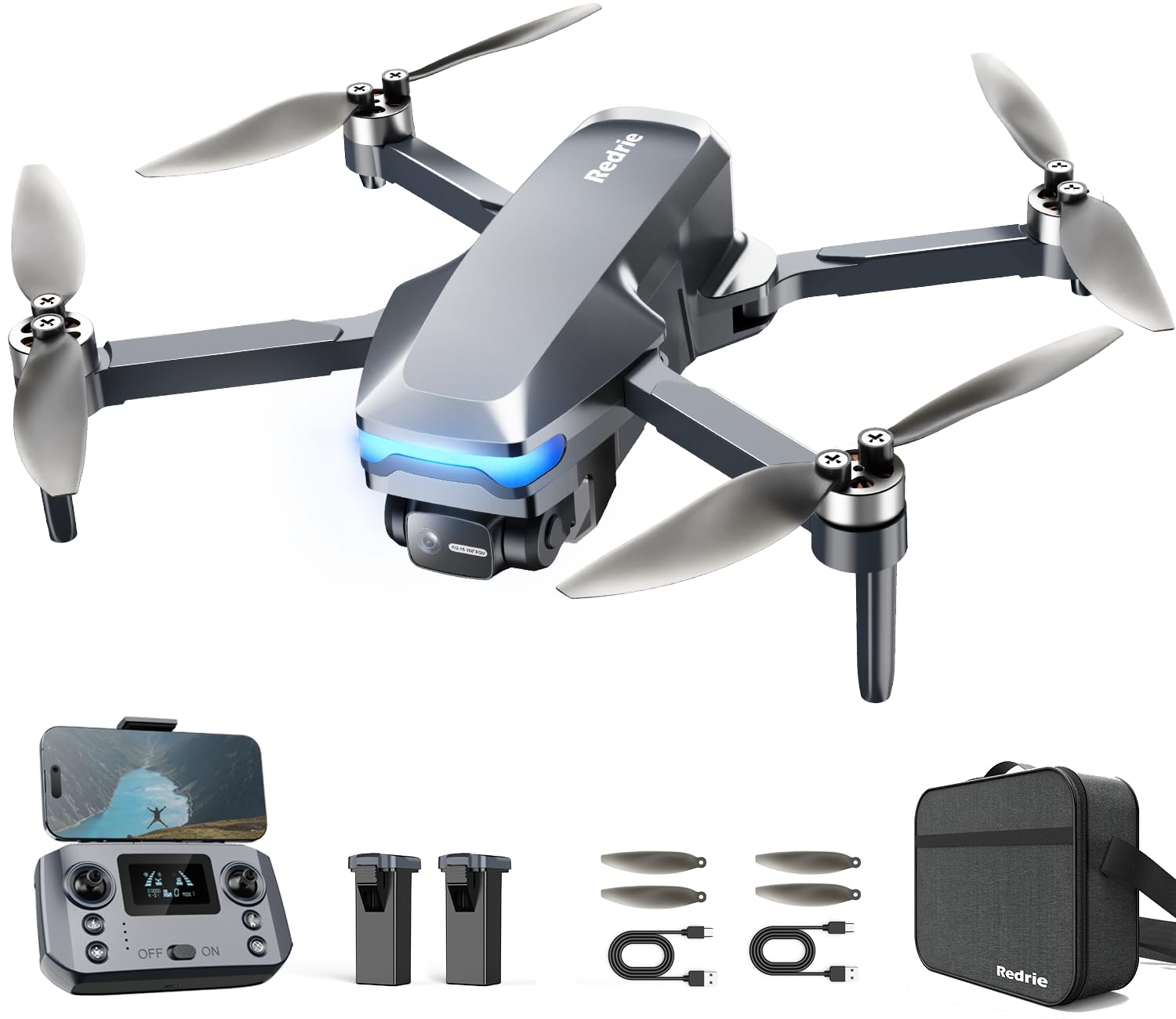
The REDRIE HK33 in its black variant focuses on endurance, bundling two 1800mAh batteries that yield 45 minutes of total flight time. The wide-angle F2.15 lens with 110-degree field of view captures sweeping landscape shots, and the 90-degree remote-controlled camera adjuster lets you tilt between horizontal and vertical framing mid-flight without landing.
Physical vibration reduction helps counteract the high-frequency oscillations that plague budget drones during rapid descents. The 5G WiFi transmission holds a stable video feed up to 985 feet, and the built-in repeater in the remote extends the control range to 1640 feet. GPS Auto Return, Route Planning, and Fly Around functions are all accessible from the app with minimal lag.
The brushless motor system handles level 5 wind conditions without drifting noticeably, and the 249-gram takeoff weight keeps FAA registration off the table. Foldable arms and the included carrying case make this drone easy to pack for hiking or beach trips. The battery indicator on the remote gives a clear readout of remaining power at a glance.
Why it’s great
- 45 minutes of total flight time from two batteries
- Physical vibration reduction for smoother video
- Level 5 wind resistance keeps flights stable outdoors
Good to know
- Camera is 2K resolution rather than true 4K
- Cell phone holder on remote is not adjustable
- Video stabilization can struggle in gusty conditions
5. Oddire HK11

The Oddire HK11 distinguishes itself through its 7.7-volt battery architecture, which delivers higher sustained power output compared to standard 7.4V or 3.7V packs. This translates to more responsive climbs and better wind penetration during aggressive maneuvers. The total flight time reaches 48 minutes across two 1800mAh batteries, putting it among the endurance leaders in this segment.
The 4K camera captures stills at 4096x3072P and records 2K video at 2048x1088P — images that hold detail well in broad daylight. The 5G WiFi transmission system, paired with a remote-mounted signal repeater, maintains a solid connection out to 500 meters. GPS Follow, Route Planning, and Fly Around modes simplify complex shots, and gesture control allows hands-free photo capture.
Weighing exactly 249 grams, the HK11 avoids FAA registration requirements. The brushless motor system produces minimal audible whine during hovering, and the level 5 wind resistance keeps the frame steady during light gusts. The X DRONE GO app includes built-in filters and background music that streamline social-media-ready video production without desktop editing software.
Why it’s great
- Higher voltage 7.7V battery improves throttle response
- 48 minutes total flight time with two packs
- 500-meter control range with built-in signal repeater
Good to know
- Compass calibration required before every flight
- Main app may not work; requires X DRONE GO download
- Return-to-home can overshoot if interference is present
6. REDRIE HK33 (Grey)
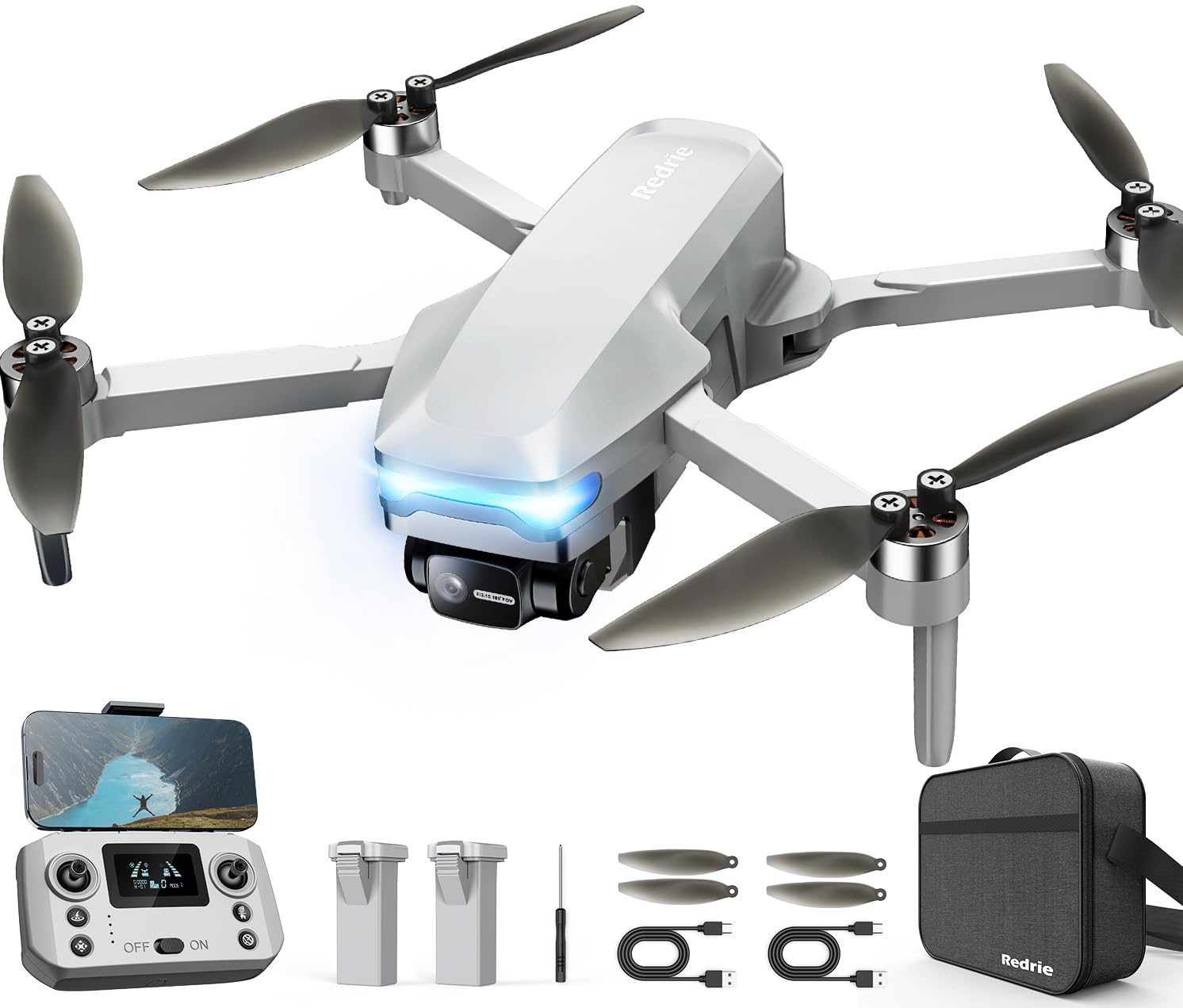
The grey REDRIE HK33 incorporates a genuine 2-axis mechanical gimbal — a rarity at this price point — which eliminates the jello effect and roll drift that plague drones relying solely on electronic stabilization. The F2.15 large aperture with a 110-degree ultra-wide lens captures more light than the typical F2.8 found on competing models, resulting in better shadow detail during late afternoon flights.
The 4K photo resolution reaches 4096x3072P, and 2K video at 2048x1088P benefits from the gimbal’s ability to absorb vibration during fast forward flight. The 90-degree remote-controlled camera tilt lets you frame shots without guessing angles. Two 1800mAh batteries provide a total flight window of 40 to 45 minutes, sufficient for a full aerial survey of a property or a multi-location landscape run.
The 5G WiFi system delivers stable video out to 985 feet, with a signal repeater extending control range to 1640 feet. GPS Auto Return engages on signal loss or low battery, and Follow Me mode tracks a moving subject reliably as long as the drone maintains a clear sky view. Weighing under 250 grams, the HK33 avoids the FAA registration process entirely.
Why it’s great
- 2-axis mechanical gimbal provides superior stabilization
- F2.15 aperture improves low-light performance
- Robust GPS return-to-home with multiple trigger conditions
Good to know
- Video resolution is 2K, not true 4K
- Beginner practice recommended before complex maneuvers
- MicroSD card required for saving footage
7. suangrc X9
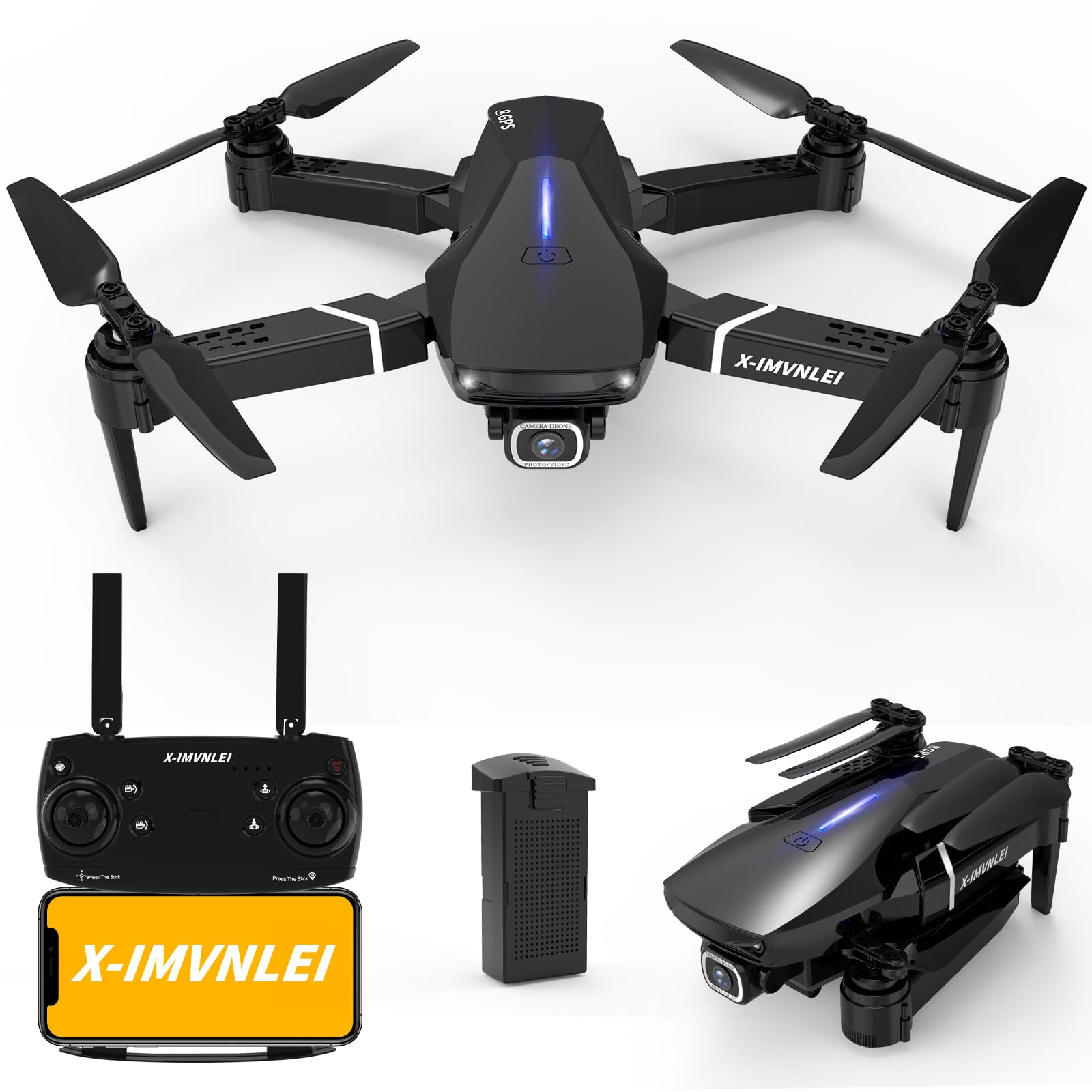
The suangrc X9 is the only drone in this lineup that includes a built-in 4.5-inch LCD screen on the controller, which means you do not need to mount a smartphone to see the live FPV feed. This feature eliminates the frustration of dim phone screens, loose phone holders, and app compatibility issues. The screen provides a clear, responsive view of the 4K camera output with minimal latency.
The 110-degree adjustable lens captures wide-angle footage, and the 5G WiFi transmission keeps the video feed stable within the drone’s operating range. GPS-assisted features such as One-Key Return, Follow Me, and Trajectory Flight work as expected, and the optical flow positioning system holds the drone steady indoors where GPS signals may be absent. Headless Mode simplifies orientation for first-time pilots.
The brushless motors provide sufficient thrust for level 3 wind conditions, and the foldable body compresses to a compact size for storage. Gesture control allows hands-free selfies, and 360-degree flip mode adds a fun trick for casual flights. The modular battery design makes swapping packs quick, though the included battery capacity limits flight to around 18 minutes per charge.
Why it’s great
- Built-in 4.5-inch screen eliminates phone dependency
- Optical flow positioning works indoors without GPS
- Gesture control and 360-degree flips add fun
Good to know
- Battery capacity is lower than competitors at 1200mAh
- Maximum flight time is around 18 minutes per battery
- Some users report app responsiveness issues
8. PLEGBLE PL715
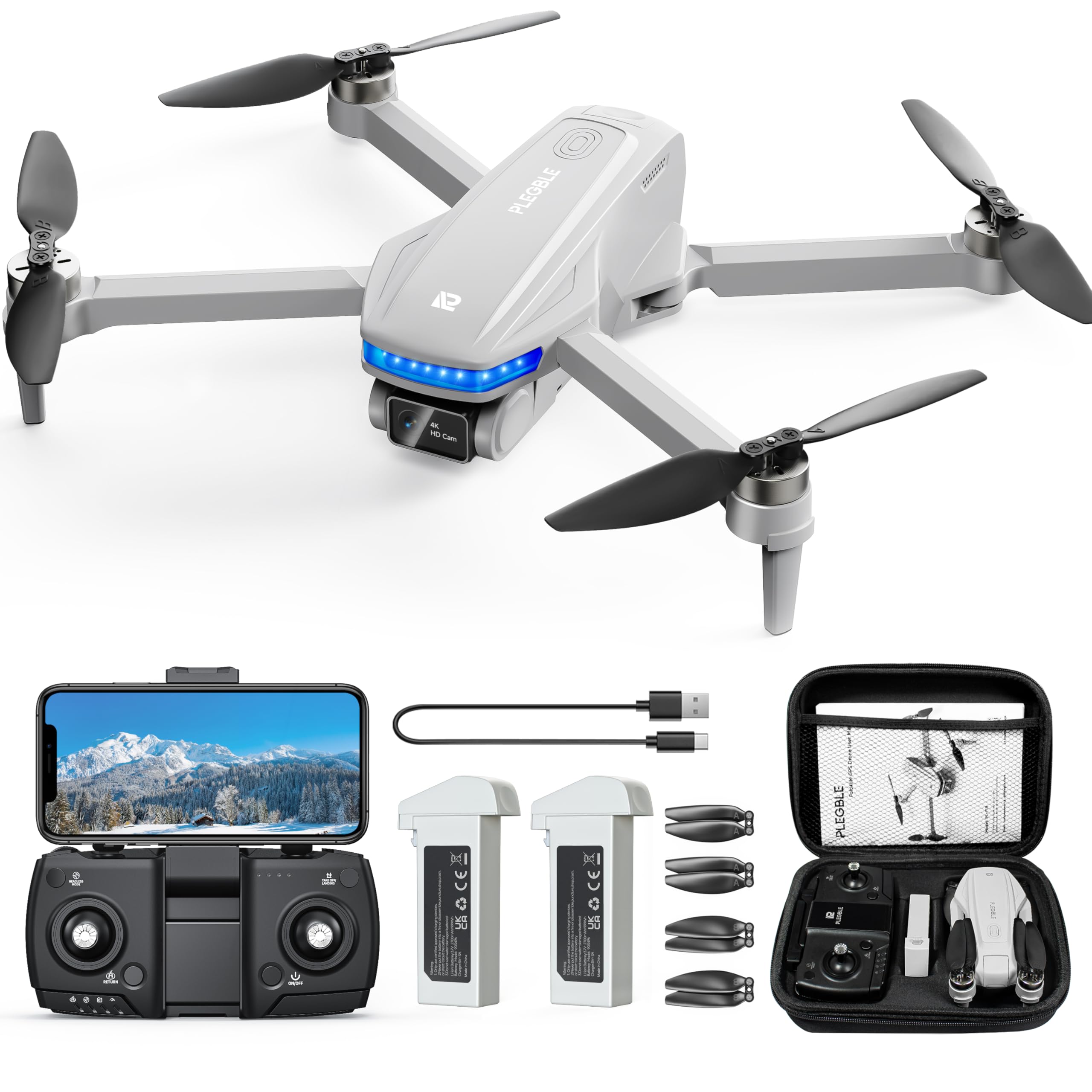
The PLEGBLE PL715 packs two 2700mAh intelligent batteries that deliver 46 minutes of total flight time — the highest capacity-per-battery ratio in this roundup. The 4K camera with a 120-degree wide-angle lens and 90-degree adjustable angle captures crisp stills and smooth video, and the 5GHz FPV transmission keeps the live feed stable out to the drone’s operating range.
A dedicated Beginner Mode restricts the flight radius to 30 meters, which helps new pilots build confidence close to the launch point before graduating to full-range flying. The GPS Auto Return activates on low battery or signal loss, and Follow Me, Waypoint Flight, and Circle Fly modes expand creative possibilities without requiring manual stick coordination.
The brushless motor system runs quietly and provides enough thrust for level 4 wind conditions. The foldable frame with the included carrying case makes transport straightforward. The PL715 weighs under 250 grams, so FAA registration is not needed, and the compass calibration procedure takes under a minute once the user reviews the manual instructions.
Why it’s great
- 2700mAh batteries provide 46 minutes total flight time
- Beginner Mode limits range to 30 meters for safer practice
- 5GHz FPV transmission delivers smooth live video
Good to know
- Compass calibration required before each takeoff
- Beginner Mode is enabled by default and must be manually disabled
- Maximum speed is around 8 mph in standard mode
9. WeFone WF30

The WeFone WF30 serves as a genuine entry point into GPS-equipped camera drones without asking for a large investment. The 4K UHD camera with a 117-degree wide-angle lens and 90-degree electrical tilt captures respectable daytime footage, and the FPV 5G transmission provides real-time video to your smartphone up to 300 meters away. Two modular batteries yield a combined 40 minutes of flight time, though real-world users report around 15 minutes per battery during active flying.
GPS features such as Follow Me, Waypoint Flight, and Point of Interest are accessible from the app, and the optical flow positioning system helps maintain hover stability when satellite lock is weak. One-key takeoff and landing, headless mode, and speed switching make the WF30 approachable for complete beginners. The under-249-gram weight means no FAA registration is required, and the foldable design with the included carrying case adds convenience.
The brushless motors deliver a smoother, quieter flight than the brushed alternatives found at the absolute bottom of the market. Some users have reported that the emergency return-to-home can cause the drone to ascend unexpectedly, so flying in open areas during the learning phase is recommended. The package includes spare propellers, a screwdriver, and a USB charger.
Why it’s great
- Very durable construction survives multiple crashes
- GPS return-to-home and Follow Me at entry-level price
- Includes carrying case and spare parts out of the box
Good to know
- Real-world flight time averages 15 minutes per battery
- Emergency return-to-home can cause uncontrolled ascent
- Open WiFi connection poses a theoretical security risk
FAQ
Do I need FAA registration if my drone weighs under 250 grams?
Why does my budget drone come back on its own when the battery gets low?
Can I fly a sub-250g drone in windy conditions?
How do I improve the video quality from my budget drone camera?
Final Thoughts: The Verdict
For most users, the budget drone with camera winner is the Potensic ATOM LT because it combines the longest flight time in the class with a proven Sony sensor, 4-kilometer transmission range, and quad-GNSS positioning that locks quickly and holds steady. If you want omnidirectional obstacle sensing and palm-operated convenience, grab the DJI Neo 2. And for the best value that still includes a mechanical gimbal and an F2.15 aperture lens, nothing beats the REDRIE HK33 (Grey).

Mo Maruf
I created WellFizz to bridge the gap between vague wellness advice and actionable solutions. My mission is simple: to decode the research and give you practical tools you can actually use.
Beyond the data, I am a passionate traveler. I believe that stepping away from the screen to explore new environments is essential for mental clarity and physical vitality.