Our readers keep the lights on and my smoothie glass nicely filled. As an Amazon Associate, I earn from qualifying purchases.
Finding an honest 4K camera drone under the premium DJI tax is a needle-in-a-haystack search filled with inflated specs and wobbly footage. Most budget-friendly options claim 4K but deliver soft, shaky video that falls apart the moment a breeze hits the rotors. The real challenge is sorting through the marketing noise to find a drone that offers a genuine 3-axis gimbal, reliable GPS hold, and a usable flight time—without breaking the bank.
I’m Mohammad Maruf — the founder and writer behind WellFizz. I dissect FAA compliance claims, gimbal actuator specs, and transmission protocol data so you don’t have to gamble your money on a drone that looks good in photos but fails on the first launch.
After sifting through hours of test footage and user-flight logs across nine models, I’ve built a no-nonsense guide to picking the best budget drone with 4k camera that actually delivers stable aerial imaging without demanding DJI-tier spending.
How To Choose The Best Budget Drone With 4K Camera
The budget drone market is a minefield of exaggerated claims. A true 4K-capable drone under requires the right balance of camera stabilization, flight endurance, and intelligent flight logic to keep you from chasing a drifting speck across the sky. Here is what separates a flyable camera platform from a frustrating toy.
The Gimbal Is Non-Negotiable
Never trust electronic image stabilization (EIS) alone on a budget drone. A physical 3-axis brushless gimbal mechanically counteracts pitch, roll, and yaw movements, delivering silky 4K footage even when the drone fights a gust. Without it, your video will have that jello-wobble look that ruins any cinematic ambition. Look for the words “3-axis mechanical gimbal” in the spec sheet—not just “gimbal stabilization.”
Sensor And Resolution Reality
Many entry-level drones advertise “6K” or “8K” photos. That is interpolated resolution—not native sensor detail. What matters for video is the actual recording resolution: true 3840×2160 (4K UHD) at a solid 30 frames per second. A 1/2.3-inch or larger CMOS sensor gives you better dynamic range and low-light performance. If the spec sheet hides the sensor size, assume it is a tiny sensor that produces noisy footage after sunset.
Flight Time And Battery Logistics
Single battery flight time is the real endurance metric. Most budget drones bundle two or three packs to pad the “total flight time” number. A drone that flies 25 minutes per battery is far more useful than one that flies 15 minutes with three batteries. Also check the charging method: proprietary charger hubs that double as power banks add significant convenience in the field.
GPS, GNSS, And Return-To-Home Reliability
A drone without multi-constellation GPS (GPS + GLONASS + Galileo + BeiDou) is a drift risk in open skies. Budget drones often take 60-90 seconds to lock satellites before launch. The return-to-home behavior—whether it climbs to a safe altitude first and the altitude ceiling—is the key safety net that prevents losing a drone on its third flight. Always prioritize models with verified GPS return, especially in this price tier.
Quick Comparison
On smaller screens, swipe sideways to see the full table.
| Model | Category | Best For | Key Spec | Amazon |
|---|---|---|---|---|
| Ruko Drone (under 249g) | Premium Compact | Longest flight bundle | 96 min total / 20,000ft range | Amazon |
| Bwine F7MINI 4K(RC3) | Screen Controller | No-phone flying | Built-in 1080P RC screen | Amazon |
| Holy Stone HS790 | Long Range | Extended exploration | 30,000ft transmission range | Amazon |
| Bwine F7GB2 Pro | High Wind | Flying in windy conditions | Level 6 wind resistance | Amazon |
| Veeniix V11Air | Value Gimbal | Best 3-axis gimbal for price | 70 min total / 10,000ft range | Amazon |
| Gleesfun G11PRO | Complete Kit | All-in-one accessory bundle | 70 min total / 10,000ft range | Amazon |
| DJI Neo Three-Battery Combo | Selfie Drone | Palm launch vlogging | 135g weight / 4K UHD | Amazon |
| DJI Neo 2 | Obstacle Sensing | Indoor-safe flying | Omnidirectional obstacle sensing | Amazon |
| Potensic ATOM LT | Entry Level | Best starter under | 80 min total / 4KM range | Amazon |
In‑Depth Reviews
1. Ruko Drone with 4K UHD Camera (under 249g)

The Ruko under-249g model delivers an impressive package that punches well above its price bracket. Its 1/2-inch CMOS 48MP sensor captures 8K stills and genuine 4K/30fps video, while the 3-axis brushless gimbal paired with EIS keeps footage incredibly stable even in moderate wind. The 20,000ft digital transmission system avoids the Wi-Fi interference that plagues cheaper drones, giving you a reliable FPV feed at meaningful distances.
Flight endurance is the standout feature here. Three intelligent batteries provide a combined 96 minutes of airtime, which is exceptional for a sub-250g drone. The AI-assisted takeoff and landing system, combined with quadruple positioning (GPS, barometric, TOF, and optical flow), makes this drone remarkably beginner-friendly without sacrificing advanced control. The built-in beeper is a practical lifesaver for locating a downed drone in tall grass.
Customer service responsiveness is a recurring theme in user logs—Ruko sent replacement units promptly for battery defects and propeller failures, which builds trust for a first-time buyer. The joystick sensitivity is slightly high for absolute beginners, but the beginner mode reduces responsiveness enough to learn safely.
Why it’s great
- Exceptional 96-minute total flight time with 3 batteries.
- 3-axis brushless gimbal delivers smooth 4K footage in wind.
- FAA exempt at under 249g—no registration hassle.
Good to know
- Joystick sensitivity may feel sharp for raw beginners.
- Some users report minor app stability on older phones.
2. Bwine F7MINI 4K(RC3)
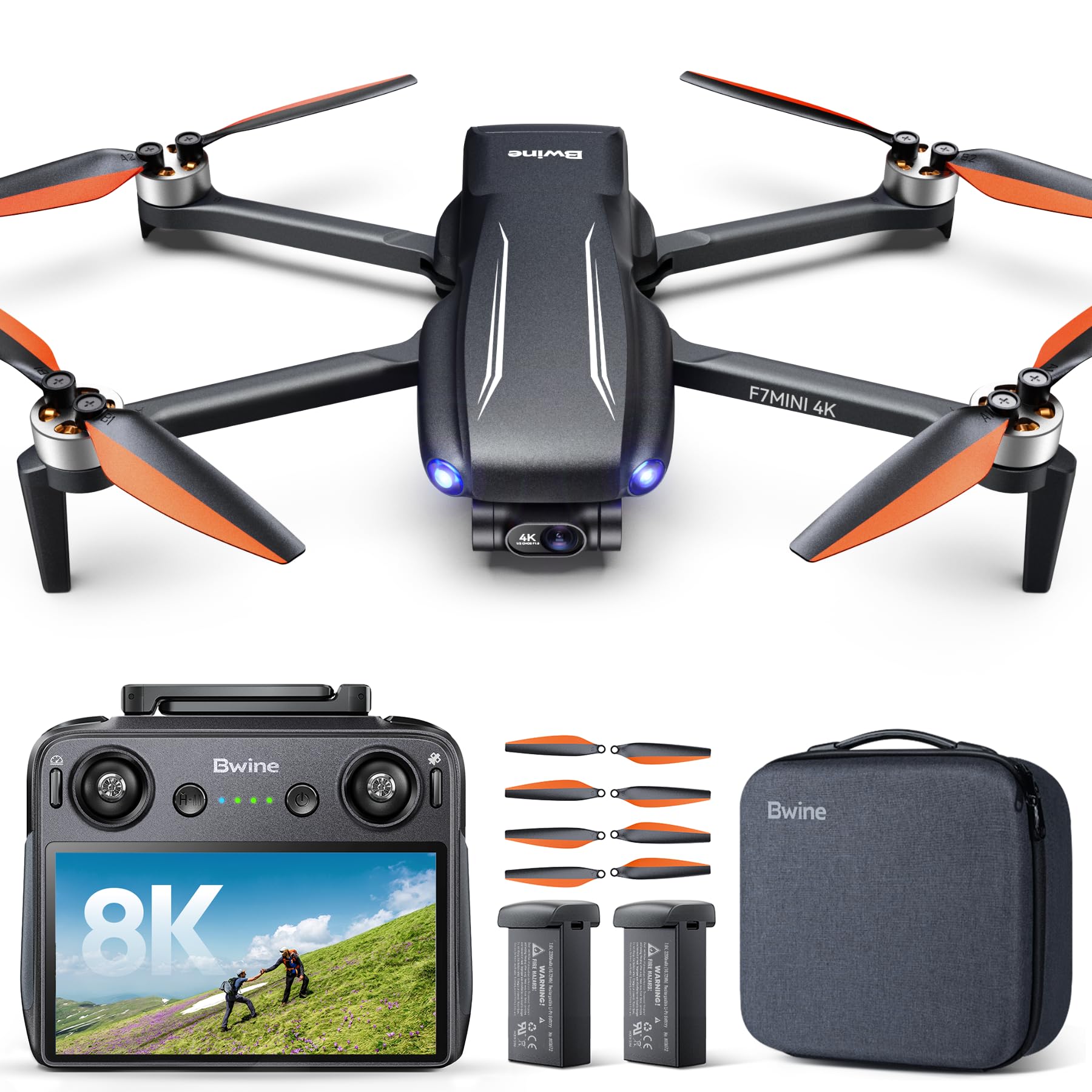
The F7MINI 4K(RC3) solves one of the biggest annoyances in budget drone flying: the need to hook up your phone to the controller. Its 5.5-inch 1080P built-in screen at 500 nits brightness is crisp enough to see in direct sunlight, and the 32GB of internal storage lets you review footage instantly without a smartphone app. This is a massive quality-of-life upgrade for anyone who wants to fly without fumbling with cables and app permissions.
The 3-axis brushless gimbal and EIS combination produces genuinely smooth 4K/30fps video, and the 48MP sensor with F1.8 aperture handles low-light scenarios better than most competition at this price. The 20,000ft real-time transmission stays solid up to about 4.5 kilometers in urban environments with 0.1-second latency, making it one of the more reliable long-range options under . The two included batteries give 64 minutes total flight time, and each charges via PD 3.0 fast charging.
GPS features are comprehensive for a drone in this tier: Active Track with 0.5-meter accuracy, Cruise Control, Orbit Flight, and Waypoint Planning all function as advertised. The 120dB locator buzzer is a nice safety net for retrieval. The only minor drawback is the file transfer speed from the controller to a phone via the app, which is slower than direct USB-C transfer to a computer.
Why it’s great
- Built-in 1080P screen controller eliminates phone dependency.
- 3-axis gimbal produces smooth, stabilized 4K footage.
- FAA exempt at under 249g with full GPS functionality.
Good to know
- File transfer from controller to phone via app is slow.
- Batteries require separate PD 3.0 charger for fast charging.
3. Holy Stone HS790
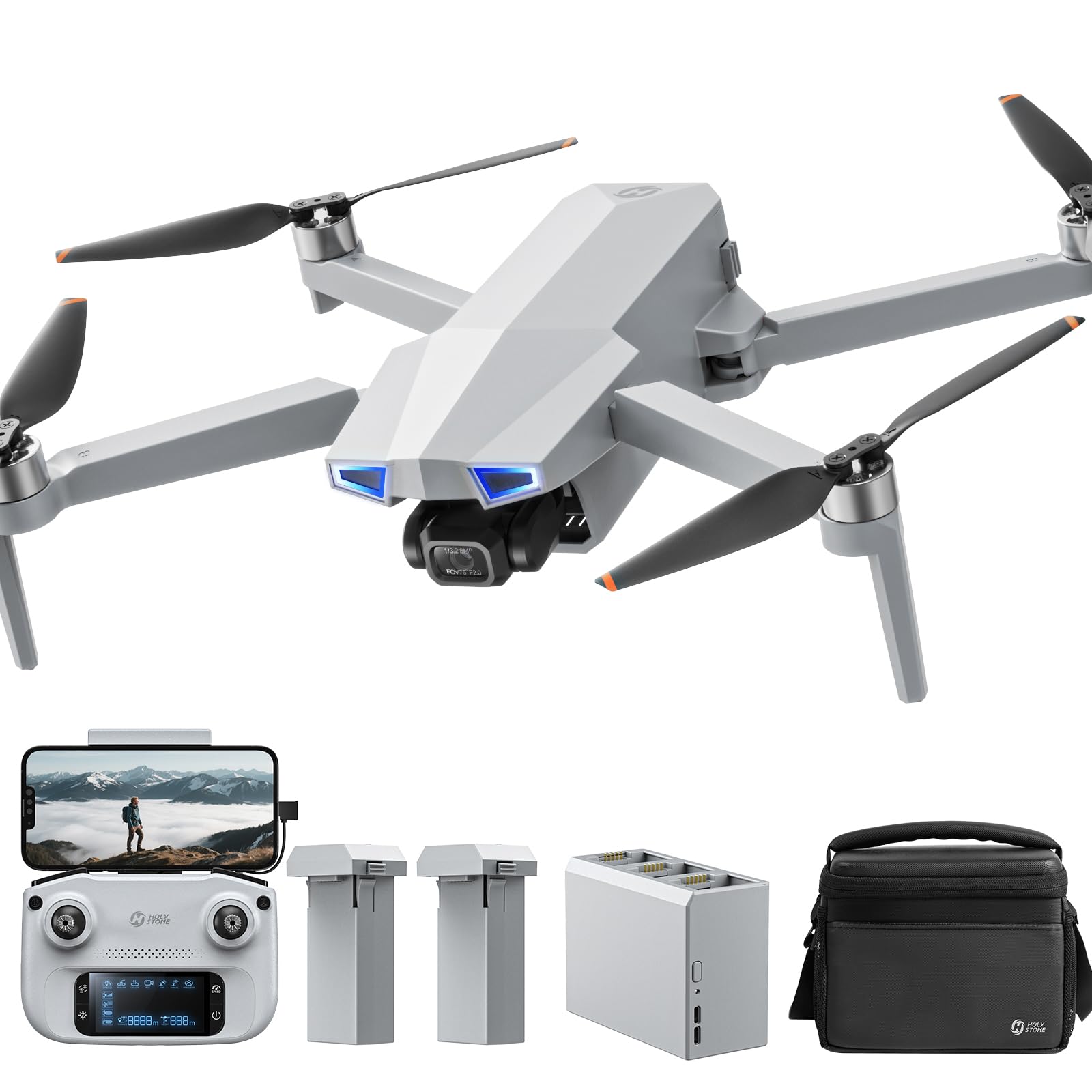
The Holy Stone HS790 is built for pilots who want to push distance without losing the video feed. Its WiFi Repeater-based transmission system delivers a real-time 4K FPV stream up to 30,000 feet (9 kilometers)—a remarkable range for a mid-tier drone. The 3-axis mechanical gimbal keeps footage stable during high-speed passes, and the 6K photo mode with a 38MP effective resolution gives you headroom for cropping stills without losing clarity.
The dual-battery setup with the Smart PD Charging Hub is a standout feature. The hub doubles as a power bank, allowing you to charge other devices in the field, and the fast charging cuts downtime to about 2.5 hours for a full top-up. The Night Mode is genuinely usable, boosting ISO without introducing excessive noise, making this a rare budget drone that can shoot worthwhile footage after dusk.
User reports indicate the HS790 handles wind well up to about 28 MPH, and the built-in Remote ID compliance means no extra modules needed for FAA legality. The app (HT FLY) can be slightly buggy on certain Android versions, but the core flight controls remain stable and responsive.
Why it’s great
- Real 30,000ft transmission range for long-range exploration.
- Smart PD Charging Hub doubles as a power bank.
- 3-axis mechanical gimbal delivers stable 4K/30fps video.
Good to know
- App can exhibit minor bugs on some Android devices.
- Not under 249g—FAA registration and RID required.
4. Bwine F7GB2 Pro

The Bwine F7GB2 Pro is the heavy lifter of the group, specifically engineered to maintain stable flight in level 6 wind conditions—a claim backed by a test report. Its 1806 brushless motors provide enough torque to climb to 2000 meters altitude, making it suitable for flying in mountain terrain or coastal areas where gusty conditions ground lesser drones. The 4K camera with 3-axis gimbal and 5x digital zoom captures smooth footage even during aggressive maneuvers.
The three-battery setup delivers 75 minutes of total flight time, and each 2600mAh pack meets UL 2054 safety certification—an important trust signal for LiPo batteries at this price point. The Bwine Mini app is intuitive and includes social media sharing features with built-in filters and background music, appealing to content creators who want to post directly from the field.
Customer feedback consistently praises the advanced flight modes: Waypoint Planning, Orbit Fly, and Follow Me all work reliably. The remote screen overlay provides telemetry data without needing the app open, which is a nice redundancy. The downside? The stock charger is slow—investing in the optional 65W fast charger cuts charge time from 3+ hours to about 90 minutes.
Why it’s great
- Certified level 6 wind resistance for stable flying in gusts.
- Three UL-certified batteries for 75 minutes total flight.
- 2000-meter altitude ceiling is excellent for mountain use.
Good to know
- Stock charger is very slow; upgrade to 65W fast charger recommended.
- Heavier build at 550g requires FAA registration and RID.
5. Veeniix V11Air
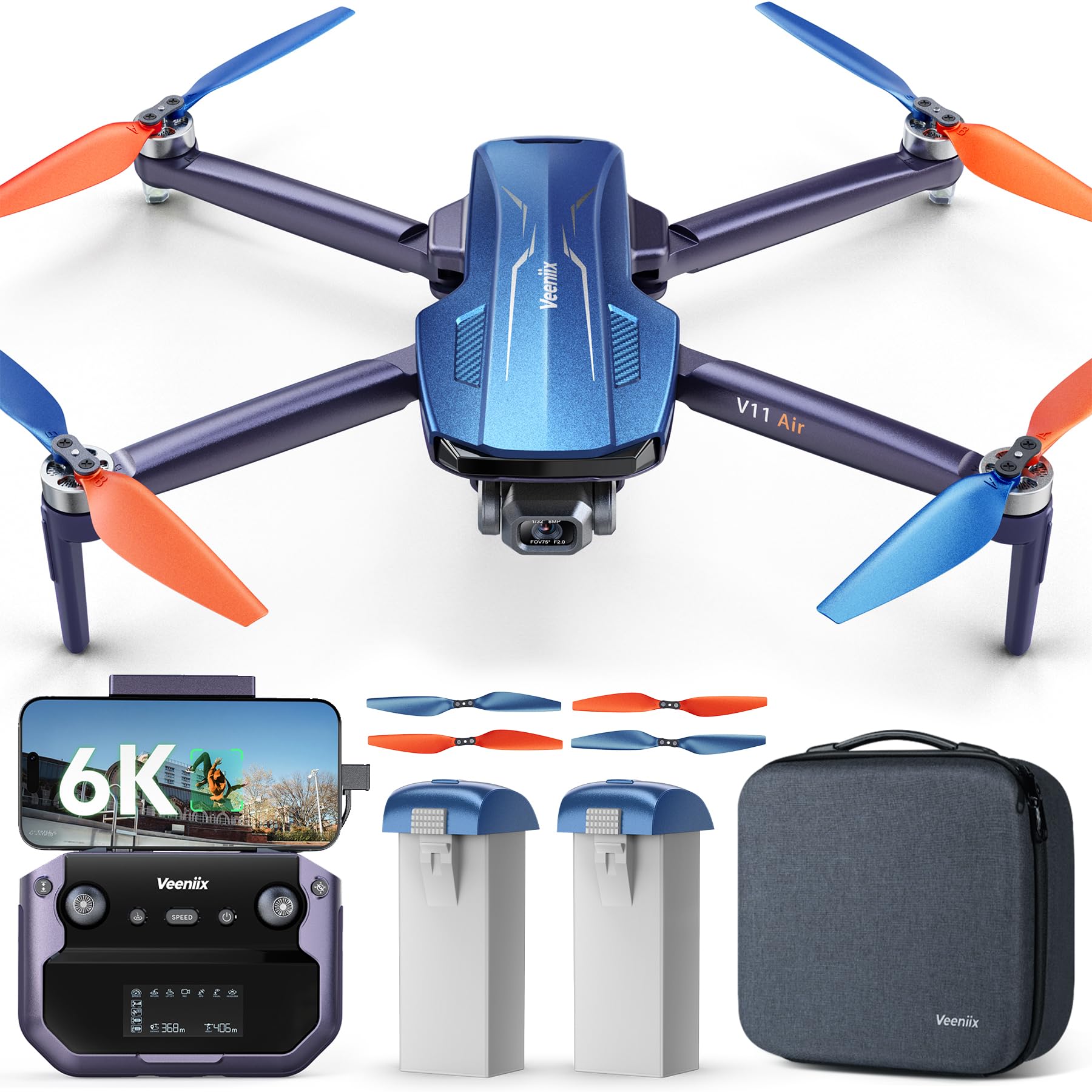
The Veeniix V11Air punches above its weight class with a genuine 3-axis brushless gimbal that delivers stabilized 4K/30fps video without the jello effect common in gimbal-less drones. The 6K photo mode from the imported CMOS sensor produces images with enough detail for moderate cropping, and the 5x lossless zoom preserves clarity better than digital interpolation. The 10,000-foot transmission range with digital feed is solid for open-field flying, though performance drops predictably in wooded areas.
The dual 3200mAh battery setup provides a combined 70-minute flight time, and the fast charging capability reduces downtime significantly. The Night Mode is a genuinely useful addition, boosting signal processing to capture usable details after dark without requiring a high-end sensor. The orange and blue propeller color scheme is not just cosmetic—it helps maintain visual orientation without straining to see the drone against a bright sky.
Customer service is a repeated highlight in user logs: Veeniix sent free replacement drones to users who experienced software-related issues, indicating a company that stands behind its product. The main trade-off is the weight—at 600 grams, this drone requires FAA registration and is not as portable as sub-250g alternatives.
Why it’s great
- 3-axis brushless gimbal provides exceptional stability for the price.
- 5x lossless zoom maintains image quality when framing distant subjects.
- Fast dual-battery charging reduces wait time between flights.
Good to know
- Signal range degrades noticeably in tree-covered areas.
- 600g weight means FAA registration and RID are mandatory.
6. Gleesfun G11PRO

The Gleesfun G11PRO is the definition of a complete package—the box contains 40 pieces including a carrying case, dual batteries, an extensive spare parts kit, and both USB-C and Lightning cables for the controller. The 3-axis brushless gimbal system uses a dedicated control chip for millisecond synchronization between the flight system and the camera, which translates to genuinely smooth 4K/30fps video. The 1/3.2-inch CMOS sensor is smaller than some competitors, but the image processing compensates well in good lighting conditions.
The GQ2.0 digital transmission system uses a dual-antenna design that maintains a stable 10,000-foot range without the frame drops common with single-antenna drones. The Cruise Control technology is a clever addition—it automates speed and heading adjustments so you can focus on steady camera work without juggling multiple stick inputs. The GL2.0 smart battery management system monitors health across 300+ charge cycles and includes breathing LED alerts for safety status.
Wind handling is surprisingly competent for a 357-gram drone, thanks to the 3-axis gimbal and responsive motor tuning. The controller is ergonomically designed with a satisfying weight and accessible button layout. The main catch is that the battery capacity per cell is 2200mAh, so the 70-minute total flight time relies on two packs charging sequentially.
Why it’s great
- Exceptionally complete accessory kit with carrying case and spare parts.
- 3-axis brushless gimbal with dedicated control chip stabilizes video well.
- Smart battery management system with 300+ cycle lifespan.
Good to know
- 1/3.2-inch CMOS sensor is smaller than ideal for low light.
- Battery capacity per cell is only 2200mAh—two packs are essential.
7. DJI Neo Three-Battery Combo

The DJI Neo is the lightest drone on this list at just 135 grams—lighter than the average smartphone—making it completely FAA registration-free and pocketable. What sets it apart is the palm takeoff and landing system: a single button press launches the drone from your hand, and it lands back with no controller required. This friction-free operation makes it ideal for spontaneous vlogs, hikes, and family gatherings where you want aerial footage without setup time.
The 4K UHD video benefits from DJI’s stabilization technology and level 4 wind resistance, producing smooth footage even while moving through kayaking or cycling scenes. The Subject Tracking and QuickShots modes (Dronie, Circle, Boomerang, Helix) are genuinely useful for solo content creators who have no camera operator. The three-battery combo extends total flight time to 54 minutes, and the Two-Way Charging Hub keeps power management simple.
Full-coverage propeller guards make this drone remarkably safe for flying near people and objects, reducing the intimidation factor for nervous beginners. The audio recording captures prop noise that requires post-production cleaning. And the lack of obstacle avoidance means you must stay aware of your surroundings during autonomous tracking.
Why it’s great
- 135g weight makes it the most portable and FAA-exempt option.
- Palm takeoff and landing enables controller-free operation.
- DJI stabilization delivers reliable 4K footage in motion.
Good to know
- No obstacle avoidance—requires manual awareness during tracking.
- Propeller noise is audible in recorded audio; needs post-processing.
8. DJI Neo 2
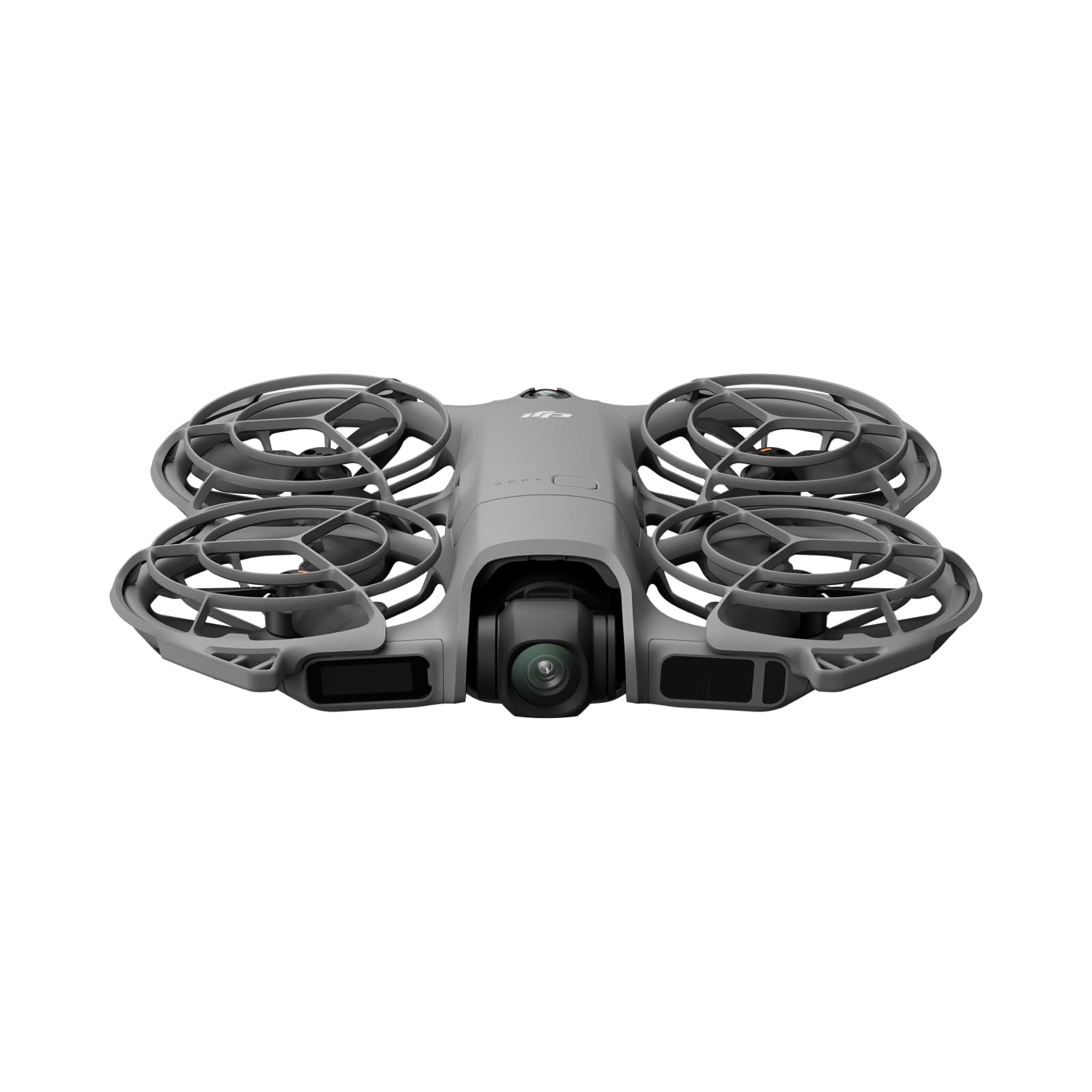
The DJI Neo 2 addresses the primary limitation of its predecessor by adding omnidirectional obstacle sensing. At 151 grams, it remains under the FAA registration threshold while offering legitimate collision avoidance that makes indoor flying and tree-lined paths much safer. The gesture controls now work reliably—a simple wave starts recording or triggers the SelfieShot mode without needing the app.
The 4K video quality is noticeably improved over the original Neo, with better dynamic range and stabilization that handles panning movements without jarring transitions. The full-coverage propeller guards remain standard, and the new ActiveTrack algorithm keeps subjects locked with greater accuracy during complex movement patterns. The single battery provides 18-19 minutes of flight time, which is adequate for quick content capture but demands the optional battery hub for extended sessions.
The compact foldable design is genuinely pocketable, and the USB-C data cable for firmware updates is included. The Neo 2 works with the DJI Fly app (downloadable from the DJI website since it was removed from Google Play), and it also supports the RC-2 controller and DJI Goggles 3 for a more immersive experience. The only real trade-off is the lack of an included controller in the base package.
Why it’s great
- Omnidirectional obstacle sensing enables safe indoor and forest flying.
- 151g weight keeps it FAA-exempt while adding collision avoidance.
- Improved gesture controls and SelfieShot are genuinely usable.
Good to know
- Single battery flight time (18-19 min) is short without the hub.
- No controller is included in the base package.
9. Potensic ATOM LT

The Potensic ATOM LT offers the best flight endurance per dollar on this list. Two 3000mAh intelligent batteries deliver 40 minutes each, totaling 80 minutes of airtime—enough to cover multiple shooting locations on a single charging cycle. At under 249 grams, it is FAA registration-free, and the foldable design collapses to 3.5×5.6×2.3 inches, fitting inside most jacket pockets for true grab-and-go portability.
The 2.5K EIS camera with Sony sensor produces 2560×1440 video, which is technically below 4K resolution but still delivers crisp footage for social media and casual use. The ShakeVanish 2.0 stabilization does a commendable job smoothing out minor vibrations, though it cannot match a physical gimbal in heavy wind. The PixSync 2.0 transmission system maintains an HD feed up to 4 kilometers, and the 4-satellite GNSS support (GPS, GLONASS, Galileo, BeiDou) ensures fast lock-on and reliable satellite positioning.
Customer reviews consistently praise the beginner-friendly flight modes and the responsive brushless motors that handle level 5 wind conditions. The main criticism is the GPS satellite acquisition time—some users report waiting over a minute for signal lock before taking off. For the price point, the ATOM LT is an ideal entry-level drone for practicing flight fundamentals before investing in a pricier gimbal-based system.
Why it’s great
- Best flight endurance per dollar: 80 minutes with two 3000mAh batteries.
- Under 249g and FAA-exempt with ultra-compact foldable design.
- Brushless motors provide level 5 wind resistance and smooth control.
Good to know
- Camera records 2.5K video—not true 4K resolution.
- EIS stabilization struggles compared to 3-axis mechanical gimbal models.
FAQ
Do I need FAA registration for a budget drone with 4K camera?
Can a budget 4K drone record usable footage in windy conditions?
How important is obstacle avoidance on a budget drone?
What does the “total flight time” number actually mean?
Final Thoughts: The Verdict
For most users, the budget drone with 4k camera winner is the Ruko under-249g model because it combines a true 3-axis gimbal, exceptional 96-minute total flight time, and FAA-exempt portability in a single package that genuinely delivers stabilized 4K video. If you want a built-in controller screen that eliminates phone hassle, grab the Bwine F7MINI 4K(RC3). And for the absolute lowest entry price without sacrificing flight endurance, nothing beats the Potensic ATOM LT for beginners who need 80 minutes of practice time.

Mo Maruf
I created WellFizz to bridge the gap between vague wellness advice and actionable solutions. My mission is simple: to decode the research and give you practical tools you can actually use.
Beyond the data, I am a passionate traveler. I believe that stepping away from the screen to explore new environments is essential for mental clarity and physical vitality.