Our readers keep the lights on and my smoothie glass nicely filled. As an Amazon Associate, I earn from qualifying purchases.
The real challenge with a budget digital camera isn’t finding one that turns on—it’s finding one that delivers sharp, usable images without the frustration of slow autofocus, washed-out colors, and a zoom that rattles. Most entry-level shooters discover too late that megapixel numbers on the box have little to do with real-world photo quality.
I’m Mohammad Maruf — the founder and writer behind WellFizz. I’ve spent years analyzing sensor technology, optical zoom mechanisms, and autofocus algorithms across hundreds of camera models to separate genuine value from marketing fluff.
Whether you’re a beginner, a vlogger, or a parent wanting better birthday-party shots, finding the right piece of gear matters. This guide breaks down the top contenders for the best budget digital camera you can buy today, based on real specs and verified user experience, not inflated claims.
How To Choose The Best Budget Digital Camera
Not every low-cost camera is built the same. The cheap models that frustrate users typically cut corners on lens quality, autofocus speed, and low-light performance. Here are the specs that actually separate a keeper from a return.
Optical zoom vs. digital zoom
Optical zoom uses physical glass to magnify the image without losing resolution. Digital zoom simply crops and enlarges the pixels, which introduces blur. For any budget digital camera, aim for at least 6x optical zoom—anything less and you’ll be stuck with blurry distant shots. The Sony Cyber-shot and Kodak PIXPRO models offer 35x and 25x optical zoom respectively, which is exceptional value at this price tier.
Sensor resolution and pixel quality
Higher megapixel numbers look good on a spec sheet, but cramming 64MP onto a small 1/2.3-inch sensor creates tiny, noisy pixels that perform poorly in low light. The 16-20MP sensors found in Canon and Kodak models deliver cleaner images at higher ISO settings because each pixel has more physical surface area to capture light. For most budget shooters, 16-20MP is the sweet spot.
Autofocus system type
Contrast-detection autofocus (used in most budget cameras) works by hunting for the edge of a subject. This is slow and prone to “hunting” in dim conditions. Phase-detection autofocus, common in pricier mirrorless cameras, is faster and more accurate. At budget price points, you’re almost always getting contrast-detection, but manufacturers who tune it well—like Canon—deliver usable speed. Avoid cameras with manual focus only if you plan to shoot moving subjects.
Quick Comparison
On smaller screens, swipe sideways to see the full table.
| Model | Category | Best For | Key Spec | Amazon |
|---|---|---|---|---|
| Sony Cyber-shot DSC-H300 | Premium | Long-zoom travel | 35x Optical Zoom | Amazon |
| Canon PowerShot SX530 HS | Premium | Extreme reach & wildlife | 50x Optical Zoom | Amazon |
| Kodak PIXPRO AZ255 | Mid-Range | Budget superzoom | 25x Optical Zoom | Amazon |
| Minolta 64MP Digital Camera | Mid-Range | Macro & detailed stills | 10x Optical Zoom | Amazon |
| 5K 96MP Jukanur Digital Camera | Budget | Vlogging & beginners | 6x Optical Zoom | Amazon |
| Nsoela 5K WiFi Digital Camera | Budget | WiFi sharing & webcam use | 6x Optical Zoom | Amazon |
| VJIANGER Vlogging Camera | Budget | Manual focus learning | 16x Digital Zoom | Amazon |
| NIKICAM 8K Digital Camera | Budget | High-res stills & selfies | 18x Digital Zoom | Amazon |
| NBDDIGITAL 5K Camera | Budget | Ultra-portable everyday carry | 16x Digital Zoom | Amazon |
In‑Depth Reviews
1. Sony Cyber-shot DSC-H300 (Renewed)

The Sony Cyber-shot DSC-H300 proves that a renewed camera can outshoot brand-new budget models at similar prices. Its 20.1-megapixel CCD sensor—with larger individual pixels than the 48-64MP sensors crammed into cheap point-and-shoots—delivers noticeably cleaner images at higher ISO settings. The 35x optical zoom lens (25-875mm equivalent) lets you pull in distant subjects without the digital zoom degradation that plagues lower-tier alternatives.
Optical SteadyShot stabilization effectively reduces blur in low-light handheld scenarios, and the Sweep Panorama mode captures wide landscapes in a single smooth motion. The AA battery system is a double-edged sword: convenient if you travel with spares, but expect shorter runtimes compared to proprietary lithium packs. The contrast-detection autofocus can hunt in dim conditions, but once locked, it produces sharp results that rival cameras costing twice as much.
Build quality is recognizably Sony—the plastic body feels stiffer than the hollow shells of many budget cameras, and the grip is deep enough for comfortable one-handed operation. The 3-inch LCD is adequate for composition but lacks touch sensitivity and articulation. For its zoom range, stabilization, and sensor quality, this is the benchmark that other budget cameras should aim to beat.
Why it’s great
- 35x optical zoom delivers genuine reach without digital artifacts
- 20.1MP sensor produces clean, detailed images in good light
- Optical SteadyShot reduces handheld blur effectively
- Sweep Panorama is genuinely useful for travel landscapes
Good to know
- Autofocus hunts noticeably in low-light or low-contrast scenes
- AA batteries drain quickly; budget for rechargeable NiMH cells
- 3-inch LCD is fixed and non-touch, limiting creative framing
- Renewed condition means cosmetic wear is possible
2. Canon PowerShot SX530 HS (Renewed)

The Canon PowerShot SX530 HS packs a staggering 50x optical zoom (24-1200mm equivalent) into a body that still fits in a jacket pocket—a feat no phone can approach at any price. Its 16-megapixel CMOS sensor, paired with the DIGIC 4+ image processor, delivers pleasing color science that Canon is famous for: skin tones look natural, and skies hold realistic blues without oversaturation. At the 1200mm end, you can read text on a sign a quarter-mile away, though a tripod becomes nearly essential at maximum zoom.
Built-in Wi-Fi with NFC enables wireless transfers to your phone via the Canon Camera Connect app, making social media sharing one less chore during trips. The 1080p Full HD video at 30fps is dated by modern standards, but for casual vlogging and family memories it’s perfectly serviceable. The 3-inch LCD has a 461,000-dot resolution that looks crisp when reviewing shots, and the dedicated movie button means you never miss a moment fumbling through menus.
The autofocus is contrast-detection, which is slower than phase-detect systems found in Canon’s DSLRs, but it locks reliably in good light. Low-light performance is a weak point—bump the ISO past 800 and noise becomes visible. Battery life is middling; expect around 200 shots per charge with moderate zoom use. The lens extends noticeably when powering on, so be mindful when pulling it from a bag quickly. For the zoom range alone, this camera remains a category standout.
Why it’s great
- 50x optical zoom is unmatched at this price; 1200mm reach captures distant detail
- Canon color science produces natural, pleasing JPEGs out of camera
- Built-in Wi-Fi makes on-the-go sharing effortless
- Large, bright LCD with 461k-dot resolution aids composition
Good to know
- Autofocus slows at extreme zoom lengths; steady hands needed
- Noise becomes visible above ISO 800; avoid shooting in dim interiors
- Battery life is average at ~200 shots per charge
- Renewed condition; confirm battery and charger are included
3. Kodak PIXPRO AZ255-BK

Kodak’s PIXPRO AZ255 brings a 25x optical zoom lens (24-600mm equivalent) and a 16-megapixel backside-illuminated CMOS sensor to a price point that undercuts most rivals. The BSI sensor design improves light sensitivity, which translates to cleaner shadows and less noise at moderate ISOs compared to conventional sensors in similarly priced point-and-shoots. Optical Image Stabilization does a fair job of countering handheld shake at the telephoto end, though at full 600mm extension you’ll still want to brace against a wall.
The 3-inch LCD screen provides adequate clarity for reviewing shots, and the camera’s mode dial offers manual (P/A/S/M) control for users who want to learn exposure basics—a rare feature in sub- new cameras. The variable aperture (f/3.0 at wide, f/6.8 at telephoto) is typical for this class, but the optical zoom quality itself is clean with minimal chromatic aberration until you reach the extreme end. The camera runs on AA batteries, which is polarizing: cheap to buy, but you’ll cycle through alkaloids quickly. Invest in rechargeable NiMH cells on day one.
Video tops out at 1080p Full HD, and the onboard microphone picks up wind noise outdoors unless you buy an external mic. The body is lightweight but feels slightly hollow compared to the Sony or Canon options—it’s clearly where cost was saved. For a brand-new camera with a genuine 25x optical zoom lens under , the PIXPRO AZ255 is a strong contender for beginners who want zoom reach and manual learning without buying refurbished.
Why it’s great
- 25x optical zoom offers genuine telephoto capability at a new-camera price
- BSI CMOS sensor improves low-light performance vs. older sensors
- Full manual controls (P/A/S/M) for learning photography basics
- AA batteries are universally available; no proprietary charger needed
Good to know
- Plastic build feels less premium than Sony or Canon alternatives
- Video quality is limited to 1080p with audible wind noise outdoors
- Variable aperture dims quickly at telephoto end (f/6.8 at 600mm)
- Does not include an SD card; budget for a U3-class card
4. Minolta 64MP Digital Camera

The Minolta 64MP camera brings a legacy brand name to a well-accessorized package that includes a 10x optical zoom lens, 4K Ultra HD video, and a bundled 32GB SD card, case, and rechargeable battery. The 10x optical zoom provides a useful range for portraits and moderate telephoto work, and the macro shooting mode allows focus as close as a few centimeters—ideal for photographing coins, flowers, or product details. The 4K video is interpolated rather than native, but at this price tier, having any 4K output at all is a bonus.
Anti-shake technology and face detection help keep portraits sharp, and the 3-inch articulating LCD screen flips out for vlogging or waist-level shooting. The built-in Wi-Fi enables remote control via smartphone, letting you frame group shots from across the room. The included 32GB card is a UHS-I type that writes quickly enough for burst shooting, and the lithium-ion battery charges via USB-C—a modern touch that budget cameras often lack.
Some users report autofocus inconsistency after extended use, particularly with the contrast-detection system losing accuracy in dim light. The mode selector wheel is physically loose, which can cause accidental mode changes during carry. The 64MP sensor resolution is marketing-driven; real-world detail is comparable to a good 20MP sensor, but pixel-peepers will notice softness. For its comprehensive accessory bundle and macro capabilities, this is a solid pick for hobbyists who want a complete kit out of the box.
Why it’s great
- 10x optical zoom plus dedicated macro mode for close-up detail work
- Complete kit includes 32GB SD card, case, and USB-C rechargeable battery
- Articulating LCD screen aids vlogging and creative composition
- Built-in Wi-Fi enables remote smartphone control and file transfers
Good to know
- Autofocus consistency varies between units; some report blurry shots
- Mode selector wheel feels loose and can rotate accidentally in a bag
- 64MP is interpolated; practical resolution is closer to 20-24MP usable
- No built-in flash; relies entirely on sensor sensitivity in low light
5. Jukanur 5K 96MP Digital Camera
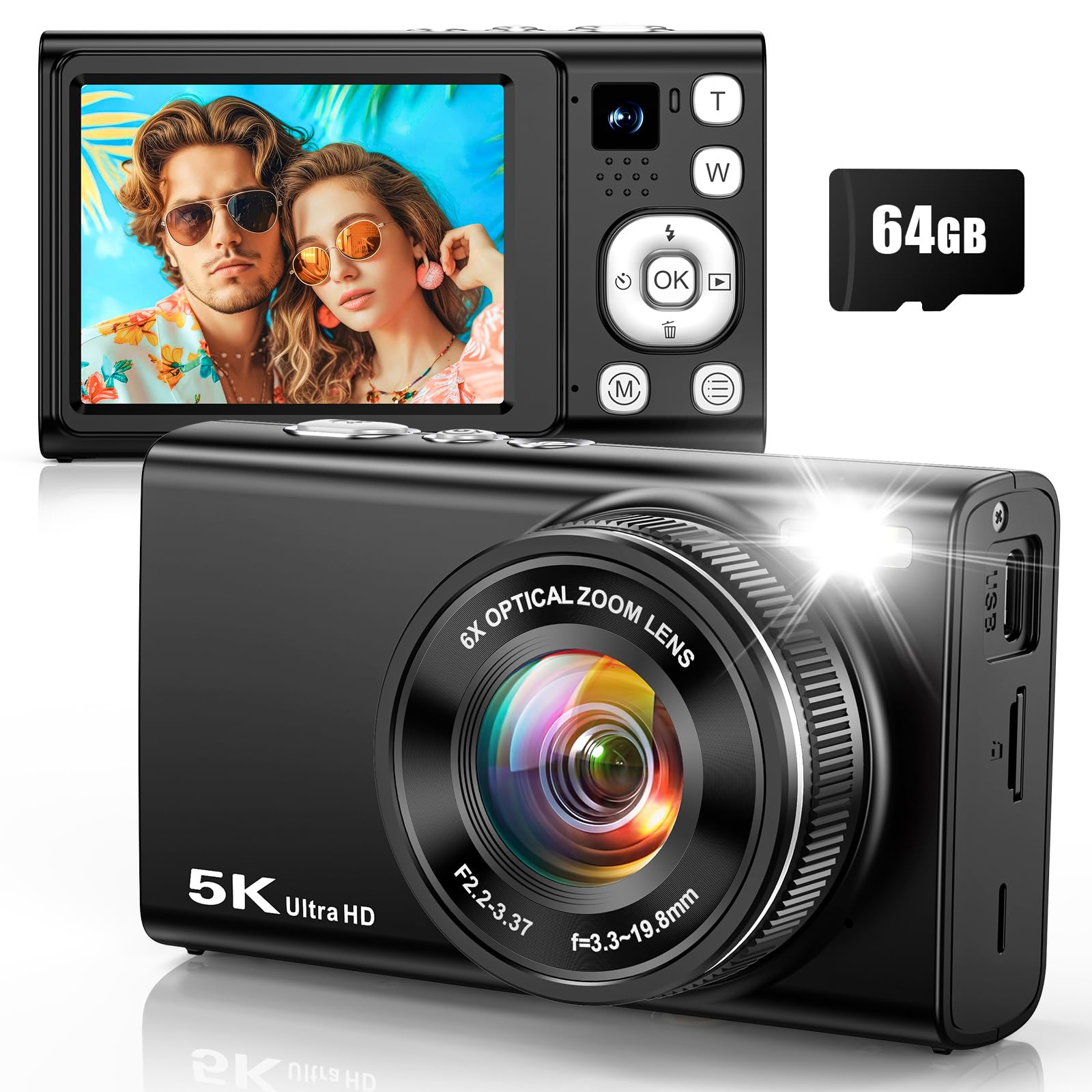
The Jukanur 5K camera targets absolute beginners with an IMX415 CMOS sensor that supports 5K video (5120×2880) and interpolated 96MP stills. The 6x optical zoom lens is genuinely optical—not digital—which means you can zoom into a subject at a concert or ballgame without introducing the pixelation that plagues cheaper digital-zoom-only cameras. The contrast-detection autofocus is surprisingly quick for the price, locking onto faces reliably when smile detection is enabled.
The kit includes a 64GB microSD card, a lanyard, a storage bag, and a USB power adapter. The built-in lithium battery charges via USB and delivers enough power for a full day of casual shooting. The camera’s dual-lens design includes a front-facing lens for selfies, and the included flash provides fill light for indoor dim scenes. Video pause, time-lapse, slow-motion, and continuous shooting modes give beginners room to experiment without feeling limited.
The body is lightweight plastic—noticeably less dense than the Sony or Canon options—but the ergonomics are passable for small hands. The 2.8-inch LCD screen is non-touch and has limited viewing angles in direct sunlight. The 96MP stills are interpolated from a lower native resolution; sharpness at full zoom is acceptable but not exceptional. For a first camera for a teen or a vacation cam for casual use, it’s a perfectly functional package.
Why it’s great
- True 6x optical zoom lens preserves image quality at distance
- Comprehensive starter kit: 64GB card, bag, lanyard, USB cable
- Autofocus is responsive for the price, with smile and face detection
- Dual-lens selfie camera avoids needing to flip the display
Good to know
- 96MP images are interpolated; native resolution is lower
- Plastic body feels light and less durable than premium models
- LCD screen has poor off-axis visibility and no touch input
- Low-light performance is limited; flash is necessary indoors
6. Nsoela 5K WiFi Digital Camera
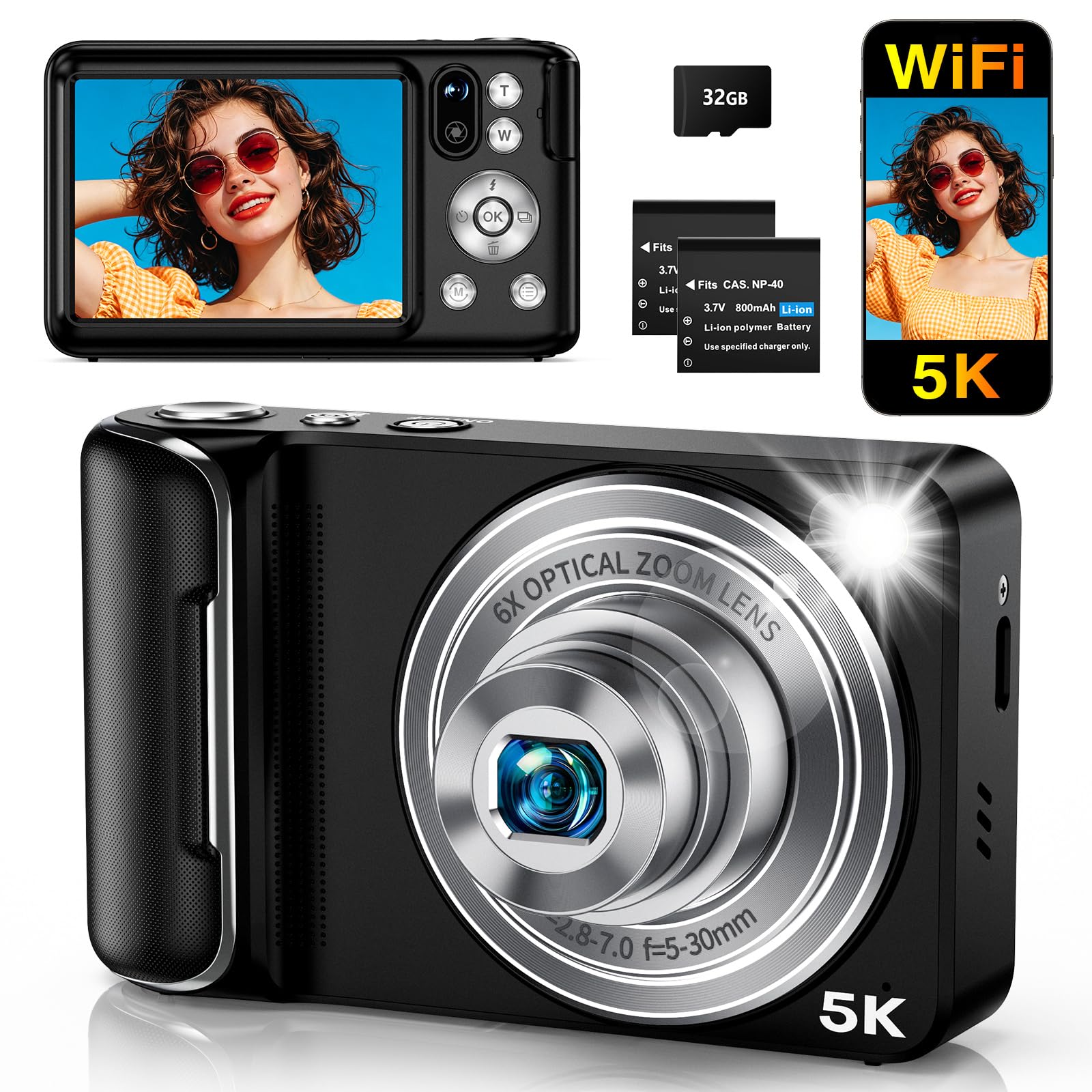
The Nsoela 5K camera stands out in the budget segment by integrating Wi-Fi for real-time remote viewing and file transfer via the Viipulse app—a feature typically reserved for cameras costing two to three times more. The 6x optical zoom lens uses an auto-opening dust-resistant cover, which eliminates the need for a separate lens cap and removes one more step between you and the shot. The 2.8-inch IPS touchscreen supports pinch-to-zoom and swipe gestures, making playback and editing more intuitive than button-only interfaces.
The front and rear dual-lens design makes selfie vlogging simple: you can switch between cameras without rotating the body. The built-in LCD flash provides fill light in dim environments, and the axis image stabilization reduces handheld shake noticeably in video mode. The record-while-charging capability is a huge win for long vlogging sessions—just plug in a USB power bank and keep rolling. The package includes two rechargeable batteries and a 32GB card, giving you redundancy on shoot days.
A small but notable sample of units have reported autofocus failures and zoom jamming issues, which suggests quality control is inconsistent. The 64MP still resolution is interpolated, and the 5K video is not up to the bitrate of a true cinema camera, but for social media content and casual recording, it’s more than adequate. If you value connectivity and touch-based operation over raw sensor quality, this is a compelling option.
Why it’s great
- Built-in Wi-Fi with app control for remote shooting and fast transfers
- Record-while-charging via USB-C power bank for extended sessions
- Touchscreen interface with pinch-to-zoom and swipe navigation
- Two rechargeable batteries included for backup power on the go
Good to know
- Quality control varies; some units have autofocus or zoom jamming defects
- 64MP and 5K specs are interpolated; practical resolution is lower
- Body is compact but feels less solid than premium point-and-shoots
- HDR and dynamic range are limited; highlights clip easily
7. VJIANGER Vlogging Camera
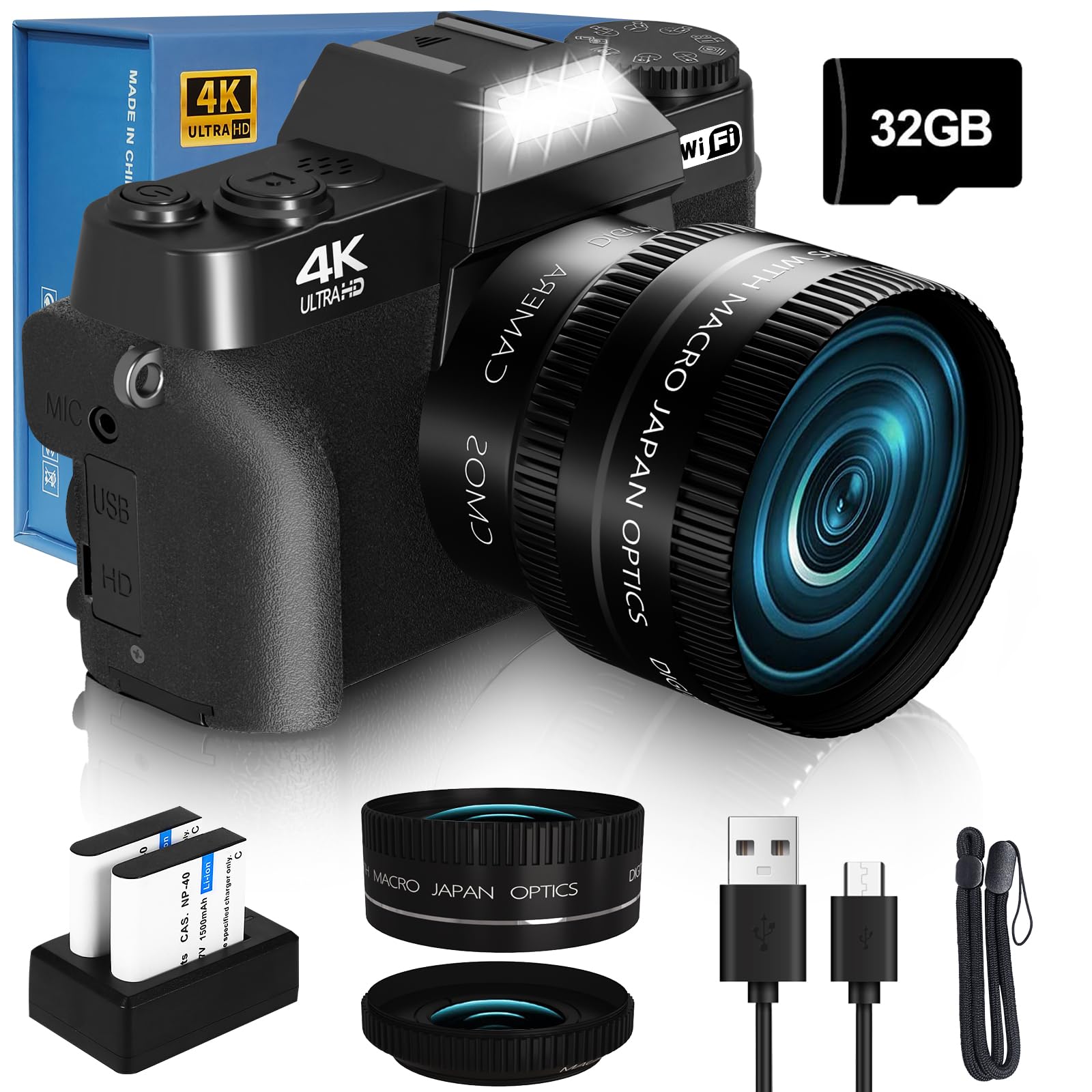
The VJIANGER camera takes a different approach from the rest of the pack: it offers manual-only focus through a press-to-focus button. This means no autofocus hunting or lag—but it also means you must manually initiate focus for every shot, which can be frustrating for fast-moving subjects or spontaneous moments. The 16x digital zoom is entirely pixel-based, so at maximum extension, images become noticeably soft. The camera does include a 52mm wide-angle lens attachment and a macro lens, adding genuine creative flexibility for architectural and close-up photography.
Wi-Fi connectivity enables remote control and instant file transfers to your phone via the companion app. The camera doubles as a webcam over USB, switching to “Camera Mode” for Zoom meetings or live streaming. The 180-degree flip screen rotates forward for selfie framing, and the two included batteries plus a 32GB card mean you can shoot from morning until evening without stopping. The flash doubles as a continuous video light—a thoughtful feature for indoor vlog sets.
The body is the lightest in this roundup at just 0.57 pounds, making it easy to toss into a backpack or purse. The “saving photo” delay is noticeable—you cannot shoot rapidly in succession, so sports and action are out of the question. The included lenses screw onto the fixed lens barrel, but the threads can feel slightly loose. For a beginner willing to learn manual focus discipline, this is a versatile and affordable toolkit.
Why it’s great
- Includes 52mm wide-angle and macro lens attachments for creative shooting
- Flip-forward screen and dual video light/flash perfect for indoor vlogging
- Two rechargeable batteries provide solid runtime for all-day outings
- Lightest body in the roundup at 0.57 lbs; very portable
Good to know
- Digital zoom degrades image quality significantly at higher magnification
- Manual-only focus is slow; no autofocus support for fast shooting
- “Saving photo” delay prevents rapid burst capture for action scenes
- Lens attachment threads can feel loose; check tightness before use
8. NIKICAM 8K Digital Camera
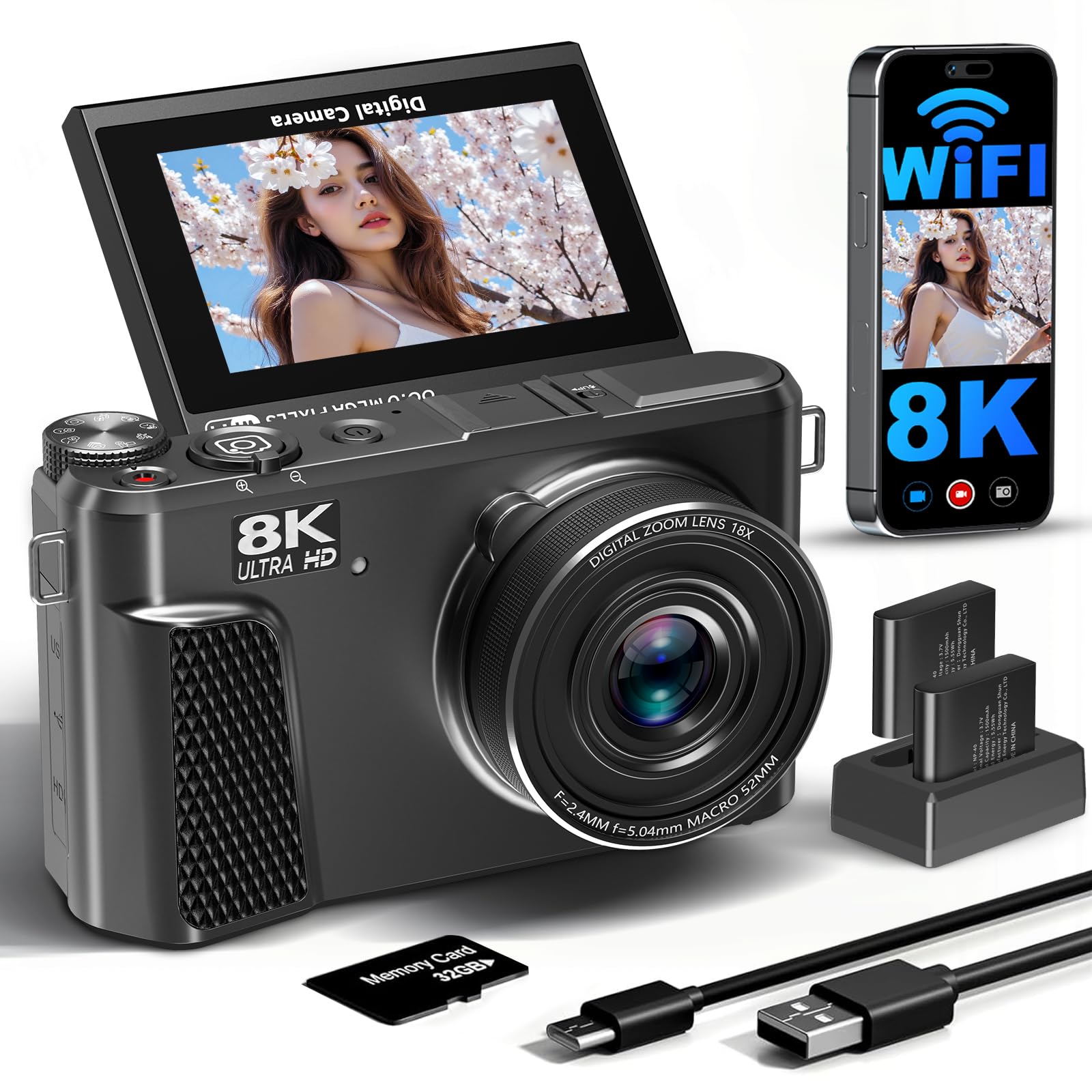
The NIKICAM 8K camera pushes resolution claims to 88MP stills and 8K (15fps) video, but like all cameras at this price, these figures are interpolated from a lower native sensor resolution. What makes this model interesting is the 180-degree flip 3-inch screen, autofocus support (with three modes: auto, manual, and fixed), and an 18x digital zoom range. The zoom dial sits conveniently near the shutter button, letting you zoom in or out without taking your eye off the display.
Wi-Fi connectivity works with a dedicated app for instant social media sharing, and the HDMI port lets you connect the camera directly to an external monitor or TV for playback on the big screen—a feature rarely seen in budget cameras. The hot shoe mount opens up accessory options like an external flash or shotgun microphone. The camera includes two 1500mAh rechargeable batteries and a 32GB TF card, which together provide roughly two hours of continuous recording.
The body is lightweight and available in a gunmetal finish that looks more expensive than it is. Some buyers reported that the memory card was missing from their package, so verify contents upon delivery. The autofocus can be inconsistent in low contrast scenes, and the 8K video frame rate is capped at 15fps—too choppy for smooth motion. For 1080p use and casual stills, this is a well-featured option for selfie-heavy users.
Why it’s great
- Flip screen and hot shoe mount add vlogging and accessory flexibility
- HDMI output enables direct connection to monitors or TVs
- WiFi app integration simplifies sharing to social media platforms
- Two 1500mAh batteries included for extended shooting sessions
Good to know
- 8K video is limited to 15fps; practical use is best at 1080p
- Autofocus can be inconsistent in low-contrast or dim environments
- Some units ship without the advertised memory card; check box
- Digital zoom degrades image quality; use optical focal lengths for sharpness
9. NBDDIGITAL True 5K Camera
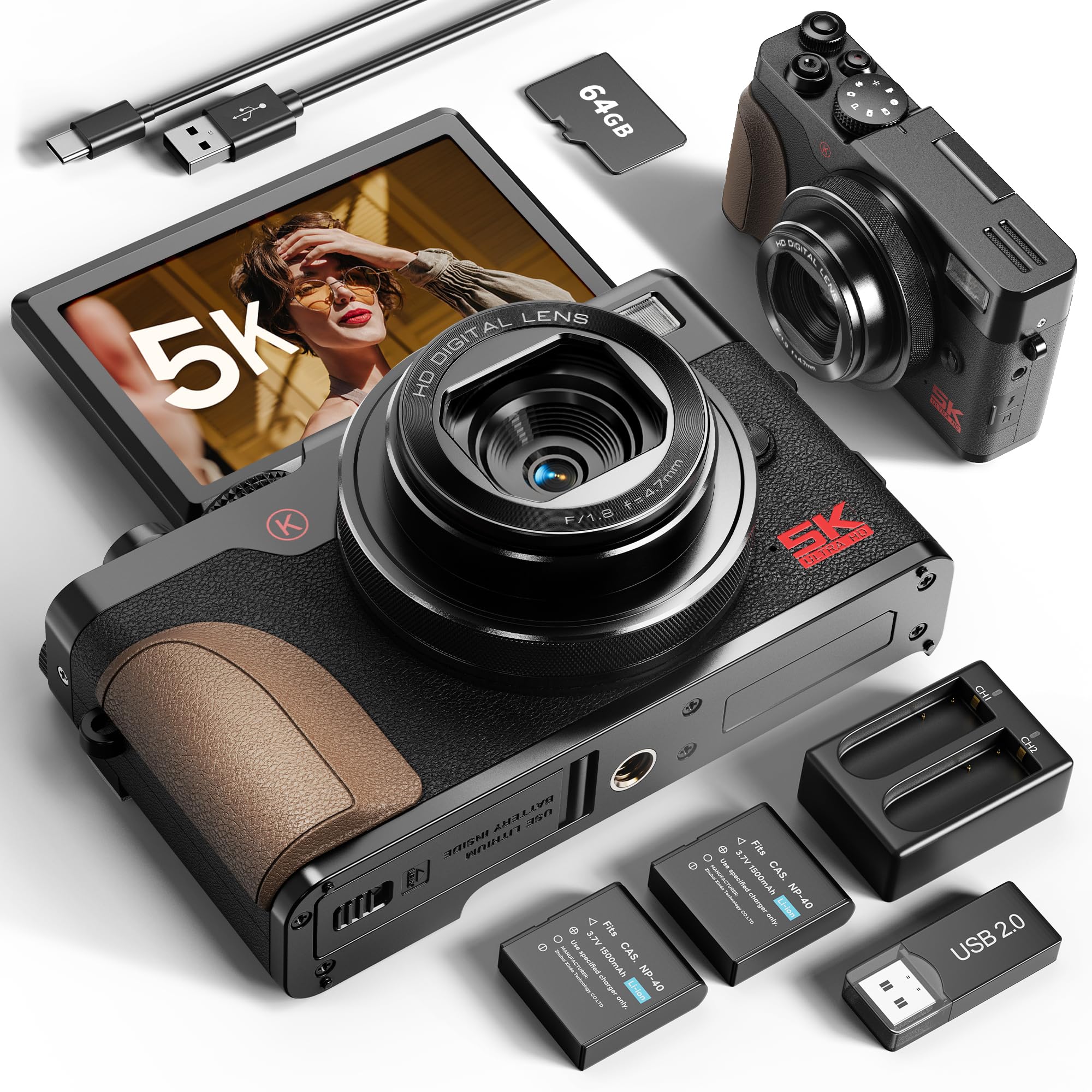
The NBDDIGITAL camera prioritizes portability and design over brute-force specs. At just 121 grams (4.3 ounces), it’s the lightest camera in this lineup, with a smooth ceramic-like composite body and a patented silent scroll wheel that replaces traditional zoom buttons. This eliminates the clicking noise that can ruin video audio—a small but meaningful detail for vloggers. The 4K/30fps video and 16x digital zoom provide enough reach for everyday subjects, and the 16x zoom is assisted by anti-shake for smoother handheld footage.
The camera features eight dedicated scene modes (Sports, Portrait, Night, etc.) that automatically adjust settings for the scenario, making it easy for beginners to get good results without manual tweaking. The built-in 2500mAh lithium-polymer battery is high-capacity for this class, supporting over 300 photos per charge with fast USB-C charging that is roughly twice as fast as removable battery solutions. The package includes a 32GB TF card and a USB-C cable.
There is no flash and no front-facing camera—selfies are taken using the rear lens, which requires you to frame the shot by turning the camera around. The memory card came unformatted for some buyers, requiring a manual format before first use (a step not documented in the manual). The 64MP stills and 5K video are interpolated, so real-world resolution is closer to 24MP and 4K. For its weight, battery life, and silent operation, it’s a strong choice for urban explorers who want a camera that disappears in a pocket.
Why it’s great
- Ultralight 121g body with silent scroll wheel for noiseless zoom operation
- High-capacity 2500mAh battery with fast USB-C charging
- Eight scene modes automate settings for beginners in different conditions
- Compact, ceramic-finish body is durable and visually stylish
Good to know
- No front-facing camera or flash; selfies require rear lens and screen flip
- Memory card may need manual formatting before first use—check manual
- Digital zoom only; no optical zoom lens for true telephoto reach
- Interpolated 64MP and 5K specs; practical quality is lower than numbers suggest
FAQ
What is the real difference between 20MP and 64MP in a budget camera?
Can a budget digital camera replace my phone for photography?
Is it worth buying a renewed camera to save money?
Why do some budget cameras use AA batteries instead of lithium-ion?
Final Thoughts: The Verdict
For most users, the best budget digital camera winner is the Sony Cyber-shot DSC-H300 because it combines 35x genuine optical zoom, a 20.1MP sensor with real pixel quality, and proven reliability at a price that undercuts comparable new models. If you want extreme 50x zoom reach and Canon’s renowned color science, grab the Canon PowerShot SX530 HS. And for a brand-new superzoom with manual controls, nothing beats the Kodak PIXPRO AZ255.

Mo Maruf
I created WellFizz to bridge the gap between vague wellness advice and actionable solutions. My mission is simple: to decode the research and give you practical tools you can actually use.
Beyond the data, I am a passionate traveler. I believe that stepping away from the screen to explore new environments is essential for mental clarity and physical vitality.