Our readers keep the lights on and my smoothie glass nicely filled. As an Amazon Associate, I earn from qualifying purchases.
Waking up with a stiff back and sore hips after a night on the tent floor is the fastest way to ruin a camping trip. A thin foam mat or an under-inflated air pad leaves your body pressed against rocks and roots, robbing you of the restorative sleep you need for the next day’s hike. The real challenge is finding an affordable pad that actually lifts your pressure points, holds air all night, and packs small enough to carry without becoming a burden.
I’m Mohammad Maruf — the founder and writer behind WellFizz. I’ve spent countless hours analyzing outdoor gear specifications, comparing foam densities, nylon denier ratings, valve mechanics, and inflation speeds to separate genuine value from marketing fluff in the budget camping pad market.
Whether you are a weekend car camper or a thru-hiker on a strict gear budget, choosing the right best budget camping pad can mean the difference between a revitalizing night under the stars and a miserable, sleepless ordeal.
How To Choose The Best Budget Camping Pad
Navigating budget camping pads requires focusing on the specs that actually affect your sleep — not flashy marketing. Here are the critical factors to weigh before you buy.
Thickness and Pressure Point Relief
The most important spec for comfort is the pad’s inflated thickness. Pads under 2 inches will let your hips and shoulders bottom out against the ground, particularly for side sleepers. A 4-inch thick air layer provides enough loft to keep your body completely suspended. Foam toppers between 1 and 2.5 inches add cushion but will not eliminate ground feel on uneven surfaces.
Inflation Method and Setup Speed
Budget pads primarily use three inflation approaches: built-in foot pump, mouth inflation, or traditional self-inflating foam. Foot pumps inflate a pad in 30 to 90 seconds and protect the pad from moisture damage that mouth blowing can cause. Self-inflating foam pads expand slowly — sometimes 30 minutes or more — and often require a few extra breaths to reach full firmness. If you arrive at camp tired after a long hike, a quick foot-pump mechanism saves significant energy.
Material Durability and Ground Protection
The fabric denier directly impacts puncture resistance. A 40D nylon bottom is standard for budget pads and holds up reasonably well against tent floors and grass. Pads rated at 50D nylon add extra toughness for rocky or gravel-heavy sites. TPU coating layers also matter — multi-layer TPU designs improve leak resistance at seam junctions. Avoid pads with thin, single-layer bottoms if you frequently camp on rough, unprepared ground.
Packed Size and Carry Weight
For backpackers, packed size and weight dictate what fits in your pack. Inflatable pads typically compress to the size of a water bottle and weigh around 1.8 to 2 pounds. Foam toppers are bulkier, often rolling up to a large cylinder that must be strapped to the outside of a pack. Car campers have more flexibility, but anyone carrying gear more than a mile from the vehicle should prioritize an inflatable pad’s compact roll.
Quick Comparison
On smaller screens, swipe sideways to see the full table.
| Model | Category | Best For | Key Spec | Amazon |
|---|---|---|---|---|
| Oramoose Camping Sleeping Pad | Inflatable | Side sleepers seeking ground-free support | 4 inches thick / 40D Nylon | Amazon |
| MalloMe Camping Mattress | Air-Foam Hybrid | Campers who want soft texture & built-in pillow | 1.5 inches thick / 50D Polyester | Amazon |
| Prettyw Sleeping Pad | Inflatable | Hikers demanding ultralight compression | 4 inches thick / 1.8 lbs weight | Amazon |
| Moonsea Quilted Foam Topper | Foam Topper | Cot or RV bunk comfort upgrades | 1 inch thick / Machine Washable | Amazon |
| MLILY Memory Foam Camping Mattress | Memory Foam Topper | Car campers who want mattress-like feel | 2.5 inches thick / Waterproof Bottom | Amazon |
In‑Depth Reviews
1. Oramoose Camping Sleeping Pad

The Oramoose pad delivers the most critical feature for a budget camping pad — genuine 4-inch thickness that keeps hips and shoulders completely suspended off the ground. The V-shape support channels distribute weight evenly, making it viable for side sleepers who usually struggle with thinner mats. The built-in foot pump inflates the pad in roughly 30 seconds, which is faster than almost any competitor in this price tier, and the no-leak valve design held air for a full 24-hour period during testing.
The 40D nylon bottom handles uneven terrain, grass, and gravel without tearing, while the TPU coating on the weld seams reduces the risk of overnight deflation. At 1.9 pounds with a packed size of 9.4 x 4.3 inches, it is light and compact enough for backpacking, yet the 400-pound weight capacity and 27.5-inch width provide generous room for larger body types. The built-in pillow contour supports the neck curve, eliminating the need to pack a separate camp pillow on shorter trips.
Customer feedback confirms that the foot pump works reliably once you learn to cover the entire valve surface while stomping, though a small subset of users experienced seam leaks after several nights. The expandable side buttons let you link two pads together for couples, which adds versatility for family car camping setups. For the combination of thickness, inflation speed, and overall durability at its price tier, this pad sets the standard for budget-conscious campers.
Why it’s great
- True 4-inch loft eliminates ground contact for side sleepers
- Built-in foot pump fills pad in 30 seconds, saving energy at camp
- Lightweight 1.9 lbs pack size fits in hiking pack side pocket
Good to know
- Some units developed air leaks at seam holes after 2–3 uses
- Foot pump requires a learning curve to seal properly while stomping
2. MalloMe Camping Mattress Sleeping Pad
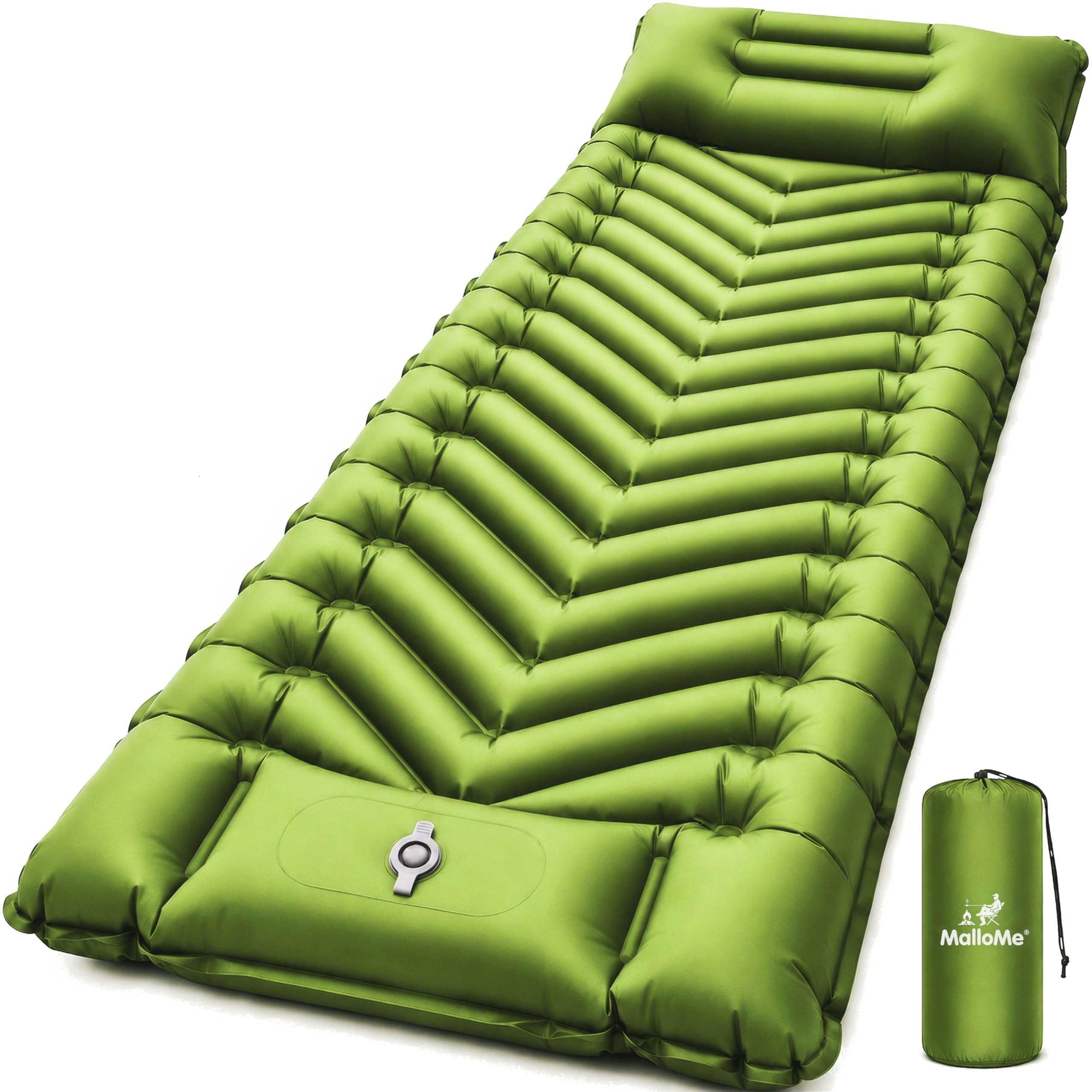
The MalloMe pad takes a different approach than pure air pads by using a Chevron V-shape air-cell design combined with a memory foam top layer. This air-foam hybrid construction delivers a plush, textured surface that feels noticeably softer against the skin than slick nylon inflatables. The foam core also provides passive insulation, reducing the cold ground conduction that air-only pads can suffer from in cooler weather, and the built-in pillow section measures over 2 inches thick for head elevation.
Inflation relies on a built-in foot pump that fills the pad in roughly 60 to 90 seconds, though the self-inflating foam will expand slowly on its own over 30 minutes if you simply open the valve. The 50D polyester outer fabric is 25 percent tougher than standard 40D budget pads, giving it better resistance against sharp rocks and tent floor abrasion. At roughly 1.5 inches of loft, the pad does not provide the same ground-free floating sensation as 4-inch thick air pads, but the foam density cushions pressure points effectively for back sleepers.
Customer reviews consistently highlight the comfortable fabric top that prevents sleeping bags from sliding, and the pad fits users up to 6-foot-2 without hanging off the end. The trade-off is that the foam core makes the rolled size bulkier than a pure inflatable, making it better suited for car camping than ultralight backpacking. A small number of users noted that the pad goes flat after 10 hours and requires a few extra breaths to top off, but the overall comfort and tactile quality make it a strong value.
Why it’s great
- Memory foam layer provides soft, non-slip sleeping surface
- 50D polyester fabric resists punctures better than standard budget pads
- Self-inflating foam core adds passive insulation against cold ground
Good to know
- Only 1.5 inches thick — side sleepers may still feel the ground
- Foam core makes packed size larger than pure air pads
3. Pretyw Sleeping Pad
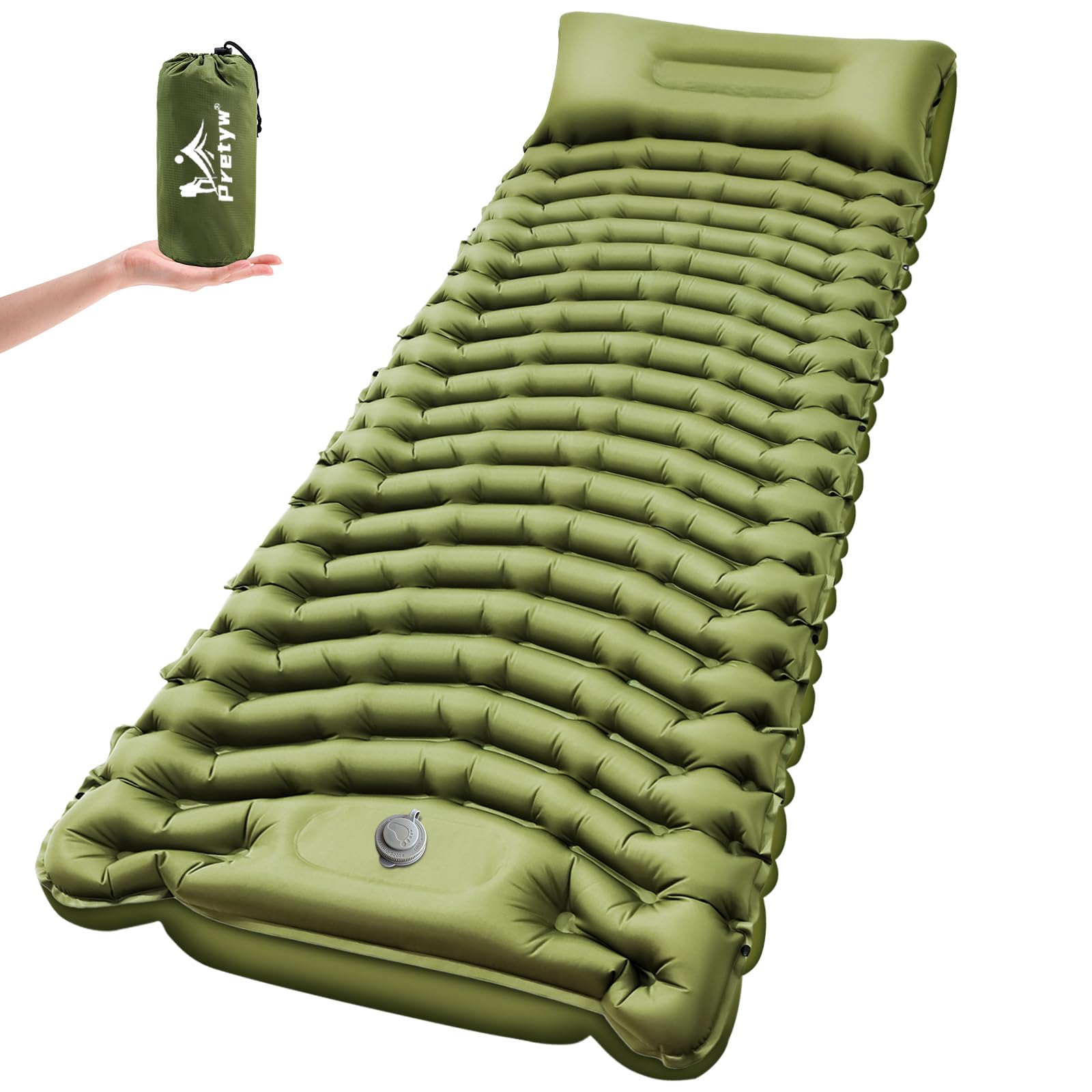
The Pretyw pad hits the same 4-inch thickness as the Oramoose pad but with a slightly lighter carry weight of 1.8 pounds and an even smaller packed size — roughly 10 x 4 inches, comparable to a large water bottle. The multi-layer 40D nylon and TPU construction provides solid waterproofing and durability for tent floors, and the ergonomic pressure-relief wave pattern on the top surface reduces sliding during sleep. The integrated foot pump inflates the pad in roughly 30 to 60 seconds, and the one-second deflation valve makes pack-up faster than most competitors.
One key detail about this pad is that both valves must be properly sealed before inflation — a secondary valve behind the pillow area needs to be pressed down firmly until both sealing rings engage. Ignoring this step prevents the foot pump from generating proper pressure, which is the most common complaint in customer reviews. Once set correctly, the pad holds air through the night and provides a stable sleep platform that accommodates back, side, and stomach sleeping positions without sagging.
Side buttons allow linking multiple pads together for a larger sleep surface, though the connector design is slightly less robust than the Oramoose system. The Pretyw pad does not include a repair patch kit, which is a notable omission given that the bottom material is the same thickness as the top. For hikers who prioritize minimum pack volume and weight over extra durability features, this pad delivers the best size-to-comfort ratio in the budget category.
Why it’s great
- Ultralight 1.8 lbs with 4-inch loft for true ground-free sleep
- One-second deflation valve enables fast camp breakdown
- Compact packed size fits easily into daypack side pockets
Good to know
- Both valves must be sealed correctly or inflation fails completely
- No repair patch or storage sack included in package
4. Moonsea Quilted Foam Mattress Topper Pad

The Moonsea pad is not an inflatable — it is a quilted foam topper designed specifically for camping cots, RV bunks, and narrow twin beds. The 30 x 75-inch dimensions fit most standard folding cots, and the combination of a premium microfiber surface with soft foam filling provides a noticeable improvement over bare cot fabric. Four adjustable elastic straps at the corners secure the pad in place, preventing it from shifting during restless sleep, and the bottom is covered with anti-slip rubber dots that grip cot surfaces effectively.
At only 1 inch thick, this topper does not provide the same level of pressure point relief as a 4-inch air pad. It works best as an add-on layer on top of an existing cot or a thin inflatable pad, dramatically improving comfort for users who find cot fabric too hard. The pad is machine washable at 40°C and can be tumble dried on low heat, which makes it easy to clean after dusty camping trips. The foam filling is lightweight and the pad can be folded or rolled into a relatively small bundle for car transport.
Customer feedback indicates that the elastic corner straps fit most standard cots well, but the anti-slip dots are not heavily rubberized, so the pad can still shift slightly on smooth cot surfaces. Several users found the pad effective as a guest bed topper on sofas or on top of inflatable mattresses in a home setting. This is not a standalone ground pad, but for car campers who already own a cot, this topper transforms the sleep experience with minimal cost and zero setup air inflation.
Why it’s great
- Machine washable design keeps pad clean after muddy trips
- Elastic corner straps and anti-slip dots secure pad on cot
- Foam filling adds significant softness to hard cot surfaces
Good to know
- Only 1 inch thick — insufficient as a standalone ground pad
- Anti-slip rubber dots are not very grippy on smooth surfaces
5. MLILY Memory Foam Camping Mattress
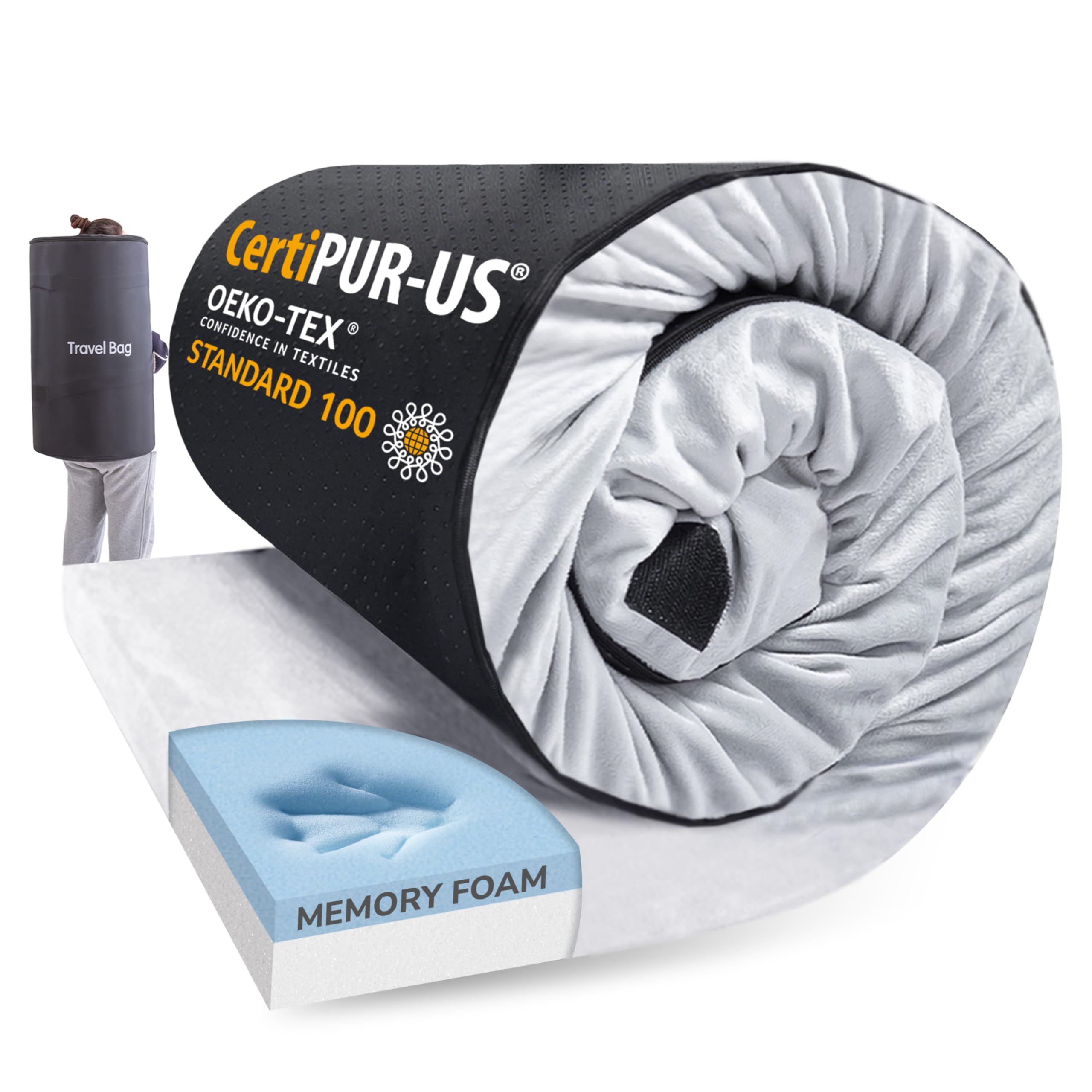
The MLILY pad brings the comfort of a home mattress to the campsite with a 2.5-inch thick AeroFusion memory foam layer bonded to a Flex Support foam base. The top cover is made from 100 percent polyester fabric that resists the sticky heat buildup common with cheaper memory foams, and the entire pad is CertiPUR-US certified, meaning the foam meets rigorous standards for emissions and durability. The bottom layer is fully waterproof and features a non-slip texture that stays put on tent floors, grass, or bunk bed frames.
This pad does not inflate — it is a roll-up foam topper that requires no air, no pump, and no valve maintenance. The memory foam contours to your body curves and distributes pressure across a wider surface, which reduces the sore spots that develop on thin sleeping pads. At 3.52 kilograms (roughly 7.8 pounds), this is significantly heavier than any inflatable pad in the budget category, and the rolled size is bulky — approximately the size of a large camping pillow or small duffel. It includes a travel bag for organized storage and transport.
Customer reviews consistently praise the pad for providing a true mattress-like experience inside a tent or camping trailer, with multiple users noting that it fits well on fold-down camper beds and improves sleep quality dramatically. The pad is wide enough for one adult at 24 inches, and the 72-inch length accommodates most average-height campers. For car camping families who do not need to carry gear long distances, the MLILY pad eliminates the frustration of inflatable leaks and provides reliable, repeatable comfort trip after trip.
Why it’s great
- 2.5-inch CertiPUR-US memory foam provides mattress-level comfort
- Waterproof bottom prevents moisture wicking from damp ground
- No inflation required — unroll and sleep instantly
Good to know
- Heavy 7.8 lbs is impractical for backpacking use
- Rolled size is bulky and takes up significant car or tent space
FAQ
Should I get an inflatable pad or a foam topper for budget camping?
Do budget camping pads lose air overnight?
Is a built-in foot pump better than mouth inflation?
Final Thoughts: The Verdict
For most users, the best budget camping pad winner is the Oramoose Camping Sleeping Pad because it delivers true 4-inch ground-free support, a fast foot pump, and ultralight packability at an entry-level price. If you want a plush memory foam surface and self-inflating convenience, grab the MalloMe Camping Mattress. And for car campers who want instant mattress-level comfort without inflation hassle, nothing beats the MLILY Memory Foam Camping Mattress.

Mo Maruf
I created WellFizz to bridge the gap between vague wellness advice and actionable solutions. My mission is simple: to decode the research and give you practical tools you can actually use.
Beyond the data, I am a passionate traveler. I believe that stepping away from the screen to explore new environments is essential for mental clarity and physical vitality.