Our readers keep the lights on and my smoothie glass nicely filled. As an Amazon Associate, I earn from qualifying purchases.
Stepping up from smartphone photography can feel daunting, with a sea of technical terms and a fear of overspending. But the right budget mirrorless camera doesn’t have to be a compromise—it’s your gateway to professional-level control, stunning image quality, and creative freedom that fits your life and your finances.
I’m Mohammad Maruf — the founder and writer behind WellFizz. My process involves deep market research, analyzing thousands of user reviews and technical specifications to identify which features genuinely translate to real-world performance for photographers at every level.
After dissecting data on dozens of models, I’ve narrowed it down to the standout performers that deliver exceptional value, ensuring your first foray into interchangeable lens photography is both rewarding and future-proof. The real challenge is finding the best budget camera mirrorless that aligns with your creative goals without hidden trade-offs.
How To Choose The Best Budget Camera Mirrorless
Navigating your first mirrorless purchase is about balancing immediate needs with future growth. The core decision lies in understanding which system offers the right blend of image quality, features, and expandability for your budget.
Sensor Size: The Foundation of Image Quality
This is the camera’s “film.” APS-C sensors (found in most entry-level models) offer a great balance of quality and size, providing better low-light performance and depth-of-field control than a phone. Micro Four Thirds sensors are smaller, leading to incredibly compact cameras and lenses, ideal for travel. Full-frame sensors (a premium option) offer the ultimate in image quality and low-light ability but come with larger, more expensive lenses.
The Lens Ecosystem: Your Camera’s True Potential
A camera body is just the start; its value grows with the lenses you can add. Canon’s RF mount and Sony’s E-mount have vast, growing selections of both first and third-party lenses. The Micro Four Thirds system (Panasonic & OM System) boasts one of the most extensive and affordable lens libraries available. Consider what you want to shoot next—portraits, wildlife, landscapes—and ensure your chosen system has accessible lens options.
Stabilization: The Key to Sharper Shots
Image stabilization (IS) counteracts hand shake. In-body stabilization (IBIS) works with any lens attached and is fantastic for video and low-light stills. Lens-based stabilization (OIS) is built into specific optics. Some cameras, like several Panasonic models, combine both for “dual IS,” offering exceptional stability. This feature is a major quality-of-life upgrade for handheld shooting.
Video & Autofocus: Beyond Stills
Even if you’re primarily a photographer, strong video features and reliable autofocus (AF) are invaluable. Look for 4K video recording, a microphone input for better audio, and autofocus that reliably tracks faces and eyes. Cameras designed with vloggers in mind, like the Sony ZV-E10, often have features such as product showcase modes and fully articulated screens.
Quick Comparison
On smaller screens, swipe sideways to see the full table.
| Model | Type | Best For | Key Feature | Amazon |
|---|---|---|---|---|
| Panasonic LUMIX G85 | Mirrorless | All-Rounder & Video | 5-Axis Dual I.S. | Amazon |
| Sony Alpha ZV-E10 | Mirrorless | Content Creators & Vlogging | Product Showcase AF | Amazon |
| Canon EOS RP | Mirrorless | Full-Frame Beginners | Full-Frame Sensor | Amazon |
| Panasonic LUMIX G100 | Mirrorless | Travel & Social Media | Advanced Built-in Mic | Amazon |
| Nikon Z50 II Kit | Mirrorless | Beginners with Two Lenses | Dual-Lens Versatility | Amazon |
| Panasonic LUMIX G7 | Mirrorless | 4K Video on a Budget | 4K Photo Modes | Amazon |
| Canon EOS R100 | Mirrorless | Absolute Beginners | Compact RF Mount | Amazon |
| OM SYSTEM OM-3 | Mirrorless | Travel & Adventure | Weather-Sealed Build | Amazon |
| OM SYSTEM OM-1 Mark II | Mirrorless | Action & Wildlife | Stacked Sensor Speed | Amazon |
| Sony Alpha a3000 | Mirrorless | Ultra-Budget Entry | DSLR-like Grip | Amazon |
| Canon EOS Rebel T7 | DSLR | Traditional DSLR Feel | Proven DSLR System | Amazon |
In‑Depth Reviews
1. Panasonic LUMIX G85

The Panasonic LUMIX G85 represents a sweet spot in the mirrorless world, offering a professional feature set that belies its mid-range positioning. It combines a robust, magnesium alloy body with weather-sealing—a rarity at this level—making it a reliable companion for outdoor adventures. The included 12-60mm lens provides a versatile zoom range, perfect for everything from landscapes to casual portraits.
Where the G85 truly excels is in its 5-axis Dual Image Stabilization system, which combines in-body and lens-based stabilization. This technology allows you to capture remarkably sharp images and steady handheld video footage even in challenging low-light conditions. The 4K video capabilities are robust, and the fully articulating touchscreen is invaluable for vloggers or capturing creative angles.
User feedback consistently praises its intuitive ergonomics and the tangible sense of quality it offers. It’s a camera that doesn’t feel like a beginner’s tool but rather a capable workhorse that can grow with your skills, providing a clear upgrade path within the extensive Micro Four Thirds lens ecosystem.
Why it’s great
- Excellent in-body and lens stabilization for blur-free shots
- Durable, weather-sealed construction inspires confidence
- Versatile kit lens with a useful 24-120mm equivalent range
- Strong 4K video features and fully articulating screen
Good to know
- Micro Four Thirds sensor is smaller than APS-C, affecting low-light performance
- Autofocus in low light can sometimes hunt compared to newer systems
- Battery life is adequate but not exceptional
2. Sony Alpha ZV-E10
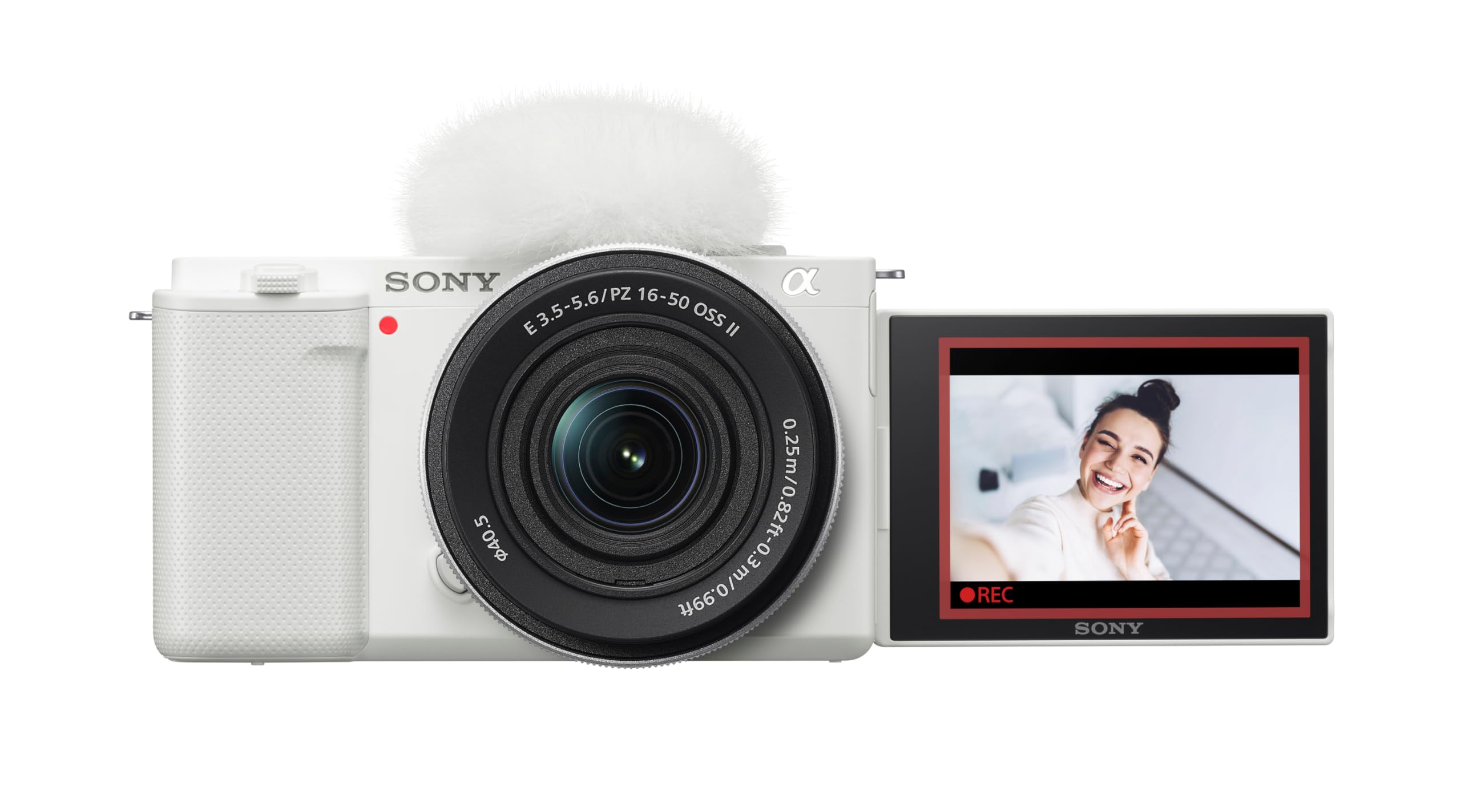
Designed from the ground up for content creators, the Sony ZV-E10 is a purpose-built tool that removes the guesswork from video and live streaming. It inherits the excellent 24.2MP APS-C sensor and processor from Sony’s more expensive cameras, ensuring superb image quality and color science right out of the box. The compact, minimalist body is lightweight and easy to handle for extended shooting sessions.
Its standout features are uniquely tailored for solo operators: a dedicated “Background Defocus” button instantly blurs the background, and the “Product Showcase Setting” seamlessly shifts focus from your face to an object you hold up to the camera. The directional three-capsule microphone is far superior to typical built-in mics, and it includes a windscreen. For streaming, it connects via a single USB cable to function as a high-quality webcam.
Users upgrading from smartphones or compact cameras are often thrilled with the leap in audio and video quality. While it lacks a viewfinder and in-body stabilization, its intelligent design and powerful APS-C sensor make it one of the most compelling options for anyone serious about creating video content on a budget.
Why it’s great
- Dedicated features for vloggers (product showcase, background defocus)
- Superior built-in directional microphone with included windscreen
- Excellent oversampled 4K video quality from a 6K source
- Simple one-cable setup for live streaming
Good to know
- No electronic viewfinder (EVF), relying solely on the rear screen
- Lacks in-body image stabilization (relies on lens OIS or digital stabilization)
- Battery life is modest, typical of compact mirrorless cameras
3. Canon EOS RP

The Canon EOS RP holds the distinction of being one of the most accessible entry points into the world of full-frame photography. Its compact and lightweight design makes it surprisingly portable for a camera with such a large sensor. The image quality is a significant step up from APS-C models, offering superior low-light performance, a wider dynamic range, and that coveted shallow depth-of-field for beautiful background blur.
Paired with the versatile RF 24-105mm kit lens, you have a system that can handle a wide variety of subjects, from travel snaps to portraits. The Dual Pixel CMOS AF is fast and reliable for both stills and video, and the intuitive touchscreen interface will feel familiar to anyone who has used a modern Canon camera. It also serves as an excellent high-quality webcam.
Photographers upgrading from older Canon DSLRs appreciate the seamless transition to the RF mount, often using an adapter to continue using their existing EF lenses. While its 4K video has some limitations (a crop and lack of Dual Pixel AF), for stills photographers wanting full-frame quality without a massive investment, the RP is a compelling and logical choice.
Why it’s great
- Most affordable gateway to a full-frame sensor system
- Remarkably compact and light for a full-frame body
- Excellent Dual Pixel autofocus performance
- Compatible with a huge range of Canon EF lenses via adapter
Good to know
- 4K video is heavily cropped and lacks advanced autofocus
- Battery life is shorter than larger DSLRs
- The kit lens aperture is variable and not particularly fast
4. Panasonic LUMIX G100

The Panasonic LUMIX G100 is designed for the mobile-first creator who prioritizes portability and smart features. Its incredibly compact form factor, aided by the tiny Micro Four Thirds 12-32mm collapsible lens, makes it an ideal travel companion that can easily slip into a small bag. Despite its size, it packs a 4K video punch and a unique audio system.
Panasonic collaborated with audio experts to integrate a high-performance directional microphone with tracking technology. This system automatically adjusts audio focus based on where sound is coming from, whether you’re in a crowd, interviewing someone, or recording yourself. This makes it a standout for vloggers who want great sound without an external mic. It also easily doubles as a webcam for professional-looking calls and streams.
Users love its simplicity and the vibrant, colorful JPEGs it produces straight out of camera. The electronic viewfinder is a welcome addition for shooting in bright sunlight. It’s a fantastic option for social media enthusiasts and travelers who want a significant upgrade from their phone without the bulk of a traditional camera system.
Why it’s great
- Exceptionally compact and lightweight system
- Advanced built-in microphone with Nokia OZO audio tracking
- Simple one-cable webcam functionality
- Bright electronic viewfinder in a tiny body
Good to know
- Uses digital image stabilization, which can crop the video frame
- 4K video recording has a time limit due to heating concerns
- Smaller Micro Four Thirds sensor compared to some rivals
5. Nikon Z50 II with Two Lenses

The Nikon Z50 II kit is the ultimate “ready-to-shoot” package for a beginner who doesn’t want to think about buying additional lenses right away. It includes two compact DX lenses: the 16-50mm for everyday wide-angle to portrait shots, and the 50-250mm for bringing distant subjects like wildlife or sports action closer. This coverage from wide to super-telephoto is incredibly versatile.
Nikon has focused on creative accessibility with this model. It features 31 built-in Picture Control presets that apply distinct color and tone profiles to your photos and videos, letting you achieve a specific look in-camera. The autofocus system is also quite sophisticated, with reliable subject detection for people, animals, and vehicles. The inclusion of a built-in flash is a practical touch often omitted in modern mirrorless cameras.
For someone who wants a complete system from day one, this kit eliminates guesswork. The image quality from the 20.9MP APS-C sensor is excellent, and the compact, retro-styled body is a joy to use. It’s a thoughtful package that encourages exploration across different types of photography.
Why it’s great
- Complete system with wide and telephoto zoom lenses included
- Creative in-camera color and tone presets for unique looks
- Reliable subject-detection autofocus
- Includes a built-in flash, which is handy in a pinch
Good to know
- Lens apertures are variable and not very fast (f/3.5-6.3)
- The flip-down screen isn’t ideal for vlogging when a mic is mounted on top
- Battery life is average; a spare is recommended for all-day use
6. Panasonic LUMIX G7

The Panasonic LUMIX G7 is a veteran in the budget mirrorless space that continues to offer incredible value, particularly for videographers. It was one of the first cameras in its class to offer uncropped 4K video recording, and that capability remains impressive today. The inclusion of a microphone input is a critical feature for anyone serious about audio quality, setting it apart from many entry-level competitors.
Its “4K Photo” modes are a unique strength, allowing you to extract high-resolution 8MP still images from 4K video footage, perfect for capturing the perfect moment in fast-action scenes. The camera’s ergonomics are excellent, with a deep grip and plenty of physical dials for manual control. The fully articulating touchscreen is perfect for both self-recording and shooting from tricky angles.
Even years after its release, users praise its reliable performance, intuitive controls, and the sheer amount of features packed into a mid-range body. For those who prioritize video features and manual control on a tight budget, the G7 remains a highly relevant and powerful option.
Why it’s great
- Uncropped 4K video and useful 4K Photo modes
- Includes a microphone input for better audio recording
- Excellent ergonomics with a deep grip and control dials
- Fully articulating touchscreen for flexible shooting
Good to know
- Older sensor technology compared to newer models
- Lacks in-body image stabilization (relies on lens OIS)
- Continuous autofocus in video can be less reliable than newer systems
7. Canon EOS R100

The Canon EOS R100 is the most streamlined and affordable entry into Canon’s modern RF mirrorless system. It’s designed explicitly for absolute beginners, with a simplified menu system and automatic scene modes that help you get great results while you’re learning. Its compact size makes it unintimidating and easy to carry everywhere.
It features a capable 24.1MP APS-C sensor and Canon’s reliable Dual Pixel CMOS autofocus, ensuring your subjects are sharply in focus. The included RF-S 18-45mm lens provides a basic but useful zoom range for everyday photography. Many bundles also include helpful extras like a bag and memory card, making it a true “kit-and-go” solution.
New photographers appreciate its ease of use and the quality jump from smartphone photos. It provides a clear, no-fuss on-ramp to the powerful RF lens ecosystem, allowing you to invest in better glass as your skills progress, with a clear upgrade path to more advanced R-series bodies in the future.
Why it’s great
- Extremely accessible entry point to the Canon RF system
- Simple, guided interface perfect for first-time users
- Reliable Dual Pixel autofocus for sharp photos
- Very compact and lightweight body
Good to know
- Fixed rear screen (does not articulate for vlogging)
- 4K video is severely cropped and limited to 24fps
- Uses an older DIGIC 8 processor
8. OM SYSTEM Olympus OM-3

The OM SYSTEM OM-3 is a unique proposition: a compact, retro-styled camera built to withstand the elements. With an IP53 rating, it’s dustproof, splashproof, and freezeproof, making it an ideal companion for hiking, travel, and outdoor photography in unpredictable conditions. Its all-metal construction provides a premium, durable feel.
Beyond its ruggedness, it’s packed with computational photography features that were once the domain of smartphones. Live ND simulates neutral density filters for long exposures in bright light, Live Composite lets you paint with light, and High-Res Shot combines multiple images for incredible detail. The 5-axis image stabilization is among the best in the industry.
This camera is for the photographer who values portability and reliability above all. It proves that a Micro Four Thirds camera can be a professional tool, especially when the environment is a factor. The combination of robust build, innovative software features, and a compact lens ecosystem makes it a specialist’s dream.
Why it’s great
- Rugged, weather-sealed construction for outdoor use
- Powerful computational photography features (Live ND, Composite)
- Best-in-class 5-axis image stabilization
- Compact and lightweight with a premium metal body
Good to know
- Premium price within the “budget” category
- Smaller sensor size affects absolute low-light performance
- The front grip is minimal, which can be a factor with heavier lenses
9. OM SYSTEM OM-1 Mark II

The OM SYSTEM OM-1 Mark II is the performance flagship of the Micro Four Thirds world, featuring a cutting-edge stacked BSI Live MOS sensor. This technology allows for incredibly fast readout speeds, enabling blistering continuous shooting rates (up to 120 fps with AF), a blackout-free viewfinder, and reduced rolling shutter in video. It’s built for action, wildlife, and any situation where speed is critical.
Its autofocus system, with subject detection for birds, vehicles, and animals, is highly sophisticated and competitive with far more expensive systems. Combined with the legendary 5-axis image stabilization, it allows you to handhold super-telephoto lenses that would require a tripod on other systems. Like the OM-3, it’s fully weather-sealed and packed with computational features.
This is a camera for the enthusiast or pro who prioritizes portability and speed without compromise. It demonstrates that sensor size isn’t the only measure of capability, offering a feature set and build quality that rivals premium full-frame cameras, all in a remarkably small and light package.
Why it’s great
- Extremely fast stacked sensor enables high-speed shooting
- Professional-grade, intelligent autofocus with subject recognition
- Outstanding image stabilization for handheld telephoto work
- Robust, fully weather-sealed professional body
Good to know
- At the very top end of the budget spectrum
- 20MP resolution may feel limiting for some landscape photographers
- Battery life can drainfaster when using power-intensive features like the EVF
10. Sony Alpha a3000

The Sony Alpha a3000 is a fascinating piece of mirrorless history, representing an early and unique design approach. It pairs a compact mirrorless body with a deep, DSLR-style grip, which many find very comfortable to hold, especially with larger lenses. It features a capable 20.1MP APS-C sensor that still produces very good image quality for its era.
As one of Sony’s first E-mount cameras, it benefits from compatibility with a wide range of Sony E and FE lenses, giving you access to the modern Sony ecosystem. The electronic viewfinder, while lower resolution by today’s standards, is a valuable tool for composing shots in bright sunlight. It can record Full HD video, which was standard for its time.
This camera is primarily for the ultra-budget-conscious shooter who values the feel of a DSLR and the lens options of the Sony system, but doesn’t need the latest video features or autofocus speed. It’s a testament to how capable older technology can be for learning the basics of photography.
Why it’s great
- Unique, comfortable DSLR-like grip on a mirrorless body
- Access to the vast and growing Sony E-mount lens system
- Includes an electronic viewfinder, which many entry cameras omit
- Very affordable entry point for the Sony ecosystem
Good to know
- Very outdated autofocus and menu system compared to modern cameras
- Battery life is notably poor; spare batteries are essential
- No touchscreen, Wi-Fi, or 4K video capabilities
11. Canon EOS Rebel T7

It’s important to note the Canon EOS Rebel T7 is a traditional DSLR, not a mirrorless camera. However, it remains a popular and highly affordable entry point into interchangeable lens photography. It offers a familiar optical viewfinder experience, a proven 24.1MP APS-C sensor, and the immense, affordable library of Canon EF and EF-S lenses.
The T7 is built on a platform that Canon refined over years, making it incredibly reliable and straightforward for a beginner. It includes built-in Wi-Fi and NFC for easy photo sharing to your phone. The image quality for stills is excellent, with Canon’s renowned color science producing pleasing JPEGs straight out of camera.
For a photographer who prefers the direct optical view of a DSLR, doesn’t need advanced video features, and wants the most budget-friendly path into a major camera system, the T7 is a solid, no-fuss choice. It represents the end of an era but continues to deliver great value for pure photography.
Why it’s great
- Extremely affordable access to the vast Canon EF/EF-S lens system
- Optical viewfinder provides a direct, lag-free view
- Excellent battery life typical of DSLRs
- Reliable image quality and user-friendly operation
Good to know
- It is a DSLR, not a mirrorless camera (larger and uses a different mechanism)
- No 4K video, and Live View autofocus is slow
- Fixed, non-touchscreen LCD feels dated
Understanding the Specs
Sensor Size: APS-C vs. MFT vs. Full-Frame
The sensor is your camera’s digital film. APS-C (found in the Canon R100, Sony ZV-E10) offers a great balance of image quality, low-light ability, and lens size/cost. Micro Four Thirds (MFT, in Panasonic & OM System cameras) uses a smaller sensor, enabling ultra-compact cameras and lenses, which is ideal for travel. Full-Frame (in the Canon RP) provides the best image quality and background blur but requires larger, more expensive lenses.
Image Stabilization: IBIS vs. OIS vs. Dual I.S.
Stabilization counteracts camera shake. In-Body Image Stabilization (IBIS) is built into the camera body and works with any lens—a huge advantage. Optical Image Stabilization (OIS) is built into specific lenses. Dual I.S. (as in the Panasonic G85) combines both for maximum effectiveness. This is crucial for sharp handheld photos in low light and for smooth video without a gimbal.
FAQ
Is a mirrorless camera better than a DSLR for a beginner?
What does “kit lens” mean and is it good enough?
Can I use my old DSLR lenses on a new mirrorless camera?
How important is 4K video for a beginner?
Final Thoughts: The Verdict
For most people, the best budget camera mirrorless winner is the Panasonic LUMIX G85 because it delivers professional-level features like weather-sealing and dual image stabilization at a mid-range point, offering tremendous long-term value. If you want a camera built specifically for video and vlogging, grab the Sony Alpha ZV-E10. And for the photographer who dreams of full-frame quality without a massive investment, nothing beats the accessible gateway of the Canon EOS RP.

Mo Maruf
I created WellFizz to bridge the gap between vague wellness advice and actionable solutions. My mission is simple: to decode the research and give you practical tools you can actually use.
Beyond the data, I am a passionate traveler. I believe that stepping away from the screen to explore new environments is essential for mental clarity and physical vitality.