Our readers keep the lights on and my smoothie glass nicely filled. As an Amazon Associate, I earn from qualifying purchases.
Stepping up to 8K resolution used to mean a five-figure investment reserved for home theater enthusiasts with dedicated dark rooms. The 2024 and 2025 model years have changed that equation dramatically, with Mini-LED backlighting and advanced AI upscaling making 8K a genuine option for living rooms—not just dedicated theaters. The challenge now is separating the true performers from the marketing specs.
I’m Mohammad Maruf — the founder and writer behind WellFizz. I‘ve spent hundreds of hours researching display technologies, analyzing panel specifications, and comparing real-world performance metrics across the latest 8K and near-8K TV lineups to find where value meets visual fidelity.
After digging through the spec sheets, customer experiences, and real testing data, I’ve curated a tight list of models that deliver genuine 8K clarity and high-end features without derailing your budget. This is your definitive guide to finding the best budget 8k tv that makes sense for your home and wallet.
How To Choose The Best Budget 8K TV
Buying an 8K TV on a budget means prioritizing the specs that matter most while ignoring marketing fluff. The core challenge is balancing native resolution, backlight technology, and processing power—three areas where budget models often cut corners. Here’s what to look for.
Native Panel vs. AI Upscaling
Not every “8K” TV uses a native 8K panel. Many mid-range models rely on aggressive AI upscaling to simulate 8K from lower-resolution sources. A true native 8K panel has 33 million active pixels—four times that of a 4K panel. Check the manufacturer’s specifications for the phrase “Real 8K Resolution” or “8K Panel” to confirm you’re getting a real native display. The Samsung QN800D and QN900F series, for example, use native 8K panels, while some larger 4K sets like the Hisense U8 series offer stunning brightness but lack the pixel density of real 8K.
Mini-LED Backlighting and Dimming Zones
Budget 8K TVs typically use Mini-LED backlighting instead of expensive OLED panels. The number of local dimming zones directly impacts black level and contrast. More zones mean less blooming and deeper blacks. Look for models with at least 1,000 zones for acceptable HDR performance; models with 3,000+ zones, like the Hisense U8 series, approach OLED-like contrast in practice. The peak brightness in nits also matters for HDR impact—1,500 nits is good, 3,000+ nits is excellent for bright rooms.
HDMI 2.1 and Refresh Rate
For gaming, HDMI 2.1 bandwidth is mandatory for 4K at 120Hz or 8K at 60Hz. Many budget 8K TVs support 4K 120Hz via HDMI 2.1 but cannot do 8K at high refresh rates. Check whether the panel supports Variable Refresh Rate (VRR) and Auto Low Latency Mode (ALLM). The Samsung QN800D offers Motion Xcelerator 165Hz, while the Samsung QN900F pushes to 165Hz at 4K. For most buyers, 120Hz is plenty—higher rates matter mostly for competitive PC gaming.
Sound System and Audio Pass-Through
Built-in audio is often a weak point on slim 8K panels due to space constraints. Look for models with Dolby Atmos support and at least a 2.1-channel system. The Hisense U8’s 4.1.2-channel setup with up-firing speakers provides genuinely immersive sound without a soundbar. For Samsung models, Object Tracking Sound+ creates a convincing 3D audio bubble. If sound quality is critical, budget for a separate soundbar or AV receiver anyway.
Smart Platform and Ecosystem
The operating system affects long-term usability. Google TV (found on Hisense and Sony models) offers broad app availability and Google Cast/AirPlay 2 support. Samsung’s Tizen OS is polished but less universal. Check for updates and app support—older platforms may lose key streaming apps within a few years. Budget 8K TVs from major brands typically receive software updates for at least four years.
Quick Comparison
On smaller screens, swipe sideways to see the full table.
| Model | Category | Best For | Key Spec | Amazon |
|---|---|---|---|---|
| Samsung QN900F | 8K Premium | Pure 8K clarity + gaming | 256 Neural Networks, 165Hz | Amazon |
| Samsung QN800D | 8K Mid-Range | Native 8K at a lower entry point | Neo Quantum HDR 8K+, 165Hz | Amazon |
| Sony Z9K | 8K Flagship | Cinema-grade 8K with PS5 | Cognitive XR, Mini-LED | Amazon |
| Hisense U8 | 4K Bright | Near-8K brightness, massive size | 5000 Nits, 5600 Zones, 165Hz | Amazon |
| Hisense U7 | 4K Value | Large screen, strong specs | 3000 Nits, 3000 Zones, 165Hz | Amazon |
| TCL QM8K | 4K Giant | 98-inch premium 4K | QD-Mini LED, 288 VRR | Amazon |
| Samsung S90F | 4K OLED | Best picture quality for budget | QD-OLED, 128 Neural Nets | Amazon |
| Sony XR8B | 4K OLED | OLED purity + PS5 | XR Processor, 8M Pixels | Amazon |
| Samsung Frame Pro | 4K Lifestyle | Art mode + flush design | Matte Display, Mini-LED | Amazon |
In‑Depth Reviews
1. Samsung 65-Inch QN900F 8K Neo QLED

The Samsung QN900F is the benchmark for budget-accessible 8K in 2025. It combines a native 8K panel with 256 AI neural networks for upscaling, which means even 1080p content looks remarkably crisp and detailed. The Neo Quantum HDR 8K Pro delivers deep blacks and bright highlights that rival premium OLEDs in most lighting conditions, with a peak brightness that handles bright living rooms without breaking a sweat.
The slim, nearly edgeless metal design mounts nearly flush to the wall, and the Glare Free technology effectively minimizes reflections from windows and lamps. Gaming features include 4K 165Hz VRR and Auto Low Latency Mode, making this a serious option for console and PC gamers who also want 8K for movies. The Tizen OS is fast and supports all major streaming apps with built-in Alexa.
Customer feedback highlights the stunning color accuracy and sharpness at 8K resolution, especially when used as a computer monitor where the pixel density is clearly superior to 4K. A small number of reports mention vertical lines in darker scenes, which may indicate panel variance—something to check immediately upon delivery. Overall, this is the most complete 8K package for buyers who want true 8K without stepping into five-figure pricing.
Why it’s great
- True 8K resolution with best-in-class AI upscaling via 256 neural networks.
- Ultra-slim metal design with almost no bezel and flush wall mounting.
- Excellent anti-glare coating for bright rooms.
- 165Hz refresh rate with full HDMI 2.1 gaming support.
Good to know
- Some users report vertical lines in dark scenes—inspect immediately.
- No Dolby Vision support; HDR10+ is the primary HDR format.
- Built-in sound is decent but a soundbar greatly improves the experience.
2. Samsung 65-Inch QN800D 8K Neo QLED
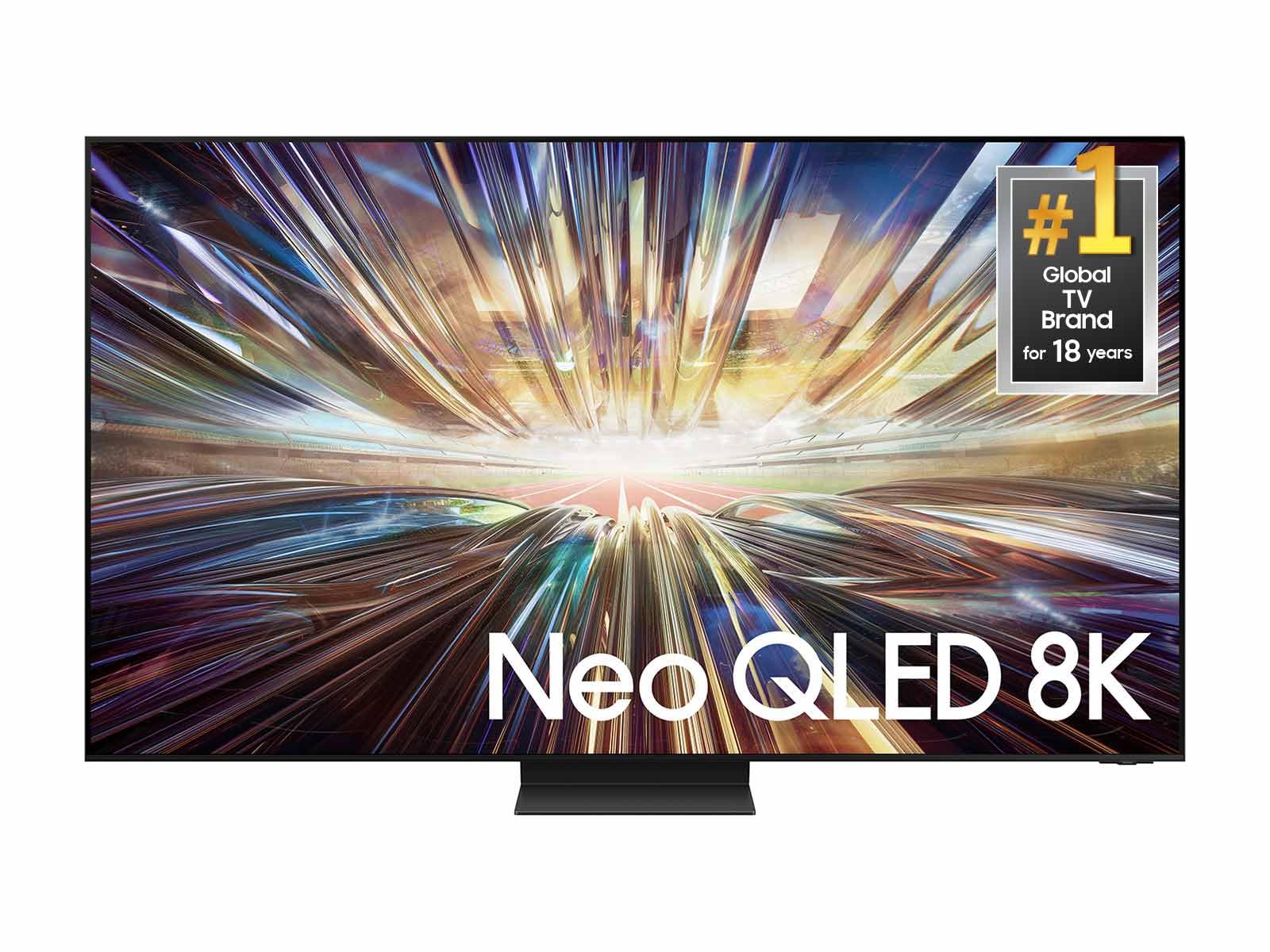
The Samsung QN800D is the entry-level native 8K panel that makes the resolution class accessible to a much wider audience. It uses Quantum Matrix Pro with Mini LEDs and 1.5x more lighting zones than the previous generation, resulting in impressive contrast for an LCD-based set. The NQ8 AI Gen2 Processor, with 512 neural networks, handles upscaling from 4K and lower sources with remarkable fidelity.
Motion Xcelerator 165Hz ensures smooth visuals for fast-paced sports and gaming, while the Real Depth Enhancer Pro adds a three-dimensional quality to images that makes content feel more immersive. The Object Tracking Sound+ creates a convincing audio bubble that matches on-screen movement, and Dolby Atmos support adds overhead effects when paired with compatible soundbars.
Customer reviews praise the incredible picture quality and the seamless Google TV integration, but a significant minority report reliability issues—specifically horizontal flickering lines appearing within the first year. This appears to be a known issue backed by online reports. If you’re willing to accept the reliability risk for the lowest native 8K price, the QN800D delivers outstanding visuals for the investment.
Why it’s great
- Lowest-priced true native 8K panel available in 2024/2025.
- Superb AI upscaling with 512 neural networks for 4K content.
- Object Tracking Sound+ creates a convincing 3D audio stage.
- 165Hz refresh rate with VRR for gaming.
Good to know
- Reliability concerns with horizontal flickering reported by multiple users.
- No Dolby Vision; uses HDR10+ exclusively.
- Built-in sound is average; a soundbar is recommended.
3. Sony 75-Inch Z9K 8K Mini LED

The Sony Z9K remains one of the most respected 8K TVs ever made, and its 2024 pricing puts it into budget 8K territory for serious home theater fans. The Cognitive Processor XR mimics human vision to optimize contrast, color, and clarity in real time, and the XR Backlight Master Drive controls thousands of Mini LEDs with surgical precision. The result is OLED-like blacks with LED brightness—a rare combination.
For PlayStation 5 owners, the Z9K is the ultimate companion. Exclusive features like Auto HDR Tone Mapping and Auto Genre Picture Mode work automatically, and HDMI 2.1 supports 4K at 120Hz with VRR and ALLM. The BRAVIA CAM adds gesture controls and ambient optimization, adjusting picture and sound based on seating position. The included BRAVIA CORE credits give access to a library of 4K UHD movies.
Owners consistently report jaw-dropping brightness and color accuracy, with many calling it the best TV they’ve ever owned. The glare issue is a notable weakness—the screen is highly reflective in bright rooms, which contradicts the typical Mini-LED advantage. The internal Android TV platform can feel laggy, and the Ethernet port caps out at 88 Mbps, necessitating a USB adapter for fast streaming.
Why it’s great
- Cognitive XR processor delivers best-in-class HDR and color accuracy.
- Seamless PS5 integration with exclusive Auto HDR and Genre modes.
- BRAVIA CAM enables gesture controls and automatic room calibration.
- Includes BRAVIA CORE movie credits for 4K streaming.
Good to know
- Severe glare issues—not ideal for bright rooms with direct sunlight.
- Internal Android TV is slow; Ethernet port is limited to 88 Mbps.
- Price is still high relative to similarly-specced Samsung 8K options.
4. Hisense 85″ U8 Series ULED Mini-LED
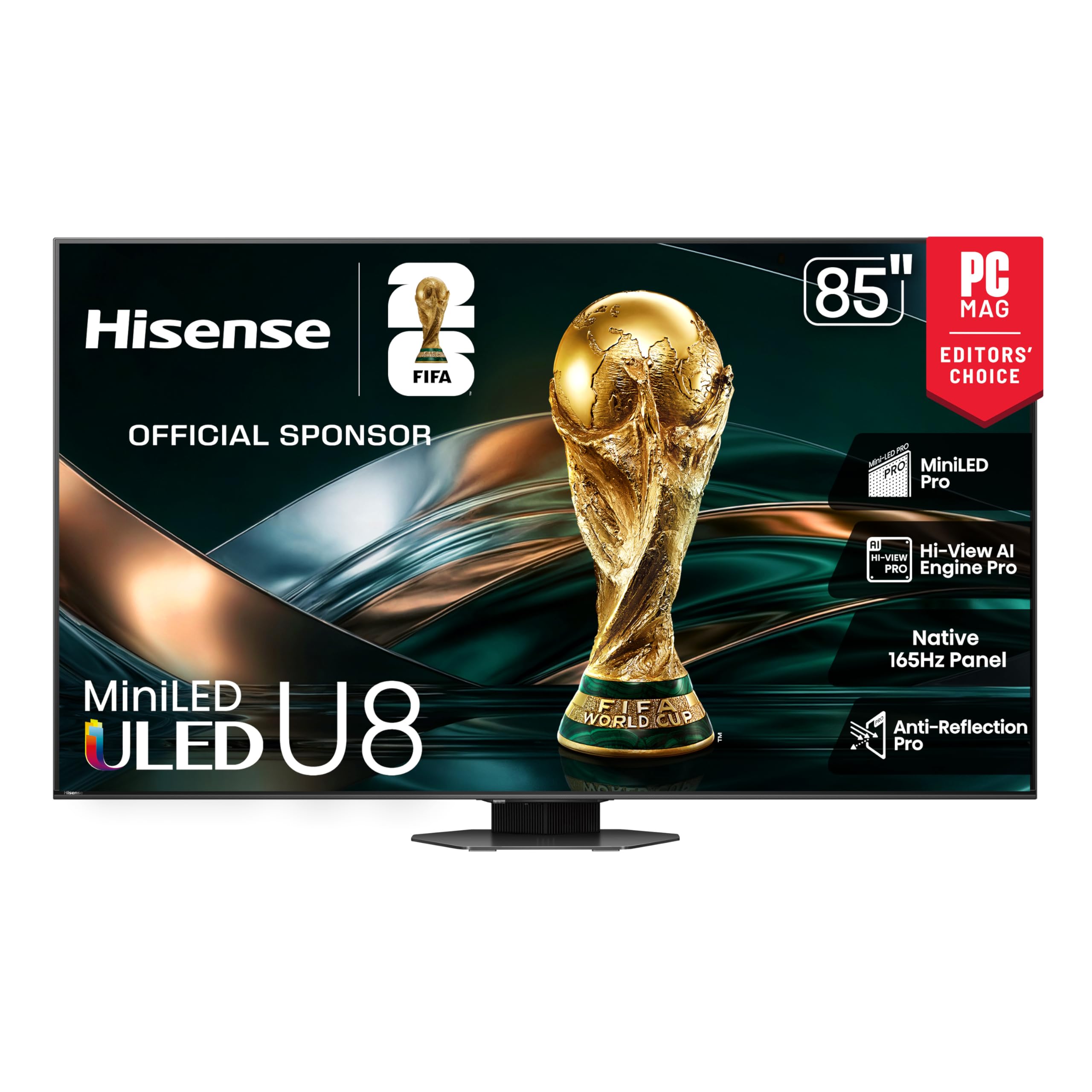
The Hisense U8 isn’t a native 8K TV, but its 4K panel delivers such extreme brightness and dimming zone density that it visually approaches 8K in perceived detail and HDR impact. With a peak brightness of 5,000 nits and 5,600 local dimming zones, the U8 produces blacks that rival OLED and highlights that no OLED can match. For bright-room viewers, this is the absolute brightest option in the lineup.
The Native 165Hz panel with Game Booster 288 provides a Variable Refresh Rate of up to 288Hz, making it a phenomenal gaming display for fast-paced titles. The 4.1.2 channel audio system with two up-firing speakers delivers genuine Dolby Atmos immersion without a soundbar—rare at this level. Pantone-validated QLED color ensures over a billion shades of accurate color reproduction.
Customer experiences are overwhelmingly positive, with many calling the picture quality near-OLED and the built-in sound the best they’ve heard from a TV. A few reports mention software reliability issues, including TVs requiring factory resets after periods of inactivity. The Google TV platform is otherwise responsive and well-supported. For buyers who prioritize brightness and HDMI 2.1 gaming over native 8K, this is a top-tier choice.
Why it’s great
- Extreme 5,000 nits peak brightness—best in class for bright rooms.
- 5,600 dimming zones provide near-OLED contrast with minimal blooming.
- 288Hz VRR and 165Hz native panel are exceptional for gaming.
- Powerful 4.1.2-channel sound system with Dolby Atmos.
Good to know
- Some units experience software glitches requiring factory resets.
- Not a native 8K panel—pixel count is 4K.
- Size is limited to 85 inches; no larger variant available.
5. Hisense 85″ U7 Mini-LED ULED
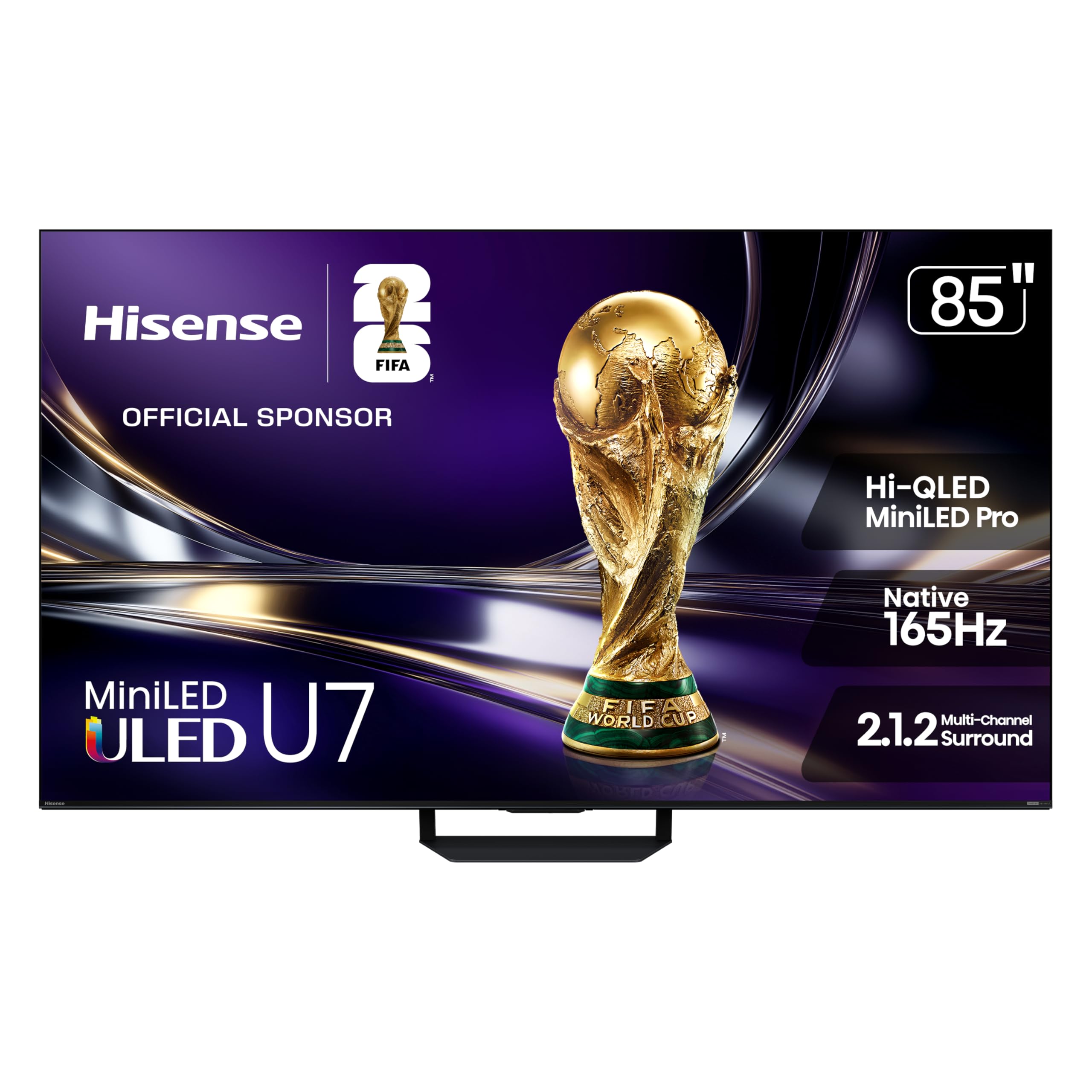
The Hisense U7 is the younger sibling to the U8, trading some peak brightness (3,000 nits vs 5,000) and dimming zone count (3,000 vs 5,600) for a significantly lower entry point while retaining the core Mini-LED and 165Hz gaming architecture. At 85 inches, the U7 delivers massive screen real estate with vibrant colors, deep blacks, and excellent anti-reflection performance that handles bright windows without washing out.
The HI-View AI Engine Pro automatically adjusts color, contrast, and detail scene by scene, delivering a polished picture that competes well with TVs costing considerably more. The Native 165Hz refresh rate with VRR up to 330 ensures smooth motion for sports and gaming alike. The 2.1.2 channel audio system provides decent sound with Dolby Atmos support, though the U8’s 4.1.2 setup is noticeably more immersive.
Customer feedback almost universally praises the picture quality and value proposition, with many calling it a huge upgrade from previous 4K sets. The anti-reflection layer is particularly effective, making the U7 a strong candidate for living rooms with large windows. The Google TV interface is responsive, and the included remote controls all major streaming services. For a budget-minded shopper seeking 85 inches of impressive Mini-LED performance, the U7 is tough to beat.
Why it’s great
- Excellent anti-glare coating works well in sunlit rooms.
- 3,000 nits peak brightness with 3,000 dimming zones for strong HDR.
- 165Hz native refresh rate with VRR up to 330 for tear-free gaming.
- Google TV interface is smooth and well-supported.
Good to know
- Built-in sound is adequate but not as powerful as the U8’s 4.1.2 system.
- Not a native 8K panel—pixel density is standard 4K.
- Some units may require soundbar for truly immersive audio.
6. TCL 98-Inch QM8K Mini LED
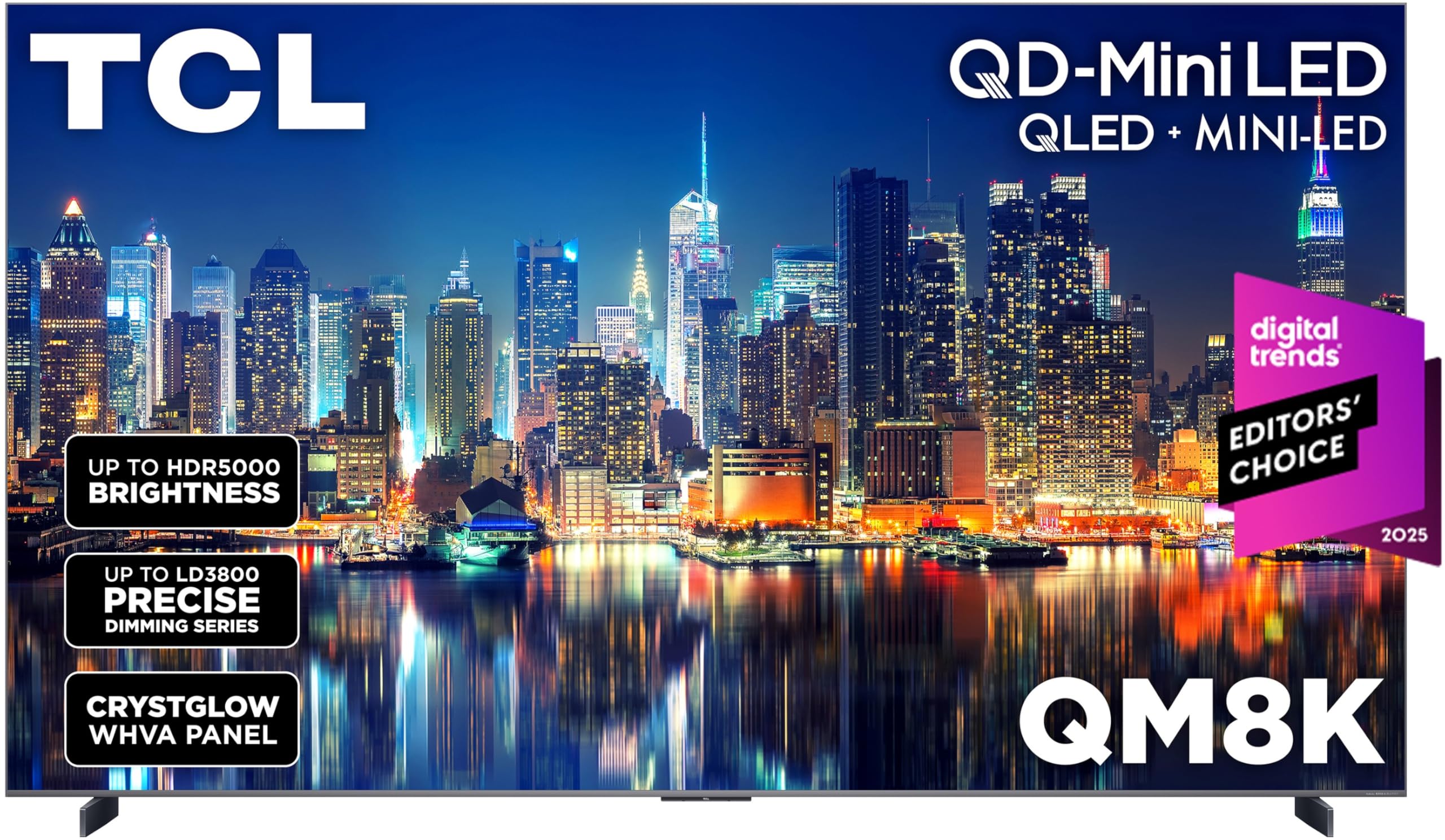
The TCL QM8K is for buyers who want maximum screen size on a budget. At 98 inches, this is one of the largest mainstream TVs available, and the QD-Mini LED panel delivers stunning brightness and color that holds up in brightly lit rooms. The TCL Halo Control System—featuring advanced micro-optics and a bi-directional 23-bit backlight controller—produces halo-free images with deep blacks and rich colors that rival much more expensive sets.
The Game Accelerator 288 provides up to 288Hz VRR, making this a legitimate gaming behemoth on the big screen. The anti-reflective WHVA panel with ZeroBorder design creates an edge-to-edge viewing experience with minimal distractions. Google TV with hands-free voice control and the included backlit voice remote make navigation effortless. The Bang & Olufsen audio collaboration adds a premium sound signature, though external speakers are still recommended for critical listening.
Customer reviews consistently highlight the jaw-dropping size and picture quality, with many noting that the QM8K competes with OLEDs on black level while offering massively higher brightness. The built-in sound is better than most TVs in this class, with clear dialogue and solid bass. The Hulu app has reported sync issues, and the TCL support team was reportedly unhelpful for that specific problem. For massive entertainment at a relatively accessible price, this is the flagship option.
Why it’s great
- 98-inch screen provides a genuine home theater experience.
- QD-Mini LED panel delivers deep blacks and very high brightness.
- 288Hz VRR for competitive gaming at the biggest size.
- Anti-reflective screen minimizes glare on such a large surface.
Good to know
- Some streaming apps (Hulu) have reported sync issues.
- Requires multiple people or professional installation due to massive size.
- Not a native 8K panel; resolution is 4K.
7. Samsung 83-Inch S90F OLED

The Samsung S90F brings QD-OLED technology to a larger 83-inch format with a price that undercuts many traditional OLEDs. The NQ4 AI Gen3 processor, powered by 128 neural networks, delivers exceptional upscaling and brightness enhancement that pushes QD-OLED beyond what standard OLED panels can achieve. Colors are incredibly vibrant, blacks are absolute, and the brightness is impressive for an OLED—though still behind the best Mini-LED sets for bright rooms.
The Motion Xcelerator 144Hz ensures tear-free gaming with VRR support, and the built-in Q-Symphony feature syncs seamlessly with Samsung soundbars for a cohesive audio experience. The slim, minimalist design and sturdy build quality feel premium. The remote is minimalistic to a fault, with no number pad, but the voice control through Samsung’s Bixby and Alexa integration compensates.
Owner reviews rave about the QD-OLED picture quality, calling it a huge upgrade over standard LED TVs. The anti-reflective coating is effective but delicate—some users note that cleaning it can damage the coating. There are reports of damaged units delivered in repackaged boxes from Amazon, so inspect the packaging and panel carefully upon arrival. For buyers who prioritize absolute color accuracy and infinite contrast over maximum brightness, the S90F is a phenomenal choice.
Why it’s great
- QD-OLED panel delivers best-in-class color and infinite contrast.
- 128 neural networks provide excellent AI upscaling.
- 144Hz VRR with Game Motion Plus for smooth gaming.
- Q-Symphony syncs perfectly with Samsung soundbars.
Good to know
- Not suitable for very bright rooms; OLED brightness still limited vs. Mini-LED.
- Anti-reflective coating is fragile and can be damaged by cleaning.
- Some buyers received damaged repackaged units—inspect immediately.
8. Sony 77-Inch XR8B OLED

The Sony XR8B is the entry-level OLED in Sony’s 2024 lineup, but it punches well above its price bracket. With over 8 million self-lit pixels delivering pure black and high brightness, the OLED contrast is unmatched by any LCD-based TV. The XR Processor intelligently enhances every scene in real time, boosting color, contrast, and clarity to deliver a natural, film-like image that Sony is famous for.
For PlayStation 5 owners, the XR8B is specially tuned. Exclusive features like Auto HDR Tone Mapping and Auto Genre Picture Mode optimize picture settings automatically for games and streaming. The Game Menu puts all gaming settings in one place, and HDMI 2.1 supports 4K at 120Hz with VRR and ALLM. The Acoustic Surface Audio+ system vibrates the screen itself to produce directional sound, creating the illusion of voices coming from specific characters on screen.
Customer reviews consistently praise the “wow factor” of the OLED picture, with many upgrading from older LED sets and noting the dramatic improvement in black levels and color depth. The built-in sound is serviceable but significantly improved with a soundbar. The Google TV interface is responsive and well-organized. The thin frame and excellent viewing angles make it a strong choice for family rooms where viewers sit off-center. For OLED purity at a relatively accessible price, this is the pick.
Why it’s great
- Pure black levels and infinite contrast from self-lit OLED pixels.
- Perfect PS5 integration with Auto HDR and Genre Picture modes.
- Acoustic Surface Audio+ creates directional sound without external speakers.
- Studio-calibrated picture modes for Netflix and Prime Video.
Good to know
- Not suitable for very bright rooms; OLED brightness is limited.
- Built-in sound is good but a soundbar is recommended for immersive audio.
- No native 8K panel; resolution is 4K.
9. Samsung 85-Inch The Frame Pro
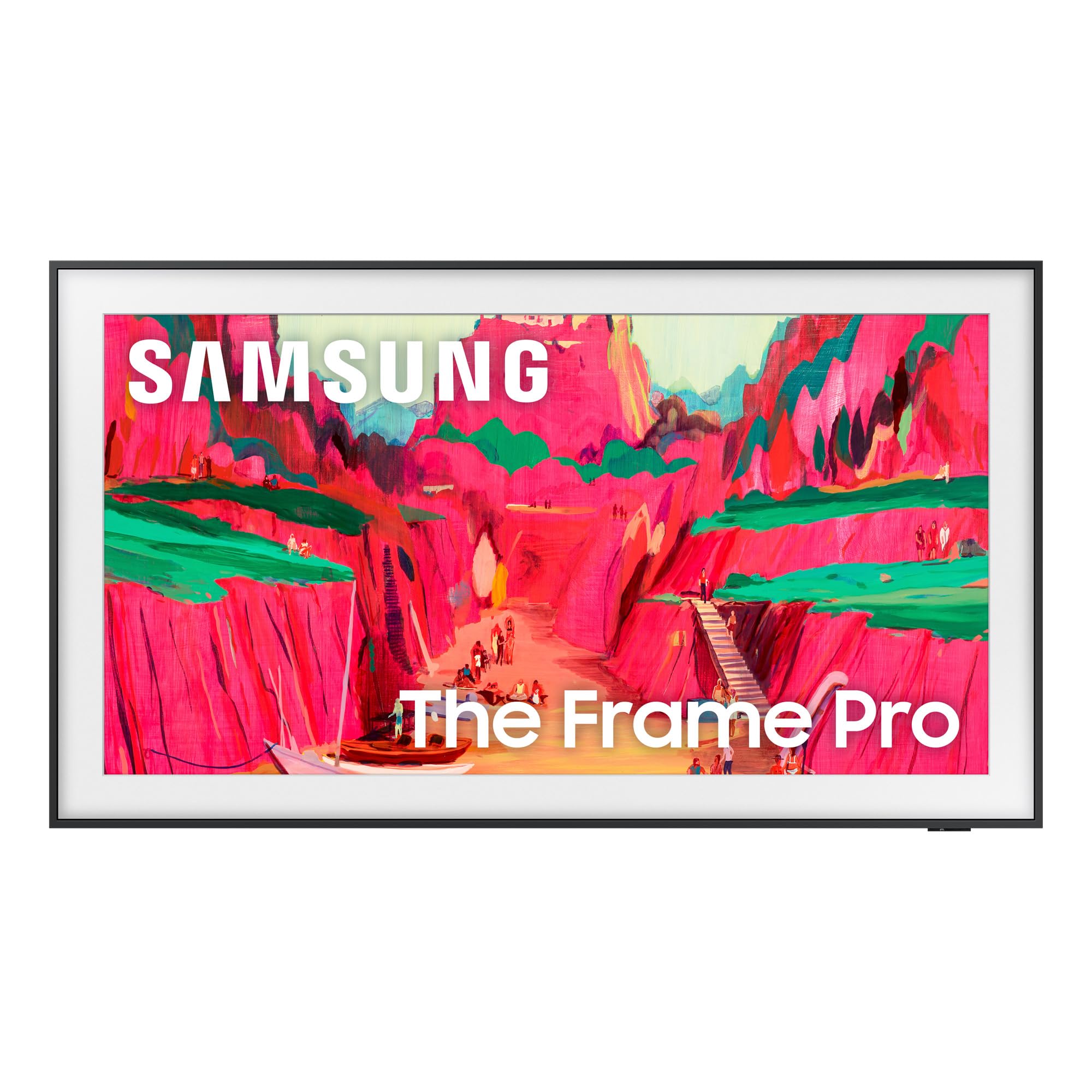
The Samsung Frame Pro occupies a unique niche in the budget 8K landscape—it’s a 4K TV, but its primary purpose is to disappear into your wall as a piece of art. The 2025 Pro model upgrades the original Frame with Mini-LED backlighting, significantly improving brightness and contrast for those times you actually watch content. The matte display and Pantone Validated Artful Color make artwork look remarkably like a real framed print with a gallery-like finish.
The Wireless One Connect box eliminates cable clutter entirely, allowing the TV to hang nearly flush against the wall with no visible wires. Customizable bezels (sold separately) let you match your room’s aesthetic. When not showing art, the NQ4 AI Gen3 processor delivers solid 4K upscaling and HDR performance, though it doesn’t match dedicated cinema TVs in raw brightness or color volume. The Motion Xcelerator 144Hz supports gaming adequately.
Customer feedback is split: many love the seamless integration into home decor and the convincing art mode, while others criticize the picture quality as underwhelming for the price, especially when compared to similarly priced OLED or Mini-LED sets. The Art Store subscription (/year) is an additional cost. The anti-glare coating is genuinely impressive—one of the lowest-glare screens on the market. For buyers who prioritize aesthetics above absolute picture fidelity, the Frame Pro is a stylish solution.
Why it’s great
- Mini-LED backlighting improves brightness and contrast over original Frame.
- Matte display minimizes reflections and makes art look like a real print.
- Wireless One Connect box eliminates visible cables.
- Customizable bezels match any room decor.
Good to know
- Picture quality is not competitive with similarly priced OLED or Mini-LED TVs.
- Art Store requires a /year subscription for the full library.
- Designed for a lifestyle aesthetic, not home theater performance.
FAQ
Is a native 8K panel worth it over a high-end 4K Mini-LED in 2025?
What HDMI cables do I need for 8K TVs?
Will my PlayStation 5 or Xbox Series X benefit from an 8K TV?
How much does a good budget 8K TV really cost in 2025?
Do I need a soundbar with a budget 8K TV?
Final Thoughts: The Verdict
For most users, the best budget 8k tv winner is the Samsung QN900F because it combines a true native 8K panel with exceptional AI upscaling, a sleek design, and strong gaming features at a relatively accessible price point. If you want the absolute brightest image for a bright living room, grab the Hisense U8. And for massive screen size that creates a genuine home theater experience, nothing beats the TCL QM8K at 98 inches.

Mo Maruf
I created WellFizz to bridge the gap between vague wellness advice and actionable solutions. My mission is simple: to decode the research and give you practical tools you can actually use.
Beyond the data, I am a passionate traveler. I believe that stepping away from the screen to explore new environments is essential for mental clarity and physical vitality.