Our readers keep the lights on and my smoothie glass nicely filled. As an Amazon Associate, I earn from qualifying purchases.
Finding a solo tent that doesn’t add unnecessary bulk to your pack while still holding up against a sudden mountain downpour is the real challenge of lightweight backpacking. The difference between a great night in the backcountry and a miserable, damp one often comes down to a few ounces of fabric and the quality of a taped seam.
I’m Mohammad Maruf — the founder and writer behind WellFizz. I’ve spent years analyzing outdoor gear specifications, comparing fabric denier, hydrostatic head ratings, and pole geometries to separate real performance from marketing claims in the budget tent market.
After sorting through dozens of models, I’ve narrowed the field to the options that deliver genuine weather protection and packability without breaking the bank. This is the definitive guide to finding the best budget 1 person backpacking tent for your next solo adventure.
How To Choose The Best Budget 1 Person Backpacking Tent
The market is flooded with ultralight claims, but a true budget-friendly solo tent must balance weight, weather resistance, and livable space. Focus on these three factors to avoid a purchase you’ll regret halfway up the trail.
Prioritize Weather Protection Over Weight
A tent that shaves eight ounces but soaks you in the first rainstorm is a failure. Look for a rainfly and floor with a hydrostatic head rating of at least 1500mm. Seam-taped construction is non-negotiable for keeping moisture out at the stitch holes. A double-wall design with a separate rainfly provides far better condensation management than a single-wall shelter, especially in humid conditions.
Know Your Interior Space Limits
A true one-person tent floor width typically ranges from 30 to 36 inches. If you are tall (over 6 feet), check the floor length carefully — many budget models are designed for average heights below 5’10”. Headroom matters for changing clothes; a peak height of 36 inches allows you to sit up, but 40 inches or more is noticeably more comfortable for longer trips.
Evaluate Pole Quality and Setup Ease
7000-series aluminum poles are significantly more durable and wind-resistant than fiberglass. Freestanding designs allow you to move the tent before fully staking it down, which is a major advantage on rocky or hard-packed ground. Clip attachments are faster than sleeves, and color-coded hardware simplifies setup in fading light.
Quick Comparison
On smaller screens, swipe sideways to see the full table.
| Model | Category | Best For | Key Spec | Amazon |
|---|---|---|---|---|
| Featherstone Backbone 1 | Trekking Pole | Ultralight thru-hikers | Trail weight: 2 lb 6 oz | Amazon |
| ALPS Mountaineering Zephyr 1 | Freestanding | Comfort & headroom | Floor area: 23 sq ft | Amazon |
| The North Face Stormbreak 1 | Freestanding | Brand reliability | Trail weight: 3 lb 1.4 oz | Amazon |
| ALPS Mountaineering Lynx 1 | Freestanding | Durability on a budget | Floor denier: 75D 185T | Amazon |
| Kelty Discovery Trail 1 | Freestanding | Beginner-friendly setup | Setup: Quick Corners | Amazon |
| MC TOMOUNT 1-Person | Freestanding | Tall campers | Floor length: 86.6 in | Amazon |
| Naturehike 1-Person | Freestanding | Value with footprint | Rainfly PU: 4000mm | Amazon |
| KAZOO Venus 1 | Freestanding | Eco-conscious buyers | Fabric: GRS Recycled | Amazon |
| GEERTOP Bivy Tent | Bivy-style | Minimalist weight savings | Trail weight: 2.9 lb | Amazon |
In‑Depth Reviews
1. Featherstone Backbone 1

This trekking-pole-dependent shelter achieves a genuine trail weight of just 2 pounds 6 ounces, putting it squarely in ultralight territory at a fraction of the cost of cottage-industry competitors. The sil-nylon construction and fully seam-taped barrier provide reliable waterproofing, while the dual vestibules (one for a pack, one for boots) maximize its 19-square-foot floor plan. The 40/60 pole placement creates noticeably more headroom near the entrance, a thoughtful touch for a solo shelter.
Taller backpackers will appreciate the 85-inch floor length, which comfortably fits a standard 78-inch sleeping pad with room for gear at the foot end. The wide mesh panels and large vents move air effectively, though users report significant condensation issues in sustained wet weather if the vents aren’t opened fully. Setup requires two trekking poles (not included), which is a dealbreaker for hikers who don’t use them.
The included J-stakes and Y-stakes are functional but not premium; swapping them for lightweight titanium pegs would shave another ounce. The single-wall design demands discipline with moisture management, but for gram-conscious soloists prioritizing pack volume and speed, this shelter delivers performance that rivals options costing twice as much.
Why it’s great
- Ultralight trail weight for the price
- Dual vestibules add valuable storage
- Excellent headroom for a trekking pole tent
Good to know
- Requires trekking poles for setup
- Significant condensation in wet conditions
- No footprint included
2. ALPS Mountaineering Zephyr 1

The Zephyr 1 sets itself apart with pre-bent 7000-series aluminum poles that push the walls nearly vertical, creating 23 square feet of floor space — among the roomiest in this category. The center height of roughly 42 inches allows a 6-foot-2-inch user to sit upright without brushing the ceiling, a luxury in a one-person tent. The full mesh inner walls are ideal for hot, humid nights, providing airflow that most budget tents lack.
The 75D 185T polyester rainfly with 1500mm coating is seam-taped and cuts wind well, but the fly fabric is not as robust as the 75D taffeta on the floor. The single vestibule is spacious enough for a medium backpack and boots, though the door opening is a bit narrow for quick exits. Setup is straightforward with snap-on pole clips, and the free-standing design makes it easy to relocate the tent before full staking.
Weighing around 4 pounds on the scale, this is not an ultralight option — it’s a comfort-first shelter for weekend trips or car-accessible trailheads where every ounce isn’t paramount. The included stakes are functional but not confidence-inspiring in hard ground. Overall, this is the go-to for solo campers prioritizing interior liveability over absolute weight.
Why it’s great
- Best headroom and floor area in its class
- Full mesh walls for superior ventilation
- Easy clip-based setup
Good to know
- Heavier than ultralight alternatives
- Rainfly fabric feels less durable than floor
- Footprint sold separately
3. The North Face Stormbreak 1

The Stormbreak 1 brings brand-name reliability to the budget tier, with a fully seam-taped canopy and floor constructed from 75D polyester taffeta — a fabric weight that resists abrasion better than the 20D sil-nylon found on ultralight models. The high-low ventilation openings are genuinely effective at managing condensation, a weak point of many single-wall designs. The trail weight of 3 pounds 1.4 ounces is respectable for a freestanding tent with this build quality.
The floor area of 18.13 square feet is snug even by one-person standards; the 34-inch width is adequate but the 87-inch length accommodates taller sleepers. The mesh stuff pocket that holds the door open is a clever touch that simplifies entry during setup. The included stakes are steel and heavy; swapping to aluminum saves notable weight.
This tent is not for ultralight gram-counters, but it is a durable, well-ventilated shelter that will last through many seasons of regular use. The non-PFC DWR finish is an environmentally conscious addition. If you value a known brand warranty and robust materials over the lowest possible pack weight, this is a solid investment for entry-level and intermediate backpackers alike.
Why it’s great
- Durable 75D polyester fabrics
- Effective high-low ventilation system
- Trusted brand with warranty support
Good to know
- Small interior and vestibule
- Heavy steel stakes included
- Footprint sold separately
4. ALPS Mountaineering Lynx 1

The Lynx 1 is the tank of the budget category — a freestanding tent built around a 70D 185T poly taffeta floor and 75D rainfly, both with factory-sealed seams. This material choice makes it significantly more resistant to punctures and abrasion than the lightweight fabrics used on competing models. At 4 pounds 1 ounce total weight, it is the heaviest tent in this lineup, but the trade-off is exceptional durability for rocky or abrasive campsites.
The 90-inch floor length and 32-inch width provide generous stretching room for taller individuals, though the 36-inch peak height is average. The single vestibule is functional but small — enough for a pack and boots, but not much else. Setup is straightforward with the two-pole aluminum frame and pole clips; many users report completing it in under 60 seconds after the first pitch.
The half-mesh walls provide decent ventilation, though condensation can be an issue in humid conditions if the rainfly is fully deployed. The included aluminum stakes are better than most budget offerings but still benefit from an upgrade. For car campers, scout groups, or solo backpackers who prioritize longevity over pack weight, this tent offers outstanding value and will outlast lighter alternatives.
Why it’s great
- Very durable 70D floor resists punctures
- Fast and intuitive setup
- Excellent value for the build quality
Good to know
- Heaviest option in this guide
- Small vestibule limits gear storage
- Half-mesh walls reduce airflow
5. Kelty Discovery Trail 1
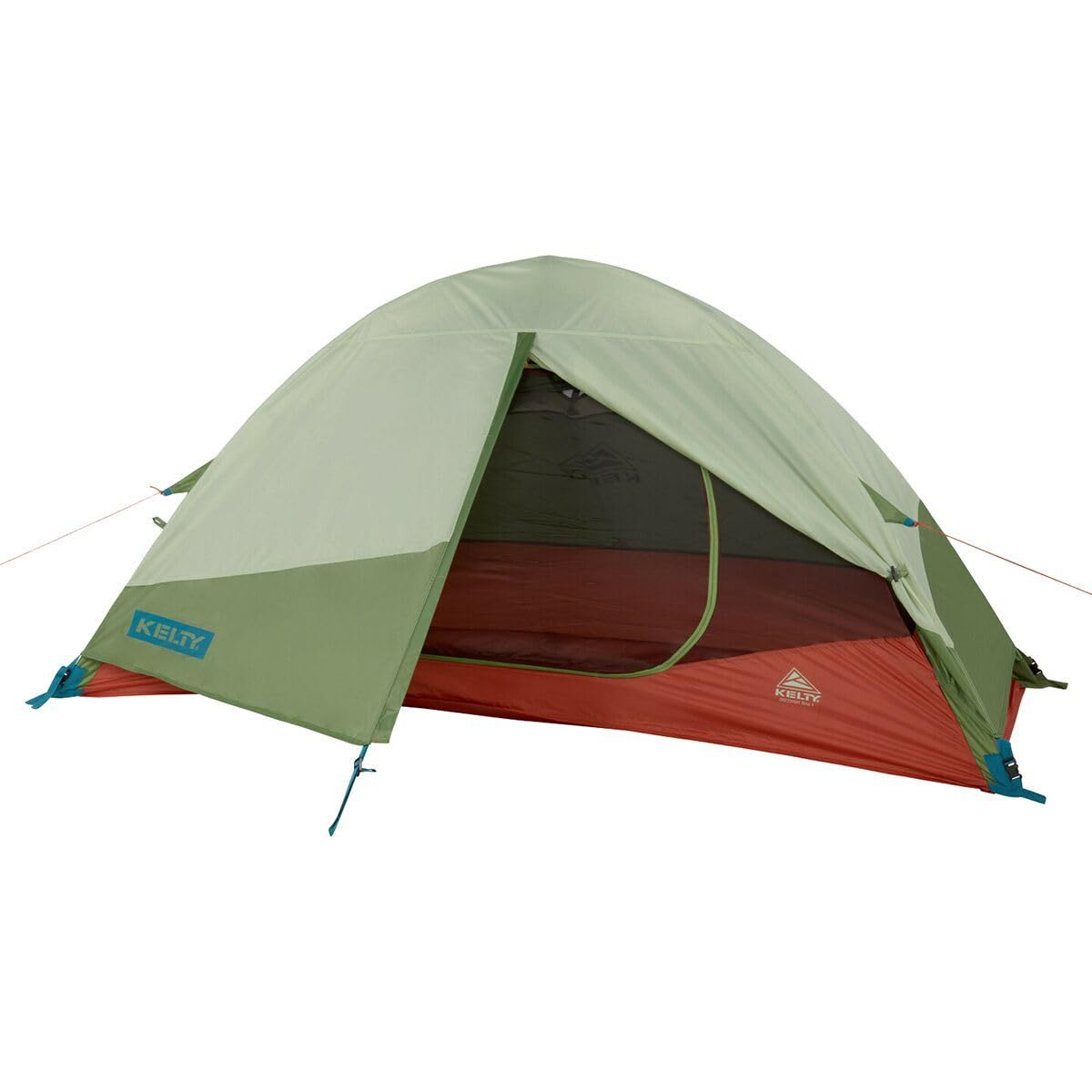
Kelty’s Discovery Trail 1 is engineered for the first-time backpacker who wants a tent that practically pitches itself. The Quick Corners system uses pre-attached guylines and color-coded rainfly clips that align intuitively, cutting setup time to roughly two minutes. The pressfit aluminum poles eliminate the need for pole sleeves, and the shark-mouth stuff sack allows for fast pack-up without fighting to repack the tent body.
The 19-square-foot floor and 40-inch peak height offer comfortable solo space, though the 87-inch length is tight for anyone over 6 feet. The single door and vestibule provide adequate access and storage for a small pack, but the vestibule is not large enough for anything beyond boots and a daypack. The rainfly includes a vent to manage condensation, a welcome feature at this price point.
The included stakes are flimsy and will bend in hard-packed or rocky soil — upgrading to aftermarket pegs is strongly recommended. The mesh is fine but not as tear-resistant as higher-end models. For casual weekend trips, scout outings, or as a first backpacking tent, the Discovery Trail 1 delivers a frustration-free experience that dramatically lowers the learning curve.
Why it’s great
- Fastest setup in its class
- Intuitive color-coded hardware
- Good headroom for the weight
Good to know
- Stakes are weak and bend easily
- Vestibule is quite small
- Short for tall sleepers
6. MC TOMOUNT 1-Person
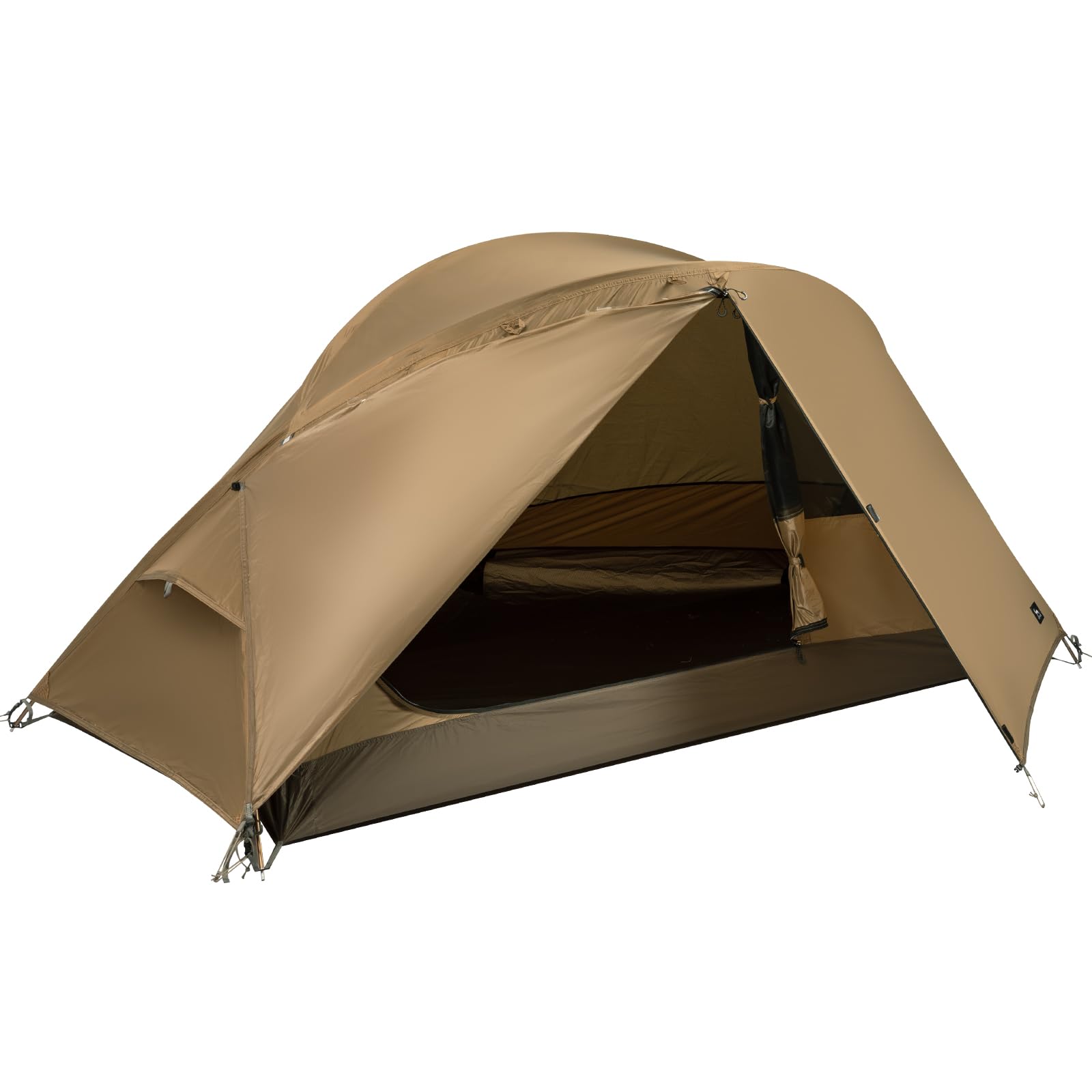
With an 86.6-inch floor length and a center height of 41.3 inches, the MC TOMOUNT is one of the few budget-friendly tents that genuinely accommodates taller campers without forcing them to sleep diagonally. The 20D nylon fly and inner tent are coated to PU3000mm, providing solid splash-and-rain protection for three-season use. The free-standing design with two aluminum poles is simple to assemble, and the storage bag is roomy enough for quick packing.
The 31.5-inch width is standard for a solo tent, but the middle section extends to 70 inches when the side walls are unclipped — a clever feature that allows a bit more elbow room or space for a pack inside. The dual side windows and mesh inner promote airflow, though the nylon top panel can trap heat in direct sun. The included stakes are basic but functional.
Users above 6 feet 3 inches report the tent still fits them, though the toe-end mesh may be touched. The vestibule is small, and the rainfly attachment points are not as secure as those on higher-priced models. For taller solo hikers on a tight budget who need a tent that actually provides full-length coverage, this is a standout option that doesn’t compromise on length.
Why it’s great
- Best floor length for tall users
- Good headroom at 41.3 inches
- Expandable middle width for gear
Good to know
- Rainfly attachment points are basic
- Vestibule offers minimal storage
- Nylon top can trap heat
7. Naturehike 1-Person

Naturehike’s solo tent punches above its price point with a rainfly rated to PU4000mm and a 150D rip-stop oxford floor rated to PU3000mm — specs typically found on tents costing significantly more. The 20D silicone-coated nylon rainfly is lightweight yet durable, and all seams are factory-taped. The 7001 aluminum alloy poles provide good stiffness for wind resistance, and the free-standing design sets up in under five minutes even for first-timers.
The interior measures 80.7 inches long by a tapered width that starts at 37.4 inches in the middle, narrowing to 12 inches at each side. This creates adequate shoulder room but a tight foot and head space. The 43.3-inch peak height is generous for a solo tent, allowing comfortable sitting. The double-wall design with a B3 mesh inner tent and side window provides good ventilation, though the lower sidewalls can limit airflow near the ground.
A significant advantage is the included footprint, saving around –30 compared to models that sell it separately. Users around 5 feet 8 inches find the length adequate, but taller campers will touch the ends. The 3.63-pound trail weight is reasonable but not ultralight. For budget-conscious backpackers who want robust waterproofing and don’t need to shave every ounce, this tent is a compelling package.
Why it’s great
- Excellent waterproofing (PU4000mm fly)
- Includes free footprint
- Generous 43.3-inch peak height
Good to know
- Narrow foot and head areas
- Tight for sleepers over 5’10”
- Ventilation is limited near the ground
8. KAZOO Venus 1

The KAZOO Venus 1 stands out for its commitment to sustainability, using fabrics certified to the Global Recycled Standard through the ECO CIRCLE recycling system — a rare feature in the budget tent market. The 210T ripstop polyester rainfly and 190T breathable polyester inner are both hydrophobic and rated above 3000mm waterproofing. The single integrated aluminum pole with clip attachments makes setup fast and intuitive.
The interior floor measures 83 inches long by 36 inches wide, providing above-average shoulder room for a solo tent. At 20.75 square feet, the floor area is competitive. The peak height is around 40 inches, adequate for sitting up but not spacious. The full-coverage rainfly includes vents, and the D-shaped door allows easy entry. The included stake set is generous at 14 pieces, offering excellent anchoring options in soft ground.
Users report the tent performs well in wind and heavy rain, with minimal condensation thanks to the large mesh panels. However, the 3.3-pound weight and 20-inch packed length are slightly bulkier than similarly priced alternatives. The groundsheet is larger than the tent footprint, which can channel water under the fly if not adjusted carefully. For eco-minded solo campers who want a solid, reliable shelter with a smaller environmental footprint, this tent delivers.
Why it’s great
- GRS-certified recycled fabrics
- Ample 36-inch width for comfort
- 14 stakes for robust anchoring
Good to know
- Groundsheet is oversized
- Packed size is a bit bulky
- No footprint included
9. GEERTOP Bivy Tent
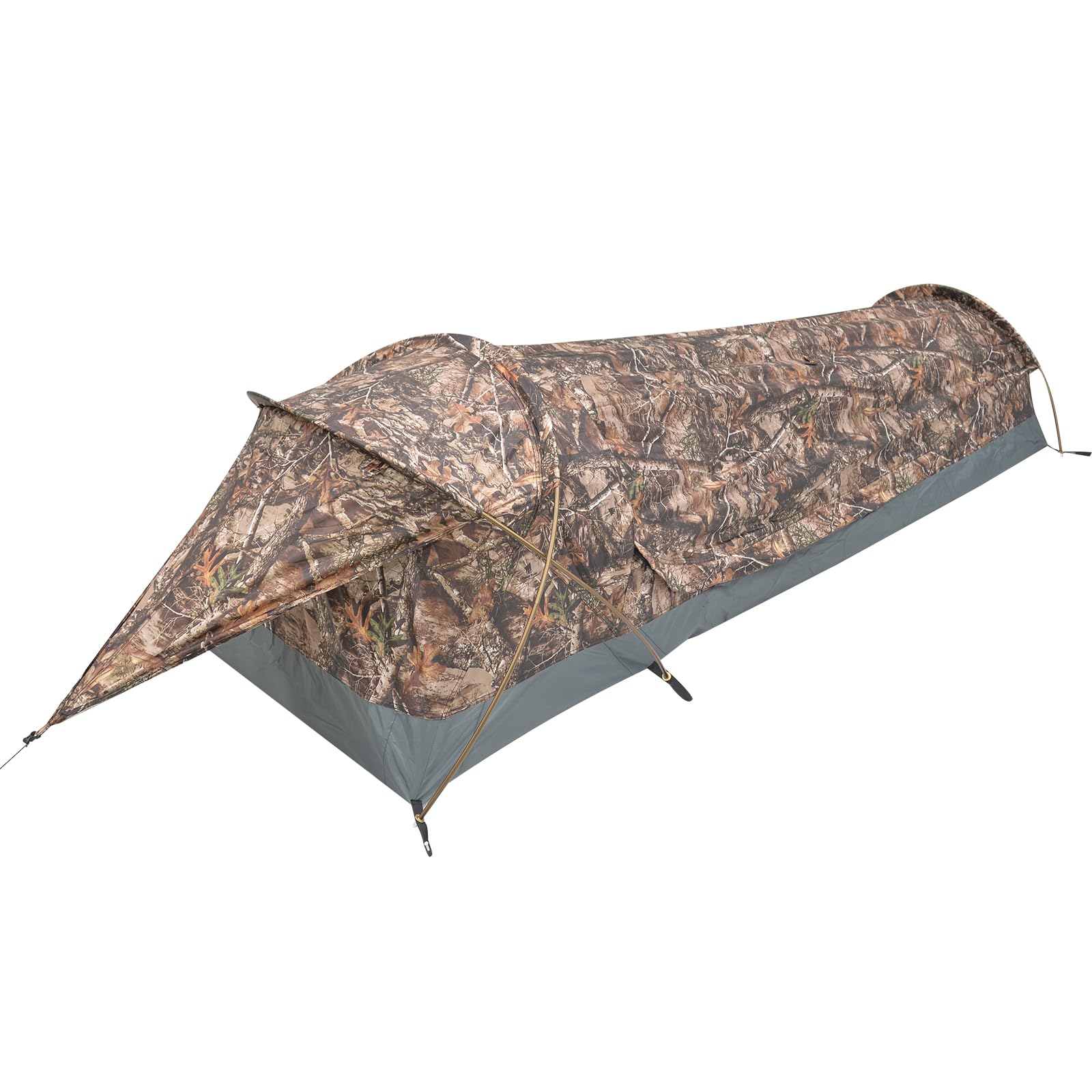
The GEERTOP Bivy Tent is the lightest option in this lineup at 2.9 pounds, packing down to 17 x 5 x 5 inches — small enough to fit inside a daypack with room to spare. The rainfly is rated to PU5000mm and the floor to PU8000mm, both with fully seam-taped and double-stitched construction. The 3-pole aluminum frame system sets up in about two minutes, making it ideal for quick shelters during unexpected weather changes.
The interior is narrow at 29.5 inches wide, with a low 24-inch peak height that is better suited for lying down and sleeping than sitting up and lounging. The 84.6-inch length fits most sleepers, but the tapered foot end can feel cramped. The top mesh panel and two side windows provide ventilation, though multiple users report significant condensation issues in humid conditions, especially if the rainfly is deployed fully.
This tent is best classified as a bivy-style shelter with standing poles — it prioritizes weight and packability over living space. Users over 6 feet tall will find the length tight, and the low profile can feel claustrophobic during extended rain holds. For fast-and-light missions where every ounce counts and you plan to sleep, not hang out, this is the most budget-friendly ultralight option available.
Why it’s great
- Very light at 2.9 pounds
- Excellent waterproof ratings
- Fast two-minute setup
Good to know
- Very low 24-inch peak height
- Narrow 29.5-inch width
- Condensation is a common complaint
FAQ
Can a budget 1-person tent survive heavy rain?
How much headroom should I expect in a budget solo tent?
Is a trekking pole tent a good choice for a budget backpacker?
Final Thoughts: The Verdict
For most solo backpackers, the best budget 1 person backpacking tent winner is the Featherstone Backbone 1 because it delivers a genuine ultralight trail weight of 2 pounds 6 ounces with dual vestibules and excellent waterproofing at a price that undercuts boutique brands by hundreds of dollars. If you want maximum interior comfort and headroom, grab the ALPS Mountaineering Zephyr 1. And for sheer durability and beginner-friendly ease, nothing beats the ALPS Mountaineering Lynx 1.

Mo Maruf
I created WellFizz to bridge the gap between vague wellness advice and actionable solutions. My mission is simple: to decode the research and give you practical tools you can actually use.
Beyond the data, I am a passionate traveler. I believe that stepping away from the screen to explore new environments is essential for mental clarity and physical vitality.