Our readers keep the lights on and my smoothie glass nicely filled. As an Amazon Associate, I earn from qualifying purchases.
Water-based polyurethane has a reputation for drying fast and leveling poorly, leaving amateur finishers with visible lap marks, bristle tracks, and stray hairs frozen in the finish. The wrong brush — typically a coarse natural-bristle tool designed for oil-based products — absorbs water, swells, and lays down a thin, uneven film that requires extra coats and sanding to correct. Finding a brush that holds enough material, releases it evenly, and resists shedding is the single most important variable between a glass-smooth floor or tabletop and a frustrating, cloudy mess.
I’m Mohammad Maruf — the founder and writer behind WellFizz. Over years of researching finishing tools, I’ve analyzed synthetic-filament chemistry, ferrule construction, and flagging density to separate brushes that merely paint from those that truly level water-clear urethanes.
This guide reviews five brushes engineered to work with water-based polyurethane, covering width, bristle composition, and cleanup for different project sizes. Whether you are brushing a dresser or a whole floor, the right brush for water based polyurethane eliminates frustration and delivers a factory-clear finish.
How To Choose The Best Brush For Water Based Polyurethane
Choosing the right brush for water-based polyurethane is not the same as picking a brush for latex paint. The chemistry of water-clear urethane requires a specific bristle material and density to avoid streaks, bubbles, and bristle loss. Narrow your choices by focusing on three key factors.
Bristle Material — Synthetic Only
Natural bristles (China bristle or hog hair) absorb water, swell, and go limp. This prevents the brush from holding a chisel edge and causes visible dragging. For water-based polyurethane, you need either nylon, polyester, or a nylon/polyester blend. These filaments resist water absorption, maintain stiffness, and release the finish consistently without swelling or softening filament flags.
Flagging and Tip Configuration
Flagged tips — split ends or tapered filaments — hold more liquid and release it gradually, reducing the number of dips and promoting self-leveling. A chiseled or square trim works for cutting in but can leave micro-ridges on large flat surfaces. For furniture and floors, look for tapered or flagged synthetic filaments that lay down a uniform wet film thickness.
Width and Handle Design
Wide brushes (4 to 8 inches) cover large areas faster but require significant arm strength to avoid wrist fatigue. Narrow brushes (1.5 to 2.5 inches) are ideal for drawers, trim, and tight spots. Ergonomic handles with rubber grips or threaded bases for extension poles reduce strain during long sessions. Always match the brush width to the surface—a 7.5-inch brush on a 12-inch board works better than a 3-inch brush that forces multiple passes.
Quick Comparison
On smaller screens, swipe sideways to see the full table.
| Model | Category | Best For | Key Spec | Amazon |
|---|---|---|---|---|
| Bates Deck Stain Brush 7.5″ | Wide Applicator | Large decks and floors | Flagged synthetic, 7.5-inch width | Amazon |
| Magimate 8″ Flat Brush | Extra-Wide Flat | Wallpaper paste and large furniture | SRT blend filament, 8-inch width | Amazon |
| ROLLINGDOG 5.5″ Deck Brush | Imitation-Bristle | Limewash and heavy masonry | Flagged imitation bristle, 5.5-inch | Amazon |
| Wooster Bravo 4″ Stainer | Stain & Sealer | Deck spindles and trim | China bristle/polyester blend, 4-inch | Amazon |
| Wooster Shortcut 2″ Angle | Angle Sash | Cutting in and tight edges | Synthetic blend, 2-inch angular trim | Amazon |
In‑Depth Reviews
1. Bates Deck Stain Brush 7.5-Inch

The Bates 7.5-inch deck stain brush uses flagged synthetic bristles that hold a generous reservoir of water-based polyurethane and release it across a wide surface without dripping. Users report cutting staining time by up to 90% compared to narrow trim brushes, with a uniform film thickness that reduces the number of coats needed on large decks or floors.
The thick bristle pack reaches between deck boards and into minor gaps, while the flagged tips help eliminate brush marks on flat areas. The universal threaded base accepts standard extension poles, allowing you to apply finish while standing upright — a significant relief for knees and lower back during all-day projects.
Cleanup is straightforward with the included metal and wood cleaning comb. Rinse with warm water and soap, comb out trapped finish, and the brush remains soft and ready for reuse. Some users note that the 7.5-inch width can be heavy for ceiling work, but for horizontal surfaces it is a time-saving tool that outperforms narrower brushes in both speed and consistency.
Why it’s great
- Wide flagged head reduces strokes and avoids lap marks
- Threaded base fits extension poles for standing application
- Includes cleaning comb that prolongs brush life
Good to know
- Heavy for vertical walls or overhead work
- Cleaning takes longer due to large bristle surface
2. Magimate 8 Inch Large Paint Brush
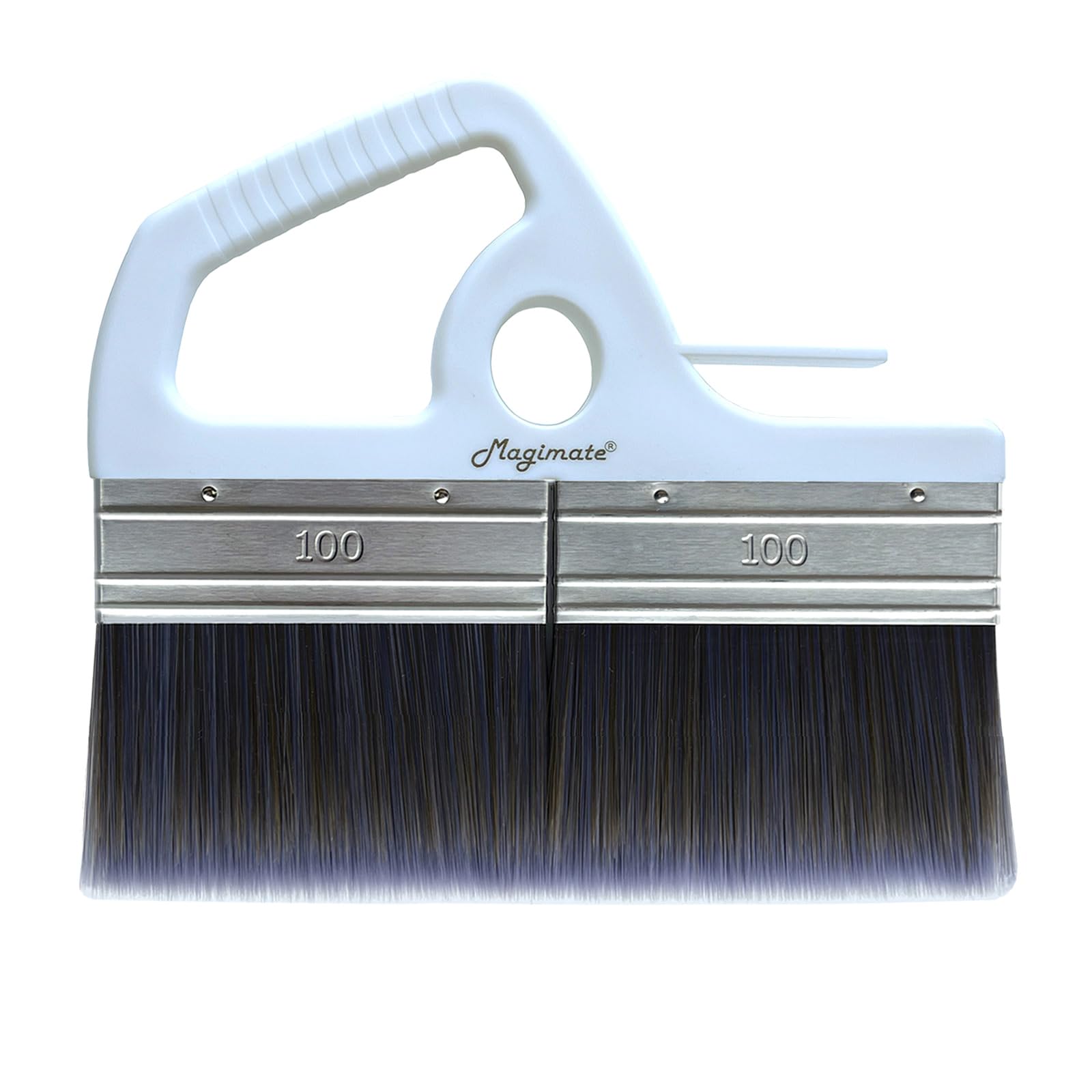
The Magimate 8-inch flat brush uses an SRT (Selected Synthetic) blend filament designed for water-based products, including polyurethane. Its extra-wide paddle holds a large volume of liquid, which is critical for maintaining a wet edge on large surfaces like tabletops, furniture panels, and wallpaper glue application before finishing.
Reviewers consistently describe the brush as “buttery soft” and note minimal shedding when pre-cleaned before use. The fluted plastic handle provides a comfortable grip even when wet, though some users find the handle shape awkward for extended sessions. The 8-inch width requires a steady hand to avoid drips, but the payoff is exceptionally smooth, uniform coverage with fewer refills.
Cleanup is simple — a rinse with warm water and a gentle comb removes water-based finishes quickly. A few stray bristles may appear during the first use, but pre-washing with brush cleaner eliminates this. For a moderate-sized furniture project, this brush offers the best balance of loading capacity and finish quality at a very accessible price point.
Why it’s great
- 8-inch width loads massive amounts of finish
- Thick bristle pack prevents dripping during transfer
- Washes easily under warm water
Good to know
- Plastic handle feels less balanced than wood
- May shed a few bristles on first use if not pre-cleaned
3. ROLLINGDOG 5.5″ Deck Stain Limewash Brush

The ROLLINGDOG 5.5-inch brush uses imitation bristle — a blend of flagged, conical, and wavy synthetic filaments engineered to mimic the liquid-holding capacity of natural bristle without absorbing water. This makes it an unusual but effective choice for water-based polyurethane, delivering a heavy-bodied laydown that covers masonry, fencing, and wide floor boards without visible streaks.
The beech wood handle is engraved for grip and includes a metal bucket clip, a practical feature for wet work where you need to rest the brush between passes. Users praise its durability on rough surfaces like brick and concrete, where it survived heavy use without splaying or shedding. The 5.5-inch width is a sweet spot — wide enough for speed but narrow enough for controlled application on stairs and railings.
The primary drawback is cleanup time. The dense imitation bristle pack traps finish deep inside, requiring thorough rinsing and combing to prevent hardening at the base. For interior furniture work where fine finish is critical, the width may be too large, but for decks, fences, and masonry projects, this brush is a rugged, reliable performer that holds more liquid than any standard 4-inch trim tool.
Why it’s great
- Imitation bristle mimics natural bristle loading without water absorption
- Metal bucket clip and ergonomic wood handle
- Very durable on rough and abrasive surfaces
Good to know
- Cleanup is notably time-consuming
- Width not ideal for fine furniture trim work
4. Wooster Brush Bravo F5119-4 Stainer 4-Inch

The Wooster Bravo F5119-4 combines white China bristle with polyester in a 4-inch square trim head, offering a hybrid of natural-bristle loading and synthetic water resistance. This blend works well with water-based stains and sealers, including polyurethane, though it is best suited for vertical surfaces like deck spindles, fences, and trim where a 4-inch width allows precise control.
The threaded hardwood handle includes a removable bucket clip and accepts standard extension poles, adding flexibility for high or low surfaces. Users who applied Defy extreme wood stain on cedar siding report that the Bravo holds more liquid than comparable Purdy brushes and delivers a consistently smooth finish without brush marks. The nickel-plated steel ferrule resists corrosion even after repeated water cleanings.
On the downside, the China bristle component means this brush is not fully synthetic. If left soaking in water, the natural bristles can absorb moisture and lose their chisel edge. It remains a strong choice for stain applications where polyurethane is the topcoat, but for pure polyurethane finishing on smooth interior surfaces, a full-synthetic brush performs better. Cleanup with soap and water is straightforward, and the brush holds up well through multiple projects.
Why it’s great
- Excellent paint and stain holding capacity for vertical surfaces
- Threaded handle accepts extension poles and bucket clip
- Durable nickel-plated ferrule resists rust
Good to know
- Natural bristle component can swell if left in water
- Square trim may leave faint marks on perfectly flat surfaces
5. Wooster Brush Q3211-2 Shortcut Angle Sash 2-Inch (Pack of 3)

The Wooster Shortcut Q3211-2 is a 2-inch angled sash brush with a synthetic blend that resists water absorption, making it ideal for cutting in around trim, molding, and windows when applying water-based polyurethane. The short purple Shergrip handle reduces hand fatigue during extended detail work and fits into tight spaces where a full-length handle would interfere.
Users report zero shedding even after multiple washes, and the angled tip allows precise edging without taping. The brush holds enough finish for several feet of trim before reloading, and the flagged synthetic tips release the polyurethane in a thin, even film that self-levels without streaking. The brass-plated steel ferrule adds durability without adding weight.
The 2-inch width is intentionally narrow — it is not designed for large surfaces. For finishing a dresser drawer, a window sash, or interior cabinet doors, this brush delivers the control that a 4-inch or wider brush cannot. The pack of three provides a backup for different finishes or a spare for cleanup days. Cleanup is fast: soap and warm water, a quick comb, and the brushes are ready for the next coat.
Why it’s great
- Short handle reduces hand fatigue during detailed cutting-in
- Zero shedding reported even after heavy use
- Angled trim perfect for tight corners and molding
Good to know
- Too narrow for floors, decks, or large furniture panels
- Handle may feel too short for some users’ grip preference
FAQ
Can I use a natural-bristle brush for water-based polyurethane?
How wide should my brush be for a tabletop or desk project?
Why are flagged or tapered bristles important for polyurethane?
How should I clean a brush used for water-based polyurethane?
Final Thoughts: The Verdict
For most users, the brush for water based polyurethane winner is the Bates Deck Stain Brush 7.5-Inch because its wide flagged synthetic head loads heavily and releases evenly across large surfaces, dramatically reducing application time while maintaining a smooth, self-leveled film. If you need precise edging around trim and molding, grab the Wooster Shortcut 2-Inch Angle for its fatigue-free short handle and zero-shed performance. And for heavy-duty masonry or deck projects where durability and liquid capacity matter most, nothing beats the ROLLINGDOG 5.5-Inch Imitation Bristle Brush.

Mo Maruf
I created WellFizz to bridge the gap between vague wellness advice and actionable solutions. My mission is simple: to decode the research and give you practical tools you can actually use.
Beyond the data, I am a passionate traveler. I believe that stepping away from the screen to explore new environments is essential for mental clarity and physical vitality.