Our readers keep the lights on and my smoothie glass nicely filled. As an Amazon Associate, I earn from qualifying purchases.
Latex paint is notoriously thick and fast-drying, which means the wrong brush turns a weekend project into a battle against brush marks, shedding bristles, and uneven coverage. A brush designed for water-based paints—with the right filament blend and flagged tip—makes the difference between a flawless wall and a frustrating mess.
I’m Mohammad Maruf — the founder and writer behind WellFizz. I’ve spent years analyzing brush filament compositions, ferrule construction, and real-world user feedback to separate the tools that truly handle latex from those that just look the part.
After testing dozens of models against the demands of water-based coatings, I’ve curated this shortlist of the brush for latex paint that delivers smooth, even results without the usual headaches of shedding or stiff application.
How To Choose The Best Brush For Latex Paint
Latex paint is water-based and has different flow characteristics than oil-based paints. The wrong bristle material—like natural hog hair—absorbs water, swelling the filaments and turning the brush into a limp, ineffective tool. Here’s what to look for.
Bristle Material: Always Go Synthetic
For latex, synthetic filaments—nylon, polyester, or a nylon/polyester blend—are non-absorbent. They keep their stiffness when wet, allowing the brush to hold a sharp edge and lay down a smooth finish without dragging. Natural bristles are for oil-based paints only; they swell and soften in water, ruining the application.
Brush Shape and Width
Angled sash brushes (2 to 2.5 inches) give you the control needed for cutting in around ceilings, trim, and corners. Wider flat brushes (3 to 4 inches) cover large open walls faster but sacrifice precision. For most interior projects, a 2.5-inch angled brush is the sweet spot.
Ferrule and Handle Quality
A stainless steel ferrule—corrosion-resistant and tightly crimped—keeps bristles from shedding. Look for ferrules with no exposed nails or staples. Ergonomic handles with a comfortable grip reduce hand fatigue during longer sessions; wood handles offer a classic feel but rubberized grips provide better control.
Quick Comparison
On smaller screens, swipe sideways to see the full table.
| Model | Category | Best For | Key Spec | Amazon |
|---|---|---|---|---|
| Corona Excalibur 2″ Chinex | Premium Sash | Professional contractors & heavy latex | 100% DuPont Chinex tapered filament | Amazon |
| Purdy Pro-Extra Glide 2.5″ | Workhorse | All-purpose interior latex painting | Nylon/polyester blend flagged tip | Amazon |
| Richard Elegance Trim 3-Pack | Detail Set | Trim, baseboards & cutting in without tape | Soft-grip handle, 0.63″/0.75″/1″ sizes | Amazon |
| PinStone 3-Pack 1″/1.5″/2″ | Multi-Size Value | Cabinets, chalk paint & furniture | Solvent-resistant rubber handle | Amazon |
| Purdy White Bristle Adjutant 2.5″ | Oil-Only | Oil-based stains & polyurethanes | Natural bristle (not for latex) | Amazon |
In‑Depth Reviews
1. Corona Excalibur 2″ Chinex Professional Brush

The Corona Excalibur uses 100% DuPont Chinex tapered synthetic filament, a material engineered specifically for heavy water-based paints. This brush holds a massive load of latex without dripping, and its hand-formed, soft-flagged edge lays down paint with zero drag lines. Professional contractors consistently report no bristle loss even after painting entire houses.
The unfinished hardwood sash handle offers a natural grip that improves with mineral oil treatment, and the magnetic stainless steel ferrule adds a surprising layer of utility. The 2-inch width is ideal for cutting in around windows, doors, and baseboards, balancing precision with quick coverage.
Cleanup is straightforward with soap and water—the Chinex filament resists paint buildup, leaving the brush looking nearly new after repeated use. It’s a clear choice for anyone who wants a single, high-performance brush that handles the thickest latex coatings with ease.
Why it’s great
- DuPont Chinex filament maximizes paint release and smoothness
- No shedding reported even after heavy professional use
- Easy latex cleanup; brush stays soft and intact
Good to know
- Not designed for oil-based paints
- More expensive than Purdy equivalents
2. Purdy Pro-Extra Glide Paint Brush, 2.5″

The Purdy Pro-Extra Glide is a standard in the painting industry, and for good reason. Its nylon/polyester blend filaments are flagged to a fine tip, allowing the brush to hold a clean, sharp line even when working with thick latex. The 2.5-inch width is the most versatile size for interior wall and trim work.
The fluted hardwood handle is comfortable for extended use, and the brush’s stiffness strikes a balance that prevents overloading while still laying down paint quickly. Users consistently note that with proper cleaning, this brush lasts through multiple projects without degrading.
One key advantage is its price point relative to performance—it delivers professional-grade results without the premium cost of specialty filaments. It’s a reliable, go-to brush for anyone painting latex on a regular basis.
Why it’s great
- Proven nylon/polyester blend works perfectly with latex
- Flagged tip allows precise cutting in
- Excellent value for a professional-grade brush
Good to know
- Some users report slight shedding after heavy use
- Not as premium as the Chinex filament
3. Richard Elegance Trim Paint Brush, 3-Pack

The Richard Elegance trim brushes are purpose-built for detail work. The 5/8-inch, 3/4-inch, and 1-inch sizes cover everything from crown molding to window glazing, and the soft-grip handle gives you micro-adjustment control without hand cramps. The polyester bristles are flagged and firm enough to create crisp edges.
These brushes excel at cutting in without tape—users report clean lines on baseboards and corners, making them ideal for projects where precision matters more than speed. The tapered shape of the 1-inch brush allows access to tight angles that standard brushes can’t reach.
The multi-pack format makes this a great add-on to a larger 2.5-inch brush. Use the bigger brush for walls, then switch to the Richard set for finishing work. They wash easily with water and show minimal shedding.
Why it’s great
- Ergonomic soft-grip handle prevents fatigue during fine detail work
- Three sizes cover all trimming and edging needs
- Firm flagged bristles create clean lines without bleeding
Good to know
- Some users wish the smallest was 1/2 inch instead of 5/8 inch
- Not ideal for large wall sections
4. PinStone 3-Pack Professional Paint Brushes (1″, 1.5″, 2″)

The PinStone 3-pack offers a practical range of sizes for furniture, cabinets, and chalk paint projects. The synthetic bristles are flagged and soft-to-firm, which helps reduce brush strokes, and the rubber handle with thumb groove provides a secure grip even when working overhead or at awkward angles.
Users have found these brushes particularly effective with chalk paint and latex, reporting zero bristle shedding and easy cleaning. The 2-inch brush is great for larger surfaces like dresser tops, while the 1-inch handles tight spots around hardware and edges.
The stainless steel ferrule is welded (no nails), preventing rust and paint buildup in crevices. For the price, this set is a strong option for DIYers who want multiple sizes in one purchase rather than investing in single premium brushes.
Why it’s great
- Comfortable rubber handle with anti-slip design
- Good for chalk paint and latex with minimal strokes
- Sturdy ferrule construction with no exposed nails
Good to know
- A few users noted paint pooling at the ferrule edge
- Not as durable as Purdy or Corona over many uses
5. Purdy White Bristle Adjutant Paint Brush, 2.5″
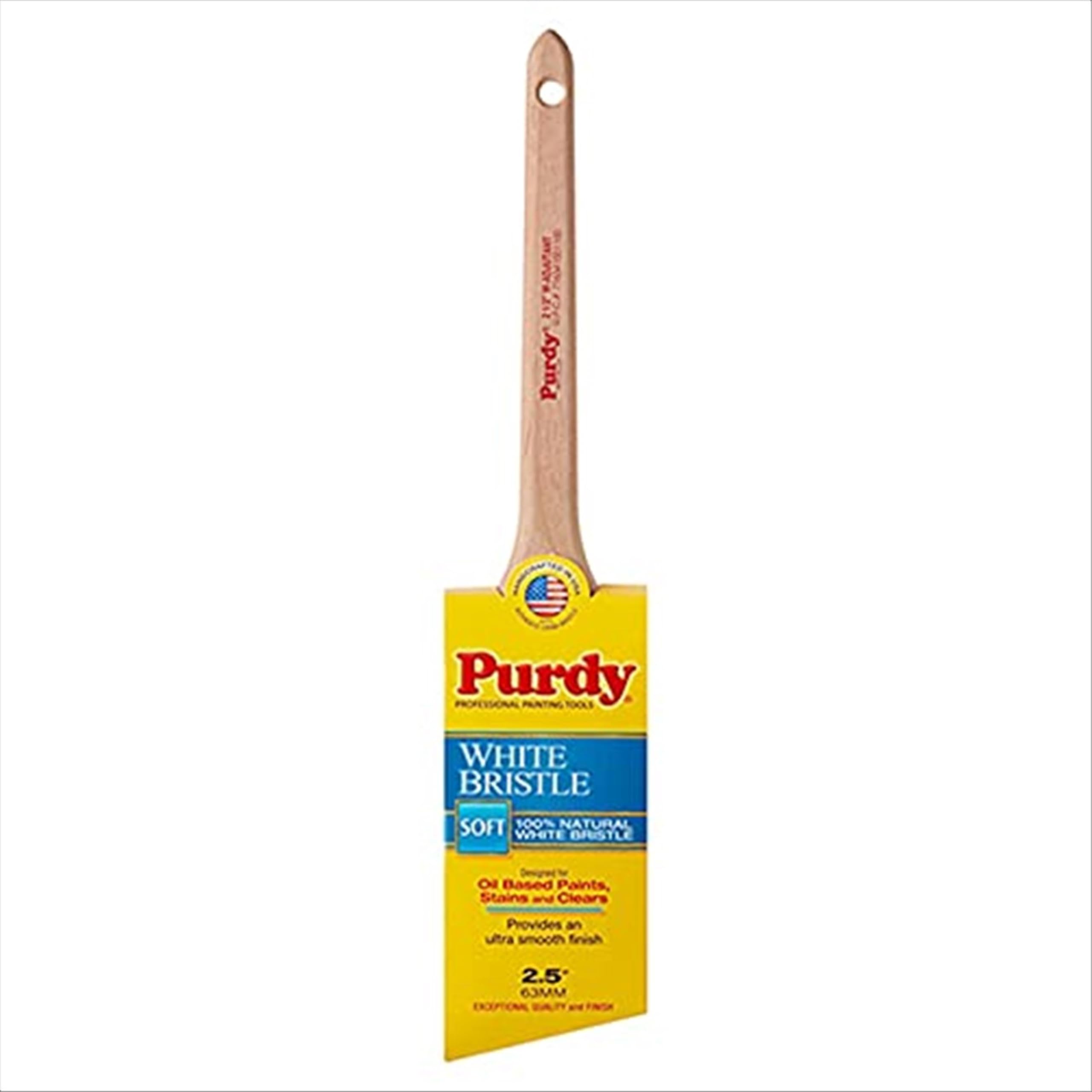
This Purdy brush uses a soft natural bristle blend that is explicitly designed for oil-based paints, stains, polyurethanes, and clears. If you are working solely with water-based latex, this is the wrong tool—natural bristles absorb water, soften, and lose their shape, resulting in a frustrating application.
However, for oil-based finishes like spar urethane or varnish on wood floors and furniture, this brush is exceptional. Users report zero shedding, even application, and a brush that improves with age if cleaned properly with brush cleaner.
It earns a spot on this list because many painters work with both latex and oil-based coatings. If you need a dedicated brush for oil-based projects, the Adjutant is a top-tier choice that has been a trusted tool since 1925.
Why it’s great
- Outstanding for oil-based paints and polyurethanes
- Soft natural bristle lays down an ultra-smooth finish
- Excellent durability and zero shedding with proper care
Good to know
- Not suitable for water-based latex paint
- Requires solvent-based cleaner for oil removal
FAQ
Can I use a natural bristle brush for latex paint?
What size brush is best for cutting in latex on walls and ceilings?
How do I clean a synthetic brush after using latex paint?
Final Thoughts: The Verdict
For most users, the brush for latex paint winner is the Corona Excalibur 2″ Chinex because its DuPont filament offers the best paint release and smoothness for heavy water-based coatings. If you want a reliable workhorse that’s slightly more affordable, grab the Purdy Pro-Extra Glide 2.5″. And for precision trim work without tape, nothing beats the Richard Elegance 3-Pack.

Mo Maruf
I created WellFizz to bridge the gap between vague wellness advice and actionable solutions. My mission is simple: to decode the research and give you practical tools you can actually use.
Beyond the data, I am a passionate traveler. I believe that stepping away from the screen to explore new environments is essential for mental clarity and physical vitality.