Our readers keep the lights on and my smoothie glass nicely filled. As an Amazon Associate, I earn from qualifying purchases.
Tile floors look beautiful, but their grout lines and textured surfaces are a dirt magnet. A standard corn broom pushes debris into the crevices, leaving you with a floor that looks clean but quickly grows a fuzzy gray film. The right broom for tile floors needs a specific bristle design that traps fine dust and lifts it away from the grout without scratching the glaze.
I’m Mohammad Maruf — the founder and writer behind WellFizz. I research household cleaning tools by sifting through real customer feedback and technical specs to find the gear that solves the specific problems buyers actually talk about.
After analyzing nearly 400 customer reviews and comparing five distinct cleaning tools, I found the best broom for tile floors isn’t always a traditional broom at all, but one that uses either rubber bristles or a wide microfiber pad to trap dust instead of scattering it.
How To Choose The Best Broom For Tile Floors
Tile flooring is hard, smooth, and punctuated with uneven grout lines. A broom built for smooth concrete or wood will simply glide over the grout, leaving debris behind. The ideal tool uses either electrostatic rubber to attract fine dust or soft flagged bristles that dig into the grout texture without scratching the tile surface.
Bristle Material and Type
Rubber bristles generate static that pulls hair and dust toward the broom head rather than sending it airborne. Flagged bristles have split or frayed tips that trap fine particles, making them effective for smooth tile. Polystyrene bristles resist oil and heat, making them suitable for garage or workshop tiles. Avoid stiff unflagged polypropylene on glazed tile — it can leave micro-scratches visible in direct light.
Head Width and Maneuverability
A 12-inch head works well for tight spaces and kitchens with cabinets, but it will take longer to sweep a large open living area. The 24-inch dust mop heads sweep roughly twice as fast but may feel cumbersome around furniture and corners. A 360-degree swivel or 180-degree flexible head helps reach under toe kicks and baseboards without stooping.
Handle Ergonomics
Tile floor cleaning often involves multiple passes over a large surface area. A telescopic handle that adjusts between 34 and 60 inches allows users of different heights to maintain a neutral spine, reducing lower back fatigue. For small apartments, a compact handle that stores easily matters more; for open-plan homes, a longer handle reduces bending.
Quick Comparison
On smaller screens, swipe sideways to see the full table.
| Model | Category | Best For | Key Spec | Amazon |
|---|---|---|---|---|
| FURemover Rubber Broom | Rubber Broom | Pet hair on tile and grout | 12.5-inch electrostatic rubber head | Amazon |
| CLEANHOME 24″ Dust Mop | Microfiber Mop | Large open tile areas | 24-inch head, 2 microfiber pads | Amazon |
| BUVE 24″ Commercial Dust Mop | Cotton Mop | Wet & dry tile cleaning | 24-inch head, 2 cotton mop heads | Amazon |
| Weiler 24″ Fine Sweep Brush | Push Broom Head | Delicate scratch-free sweeping | 24-inch flagged polystyrene fill | Amazon |
| Bissell Featherweight Stick Vac | Electric Broom | Quick daily tile touch-ups | 0.71-quart cup, 15ft cord | Amazon |
In‑Depth Reviews
1. FURemover Pet Hair Removal Rubber Broom

This broom uses a 12.5-inch wide rubber head that generates electrostatic charge to pull dust and pet hair toward the bristles instead of pushing it around. On tile floors, the rubber bristles dig into the grout lines and lift debris that traditional brooms miss. The built-in squeegee edge handles liquid spills on tile, concrete, and hardwood, making it a genuine two-in-one tool for kitchen and bathroom floors.
The telescopic handle adjusts from 34 to 58 inches so taller users can sweep without hunching. Owners report that the rubber bristles collect dog and cat hair effectively on both hard floors and low-pile carpets by using short, sharp strokes. The head rinses clean under running water, and the quick-drying rubber resists odor buildup that plagues corn-bristle brooms.
One consistent point of feedback is that the rubber head is somewhat wide for sweeping inside tight corners or between toilet fixtures. A few users noted that overtightening the handle can cause the plastic connector to crack, so hand-tighten only. For households with shedding pets, this broom dramatically reduces the frequency of vacuuming hard floors.
Why it’s great
- Electrostatic rubber grabs hair and dust from tile grout lines
- Adjustable handle reduces back strain for different heights
- Built-in squeegee handles wet spills on tile
- Easy to rinse clean and dries quickly
Good to know
- 12.5-inch head is wide for tight corners and between furniture legs
- Handle connector can crack if overtightened
- Not ideal for sweeping heavy construction debris on tile
2. CLEANHOME 24″ Commercial Dust Mop

The CLEANHOME dust mop replaces sweeping with a gliding motion that captures fine dust across large tile surfaces. Its 24-inch wide microfiber head covers twice the area of a standard broom in each pass, making it a time-saver for open-plan living rooms and commercial tile floors. The microfiber pad zips off and goes in the washing machine, which keeps it fresh for repeated daily use.
An extendable metal pole adjusts from 50 to 59 inches, and the head swivels 180 degrees to reach under cabinets and around furniture legs without repositioning your body. Users consistently praise its dust-trapping ability on tile and laminate floors, noting that it locks in dirt rather than kicking it into the air. The included second pad means you always have a clean one ready while the other is in the wash.
A few owners observed that the handle height adjustment can feel insecure and may slide down during use. The microfiber pads also felt less plush than true microfiber to some users, though they still performed well for dust pickup. For dry sweeping of tile floors, this mop works best — but for wet mopping, you will need to dampen the pad yourself as there is no built-in spray mechanism.
Why it’s great
- 24-inch head cuts sweeping time on large tile areas
- Washable microfiber pads trap fine dust
- Swivel head reaches under furniture
- Includes two pads for rotation
Good to know
- Handle height adjustment can slip during use
- Pads may not be true microfiber quality
- Not designed for heavy wet mopping without modification
3. BUVE 24″ Commercial Dust Mop
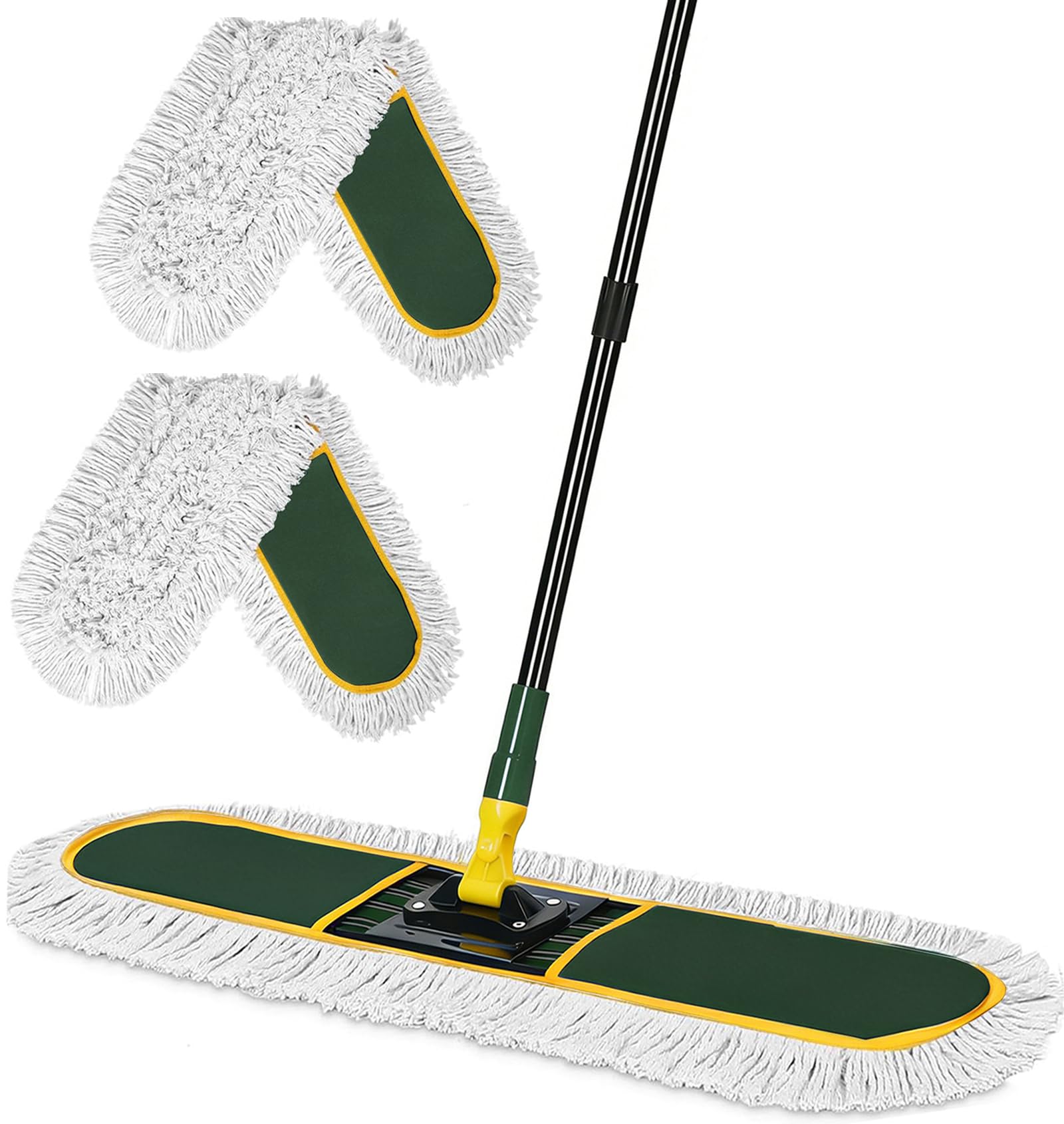
The BUVE commercial dust mop stands out for its absorbent cotton mop heads that work effectively for both dry dusting and wet cleaning on tile floors. Unlike microfiber pads that can push wet spills around, the cotton loop fibers absorb moisture and hold it, making this a true wet/dry tool. The 24-inch wide head covers large areas quickly, and the 360-degree swivel allows you to navigate around kitchen islands and bathroom vanities without fighting the handle.
The telescopic handle extends to 60 inches, and the threaded four-section design assembles in seconds without tools. Owners report that the cotton heads trap pet hair and dust bunnies effectively and that the mop glides smoothly over tile without scratching. The two included washable pads are rated for over 200 wash cycles, which makes this a long-term investment for a mid-range price.
One point of confusion among buyers is that the product photos and description suggest two replacement pads, but some packages include only one extra pad. The iron frame is sturdy for everyday home use but may dent if dropped repeatedly on concrete garage floors. For households that want one tool to dry sweep and wet mop tile floors without switching equipment, this is a strong contender.
Why it’s great
- Cotton heads absorb water for true wet/dry use on tile
- 360-degree swivel navigates tight spaces easily
- 60-inch handle accommodates tall users
- Washable heads rated for 200+ cycles
Good to know
- Some packages may include only one extra pad instead of two
- Iron frame may dent with heavy impact
- Cotton heads take longer to dry than microfiber
4. Weiler 24″ Fine Sweep Floor Brush

The Weiler Fine Sweep Brush is a push broom head designed for scratch-free sweeping on delicate surfaces, including glazed tile and polished wood. Its 24-inch lacquered hardwood block holds flagged polystyrene bristles that are split at the tips, creating a feathery texture that traps fine dust particles without scratching the tile glaze. The polystyrene fill resists oil and heat up to 180°F, making it suitable for workshop tiles near a workbench or garage floor.
This is a head-only unit — you supply your own handle with a 1-inch to 1.5-inch diameter female thread connection. Flooring contractors and commercial users favor it for finish sweeping because it leaves no visible swirl marks on coated concrete or ceramic tile. The 3-inch bristle length is short enough to provide good stiffness for sweeping debris, yet soft enough not to damage grout or sealants.
Homeowners should note that this is a no-frills tool: there is no ergonomic grip, no adjustable handle, and no squeegee edge. It is primarily designed for trade professionals who need a reliable finish broom for daily use. For domestic tile cleaning, it works best when paired with a comfortable handle of your choosing, and its lightweight construction makes it easy to maneuver for extended periods.
Why it’s great
- Flagged polystyrene bristles won’t scratch glazed tile
- 24-inch width covers large areas efficiently
- Oil and heat resistant for garage or workshop use
- Lightweight solid wood block construction
Good to know
- Head only — requires a separate handle purchase
- Not ideal for pet hair pickup on textured tile
- No built-in handle grip or ergonomic features
5. Bissell Featherweight Stick Vacuum
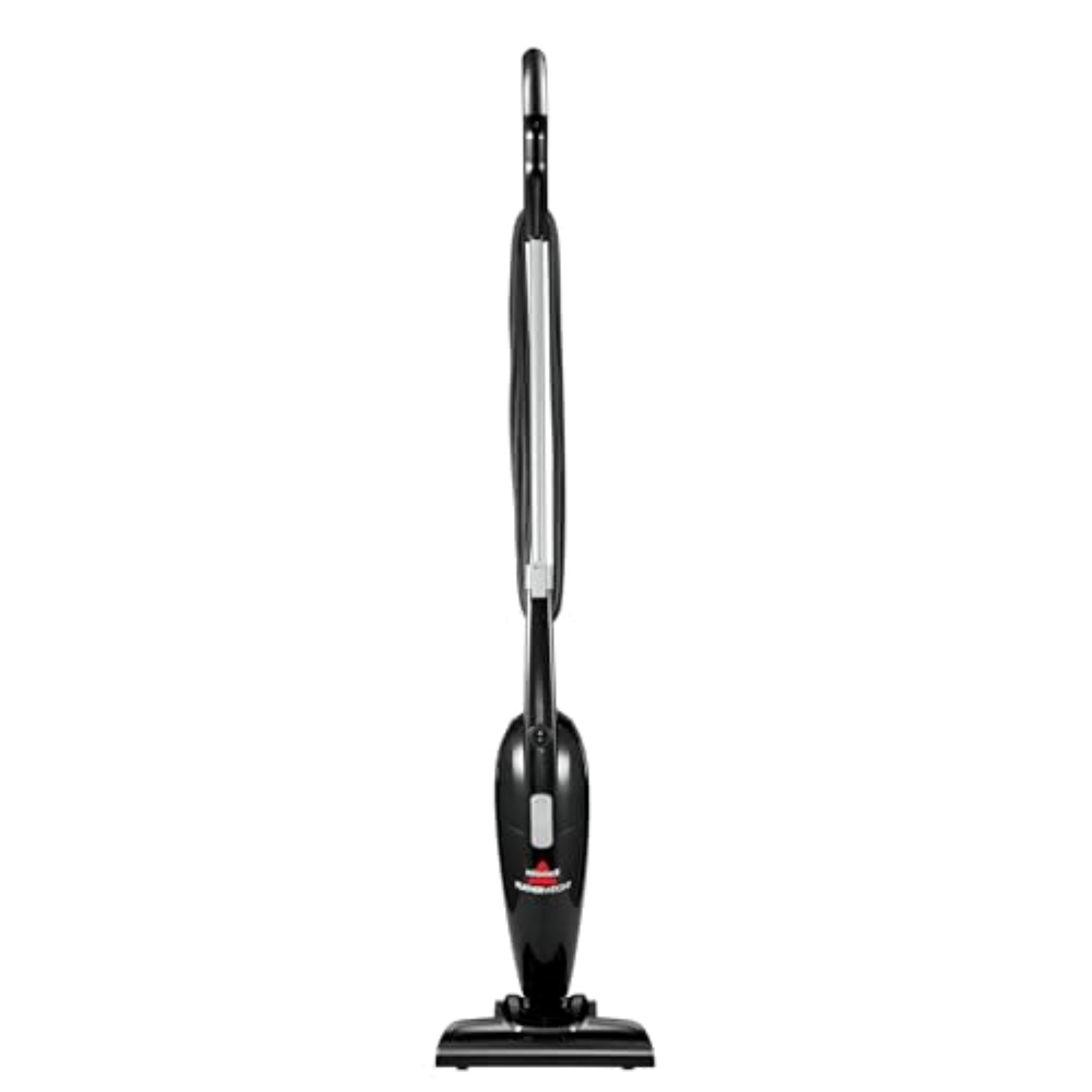
The Bissell Featherweight is technically a vacuum, but it functions as an electric broom for tile floors — a lightweight, corded tool that you grab for quick daily touch-ups. Weighing under 4 pounds, it glides across tile without scattering dust into the grout. The 15-foot power cord provides continuous run time with no battery anxiety, and the 0.71-quart dirt cup is easy to empty when it fills up with pet hair and kitchen crumbs.
This 3-in-1 design converts from a stick vacuum to a hand vacuum or stair vacuum using the included crevice tool. The floor nozzle works well on sealed tile and low-pile rugs, picking up surface debris that a broom would push around. Owners with tendonitis or joint pain report that this vacuum reduces physical strain compared to pushing a traditional broom across tile.
The foam filter requires frequent emptying and washing to maintain suction, and it is not designed for deep cleaning of thick carpets or heavy debris like large gravel. On tile floors, however, its suction is sufficient to lift fine dust and hair from the grout texture. For those who dislike the dust cloud created by sweeping, this electric broom offers a cleaner, air-quality-friendly alternative.
Why it’s great
- Under 4 pounds — easy to maneuver on tile without fatigue
- Corded design means no battery fade during cleaning
- Converts to hand vacuum for upholstery and stairs
- Powerful enough for daily hair and crumb pickup on tile
Good to know
- Foam filter needs frequent cleaning to maintain suction
- Not effective on high-pile carpet or heavy debris
- 0.71-quart cup fills quickly in a large home
FAQ
Will a rubber broom scratch my glazed ceramic tile?
Why does my corn broom leave dust on tile grout lines?
Can I use a dust mop on wet tile floors?
Final Thoughts: The Verdict
For most users, the best broom for tile floors winner is the FURemover Rubber Broom because its electrostatic rubber bristles trap pet hair and dust from grout lines without creating airborne dust clouds. If you want to cover large tile areas faster, grab the CLEANHOME 24″ Dust Mop. And for those who prefer a corded electric option that avoids sweeping entirely, nothing beats the Bissell Featherweight Stick Vacuum for quick daily touch-ups on tile.

Mo Maruf
I created WellFizz to bridge the gap between vague wellness advice and actionable solutions. My mission is simple: to decode the research and give you practical tools you can actually use.
Beyond the data, I am a passionate traveler. I believe that stepping away from the screen to explore new environments is essential for mental clarity and physical vitality.