Our readers keep the lights on and my smoothie glass nicely filled. As an Amazon Associate, I earn from qualifying purchases.
You want to photograph a hawk across the valley, your kid scoring from the bleachers, or the lunar surface in crisp detail — but a DSLR with a lens that long costs a fortune, and a phone just can’t reach. That’s the exact gap a bridge camera fills: one integrated body with a zoom range so extreme it transforms distant specks into frame-filling subjects.
I’m Mohammad Maruf — the founder and writer behind WellFizz. After cross-referencing sensor sizes, optical zoom ratios, burst rates, and real-world user reports across eleven popular models, I’ve isolated the specs that actually determine performance in this superzoom class.
Whether you prioritize raw reach, 4K video depth, or pocketable portability, the best bridge camera is the one that matches your specific shooting environment — and this guide maps every meaningful difference.
How To Choose The Best Bridge Camera
A bridge camera’s entire reason for existing is its zoom reach. But beyond maximum millimeters, four other factors separate a keeper from a regret: stabilization that actually works at the long end, a viewfinder that stays usable in sunlight, burst speed for capturing moving subjects, and sensor quality that doesn’t fall apart in anything less than golden-hour light. Here’s what matters most.
Zoom Range and Optical Reach
This is the headline spec. An 83x optical zoom like the Nikon COOLPIX P950 delivers a 24-2000mm equivalent range, while a 30x zoom like the Panasonic LUMIX ZS99 covers 24-720mm. More zoom means heavier glass and a larger body, so the trade-off is portability. If you shoot birds, planes, or the moon, prioritize 60x and above. For concerts and travel where bag space is tight, 30x-40x is often enough.
Image Stabilization Quality
At 1200mm or 2000mm equivalent, even your pulse becomes visible in the frame. Optical image stabilization (OIS) is non-negotiable — look for Power O.I.S., Dual Detect VR, or similar branded systems that actively shift lens elements to counteract hand shake. A camera with weak stabilization at the telephoto end will produce soft images regardless of its zoom number.
Sensor Size and Low-Light Performance
Nearly every bridge camera uses a 1/2.3-inch sensor, which is smaller than what you’d find in a modern smartphone’s main camera. That means noise creeps in above ISO 800, and dynamic range is limited. A few premium models use a 1-inch sensor, which dramatically improves low-light shots. If you shoot indoors or at dusk, prioritize the larger sensor — otherwise, the standard 1/2.3-inch sensor is acceptable for daytime use.
Burst Rate and Autofocus for Action
For birds in flight or fast sports, burst shooting frames per second (fps) matters. Entry-level models typically offer 5-6 fps, while mid-range and premium options hit 10 fps or higher. Equally important is autofocus speed — contrast-detection AF is the norm, but hybrid AF systems (found on higher-end Panasonic and Canon models) lock focus faster on moving subjects.
Viewfinder, LCD, and Connectivity
An electronic viewfinder (EVF) is critical for shooting in bright daylight when the rear LCD washes out. EVF resolution varies from 200k-dot to 2.36m-dot — the higher the dot count, the clearer the view. Also check whether the LCD is fixed or vari-angle (tilting/flipping). Built-in Wi-Fi and Bluetooth simplify image transfer; models with USB-C charging are more travel-friendly.
Quick Comparison
On smaller screens, swipe sideways to see the full table.
| Model | Category | Best For | Key Spec | Amazon |
|---|---|---|---|---|
| Nikon COOLPIX P950 | Superzoom | Extreme reach wildlife | 83x optical (24-2000mm) | Amazon |
| Nikon COOLPIX P1000 | Flagship Superzoom | Maximum optical reach | 125x optical (24-3000mm) | Amazon |
| Canon PowerShot SX70 HS | Superzoom | All-around nature shooting | 65x optical (21.1MP) | Amazon |
| Panasonic LUMIX FZ80D | Mid-Range Superzoom | Value 4K + 60x zoom | 60x optical (20-1200mm) | Amazon |
| Panasonic LUMIX ZS99 | Compact Travel Zoom | Pocketable travel zoom | 30x optical (24-720mm) | Amazon |
| Canon PowerShot SX740 HS | Compact Travel Zoom | Concert/event zoom | 40x optical (24-960mm) | Amazon |
| Panasonic LUMIX TZ99 | Compact Travel Zoom | Travel versatility | 30x optical (24-720mm) | Amazon |
| Kodak PIXPRO AZ528 | Entry Superzoom | Budget-friendly reach | 52x optical (24mm wide) | Amazon |
| Minolta MN40Z | Budget Superzoom | Easy-to-use superzoom | 40x optical (20MP) | Amazon |
| Minolta MNB10Z | Budget Starter | Beginner bundle value | 10x optical (64MP) | Amazon |
| Kodak PIXPRO AZ528 Bundle | Entry Superzoom | Budget all-in-one kit | 52x optical (16MP) | Amazon |
In‑Depth Reviews
1. Nikon COOLPIX P950

The Nikon COOLPIX P950 delivers an 83x optical zoom that reaches 2000mm equivalent, putting distant birds, far-off landscapes, and the moon within crisp reach. Its Dual Detect Optical Vibration Reduction actively compensates for hand shake at extreme telephoto lengths, making handheld shots at full zoom usable where most cameras would produce blur. The 16MP sensor captures 4K UHD video, and the built-in Bird and Moon modes simplify challenging subjects for beginners.
Autofocus uses contrast detection with 399 points, and while it can hunt on small, fast-moving birds against busy backgrounds, the manual focus wheel on the lens barrel provides quick override access. The 2.36m-dot OLED electronic viewfinder is bright and clear, and the vari-angle LCD screen flips out for low-angle or overhead compositions. Wi-Fi connectivity enables easy image transfer to a smartphone via the SnapBridge app.
Real-world users consistently praise the P950’s stabilization and reach, noting that it handily outperforms the older P900 in zoom clarity and digital zoom refinement. The small 1/2.3-inch sensor does limit low-light performance, and the aperture narrows to f/6.5 at full zoom, so shooting at dawn or dusk requires higher ISO and stable support. For daytime wildlife and superzoom enthusiasts, this is the sweet spot of reach and value.
Why it’s great
- 83x optical zoom (24-2000mm) for extreme telephoto reach
- Excellent Dual Detect VR keeps handheld long shots sharp
- Bird and Moon scene modes simplify specialty shots
- 4K UHD video with good detail at all zoom ranges
Good to know
- Small sensor struggles in low light above ISO 800
- AF can hunt on fast-moving subjects at full zoom
- Larger body requires a bag for transport
2. Nikon COOLPIX P1000
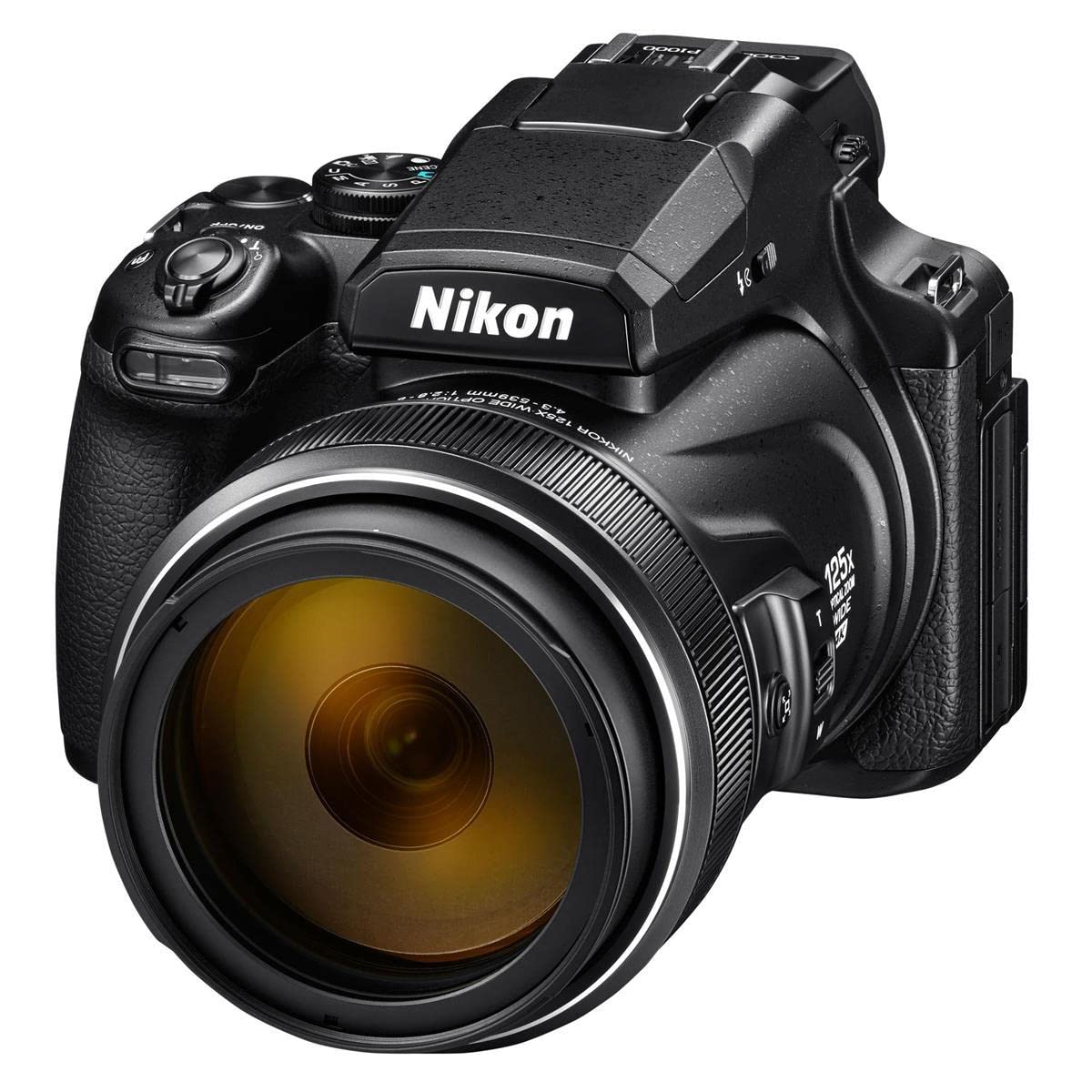
The Nikon COOLPIX P1000 holds the crown for optical reach with a staggering 125x zoom that stretches from 24mm wide to 3000mm telephoto — the most powerful zoom lens ever put on a Nikon Coolpix camera. At 3000mm equivalent, you can photograph details on distant mountain ridges, read signs from over a mile away, or capture lunar craters in sharp focus without a telescope. The Dual Detect Optical Vibration Reduction is essential here, as even minor hand movement at 3000mm appears exaggerated without stabilization.
Video recording reaches 4K UHD with stereo sound, and an accessory hot shoe allows external microphones for improved audio. RAW (NRW) format support gives advanced users flexibility in post-processing, and the vari-angle 3.2-inch LCD with anti-reflection coating remains viewable in bright sunlight. A 0.39-inch OLED electronic viewfinder with 2.36m-dot resolution provides a clear alternative for composition when glare washes out the rear screen.
Users confirm that the P1000 excels for creative and experimental superzoom work, delivering sharp results at both ends of the zoom range when used on a tripod. The primary trade-offs are weight — at 3.3 pounds, it’s the heaviest bridge camera here — and the small sensor, which limits image quality past ISO 800. Autofocus can struggle at 3000mm, and handheld shots at max zoom typically require a tripod for consistent sharpness. For sheer reach, nothing else comes close.
Why it’s great
- 125x optical zoom reaches 3000mm — unmatched in bridge cameras
- RAW support for advanced post-processing flexibility
- 4K video with hotshoe for external mics
- Vari-angle LCD with anti-reflection coating
Good to know
- Heavy at 3.3 pounds; tripod recommended for max zoom
- Small sensor limits low-light performance significantly
- AF hunts at extreme telephoto lengths
- Battery life is short; carry spares for full-day shoots
3. Canon PowerShot SX70 HS

The Canon PowerShot SX70 HS pairs a 65x optical zoom (21-1365mm equivalent) with a 21.1MP CMOS sensor and Canon’s DIGIC 8 processor, delivering sharp daytime images and smooth 4K video. The optical zoom range is generous enough for wildlife and sports, while the built-in flash and hotshoe provide flexibility for low-light situations. Hybrid autofocus combines contrast and phase detection, offering faster lock-on than pure contrast-detection systems found on many competitors.
The 2.36m-dot electronic viewfinder is bright and responsive, and the 3-inch vari-angle LCD makes framing from awkward angles straightforward. Wi-Fi and Bluetooth are built in, enabling remote control and fast image transfers via the Canon Camera Connect app. The SX70 HS also supports RAW capture, giving editors control over white balance, exposure, and noise reduction after the shot.
Users who shoot nighttime moth species and small nature subjects report excellent results thanks to the macro mode and manual control depth. The body is lighter than the Nikon P950, making it easier to carry on long hikes. The primary compromises are the narrow f/6.5 aperture at full telephoto, which forces higher ISO in dim conditions, and the autofocus point count of 11, which feels limited compared to newer superzooms with hundreds of AF zones.
Why it’s great
- 65x optical zoom with 21-1365mm equivalent range
- 21.1MP sensor with DIGIC 8 processing for clean daytime shots
- Hybrid autofocus for quicker subject lock
- Vari-angle LCD and built-in EVF for any lighting condition
Good to know
- Only 11 autofocus points limits tracking precision
- f/6.5 at telephoto requires good light or high ISO
- Some users find the body too large for pocket carry
4. Panasonic LUMIX FZ80D
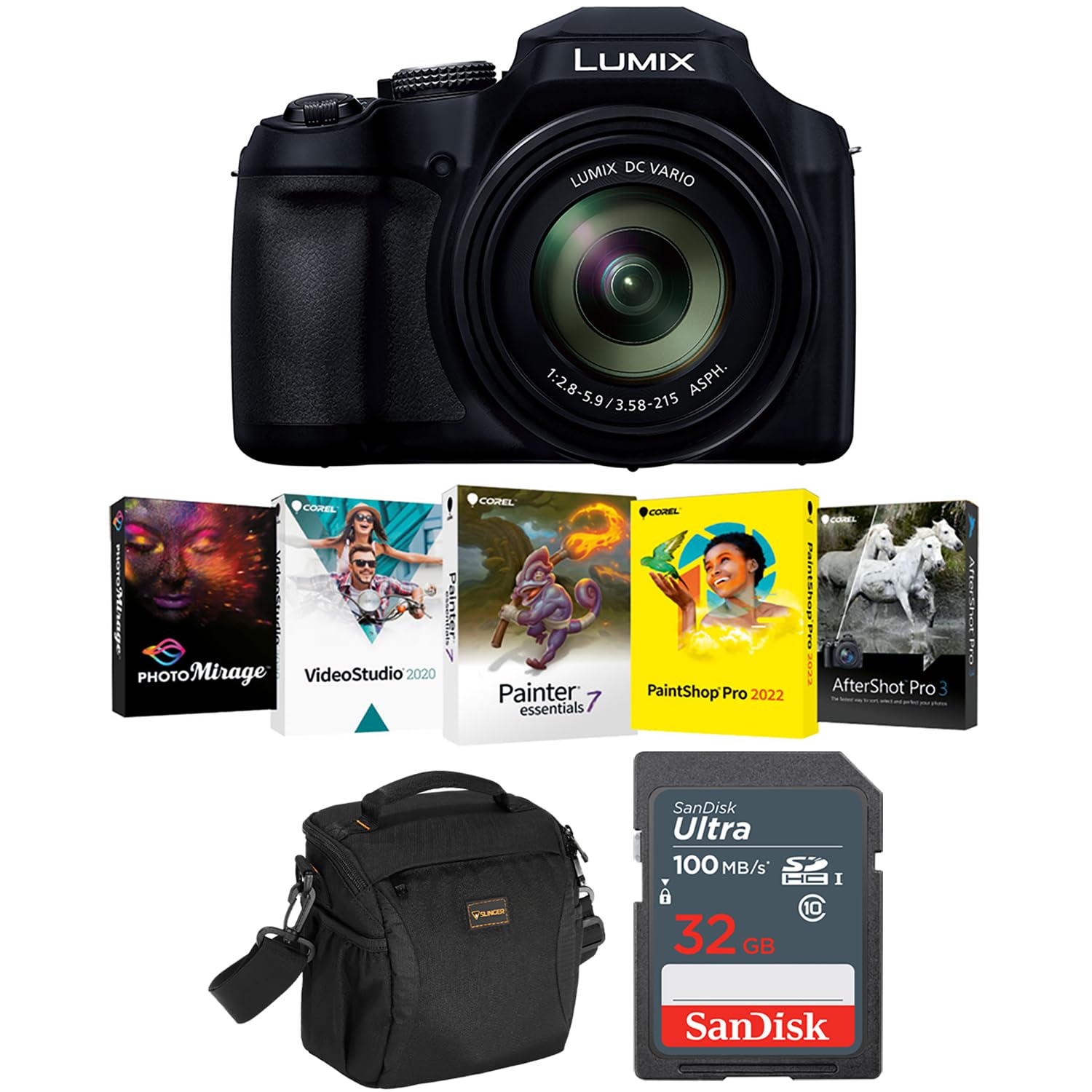
The Panasonic LUMIX FZ80D delivers an 18.1MP MOS sensor paired with a 60x optical zoom lens covering 20-1200mm equivalent. At this price tier, the inclusion of 4K UHD video recording at 30p sets it apart from many budget superzooms that top out at 1080p. The f/2.8 maximum aperture at the wide end allows decent low-light shooting, though it narrows to f/5.9 at full telephoto. Power O.I.S. image stabilization is standard and effectively counters hand shake across the zoom range.
The 2.36m-dot OLED live viewfinder is a standout feature at this price, offering bright, lag-free composition even in direct sun. The 3-inch LCD has a 1.84m-dot resolution, providing crisp playback. The FZ80D shoots up to 10 frames per second in burst mode, which is competitive with more expensive models. Wi-Fi connectivity enables remote control and image sharing via the Panasonic Image App, though Bluetooth is not included.
Users consistently praise the 60x zoom range and image clarity, noting that the camera handles well for point-and-shoot beginners while offering full manual controls for experienced photographers. The bundled 32GB SD card and shoulder bag make it a ready-to-go kit. The primary downside is the lack of a microphone jack, which limits audio quality for vloggers. The user manual is also reported as difficult to navigate, causing some frustration.
Why it’s great
- 60x zoom with 4K recording at a mid-range price
- 2.36m-dot OLED EVF for bright outdoor composition
- 10 fps burst for action and wildlife
- Power O.I.S. keeps handheld telephoto shots stable
Good to know
- No microphone jack limits vlogging audio quality
- User manual is confusing for beginners
- No Bluetooth, only Wi-Fi for connectivity
5. Panasonic LUMIX ZS99

The Panasonic LUMIX ZS99 packs a 30x Leica DC Vario-Elmar zoom lens (24-720mm equivalent) into a body small enough to slip into a jacket pocket. This is the key differentiator: full superzoom reach without the bulk. The 20.3MP MOS sensor captures 4K video at 30p and 4K PHOTO at 30 fps, extracting high-resolution stills from video frames. Hybrid O.I.S.+ with five-axis correction keeps handheld footage smooth even at maximum zoom.
The 1,840k-dot tiltable touchscreen is bright and responsive, though it lacks the vari-angle articulation that some users prefer for overhead or ground-level shots. Bluetooth 5.0 provides always-on connection for quick image transfer, and the dedicated Send Image button simplifies sharing to a paired smartphone. USB Type-C charging means you can power up with the same cable as your laptop or tablet, a convenience for travelers.
Users praise the ZS99 for concert and event photography, as the 30x zoom reaches the stage clearly without being blocked by venue restrictions. Image quality is very good for a compact sensor up to ISO 1600, and the Leica lens delivers sharp, contrasty results. The main cautions are overheating during extended 4K recording (recording stops after ~15 minutes at 4K) and the small sensor’s limitations in very dim light. Battery life runs about 6 hours of general use.
Why it’s great
- 30x Leica zoom fits in a pocket for true portability
- Bluetooth 5.0 with one-touch image transfer
- USB-C charging on a single cable
- Tiltable touchscreen with high 1,840k-dot resolution
Good to know
- 4K recording limited to 15 minutes before overheating
- Small sensor struggles in dim conditions
- Lens housing can dent without a protective case
6. Canon PowerShot SX740 HS
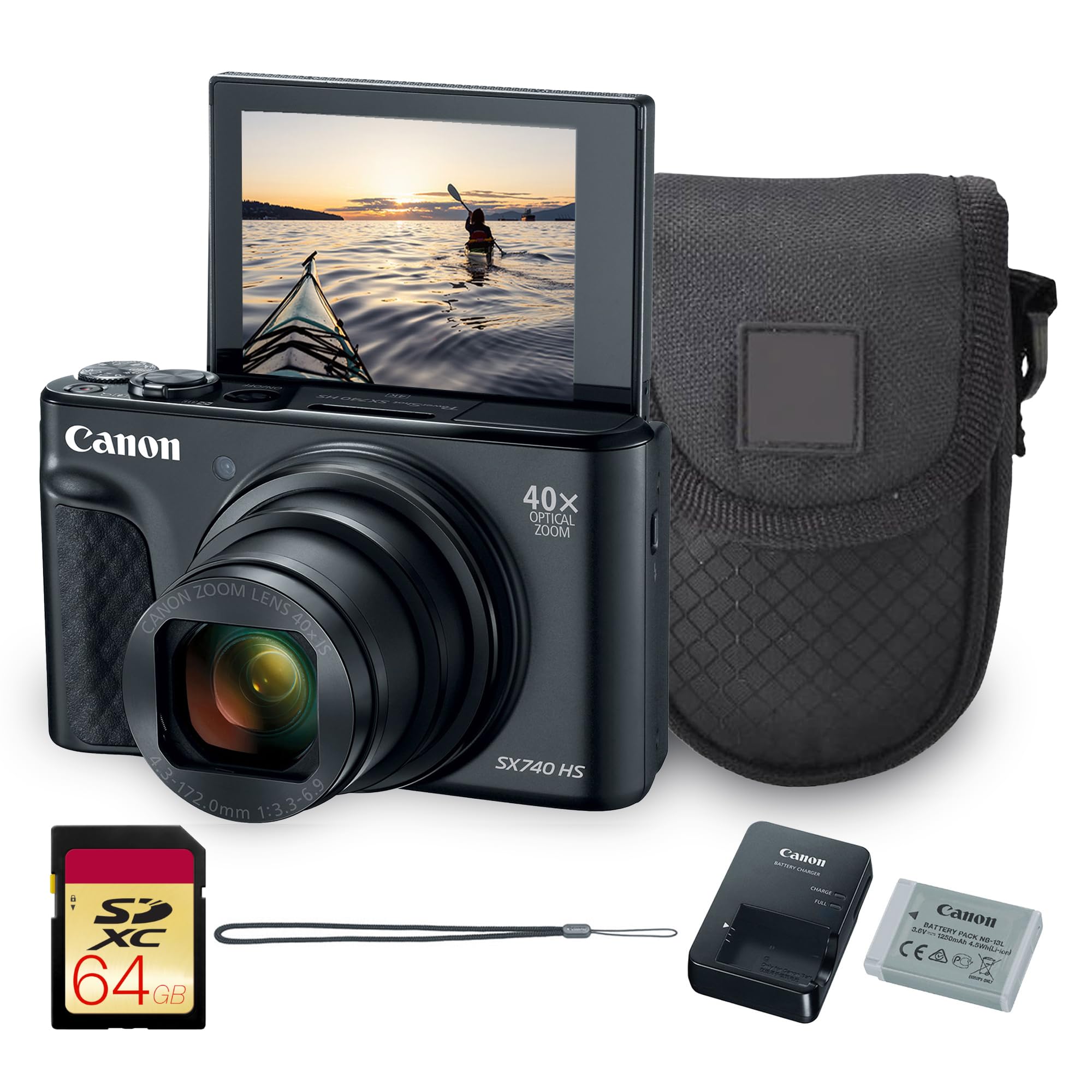
The Canon PowerShot SX740 HS combines a 40x optical zoom (24-960mm equivalent) with a 20.3MP CMOS sensor and DIGIC 8 processor in an ultra-compact body that fits easily in a small bag or large pocket. This form factor makes it a favorite for concerts, events, and travel where discretion and portability matter. The 4K UHD video at 30p includes five-axis stabilization to smooth handheld footage while walking or following action.
Wi-Fi and Bluetooth connectivity via the Canon Camera Connect app enables remote shooting and instant social media uploads. The 3-inch LCD flips up 180 degrees for selfies and vlogging, a feature missing from many bridge cameras in this class. The battery life is notably strong — users report multi-day trips on a single charge with moderate shooting. The SX740 also includes automatic scene detection and creative filters for beginners.
Users consistently highlight the zoom quality and ease of use, calling the image quality significantly better than a smartphone at full zoom. The small sensor does produce noise above ISO 800, and the lack of a microphone jack is a drawback for serious vloggers. Some units sold on Amazon are international models, which cannot be registered with Canon USA for warranty support, so buyers should verify seller sourcing before purchase.
Why it’s great
- 40x zoom in a pocket-friendly body for concerts and travel
- Excellent battery life; lasts days on a single charge
- Flip-up screen for selfies and vlogging
- 5-axis stabilization keeps 4K video smooth
Good to know
- No microphone jack limits vlog audio quality
- Small sensor shows noise above ISO 800
- International models may lack US warranty support
7. Panasonic LUMIX TZ99

The Panasonic LUMIX TZ99 is a travel-first superzoom with a 30x Leica zoom lens (24-720mm equivalent) and a 1,840k-dot tiltable touchscreen. It is nearly identical in hardware to the ZS99 but sold under the TZ model designation, which Panasonic uses for international markets. The compact body slides into a pocket, and the lens retracts flush with the body when powered off. 4K video recording at 30p and 4K PHOTO at 30 fps extract high-res stills from motion.
Bluetooth 5.0 provides always-on connection for geotagging and background transfer, while USB-C charging eliminates the need for a proprietary charger. The hybrid autofocus system with 171 AF points is notably faster than the contrast-detection systems on budget bridge cameras. The stepped zoom function lets you jump to preset focal lengths instantly, a useful feature for framing consistent shots.
Users praise the TZ99 for family trips and concerts, appreciating the balance of zoom range and portability. The image quality is good up to ISO 1600, with pleasing color reproduction in auto mode. Some users received international versions with non-English manuals and replaced packaging, so verifying the seller is critical. The small sensor and average low-light performance mean this camera shines brightest in daytime or well-lit venues.
Why it’s great
- 30x Leica zoom in a truly pocketable body
- 171-point hybrid AF for fast subject acquisition
- Bluetooth 5.0 and USB-C for modern convenience
- Stepped zoom and Lens Position Resume for repeatable framing
Good to know
- Small sensor struggles in low light compared to phones
- International versions may have tampered packaging
- LCD can be hard to read in direct sunlight without EVF
8. Kodak PIXPRO AZ528
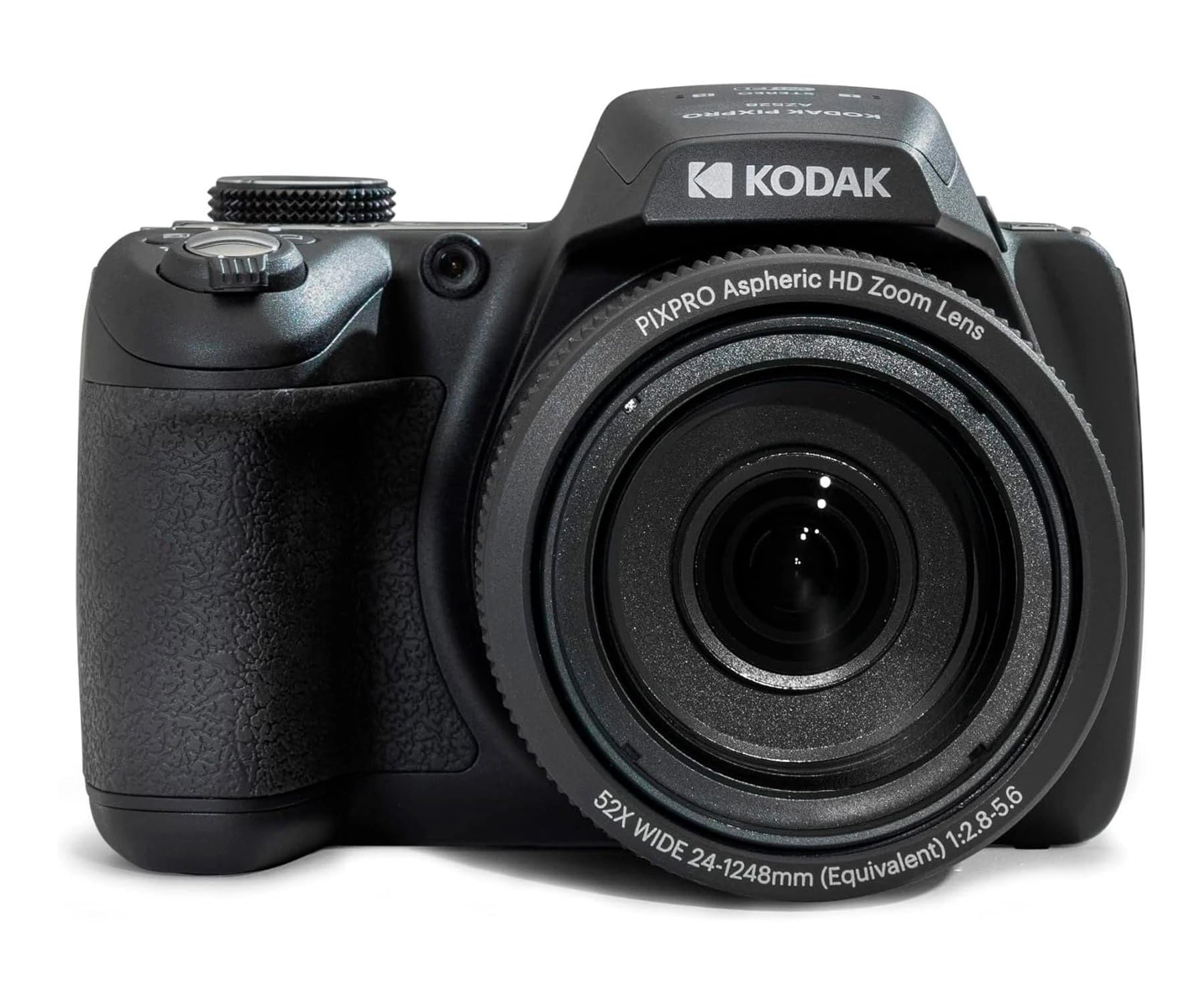
The Kodak PIXPRO AZ528 offers a 52x optical zoom with a 24mm wide-angle lens and 16MP BSI CMOS sensor at a budget-friendly entry point. The backside-illuminated sensor provides better low-light performance than older CCD sensors, and the optical image stabilization helps keep handheld telephoto shots presentable. Six frames per second burst shooting is sufficient for slow-to-moderate action, and the 1080p Full HD video at 30fps covers basic recording needs.
Wi-Fi connectivity allows wireless control via a smartphone and direct social media upload, a feature typically reserved for more expensive models. The 3-inch LCD is adequate for composition, though the lack of an electronic viewfinder means you’ll rely on the screen even in bright sunlight. The camera accepts SDHC/SDXC cards up to 512GB, providing ample storage for travel. The rechargeable Li-Ion battery is replaceable and charges via USB-C.
Users report good results for bird feeder photography, pet portraits, and daylight landscapes, with the 52x zoom providing genuine reach that phone cameras cannot match. The autofocus requires a deliberate half-press technique, and the body scuffs easily, but the image quality at full zoom is noticeably better than digital zoom from any smartphone. Battery life is adequate for a day trip, and the Wi-Fi app functions reliably for transfers.
Why it’s great
- 52x optical zoom at an entry-level price point
- BSI CMOS sensor for improved low-light response
- Wi-Fi with smartphone remote control
- USB-C charging and large SD card support up to 512GB
Good to know
- No electronic viewfinder; LCD washes out in sunlight
- Body scuffs easily from normal use
- Burst rate limited to 6 fps for faster action
9. Minolta MN40Z

The Minolta MN40Z pairs a 40x optical zoom lens with a 20MP CMOS sensor in a compact, lightweight body designed for budget-conscious buyers. The 40x zoom provides respectable reach for outdoor and distant subjects, while the 1080p Full HD video recording at 30fps covers basic video needs. Optical image stabilization is included to minimize shake at telephoto lengths, and the 3-inch LCD screen allows straightforward composition and menu navigation.
Wi-Fi connectivity enables smartphone image transfer and remote control via a companion app. Face, smile, and blink detection add convenience for portrait shooting. The MN40Z uses AA batteries, which are easy to replace in the field when alkalines run out, though this may be a downside for users who prefer built-in rechargeable packs. The camera body is notably small for its zoom class, weighing significantly less than most 40x superzooms.
Owners find the MN40Z easy to use for seniors and beginners, with good daylight image quality and an impressive 40x zoom that pulls in distant objects clearly. Some units experience freezing when switching modes, requiring a battery pull to reset. The image stabilization is weaker than premium models, and low-light performance is poor. The stabilizer shows its limits at full zoom, and motion photography results in blur.
Why it’s great
- 40x optical zoom in a lightweight, compact body
- AA batteries are easy to replace in the field
- Wi-Fi for smartphone image transfer
- Accessible for beginners and elderly users
Good to know
- Camera can freeze during mode switching
- Weak stabilization struggles at full zoom
- Poor low-light performance with small sensor
10. Minolta MNB10Z
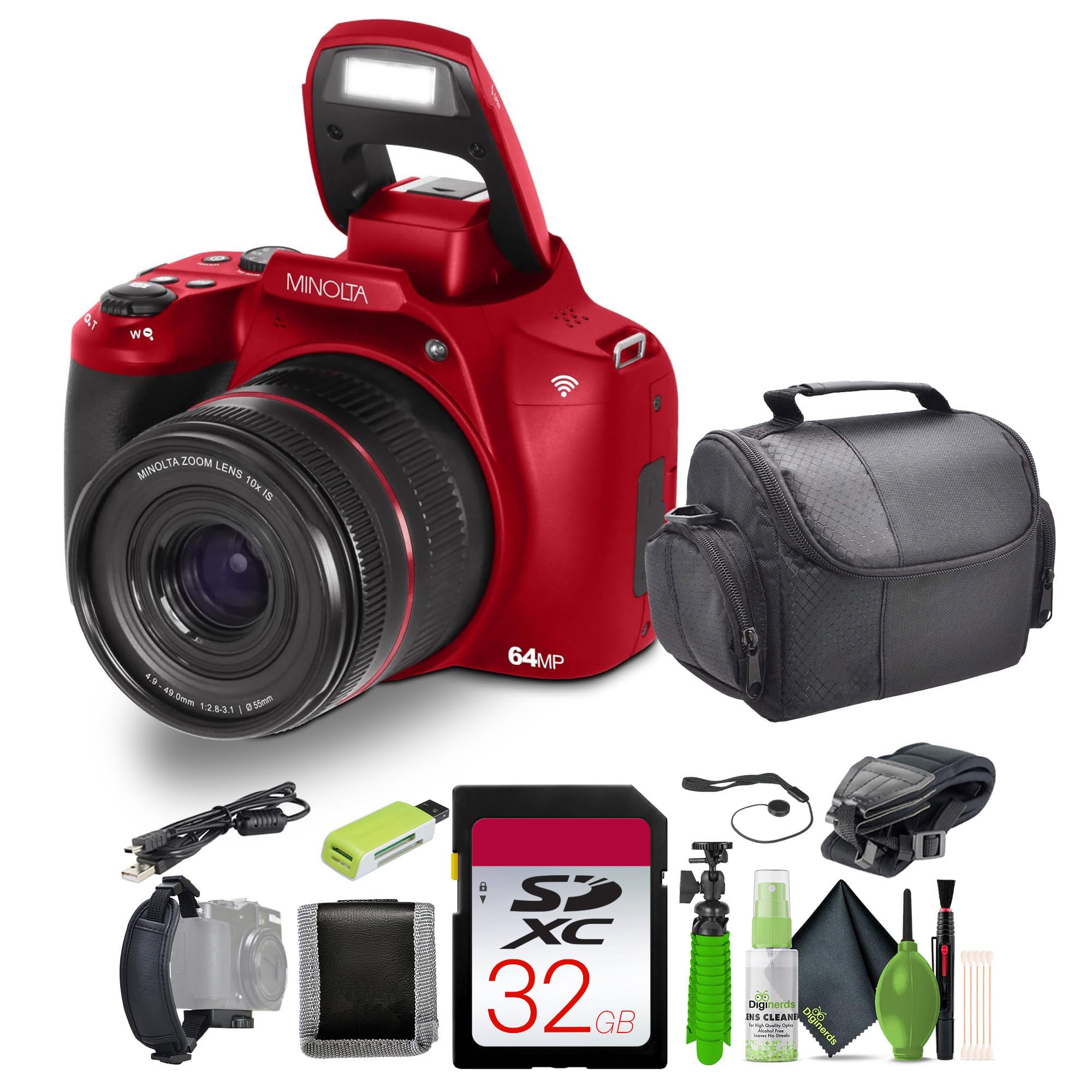
The Minolta MNB10Z is an entry-level bridge camera with a 10x optical zoom and a 64MP sensor that uses interpolation to reach that resolution. Its 4K video recording at 30fps and 10x zoom make it suitable for beginners who want a dedicated camera for YouTube, family events, or casual learning. The F2.8-F4.0 aperture range is reasonably bright at the wide end, and contrast-detection autofocus with 49 AF points handles static subjects adequately.
This bundle includes a 32GB memory card, travel bag, cleaning kit, hand strap, lens cap keeper, a 12-inch flexible vlogging tripod, a memory card wallet, and a USB card reader. That’s a complete starter kit that removes the need for separate accessory purchases. The red color option adds a distinctive look, and the camera body includes a standard tripod mount for more stable setups.
Users appreciate the generous accessory bundle and say the camera is a great starter set for learning photography or starting a YouTube channel. The image quality is decent for the price range but does not approach the detail of higher-end bridge cameras from Canon, Nikon, or Panasonic. Some users report blurry or dark photos, and the build quality is clearly budget-grade. This camera is best viewed as a low-commitment entry point, not a serious photography tool.
Why it’s great
- Comprehensive bundle with tripod, bag, and cards included
- 4K video at an entry-level price
- Bright F2.8 aperture at wide angle
- Distinctive red color option
Good to know
- 64MP is interpolated, not native resolution
- Image quality significantly below Canon/Nikon/Panasonic
- Some units produce blurry or dark photos
- Only 10x zoom limits reach for wildlife
11. Kodak PIXPRO AZ528 Bundle

This bundle version of the Kodak PIXPRO AZ528 packages the same 52x optical zoom camera with a 32GB SanDisk Ultra SDHC card and a slinger multi-device shoulder bag. The camera itself is identical to the standalone AZ528: a 16MP BSI CMOS sensor, 24mm wide-angle, 1080p Full HD video, and built-in Wi-Fi for smartphone control. The 52x optical zoom reaches far distant subjects with genuine optical sharpness, and the optical image stabilization helps keep handheld shots usable at the telephoto end.
The 3-inch LCD provides composition and playback, but the lack of an electronic viewfinder means bright sunlight can make framing difficult. Six frames per second burst shooting is adequate for modest action, and the rechargeable Li-Ion battery charges via the included AC adapter and USB cable. The bundled 32GB card stores roughly 3,000 JPEG images at full resolution, and the bag provides basic protection during transport.
Users describe this as a great first camera for learning photography, with the 52x zoom delivering moon shots and distant wildlife that phones cannot replicate. The full manual controls (except for focus) allow gradual skill progression. Some users miss the optical viewfinder for composing in bright light, and the autofocus can hunt on low-contrast subjects. For someone who wants a capable superzoom and immediate accessories without separate shopping, this bundle simplifies the purchase decision.
Why it’s great
- 52x zoom with SD card and bag included in one box
- BSI CMOS sensor for decent image quality at the price
- Wi-Fi for remote shooting and instant sharing
- Full manual controls for learning exposure
Good to know
- No EVF; LCD is hard to see in bright outdoor light
- Autofocus hunts on low-contrast subjects
- Beginner-grade build; not designed for heavy use
FAQ
Is a bridge camera better than a smartphone for zoom?
What’s the difference between bridge camera and DSLR?
Do I need a tripod for a bridge camera?
Can bridge cameras record good video?
How important is the electronic viewfinder versus the LCD screen?
Final Thoughts: The Verdict
For most users, the best bridge camera winner is the Nikon COOLPIX P950 because it delivers 83x stabilized zoom with 4K video at a price that balances reach and value better than any competitor. If you want maximum optical reach and are willing to carry extra weight, grab the Nikon COOLPIX P1000. And for pocketable travel zoom that you’ll actually bring everywhere, the Panasonic LUMIX ZS99 is the compact winner.

Mo Maruf
I created WellFizz to bridge the gap between vague wellness advice and actionable solutions. My mission is simple: to decode the research and give you practical tools you can actually use.
Beyond the data, I am a passionate traveler. I believe that stepping away from the screen to explore new environments is essential for mental clarity and physical vitality.