Our readers keep the lights on and my smoothie glass nicely filled. As an Amazon Associate, I earn from qualifying purchases.
Painting a brick fireplace or exterior wall requires a specific type of paint and preparation—using the wrong finish on porous masonry often leads to peeling, cracking, and dusting within a single season. The granular surface of brick absorbs moisture unevenly, so a standard wall paint lacks the adhesion and breathability needed to stay locked into the texture long-term.
I’m Mohammad Maruf — the founder and writer behind WellFizz. I’ve spent years analyzing masonry coating formulations, from acrylic sealers to mineral-based milk paints, comparing coverage rates, drying behavior, and long-term adhesion on rough substrates.
This buying guide cuts through the confusion to help you find the best brick paint for your specific project, whether you are whitewashing a fireplace, sealing a basement wall, or refinishing an exposed exterior facade.
How To Choose The Best Brick Paint
Selecting a brick paint goes beyond picking a favorite color. The substrate’s porosity, the location (indoor versus outdoor), and the desired finish all dictate which formulation will actually stay adhered. Below are the three most critical factors to evaluate before you buy.
Water-Based vs. Solvent-Based Formulations
Water-based acrylic brick paints offer lower odor, faster dry times, and easier brush cleanup compared to solvent-based alternatives. More importantly, they allow the brick to breathe, reducing the risk of trapped moisture that causes peeling. For indoor fireplaces and basement walls, a water-based formula is almost always the right choice. Solvent-based paints may offer slightly higher initial abrasion resistance, but the smell and extended cure time make them impractical for most residential projects.
Coverage Per Volume and Surface Prep
Brick is thirsty. A typical quart of brick paint covers roughly 15 to 50 square feet depending on the brick’s roughness and porosity, while a gallon may cover 150 to 200 square feet. Always factor in two to three coats when estimating how much paint to buy. Surface preparation—cleaning off dust, efflorescence, and loose mortar—is non-negotiable. A clean, dry surface directly determines whether the paint bonds or flakes off within a year.
Finish Type and Breathability
Matte finishes hide surface imperfections best on uneven brick, while satin or gloss sheens are easier to wipe clean but may emphasize texture. For exterior brick, a breathable matte or satin masonry paint prevents moisture entrapment. For interior brick, a clear sealer can stabilize dust without altering the natural look. If you want a transparent protective layer, choose a water-based acrylic sealer rather than a film-forming polyurethane that can trap vapor.
Quick Comparison
On smaller screens, swipe sideways to see the full table.
| Model | Category | Best For | Key Spec | Amazon |
|---|---|---|---|---|
| Giani Brick Transformations Whitewash | Whitewash Kit | Indoor fireplace makeovers | 200 sq. ft. coverage per kit | Amazon |
| MasonryDefender Brick Sealer | Clear Sealer | Sealing dusty basement brick | 128 fluid ounces per gallon | Amazon |
| Rustins MASPC500 Masonry Paint | Masonry Paint | Small outdoor stone repairs | 14 m² per liter coverage | Amazon |
| Miss Mustard Seed’s MilkPaint | Milk Paint | Antique-style distressed brick | 16 fluid ounces dry powder | Amazon |
| Wolman 360351 Outdoor Furniture Paint | Furniture Paint | Budget friendly exterior wood | 1 quart (32 fl. oz.) | Amazon |
In‑Depth Reviews
1. Giani Brick Transformations Whitewash Paint

The Giani Brick Transformations kit is purpose-built for indoor brick fireplaces, delivering a whitewashed look that softens the heavy red or brown tones without hiding the brick’s natural texture. The water-based acrylic formulation keeps VOC levels low and odor minimal—important when working inside a living space. Each can covers roughly 200 square feet when diluted with water per the included instructions, making it an economical choice for a standard fireplace surround.
User reports consistently highlight how easy the paint is to work with. A 2:1 water-to-paint ratio yields a translucent wash that lets the brick grain show through, while a heavier 1:1 ratio produces a more opaque coverage. The included brush is adequate, though many DIYers prefer using a dedicated 2-inch brush for tighter control around mortar lines. Cleanup requires only soap and water, and the paint dries to the touch within an hour.
One caveat: the paint is not waterproof, so it is not suitable for outdoor brick walls, retaining walls, or areas exposed to direct rain. For interior fireplace makeovers, however, the Giani kit offers the most predictable results with the least amount of prep work among all the options tested.
Why it’s great
- Low odor, zero VOCs ideal for indoor use
- Dilutable formula gives control over opacity
- Complete kit includes brush and clear instructions
Good to know
- Not waterproof; indoor use only
- Full cure requires 24 hours before heavy contact
2. MasonryDefender Brick Sealer Satin Sheen
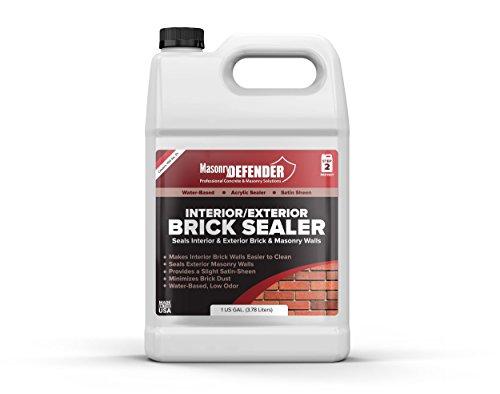
If your priority is stabilizing crumbling mortar and stopping brick dust without changing the appearance of the wall, the MasonryDefender Brick Sealer is the best tool for the job. This water-based acrylic sealer penetrates porous brick and mortar, bonding loose particles and locking them in place with a single coat. Users report that one application virtually eliminates the dust that accumulates on basement ledges and hearths.
The sealer dries clear with a satin sheen that adds a subtle, washable surface without the glossy plastic look of polyurethane. It applies easily with a brush or roller, and cleanup is straightforward with soapy water. The gallon container covers roughly 200 square feet per coat, which is generous for most single-wall projects. Because it is water-based, the odor is mild enough to use in occupied homes.
What holds it back from the top spot is that it is a sealer, not a pigmented paint. If you want to change the color of your brick, you will need to apply a separate masonry paint first and then seal it. The sealer also dries to an eggshell finish on some brick types rather than the advertised satin, so test a small area before committing to the full wall.
Why it’s great
- Stops brick dust and loose mortar effectively
- Low odor, water-based, easy cleanup
- Clear formula preserves natural brick appearance
Good to know
- Not a pigmented paint; brick color remains unchanged
- Satin sheen may appear eggshell on certain bricks
3. Rustins MASPC500 Masonry Paint Cream

The Rustins MASPC500 is a straightforward, water-based masonry paint intended for outdoor stone and brick surfaces. Its matte finish is non-reflective, making it a natural choice for exterior walls where a flat appearance is preferred. The 500-milliliter container covers roughly 7 square meters with a single coat, and the paint dries to the touch in about 30 minutes, enabling a second coat within the same afternoon.
Online reviews are mixed: some users praise the application ease and bright finish on stone window sills and steps, while others report that the paint began peeling within a year despite three coats on properly cleaned brick. This inconsistency suggests the paint is sensitive to surface preparation and may not hold up on highly porous or previously treated masonry. It performed best on stone and concrete rather than soft red brick.
Given the small container size and the adhesion concerns reported on brick, this product is best reserved for touch-up jobs or small decorative stone elements rather than full brick wall coverage. For larger projects, the Giani or MasonryDefender options offer more reliable long-term results.
Why it’s great
- Very fast drying, recoat in 30 minutes
- Water-based with low odor
- Matte finish hides surface imperfections well
Good to know
- Inconsistent adhesion on soft brick reported
- Small 500 ml volume limits use to small areas
4. Miss Mustard Seed’s MilkPaint Typewriter

Miss Mustard Seed’s MilkPaint offers a completely different approach: a dry powder that you mix with equal parts water to create a natural, chalky mineral paint. It is certified organic, free of VOCs, safe around children and pets, and can be used on brick, stone, wood, and drywall. The Typewriter color is a soft, faded black that gives brick a time-worn, antique character rather than a uniform modern coat.
When applied to bare, porous brick, the milk paint soaks in and creates a flat matte finish with subtle variation in opacity across the surface—a look that is difficult to replicate with acrylic paints. You can intentionally distress the surface by sanding after drying or by applying a thinner mix for a sheer wash. The paint dries in roughly 30 minutes, and two to three coats are typically needed for full coverage.
The biggest drawback is the learning curve. Milk paint behaves differently than standard liquid paint—it can be streaky or chippy if not mixed thoroughly or if the brick is not prepped correctly. On previously painted or sealed brick, a bonding agent is required. This product is ideal for furniture-sized brick projects or accent walls where you want a handcrafted, imperfect finish, but it may frustrate users seeking a uniform, modern look.
Why it’s great
- All-natural, zero VOCs, food-contact safe
- Creates unique distressed or chippy aesthetic
- Works on brick, stone, wood, and cabinets
Good to know
- Requires practice to mix and apply evenly
- Needs a top coat for durability in high-traffic areas
5. Wolman 360351 Outdoor Furniture Paint Granite

The Wolman Outdoor Furniture Paint is technically formulated for wood, not brick, but it earns a mention here because some DIYers reach for it as a budget-friendly option for painted brick planters or garden edging. The water-based formula is exceptionally thick, advertised as four times thicker than standard outdoor paint, which provides deep color and solid hide on rough surfaces. It dries to a gloss finish that resists water and UV damage.
On wood, this paint is a standout—users report excellent adhesion and durability on picnic tables and rocking chairs even after a full year outdoors with minimal prep. However, the manufacturer explicitly warns against using it on concrete, fiberglass, tile, or metal surfaces. Brick is not mentioned in the warnings, but the paint is not designed to bond with masonry’s porous, mineral chemistry, and adhesion may be inconsistent over time.
If you are considering this product for a brick project, limit it to above-ground decorative brick elements that are not load-bearing or exposed to constant moisture. For actual brick walls or fireplaces, a dedicated masonry paint or sealer will provide more reliable, longer-lasting results.
Why it’s great
- Very thick formula provides solid hide in one coat
- Durable and water-resistant on wood surfaces
- Fast drying and easy water cleanup
Good to know
- Not formulated for brick or masonry adhesion
- Limited to 20 sq. ft. coverage per quart
FAQ
Can I use standard interior wall paint on brick?
Do I need to prime brick before painting?
How do I stop brick paint from peeling after a year?
Final Thoughts: The Verdict
For most users, the best brick paint winner is the Giani Brick Transformations Whitewash Paint because it combines predictable coverage, low odor, and a finished look that transforms a dated fireplace with minimal effort. If you want to seal crumbling mortar and stop brick dust without changing the wall color, grab the MasonryDefender Brick Sealer. And for an antique, handcrafted brick accent wall where character matters more than uniformity, nothing beats the Miss Mustard Seed’s MilkPaint.

Mo Maruf
I created WellFizz to bridge the gap between vague wellness advice and actionable solutions. My mission is simple: to decode the research and give you practical tools you can actually use.
Beyond the data, I am a passionate traveler. I believe that stepping away from the screen to explore new environments is essential for mental clarity and physical vitality.