Our readers keep the lights on and my smoothie glass nicely filled. As an Amazon Associate, I earn from qualifying purchases.
The challenge is real: standard compression socks can turn your legs into a sweaty, clammy prison by midday. The very tool meant to improve circulation often creates a new problem—trapped heat and moisture that makes you want to yank them off by noon. The entire category has been plagued by thick, non-breathable fabrics that prioritize pressure over comfort, forcing users to choose between leg health and feeling dry.
I’m Mohammad Maruf — the founder and writer behind WellFizz. I’ve spent years analyzing textile engineering, moisture-wicking fiber blends, and the specific knit structures that separate a good compression sock from a genuinely breathable one that you can wear for 12 hours without irritation.
This guide cuts through the marketing to deliver the best breathable compression socks that actually keep your feet cool, dry, and fully supported, whether you’re on a long-haul flight or standing for a double shift.
How To Choose The Best Breathable Compression Socks
Not all “breathable” claims are equal. The difference between a sock that suffocates your skin and one that keeps air moving comes down to three specific factors: fiber composition, knit density, and panel placement. Most buyers focus on the compression level (mmHg) and ignore the material science—that is the primary mistake. A 20-30mmHg sock made of thick cotton-poly blend will trap moisture, while the same rating in a fine-gauge nylon-spandex or polyamide-elastane construction can feel airy all day.
Fiber Composition and Knit Structure
The base material dictates breathability. Look for socks with a high percentage of nylon or polyamide (often 70-80%) blended with spandex or elastane (15-20%). These synthetics wick moisture away from the skin and dry quickly. The knit gauge matters too: a tighter, finer micro-knit allows airflow between fibers, whereas a loose, bulky knit traps heat. Avoid cotton-heavy blends—cotton absorbs sweat and stays damp, causing skin maceration and odor.
Graduated Compression and Heat Dissipation
Graduated compression (20-30mmHg) is the therapeutic sweet spot for swelling and fatigue. But compression itself generates heat because the fabric hugs the skin. The best breathable designs use targeted mesh zones—often behind the knee, along the ankle, or on the top of the foot—to vent heat without losing the pressure gradient. Check product images for visible perforations or lighter-knit strips; these indicate intentional airflow engineering rather than a solid compression panel.
Seamless Toe and Fit Precision
A bulky toe seam creates friction, blisters, and dead air space that promotes sweating. Look for a seamless toe closure. Fit precision is equally critical: a sock that is too tight for your calf circumference will compress skin folds and block airflow. Measure your calf at the widest point and compare to the brand’s sizing chart. An oversized sock won’t compress effectively; an undersized one will cut off circulation and trap heat.
Quick Comparison
On smaller screens, swipe sideways to see the full table.
| Model | Category | Best For | Key Spec | Amazon |
|---|---|---|---|---|
| SB SOX Compression Socks | Mid-Range | All-Day Wear & Travel | 20-30mmHg, 80% Nylon/20% Spandex | Amazon |
| Physix Gear Compression Socks | Mid-Range | Medical Recovery & Nursing | 20-30mmHg, Graduated Compression with Arch Support | Amazon |
| Swiftwick Aspire Quarter Crew | Premium | Running & Athletic Performance | Light Cushion, 69% Nylon / 27% Olefin / 4% Spandex | Amazon |
| Zensah Tech+ Compression Socks | Premium | Serious Running & Shin Splint Prevention | 82% Polyamide / 18% Elastane, Seamless Toe | Amazon |
| Dr. Motion 6 Pairs Low Cut Ankle | Budget-Friendly | Casual Wear & Light Activity | Low-Cut Ankle, Cushioned Sole, Light Compression | Amazon |
In‑Depth Reviews
1. SB SOX Compression Socks 20-30mmHg

The SB SOX model is the gold standard for breathable all-day compression. Its 80% nylon and 20% spandex blend creates a fine micro-knit that feels lightweight against the skin while still delivering a firm 20-30mmHg graduated compression. The reinforced heel and toe cushioning add comfort without adding bulk, and the fabric surface allows air to circulate rather than trapping sweat against your calf.
Long-term durability is exceptional—multiple reports confirm these socks maintain their elastic integrity for over six years when air-dried, with no measurable loss of compression. The wide calf sizing (up to 24 inches in XX-Large) covers a demographic that budget brands ignore, and the top band stays put without cutting into the skin, a common failure point in cheaper alternatives.
What makes these the best overall pick for breathability is the balance of compression intensity and fabric airiness. The toe area has less compression, allowing your toes to spread naturally and reducing moisture buildup between digits. For DVT prevention on flights, post-DVT recovery, or standing 12-hour shifts, this is the pair that disappears on your legs.
Why it’s great
- Proven 6-year durability with zero elastic degradation
- Breathable nylon-spandex knit prevents clamminess during long wear
- True graduated compression that doesn’t cut the top band
Good to know
- Hand-wash only to preserve the micro-knit structure
- XX-Large sizing may be slightly long for shorter legs
2. Physix Gear Compression Socks 20-30 mmHg

Physix Gear targets a specific niche—users recovering from knee osteoarthritis or ligament tears who need the ankle-to-knee compression to stabilize the joint while keeping the foot cool. The graduated design provides 20-30mmHg that starts firm at the ankle and eases up the calf, with an added arch support panel that prevents the sock from sliding into the shoe arch during high-step activities.
The fabric construction uses a dense but ventilated weave that allows moisture to escape. Users report zero swelling after 12-hour nursing shifts with 12,000 steps, and the cushioned sole absorbs impact without adding insulation. The fit is accurate per the size chart—users with 15-16 inch calves and size 10-11.5 feet find the XL fits securely without sagging or wrinkling.
One consideration: the sock length runs slightly taller than expected, reaching the knee bend for shorter individuals, which can cause the fabric to bunch behind the knee if not pulled up fully. Despite this, the breathability and medical-grade compression make it the top choice for recovery and chronic pain management.
Why it’s great
- Excellent arch support prevents slipping and foot fatigue
- Cushioned sole with graduated compression for 12-hour shifts
- Soft, breathable fabric with minimal skin irritation
Good to know
- May be too long for shorter legs, causing ankle wrinkles
- Price point is higher than some comparable mid-range models
3. Swiftwick Aspire Quarter Crew
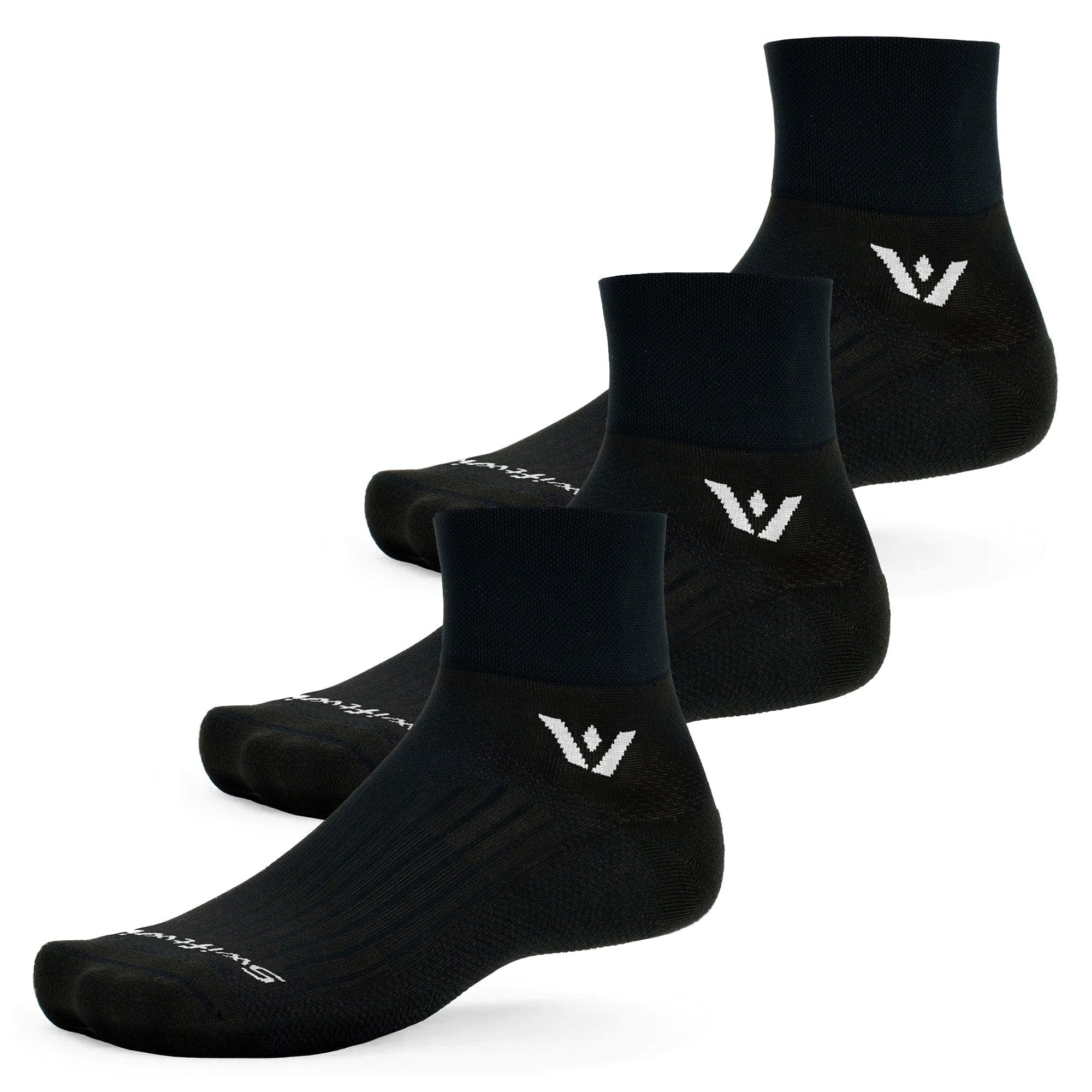
Swiftwick uses an unconventional material mix—69% nylon, 27% olefin, and 4% spandex—that sets it apart in the breathability race. Olefin is a hydrophobic polyolefin fiber that actively repels moisture and dries faster than nylon or polyester. This makes the Aspire Quarter Crew exceptionally good at keeping feet dry during high-output activities like marathon training or 10-mile daily walks.
The quarter crew height sits just above the ankle, making it ideal for runners who want compression without the bulk of knee-highs. The light cushion provides impact absorption without adding thermal mass, and the seamless toe construction eliminates friction points. Users report that feet stay noticeably cooler compared to standard nylon-spandex socks, even in summer heat.
Durability is strong for the first year, though the elastic band can fatigue over multiple seasons, leading to eventual holes in the heel and toe. The price per pair is premium, but the moisture management performance justifies it for serious athletes who prioritize staying dry over cost savings.
Why it’s great
- Olefin fiber actively wicks moisture and dries rapidly
- Light cushion with seamless toe for blister-free runs
- Stays in place without sagging or bunching
Good to know
- Elastic may wear out after 1-2 years of heavy use
- Limited color options compared to competitors
4. Zensah Tech+ Compression Socks
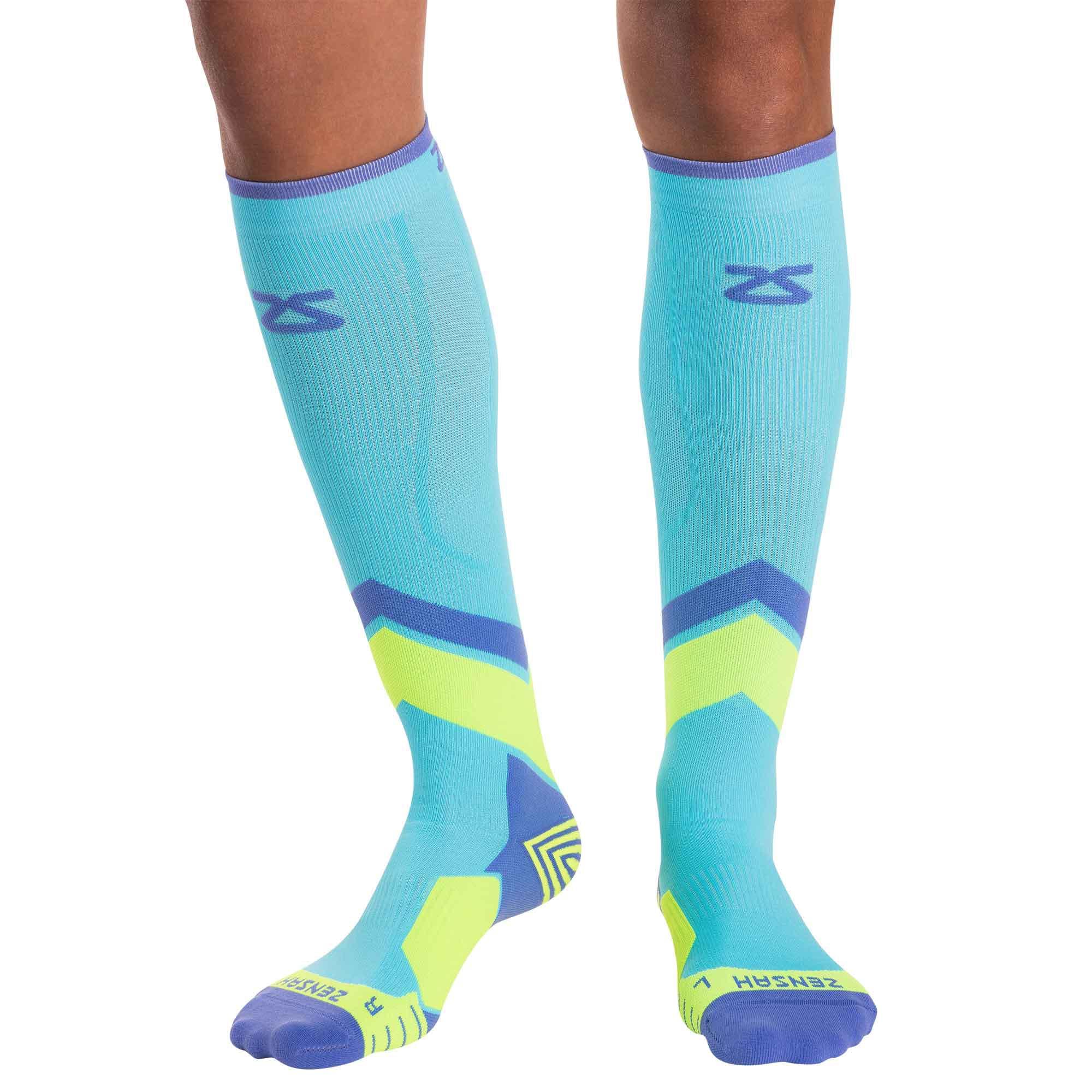
Zensah’s Tech+ uses an 82% polyamide and 18% elastane construction, a composition that offers superior stretch recovery and a tighter knit density than most alternatives. The result is a sock that feels almost like a second skin, with a smooth, compressive surface that doesn’t trap heat. The seamless toe is particularly well-engineered—no bulky stitching means no friction points during long runs.
The graduated compression is tuned for shin splint prevention, with the tightest weave concentrated around the shin and calf. Runners report that these socks effectively stabilize the lower leg muscles without overheating, even in temperatures down to 7°F. The moisture-wicking properties keep sweat moving away from the skin, and the fabric dries quickly between uses.
One minor drawback: the top band is narrower than earlier versions, and some users note it can dig into the calf if not positioned correctly. For size 8-8.5 feet, the fit is excellent, but larger or smaller feet may find the sizing less forgiving. This is a premium sock for dedicated runners who won’t compromise on compression or breathability.
Why it’s great
- Seamless toe eliminates blister risks on long runs
- High spandex content provides exceptional stretch recovery
- Effective shin splint prevention with targeted compression zones
Good to know
- Narrower top band can dig in if not pulled up properly
- High price point, especially for a single pair
5. Dr. Motion 6 Pairs Low Cut Ankle Compression Socks
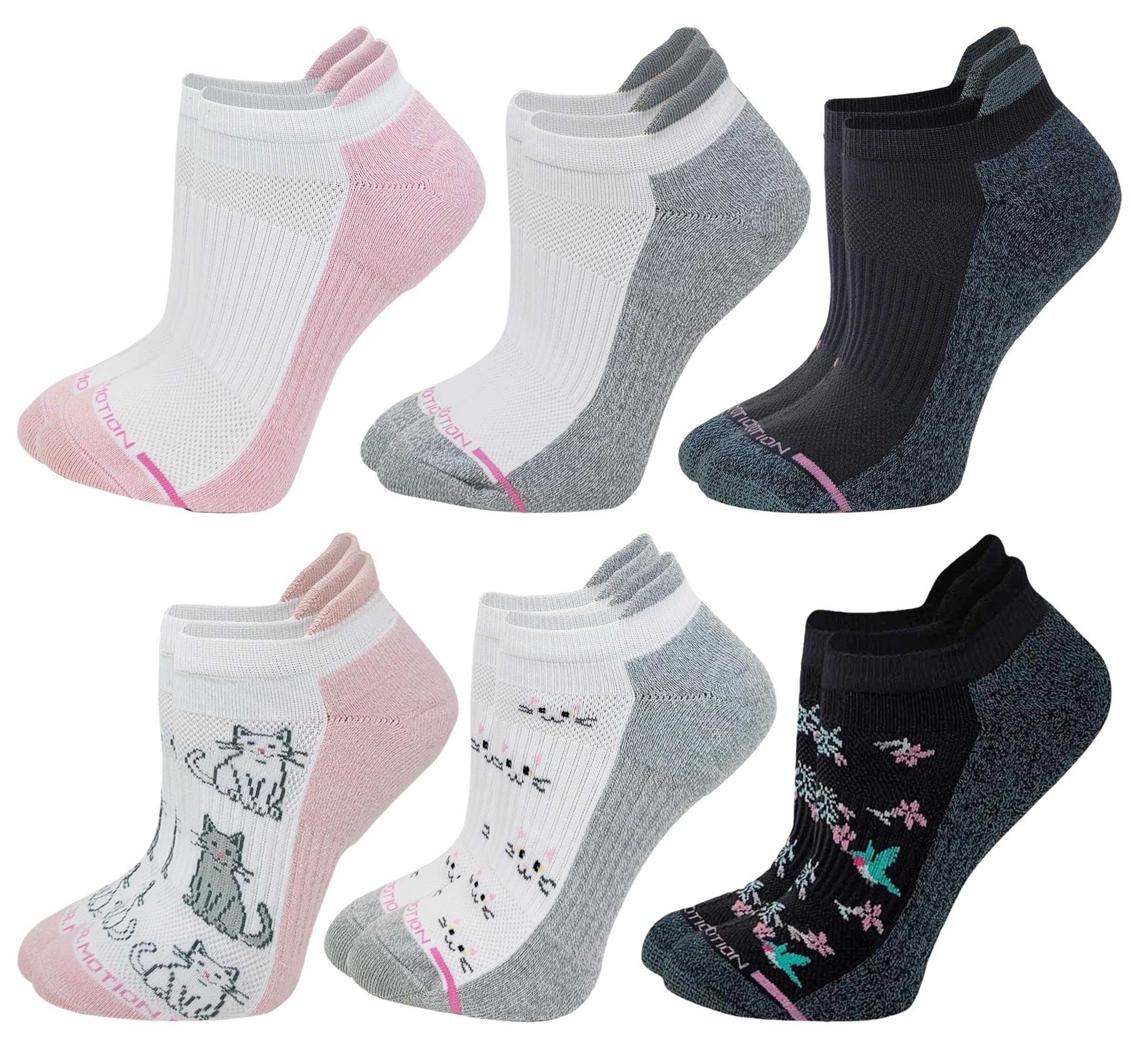
Dr. Motion offers a different take on breathable compression: a low-cut ankle sock with light compression and a cushioned sole. The six-pair pack is the most budget-friendly entry point in this guide, designed for casual wear rather than medical-grade therapy. The fabric is thick and fluffy but breathable—users consistently note that the socks hug the feet without causing sweatiness, even during 12-hour shifts in Dansko clogs.
The compression level is mild compared to true 20-30mmHg medical socks, but it provides enough support to reduce mild foot fatigue and arch strain. The toe box is intentionally roomy, leaving space for toes to splay naturally, which improves air circulation at the front of the foot. The cushioning absorbs shock without adding thermal bulk, a rare balance in cushioned socks.
These are not a replacement for knee-high graduated compression if you need DVT prevention or post-surgical recovery. For everyday office wear, errands, or light activity, however, they deliver exceptional comfort and breathability at a fraction of the per-pair cost of premium models. The true white color stays bright after multiple washes, and the elastic holds up well over time.
Why it’s great
- Six-pair pack offers outstanding per-pair value
- Roomier toe box promotes airflow and reduces moisture
- Comfortable cushioned sole for all-day standing
Good to know
- Only light compression—not for medical or therapeutic needs
- Low-cut style doesn’t provide calf or shin support
FAQ
How do I measure my calf for breathable compression socks?
Can breathable compression socks handle sweaty feet in summer?
Are low-cut ankle compression socks as breathable as knee-highs?
Final Thoughts: The Verdict
For most users, the best breathable compression socks winner is the SB SOX Compression Socks because they combine proven 6-year durability, a breathable 80/20 nylon-spandex knit, and true 20-30mmHg graduated compression that doesn’t trap heat. If you need advanced moisture management for running, grab the Swiftwick Aspire Quarter Crew for its olefin fiber construction. And for budget-friendly casual wear with light compression, nothing beats the Dr. Motion 6 Pairs Low Cut Ankle Socks.

Mo Maruf
I created WellFizz to bridge the gap between vague wellness advice and actionable solutions. My mission is simple: to decode the research and give you practical tools you can actually use.
Beyond the data, I am a passionate traveler. I believe that stepping away from the screen to explore new environments is essential for mental clarity and physical vitality.