Our readers keep the lights on and my smoothie glass nicely filled. As an Amazon Associate, I earn from qualifying purchases.
The choice between a wearable or a traditional pump used to force a trade-off between convenience and output. Heated wearable models have changed that, but the market is flooded with options that promise hospital-grade suction while being quiet enough for conference calls. The real test is whether a pump empties you effectively over months of daily use, not just during the first week.
I’m Mohammad Maruf — the founder and writer behind WellFizz. My approach to product analysis focuses on understanding the mechanics behind the marketing, specifically how motor consistency, flange fit, and heat technology affect long-term milk output in wearable and hospital-strength pumps.
This deep-dive comparison evaluates 7 of the most talked-about models based on real-world pumping data and mechanical specs, helping you find the best breastfeeding pump for your lifestyle and budget.
How To Choose The Best breastfeeding pump
Choosing the wrong pump often leads to decreased milk supply over time. The most common mistake is prioritizing discretion over effective emptying. When you evaluate a model, focus on three mechanical factors: suction strength (measured in mmHg), flange fit (narrow ring size), and the presence of a closed system that prevents moisture from reaching the motor.
Suction Strength and Motor Type
Hospital-strength pumps deliver suction between 250 mmHg and 300 mmHg. Wearable models often fall below 250 mmHg, which can lead to incomplete emptying for some users. Paruu’s 309 mmHg and eufy’s 300 mmHg are strong outliers for wearables. If you have a strong letdown reflex, a lower suction may work fine, but for exclusive pumpers, prioritize 270 mmHg or higher.
Flange Fit and Soft Silicone
The wrong flange size causes pain and reduces output. Most pumps include three or four insert sizes between 17 mm and 24 mm. Soft silicone flanges on the Philips Avent adapt to breast shape, but they also reduce forward pull compared to hard plastic. Some users find hard flanges with separate soft inserts more effective for deep extraction.
Quick Comparison
On smaller screens, swipe sideways to see the full table.
| Model | Category | Best For | Key Spec | Amazon |
|---|---|---|---|---|
| eufy Heated S1 | Wearable | Exclusive pumpers wanting heat + app | 300 mmHg / 46 dB / HeatFlow | Amazon |
| Medela Sonata | Hospital Strength | Hospital-level suction with portability | Hospital perfo / 1.5h battery | Amazon |
| Momcozy M6 | Wearable | Hands‑free all‑day comfort | 295 mmHg / 2nd Gen motor | Amazon |
| eufy Heated E20 | Wearable | Working moms needing fast heat | 300 mmHg / 46 dB / 30‑sec heat | Amazon |
| Philips Avent Double | Tabletop | Gentle suction with silicone shield | 270 mmHg / 8 stim + 16 expr | Amazon |
| MomMed S21 | Wearable | All‑in‑one kit for new pumpers | <46 dB / 3 modes / carrying case | Amazon |
| Paruu P16 | Wearable | Budget‑friendly strong suction | 309 mmHg / 3 flange inserts | Amazon |
In‑Depth Reviews
1. eufy Security Heated Breast Pump S1
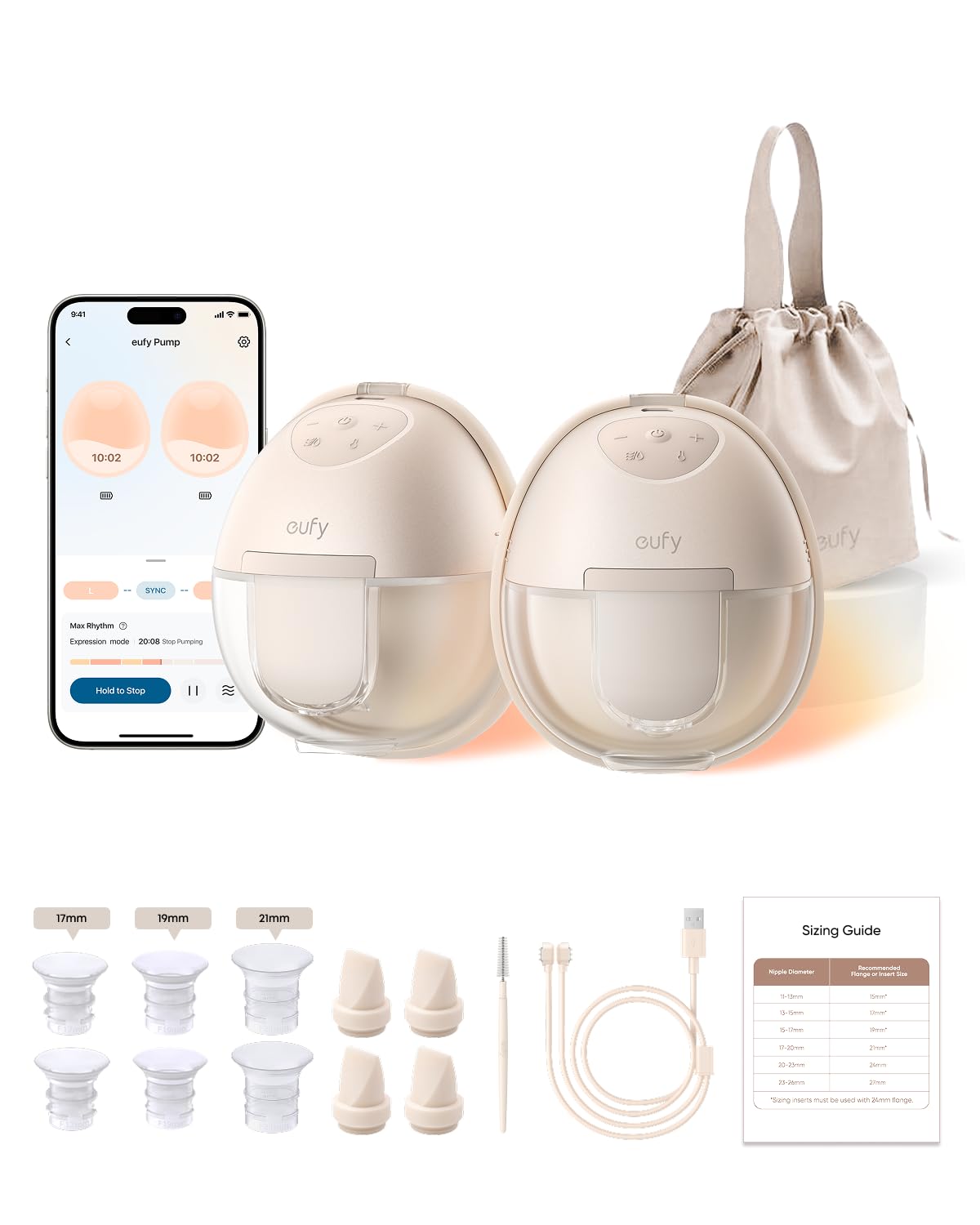
The eufy S1 brings HeatFlow technology to a wearable form factor, applying gentle warmth directly to the flange area to reduce clogs and increase output by roughly 30% according to internal trial data. The 300 mmHg suction range sits at the top of the wearable category, and the ability to customize rhythm via the app gives you fine control over letdown stimulation. The 105-degree ergonomic curvature with soft silicone makes extended sessions more comfortable than rigid flange designs.
Reviewers who own both a Spectra S1 and the eufy S1 report that the latter empties them more completely in less time, with the added bonus of reduced pumping-related anxiety due to the heat function. Battery life runs about 90 minutes with heat on full, enough for 5 sessions. The pump operates at 46 dB, which is noticeable in a quiet room but not disruptive in an office.
Some users note that the cups are slightly bulky for laying down or babywearing, and the diaphragm can leak if turned upside down. The leakproof double seal works best when the pump stays upright during use. The included flange inserts cover 17 to 24 mm, so most nipple sizes are accommodated out of the box.
Why it’s great
- Heated flange reduces clogs and improves letdown speed
- Suction matches hospital-grade pumps at 300 mmHg
- App-driven rhythm presets offer genuine customization
Good to know
- Cups are bulky and prevent laying down during pumping
- App requires a free trial after initial use
- Diaphragm can leak if the unit is tilted drastically
2. Medela Sonata Smart Breast Pump
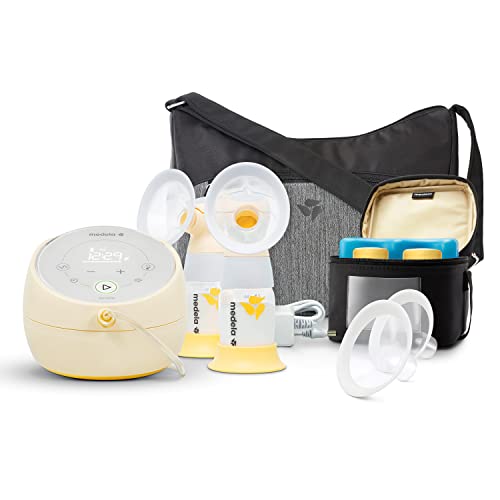
The Medela Sonata is a hospital-strength double electric pump that delivers the same vacuum pattern as the Medela Symphony used in NICUs. It features a closed system that prevents milk from backing up into the tubing, which makes it more hygienic than older Medela models. The built-in rechargeable battery lasts roughly 90 minutes, giving you two full sessions away from an outlet. The touch screen interface is intuitive, though the Medela Family app has mixed feedback for reliability.
Long-term exclusive pumpers consistently report that the Sonata maintains their supply as effectively as the Symphony, with the soft Flex breast shields improving comfort over the older PersonalFit flanges. The pump is quiet enough to not wake a sleeping baby in the same room, and the compact form factor makes it easy to pack in the included tote or backpack.
Several users mention glitchy behavior like power cord sensitivity and “CALL” error messages, though these are described as manageable rather than deal-breaking. The Sonata requires both hands for operation since it is not wearable, so you are tethered to a table or surface during pumping sessions.
Why it’s great
- NICU‑level suction pattern that matches the Symphony
- Closed system prevents moisture damage to motor
- Very quiet operation for nighttime use
Good to know
- Not a wearable design — requires sitting at a table
- App functionality has limited value for most users
- Occasional error codes require restarting the unit
3. Momcozy M6 Wearable Breast Pump

The Momcozy M6 features a second-generation motor delivering 295 mmHg suction, which sits near the top of the wearable segment. The DoubleFit flange uses a combination of soft and hard silicone to create a firm seal while maintaining comfort against sensitive tissue. The stand-up milk bowl design makes pouring into bags or bottles significantly easier than cup-style collectors, reducing the common problem of spills during transfer.
Exclusive pumpers and those managing oversupply report that the M6 empties the breast in about 12 minutes, matching their Spectra S1 output in half the time. The pump holds up to 6 ounces per side, which may require mid-session emptying for heavy producers. The timer and auto-shutoff are reliable enough that you can walk around during a session without monitoring the clock.
A small percentage of users report that aggressive movement or bending can cause milk to leak into the motor housing, although Momcozy’s warranty replacement is described as responsive. The pump requires a tight pumping bra to stay in place, and the 9 suction levels may feel limited if you prefer very fine control.
Why it’s great
- Drains completely in under 15 minutes for most users
- Stand-up collector reduces spill risk during transfer
- Quiet enough for discreet use in public
Good to know
- Not leakproof during heavy bending or exercise
- Limited to 9 adjustment levels
- Holds only 6 oz per side before needing emptying
4. eufy Security Heated Breast Pump E20
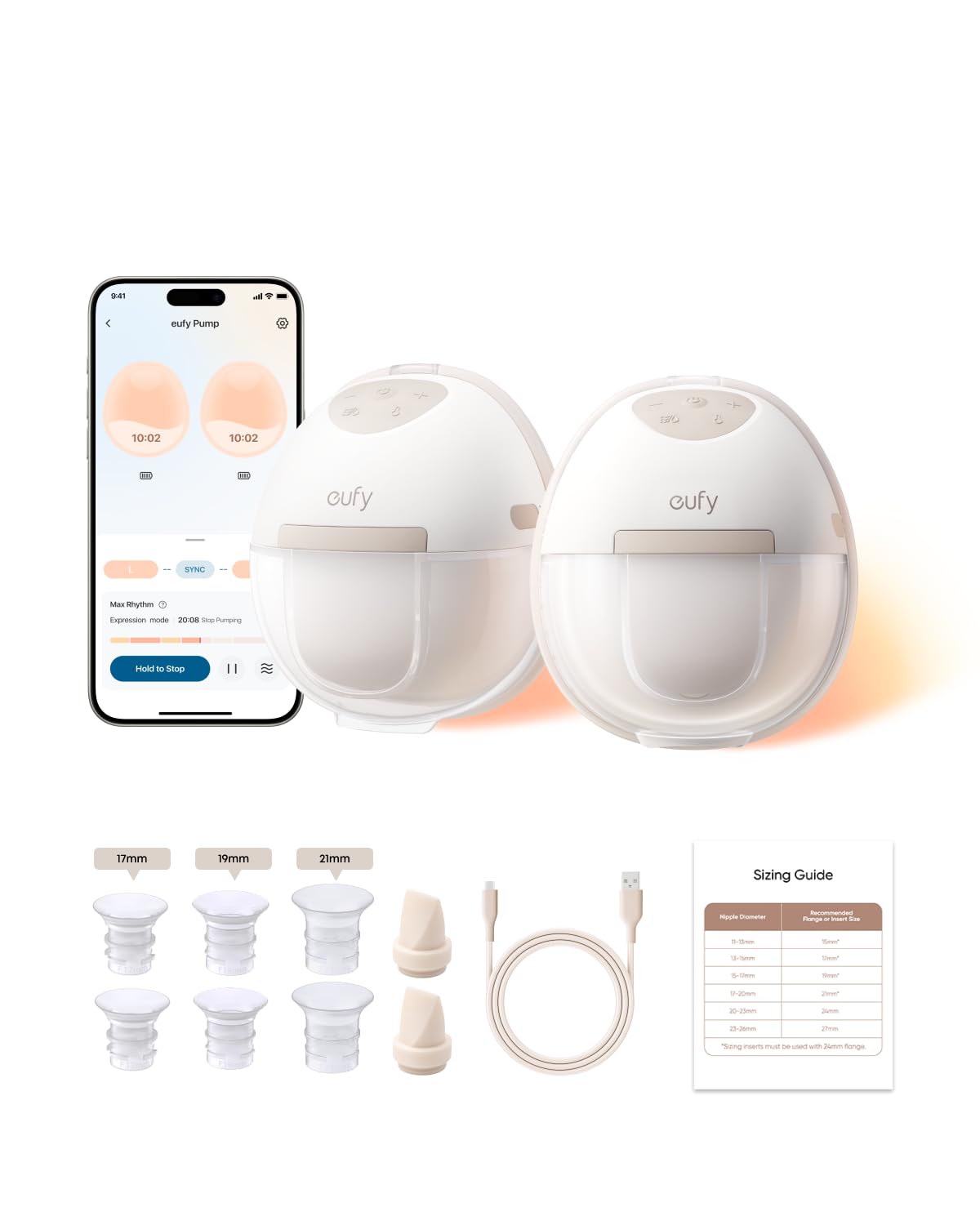
The eufy E20 shares HeatFlow technology with its S1 sibling but reaches target temperature in about 30 seconds, making it ideal for busy mothers who need to start pumping immediately. The slim profile fits more discreetly inside a bra than the S1, though the trade-off is a smaller motor footprint that some users say produces slightly less consistent suction at higher levels. Suction still hits 300 mmHg peak.
Working moms who pump in office environments appreciate the sub-46 dB noise floor and the ability to select from four preset rhythms without needing the app open. The double seal and reinforced lower half prevent leaks during normal movement, though the E20 is not designed for vigorous activity or bending over. Reviews from users switching from a Medela PISA report that the E20 empties just as effectively while allowing full mobility.
The package includes only 17, 19, and 21 mm inserts, so users with larger nipple diameters will need to purchase 24 mm inserts separately. Some testers noted that the placement is tricky at first — the pump must sit exactly centered in the bra to maintain a perfect seal, which takes practice.
Why it’s great
- Reaches warm temperature in under 30 seconds
- Slimmer profile than comparable heated wearables
- Effective for exclusive pumpers needing mobility
Good to know
- Does not include 24 mm flange inserts
- Placement needs practice for a consistent seal
- Not suitable for babywearing or laying sideways
5. Philips Avent Double Electric Breast Pump

The Philips Avent uses Natural Motion technology that mimics a baby’s suckling-and-massage pattern rather than pure vacuum. The soft silicone flange shield adapts to individual breast shape and size, which reduces friction compared to rigid plastic. With 8 stimulation levels and 16 expression levels, you have a very wide range of customization to avoid over-suctioning tender tissue.
This pump is unique in that it lets you pump without leaning forward — the bottle sits at a comfortable angle below the breast, so you can sit in a relaxed position. The closed system keeps milk out of the tubing, and the few parts make assembly and cleaning straightforward. Hospital-strength 270 mmHg suction is adequate for most users, though some exclusive pumpers may want more pulling power.
The primary limitation is that the unit must be plugged into a wall outlet during use — there is no rechargeable battery. The design is also tabletop-style rather than wearable, so you are stationary during pumping sessions. Users who have the option to get a battery-powered version through insurance should consider that for added mobility.
Why it’s great
- Soft silicone shield conforms to breast shape
- Comfortable pumping position without leaning forward
- Very wide customization with 24 total levels
Good to know
- Must remain plugged into a wall outlet at all times
- Tabletop design limits mobility
- 270 mmHg suction may feel low for exclusive pumpers
6. MomMed S21 Wearable Breast Pump
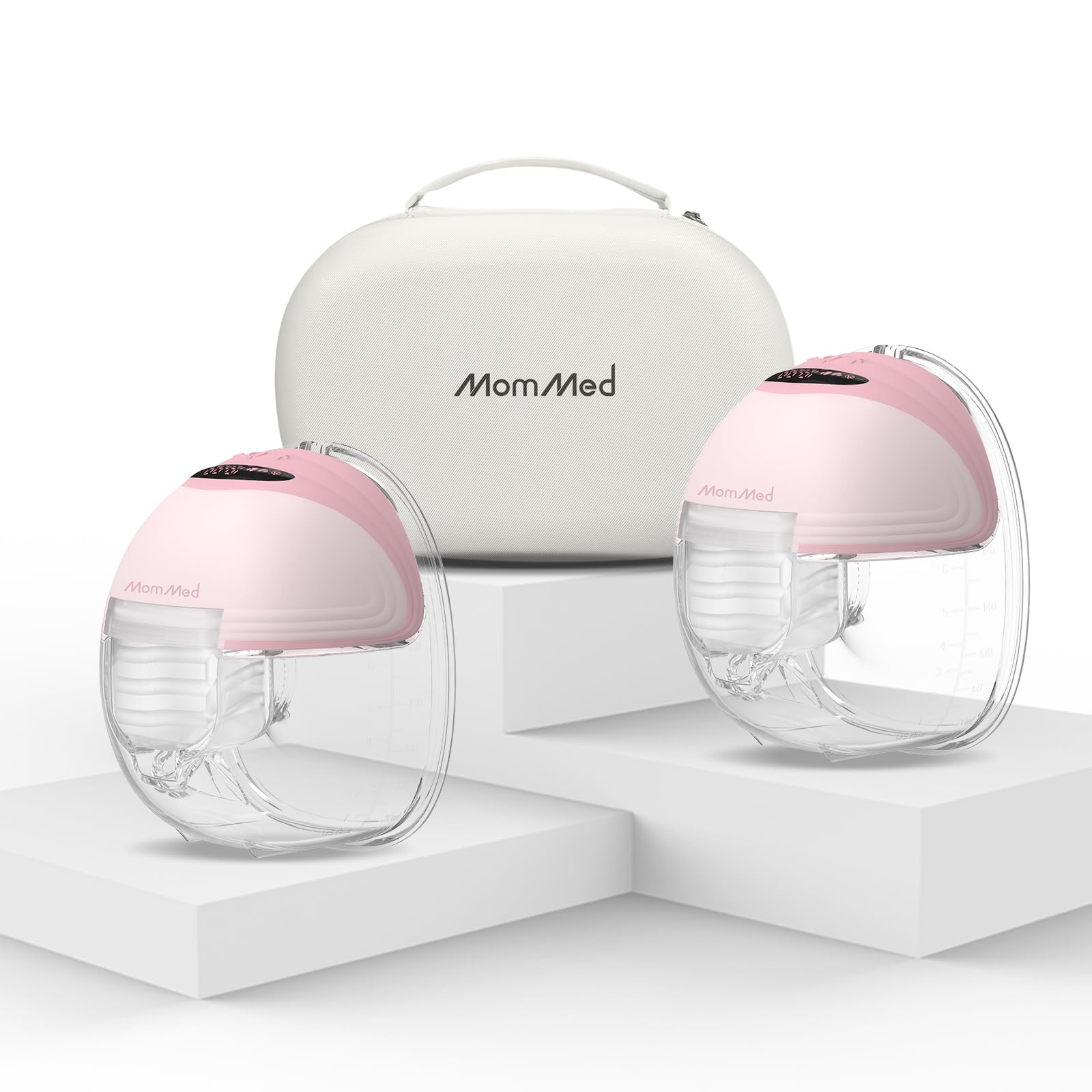
The MomMed S21 is one of the most complete all-in-one wearable kits on the market, including extra duckbill valves, cleaning brushes, and a carrying case. The backflow prevention membrane physically separates milk from the vacuum system, which reduces motor moisture damage and leakage risk. The semi-circular ergonomic design weighs under a pound and fits comfortably in nursing bras.
Exclusive pumpers who have tried multiple brands note that the S21 empties them as effectively as pricier models like the Zomee, and the included 6 flange inserts (17, 19, 21 mm pairs) cover a wide size range out of the box. The noise level stays below 45 dB, which is quieter than many competitors and discreet enough for shared workspaces. The LED screen and physical buttons are more durable than touch-only interfaces.
The main trade-off is that the suction curve is not as aggressive as 300 mmHg wearables, so some mothers need longer sessions to fully empty. The inserts can also be difficult to remove from the larger flange pieces because they suction tightly — a minor inconvenience but notable for daily use.
Why it’s great
- Comprehensive kit with accessories and carrying case
- Backflow membrane prevents motor contamination
- Extremely quiet operation for shared spaces
Good to know
- Suction feels less aggressive than higher‑mmHg wearables
- Flange inserts can be hard to separate for cleaning
- Battery life is adequate but not standout
7. Paruu P16 Hands Free Breast Pump
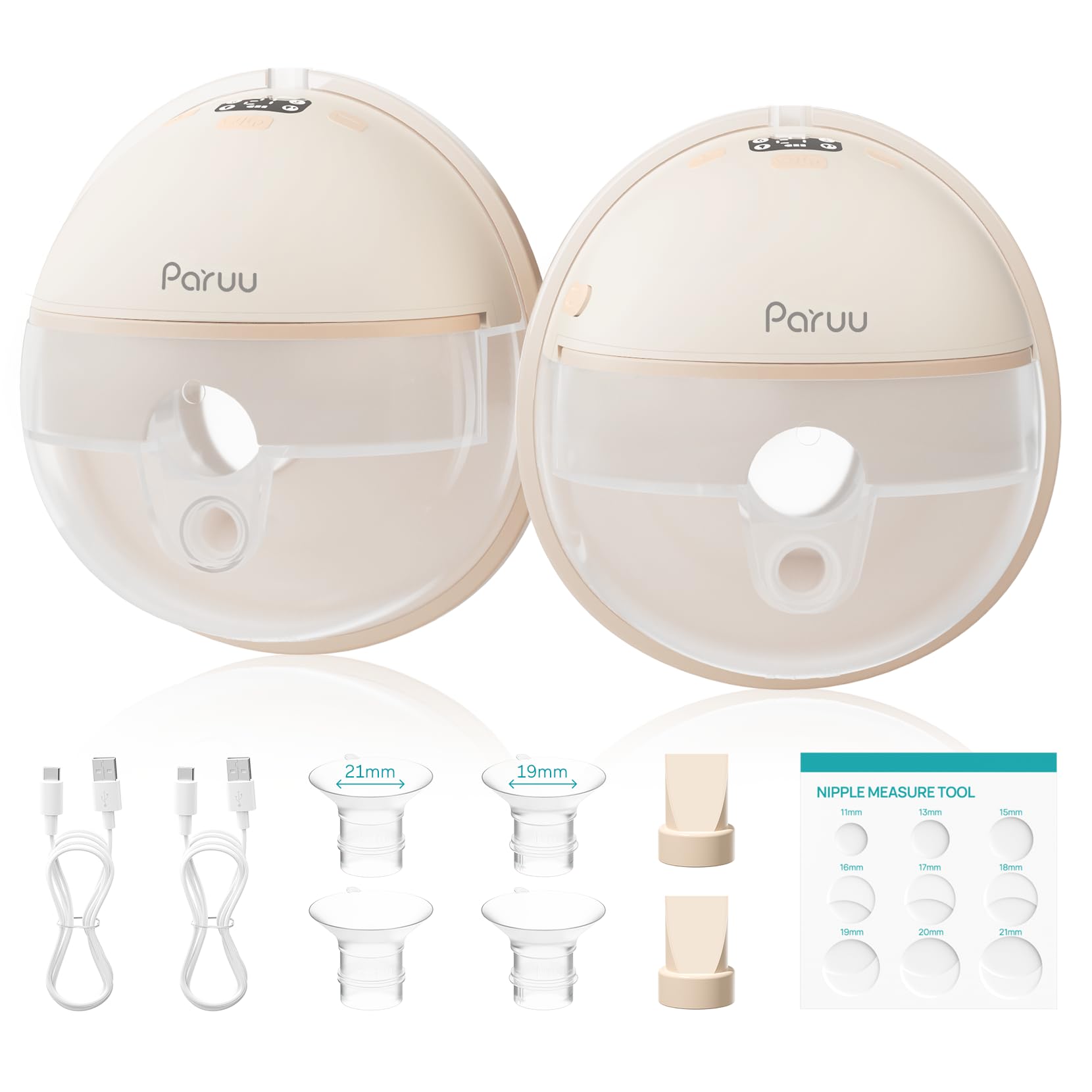
The Paruu P16 punches well above its tier with a maximum suction of 309 mmHg — higher than many premium wearables. The 4 modes with 12 levels each allow granular control, and the LED display clearly shows session time, mode, and level. Weighing only 240 grams, it is lighter than most competitors and sits very discreetly inside nursing bras.
Experienced mothers who have used Spectra and Zomme pumps report that the P16 increased their per-session output by 3 to 4 ounces due to the stronger suction curve. The 30-minute auto shutoff prevents over-pumping and helps protect the motor. The included 19, 21, and 24 mm inserts cover a broad range, and the BPA-free food-grade silicone passed FDA certification.
The short battery life is the most common complaint — it lasts about 3 sessions before needing a recharge. Some users also mention that it is louder than mid-range wearables, though not disruptive in a private room. Replacing duckbill valves and diaphragms monthly is necessary to maintain peak suction strength.
Why it’s great
- Exceptional 309 mmHg suction at a budget-friendly price
- Extremely lightweight and discreet in the bra
- Three flange sizes included with measurement card
Good to know
- Battery lasts only 2–3 pumping sessions
- Motor noise is higher than mid-range wearables
- Regular valve replacement required for peak performance
FAQ
Is a heated wearable pump worth the extra cost over a standard wearable?
Should I replace duckbill valves and diaphragms monthly?
Can a wearable pump fully replace a hospital-grade tabletop pump for exclusive pumping?
Final Thoughts: The Verdict
For most users, the best breastfeeding pump winner is the eufy Security Heated Breast Pump S1 because it combines 300 mmHg hospital-grade suction with HeatFlow warmth and app-based customization in a wearable form factor. If you want a proven hospital-strength pump that requires no app and works every time, grab the Medela Sonata. And for a budget-friendly entry point with surprisingly strong suction that rivals premium models, nothing beats the Paruu P16.

Mo Maruf
I created WellFizz to bridge the gap between vague wellness advice and actionable solutions. My mission is simple: to decode the research and give you practical tools you can actually use.
Beyond the data, I am a passionate traveler. I believe that stepping away from the screen to explore new environments is essential for mental clarity and physical vitality.