Our readers keep the lights on and my smoothie glass nicely filled. As an Amazon Associate, I earn from qualifying purchases.
Exclusive pumping is a full-time job that demands equipment you can trust for every single session, day and night. A pump’s ability to empty the breast efficiently, maintain supply, and withstand heavy daily use defines whether this journey feels manageable or exhausting.
I’m Mohammad Maruf — the founder and writer behind WellFizz. I’ve spent countless hours analyzing hospital-grade suction specs, flange geometry, and motor durability across hundreds of user reports to separate the pumps built for daily workhorses from those that falter under the pressure of exclusive pumping.
This guide walks you through the precise specs, real-world performance data, and critical design considerations that separate an average pump from a reliable daily companion. Finding the right breast pump for exclusive pumping means choosing a model that empties quickly, keeps your milk supply steady, and fits into your life without constant maintenance.
How To Choose The Best Breast Pump For Exclusive Pumping
Exclusive pumping means your pump is your primary tool for feeding your baby. Unlike occasional pumpers, you need a motor that maintains consistent suction over months, flanges that prevent painful friction, and a closed system that keeps milk out of the tubing. Here are the critical factors that separate daily-use winners from occasional-use disappointments.
Motor Durability and Suction Consistency
The motor is the heart of any pump for exclusive pumping. Hospital-grade pumps cycle through thousands of sessions without losing suction strength. Look for motors rated at 250 mmHg or higher — the most reliable models push 295–300 mmHg. Frequency of cycles per minute also matters: faster cycles (40–60 per minute) in stimulation mode help trigger letdown, while slower cycles (30–45 per minute) in expression mode mimic deeper nursing. Pumps that lose suction after three months or require constant maintenance are not suitable for exclusive use.
Flange Fit and Material Comfort
Incorrect flange size is the most common cause of low output and nipple pain. The nipple should move freely within the tunnel without rubbing the sides. Most pumps include 24mm and 28mm flanges, but many women need 17mm, 19mm, or 21mm. Flange material also matters — hard plastic can chafe after hours of daily use, while soft silicone edges reduce friction. Some premium pumps now offer anatomical 105° openings that reduce breast compression, resulting in measurably higher yield per session.
Closed System Hygiene
A closed system prevents breast milk from entering the tubing and motor housing. This is non-negotiable for exclusive pumping because any milk residue in the tubing can harbor bacteria and degrade suction performance. Closed-system pumps also require fewer replacement parts. Check that the pump has a backflow protector or a diaphragm between the collection cup and tubing — budget models sometimes skip this feature, forcing you to replace tubes frequently.
Portability and Battery Runtime
Exclusive pumpers often need to pump in multiple locations — at home, in the car, at work. A pump with a rechargeable battery that lasts at least 60 minutes per charge (enough for two to three 20-minute sessions) makes daily life significantly easier. Wearable pumps offer full freedom of movement but typically have smaller motors and smaller collection capacities (usually 5–8 ounces). Corded hospital-grade units with a battery pack provide a middle ground: strong suction plus mobility.
Ease of Cleaning and Assembly
When you are pumping six to eight times per day, every extra minute spent cleaning feels magnified. Pumps with fewer parts — ideally four to six components per session — simplify the wash-and-dry cycle. Dishwasher-safe parts save time, and parts that stand upright during drying prevent water pooling. Avoid pumps with intricate valves or membranes that are difficult to reassemble in the dark during a middle-of-the-night session.
Quick Comparison
On smaller screens, swipe sideways to see the full table.
| Model | Category | Best For | Key Spec | Amazon |
|---|---|---|---|---|
| Spectra S1 Plus Premier | Rechargeable Corded | Hospital-grade reliability, travel-friendly | Rechargeable battery, 3-hour runtime | Amazon |
| Medela Sonata Smart | Smart Corded | Comfort, hospital-strength suction | Touch screen, 1.5-hour battery | Amazon |
| eufy S1 Heated | Wearable Heated | Heat-assisted letdown, app control | 300 mmHg suction, HeatFlow, 5-session battery | Amazon |
| Momcozy M6 | Wearable Mid-Range | Hands-free daily pumping, discrete design | 295 mmHg suction, 2nd Gen motor, 6 oz cup | Amazon |
| eufy E20 | Wearable Heated | Mid-range warmth, app integration | 300 mmHg, HeatFlow, 3 heat levels | Amazon |
| Lansinoh Discreet Duo | Wearable Budget | Quiet sessions, 100-min battery, easy clean | 45 dB noise, 4 modes, 21/24mm flanges | Amazon |
| Medela Pump in Style MaxFlow | Wearable Corded Hybrid | In-bra collection, 2-Phase technology | 105° shields, MaxFlow microvibrations | Amazon |
| Zomee Z2 | Wearable Portable | Alternate-mode tech, 2-hour battery, nightlight | 3 modes, 9 levels, USB-C, LCD screen | Amazon |
| Philips Avent Double Electric | Corded Hospital | Gentle suction, lean-forward comfort | 270 mmHg, 8+16 levels, soft silicone flange | Amazon |
In‑Depth Reviews
1. Spectra S1 Plus Premier Rechargeable Breast Pump

The Spectra S1 is the gold standard for exclusive pumping because it combines hospital-grade suction with true portability. Its rechargeable battery provides up to three hours of runtime — enough for six 20-minute sessions — so you are never tied to a wall outlet. The natural nursing technology cycles between a fast stimulation phase and a slower, deeper expression phase that closely mimics an infant’s suckling rhythm.
Users consistently report emptying in 15–20 minutes, significantly faster than many competing corded pumps. The massage mode helps prevent clogs, and the built-in nightlight makes middle-of-the-night sessions less disruptive. The closed system prevents milk from entering the tubing, keeping the motor safe and reducing the need for replacement parts.
Lactation consultants frequently recommend Spectra as the first choice for mothers who need to establish or maintain supply. The only tradeoff is the size — it is bulkier than wearable options — but the suction consistency and battery longevity make it the most reliable daily driver for exclusive pumping.
Why it’s great
- Long battery life lasts through 5-6 sessions
- Quiet motor that doesn’t disturb sleeping baby
- Effective massage + expression modes empty fast and prevent clogs
- Closed-system design keeps tubes clean and motor safe
Good to know
- Comes only with 24mm and 28mm flanges — smaller sizes sold separately
- Not wearable; requires tubing and careful positioning
- Slightly bulky for carrying in a diaper bag
2. Medela Sonata Smart Double Electric Breast Pump
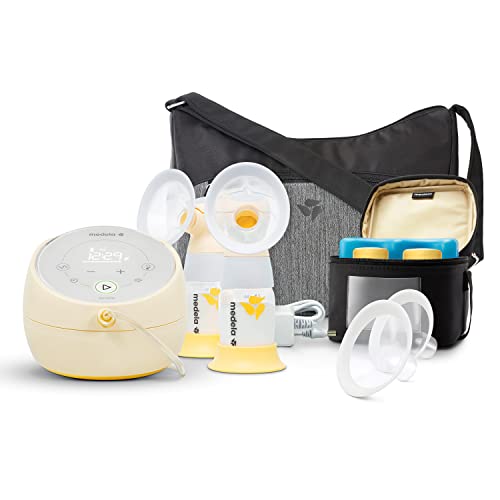
The Medela Sonata brings Symphony-level suction into a compact, travel-friendly chassis. The hospital-strength vacuum adjusts responsively during pumping to maintain consistent suction even as your milk flows, which prevents the discomfort of over-suctioning at the end of a session. The 105° Flex breast shields reduce compression on breast tissue by up to 30% compared to traditional 90° flanges, and soft rims prevent chafing during prolonged pumping sessions.
Weighing under 2.5 pounds with a built-in handle, the Sonata is easy to carry between rooms or to work. The rechargeable battery delivers roughly 1.5 hours of runtime — enough for three 20-minute sessions — and the motor is whisper-quiet, making it easy to pump without waking a sleeping baby nearby. The touch screen provides quick access to suction levels and an automatic timer tracks session length.
Users who have been through multiple children often call the Sonata their final pump purchase. The closed system prevents milk backup into the tubing, and the four main parts (flange, valve, membrane, bottle) are simple to clean. The Medela Family app connection is helpful for logging sessions, though the app itself has mixed reviews on reliability.
Why it’s great
- Consistent hospital-grade suction that adjusts mid-session
- Comfortable Flex shields with soft rims reduce chafing
- Compact and lightweight for a corded pump
- Very quiet motor, easy to use during baby’s nap
Good to know
- Battery life limited to about 3 sessions per charge
- App connectivity can be glitchy
- Some units experience “CALL” error code that requires reset
3. eufy Security Heated Breast Pump S1
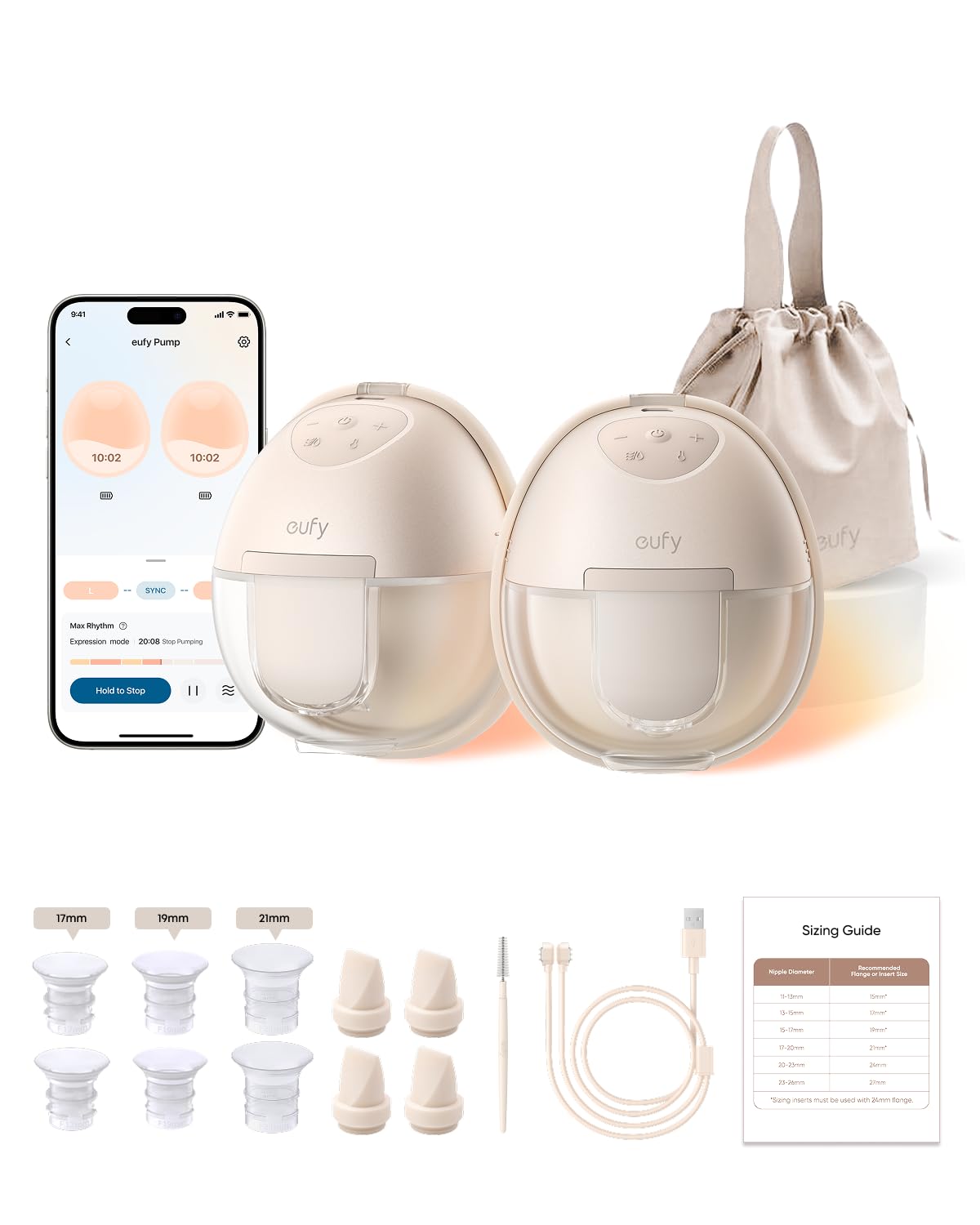
The eufy S1 is the first wearable pump to integrate gentle warmth into the pumping experience, and for exclusive pumpers, this feature changes the game. The HeatFlow technology warms the shield to approximately 95°F, which mimics the natural warmth of a baby’s mouth and helps trigger faster letdown. In user trials, mothers reported up to 30% higher output compared to the same pump with the heating function off. The heat also helps reduce the discomfort of engorgement and may lower the risk of recurring plugged ducts.
Suction reaches 300 mmHg with adjustable cycles and intensity. The 105° ergonomic flange and soft silicone edges make prolonged wear comfortable. The app allows you to create custom pumping rhythms beyond the four presets, and it logs the volume from each session so you can track supply trends over time. The closed system and double-seal design prevent leaks, and the pump operates at just 46 dB — quiet enough for discreet use in shared spaces.
The main limitation for exclusive pumping is cup capacity. Each side holds about 5–6 ounces, which may require emptying mid-session for oversuppliers. The battery lasts roughly five 20-minute sessions with heat turned on, and about seven sessions without. The S1 is best suited for exclusive pumpers who prioritize warmth, portability, and app tracking.
Why it’s great
- HeatFlow technology improves letdown and reduces clogged ducts
- App customization for rhythm, suction, and session logging
- Compact and leakproof for discreet in-bra pumping
- Comes with multiple flange sizes (17-24mm)
Good to know
- Cup capacity is limited to about 5-6 oz per side
- Battery drains faster when heat is on
- App subscription may be required for custom rhythms after free trial
4. Momcozy M6 Hands Free Wearable Breast Pump

The Momcozy M6 is engineered for exclusive pumpers who value complete hands-free freedom without sacrificing suction power. The 2nd Gen motor delivers 295 mmHg of suction, which is strong enough to empty most users in 12–15 minutes. The Ideal Rhythm technology was developed through over 1,000 trials to find a cycle pattern that maximizes output, and real-world feedback confirms it outperforms many pricier wearables.
The DoubleFit flange uses a dual-layer design: a hard outer shell for stability and a soft inner silicone layer that conforms to the breast shape. This reduces the pinching and friction that often occur with single-layer flanges during long pumping sessions. The stand-up milk collector holds up to 6 ounces per side and can be poured directly into storage bags or bottles without a separate transfer step.
The M6 is particularly praised by mothers who exclusively pumped for twins or oversuppliers who needed strong, reliable suction multiple times per day. The pump is quiet enough for shared workspaces, and the battery lasts approximately 3–4 sessions per charge. The main drawback is that the pump requires a snug pumping bra to stay in place; bending over can cause spillage if the seal shifts.
Why it’s great
- Strong 295 mmHg suction empties fast, even for oversuppliers
- DoubleFit silicone flanges reduce discomfort during extended wear
- Stand-up collector design simplifies pouring and cleaning
- Excellent customer service with overnight warranty replacements
Good to know
- Requires tight pumping bra to stay positioned correctly
- Can spill if you lean forward or bend over
- No WiFi or phone app for tracking sessions
5. eufy Security Heated Breast Pump Hands-Free E20
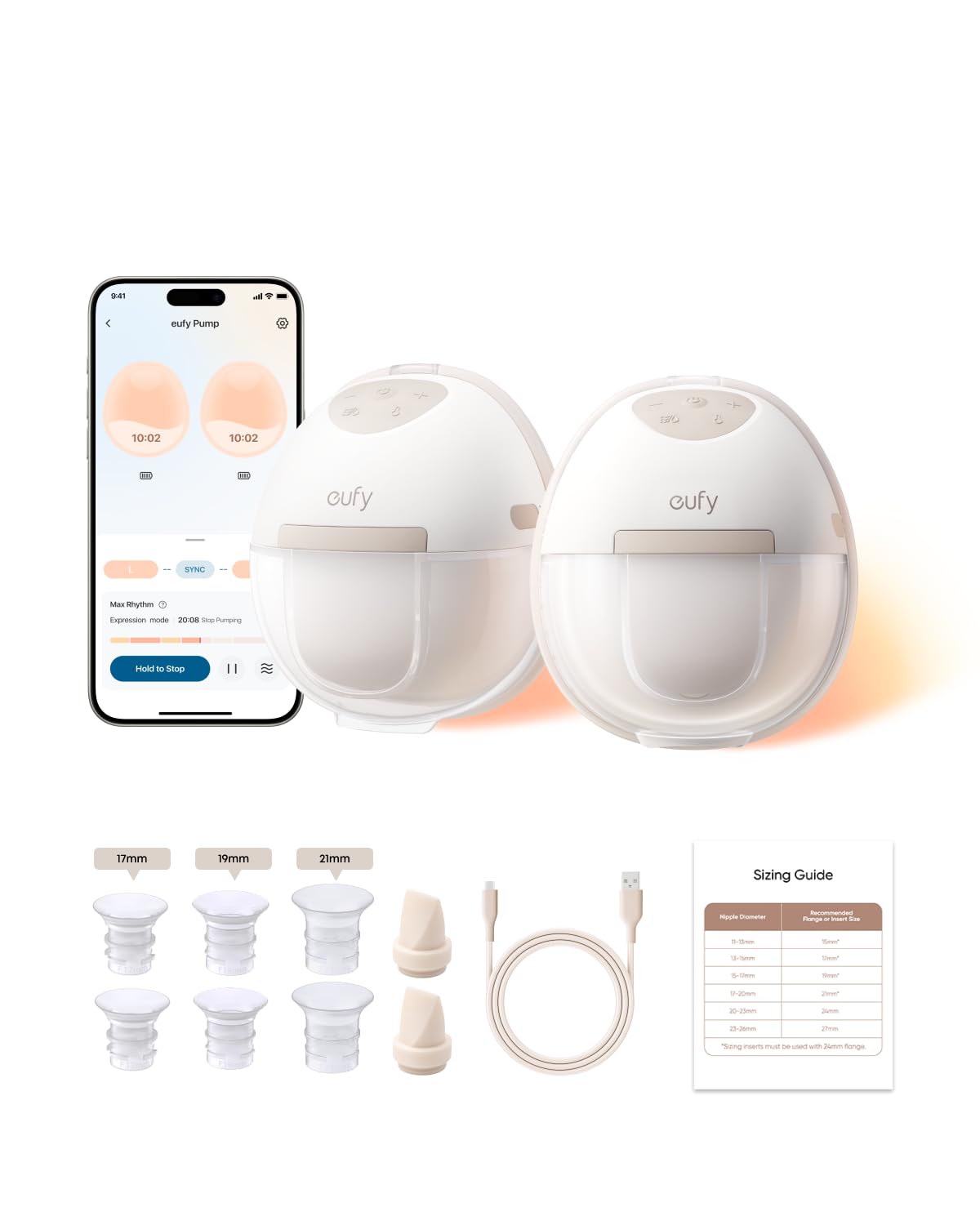
The eufy E20 is the more accessible sibling of the S1, offering the same HeatFlow warmth technology in a slightly more compact and slightly less expensive package. The three heat settings (low, medium, high) warm the shield to a maximum of about 95°F, and users consistently report that the warmth helps trigger letdown faster and reduces the pain of initial suction. The pump reaches operating temperature in about 30 seconds, so you can start pumping almost immediately.
Suction goes up to 300 mmHg with adjustable cycle speeds, and the app allows you to save custom rhythms, set timer limits, and log milk output. The 105° ergonomic flange design with soft silicone edges reduces tissue compression, and the double-seal system prevents leaks even when the cups are full. The pump operates at 46 dB, making it discreet enough for office use or pumping while on a call.
The E20 includes 17mm, 19mm, 21mm, and 24mm flanges, so sizing is rarely an issue. The battery lasts roughly five 30-minute pumping sessions with heat on, and the USB-C charging means you can top up from a laptop or car charger. The cups are slightly bulkier than some other wearables, making them more noticeable under clothing, but the combination of warmth, app control, and reliable suction makes the E20 a strong mid-range choice for exclusive pumping.
Why it’s great
- Heating improves milk flow and makes pumping sessions more comfortable
- App provides full control over rhythm, suction, and logging
- Includes 4 flange sizes for an accurate fit
- Quick 30-second warm-up time
Good to know
- Bulky compared to some other wearables
- Cannot lay down or baby-wear while pumping
- Battery runtime decreases noticeably with heat on
6. Lansinoh Discreet Duo Wearable Breast Pump
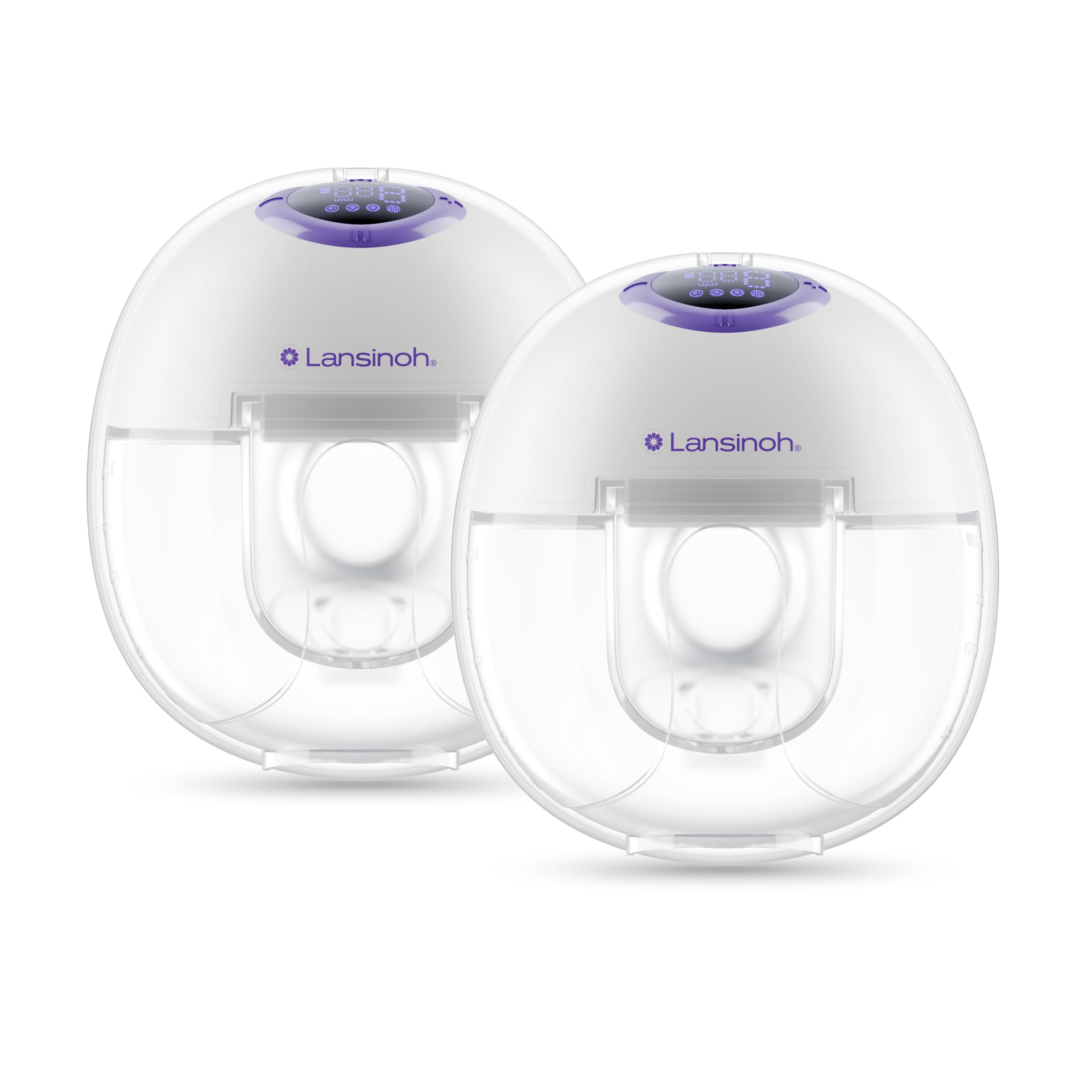
The Lansinoh Discreet Duo is built for exclusive pumpers who need a quiet, lightweight wearable for long shifts. The pump operates at under 45 dB, which is barely audible in a quiet room, making it ideal for pumping during meetings, video calls, or while the baby sleeps nearby. The battery lasts up to 100 minutes on a charge — roughly three 30-minute sessions — and the automatic shut-off after 20 minutes prevents over-pumping.
The pump offers four customizable modes (stimulation, expression, combination, and a massage rhythm) with nine levels of suction. The flange sizes include 21mm and 24mm, with additional sizes available separately. The closed system uses silicone flanges and inserts that are free of BPS and BPA, and the anti-backflow design prevents milk from entering the motor housing.
Users who have tried high-end wearables like the Willow or Elvie often find the Discreet Duo empties just as well at a more accessible price. The pump is easy to assemble with only a few parts, and the materials are durable enough for daily washing. The main downsides are that the pump is not as discreet as its name suggests — it does add noticeable bulk under a shirt — and some users report that the seal can leak if the parts are not snapped together perfectly.
Why it’s great
- Very quiet motor doesn’t disturb others
- Long 100-minute battery runtime
- Easy to clean and assemble with few parts
- Closed system with BPA-free silicone components
Good to know
- Not truly discreet — adds noticeable bulk under clothing
- Seal depends on precise part assembly
- No custom carrying case included
7. Medela Pump in Style MaxFlow
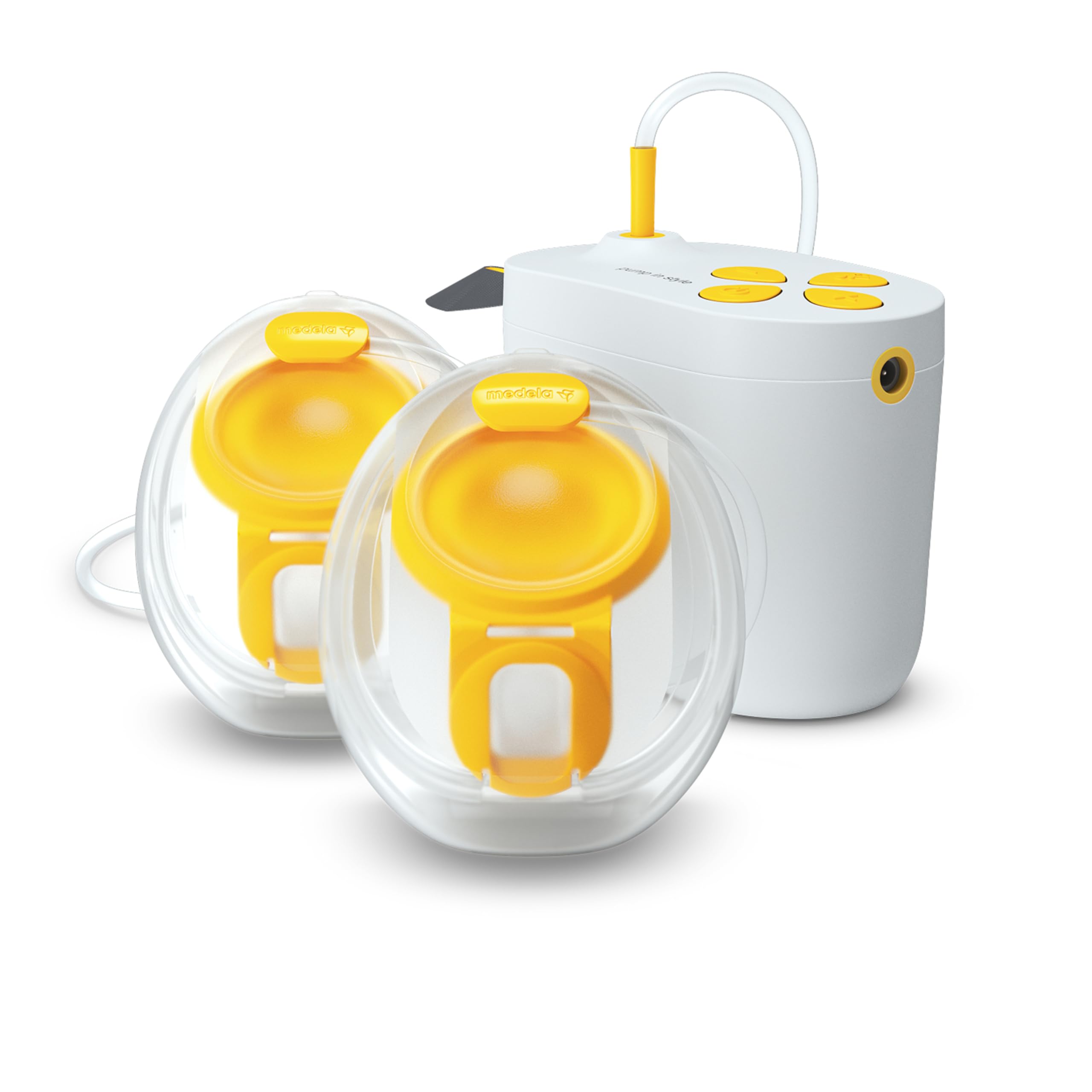
The new Pump in Style MaxFlow combines Medela’s 2-Phase technology with a wearable in-bra collection cup system, giving you a hospital-grade motor in a more portable format. The MaxFlow feature uses microvibrations during the expression phase to enhance milk flow, and the 105° anatomically designed shields reduce breast compression, leading to an average 11.8% increase in milk per session compared to standard 90° shields.
The collection cups stand upright to prevent spills and feature an easy-pour spout for transferring milk. All three main parts (cup, shield, membrane) are dishwasher-safe, and the closed system keeps milk out of the tubing. The pump runs on either the included power adapter or eight AA batteries, though heavy users will find the battery drain rate relatively high.
Exclusive pumpers who prefer Medela’s hospital suction but want a cord-free experience will appreciate this hybrid approach. However, the AA battery requirement is a notable limitation — rechargeable battery packs are not included. Some users also report that the hard plastic collection cups can crack at the flange lock after several weeks of daily use, though replacement parts are available separately.
Why it’s great
- Hospital-grade motor with 2-Phase technology for natural rhythm
- Ergonomic 105° shields increase milk output
- In-bra collection cups allow hands-free movement
- Dishwasher-safe parts for easy cleaning
Good to know
- Runs on AA batteries — no rechargeable battery pack included
- Some users report flange cracks after a month of daily use
- No display screen for level or timer
8. Zomee Z2 Double Electric Breast Pump

The Zomee Z2 stands out with its Alternate-Mode technology, which automatically switches expression between breasts in a rhythmic pattern. This staggered suction more closely mimics how a baby nurses, alternating between short breaks that allow the nipple to recover while keeping the other breast stimulated. Users report getting the same milk volume in about half the time compared to a standard Spectra S2 session.
The pump includes three modes: Stimulation (fast, light suction to trigger letdown), Expression (stronger, slower suction for milk removal), and 2-Phase (alternates between the two). Each mode offers nine adjustable levels. The LCD screen has a built-in nightlight for late-night sessions, and the internal rechargeable battery lasts over two hours — enough for four 30-minute sessions. The USB-C port allows charging from a laptop or power bank, and the AC adapter provides an alternative power source.
The Z2 is designed with only four main parts per side, making assembly and cleaning quick. The closed anti-backflow system keeps milk out of the motor. A 2-year warranty covers the pump, which is longer than most competitors. The main limitation is flange sizing — standard models include only down to 19mm, so users needing 17mm or 15mm flanges will need to purchase third-party adapters. The 140ml (4.7 oz) bottle capacity is also somewhat small for oversuppliers.
Why it’s great
- Alternate-Mode tech mimics natural nursing rhythm
- Very fast emptying — saves 10-15 minutes per session
- USB-C charging and long battery life
- 2-year warranty for peace of mind
Good to know
- Standard flanges only go down to 19mm
- Bottle capacity is 4.7 oz — may need mid-session emptying
- Diaphragm contacts milk, requiring thorough cleaning
9. Philips Avent Double Electric Breast Pump

The Philips Avent SCF393/82 uses Natural Motion technology, which combines suction with gentle nipple stimulation to trigger letdown quickly. The soft silicone flange shield adapts to the shape of the breast, creating a comfortable seal without the pinching commonly reported with hard plastic flanges. The pump provides up to 270 mmHg of suction — hospital-strength for most users — with 8 stimulation levels and 16 expression levels for fine-tuning.
The lean-forward design allows you to pump without leaning forward, which is a subtle but significant comfort improvement for exclusive pumpers who spend hours pumping. The closed system prevents milk from entering the tubing, and the pump has few parts for quick assembly and cleaning. The included tote bag and bottle pouch make this an easy grab-and-go solution for work or travel.
Exclusive pumpers who are sensitive to strong suction or have elastic nipples often prefer the Philips Avent because of its gentle expression curve. The main drawback is that this model does not have a rechargeable battery — it must remain plugged into a wall outlet during use. For some, this limitation is manageable at a home pumping station, but it reduces flexibility for pumping in different rooms or on the go.
Why it’s great
- Soft silicone flange reduces pain and adapts to breast shape
- Natural Motion technology combines suction with nipple stimulation
- Very few parts for quick wash-and-dry cycles
- Compact design with carrying tote for portability
Good to know
- Must be plugged into a wall outlet during use
- Some users find the 24 levels overwhelming
- Less effective for oversuppliers who need stronger suction
FAQ
How do I know if my flange size is correct for exclusive pumping?
Can I use a wearable breast pump for all my exclusive pumping sessions?
What does ‘closed system’ mean and why does it matter for exclusive pumping?
How long should a breast pump motor last for daily exclusive pumping?
Should I use heat during pumping sessions for exclusive pumping?
Final Thoughts: The Verdict
For most exclusive pumpers, the breast pump for exclusive pumping winner is the Spectra S1 Plus Premier because it combines hospital-grade suction consistency with a reliable rechargeable battery and a closed system that keeps maintenance low across months of daily use. If you want heat-assisted letdown and app tracking, grab the eufy S1 Heated. And for complete hands-free freedom with strong suction that empties in under 15 minutes, nothing beats the Momcozy M6.

Mo Maruf
I created WellFizz to bridge the gap between vague wellness advice and actionable solutions. My mission is simple: to decode the research and give you practical tools you can actually use.
Beyond the data, I am a passionate traveler. I believe that stepping away from the screen to explore new environments is essential for mental clarity and physical vitality.