Our readers keep the lights on and my smoothie glass nicely filled. As an Amazon Associate, I earn from qualifying purchases.
Finding a pastime that genuinely flexes your mental muscles without feeling like homework is a rare win. The best brain games for adults deliver that sweet spot: a satisfying challenge that sharpens logic, memory, and spatial reasoning while you’re simply having fun.
I’m Mohammad Maruf — the founder and writer behind WellFizz. Over years of analyzing puzzle and game markets, I’ve evaluated hundreds of titles based on cognitive demand, replayability, and the measurable depth of their mechanics.
After sorting through dozens of options, I’ve zeroed in on the five that consistently deliver a genuine mental workout. This guide breaks down the top contenders for the best brain games for adults.
How To Choose The Best Brain Games For Adults
The right brain game depends on whether you want a solo meditation session or a competitive group challenge. The key is matching the cognitive demand to your goals.
Puzzle Variety and Difficulty Scaling
A game with a broad difficulty curve—from starter to expert—ensures you won’t outgrow it quickly. Titles with 60 to 200 progressive challenges offer lasting value by constantly raising the mental bar.
Mechanic Type: Logic, Strategy, or Spatial
Logic puzzles (like Kanoodle) test deductive reasoning. Strategy games (like Sequence) require planning and hand management. Spatial puzzles (like Tetris) improve mental rotation and visual processing. Pick the type that targets the cognitive muscle you want to exercise.
Player Count and Replayability
Solo games offer deep, focused thinking. Multiplayer games introduce unpredictability and social dynamics, often forcing faster, more adaptive decisions. Consider your usual play environment: quiet solo sessions or lively game nights with friends.
Quick Comparison
On smaller screens, swipe sideways to see the full table.
| Model | Category | Best For | Key Spec | Amazon |
|---|---|---|---|---|
| Educational Insights Kanoodle | Logic Puzzle | Solo mental focus & travel | 200 puzzles (2D & 3D) | Amazon |
| Spin Master Tetris Impossible | Lenticular Puzzle | Visual-spatial challenge | 639 lenticular pieces | Amazon |
| SmartGames Cats & Boxes | Logic Game | Portable family logic play | 60 progressive challenges | Amazon |
| Jax Original Sequence | Strategy Board Game | Multiplayer group strategy | 2-12 player team play | Amazon |
| The Master Theorem | Puzzle Book | Eclectic riddle & wordplay | 212 pages of puzzles | Amazon |
In-Depth Reviews
1. Educational Insights Kanoodle

Kanoodle is the benchmark for portable solo brain training. The challenge booklet packs 200 puzzles into 2D and 3D configurations, pushing your spatial reasoning and critical thinking through a true beginner-to-expert curve. The pyramid board adds a third dimension that flat puzzles simply can’t match, forcing you to visualize piece stacking rather than just tile arrangement.
What sets Kanoodle apart is its accessibility. The nine puzzle pieces are chunky enough for easy handling, and the board doubles as a storage case—making it an ideal travel companion. Reviewers consistently praise its ability to engage both young students and older adults, with one noting it served as an effective cognitive recovery tool for a stroke survivor who played over two hours daily.
The build quality is solid, and the difficulty progression keeps you coming back. Even after dozens of solves, the 3D pyramid puzzles retain a satisfying level of “just one more try” tension. For anyone wanting a pure, screen-free mental workout that fits in a bag, this is the top pick.
Why it’s great
- Massive difficulty range (200 puzzles)
- Portable board doubles as storage case
- Effective for all ages, from kids to seniors
Good to know
- Single-player only; no social element
- Some early puzzles feel too easy for experienced solvers
2. Spin Master Games Tetris Impossible Puzzle
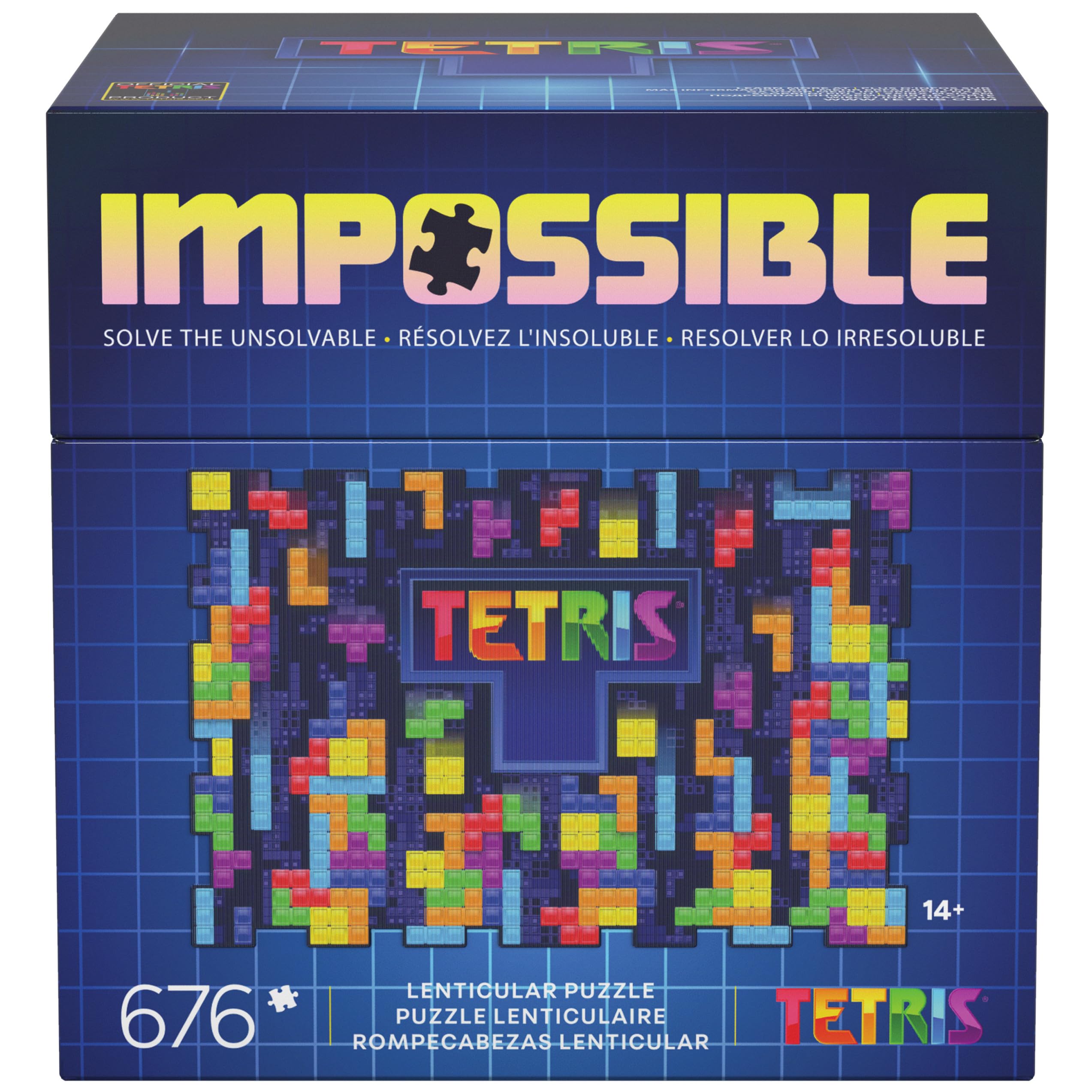
This isn’t a standard jigsaw. The Tetris Impossible Puzzle uses lenticular printing so each piece shifts color and pattern depending on the angle you view it from. The 639 interlocking tetromino shapes follow the classic Tetris grid logic, but the visual misdirection makes matching edges a genuine spatial workout. You’re not just finding shapes—you’re tracking optical shifts as you rotate each piece.
The 2-in-1 design adds a bonus 56-piece mini-puzzle that inserts into the main image for an extra layer of complexity. This is a puzzle that demands patience and deliberate visual scanning. Reviewers note it’s “stressful” for some but “fun and challenging” for those who enjoy a hard visual hunt. The included poster helps with reference, but the lenticular effect means the poster can only approximate the final look.
Once completed, the 28″x19″ finished piece displays like kinetic art, with the color shifts still active as you walk past it. It’s as much a conversation piece as it is a cognitive exercise.
Why it’s great
- Unique lenticular visual twist on classic Tetris
- Bonus 56-piece puzzle adds replayability
- Stunning display piece when finished
Good to know
- Some customers report bent pieces on arrival
- Not a quick activity; requires significant time investment
3. SmartGames Cats & Boxes

Cats & Boxes is a compact logic puzzle that asks you to strategically place cats inside boxes using sliding puzzle pieces. The premise is simple, but the 60 challenges ramp from “easy enough for a 7-year-old” to “genuinely stumping an adult.” Each puzzle presents a diagram you must replicate by moving tetromino-like tiles across a grid, and the cat figures must end up in their matching colored boxes.
The tactile quality of the physical components—realistic plastic cats and chunky puzzle pieces—makes this a highly satisfying hands-on experience. Reviewers consistently praise the durability and the fact that the challenge booklet keeps players coming back across multiple sittings.
It’s not a “brain-melting” puzzle for expert solvers, as some reviews note, but the relaxing difficulty curve makes it ideal for casual logic practice or introducing spatial reasoning to new players.
Why it’s great
- Exceptionally portable and compact design
- 60 well-structured difficulty levels
- High-quality tactile components
Good to know
- May feel too easy for advanced puzzle solvers
- More suited to casual play than deep cognitive training
4. Jax Original Sequence
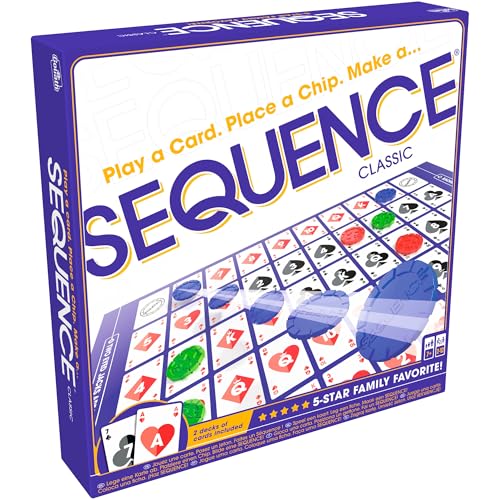
Sequence flips the script from solo logic to multiplayer strategy. Each player draws a card and places a chip on the corresponding board space, aiming to complete a five-in-a-row sequence. The twist: two standard decks are used, and certain cards act as wilds that remove opponent chips or allow you to place anywhere. This blend of hand management and area control forces you to balance immediate plays against long-term positioning.
The folding board is thick and sturdy, the chips are durable, and the rules take under five minutes to learn. It supports 2 to 12 players, scaling from a head-to-head duel to a chaotic team game. Reviewers consistently call it “the ultimate party board game” because the social dynamic—blocking teams, celebrating sequences, plotting comebacks—keeps energy high through multiple rounds.
One consistent quality complaint involves chip count: some boxes arrive with noticeably fewer red chips than blue or green chips. Still, the gameplay itself is so robust that most players simply substitute with other colors or spare pieces.
Why it’s great
- Fast setup and simple rules for large groups
- Combines luck and deep strategic planning
- High-quality board and components
Good to know
- Some boxes have uneven chip color distribution
- Strategy depth may feel shallow for hardcore eurogamers
5. The Master Theorem
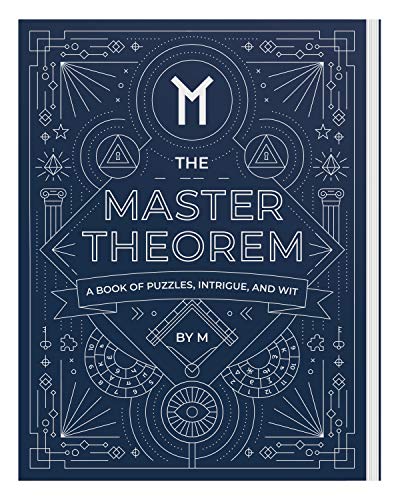
The Master Theorem is a full-color puzzle book that recreates the experience of an online riddle hunt in physical form. Each puzzle begins with a short story containing embedded clues, and solving often requires external research—Googling obscure facts, decoding ciphers, or recognizing pop culture references. The puzzles span rebuses, wordplay, trivia, and interactive challenges that demand diverse thinking.
The 212-page format includes progressive hints encoded with a Caesar cipher, so you can dial the difficulty up or down without flipping to the answer key immediately. That said, the answer section is physically unsealed, which some reviewers note as a design flaw—one user taped a rubber band over the solutions to avoid accidental spoilers. For fans of cryptic crosswords and MIT Mystery Hunt-style challenges, this book provides hours of varied mental stimulation.
It’s not a casual brain game. Expect to spend significant time on individual puzzles, and be prepared to accept that some will require research tools. The reward is a genuine sense of accomplishment when that obscure cultural reference clicks.
Why it’s great
- Eclectic puzzle types that test diverse thinking
- Progressive hint system with Caesar cipher encoding
- Satisfying story-driven narrative arc
Good to know
- Answer section is unsealed, risking accidental spoilers
- Some puzzles require external research to solve
FAQ
What age range are these brain games actually designed for?
Which brain game is best for improving memory versus logic?
Are these games suitable for travel or quiet solo sessions?
Final Thoughts: The Verdict
For most adults, the clear winner for a portable, progressive cognitive workout is the brain games for adults standout: the Educational Insights Kanoodle, because its 200-puzzle 2D/3D design offers the best difficulty scaling and portable form factor. If you want a visual-spatial challenge that doubles as wall art, grab the Spin Master Tetris Impossible Puzzle. And for group strategy on game night, nothing beats the Jax Original Sequence.

Mo Maruf
I created WellFizz to bridge the gap between vague wellness advice and actionable solutions. My mission is simple: to decode the research and give you practical tools you can actually use.
Beyond the data, I am a passionate traveler. I believe that stepping away from the screen to explore new environments is essential for mental clarity and physical vitality.