Our readers keep the lights on and my smoothie glass nicely filled. As an Amazon Associate, I earn from qualifying purchases.
A torn tendon in your foot changes how you move with every single step. The sharp pull through your arch, the fear of re-injury, the frustrating search for something that actually locks the damaged area down without cutting off circulation — that is the reality you are living in right now. The wrong brace wastes your money and prolongs recovery; the right one becomes the single most important tool in your healing process.
I’m Mohammad Maruf — the founder and writer behind WellFizz. I have spent years analyzing medical device specifications, cross-referencing biomechanical support data, and tracking real user outcomes across hundreds of orthopedic braces to identify what actually stabilizes a torn foot tendon.
Whether you are dealing with peroneal tendonitis, a posterior tibial tendon tear, or a post-surgical repair, the right immobilization strategy is non-negotiable. This guide breaks down the five most effective options available today to help you find the brace for torn tendon in foot that matches your specific injury stage and daily demands.
How To Choose The Best Brace For Torn Tendon In Foot
A torn foot tendon demands a specific kind of support — not just any ankle wrap or generic sleeve will do. The brace must offload the injured tendon, limit the range of motion that aggravates the tear, and remain comfortable enough for extended wear during recovery. Here is what matters most.
Immobilization vs. Functional Support
Acute tendon tears (within the first two weeks) require rigid immobilization to prevent any movement that could widen the tear. A walking boot with a rigid plastic shell and a rocker sole is the right call here. Once the tendon starts healing and you transition to weight-bearing activity, a lace-up ankle stabilizer with figure-eight strapping provides the dynamic support needed to protect the tendon during walking or light sport.
Air Bladder vs. Fixed Cushioning
Swelling management is critical in the early stages of a tendon injury. An air bladder system allows you to adjust compression levels as the swelling goes down, maintaining consistent stabilization without pressure points. Fixed foam cushioning is simpler and more durable for long-term use but cannot adapt to changing edema. If your injury involves significant inflammation, prioritize an adjustable air cushion over a static pad.
Rocker Sole Geometry
A rocker bottom sole shifts your weight from heel-strike to toe-off without requiring the midfoot tendons to flex. This reduces tendon strain by up to fifty percent during walking compared to a flat-soled brace. For any torn tendon that runs through the arch or along the ankle — peroneal, posterior tibial, or flexor tendons — a boot with a pronounced rocker sole is essential for pain-free ambulation.
Fit and Sizing Precision
A brace that shifts or slides on your foot negates the entire purpose of immobilization. Measure your foot length and match it against the manufacturer’s size chart rather than relying on your shoe size. The heel should sit firmly in the pocket of the boot, and your toes should not press against the front edge. Adjustable hook-and-loop straps should allow you to dial in compression without cutting off circulation — if you have to overtighten to stop movement, the size is wrong.
Quick Comparison
On smaller screens, swipe sideways to see the full table.
| Model | Category | Best For | Key Spec | Amazon |
|---|---|---|---|---|
| Med Spec ASO Ankle Stabilizer | Lace-Up Stabilizer | Chronic tendonitis & active recovery | Figure-8 strap system | Amazon |
| Honprodu Air Walking Boot | Air CAM Boot | Acute tears with swelling | Adjustable air cushion | Amazon |
| Honarry Walking Boot | Rigid CAM Boot | Stress fractures & post-op rest | Removable orthopedic insole | Amazon |
| Brace Direct Air CAM Fracture Boot (XS) | Air CAM Boot | Smaller frames & pediatric use | 1.76 lb lightweight build | Amazon |
| Brace Direct CAM Walker Fracture Boot (M) | CAM Walker Boot | Mid-range foot & ankle tears | Low-profile rocker sole | Amazon |
In‑Depth Reviews
1. Med Spec ASO Ankle Stabilizer
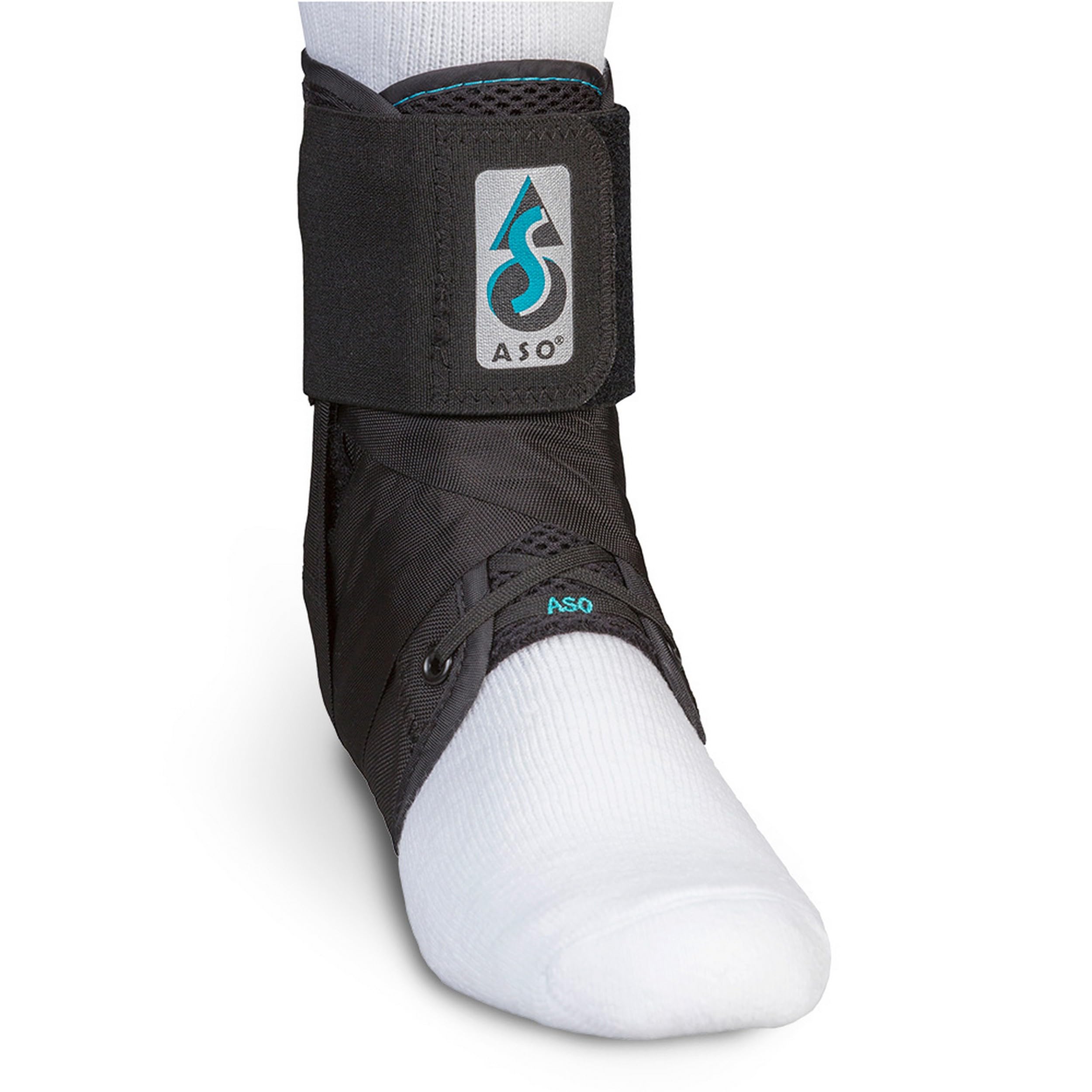
The Med Spec ASO Ankle Stabilizer is the most trusted lace-up brace among athletic trainers and physical therapists for a reason — its figure-eight strapping system directly resists the inversion and eversion forces that tear peroneal and lateral ankle tendons. The nylon and CoolFlex padding construction keeps the brace breathable during all-day wear, and the lacing system allows micro-adjustments so you can lock the heel pocket without strangling the dorsum of your foot.
Real users recovering from peroneal tendonitis and chronic sprains report that this brace fits comfortably inside most gym shoes and running shoes, making it viable for transitioning into light activity during the later stages of healing. The durable Velcro holds up for years even with daily adjustments, and the bilateral design means you can use it on either foot without losing strap alignment.
This is not a brace for acute, non-weight-bearing tears — it provides functional support rather than rigid immobilization. For anyone managing a chronic tendon issue or returning from a healed tear who needs to prevent re-injury during sport or walking, this stabilizer delivers precise, adjustable control that the bulky boots cannot match.
Why it’s great
- Figure-eight straps target inversion/eversion directly
- Fits inside most athletic shoes for active recovery
- PT-recommended with decades of clinical use
Good to know
- Difficult to put on with one hand during acute injury
- Provides functional support, not full immobilization
2. Honprodu Air Walking Boot

The Honprodu Air Walking Boot addresses the swelling problem head-on with its adjustable pneumatic air cushion, allowing you to increase or decrease compression as your edema changes over the first weeks of recovery. The air bladder wraps the entire lower leg and ankle, providing circumferential support that a rigid plastic shell alone cannot achieve. Users with fractured ankles and severe sprains report that the air cushion reduces the twisting sensation that makes walking painful on an unstable tendon.
At just under a kilogram, this boot is noticeably lighter than many hospital-grade CAM walkers, which reduces fatigue during longer periods of weight-bearing. The anti-slip sole handles both indoor flooring and outdoor pavement without hesitation, and the hook-and-loop straps are easy to operate one-handed — a practical consideration when your foot is non-weight-bearing.
The medium size fits a women’s size 8 well, but users with narrow heels may experience some heel lift that requires additional padding. The air pump mechanism is reliable, but you must re-check pressure daily as micro-leaks can soften the support over 24 hours. This is an excellent choice for anyone in the acute phase of a tendon tear who needs customizable compression to match fluctuating swelling.
Why it’s great
- Air cushion adapts to changing swelling levels
- Lightweight construction reduces gait fatigue
- Easy one-handed strap operation
Good to know
- May require daily air pressure adjustment
- Heel lift reported on narrow-footed users
3. Honarry Walking Boot
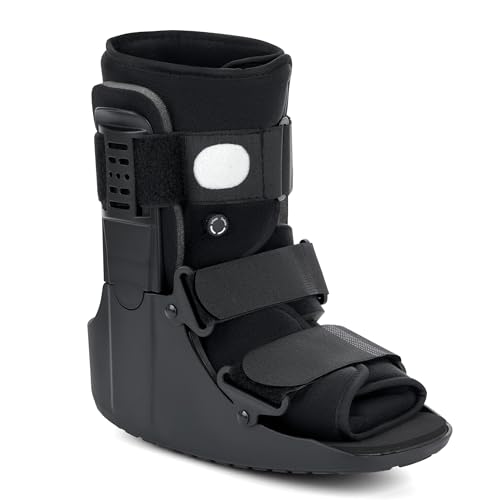
The Honarry Walking Boot delivers the rigid immobilization that acute tendon tears require without the hospital rental price tag. Its ultra-lightweight plastic shell absorbs the load that would otherwise stress the injured tendon during standing and walking, while the three-point adjustable strap system lets you dial in compression at the forefoot, midfoot, and calf independently. The removable orthopedic insole adds arch contouring that reduces strain on the posterior tibial tendon — a common tear site that flat insoles aggravate.
Users recovering from soft tissue injuries and stress fractures report that this boot stabilizes the foot well enough to allow pain-free ambulation within days of use. The breathable padding keeps the foot cool during extended wear, which matters when you are wearing the boot for eight to ten hours a day. The rocker sole geometry is present but less pronounced than premium boots, so the gait mechanics are decent but not optimal for rapid return to walking.
Sizing runs slightly large — women’s size 7.5 users report the medium leaves an extra two inches at the toe, which can cause a tripping hazard. Measure your foot length against the chart carefully and consider sizing down if you are between sizes. For the price point, this is a capable rigid boot that prioritizes protection over refined gait mechanics.
Why it’s great
- Rigid plastic shell provides complete immobilization
- Removable orthopedic insole supports arch tendons
- Significantly cheaper than hospital-grade alternatives
Good to know
- Sizing runs larger than indicated on chart
- Rocker sole is less pronounced for gait efficiency
4. Brace Direct Air CAM Fracture Boot (XS)

The Brace Direct Air CAM Fracture Boot in X-Small solves a frustrating problem — finding a properly sized walking boot for smaller adult feet, teens, and children who cannot get a secure fit in standard medium boots. Sized for men’s 3-4 and women’s 4-6, this boot wraps the foot and ankle in an air bladder that you can inflate to match the exact contour of your injury, reducing empty space inside the shell that can cause the foot to slide and re-aggravate the torn tendon.
The low-profile rocker sole is the standout feature here — it promotes a natural heel-to-toe gait that reduces midfoot tendon strain, which is crucial for tears in the posterior tibial or flexor digitorum longus tendons. The open-toe design improves ventilation and makes it easier to monitor for swelling or discoloration. Users with short stature who cannot tolerate tall CAM boots because of spine or hip issues find this short boot much more comfortable for daily wear.
Some users report that the Velcro strap feeding through the plastic buckles is fiddly, and a few units arrived with incomplete hook-and-loop adhesion on the inner liner, which allows the foot to shift inside the boot. The air pump needs occasional re-inflation throughout the day to maintain consistent pressure. For the small-footed demographic, this is one of the few boots that actually fits without flopping — just check the liner condition on arrival.
Why it’s great
- True XS sizing for small adults and teens
- Air bladder conforms to injury-specific contours
- Low rocker sole reduces midfoot tendon strain
Good to know
- Some units have incomplete Velcro on inner liner
- Straps require dexterity to thread through buckles
5. Brace Direct CAM Walker Fracture Boot (M)
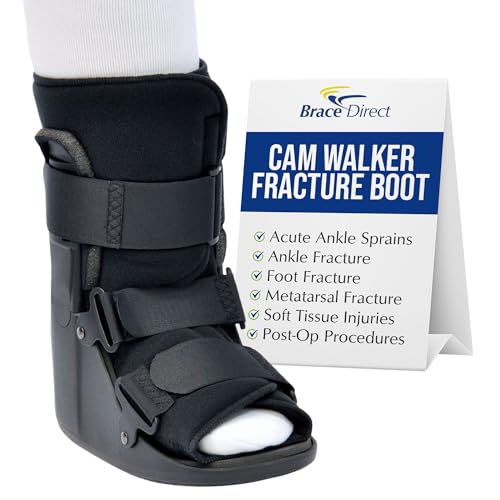
The Brace Direct CAM Walker in medium is built around the rocker sole philosophy — the curved bottom shifts your body weight from heel to toe without requiring the midfoot tendons to flex, directly reducing stress on torn peroneal and posterior tibial tendons. This boot is doctor-recommended and holds HSA/FSA eligibility, which speaks to its legitimacy as a medical-grade recovery tool. The open-toe ventilation keeps the foot from overheating during long wear sessions, and the adjustable straps accommodate bandages or post-surgical dressings without compression issues.
Users recovering from dislocated toes, stress fractures, and ankle sprains confirm that this boot provides relief from foot pressure during walking and allows them to put partial weight through the injured limb without pain. The medium size fits men’s 7.5-10.5 and women’s 8.5-11.5, and the bilateral design works on either foot. The non-skid tread pattern is aggressive enough for outdoor surfaces, which is important if you need to navigate uneven terrain during recovery.
The middle strap sits at the upper ankle and tends to be ineffective at stabilizing the talus, so some users supplement with an ace wrap above the boot. The footbed lacks midsole cushioning, which can cause arch ache after several hours of walking — adding a gel insole resolves this. For a mid-range price point, this boot delivers solid rocker technology and durable construction, but the ankle stabilization is incomplete for high-grade tendon tears.
Why it’s great
- Rocker sole unloads midfoot tendons during gait
- HSA/FSA eligible — legitimate medical device
- Non-skid tread handles outdoor surfaces
Good to know
- Middle strap lacks upper ankle stabilization
- Footbed needs additional cushioning for long wear
FAQ
Can I wear a brace for a torn foot tendon while sleeping?
How do I know if I need a walking boot or an ankle stabilizer for my tendon tear?
Final Thoughts: The Verdict
For most users, the brace for torn tendon in foot winner is the Med Spec ASO Ankle Stabilizer because it offers the most proven functional support for tendon recovery during daily movement. If you need adjustable swelling management for an acute tear, grab the Honprodu Air Walking Boot. And for those with small feet who cannot get a secure fit from standard boots, nothing beats the Brace Direct Air CAM Fracture Boot (XS).

Mo Maruf
I created WellFizz to bridge the gap between vague wellness advice and actionable solutions. My mission is simple: to decode the research and give you practical tools you can actually use.
Beyond the data, I am a passionate traveler. I believe that stepping away from the screen to explore new environments is essential for mental clarity and physical vitality.