Our readers keep the lights on and my smoothie glass nicely filled. As an Amazon Associate, I earn from qualifying purchases.
A scapholunate ligament tear destabilizes the very core of your wrist, turning simple tasks like twisting a doorknob or pushing up from a chair into a painful gamble. Without the right external support, that instability can lead to progressive arthritis and a permanent loss of grip strength—a reality that makes choosing the correct brace a serious medical decision, not just a comfort preference.
I’m Mohammad Maruf — the founder and writer behind WellFizz. This guide distills hours of cross-referencing orthopedic biomechanics literature against real-world user outcomes to identify which braces actually control scapholunate diastasis and which just squeeze the skin.
The wrong design lets the scaphoid and lunate bones drift apart with every handshake or golf swing, while the right one locks them in anatomical alignment. This analysis of the current market for a brace for scapholunate ligament tear compares dorsal-palmer stabilization, strap geometry, and material rigidity to separate genuine therapeutic tools from generic wrist wraps.
How To Choose The Best Brace For Scapholunate Ligament Tear
Choosing a brace for this specific injury requires understanding that the scapholunate ligament is the primary stabilizer between the scaphoid and lunate bones. A brace must resist the specific forces—dorsal intercalated segment instability (DISI)—that cause the lunate to tilt backward and the scaphoid to flex. Generic wrist supports that only compress the carpal tunnel or limit flexion/extension at the wrist joint do nothing to control this rotational collapse.
Dorsal vs. Palmer Stay Configuration
A brace that only features a single palmer stay bends with the wrist and fails to block the dorsal tilt of the lunate. Look for a design with a contoured dorsal stay that sits over the back of the wrist and a separate palmer stay. These two rigid elements work together to sandwich the carpal bones into a neutral alignment, mimicking the ligament’s job of preventing the scaphoid from shifting into flexion while the lunate extends.
Strap Density and Mechanical Advantage
The number and placement of cinching straps determines how finely you can tune compression across the scapholunate interval. A single strap at the mid-forearm pulls the brace tight but doesn’t localize force over the dorsal ridge of the scaphoid. Models with three or four independent straps—one at the distal forearm, one over the carpal bones, and one at the palm—allow you to apply differential tension. This prevents the brace from migrating and maintains a constant reduction force on the diastasis during pronation and supination.
Material Breathability and Skin Interface
Scapholunate braces are often worn for extended periods—sometimes at night and during all waking hours. Neoprene retains heat and moisture, which accelerates skin maceration and can make people abandon the brace prematurely. Perforated neoprene, terry cloth linings, or a microfleece interior wick sweat and reduce friction. A hypoallergenic layer also prevents contact dermatitis from the metal or plastic stays pressing into the skin over hours of wear.
Quick Comparison
On smaller screens, swipe sideways to see the full table.
| Model | Category | Best For | Key Spec | Amazon |
|---|---|---|---|---|
| Breg Apollo Universal | Premium | SLAC prevention with dual rigid stays | Malleable palmer + contoured dorsal stay | Amazon |
| Bauerfeind ManuLoc | Premium | Zero-motion immobilization post-surgery | 5.8 oz velour orthosis with side-block | Amazon |
| BioSkin Carpal Tunnel | Mid-Range | Customizable daytime neutral-zone hold | 4 adjustable straps + dual aluminum stays | Amazon |
| Comfort Cool CMC | Mid-Range | Thumb CMC + wrist instability combo | 1.6mm perforated neoprene pull-thru | Amazon |
| McDavid Adjustable Wrist Guard | Mid-Range | Collision-sport wrist protection | Two-elastic strap thermal compression | Amazon |
| JOMECA TFCC Wrist Brace | Budget | Ulnar-side pain with bionic O-ring | Built-in O-ring for DRUJ compression | Amazon |
In‑Depth Reviews
1. Breg Apollo Universal Wrist Brace

The Breg Apollo is built around a soft foam foundation that feels less clinical than a rigid splint, yet it houses the two most critical mechanical elements for scapholunate control: a contoured palmer stay that is malleable and a dorsal stay that can be positioned exactly where the diastasis gap occurs. Orthopedic surgeons have fitted this same model directly after surgery because the dual closure system lets you dial in the precise reduction force without creating pressure hotspots over the scaphoid tubercle.
Because the dorsal stay is malleable, you can bend it to match the natural slope of the dorsal wrist, creating a custom buttress that prevents the lunate from sliding into extension. The foam material is less abrasive than plastic over long days of wear, and the universal sizing (left and right) means you can buy one for each hand if bilateral instability is present. Patients with severe arm injuries and multiple surgeries have reported wearing these braces interchangeably for years, relying on the adjustable contour rather than replacing the unit.
The trade-off is breathability. The foam layer traps more heat than perforated neoprene or microfleece, which can cause sweat buildup during physical activity or in warm climates. Additionally, the universal fit means the length may feel slightly long for smaller wrists, though the dual closure straps compensate by allowing a tapered cinch at the carpal level.
Why it’s great
- Malleable palmer and contoured dorsal stay for targeted SL gap reduction
- Orthopedic surgeon-fitted—clinical-grade alignment out of the box
- Adjustable dual closure prevents migration during pronation/supination
Good to know
- Foam material retains heat more than perforated options
- Universal sizing may feel bulky on very small wrist circumferences
2. Bauerfeind ManuLoc Wrist Support
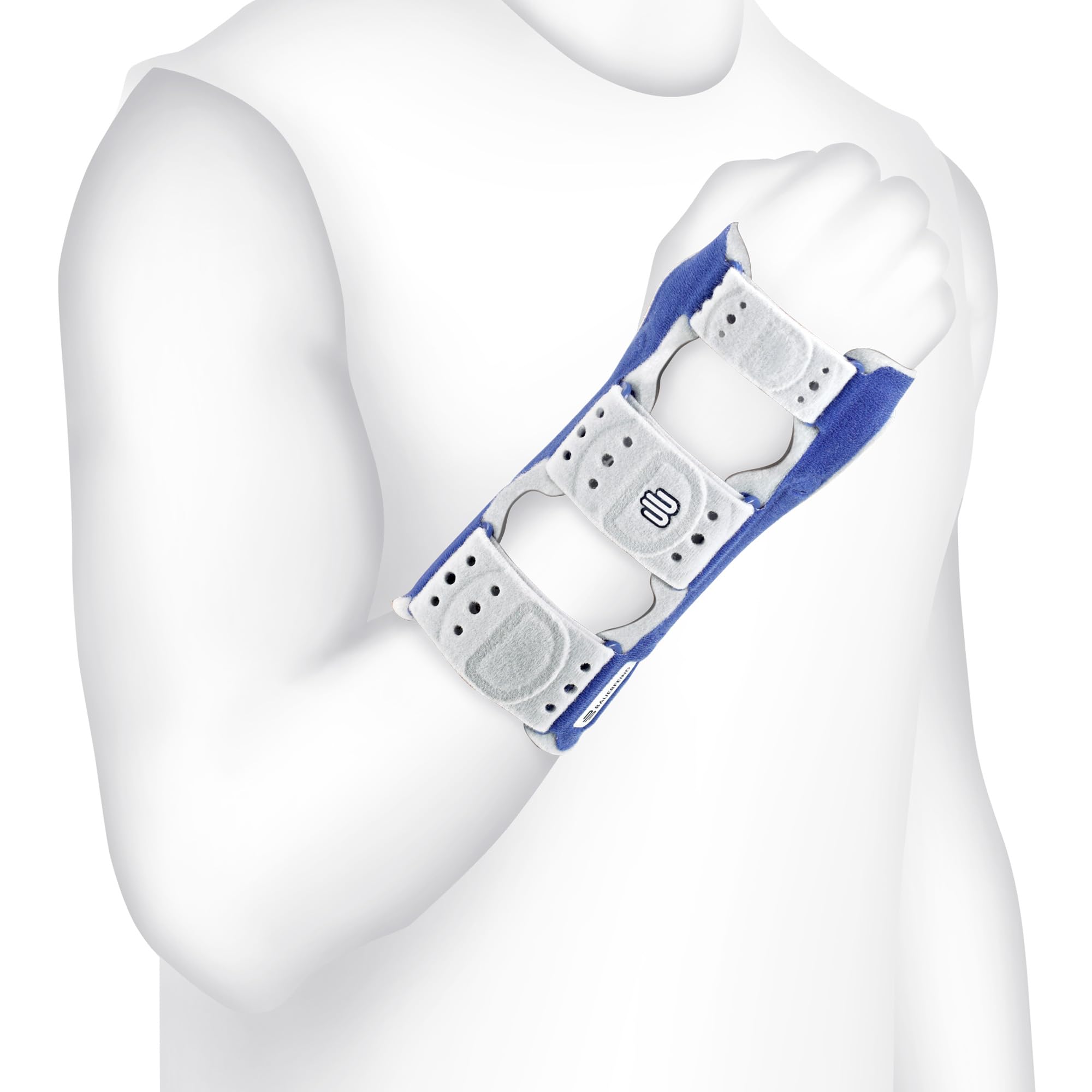
The ManuLoc is engineered as a true orthosis rather than a compression sleeve, which means it restricts motion in all three planes—flexion, extension, and critically, radial and ulnar deviation. For a scapholunate ligament tear, the ability to block side-to-side wrist movement is the difference between allowing the scaphoid and lunate to shear apart and forcing them to remain co-linear. The velour material feels soft against skin and includes additional air holes to mitigate the heat retention problem common to dense orthoses.
This brace fits both left and right hands and uses double-tab hook-and-loop closures that allow micro-adjustments around the distal radius and ulnar styloid. The design prevents all wrist movement when fully cinched, making it a strong candidate for the acute inflammatory phase or immediately after a surgical repair when any load across the SL interval must be zero. The lightweight construction at 5.8 ounces means it doesn’t fatigue the arm during all-day wear, and the titanium color scheme looks less medical than standard black braces.
The downside is an audible creaking and squeaking reported by some users during movement, which can be distracting in quiet environments. The light gray velour also shows dirt and skin oil quickly, requiring regular cleaning. For patients who need only moderate restriction during daily activities, the total immobilization of the ManuLoc may feel overly restrictive.
Why it’s great
- Blocks radial/ulnar deviation—critical for SL shear prevention
- Breathable velour with air holes for extended wear comfort
- Ambidextrous design with micro-adjustable double-tab straps
Good to know
- Can produce loud creaking sounds during movement
- Light gray color shows skin oils and grime quickly
3. BioSkin Carpal Tunnel Wrist Brace
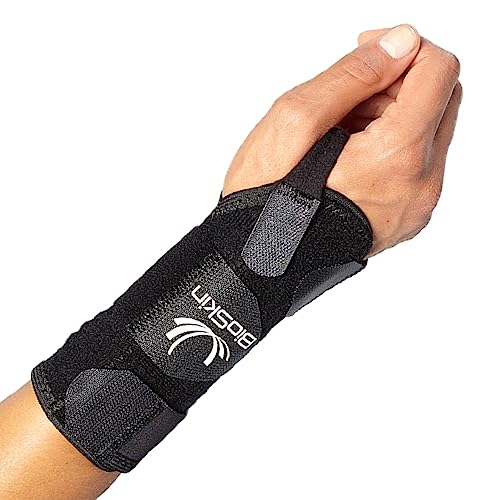
BioSkin’s brace is built around a nylon/Lycra blend that stretches minimally, providing a snug foundation without the bulk of traditional neoprene. The standout feature is the four-strap system: two crossing over the dorsal wrist, one over the palmer arch, and one at the distal forearm. This architecture allows you to apply differential tension specifically over the scapholunate interval while keeping the thumb and fingers fully free. The two aluminum stays—one above the wrist and one below—are moldable, so you can shape them to hold the wrist in the neutral-neutral position that reduces SL gap stress.
The microfleece lining is hypoallergenic and prevents the skin irritation that often develops when metal stays press against the wrist for 12+ hours a day. Multiple reviewers with trigger finger and painful wrist joints reported immediate relief because the dual stays distribute the load evenly rather than concentrating pressure at a single point. The slim profile fits under work gloves without stretching them, making it practical for light occupational use during recovery.
Long-term durability is the primary concern. Some users report the Velcro fraying and the logo rubbing off after two to three months of daily use, especially if the brace is machine-washed without a mesh bag. The left-hand-only orientation means you need to buy a separate unit if you have bilateral instability, which doubles the cost for comprehensive coverage.
Why it’s great
- Four independently adjustable straps for targeted SL compression
- Moldable aluminum stays allow custom neutral-angle positioning
- Hypoallergenic microfleece prevents contact dermatitis
Good to know
- Velcro fraying reported after several months of heavy use
- Left-hand only; bilateral users must purchase two units
4. Comfort Cool Wrist Brace with Thumb Support
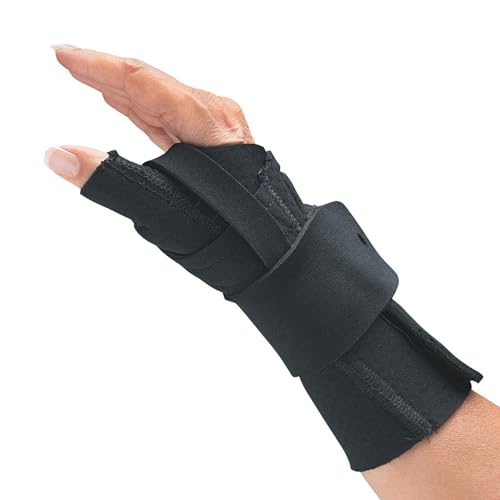
Comfort Cool is designed by occupational therapists specifically for thumb CMC instability plus wrist involvement, a common comorbidity in scapholunate injuries where the dorsal ligamentous complex is compromised. The 1.6mm perforated neoprene is the thinnest material in this comparison, which makes it ideal for patients who need to maintain some dexterity while still receiving firm compression across the carpal bones. The extended wrist strap wraps around the distal radius and provides a second compression zone that stabilizes the lunate’s relationship to the radius.
The pull-through wrist strap system requires minimal hand manipulation to tighten, which is useful when pain and stiffness in the thumb make fine motor tasks difficult. The terry cloth lining wicks moisture and resists odor, so the brace stays fresh during all-day wear in warm environments. Users who have worn this brand for two decades report replacing the brace every two years with daily use, indicating that the neoprene holds its compressive memory longer than budget alternatives.
There are two structural limitations for SL-specific use. The neoprene at the thumb-web frays faster than the rest of the construction, creating loose edges that catch on clothing. The wrist Velcro strap also protrudes outward, requiring some users to secure it with a hair band to prevent snagging. Because the brace is designed primarily for CMC arthritis rather than pure SL diastasis, the thumb component may feel unnecessary if your tear is isolated to the scapholunate ligament alone.
Why it’s great
- Ultra-thin 1.6mm neoprene preserves hand dexterity during rehab
- Pull-through strap allows easy one-handed adjustment
- Terry cloth lining resists odor and wicks moisture effectively
Good to know
- Thumb-web neoprene frays faster than main body material
- Protruding wrist strap requires extra securing to prevent snagging
5. McDavid Wrist Brace Adjustable Guard
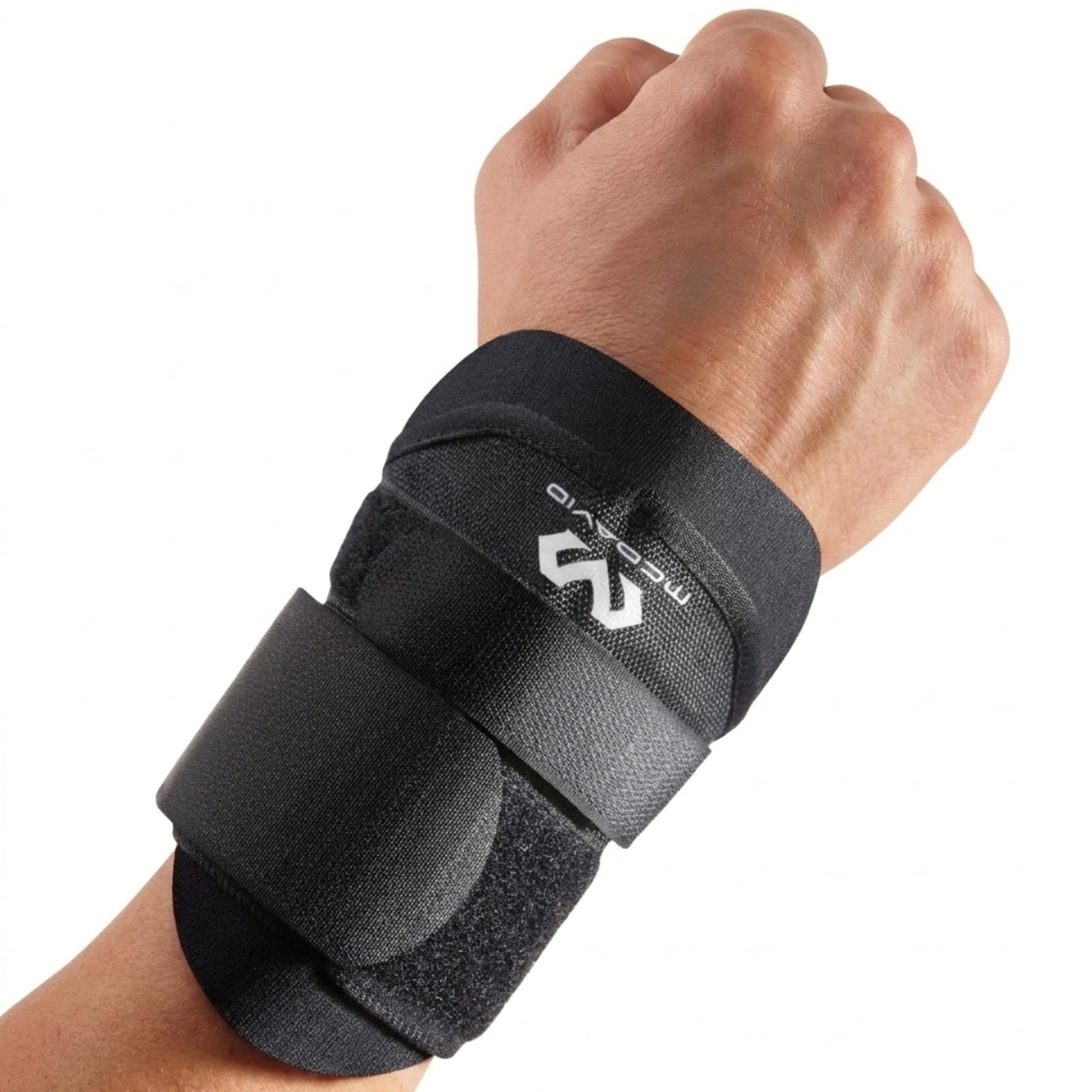
McDavid’s design centers on two strategically placed elastic straps that provide maximum compression over the carpal region, making it a solid option for active patients who need to stabilize the wrist during collision sports or high-impact training. The latex-free neoprene cuff generates thermal compression, which increases blood flow and proprioceptive awareness around the injured ligament—a factor that can reduce re-injury risk during dynamic movements like a lineman’s three-point stance or a diver’s handstand.
The pull-on slip design makes it easy to put on and take off, which is a practical advantage when you are in a hurry between sets or need to remove the brace quickly after a game. The adjustable insert lets you fine-tune the fit around the wrist circumference, and the material’s thickness provides a physical barrier against hyperextension and sudden ulnar deviation that could stress the SL ligament. Reviewers with prior wrist fractures and break-related instability found that the compression sleeve helped reduce the feeling of the wrist “giving out” under load.
The support level here is moderate rather than high. There are no rigid stays to maintain the scaphoid-lunate alignment, so this brace is best suited for preventative support during activity rather than as a rehabilitation tool for acute tears. Some users also noted that the Velcro can become too aggressive when sweaty, making removal a challenge that could inadvertently torque the wrist.
Why it’s great
- Thermal neoprene enhances proprioception during dynamic movement
- Pull-on design allows rapid application between sports sets
- Lightweight construction won’t interfere with sports gear or gloves
Good to know
- No rigid stays offered—limited SL diastasis control
- Velcro grip becomes very strong when sweaty, hard to remove
6. JOMECA TFCC Wrist Brace

The JOMECA brace is built around a bionic O-ring pad that delivers localized compression to the distal radial ulnar joint (DRUJ), making it effective when scapholunate instability coexists with TFCC pathology—a common scenario in patients who have sustained a wrist fall. The adjustable Velcro strap system allows 360-degree customization, and the soft padding minimizes seam-induced chafing, which is important for patients who need to wear the brace for multiple hours during typing or fishing activities.
The perforated, skin-friendly fabric is lightweight and breathable, addressing the heat retention issues that often cause users to abandon thicker braces mid-day. Recommended by physical therapists for ulnar-sided pain, the brace’s streamlined profile maintains stability while still allowing a functional range of motion. Diamond painters and server workers reported significant improvement in their ulnar-side pain thanks to the donut-shaped padding, which offloads the wrist’s bony prominences during sustained resting pressure.
The Velcro longevity is the weakest element. Multiple reviews indicate that the hook-and-loop closure loses stickiness within two to three weeks of daily wear, causing the brace to fall off during the day. This makes the JOMECA a viable short-term solution for acute flares, but it is not a durable option for chronic SL management that requires months of consistent immobilization.
Why it’s great
- Bionic O-ring provides targeted DRUJ compression for combined SL/TFCC conditions
- Perforated fabric stays cool during extended typing or crafting sessions
- Physical-therapist-recommended design for ulnar-sided wrist support
Good to know
- Velcro adhesive degrades rapidly—lasts weeks rather than months
- Budget construction unsuitable for long-term daily SL rehabilitation
FAQ
Can a standard carpal tunnel brace stabilize a scapholunate ligament tear?
How tight should I cinch the straps for an SL tear?
How long should I wear a brace for scapholunate recovery?
Does a thumb spica brace work for scapholunate instability?
Final Thoughts: The Verdict
For most users, the brace for scapholunate ligament tear winner is the Breg Apollo Universal Wrist Brace because its malleable dual-stay system provides the dorsal-palmer sandwich compression needed to prevent DISI collapse while remaining adjustable for individual wrist anatomy. If you require complete immobilization after surgery with zero side-to-side shear, grab the Bauerfeind ManuLoc. And for a premium daytime brace that lets you dial in differential tension across the carpus with four independent straps, the BioSkin Carpal Tunnel Brace is an excellent mid-range choice that offers clinical-grade customization without the full orthosis footprint.

Mo Maruf
I created WellFizz to bridge the gap between vague wellness advice and actionable solutions. My mission is simple: to decode the research and give you practical tools you can actually use.
Beyond the data, I am a passionate traveler. I believe that stepping away from the screen to explore new environments is essential for mental clarity and physical vitality.