Our readers keep the lights on and my smoothie glass nicely filled. As an Amazon Associate, I earn from qualifying purchases.
That sharp, stabbing pain on the outside of your ankle every time you push off your foot or change direction isn’t just an annoyance—it’s a signal that your peroneal tendons are under serious stress. Finding support that stabilizes the lateral ankle without restricting natural movement is the only way to stay active while letting those tendons heal.
I’m Mohammad Maruf — the founder and writer behind WellFizz. I’ve spent years analyzing orthopedic support products, studying material science in compression garments, and evaluating clinical review data to identify which braces actually deliver measurable lateral stabilization without cutting off circulation.
Whether you’re recovering from a sprain or managing chronic peroneal tendonitis, the right brace for peroneal tendonitis needs to limit inversion and eversion while allowing a full, natural stride during daily activities and sport.
How To Choose The Best Brace For Peroneal Tendonitis
Peroneal tendonitis demands a brace that specifically resists inversion (rolling the ankle inward) and controls eversion (rolling outward) — two motions that aggravate the peroneal tendons running behind the lateral malleolus. A standard compression sleeve won’t cut it here. You need targeted mechanical support.
Figure-8 Straps vs. Basic Straps
Figure-8 strap configurations cross over the instep and wrap around the heel, creating a stirrup effect that locks the talus and calcaneus in neutral alignment. This design directly counteracts the ankle roll mechanism that stresses peroneal tendons. Basic single-velocity straps provide compression but lack this targeted lateral control.
Removable Side Stabilizers
During acute recovery, rigid medial and lateral splints prevent painful side-to-side movement. As healing progresses, removing those stabilizers allows the brace to transition into a flexible support for sport and daily wear. Look for splints that don’t dig into the malleoli — gel padding around the shell holes is a strong indicator of comfort.
Lace-Up vs. Wrap Closure
Lace-up braces distribute tension evenly across the midfoot and ankle, preventing hot spots and allowing micro-adjustments. Wrap-style braces with wide hook-and-loop straps are faster to apply but can shift during lateral cuts if not cinched tightly. For peroneal tendonitis, lace-up systems generally offer superior heel lock and midfoot control.
Quick Comparison
On smaller screens, swipe sideways to see the full table.
| Model | Category | Best For | Key Spec | Amazon |
|---|---|---|---|---|
| Med Spec ASO | Lace-Up Stabilizer | Active recovery & sport | Figure-8 straps + CoolFlex padding | Amazon |
| Fitomo Quick Lace-Up | Lace-Up with Splints | Transition from boot to daily wear | Triple-Lock + Figure-8 strap design | Amazon |
| AGPTEK Lace-Up | Lace-Up Stabilizer | Athletes needing quick-fastening | 1-second dual-direction hook-and-loop | Amazon |
| Velpeau Stirrup | Stirrup Splint | Grade 1-2 sprain protection | Bi-Injection plastic splints + gel pads | Amazon |
| ZOELION Compression | Compression Sleeve | Mild support & inflammation control | 3-zone graduated compression + fishnet strap | Amazon |
In‑Depth Reviews
1. Med Spec ASO Ankle Stabilizer
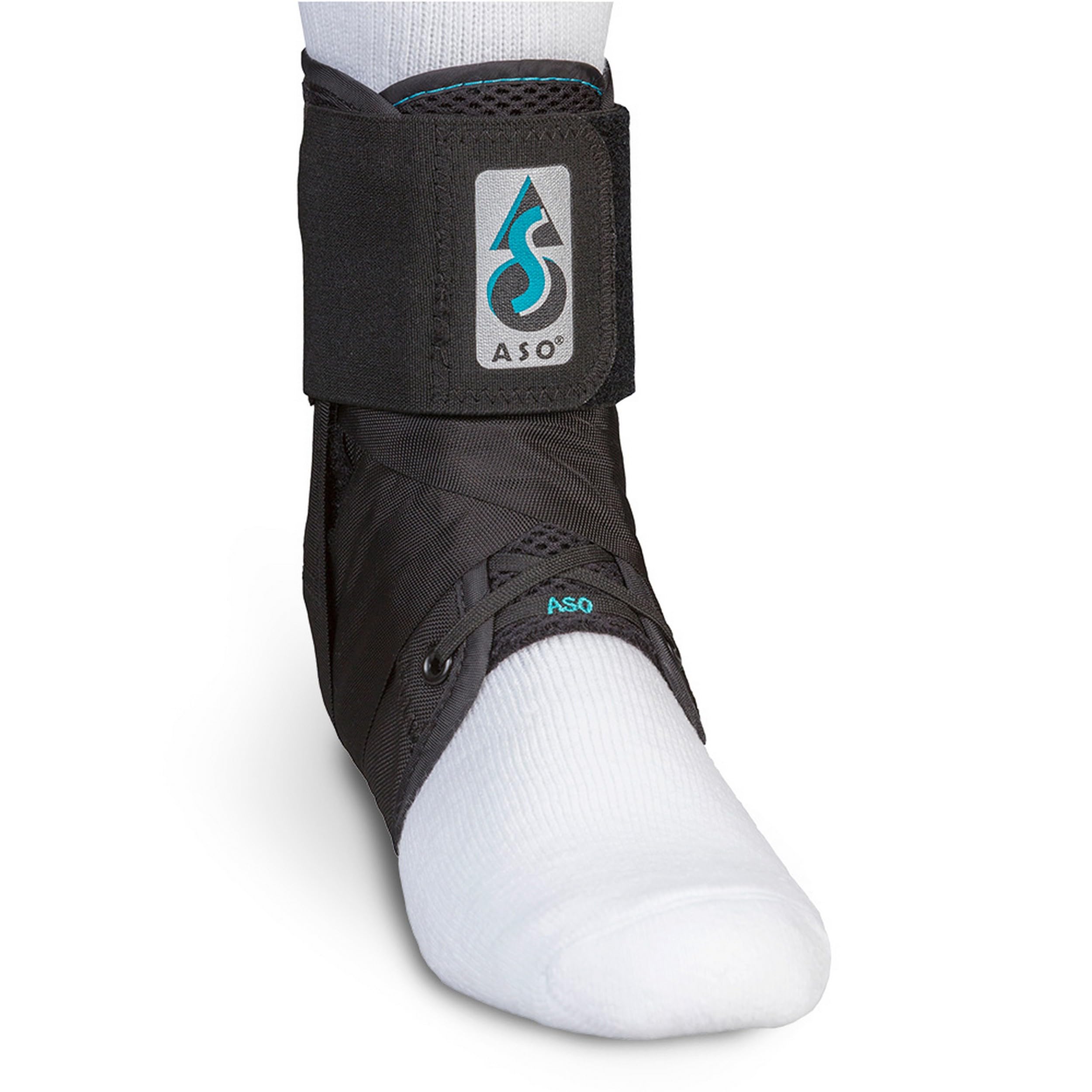
The Med Spec ASO is the gold standard for peroneal tendonitis support, and for good reason — its figure-8 strap configuration directly targets the inversion and eversion motions that aggravate the peroneal tendons. Unlike cheap sleeves that just squeeze, the ASO’s lace-up base locks the heel in place, while the two crossing straps create a stirrup effect that limits lateral roll without restricting dorsiflexion or plantarflexion. Athletic trainers and physical therapists consistently recommend this brace because the CoolFlex padding and durable nylon construction hold up to daily wear and high-intensity sport without stretching out.
Users recovering from sprains and chronic tendon soreness report that the ASO fits comfortably inside most athletic shoes, which is critical when you need to maintain activity levels during rehab. The lace system includes a center point marker for even tension distribution, preventing the pressure points common with cheaper braces. One reviewer with peroneal tendon issues noted the brace stabilized weak ankles well enough for hiking without the rubbing or breathability problems typical of bulkier stabilizers.
The ASO runs true to size using the manufacturer’s sizing guide, but the snug lace-up fit means you’ll want to pair it with low-cut socks to avoid friction. Some users find the initial application requires a bit of practice, especially getting the figure-8 straps tight enough without over-tightening — but once dialed in, the support is unmatched in this category. The Velcro holds its grip for years, making this a long-term investment for recurrent ankle issues.
Why it’s great
- Figure-8 straps provide superior lateral stabilization for peroneal tendons
- Breathable CoolFlex padding prevents irritation during all-day wear
- Durable construction with Velcro that maintains grip over years of use
Good to know
- Requires practice to apply figure-8 straps correctly
- May need low-cut socks to avoid bulk inside narrow shoes
2. Fitomo Quick Lace-Up Ankle Brace
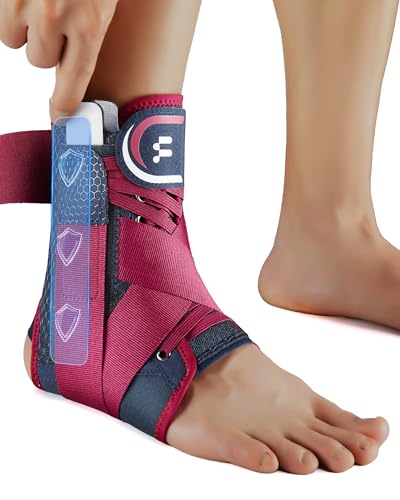
The Fitomo brace solves a specific problem that peroneal tendonitis sufferers face: transitioning out of a walking boot. Its Triple-Lock system combines top strap compression with dual removable side stabilizers and cross straps, giving you the option to dial support from rigid rehab mode to flexible daily wear. The figure-8 adjustable strap lets you fine-tune compression depending on whether you’re walking the dog or returning to light sport — a level of customization that’s rare at this price point.
Reviewers recovering from broken ankles and post-surgery rehab praise how this brace fits inside sneakers without the bulk of traditional stirrup braces. The removable stabilizers are a standout feature for peroneal tendonitis because you can keep the rigid splints in during acute phases when lateral movement is painful, then pop them out once the tendon calms down. One stroke survivor even replaced a bulky AFO with this brace, citing its low-profile design and ease of donning with one hand.
The size S fits smaller frames well, but larger-footed users should measure carefully — the sizing runs slightly smaller than some competitors. The Velcro straps hold securely after six months of daily use, with no slipping or fraying. The only real drawback is the single-brace packaging, which makes the unit price feel higher than some two-pack alternatives, but the build quality and adjustable support justify the investment for targeted peroneal relief.
Why it’s great
- Removable side stabilizers allow transition from rigid rehab to flexible support
- Figure-8 strap design enables fine-tuned compression control
- Fits inside most sneakers without bulk
Good to know
- Sizing runs small; measure carefully before ordering
- Single-brace packaging makes per-unit cost higher
3. AGPTEK Adjustable Lace-Up Ankle Brace
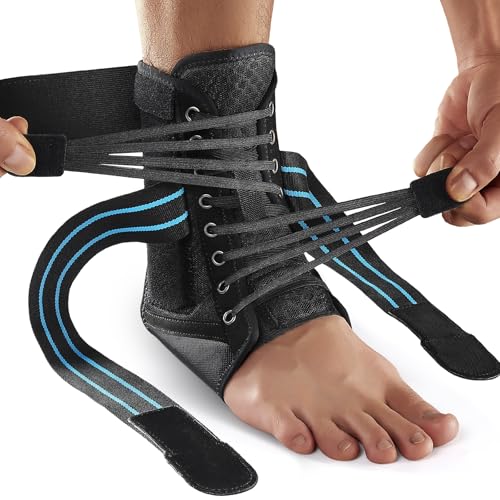
If you’ve ever fumbled with tangled laces while your peroneal tendon is already throbbing, the AGPTEK brace’s 1-second fastening system will feel like a revelation. The dual-direction hook-and-loop fasteners replace traditional laces entirely, while elastic cords adapt to swelling fluctuations — a real benefit for peroneal tendonitis where inflammation can vary day to day. The 360° support system uses reinforced dual side stabilizers and X-cross compression straps to give comprehensive lateral control without the time sink of lace-up adjustments.
Users recovering from foot surgery and Achilles tendonitis report that the AGPTEK stays comfortable during pickleball and basketball without causing the injury to worsen — a strong indicator that the stabilizers effectively limit painful ankle roll without cutting into the peroneal tendon area. The open heel design is a smart touch for peroneal tendonitis because it prevents direct pressure on the tendon sheath while still locking the calcaneus. The honeycomb ventilation zones keep the foot drier than solid nylon braces during extended wear.
The removable lateral splints let you customize rigidity, though some users with thick ankles found the Large size runs a bit small — if you’re between sizes, sizing up is the safer bet. The Oxford fabric exterior is durable against abrasion from shoes, but the elastic laces may stretch slightly over months of heavy use. For athletes who need fast on-off access between sets or games, this brace delivers convenience without sacrificing the lateral stability peroneal tendonitis demands.
Why it’s great
- 1-second fastening eliminates lace-up struggles during flare-ups
- Elastic cords adapt to swelling changes common with tendonitis
- Open heel design avoids direct pressure on the peroneal tendon
Good to know
- Sizing runs slightly small; consider sizing up
- Elastic laces may stretch over extended heavy use
4. Velpeau Stirrup Ankle Stabilizer Brace
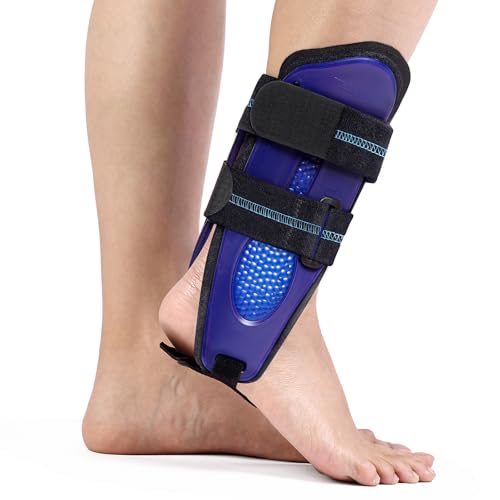
For acute peroneal tendonitis where even slight lateral movement triggers sharp pain, the Velpeau Stirrup Brace delivers the highest level of mechanical rigidity in this lineup. The Bi-Injection plastic splints on both sides physically block inversion and eversion, while the gel padding around the malleolus holes prevents the hard plastic from digging into bone — a design detail that makes a huge difference during multi-hour wear. This is the brace your doctor would prescribe for Grade 1-2 ligament involvement alongside peroneal tendonitis.
Reviewers consistently note that the stirrup design prevents ankle rolling more effectively than any wrap or compression system, with one user calling it “the best ankle brace” they’d tried after shattering their ankle five years prior. The foam pad version uses breathable Modal fabric and high-density sponge to wick moisture away from the semi-rigid splint, reducing skin irritation during extended wear. The ability to wear it on either foot adds versatility if you need to alternate sides.
The trade-off is bulk — this brace will stretch out most shoes, and users with thick calves may find the top strap’s permanent pin limits expansion. One reviewer noted the brace failed to fit a 165-pound woman’s calf properly, so this isn’t the most size-inclusive option. For those who can fit it, the Velpeau is unmatched in immobilization strength, making it ideal for the acute phase of peroneal tendonitis when any side-to-side motion is intolerable.
Why it’s great
- Semi-rigid plastic splints provide maximum lateral immobilization
- Gel padding around malleolus holes prevents bone pressure
- Reversible design fits both left and right feet
Good to know
- Bulky design stretches out most shoes significantly
- Top strap sizing may not accommodate thicker calves
5. ZOELION Ankle Brace Compression Support
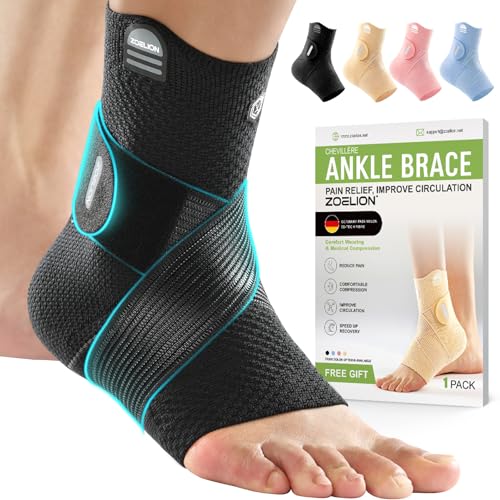
The ZOELION brace takes a different approach to peroneal tendonitis — instead of rigid mechanical blocking, it uses German-imported PA66 high-elastic fabric with 3D-tech weaving to deliver graduated compression that reduces inflammation and promotes blood flow to the injured tendon area. The three-zone design applies targeted pressure to the arch and heel while keeping the instep comfortable, and the removable fishnet X-strap adds adjustable compression along the lateral ankle. This is best suited for mild peroneal tendonitis where the primary need is inflammation control rather than roll prevention.
An athlete and physical therapist reviewer specifically praised the sleeve’s ability to provide stability without excessive tightness, noting that many competitors’ sleeves are either too loose to help or too tight to wear. The feather-slim fishnet strap is thin enough to fit inside shoes without sizing up, which makes this the most discreet option for daily wear under work shoes. Users with plantar fasciitis and Achilles tendonitis also reported relief, suggesting the compression profile supports the entire lateral chain effectively.
The ZOELION is not designed for active sport or high-intensity activity — if you’re playing basketball or running, the lack of rigid stabilizers means you won’t get the lateral control peroneal tendonitis requires during dynamic movement. The sleeve runs large according to some reviews, so measuring your ankle circumference accurately is essential. For sedentary recovery, walking, or mild daily flare-ups, the breathable moisture-wicking fabric and 180-day warranty make this a solid entry-level companion to a more rigid brace.
Why it’s great
- Graduated 3-zone compression reduces inflammation and improves circulation
- Feather-slim fishnet strap fits inside regular shoes without sizing up
- Breathable fabric with moisture transport for all-day wear
Good to know
- Lacks rigid stabilizers for high-intensity or sports activity
- Sizing runs large; accurate measurement is critical
FAQ
Can a compression sleeve alone treat peroneal tendonitis?
Should I wear a peroneal tendonitis brace while sleeping?
How do I know if my brace fits correctly for peroneal tendonitis?
Final Thoughts: The Verdict
For most users, the brace for peroneal tendonitis winner is the Med Spec ASO Ankle Stabilizer because its figure-8 straps provide the precise lateral control peroneal tendons need during activity and recovery. If you want removable splints for transitioning from post-boot rehab to flexible daily wear, grab the Fitomo Quick Lace-Up. And for mild cases where inflammation control is the priority, nothing beats the ZOELION Compression Support for discreet, breathable relief under everyday shoes.

Mo Maruf
I created WellFizz to bridge the gap between vague wellness advice and actionable solutions. My mission is simple: to decode the research and give you practical tools you can actually use.
Beyond the data, I am a passionate traveler. I believe that stepping away from the screen to explore new environments is essential for mental clarity and physical vitality.