Our readers keep the lights on and my smoothie glass nicely filled. As an Amazon Associate, I earn from qualifying purchases.
That shooting pain radiating from your elbow into your forearm isn’t just an annoyance — it’s a signal your tendons are under constant strain from repetitive gripping, lifting, or twisting. Whether you’re battling tennis elbow from weekend pickleball, golfer’s elbow from the course, or tendinitis from a desk job, the right brace provides targeted compression that changes the load mechanics on your forearm muscles and allows those inflamed tendons to finally rest.
I’m Mohammad Maruf — the founder and writer behind WellFizz. I’ve spent years dissecting the biomechanics of support gear, analyzing compression gradients, strap tension, and fabric breathability across hundreds of orthopedic accessories.
The difference between a brace that offers real therapeutic benefit and one that slips down your arm after ten minutes comes down to material engineering and pressure distribution rather than brand name alone. This guide breaks down the specs that matter so you can find the best brace for forearm tendonitis that matches your specific activity and pain level.
How To Choose The Best Brace For Forearm Tendonitis
The brace you choose must match the specific point of your pain. Tendonitis in the forearm usually stems from the lateral (outside) or medial (inside) elbow tendons, and the brace’s job is to alter the angle of pull on those tendons. Pay attention to whether you need a localized compression pad or full forearm circulation support.
Compression Sleeve vs. Strap Brace
A compression sleeve wraps your entire forearm and elbow, promoting blood flow and reducing general inflammation. A strap brace (often with a gel or foam pad) targets the tendon insertion point directly, changing the mechanical leverage during gripping activities. If your pain is sharp during specific movements like lifting a coffee cup or swinging a racket, a strap style usually works better. If you have dull, constant ache throughout the day, a full sleeve offers more consistent relief.
Graduated Compression and Fabric Blend
Graduated compression — tighter at the wrist and looser toward the elbow — actively pushes fluid back toward the heart, reducing swelling and improving circulation to injured tissue. Look for sleeves that list their mmHg rating (20-30 mmHg is firm therapeutic grade). Fabric matters just as much: a blend of micro-nylon and LYCRA spandex wicks moisture and maintains elasticity, while cheaper polyester blends stretch out after a few washes and lose their compression profile entirely.
Fit, Sizing, and Anti-Slip Design
Nothing renders a brace useless faster than slippage. If the device migrates down your forearm during activity, it loses its therapeutic positioning. Look for silicone grip strips inside the cuff, or a strap system with multiple hook-and-loop closure points. Measure the circumference of your forearm about four inches below the elbow crease and compare against the brand’s sizing chart — don’t guess based on your shirt size. A brace that is too tight will cut off circulation; too loose will slide and provide no support.
Quick Comparison
On smaller screens, swipe sideways to see the full table.
| Model | Category | Best For | Key Spec | Amazon |
|---|---|---|---|---|
| CEP Compression Forearm Sleeves | Full Sleeve | Muscle stability & circulation | Graduated compression, pair set | Amazon |
| OrthoSleeve ES3 | Sleeve Strap | Low-profile daily wear | 76% Micro-Nylon, 24% LYCRA | Amazon |
| KEKING Compression Sleeve | Full Sleeve | Firm 20-30mmHg therapy | 80% Nylon, 20% Spandex | Amazon |
| Mueller Tennis Elbow Support | Strap Brace | Targeted gel pad relief | Gel pad with hook & loop | Amazon |
| Incrediwear Arm Sleeve | Full Sleeve | Recovery & reduced soreness | Breathable, lightweight fabric | Amazon |
In‑Depth Reviews
1. CEP Compression Forearm Sleeves
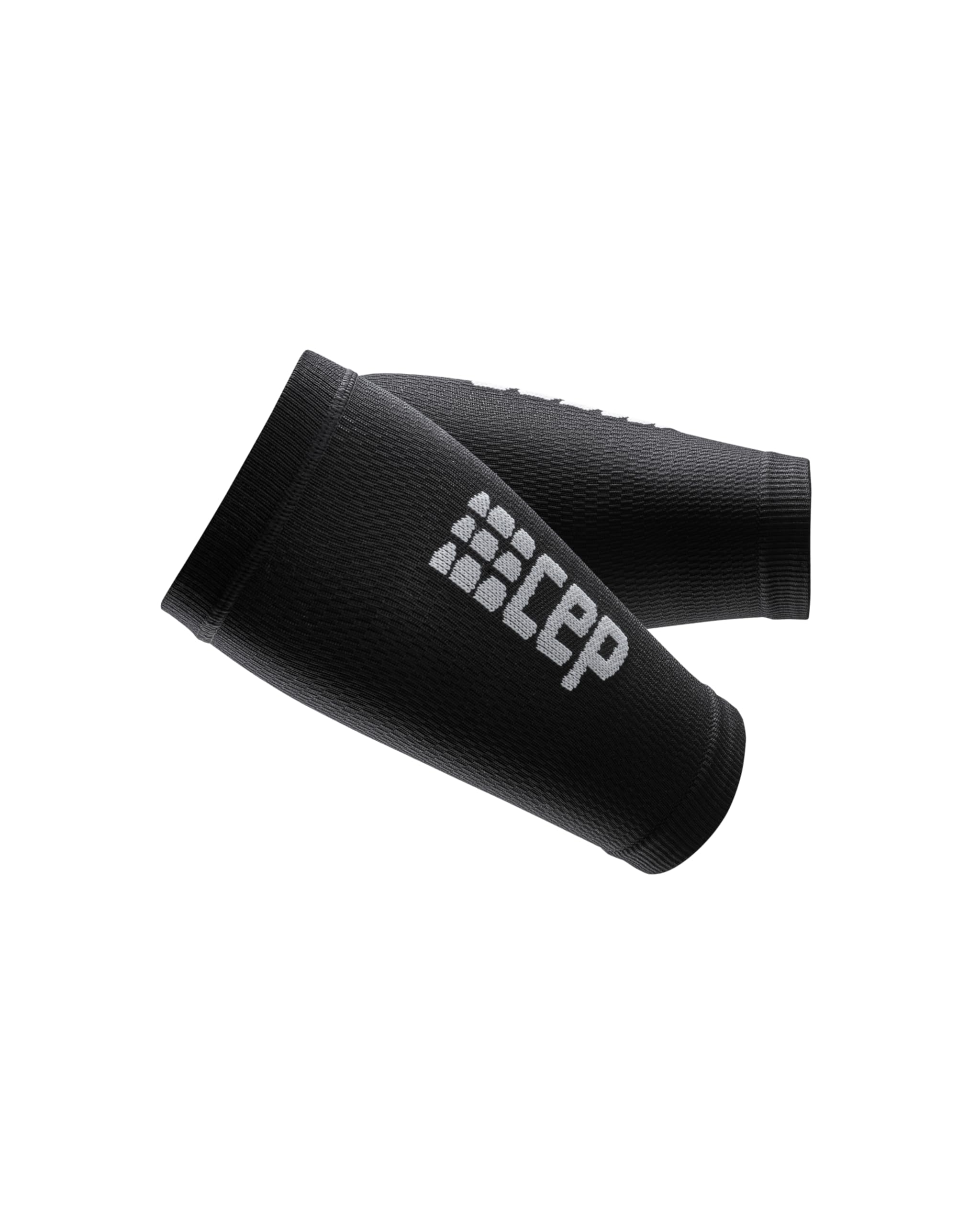
The CEP sleeves are a premium pick because they deliver true graduated compression that improves circulation from the wrist up through the forearm. Users recovering from bicep tendon strains and tennis elbow alike report that the consistent pressure profile helps tendons heal faster during both activity and rest. The fabric feels dense but not restrictive, and the pair packaging gives you a backup sleeve for rotation or bilateral support.
What sets CEP apart is the engineering behind the compression gradient — it’s not just tight fabric; it’s calibrated to reduce muscle oscillation during movement. Guitar players and gym-goers specifically note that the sleeve stays put without rolling at the top edge, which is a common failure point on cheaper nylon tubes. The material holds its elasticity well beyond fifty washes based on user accounts.
Beware that the branding logo is large and printed on the outside of the sleeve, which some users find visually distracting. The sizing runs anatomical — if you are between sizes, choosing the smaller option gives a tighter therapeutic fit. This is not a strap-style brace, so if you need a localized pressure pad on the tendon insertion point, look elsewhere in this list.
Why it’s great
- True graduated compression that maintains shape wash after wash
- Stays in place during dynamic movement like tennis swings or guitar playing
- Pair set offers flexibility for alternating or supporting both arms
Good to know
- Large logo printing on the outside may not appeal to everyone
- Not a strap-style brace — no localized gel pad for acute tendon pressure
2. OrthoSleeve ES3 Elbow Brace

The OrthoSleeve ES3 bridges the gap between a full compression sleeve and a targeted strap. It uses a pull-on design with no Velcro or straps, making it the most streamlined option for people who need to wear a brace under work clothes or uniforms without bulk. Nurses, painters, and pickleball players consistently rate it highly because it does not catch on fabric or equipment during movement.
Its fabric composition of 76% micro-nylon and 24% LYCRA spandex provides a moderate compression that stabilizes the forearm tendons without cutting off circulation. Users report that the sleeve eliminates sweat buildup, which is critical for all-day wear in warm conditions or during athletic activity. The silicone-free grip relies on the fabric weave itself to stay anchored to the skin, and for most users this works well throughout an eight-hour shift.
Several reviews note that the sleeve can stretch out over time and lose its initial tightness after a few weeks of daily use. The one-size-fits-most approach works for a wide range of arm circumferences, but if you are on the smaller side of the spectrum the sleeve may feel loose from day one. It is also a single sleeve, not a pair, so factor that into your purchase if you need bilateral support.
Why it’s great
- Extremely low-profile design fits discreetly under clothing
- Breathable moisture-wicking fabric ideal for active or sweaty conditions
- No hook-and-loop straps means nothing snags on fabrics during movement
Good to know
- Compression level may decrease over time as the spandex relaxes
- Not a targeted strap — provides general compression rather than a focused gel pad
3. KEKING Compression Arm Sleeves
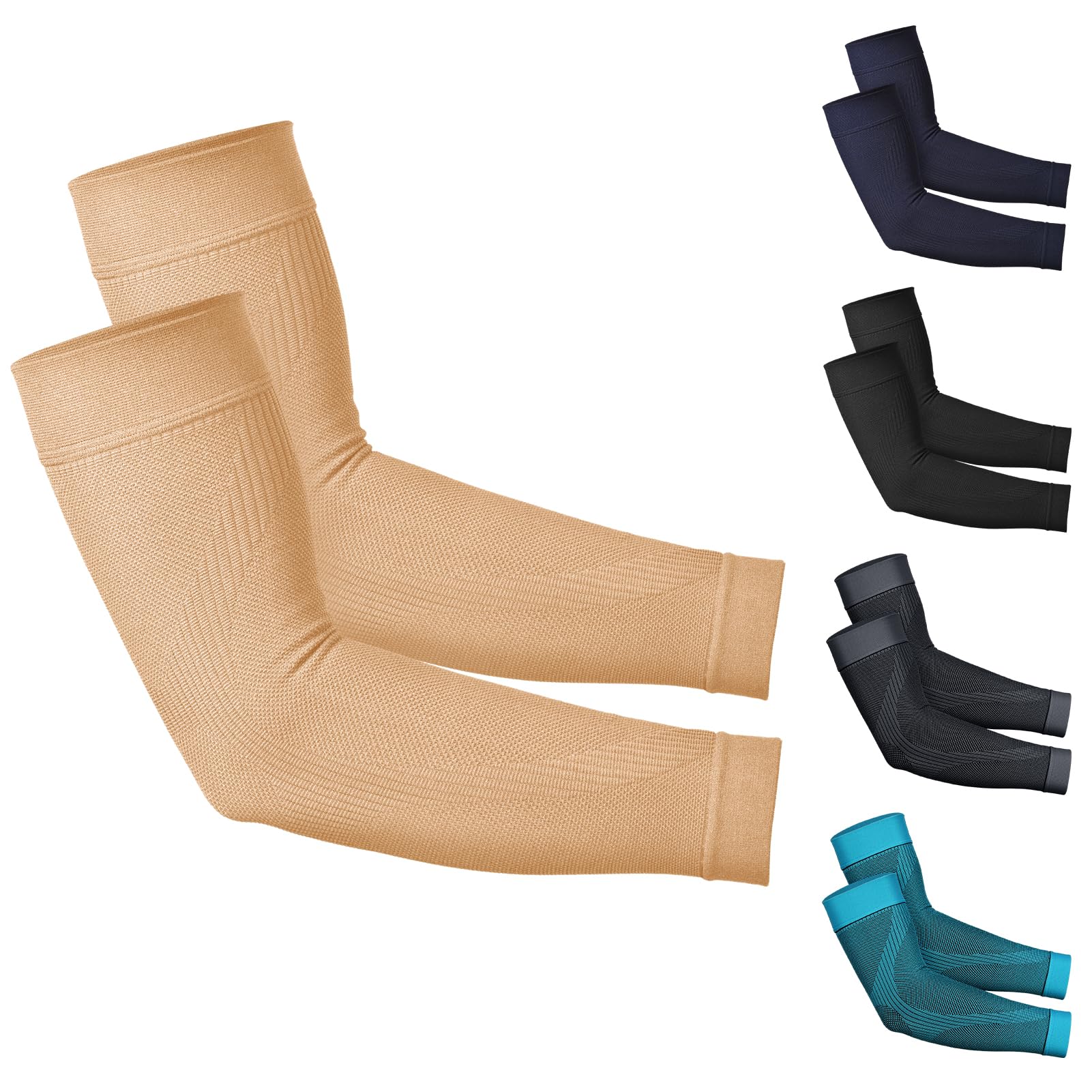
The KEKING sleeve stands out in the mid-range tier because it openly advertises its 20-30 mmHg graduated compression — a firm therapeutic grade usually found in medical-grade lymphedema sleeves. This is a serious spec for tendonitis sufferers because the higher compression actively reduces swelling and improves blood flow to the injured tendon sheath. The 80% nylon, 20% spandex blend feels dense and holds its shape well through repeated wear cycles.
Users with radial tunnel syndrome and post-lift recovery specifically note that the sleeve eliminates the need for constant readjustment during the day. The fabric is more substantial than the OrthoSleeve, which means it provides more stability but generates more heat during extended wear. Several reviews mention the material feeling slightly scratchy against bare skin, though wearing it over a thin base layer solves this issue.
Sizing is where this sleeve demands attention — it runs true to measured circumference, but some users report that the sleeve length extends further up the bicep than expected, requiring a roll at the top edge. The XXL option accommodates larger arms better than many competitors, and the latex-free construction is a must for users with contact allergies. The color selection is limited compared to other brands.
Why it’s great
- Firm 20-30 mmHg compression provides genuine therapeutic pressure for swelling relief
- Durable fabric that resists pilling and maintains shape over weeks of wear
- Excellent for larger arm circumferences with extended sizing options
Good to know
- Fabric can feel warm and slightly scratchy during extended wear
- Sleeve length may require rolling at the top for a custom fit
4. Mueller Tennis Elbow Support

The Mueller strap is the classic targeted approach to tendonitis — a hook-and-loop band with an integrated gel pad that sits directly over the forearm tendon insertion point, about an inch below the elbow. This is the style most commonly prescribed by physical therapists because it changes the effective lever arm of the extensor muscles, reducing strain on the injured tendon during gripping activities. The gel pad provides cushioning that distributes pressure evenly rather than digging in.
Users recovering from chronic tennis elbow report significant pain reduction — many noting 90% relief within three days of wearing it for a few hours during activity. The double-knit fabric backing is moisture-wicking and retains body heat to promote circulation in the affected area. The one-size design fits arm circumferences from ten to fourteen inches, covering most adult forearms without needing custom sizing.
The strap requires some trial and error to find the exact placement that works for your specific pain point, and the gel pad can shift during vigorous activity if the band is not cinched tight enough. Reviews also note that the plastic rings that manage the strap can cause the device to migrate down the arm over extended wear periods. This is best used during specific activities rather than for all-day continuous wear, as the localized pressure can become uncomfortable beyond three hours.
Why it’s great
- Targeted gel pad directly relieves tendon insertion point during gripping activities
- Affordable price point for a durable strap made by a trusted sports medicine brand
- Easy on-off design with hook-and-loop closure for quick adjustment between sets
Good to know
- Gel pad may shift position if the strap is not tightened adequately
- Not designed for all-day wear — best used for specific activity sessions
5. Incrediwear Arm Sleeve

The Incrediwear sleeve differentiates itself through fabric technology that focuses on breathability and lightweight comfort. Users coming from bulkier neoprene or gel-pad braces find this sleeve much easier to wear during sleep or recovery days when you need gentle compression without the aggressive feel of a therapeutic strap. It is particularly popular among grapplers and martial artists who need a sleeve that stays in place through vigorous mat work without restricting range of motion.
Multiple reviews report that the sleeve reduces soreness noticeably after training sessions, and some users claim pain relief begins within minutes of putting it on. The material has a smooth, almost silky feel against the skin and does not generate the heat retention issues common with denser nylon blends. The sleeve is machine washable and holds its elasticity well if you follow the care instructions.
The critical caveat with Incrediwear is sizing — it runs significantly smaller than the stated measurements. A user with a thirteen-inch bicep found the S/M size cut into their arm, requiring an exchange for a full size up. The sleeve also has a lower compression profile than the KEKING or CEP options, so if you need firm graduated pressure for swelling management, this may not provide enough force. It is best suited for mild tendonitis and maintenance during low-impact activity.
Why it’s great
- Exceptionally lightweight and breathable fabric ideal for sleep or recovery wear
- Provides noticeable pain relief within minutes for mild to moderate tendonitis
- Stays in place through dynamic activity like grappling or martial arts
Good to know
- Sizing runs small — order one size up from your measured circumference
- Lower compression level than dedicated therapeutic sleeves, not for acute swelling
FAQ
Should I wear a forearm brace all day or only during activity?
What is the difference between tennis elbow and golfer’s elbow braces?
Final Thoughts: The Verdict
For most users, the brace for forearm tendonitis winner is the CEP Compression Forearm Sleeves because the calibrated graduated compression supports tendon healing during both activity and recovery without the bulk of a strap. If you need a low-profile sleeve that disappears under clothing and handles sweat well during active work, grab the OrthoSleeve ES3. And for targeted relief that changes the mechanical load on your tendon during specific gripping activities, nothing beats the Mueller Tennis Elbow Support with its gel pad.

Mo Maruf
I created WellFizz to bridge the gap between vague wellness advice and actionable solutions. My mission is simple: to decode the research and give you practical tools you can actually use.
Beyond the data, I am a passionate traveler. I believe that stepping away from the screen to explore new environments is essential for mental clarity and physical vitality.