Our readers keep the lights on and my smoothie glass nicely filled. As an Amazon Associate, I earn from qualifying purchases.
Flat feet aren’t just about a missing arch; overpronation throws your entire gait off-kilter, straining your plantar fascia, Achilles tendon, and even your knees and hips. A proper brace for flat feet doesn’t just fill the arch void—it controls the excessive inward roll of your foot to restore natural alignment and dampen the repetitive shock of every step.
I’m Mohammad Maruf — the founder and writer behind WellFizz. I’ve spent years analyzing biomechanics research, podiatry guidelines, and consumer reviews to identify the specific construction features that separate an effective flat-foot brace from a flimsy bandage.
Whether you need rigid immobilization for severe collapse or a flexible sleeve for daily activity, this guide isolates the best brace for flat feet based on arch support geometry, material density, and real-world durability tests.
How To Choose The Best Brace For Flat Feet
Selecting a flat-foot brace requires matching the brace’s structural features to the severity of your arch collapse and your primary use case. The wrong brace can aggravate tendonitis or offer so little resistance that your foot continues to roll inward unchecked.
Heel Cup Depth & Rigidity
A deep, stiff heel cup cradles the calcaneus and prevents the heel bone from tilting outward during the gait cycle. Shallow or flexible cups allow the heel to shift, which undermines the entire brace’s pronation control. Look for a heel cup that extends at least 8 mm above the insole surface and resists thumb pressure without deforming.
Medial Post & Arch Support Material
The medial post, typically a denser foam or rigid plastic wedge under the arch, is what physically blocks the foot from rolling inward. Softer materials may feel comfortable initially but compress quickly and lose their corrective effect over a month of daily wear. For significant flat feet, a post made of polypropylene or a high-density EVA blend provides the necessary resistance.
Flexibility vs. Immobilization
Flexible braces allow natural ankle motion and are suitable for walking and light activity. Rigid or semi-rigid braces limit motion more aggressively, which can be necessary for severe pronation or post-injury stabilization. Identify your activity level first: daily walking generally benefits from a semi-rigid brace, while high-impact sports may require a fully rigid carbon-fiber shell.
Quick Comparison
On smaller screens, swipe sideways to see the full table.
| Model | Category | Best For | Key Spec | Amazon |
|---|---|---|---|---|
| NEOFECT Drop Foot Brace | Premium | Mild symptoms & daily rehab | Breathable Neoprene / Nylon | Amazon |
| Dosh AFO Foot Drop Brace | Premium | Discreet all-day wear | One Size / Neoprene | Amazon |
| Pozpo Tech AFO Foot Drop Brace | Mid-Range | Adjustable lift force | 5-Hook Tension System | Amazon |
| Tuli’s X Brace | Mid-Range | Arch & heel pressure relief | APMA Accepted / 0.5 oz | Amazon |
| Footlogics 3/4 Length Insoles | Mid-Range | Metatarsal & arch support | Built-in Metatarsal Raise | Amazon |
| OVINESY AFO Drop Foot Brace | Mid-Range | Precise tension adjustment | Dual-Hook Knob System | Amazon |
| Tenbon AFO Foot Drop Brace | Budget | Entry-level gait improvement | Triangular Stress Design | Amazon |
In‑Depth Reviews
1. NEOFECT Drop Foot Brace

The NEOFECT brace is constructed from breathable, high-quality nylon and neoprene, making it one of the most comfortable options for long-duration wear. Its fully adjustable straps allow you to dial in a custom fit that keeps the foot in a neutral position without cutting off circulation or causing pressure points around the ankle malleoli.
Designed primarily for individuals with mild symptoms — specifically those with a Manual Muscle Test score between 2 and 4 — this brace provides a moderate dorsiflexion assist that works well for daily walking and standing. It also serves a dual role as an overnight brace to maintain foot positioning during sleep, which several users report significantly improved their morning gait.
While it offers excellent comfort and adjustability, users with severe drop foot or grade-zero muscle strength may find it provides insufficient lift compared to rigid AFOs. The ankle wrap can slip slightly on very narrow feet, and the Velcro closure may require occasional re-tightening during extended activity.
Why it’s great
- Breathable materials reduce skin irritation during all-day wear
- Adjustable straps allow precise fit for both left and right feet
- Versatile for day use walking and overnight dorsiflexion maintenance
Good to know
- Not suitable for severe drop foot requiring rigid immobilization
- Ankle wrap may loosen on narrower foot shapes
2. Dosh AFO Foot Drop Brace
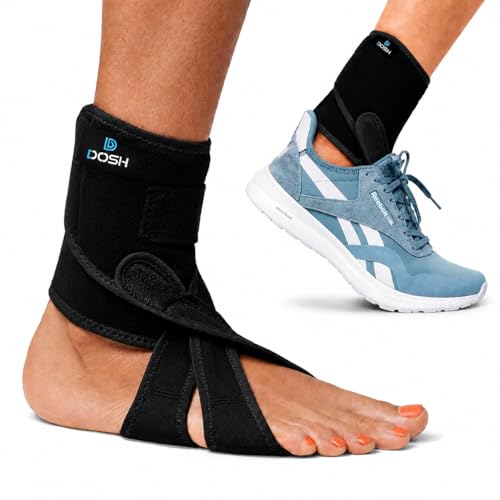
The Dosh AFO is a lightweight, soft brace that prioritizes discretion without sacrificing basic correction. Made from soft neoprene, it weighs only 3.75 ounces and features a thin profile that fits easily under pants or socks, making it a strong contender for users who want to maintain a normal shoe fit and appearance.
Its one-size-fits-most design covers a broad range of ankle circumferences, and the unisex construction works for both men and women. The brace provides gentle dorsiflexion assist that helps prevent toe dragging during walking, and its soft material allows some ankle mobility rather than locking the joint completely.
The largest strap’s Velcro may lose grip over several months of daily use, and the soft bottom can feel slightly slippery on hardwood or tile floors. Additionally, users with very active walking requirements report that the brace may shift out of position without periodic re-adjustment.
Why it’s great
- Extremely lightweight and discreet design conceals under clothing
- Soft neoprene allows natural ankle movement while providing lift
- One-size construction fits a wide variety of foot sizes
Good to know
- Velcro on largest strap may degrade after extended use
- Soft sole can be slippery on smooth indoor surfaces
3. Pozpo Tech AFO Foot Drop Brace Splint
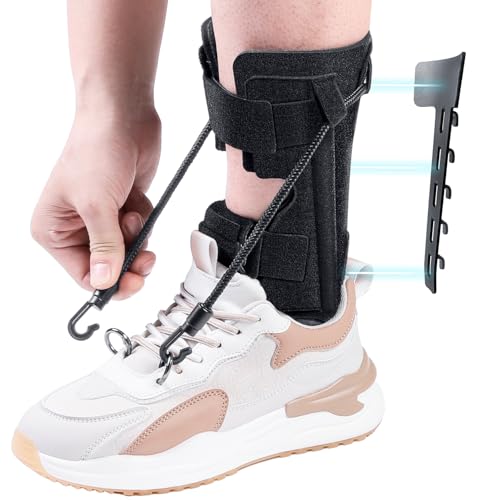
This brace from Pozpo Tech sets itself apart with a unique five-hook tension system at the back, allowing you to fine-tune the lifting force by hooking the elastic cord to different gears. This adjustability is a genuine advantage for users whose dorsiflexion needs vary throughout the day or across different shoe types.
The brace incorporates two built-in high-elastic support strips on each side of the ankle, providing both lateral stability and medial arch control. Its dual-hook design attaches directly to shoe eyelets rather than laces, which several users note feels more secure and prevents slippage during walking, particularly on uneven terrain.
Despite its thoughtful engineering, some units have shown durability issues—the rear adjustment clip and plastic strap insertion points may crack under repeated stress. The brace also requires shoes with standard eyelet rows, ruling out use with slip-ons, loafers, or most sandals without laces.
Why it’s great
- Five-hook adjustment allows precise tension customization per activity
- Dual metal ring attachment at shoe eyelets stays more secure than lace hooks
- Built-in elastic support strips add lateral stability during gait
Good to know
- Plastic clip and strap insertion points may break with heavy use
- Not compatible with slip-on shoes or lace-free footwear
4. Tuli’s X Brace

The Tuli’s X Brace is not a traditional AFO but an arch support compression sleeve that uses a patented X-shaped elastic strap to limit excessive stretching of the plantar fascia. Its low-profile design allows you to wear it inside shoes or even barefoot, making it a practical choice for flat feet accompanied by plantar fasciitis pain.
The unique heel strap secures the compression sleeve in place around the calcaneus, preventing migration during active movement. It has earned acceptance from the American Podiatric Medical Association, which reflects its clinical relevance for overpronation, Sever’s disease, and fallen arches. The entire brace weighs only half an ounce.
Sizing can be tricky—the suggested arch measurement may lead to a size that feels too compressive and causes forefoot soreness for some users. The heel loop may also slip off during high-impact exercise if the fit isn’t perfectly dialed in, so careful measurement is essential.
Why it’s great
- APMA-accepted design backed by podiatrist clinical relevance
- Ultra-light 0.5-ounce construction suitable for barefoot or sandal wear
- X-strap method mimics low-dye taping technique without adhesive
Good to know
- Sizing chart may be inaccurate for some foot shapes
- Heel loop can slip during vigorous activity if fit is not perfect
5. Footlogics 3/4 Length Orthotic Insoles

Footlogics takes a different approach by offering a 3/4-length insole rather than an external brace. This design allows it to fit into low-heeled shoes like loafers, moccasins, and flat sandals where full-length orthotics would not work. The prominent built-in metatarsal raise reduces pressure on the ball of the foot while the deep heel cup and arch support address overpronation.
Developed by Australian podiatrists, these insoles are made from lightweight Q-E.V.A. with shock-absorbing Podflex heel and forefoot padding. Users with Morton’s neuroma, metatarsalgia, and fallen arches have reported significant pain reduction, with some calling them the best over-the-counter option they’ve tried after custom orthotics failed.
The metatarsal pad position may feel misaligned for some foot anatomies, potentially causing arch discomfort rather than relief. Additionally, the 3/4 length means the toes are not supported, which can leave the forefoot feeling slightly less cushioned during long walks.
Why it’s great
- 3/4 length fits in shallow footwear where full insoles cannot
- Built-in metatarsal raise specifically targets ball-of-foot pain
- Podiatrist-developed design with shock-absorbing heel padding
Good to know
- Metatarsal pad position may not suit every foot anatomy
- No toe support due to 3/4 length
6. OVINESY AFO Foot Drop Brace
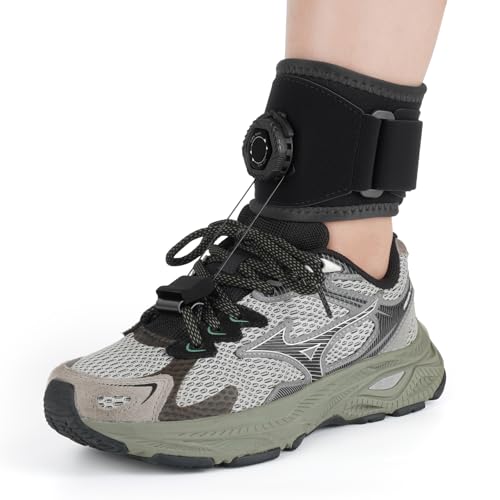
The OVINESY brace features an exclusive dual-hook knob adjustment system that allows precise, real-time tension customization. Unlike simple elastic bands, this mechanism uses a reinforced steel wire and durable lace hook, giving you the ability to fine-tune the dorsiflexion angle throughout the day without removing the brace.
Extended-length straps and a neoprene body provide a comfortable fit for ankle circumferences from 7 to 14 inches across two size options. The brace is designed to work with lace-up athletic and dress shoes, and its one-piece structure ensures stable upward support during walking, reducing the risk of tripping associated with drop foot.
Some users report that the brace does not provide sufficient lift for more severe drop foot cases when the dual-hook is not oriented correctly. The fine steel wire also requires care—overtightening or using the brace with elasticated laces may cause premature wire fatigue or breakage.
Why it’s great
- Dual-hook knob system enables on-the-fly tension adjustments
- Reinforced steel wire offers higher load-bearing capacity than standard elastic
- Extended-length straps accommodate a wide range of ankle sizes
Good to know
- Requires correct orientation of dual-hook for effective lift
- Not suitable for use with elastic shoe laces
7. Tenbon AFO Foot Drop Brace
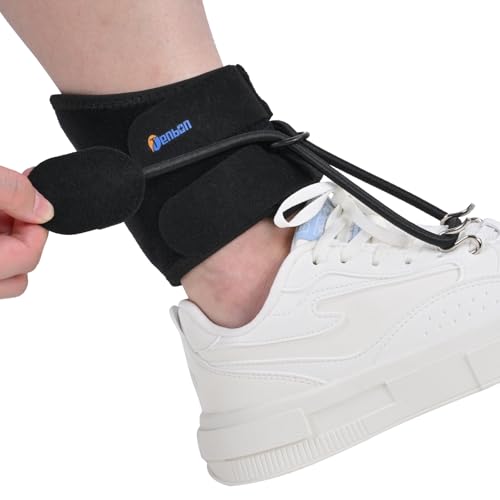
The Tenbon AFO brace is built around an exclusive Triangular Force Design that creates a mechanical linkage between the instep and shoe upper. This structure is engineered to maintain a consistent upward lift during the swing phase of gait, preventing the foot from dropping and scraping against the ground. The brace uses high-grade hook-and-loop fasteners and a magnetic closure for quick donning.
Breathable polyester fabric with soft instep cushions and Achilles tendon padding makes this one of the more comfortable options for extended daily use. It is compatible with multiple shoe types including lace-up athletic shoes, dress shoes, and select sandals, and its universal fit works for both left and right feet.
The magnetic closure has drawn mixed feedback—some users find it less secure than traditional buckle or Velcro systems during dynamic movement. The brace also tends to work best with sneakers, and several users noted difficulty achieving a snug fit with slip-on or very low-profile footwear.
Why it’s great
- Triangular Force Design provides consistent lift without detaching
- Breathable polyester padding reduces discomfort during long wear
- Compatible with athletic shoes, dress shoes, and select sandals
Good to know
- Magnetic closure may feel less secure than mechanical fasteners
- Best results limited to lace-up sneakers rather than slip-on styles
FAQ
How tight should a flat-foot brace feel when I first put it on?
Can I wear a flat-foot brace with sandals or open-toe shoes?
How long does it take to see improvement in my gait after wearing a brace daily?
Final Thoughts: The Verdict
For most users, the brace for flat feet winner is the NEOFECT Drop Foot Brace because it balances breathable comfort, adjustable support, and dual-purpose use for both walking and overnight positioning. If you want a discreet, ultra-light option that hides under clothing, grab the Dosh AFO Brace. And for precise lift-force adjustability without needing multiple braces, nothing beats the Pozpo Tech Splint.

Mo Maruf
I created WellFizz to bridge the gap between vague wellness advice and actionable solutions. My mission is simple: to decode the research and give you practical tools you can actually use.
Beyond the data, I am a passionate traveler. I believe that stepping away from the screen to explore new environments is essential for mental clarity and physical vitality.