Our readers keep the lights on and my smoothie glass nicely filled. As an Amazon Associate, I earn from qualifying purchases.
The glossy, deep-green leaves of a healthy boxwood hedge are a defining mark of a well-kept landscape, but achieving that uniform vibrancy requires more than just water and sunlight. Boxwoods are heavy feeders with specific nutrient needs, and the wrong fertilizer can lead to yellowing foliage, stunted growth, or even root burn, turning a stately shrub into a source of frustration.
I’m Mohammad Maruf — the founder and writer behind WellFizz. I’ve spent years analyzing soil science data, fertilizer formulation guides, and thousands of verified buyer reports to identify the products that consistently deliver measurable results for acid-loving ornamentals like boxwoods.
This guide cuts through the marketing hype to present only the most effective formulations, based on analysis of NPK ratios, micronutrient profiles, and real-world application feedback. You’ll discover the best boxwood fertilizer options that provide deep root feeding and sustained growth across every season.
How To Choose The Best Boxwood Fertilizer
Selecting the right plant food for your boxwoods hinges on understanding a few key principles that differ from standard lawn care. The goal is to encourage deep root growth and that rich, dark green color without forcing weak, leggy growth that is susceptible to pests and winter damage.
Match the NPK Ratio to Boxwood Needs
Boxwoods are not heavy nitrogen feeders like grass. Look for a balanced or slightly higher nitrogen formula, typically around a 10-6-4 or 16-4-4 ratio. Too much nitrogen pushes rapid, soft growth that turns pale yellow and becomes a target for boxwood leafminer and blight. The phosphorus (middle number) should be moderate to support root health, while potassium (last number) builds winter hardiness.
Choose Between Slow-Release and Water-Soluble
For established boxwood hedges, slow-release granular fertilizers or pre-measured spikes provide a steady supply of nutrients over several months, reducing the risk of burn and the need for frequent reapplication. Water-soluble formulas like 20-20-20 offer a quick green-up but require careful dilution and more frequent feeding, making them better suited for container-grown boxwoods or a mid-season boost.
Prioritize Micronutrients and Soil Acidity
Boxwoods thrive in slightly acidic soil with a pH between 6.0 and 7.0. Yellowing leaves (chlorosis) are often a sign of iron or manganese deficiency, which occurs when the soil pH is too high. A fertilizer containing sulfur, iron, and other trace minerals helps maintain the proper acidity and keeps foliage deep green. Organic options like Espoma Holly-tone are specially formulated for acid-loving plants and include these vital micronutrients.
Quick Comparison
On smaller screens, swipe sideways to see the full table.
| Model | Category | Best For | Key Spec | Amazon |
|---|---|---|---|---|
| Espoma Organic Holly-tone | Granules | Acidic soil maintenance | 4-3-4 NPK with 5% Sulfur | Amazon |
| Jobe’s Fertilizer Spikes | Spikes | Mess-free slow feeding | 16-4-4 NPK, 15 spikes | Amazon |
| Espoma Organic Evergreen-tone | Granules | Broadleaf evergreen health | 4-3-4 NPK with Bio-tone | Amazon |
| GS Plant Foods 20-20-20 | Water-Soluble | Quick green-up for containers | 20-20-20 + Kelp extract | Amazon |
| Nelson ColorStar | Granules | Extended bloom feeding | 4-5 month slow release | Amazon |
In‑Depth Reviews
1. Espoma Organic Holly-tone

Espoma’s Holly-tone is the benchmark for acid-loving plant nutrition, and its 4-3-4 formulation with 5% sulfur makes it an ideal match for boxwoods that struggle with yellowing leaves due to high soil pH. The 36-pound bag provides exceptional coverage for large hedges, and the exclusive Bio-tone microbes help break down organic matter directly in the root zone. Users consistently report a deep greening of foliage within two weeks of application.
The slow-release granular form requires no pre-mixing — you simply spread it around the drip line and water it in. It feeds for months, making the spring and fall application schedule straightforward. As an OMRI-listed organic product, it is safe for pets and children once watered in, though one verified buyer noted that dogs are attracted to the smell of the bone and blood meal in the formula.
This fertilizer shines in maintaining long-term soil health rather than forcing a quick flush of growth. For boxwood owners who want a reliable, research-backed feed that reduces chlorosis and builds dense foliage, this is the definitive choice. The barnyard smell after application is a minor trade-off for the proven biological activity.
Why it’s great
- Formulated specifically for acid-loving shrubs like boxwood
- Large 36-pound bag offers the best per-feeding value
- Organic with beneficial Bio-tone microbes for soil health
Good to know
- Strong organic odor may attract dogs
- Requires thorough watering in to activate granules
2. Jobe’s Slow Release Tree and Shrub Fertilizer Spikes

Jobe’s fertilizer spikes eliminate the guesswork of measuring and the mess of spreading granules. Each spike delivers a 16-4-4 NPK ratio directly to the root zone, which is a higher nitrogen content than organic granules, making it effective for giving a tired boxwood hedge a noticeable green boost. The included plastic driving cap prevents the spikes from crumbling during installation.
The slow-release mechanism feeds for a full season, requiring only two applications per year — early spring and late fall. This method also avoids the runoff and surface odor associated with granular fertilizers, making it a clean option for boxwoods planted near patios or walkways. The spikes are pre-measured to prevent over-fertilization, a common cause of root burn in novice gardeners.
Long-term users report that their boxwoods show denser growth and richer color compared to untreated shrubs on the same block. The 15-count package covers a moderate hedge row, and the individual spikes are ideal for targeted feeding of specimen plants. While the NPK ratio is not specifically tailored for acid-lovers, the steady nitrogen supply effectively corrects pale foliage.
Why it’s great
- No-mess, no-measure application with included cap
- Slow-release formula prevents root burn
- Effective for correcting yellowing boxwood leaves
Good to know
- Not organic or formulated for acidic soil pH adjustment
- May require hammering into hard, compacted soil
3. Espoma Organic Evergreen-tone

Espoma’s Evergreen-tone shares the same 4-3-4 analysis as Holly-tone but is formulated to support a broader range of needle and broadleaf evergreens, including boxwood. The key difference is the inclusion of 5% sulfur specifically to lower soil pH, which directly addresses the iron chlorosis that turns boxwood leaves yellow. The 18-pound bag is a practical size for medium-sized landscape beds.
Like all Espoma organic fertilizers, this product relies on natural ingredients and the Bio-tone microbial complex to feed the soil biology as well as the plant. The result is a slower, steadier nutrient release that builds long-term root structure rather than forcing a quick top-growth flush. Users note that the granules have a genuine farmyard odor, confirming the presence of real manure and bone meal.
If you are managing a mixed hedge of boxwood, juniper, and pine, this one-bag solution is incredibly convenient. The recommended twice-yearly application in early spring and late fall aligns perfectly with the boxwood growth cycle. While the lower NPK numbers mean you won’t see an overnight transformation, the gradual improvement in foliage density and color is sustainable and safe for the long-term health of the shrub.
Why it’s great
- Sulfur content helps lower pH for yellow boxwoods
- Approved for organic gardening with Bio-tone microbes
- Safe for sensitive roots and won’t burn when used as directed
Good to know
- Strong barnyard smell may be unpleasant
- Slow-acting compared to synthetic water-soluble formulas
4. GS Plant Foods All Purpose Water Soluble 20-20-20
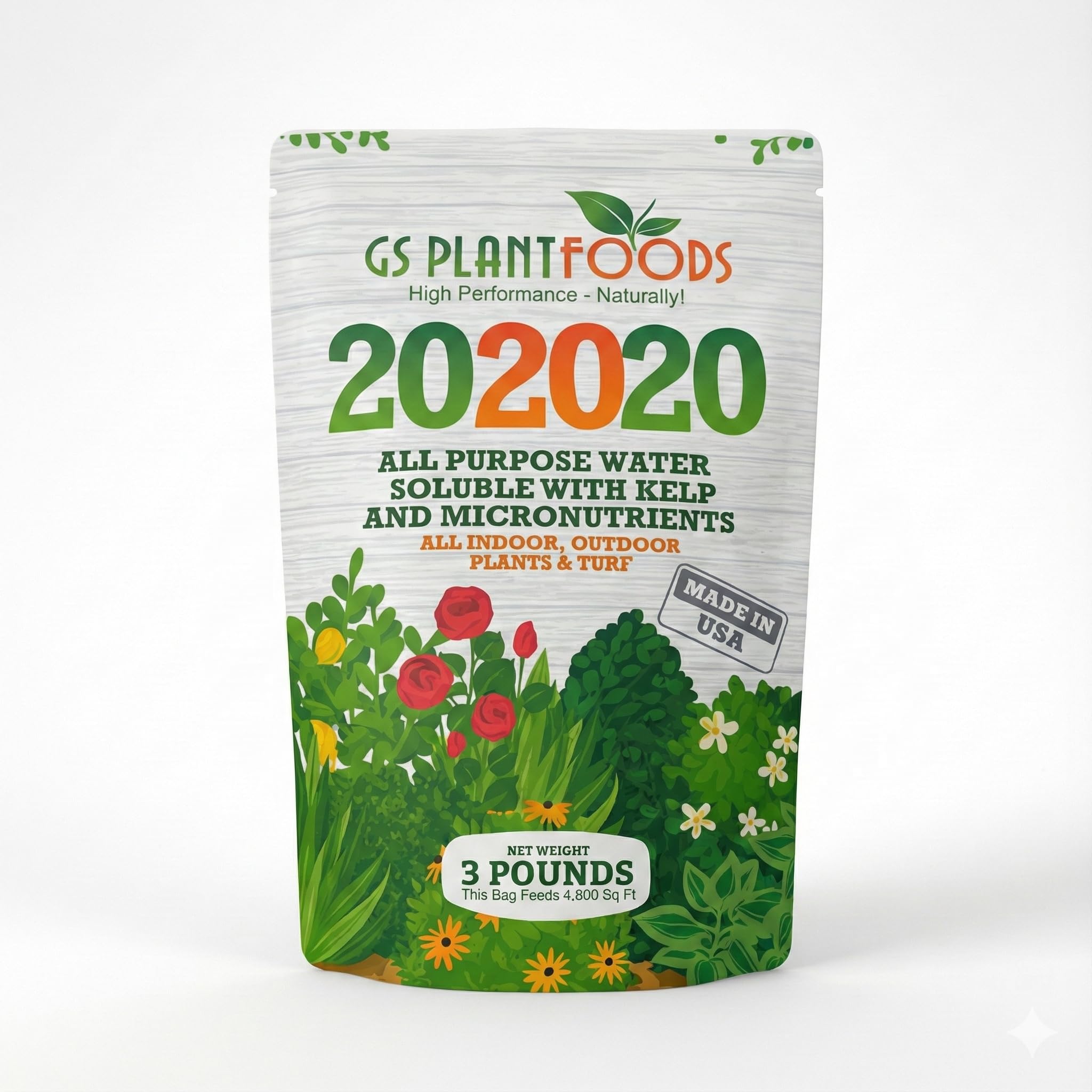
This water-soluble formula from GS Plant Foods delivers an immediate nutrient hit with its 20-20-20 balanced NPK plus kelp extract and micronutrients like iron and zinc. For boxwoods in containers or those showing signs of acute yellowing, a liquid feed can correct deficiencies in days rather than weeks. The 3-pound bag treats up to 4,800 square feet of turf, making it extremely concentrated.
The inclusion of Ascophyllum nodosum kelp provides natural growth hormones that stimulate root development, which is especially valuable for recently transplanted boxwoods. Users report that a single application revitalizes struggling plants, producing heartier growth. However, the fast-acting nature means it can burn foliage if applied too strongly, and it requires bi-weekly or monthly reapplication to maintain results.
This product is best used as a supplementary feed rather than a primary fertilizer for in-ground boxwood hedges. It works wonderfully as a mid-season pick-me-up between granular applications or as the main feed for boxwoods in pots where soil nutrients leach quickly. The all-purpose versatility also makes it a smart choice if you need a single product for your entire garden.
Why it’s great
- Immediate green-up for yellow or stressed boxwoods
- Kelp extract promotes strong root growth
- Concentrated formula provides excellent coverage
Good to know
- Requires careful dilution to avoid burning roots
- Frequent reapplication needed for sustained feeding
5. Nelson Plant Foods ColorStar
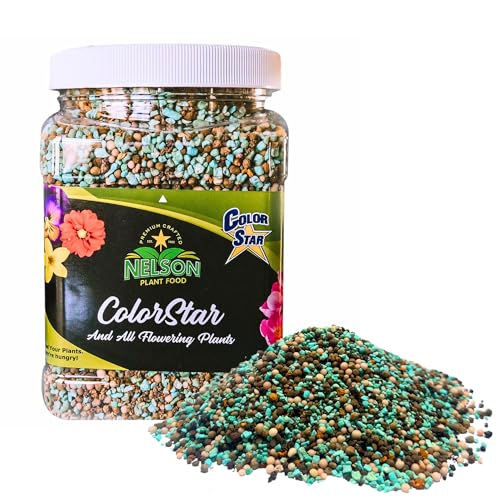
Nelson ColorStar is built around the concept of a single application lasting four to five months, using five different nitrogen sources that each release at different rates. For busy homeowners managing a large landscape, this set-it-and-forget-it approach is highly appealing. The formula contains 25% bone and blood meal plus a full suite of micronutrients including iron, zinc, and manganese.
While the manufacturer markets this primarily for flowering plants, the balanced nutrient profile and sulfur content make it effective for maintaining dark green boxwood foliage. The slow-release nitrogen sources prevent the soft, disease-prone growth associated with quick-release synthetic feeds. Users praise the visible results, noting that their shrubs look “outstanding” and hold rich color through the growing season.
The main drawback is the cost per pound, which is higher than bulk granular options like Espoma. The 2-pound jar covers a limited area, making it more suitable for a few specimen boxwoods or container plants rather than a full hedge. If you value convenience and are willing to pay a premium for a single-application solution, ColorStar delivers consistent results with minimal effort.
Why it’s great
- Single application feeds for up to 5 months
- Five nitrogen sources prevent growth surges
- Rich in micronutrients for deep green color
Good to know
- Small jar size has higher cost per feeding
- Not specifically formulated for acid-loving plants
FAQ
What NPK ratio is best for established boxwood hedges?
Why are my boxwood leaves turning yellow after fertilizing?
Final Thoughts: The Verdict
For most boxwood owners, the best boxwood fertilizer winner is the Espoma Organic Holly-tone because its 4-3-4 NPK plus sulfur directly addresses the acidic soil requirements and iron chlorosis common in boxwood cultivation. If you want an effortless, no-mess feeding schedule, grab the Jobe’s Fertilizer Spikes. And for a quick mid-season correction for container or stressed plants, nothing beats the GS Plant Foods 20-20-20.

Mo Maruf
I created WellFizz to bridge the gap between vague wellness advice and actionable solutions. My mission is simple: to decode the research and give you practical tools you can actually use.
Beyond the data, I am a passionate traveler. I believe that stepping away from the screen to explore new environments is essential for mental clarity and physical vitality.