Our readers keep the lights on and my smoothie glass nicely filled. As an Amazon Associate, I earn from qualifying purchases.
A bow saw is the manual power tool that turns a sprawling branch pile into stackable firewood without the noise of a chainsaw. The problem isn’t whether it cuts — it’s whether the blade stays sharp, the frame holds tension, and the cut doesn’t bind halfway through a wet limb.
I’m Mohammad Maruf — the founder and writer behind WellFizz. I’ve spent years analyzing hardware specifications, tension systems, and blade metallurgy across dozens of manual cutting tools to separate the tools that deliver clean strokes from those that just frustrate your wrist.
This guide breaks down the five top-rated models on the market and explains exactly what makes a great bow saw perform consistently, cut after cut.
How To Choose The Best Bow Saw
Choosing a bow saw comes down to three variables: the blade’s length, the frame’s rigidity, and the tension system. Each directly controls what thickness of wood you can cut and how much effort each stroke requires.
Blade Length and Tooth Pitch
Longer blades (21–24 inches) let you cut logs up to 12 inches in diameter in a single pass, but they require more arm extension and a wider swing space. Shorter blades (14–15 inches) are easier to control for pruning and smaller limbs. Tooth pitch — the number of teeth per inch (TPI) — determines cut aggressiveness. Lower TPI (6–8) cuts fast but rougher; higher TPI (10–12) gives a finer finish but needs more strokes.
Frame Construction and Tension System
A tubular steel frame offers the best stiffness-to-weight ratio for most users. Look for a quick-release cam lever or twist-tightener that lets you adjust blade tension without tools. Loose tension causes the blade to wander; overtightening can bend the frame. A clean tension system makes field adjustments fast.
Handle Ergonomics and Grip
Plastic or rubberized grips reduce hand fatigue during extended cutting sessions. A pistol-grip handle provides more leverage for downward cuts, while a straight handle works well for horizontal or angled cuts. Wooden handles look classic but are less forgiving on blisters in wet conditions.
Quick Comparison
On smaller screens, swipe sideways to see the full table.
| Model | Category | Best For | Key Spec | Amazon |
|---|---|---|---|---|
| GreatNeck BB24 | Premium | Heavy pruning and firewood | 24-inch chrome alloy blade | Amazon |
| Corona RS 7395 | Premium | One-handed branch pruning | 14-inch curved SK5 steel | Amazon |
| Truper AJT-21 | Mid-Range | General cutting and camping | 21-inch high-carbon steel | Amazon |
| Spear & Jackson 9500R | Mid-Range | Fine woodworking and crosscuts | 22-inch 10 TPI skew back | Amazon |
| IRWIN 2011201 | Budget | Small DIY and 2×4 cuts | 15-inch M2 tooth steel | Amazon |
In‑Depth Reviews
1. GreatNeck BB24 Bow Saw

The GreatNeck BB24 delivers the largest cutting capacity in this lineup thanks to its 24-inch chrome alloy steel blade. The extra-hard steel resists dulling on dry wood and storm debris, and the tubular steel frame provides enough stiffness to keep the blade tracking straight through logs up to 10 inches thick.
The quick-release blade tightener lets you swap or tension the blade in seconds without fumbling with wingnuts. At just 1.13 pounds, this saw is light enough to carry on trail maintenance or camping trips, yet the frame geometry gives you enough leverage to power through tough cuts.
One reviewer noted it feels like a “cheap Chinese tool” for heavy commercial use, but for homeowner tree trimming, storm cleanup, and firewood processing, it punches well above its price tier. The orange frame also makes it easy to spot if you drop it in the brush.
Why it’s great
- Longest blade in the roundup for big logs
- Blade changes require no tools
- Lightweight frame with strong tension
Good to know
- Blade can be prone to bending under extreme force
- Plastic handle less comfortable for long sessions
2. Corona Tools 14-Inch RazorTOOTH RS 7395

The Corona RS 7395 is not a traditional bow saw — it is a curved pruning saw designed for one-handed use on live branches up to 8 inches in diameter. The impulse-hardened, three-sided razor teeth on the SK5 Japanese high-carbon steel blade remove material aggressively on both the push and pull strokes.
Reviewers consistently describe it as cutting “like a hot knife through butter” on green wood up to 3 inches thick. The chrome plating reduces friction and sap buildup, while the rubberized pistol grip gives you secure control even in wet conditions. It weighs only 0.66 pounds, making it ideal for extended overhead pruning sessions.
A common note is that the two small bolts holding the handle can loosen over time. Users recommend applying thread-locking glue during assembly to prevent this. For serious pruners and landscapers, this saw rivals expensive Japanese pull-saws at a fraction of the cost.
Why it’s great
- Aggressive cut on live wood with minimal effort
- Very lightweight and easy to handle one-handed
- Works on branches up to 8 inches
Good to know
- Handle bolts may loosen; need thread-locker
- Not ideal for large logs or firewood processing
3. Truper AJT-21 Bow Saw
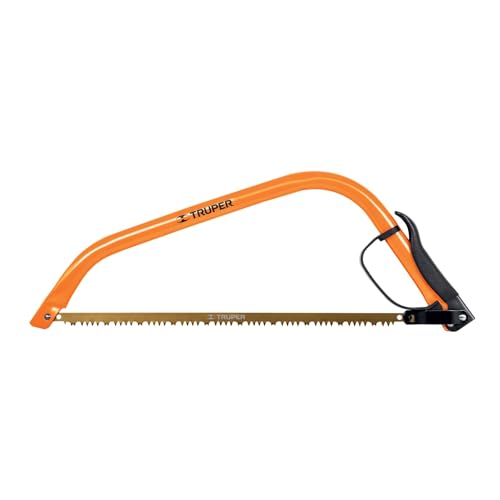
The Truper AJT-21 hits the sweet spot between portability and cutting power. At 21 inches, its high-carbon steel blade can handle logs up to 12 inches in diameter while remaining compact enough for backpacking. The cam-lever tension system lets you dial in blade tightness quickly without any tools.
Users report that this saw cuts 1–1.5-inch branches in seconds and slices through 7-inch trunks flush with the ground without binding on green wood. The steel handle with thermoplastic elastomer grip is durable and provides a solid, vibration-dampening hold even when your hands are sweaty or gloved.
For the price, this saw delivers performance that rivals models costing significantly more, making it a top recommendation for homeowners and campers alike.
Why it’s great
- Cam-lever tension system is fast and reliable
- Excellent blade that stays sharp on mixed wood
- Lightweight enough for backpacking
Good to know
- Toe pin can be weak; easy to replace
- Plastic blade cover may need DIY upgrade
4. Spear & Jackson 9500R Skew Back Saw

The Spear & Jackson 9500R is a traditional skew-back hand saw designed for fine woodworking rather than heavy brush clearing. With 10 teeth per inch and a precision-ground carbon steel blade, it excels at cutting along and across the grain in plywood, chipboard, and dimensional lumber.
Users note that the blade comes with a protective lacquer coating that can cause drag. Removing this coating with lacquer thinner and applying paste wax dramatically improves performance. Once tuned, the saw delivers a smooth finish on end grain cuts that rivals specialized joinery saws.
This saw is re-sharpenable, which adds years of service life compared to disposable blades. The wooden handle has a classic feel, though some users found the factory tote shape uncomfortable and reshaped it to their preference. This is not a pruning tool — it is for the workbench, not the woodpile.
Why it’s great
- Fine crosscut finish with 10 TPI teeth
- Blade can be resharpened multiple times
- Balanced skew-back design reduces friction
Good to know
- Requires lacquer removal and waxing for best glide
- Wooden handle may need personal reshaping
5. IRWIN 2011201 ProTouch 15-Inch Hand Saw
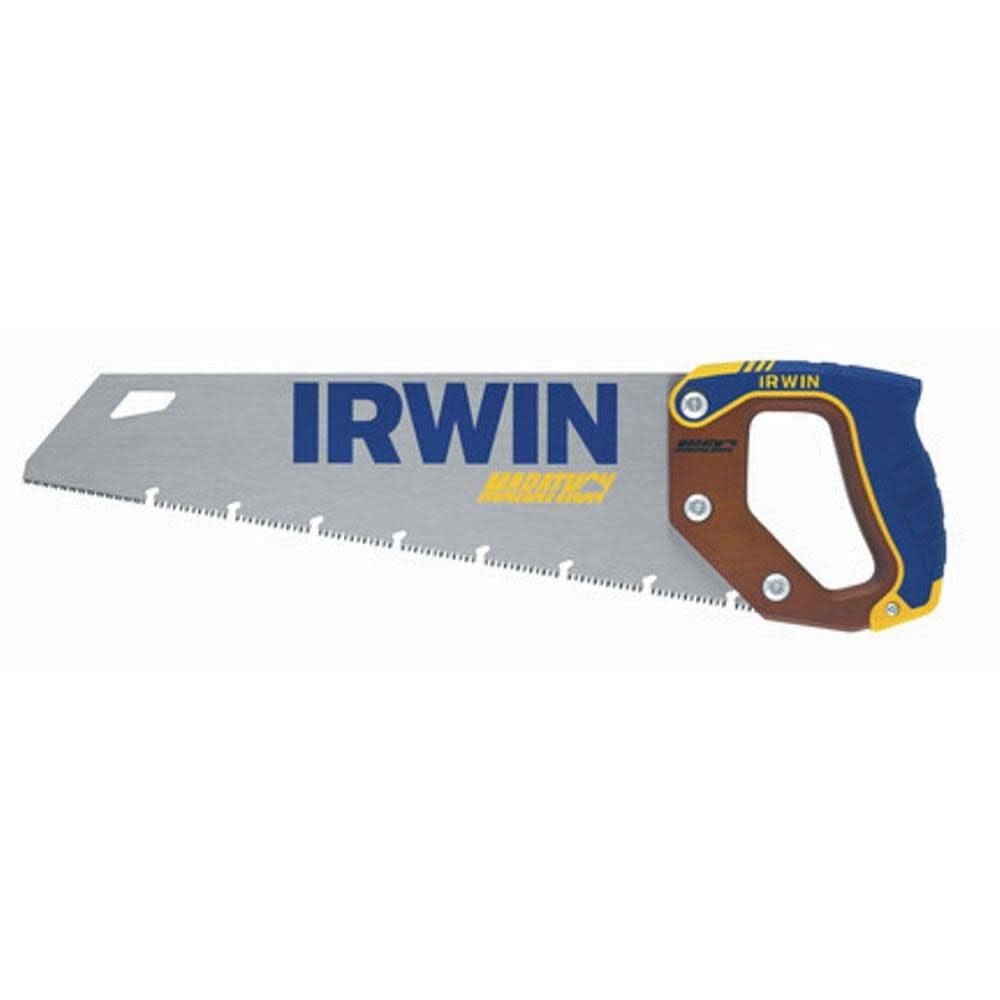
The IRWIN 2011201 is a compact carpenter’s saw with a 15-inch blade that fits easily into a tool bag. Its M2 tooth technology with tri-ground bevels delivers fast cuts on 2x4s, plywood, and small logs. The tapered-pitch nose helps start cuts cleanly without the blade skating across the surface.
With the right technique — using oscillating strokes at varying angles — this saw becomes “an absolute beast,” as one reviewer put it. The Pro-Touch wooden handle feels solid in the hand and provides good control for precision cuts. It weighs 16 ounces, making it easy to maneuver in tight spaces.
This saw is best suited for small tasks like trimming fence boards, cutting dimensional lumber, or tackling light pruning. It is not designed for large firewood processing or heavy brush, but for its intended role as a portable DIY saw, it is tough to beat at this entry-level price point.
Why it’s great
- Tri-ground teeth cut fast on softwood and plywood
- Compact size fits in a tool bag
- Comfortable wooden handle with good grip
Good to know
- Requires practice oscillation technique for best results
- Not suited for logs over 6 inches in diameter
FAQ
What is the best bow saw for cutting green wood?
Can a bow saw be used for fine woodworking?
Final Thoughts: The Verdict
For most users, the bow saw winner is the GreatNeck BB24 because its 24-inch chrome alloy blade and tool-free tension system deliver the best combination of cutting capacity and ease of use. If you want a dedicated pruning saw for overhead branches, grab the Corona RS 7395. And for a compact, budget-friendly option that handles small jobs without taking up space, nothing beats the IRWIN 2011201.

Mo Maruf
I created WellFizz to bridge the gap between vague wellness advice and actionable solutions. My mission is simple: to decode the research and give you practical tools you can actually use.
Beyond the data, I am a passionate traveler. I believe that stepping away from the screen to explore new environments is essential for mental clarity and physical vitality.