Our readers keep the lights on and my smoothie glass nicely filled. As an Amazon Associate, I earn from qualifying purchases.
Specs are compiled from manufacturer listings and verified buyer reviews and can change over time — please confirm the key details on the product page before buying.
When you are mixing a bottle at 2 a.m., the last thing you want to second-guess is the water. Tap water can contain fluoride levels that are fine for adults but a real concern for infants, and the jug in your fridge might not be pure enough for a newborn’s developing system. The safest path is a bottled water explicitly low in minerals and free of added fluoride — designed for baby formula from the ground up.
I’m Mohammad Maruf — the founder and writer behind WellFizz. This guide is built by comparing the manufacturers’ published specifications and the patterns across verified customer reviews, so you get each pick’s real strengths and trade-offs instead of marketing spin.
Choosing the right bottled water for babies to drink means looking past the label to what is actually inside — fluoride levels, purification method, and whether it is distilled or simply filtered — because not every clear bottle is safe for tiny kidneys.
Our Picks at a Glance

How To Choose The Best Bottled Water For Babies To Drink
Not all bottled water is created equal when a newborn is involved. A few key factors separate a safe choice from one that could cause stomach discomfort or interfere with formula dissolution. Here is what to check before you buy.
Distilled vs. Purified vs. Spring Water
Distilled water has been boiled into steam and condensed back into liquid, leaving virtually everything — minerals, fluoride, contaminants — behind. This makes it the blankest canvas for formula mixing and the safest bet for a baby’s immature digestive system. Purified water has been filtered but not necessarily stripped of all minerals. Spring water comes from an underground source and may contain naturally occurring minerals, which is fine only if the label confirms it is low in nitrates and sodium. For infants, distilled or purified water labeled nitrate-free and low-mineral is the standard.
Fluoride Content — The Hard Line
Babies under six months should not be exposed to fluoride in their drinking water. Too much fluoride during tooth development can cause fluorosis (white streaks or spots on permanent teeth). Look for water that explicitly states “fluoride-free” or “no added fluoride.” Distilled water naturally has negligible fluoride, and many baby-specific brands remove it during processing. If you are using spring water, verify the fluoride level is well below 0.7 mg/L — the standard for infant safety.
BPA-Free Bottles and Tamper-Evident Seals
Babies are more vulnerable to chemical leaching than adults. Every bottle your baby drinks from should be BPA-free, and the same applies to the water bottle itself. A tamper-evident cap is a small but important sign that the water has not been opened or contaminated during shipping. Single-serve 16.9 oz bottles are the most practical size — they fit a diaper bag, finish before bacteria can grow, and eliminate the risk of a half-used gallon going stale.
Quick Comparison
| Model | Best For | Purification Method | Fluoride / Minerals | Pack Size | Amazon |
|---|---|---|---|---|---|
| Bay Bay Water Purified Distilled★ Best Overall | Everyday formula mixing | 7-step steam distillation | No fluoride, no minerals | 12 pack | Amazon |
| ABC Baby Water Premium Distilled | Travel & on-the-go feeding | 9-step distillation & purification | No fluoride, no minerals | 12 pack | Amazon |
| Resway American Red Cross Distilled | Multi-use (CPAP & humidifier too) | Vapor distillation | No minerals | 12 pack | Amazon |
| Aqua Carpatica Natural Spring Water | Naturally low-mineral spring water | Naturally filtered spring | Naturally nitrate-free, sodium-free | 24 pack | Amazon |
In‑Depth Reviews
1. Bay Bay Water Purified Distilled Water for Babies, 16.9 Fl Oz (Pack of 12)
Our pick — over 4.5★ from 950+ verified ratings; the strongest balance of quality and price.
The crowd-favorite distilled water that parents trust from the first bottle to the last.
Bay Bay Water uses a 7-step steam distillation and purification process to strip out sediment, chlorine, and hardness minerals — leaving a blank-slate water that makes every formula feed taste the same. The result is a clean, light distilled water that mixes instantly without clumps or aftertaste. Each 16.9 oz bottle comes in BPA-free, phthalate-free plastic with a resealable cap, so you can close it between feeds and toss it in a diaper bag without worry. At just 1.06 pounds for the whole pack, it is significantly lighter than bulkier gallon-based options, making it far easier to carry to daycare or stash in a stroller caddy.
Water quality is the single most-praised aspect, with dozens of owners highlighting the reliable purity batch after batch. One buyer even noted their baby had been drinking this water since birth. The bottle size also earns high marks for portability — it slips into a carry-on for travel and looks discreet enough for hotel use. The consistent takeaway is that this water delivers confidence without any fuss.
What Parents Love
- 7-step distillation removes nearly all impurities for a clean, consistent formula mix
- Compact 1.06 pound pack is easy to carry in a diaper bag or stroller
- Resealable cap and BPA-free plastic keep the water fresh between feeds
The Trade-Off
- Value for money is the one recurring caveat — parents find it pricey compared to gallon distilled jugs
- Some owners wish the taste were less flat, though distilled water is inherently neutral by design
Look elsewhere if: you are on a tight budget and mix a lot of bottles daily; a larger gallon of distilled water costs less per ounce, even though it is less convenient to tote around.
2. ABC Baby Water Premium Distilled Water for Babies, 16.9 oz Bottles, 12 Pack
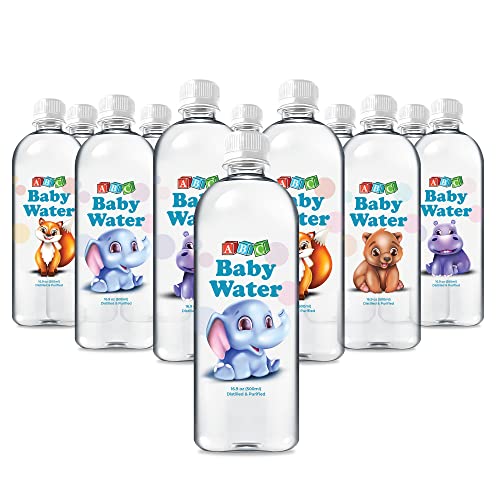
An 11-hour, 9-step distillation process that parents describe as the cleanest water they have found for on-the-go formula.
ABC Baby Water takes purification seriously — the water undergoes an 11-hour, 9-step distillation and purification process that removes pH additives, sodium, chlorine, fluoride, minerals, and metals. The company states that the absence of minerals helps ease stomach discomfort and colic, while the lack of fluoride reduces the risk of fluorosis on developing teeth. Each 16.9 oz BPA-free bottle features 4 unique labels with cute animal designs, which is a small but thoughtful detail when you are labeling bottles at daycare. Portability is the top praise here, with many owners describing the size as perfect for stashing in a diaper bag or backpack without hauling a heavy gallon jug.
The water quality holds up consistently, and buyers report that it mixes formula “in just a second” with no residue. The leak-proof cap is a practical bonus for travel — parents have thrown these into luggage without a single spill. The only real friction is the cost; several owners note that while the quality is excellent, it is pricey compared to buying a gallon of distilled water at the store. For the convenience of pre-portioned, baby-safe bottles that you do not have to think about, that trade-off is one many families are happy to make.
On-the-Go Winner: The portability is the biggest draw here — owners consistently mention that these bottles are ideal for car trips, flights, and weekend getaways where you cannot trust local tap water.
The Price Note: The premium nature of the 9-step process and the single-serve convenience mean you pay more per ounce than a gallon of standard distilled water; it is a cost for confidence and ease.
Perfect for travel if: you are a parent who frequently leaves the house and needs a water you can trust without second-guessing the source — the leak-proof, compact size is a lifesaver for day trips and flights.
skip it if: you mix most of your bottles at home and are okay with a larger jug; a gallon of distilled water will cost less and serve the same purpose at the kitchen counter.
3. Resway American Red Cross Purified Distilled Water, 16.9 oz (12 Pack)

The same trusted American Red Cross brand name, now in portable distilled bottles that pull double duty for baby formula and household gear.
Resway brings the familiar Red Cross branding to a vapor-distilled water that works for baby formula, CPAP machines, humidifiers, and even aquarium care. The 16.9 oz bottles are individually sealed and processed in a CGMP-certified, FDA-registered facility using BPA-free recyclable plastic. At 14 pounds for the full pack, this is the heaviest of the distilled options here — a 13.2x weight difference compared to the lighter Bay Bay Water pack — so it is less ideal for tossing in a diaper bag. However, the portability is still the top-rated aspect from owners, who praise the size for travel CPAP use and for elderly family members who do not want to lug gallon jugs.
The water quality earns consistent praise — owners describe it as “crisp and fresh” and note it works perfectly for Venus Fly Trap plants and steam irons alongside its baby-feeding role. The versatility is a real selling point if you also need distilled water for a humidifier in the nursery or a CPAP machine on the nightstand. The recurring caveat is the same as with most single-serve distilled options: it is expensive compared to buying a gallon jug. Owners acknowledge this is a convenience product that shines when you are traveling or need a quick refill, not a budget solution for daily home use.
Where It Excels
- Multi-use versatility — works for baby formula, CPAP, humidifiers, irons, and aquariums
- Vapor distillation in a CGMP-certified facility ensures reliable purity
- Individual bottles are easy to grab for a quick trip or overnight bag
The Practical Catch
- At 14 pounds for the 12-pack, it is noticeably heavier than other distilled options, making it less portable for everyday diaper-bag carry
- Price per ounce is significantly higher than buying a gallon of distilled water at the store
Grab this if: you want one distilled water that covers baby formula, CPAP therapy, and household appliances — the multi-use convenience justifies the weight for families who use it in several places.
Think twice if: you need a lightweight bottle to throw in a stroller every day; the 14-pound pack is better suited for home storage or car trips where weight matters less.
4. Aqua Carpatica Natural Spring Water, 16.9 oz (24 Pack)
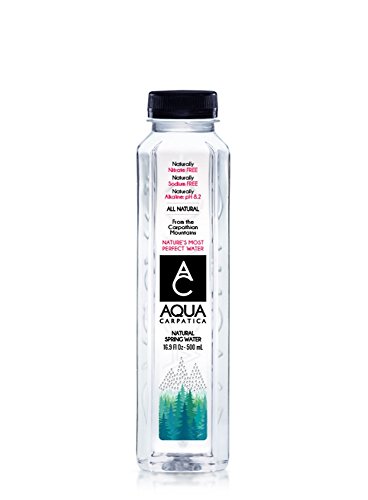
Aqua Carpatica stands apart from the distilled options on this list. It is a natural spring water, not processed through distillation, yet it is explicitly labeled as naturally nitrate-free (as NO3-N per serving) and naturally sodium-free, which the brand states makes it ideal for newborns with no boiling required. The pH sits at 8.2, giving it a naturally alkaline balance and a crisp taste that owners rave about — taste is the most-praised aspect here, with 15 owners calling it the best-tasting water they have ever had. At 28.15 pounds for the 24-pack, it is the heaviest option by a wide margin, but you are getting twice as many bottles as the other picks, making it a better value per ounce for families who go through water quickly.
The Taste Factor: Owners consistently call this the best-tasting water they have used, with a crisp, balanced flavor that makes everyday hydration genuinely enjoyable — not something you can say about most distilled waters.
The Premium Reality: This is a high-end spring water priced accordingly; the 24-pack offers decent per-bottle value but the overall cost puts it in treat territory for most families.
Pass if: your top priority is a completely mineral-stripped, neutral water for formula mixing; a distilled water is still the gold standard for that purpose, and this spring water carries a premium cost.
Understanding the Specs
Distilled vs. Spring Water for Infants
Fluoride and Nitrate Limits
Fluoride is added to many municipal tap waters for adult dental health, but for babies under six months, it can cause fluorosis — white streaks or spots on permanent teeth as they develop. A fluoride-free water (distilled or labeled as such) eliminates that risk entirely. Nitrates are another concern: high nitrate levels in water can interfere with an infant’s blood oxygen levels (blue baby syndrome). The safe upper limit is 10 mg/L; a baby-safe water should either be nitrate-free or well below that threshold. These factors are why many pediatricians recommend distilled or demineralized water for formula until at least the first birthday.
FAQ
Can I use any bottled water for baby formula?
Does distilled water leach minerals from my baby’s body?
How long can I keep an opened bottle of baby water?
Is spring water safe for newborns?
Can I boil tap water instead of buying baby water?
What does “BPA-free” mean for baby water bottles?
Is it safe to use baby distilled water in a CPAP machine?
How much baby water does a newborn go through per day?
Final Thoughts: The Verdict
How We Picked
We do not accept paid placement. Every pick is matched to a real buyer and a real use-case; we do not hands-on test units.
Sources & Methodology
Specifications: manufacturer listings and product documentation. Review insights: verified customer reviews, as of July 2026. Pricing: not shown on this page (it changes often); check the current price via the retailer link.
As an Amazon Associate, WellFizz earns from qualifying purchases. This does not affect which products we feature.
Related Guides

Mo Maruf
I created WellFizz to bridge the gap between vague wellness advice and actionable solutions. My mission is simple: to decode the research and give you practical tools you can actually use.
Beyond the data, I am a passionate traveler. I believe that stepping away from the screen to explore new environments is essential for mental clarity and physical vitality.