Our readers keep the lights on and my smoothie glass nicely filled. As an Amazon Associate, I earn from qualifying purchases.
Wet grass, mud, concealed rocks, and stray yard debris make ordinary sneakers a liability the moment you step onto the lawn. The right pair of boots turns those first steps into confident strides, keeping your feet dry and your ankles supported whether you are pushing a mower or pulling invasive vines.
I’m Mohammad Maruf — the founder and writer behind WellFizz. I’ve spent years analyzing the intersection of comfort, safety, and material science in outdoor footwear, digging into the tensile strength of outsoles, the waterproofing ratings of neoprene blends, and the real-world durability reports from verified buyers.
After diving deep into user reports, raw material specs, and warranty histories, I found the models that genuinely deliver on their promises. This guide covers the seven most reliable options in the best boots for yard work category, ranked by real-world performance.
How To Choose The Best Boots For Yard Work
Yard work boots live in a unique space between construction-grade protection and garden-essential agility. You need a boot that sheds mud, resists punctures, and stays comfortable for hours of bending, lifting, and walking on uneven ground. Here are the three decisions that matter most.
Waterproofing Material: Neoprene vs. Rubber vs. Leather
Neoprene boots offer excellent flexibility and warmth, making them ideal for cooler mornings and wet grass. Full rubber wellingtons provide maximum waterproofing but can feel stiff and less breathable in summer. Leather boots treated with a sealed membrane strike a balance between durability and airflow, though they require more maintenance to stay waterproof season after season. Your local climate should dictate the material: high heat and humidity favor rubber with a breathable liner, while cold, wet conditions reward neoprene’s insulation.
Toe Protection: Steel, Composite, or Soft Toe
A dropped rototiller tine or a heavy stepping stone landing on your foot is a real risk. Steel toes offer the highest impact resistance but conduct cold in winter. Composite toes are lighter, non-conductive, and do not get cold, yet they are slightly bulkier. Soft-toe boots are adequate for leaf raking or light weeding, but any task involving power tools, heavy pots, or moving rocks demands at least a composite toe. Do not underestimate the value of metatarsal guards if you use trimmers or brush cutters extensively.
Tread Pattern and Slip Resistance
Wet grass on a slope is one of the most deceptive surfaces in a yard. A boot with shallow, widely spaced lugs will lose grip immediately. Look for a deep, multi-directional tread with self-cleaning channels that shed mud rather than pack it tight. Chevron-style patterns perform well on loose soil, while a flat heel with aggressive edging provides stability on ladder rungs and uneven terrain. Never assume a rugged look equals grip — inspect the lug depth in millimeters before you buy.
Quick Comparison
On smaller screens, swipe sideways to see the full table.
| Model | Category | Best For | Key Spec | Amazon |
|---|---|---|---|---|
| ARIAT Turbo 6″ | Leather Work | All-day comfort with carbon toe | Carbon toe, waterproof membrane | Amazon |
| Carhartt FA5016 | Sneaker Boot | Lightweight summer yard work | Nylon shank, non-marring sole | Amazon |
| MUCK Chore Met Guard | Rubber Wellington | Wet, cold, and debris-heavy jobs | Metatarsal guard, steel toe | Amazon |
| TIDEWE Work Boots | Neoprene Pull-On | Insulated protection on a budget | 6mm neoprene, puncture-proof sole | Amazon |
| HISEA NINGO Steel Toe | Leather Wellington | Construction-grade grip for yard work | Full-grain leather, steel toe cap | Amazon |
| HISEA Rubber Insulated | Neoprene Hunting | Deep mud and wet pastures | Adjustable calf, 5mm neoprene | Amazon |
| Skechers Jdm Respected Swamper | Casual Slip-On | Light duty and quick on/off | Slip-in design, waterproof upper | Amazon |
In‑Depth Reviews
1. ARIAT Men’s Turbo 6” Waterproof Carbon Toe Work Boots

The ARIAT Turbo sits at the top of the yard-work boot hierarchy because it solves the two problems that plague most heavy-duty boots: stiffness and sweating. The carbon toe provides certified impact protection without the weight or cold-conducting properties of steel. The waterproof membrane is bonded directly to the full-grain leather upper, so standing in wet grass or puddles never reaches your socks. Users consistently report a break-in period of only two to three days, which is unusually fast for a boot with this much structure.
The outsole is where ARIAT’s equestrian heritage shines. The multi-directional lugs are spaced wide enough to shed mud but deep enough to bite into loose soil and wet grass. The heel is shaped to lock onto ladder rungs, a detail that becomes invaluable when you are climbing to clear gutters or prune tall branches. The internal padding wraps the ankle without restricting movement, so bending to pull weeds feels natural rather than stiff.
Long-term durability reports from industrial plant workers show the sole maintaining its tread for two full years of daily use. The only consistent critique involves grip on ice and snow — the rubber compound is optimized for dry and wet organic surfaces, not slick ice. For temperate-zone yard work, this is the most complete boot available. If you need better cold-weather traction, consider the MUCK boot below.
Why it’s great
- Composite toe is light and non-conductive
- Very short break-in period
- Excellent lateral support for uneven ground
Good to know
- Sizing can run large — order half size down if between sizes
- Poor grip on pure ice and packed snow
2. Carhartt Footwear FA5016 Lightweight Sneaker Boot
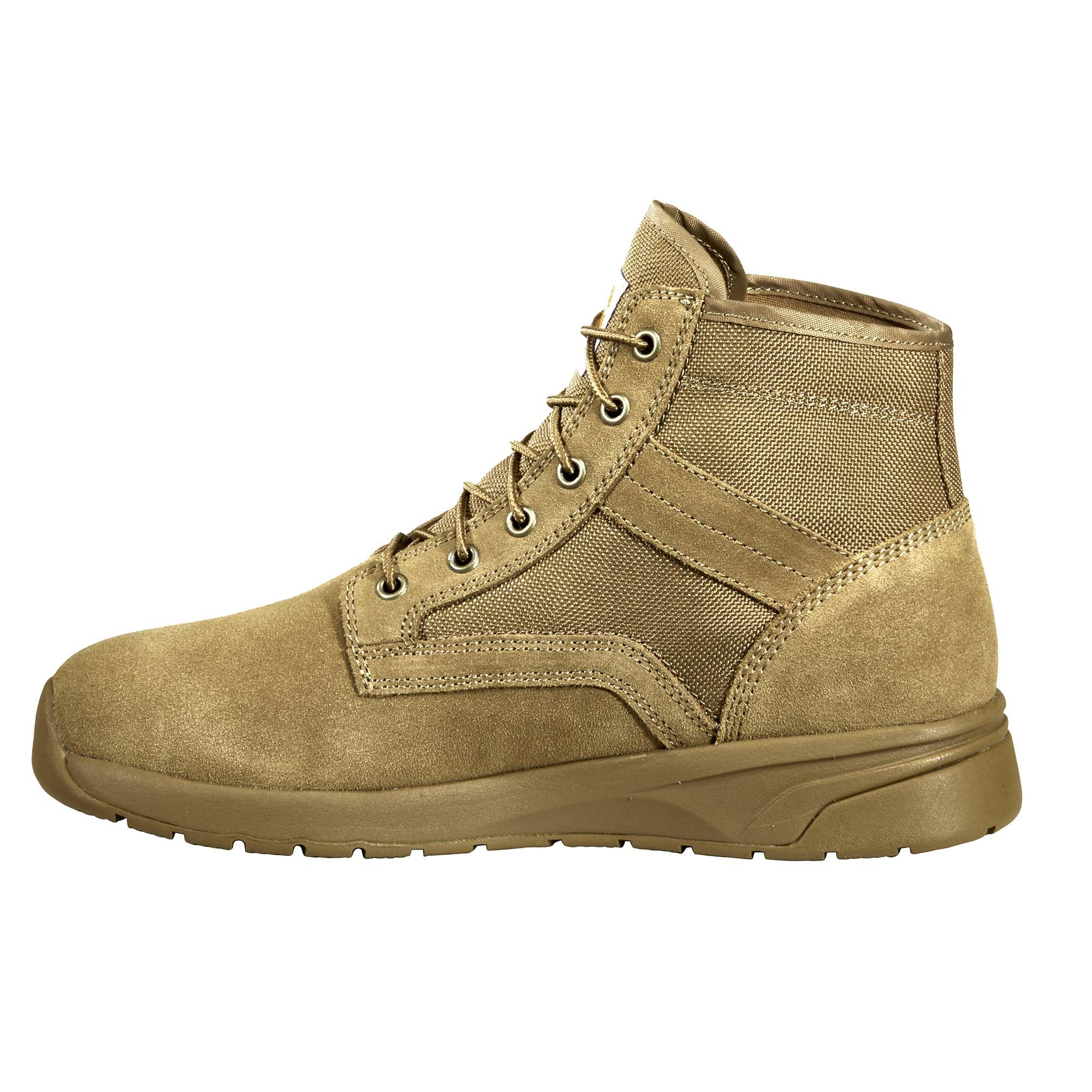
Carhartt built this boot for the person who hates the weight and clunk of traditional work boots but still needs real protection. The FA5016 uses a sneaker-style last and a lightweight EVA midsole, bringing the overall weight down to roughly that of a high-top trail runner. The upper is a combination of leather and mesh that breathes well in hot weather — a major advantage when you are spending hours in direct sun pulling weeds or spreading mulch.
The outsole is made from a non-marring compound, meaning you can step on a patio or painted deck without leaving scuff marks. That same compound also provides predictable traction on dry grass and gravel, though it is less aggressive than the ARIAT’s tread on wet slopes. The nylon shank running through the midsole provides enough rigidity to prevent fatigue from standing on a shovel or walking on rocky soil, yet the boot flexes naturally at the ball of the foot during walking.
Multiple verified buyers report the boots lasting two years of regular wear with the only issue being frayed laces — a cheap and easy fix. The ankle panel is designed to fold down easily, turning the boot into a low-cut shoe for driving or short walks. This is not the right choice if you need a steel or composite toe, but for mowing, trimming, and general property maintenance in warm climates, it is unmatched for all-day comfort.
Why it’s great
- Extremely lightweight and flexible
- Non-marring sole protects hardscaping
- Breathable enough for summer heat
Good to know
- No toe protection — not for heavy dropped objects
- Laces fray faster than the rest of the boot wears out
3. MUCK Men’s Chore Met Guard Work Boots

MUCK has a reputation among farmers and landscapers for building boots that laugh at standing water and freezing mud. The Chore Met Guard takes that legacy further by adding a metatarsal guard — a protective shield over the top of the foot that protects the metatarsal bones from falling objects. This is a rare feature in yard-work boots and one that becomes critical when you are stacking firewood, moving stone, or operating a log splitter.
The boot is constructed from a seamless rubber shell with a neoprene upper that stretches for easy entry and then grips the calf to keep mud out. The steel toe is shaped with a roomy toe box that does not pinch even after hours of kneeling. The outsole features deep chevron lugs that self-clean in mud and provide astonishing grip on wet, sloped terrain — buyers have reported walking on snow and ice without slipping, a claim few work boots can support.
The catch is consistency. A small but important subset of buyers report sole separation within days of purchase, and MUCK’s response has been mixed. If you get a good pair, these boots last two to three years of brutal use. The only other trade-off is weight — at nearly 4.5 pounds per boot, they are not for casual wear. But for serious wet-season yard work where you need maximum protection, nothing else on this list compares.
Why it’s great
- Metatarsal guard adds critical impact protection
- Seamless rubber construction is fully waterproof
- Superior traction on mud, snow, and wet grass
Good to know
- Inconsistent quality control — some units have sole separation
- Very heavy; not suitable for long walks on pavement
4. TIDEWE Work Boots for Men
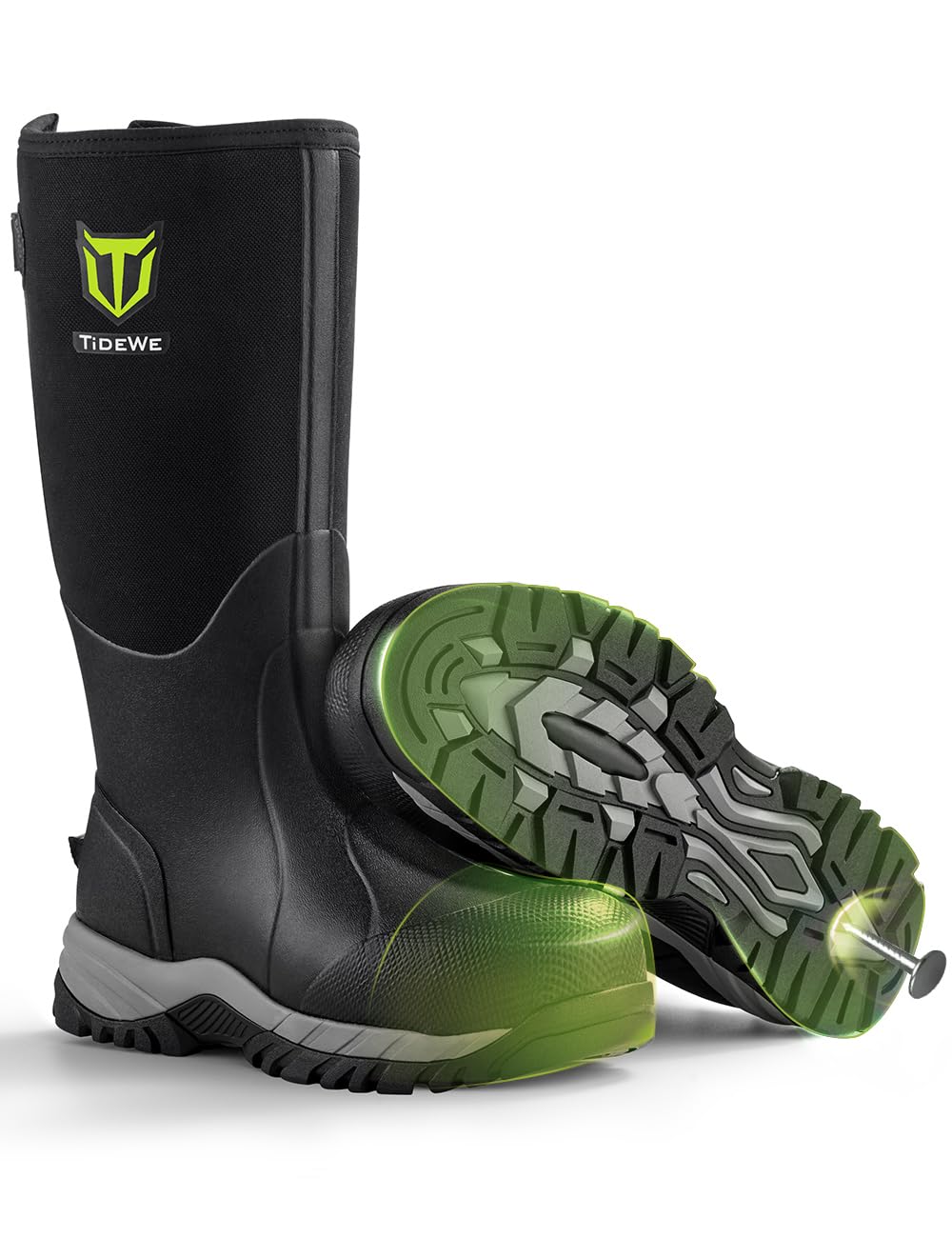
TIDEWE has carved a niche by delivering features usually reserved for boots costing nearly double. The steel toe meets ASTM impact standards, and the sole is rated puncture-proof — meaning a stray nail or sharp rock will not penetrate. The 6mm neoprene upper provides substantial insulation for cold mornings, and the rubber lower is 100% waterproof. The pull-on design with a kick tab makes it easy to slip these on when you are heading out to the yard quickly.
The comfort profile is surprisingly good for a boot in this tier. The EVA midsole offers reasonable shock absorption, and the ergonomic arch support helps reduce foot fatigue during long days of standing. However, the interior runs large — multiple buyers report needing to size down a full size to get a snug fit. The breathability is also limited; the thick neoprene tends to trap heat, and several users complain about sweaty feet during active work in temperatures above 70°F.
The outsole tread is decent on grass and packed dirt but noticeably less grippy on wet, smooth surfaces like concrete or wet leaves. Some buyers slipped on plain wet pavement. For general yard work on soil and grass, the TIDEWE boot offers outstanding value with genuine safety features, but you will want to budget for thick wool socks if you have narrow feet, and avoid wearing them on slick hard surfaces.
Why it’s great
- Steel toe and puncture-proof sole at a budget-friendly price
- Warm insulation for cold-weather yard tasks
- Easy pull-on design with kick tab
Good to know
- Runs very large — order a full size down
- Poor breathability; causes sweaty feet in warm weather
5. HISEA NINGO Steel Toe Work Boots
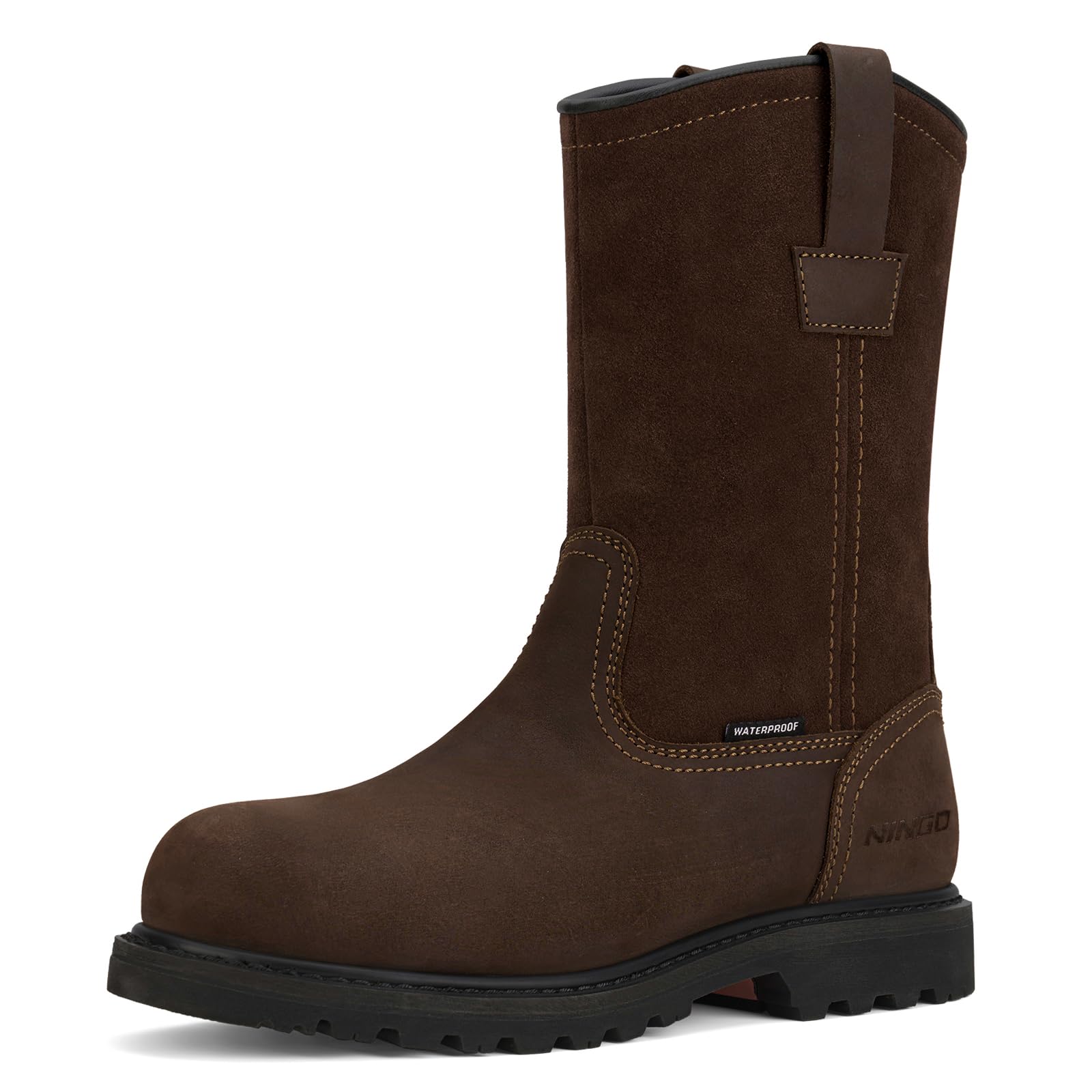
HISEA’s NINGO model brings a classic western Wellington silhouette into the yard-work space, but the construction is anything but traditional. The upper uses full-grain leather with a sealed waterproof layer, and the steel toe cap is rated for impact compression. The slip-on design lacks laces, so fit is determined purely by the boot’s shaft circumference and your calf size — which works well if you have average to thick calves but can feel loose on very slim legs.
What sets this boot apart is the oil- and slip-resistant outsole compound. The rubber formulation resists degradation from lawn chemicals, spilled gas from the mower, and oil from trimmers. Workers in heavy construction report these boots lasting seven to eight months of daily abuse, which is double the lifespan of comparably priced competitors. The leather is thick enough to resist snags from brush thorns, and the steel toe does not dig into the toes during squatting.
Styling is divisive — the toe shape is slightly rounded rather than square, which some buyers describe as elegant and others call “not square enough.” The pull-on straps are sturdy but require some effort for those with high insteps. The boot is also uninsulated, so it performs best in moderate to warm weather. For a mid-range price, this is a rugged, long-lasting option that outperforms on durability metrics that matter most in a yard environment with exposure to chemicals and sharp debris.
Why it’s great
- Oil-resistant sole withstands lawn chemicals
- Full-grain leather is thick and snag-resistant
- Steel toe certified for impact protection
Good to know
- No insulation — not ideal for cold-weather work
- Loose fit for very slim calves
6. HISEA Rubber Work Boots for Men (Insulated Neoprene)

HISEA’s rubber and neoprene blend boot is a direct answer to the person who works in standing water, deep mud, or wet pastures. The 5mm neoprene upper stretches to accommodate different calf sizes and seals around the leg to prevent debris from entering. The adjustable calf strap at the top is a rare and welcome feature — you can cinch it tight to keep mud out or loosen it for airflow when the temperature rises.
The outsole is genuinely grippy. Commercial crab fishermen and hunters have used these boots on wet, slick decks and marshland without slipping, which is a strong endorsement for yard work in wet conditions. The boot is also insulated, though buyers report the insulation is effective only down to about 35°F — below that, you will need thicker socks. The heel pull tab makes removal easy even when the boots are caked in mud.
The biggest advantage here is the lifetime warranty. When one buyer experienced heel separation after daily farm use, HISEA replaced the boots quickly. That level of manufacturer support is rare at this price point. The downsides are minimal: the boot lacks any toe protection, and sizing recommendations suggest ordering half a size up if you plan to wear thick socks. For pure wet-weather yard work without heavy falling objects, this is a durable and comfortable choice.
Why it’s great
- Adjustable calf strap for a custom fit
- Excellent traction on wet, slippery surfaces
- Lifetime warranty from manufacturer
Good to know
- No toe protection — not for use near heavy tools
- Insulation is weak below freezing
7. Skechers Men’s Jdm Respected Swamper
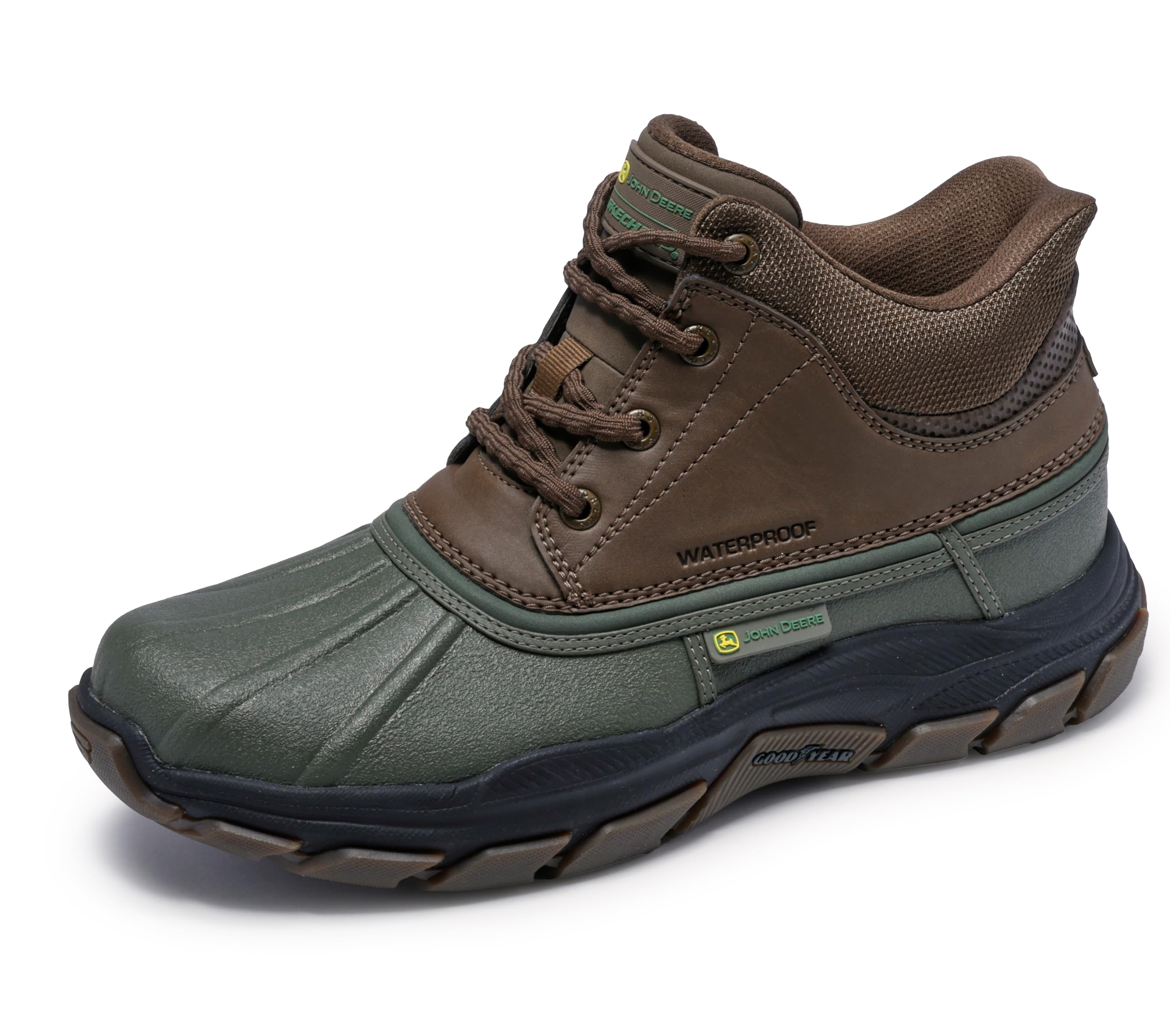
Skechers brought its proven slip-in technology to a boot designed for easy yard entry. The built-in handle at the heel and the stretchable collar let you slide these on in seconds without unlacing — perfect for quick trips to the garden or taking out the trash on a rainy morning. The upper is treated to be waterproof, and buyers confirm it holds up well in mud and light snow, keeping feet dry during typical yard tasks.
The traction is surprisingly good for a slip-on boot. The outsole is modeled after Skechers’ hiking line, with deep lugs that grip wet grass and loose soil well enough for an 80-year-old user to navigate a Michigan winter without falling. The boot is also warm, with insulation that makes it pleasant for cool mornings. The interior is lined with a soft fabric that feels like a sneaker, reducing the need for a break-in period.
However, the durability ceiling is low. One verified buyer reported the right boot interior tearing on the second wear, with the fabric collapsing when putting the foot in. Skechers’ return policy did not cover the defect in that case. For light, occasional yard work — weeding, watering, light raking — these are supremely comfortable. For heavy property maintenance involving brush or sharp tools, the construction is not robust enough to match the other boots on this list.
Why it’s great
- Slip-in design is incredibly convenient for quick tasks
- Warm and comfortable with zero break-in
- Good traction on grass and light snow
Good to know
- Interior lining can tear during normal use
- Not durable enough for heavy yard work or brush
FAQ
Can I use hiking boots for yard work instead of dedicated work boots?
How do I stop my yard work boots from smelling after a season of use?
Should I buy a half size larger for thick winter socks?
Final Thoughts: The Verdict
For most users, the best boots for yard work winner is the ARIAT Turbo 6″ because it combines certified carbon toe protection with a sneaker-like feel and a waterproof membrane that handles wet grass without overheating your feet. If you want the lightest option for summer mowing and trimming, grab the Carhartt FA5016. And for heavy wet-season jobs with significant impact risk, nothing beats the MUCK Chore Met Guard for its metatarsal protection and deep-lug traction.

Mo Maruf
I created WellFizz to bridge the gap between vague wellness advice and actionable solutions. My mission is simple: to decode the research and give you practical tools you can actually use.
Beyond the data, I am a passionate traveler. I believe that stepping away from the screen to explore new environments is essential for mental clarity and physical vitality.