Our readers keep the lights on and my smoothie glass nicely filled. As an Amazon Associate, I earn from qualifying purchases.
There is one universal truth about a rainy day: a puddle that looks shallow is always deeper than your sneakers. Wet socks, cold toes, and the squelch that follows you into the office or onto the porch define the difference between a bad boot and the right one. The chemistry of rubber compounds, the gauge of neoprene lining, and the tread pattern beneath your heel determine whether your feet stay dry through a downpour or become sponges by noon.
I’m Mohammad Maruf — the founder and writer behind WellFizz. I’ve spent years analyzing waterproofing specifications, sole construction methods, and the fastener durability that separates a seasonal boot from a long-term rain solution, translating market data into clear, buyer-focused guidance.
After evaluating dozens of models across construction, tread, and insulation tiers, the most reliable picks for steady comfort and lasting dryness are collected here as the definitive boots for rain list for a variety of needs and conditions.
How To Choose The Best Boots For Rain
Choosing a rain boot is not about rubber versus plastic. It is about matching the boot’s material stack and sole architecture to the specific wet conditions you face. The wrong tread on concrete or thin neoprene in cold rain will ruin the experience faster than any bad design.
Shaft Height and Calf Fit
Short Chelsea boots (6 inches) are ideal for puddle hopping and quick errands. Mid-calf boots (10–12 inches) suit gardening, light farm work, and walking in tall wet grass. Full-height wellies (14 inches plus) are mandatory for deep standing water. Measure your calf circumference against the boot opening; a boot that is too narrow will pinch, while one that is too wide lets in cold air and debris.
Tread Depth and Outsole Rubber Hardness
A lug depth of at least 5mm is necessary for mud and soft ground. Shallower, chevron-pattern soles work better on wet concrete and boat decks. Softer rubber durometers (50–55 Shore A) grip well on slick stone but wear faster on asphalt. Harder compounds last longer but can be slippery on wet metal or painted surfaces.
Insulation and Lining
Neoprene lining adds warmth and stretch, making the boot easier to pull on and off. Thickness between 3mm and 6mm provides meaningful insulation without sacrificing flexibility. Unlined rubber boots are fine for warm-weather rain but will feel cold below 50°F, especially if you stand still. Removable insoles allow for custom arch support and air drying.
Quick Comparison
On smaller screens, swipe sideways to see the full table.
| Model | Category | Best For | Key Spec | Amazon |
|---|---|---|---|---|
| Trudave Rubber Boots | Insulated Mid-Calf | Cold rain & snow | 6mm neoprene, steel shank | Amazon |
| XTRATUF 6 in Ankle Deck | Professional Ankle | Long hours on wet concrete | 4.5 lbs, slip-resistant sole | Amazon |
| Hunter Original Short Rain | Classic Short Wellie | Fashion-forward wet weather | Natural rubber construction | Amazon |
| Western Chief Chelsea Ankle | Stylish Chelsea | Casual rainy days | Elastic gore, rubber lug outsole | Amazon |
| Showave Classic Men’s Rubber | Insulated Neoprene | Farm & yard work | Neoprene insulated, rubber shell | Amazon |
| Showave Men’s Ankle Rain | Durable Ankle Boot | Heavy yard chores | Slip-on, heavy-duty rubber | Amazon |
| HISEA Duck Chelsea Rain | Short Garden Boot | Light farm work | 2 lbs, hose-cleanable | Amazon |
In‑Depth Reviews
1. Trudave Rubber Boots for Women with Steel Shank
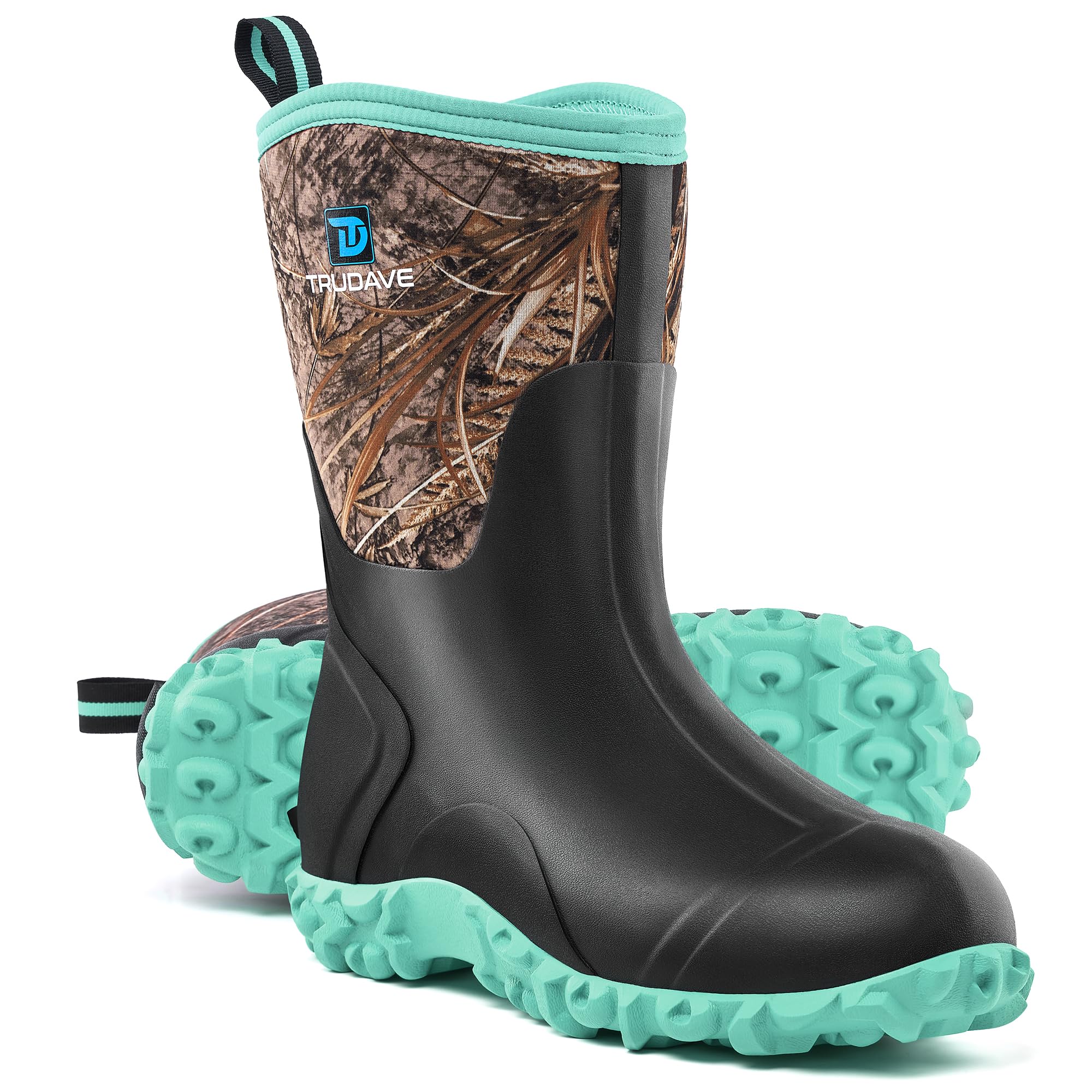
The Trudave boots deliver a rare combination for rain footwear: genuine warmth and structural support. The 6mm neoprene lining extends from the toe to the collar, trapping heat while remaining flexible enough for easy pull-on. Many comparably priced boots in this category rely on thin foam liners that compress after a season, but the Trudave’s neoprene maintains its loft through repeated flexing.
Underfoot, a steel shank bridges the midsole, providing rigidity that prevents the boot from flexing mid-step. This shank reduces foot fatigue during prolonged standing on hard ground — a feature usually reserved for work boots, not rain boots. The sole’s lug pattern bites into snow and mud with enough aggression to inspire confidence on sloped terrain.
Users consistently report true-to-size fit with enough room for a thick hiking sock, and the back pull loop combined with a heel step-on tab makes removal simple even with wet hands. The only compromise is calf width: the neoprene stretches, but women with larger calves should measure before buying.
Why it’s great
- Steel shank provides arch support rare in rain boots
- 6mm neoprene retains warmth in sub-freezing rain
Good to know
- Calf opening may be tight for larger lower legs
- Not designed for professional kitchen or boat deck use
2. XTRATUF Women’s 6 in Ankle Deck Boot
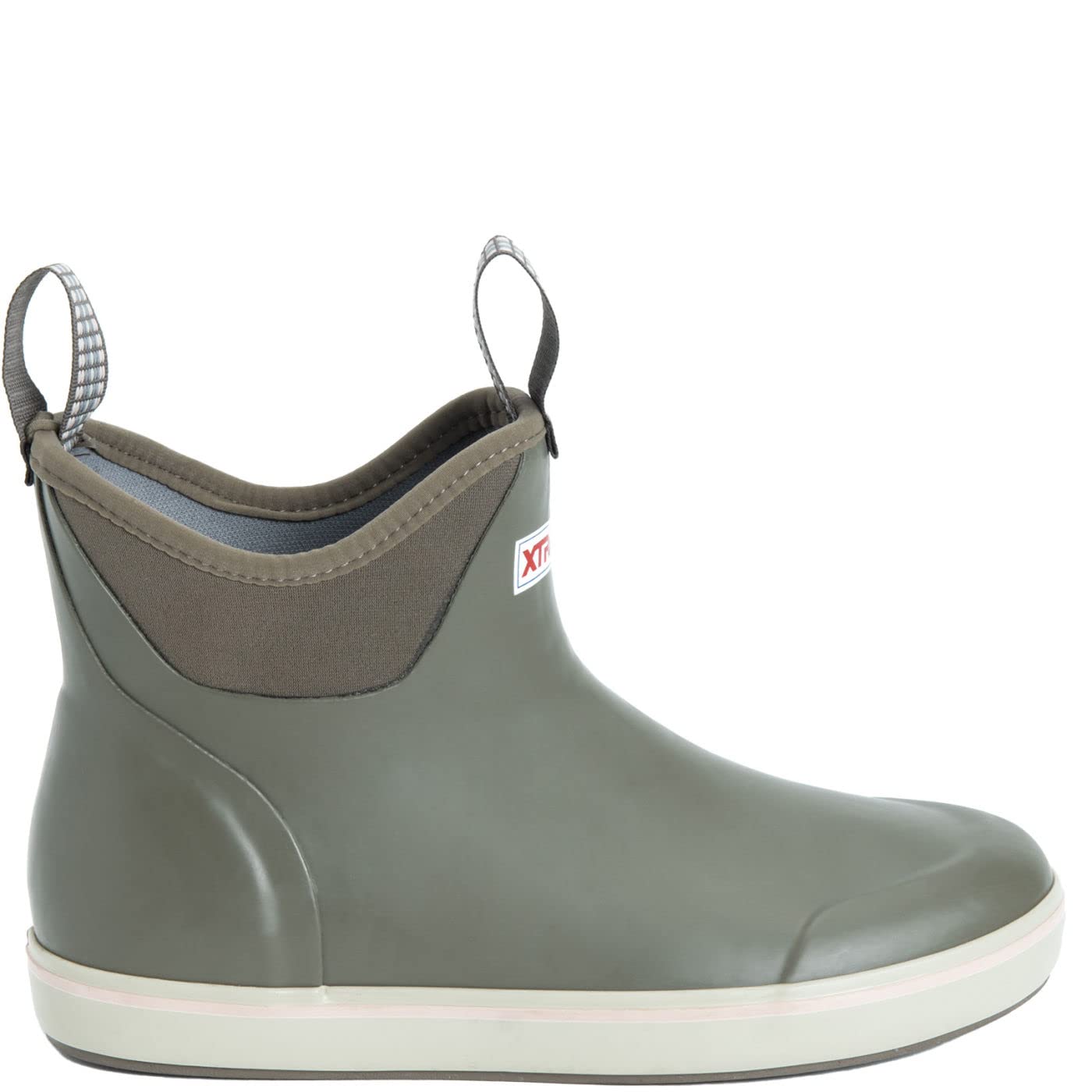
The XTRATUF 6-inch Ankle Deck Boot is the practical choice for anyone who spends entire days in wet conditions on hard surfaces. Originally designed for commercial fishing and deck work, these boots feature a contoured rubber outsole that grips wet fiberglass and painted concrete without the aggressive lug pattern that picks up mud. The overall weight sits at 4.5 pounds per pair, which is noticeably heavy but translates to material density that resists punctures and sharp wear.
The construction uses a single-piece molded rubber shell with no glued seams, which eliminates the most common leak point in budget rain boots. The interior has a fixed insole that does not shift when you pull the boot off — a small but persistent frustration with cheaper models. The ankle shaft height hits just above the malleolus, offering enough coverage for deep puddles while maintaining full ankle mobility for squatting or kneeling.
Initial break-in requires thick socks for the first handful of wears to prevent heel rubbing, but after that the rubber conforms to the foot shape. The back pull tab is reinforced and does not tear under tension. These are not insulated, so they work best for rain between 40°F and 75°F.
Why it’s great
- One-piece molded rubber eliminates seam leaks
- Excellent grip on wet concrete and deck surfaces
Good to know
- No insulation — not ideal for near-freezing rain
- Slightly heavier than average ankle rain boot
3. Hunter Women’s Original Short Rain Boots

Hunter is the name most non-specialists reach for when they think of rain boots, and the Original Short model justifies its reputation through material consistency. The boot is made from natural rubber rather than PVC or synthetic blends, which gives it a pliable feel that does not stiffen in cold weather. The short shaft reaches about mid-calf, making it a versatile silhouette for wearing under rain pants or with jeans rolled up.
The outsole features Hunter’s signature tread pattern — a chevron design with moderate depth that clears water from underfoot on pavement. It does not offer the mud-gripping aggression of a work boot, but it performs admirably on wet city streets and grassy parks. The interior is unlined, so these boots are best paired with a wool sock when the temperature drops below 55°F.
Some users report heel slippage if they have narrow heels, which is a known fit characteristic of Hunter’s last shape. Sizing up to accommodate a thicker sock or adding a heel grip insert solves the issue. The boot rinses clean easily and the natural rubber resists the ozone cracking that affects cheaper synthetic boots after a few seasons.
Why it’s great
- Natural rubber stays flexible in cold weather
- Timeless low-shaft silhouette for casual and city wear
Good to know
- Heel slippage common for narrow-footed wearers
- Unlined interior provides no insulation
4. Western Chief Women’s Waterproof Chelsea Ankle Rain Boot
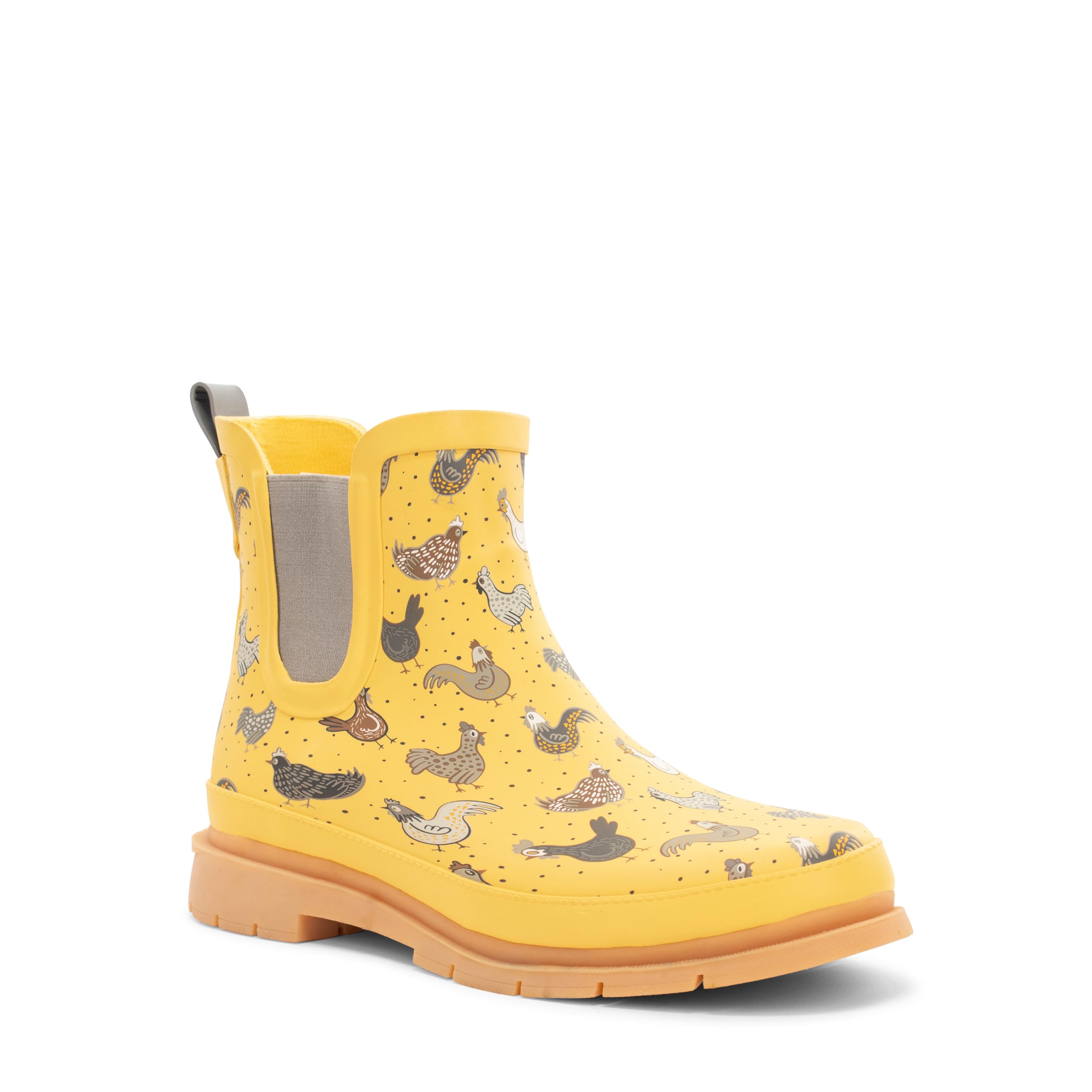
The Western Chief Chelsea boot proves that a sub-premium price point does not mean sacrificing waterproofness. The boot is constructed from a flexible rubber compound that seals completely around the foot, with elastic gore panels on both sides for easy slip-on without a zipper. The elastic is bound securely and does not stretch out after repeated wear, maintaining its tension through a full season of regular use.
The outsole is a rubber lug design with moderate depth that provides confident traction on wet grass, packed dirt, and paved surfaces. The Chelsea silhouette keeps the boot low enough to pair with most pants while providing enough coverage for urban puddle hopping and garden work. The toe cap is rounded and does not pinch wide feet, a common problem in narrow-profile Chelseas.
Color options are vibrant — floral patterns and pastels dominate — which appeals to casual wearers but may feel too bright for those wanting a subdued work boot. The boot runs slightly large, allowing for an insole upgrade if needed. It is not insulated, so consider it a true warm-weather rain boot rather than a winter mud boot.
Why it’s great
- Elastic gore keeps fit secure without a zipper
- Wide toe box accommodates most foot shapes
Good to know
- Color palette leans floral and light — not for everyone
- No insulation for cold or near-freezing rain
5. Showave Classic Men’s Rubber Boots Insulated Neoprene
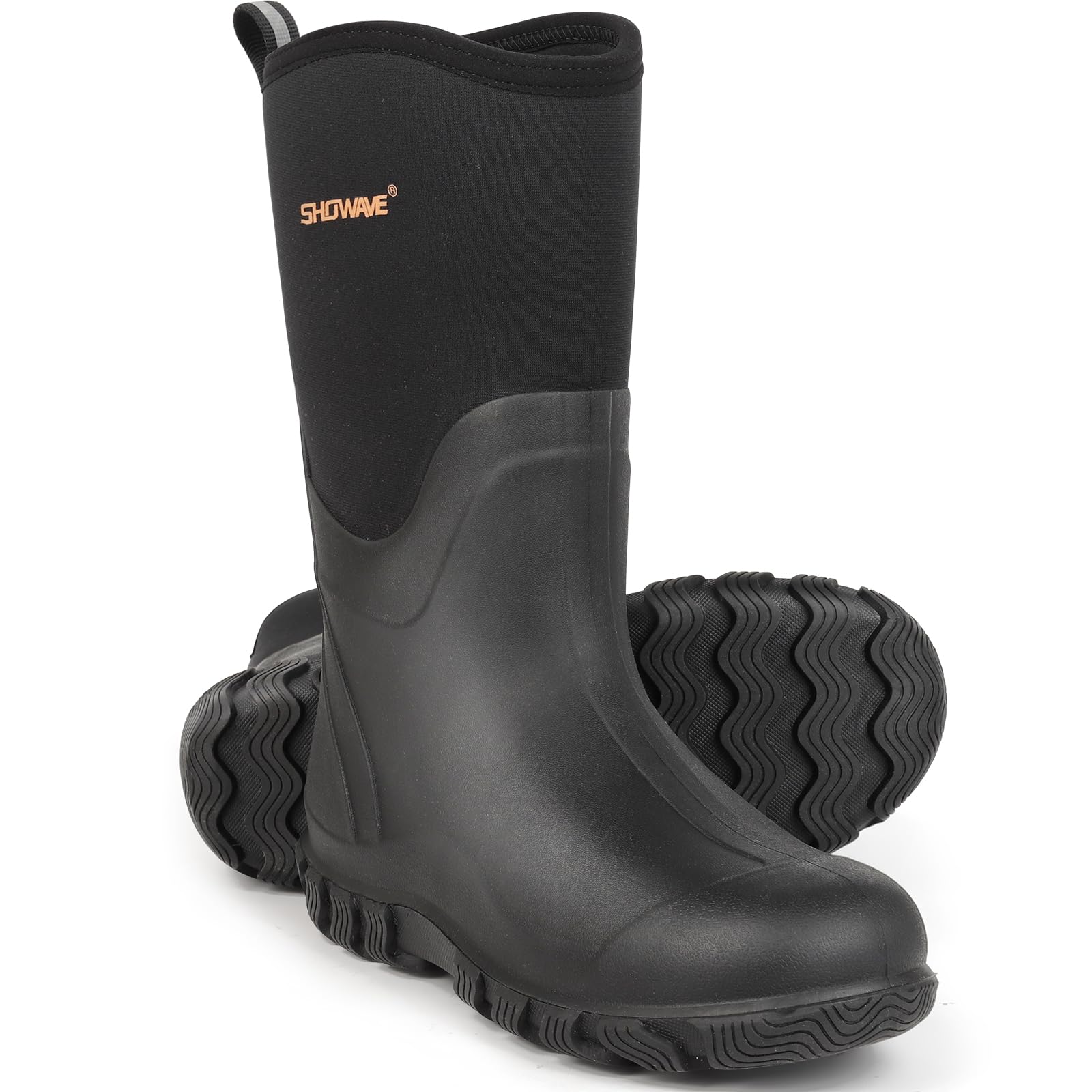
The Showave Classic Men’s boot combines neoprene insulation with a thick rubber shell to create a solid mid-range option for wet and muddy work. The neoprene lining is sewn into the upper rather than glued, which prevents delamination after extended exposure to moisture. At 2 pounds per boot, it is noticeably lighter than traditional rubber work boots, reducing fatigue during long barn or yard sessions.
The outsole uses a deep chevron-lug pattern that sheds mud quickly and maintains grip on wet grass and soft loam. The rubber compound is softer than most budget boots, translating to better traction on slick stone but faster wear on asphalt. The pull-on design includes reinforced handles at the top and a heel kick-off tab for no-hands removal.
Reviewers consistently note that these boots run true to size and accommodate thick socks comfortably. The neoprene provides meaningful warmth down to about 30°F without making feet sweat, though extended wear above 60°F can feel clammy. The boots hose off easily and show minimal cracking after a full year of daily farm use.
Why it’s great
- Sewn-in neoprene prevents lining delamination
- Lightweight for an insulated mid-calf work boot
Good to know
- Soft rubber sole wears quicker on hard pavement
- Can feel warm in temperatures above 60°F
6. Showave Men’s Ankle Rain Boots Waterproof Rubber Garden Boots

The Showave Men’s Ankle Rain Boot takes a different approach than the mid-calf version — it prioritizes durability and ease of entry over insulation. The rubber used in the shell is noticeably thicker than the company’s neoprene model, measuring roughly 3mm at the sidewall and 5mm at the toe cap. This thickness results in a boot that feels substantial underfoot and resists punctures from sharp branches or farm equipment debris.
The slip-on design incorporates molded pull tabs at the heel and a wider opening that accommodates a socked foot without struggle. The insole is removable and cushioned, allowing for custom orthotics or aftermarket arch support. The outsole features a blocky lug pattern with deep channels that clear mud and gravel effectively, making these boots ideal for wet yard work and garden tending.
The trade-off is weight — at roughly 2.5 pounds per boot, these are heavier than the Chelsea-style competitors. Sizing runs slightly large, so ordering a half-size down is common for a snug fit with thin socks. The interior lining is a thin cotton fabric that helps with slip-on but offers no insulation, limiting use to rain above 45°F.
Why it’s great
- Thick rubber shell resists puncture and abrasion
- Removable cushioned insole supports custom orthotics
Good to know
- Heavier than most ankle-height rain boots
- Runs large — consider sizing down
7. HISEA Women’s Duck Chelsea Rain Boots
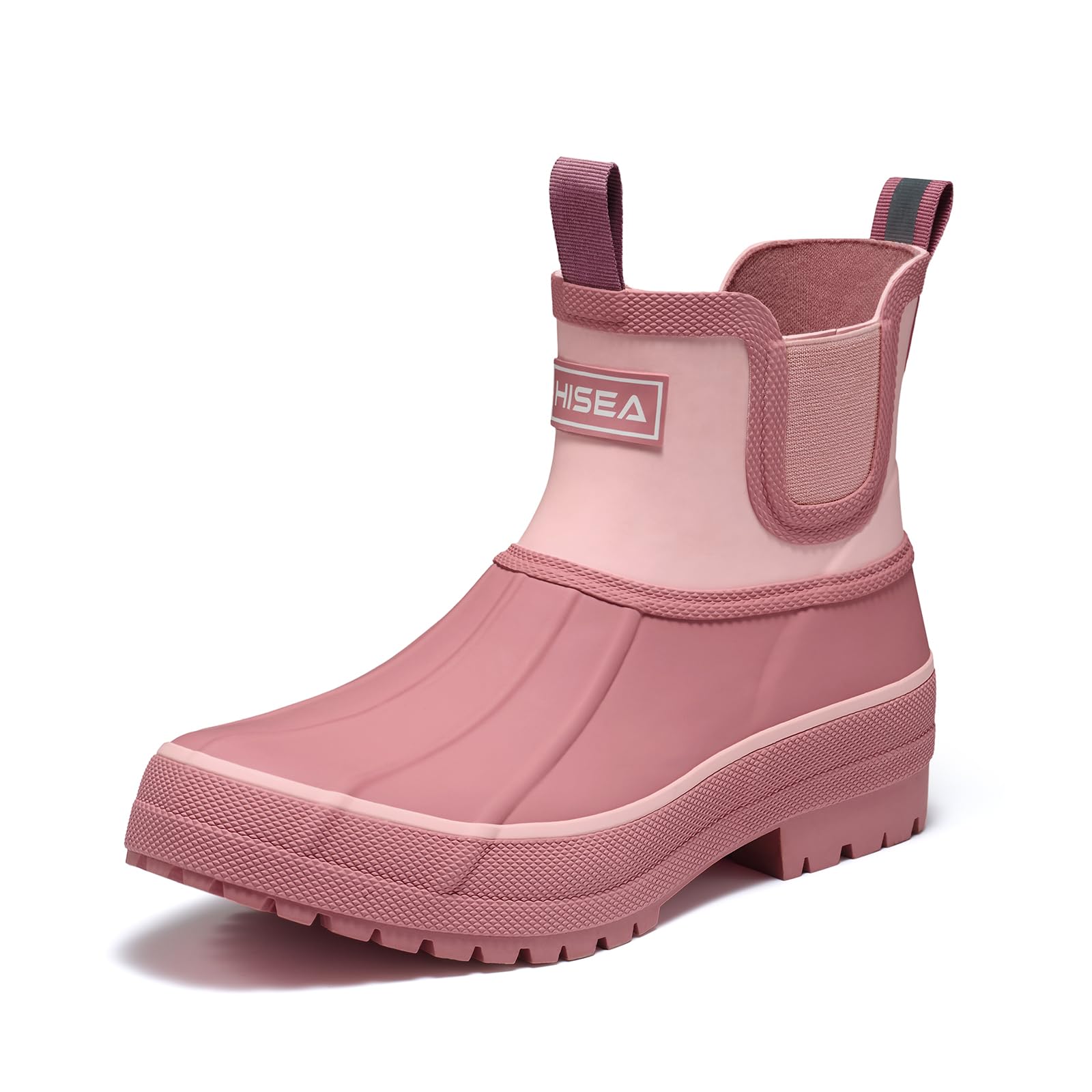
The HISEA Duck Chelsea Rain Boot is a lightweight, low-cost entry point for occasional rain use. At just 2 pounds per pair, it is the lightest boot in this lineup, making it ideal for quick trips to the chicken coop, mailbox dashes, or summer garden watering. The rubber shell keeps water out reliably, and the smooth exterior rinses clean with a garden hose without needing scrubbing.
The fit accommodates wide feet well, though the boot runs slightly small — users typically size up by half to one full size to wear with a moderate sock. The Chelsea styling with elastic gore panels allows for easy on and off, but the elastic is not as durable as the Western Chief’s, showing stretching after several months of daily use. The outsole uses a shallow tread pattern that works on wet grass and packed dirt but lacks the bite for mud or soft ground.
There is no ankle support built into the design, so users with weak ankles or a history of rolling should be cautious on uneven terrain. The boot’s insulation is minimal — it is a bare rubber shell with a thin fabric lining. For its price point, it offers reliable waterproofing for light duty, but it is not built for sustained heavy work or cold weather.
Why it’s great
- Extremely lightweight at 2 pounds per pair
- Easy to hose off and dry quickly
Good to know
- No ankle support — not for uneven terrain
- Elastic gore stretches out with heavy use
FAQ
Do rain boots need neoprene lining for warmth?
What size should I buy for rain boots compared to regular shoes?
How do I prevent rain boots from smelling after repeated use?
Final Thoughts: The Verdict
For most users, the boots for rain winner is the XTRATUF Women’s 6 in Ankle Deck Boot because it combines commercial-grade waterproofing with an outsole designed for long hours on wet, hard surfaces. If you need insulation and support for cold weather and uneven terrain, grab the Trudave Rubber Boots with Steel Shank. And for a stylish, lightweight boot that handles light rain and garden duty, nothing beats the Western Chief Chelsea Ankle Rain Boot.

Mo Maruf
I created WellFizz to bridge the gap between vague wellness advice and actionable solutions. My mission is simple: to decode the research and give you practical tools you can actually use.
Beyond the data, I am a passionate traveler. I believe that stepping away from the screen to explore new environments is essential for mental clarity and physical vitality.