Our readers keep the lights on and my smoothie glass nicely filled. As an Amazon Associate, I earn from qualifying purchases.
A boot that fits poorly or fails in wet weather turns every walk into a grind. Whether you’re tackling a muddy trail, standing on a concrete factory floor, or breaking ice on a morning hunt, the right pair determines whether you finish the day strong or nursing blisters and cold toes.
I’m Mohammad Maruf — the founder and writer behind WellFizz. My research focuses on dissecting construction methods, outsole compounds, and waterproofing membranes across the men’s footwear market to separate genuine daily drivers from fashion statements that pretend to work.
After combing through design specs and hundreds of real-world wear reports from hikers, mechanics, and hunters, these selections stand apart as the most reliable boots for men you can trust on varied terrain and unforgiving job sites.
How To Choose The Best Boots For Men
Choosing a boot without understanding your primary use case — hiking vs. daily work vs. casual winter wear — leads to disappointed feet and wasted money. Focus on these three factors to narrow your search before you look at brand names or color options.
Waterproofing vs. Water Resistance
A boot labeled “waterproof” should have a sealed membrane like GORE-TEX or a proprietary barrier that blocks liquid entry while allowing vapor to escape. Water-resistant boots rely on treated leather or nylon and will wet through under sustained rain or snowmelt. If you expect puddles, morning dew, or creek crossings, prioritize a full membrane boot.
Toe Protection: Steel vs. Composite vs. Soft Toe
Steel toe boots offer maximum impact resistance and are standard on most industrial job sites, but they conduct cold and add weight. Composite toe boots are lighter, non-conductive, and don’t get as cold in winter, making them the preferred choice for electricians and cold-weather workers. Soft toe boots are for hiking, casual wear, and jobs without drop-hazard requirements.
Outsole Grip and Tread Pattern
Deep, self-cleaning lugs with a heel brake are essential for loose dirt, mud, and rocky ascents. Flat, wide treads with siping work better on smooth concrete and wet steel surfaces common in warehouses and factories. Match the tread aggression to your primary surface — aggressive lugs on concrete wear down faster and can feel slippery on polished floors.
Quick Comparison
On smaller screens, swipe sideways to see the full table.
| Model | Category | Best For | Key Spec | Amazon |
|---|---|---|---|---|
| KEEN Men’s Targhee 4 | Hiking Boot | All-day trail comfort | 620g weight, roomy toe box | Amazon |
| Timberland White Ledge | Hiking Boot | Budget-conscious hikers | 1.1 lbs, waterproof | Amazon |
| Under Armour Hovr Dawn 2.0 | Hunting/Hiking Boot | Lightweight hunting | 2.4 lbs, no insulation | Amazon |
| CAT Men’s Invader Hi | Work Boot | Industrial steel-toe | 4.2 lbs, steel toe | Amazon |
| ROCKY Outback GORE-TEX | Hiking/Work Boot | All-weather factory work | 4.5 lbs, GORE-TEX liner | Amazon |
| ARIAT Turbo 6″ | Work Boot | Long shifts on hard floors | 3.1 lbs, carbon toe | Amazon |
| XPETI Crest Thermo | Winter Boot | Cold-weather casual | Insulated, high-top | Amazon |
In‑Depth Reviews
1. KEEN Men’s Targhee 4 Mid Height Waterproof Hiking Boots
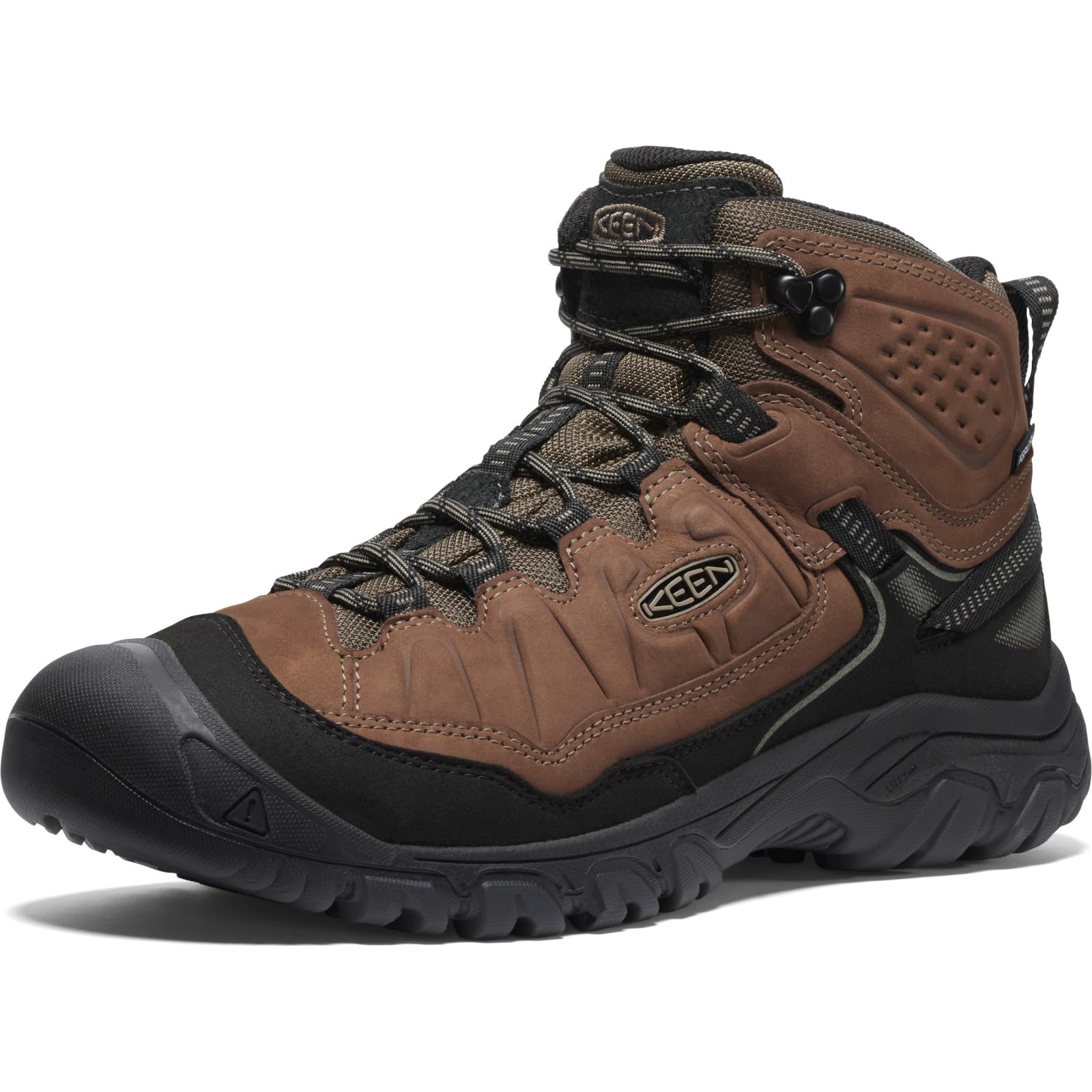
The Targhee 4 represents the fourth generation of KEEN’s most popular hiker, and it shows how small refinements compound. The FUSION construction method bonds the upper to the sole without stitching that can delaminate, so the boot resists splitting even after miles on talus fields and slickrock. The LuftCell midsole adds a springy step that reduces heel-strike fatigue on long descents.
Reviewers consistently report zero break-in pain thanks to the anatomical last and generous toe box that lets toes splay naturally. The boot weighs 620 grams per pair — slightly heavier than the Targhee III — but the trade-off is significantly better torsional stability. The K-30 insoles are an expensive upgrade, but factory insoles are adequate for moderate days.
For hikers who need a do-everything boot that handles the southern Rockies one weekend and a muddy dog walk the next, the Targhee 4 is the most refined option at this performance level. The only common complaint is an occasional missed stitch near the tongue that can require a warranty exchange.
Why it’s great
- FUSION construction prevents sole delamination
- Excellent ankle support on uneven ground without stiffness
- True-to-size fit with room for thick socks
Good to know
- Heavier than previous Targhee versions
- Factory insoles lack arch support for long days
- Occasional quality-control stitch issues reported
2. Timberland Men’s White Ledge Mid Waterproof Hiking Boots

Timberland’s White Ledge has been a fixture in the value-hiking category since 2011, and the formula still works. The rubber outsole uses a multi-directional lug pattern that bites into loose dirt and rock, though it struggles on wet algae-covered stone. The upper is a combination of full-grain leather and mesh that breathes better than all-leather competitors but requires occasional mink oil to maintain water beading.
The fit runs large — most reviewers recommend sizing down a half step from your sneaker size. The toe box is noticeably wide, which is a relief for hikers with bunions or wide feet. The padding around the ankle collar is soft enough that you can wear these casually without looking like you just stepped off a trail.
This boot is not for sustained submersion. Consumer reports show water seeping through after thirty seconds in a creek, making it a weather-resistant boot rather than a truly waterproof one. For dry-weather day hikes and casual wear, however, the White Ledge delivers a level of comfort and durability that punches above its price tier.
Why it’s great
- Comfortable straight out of the box with no break-in
- Very breathable for warm-weather hiking
- Durable Vibram-like sole after hundreds of miles
Good to know
- Not fully waterproof despite labeling
- Large fit requires sizing down
- Minimal ankle support compared to taller boots
3. Under Armour Hovr Dawn 2.0 Boots
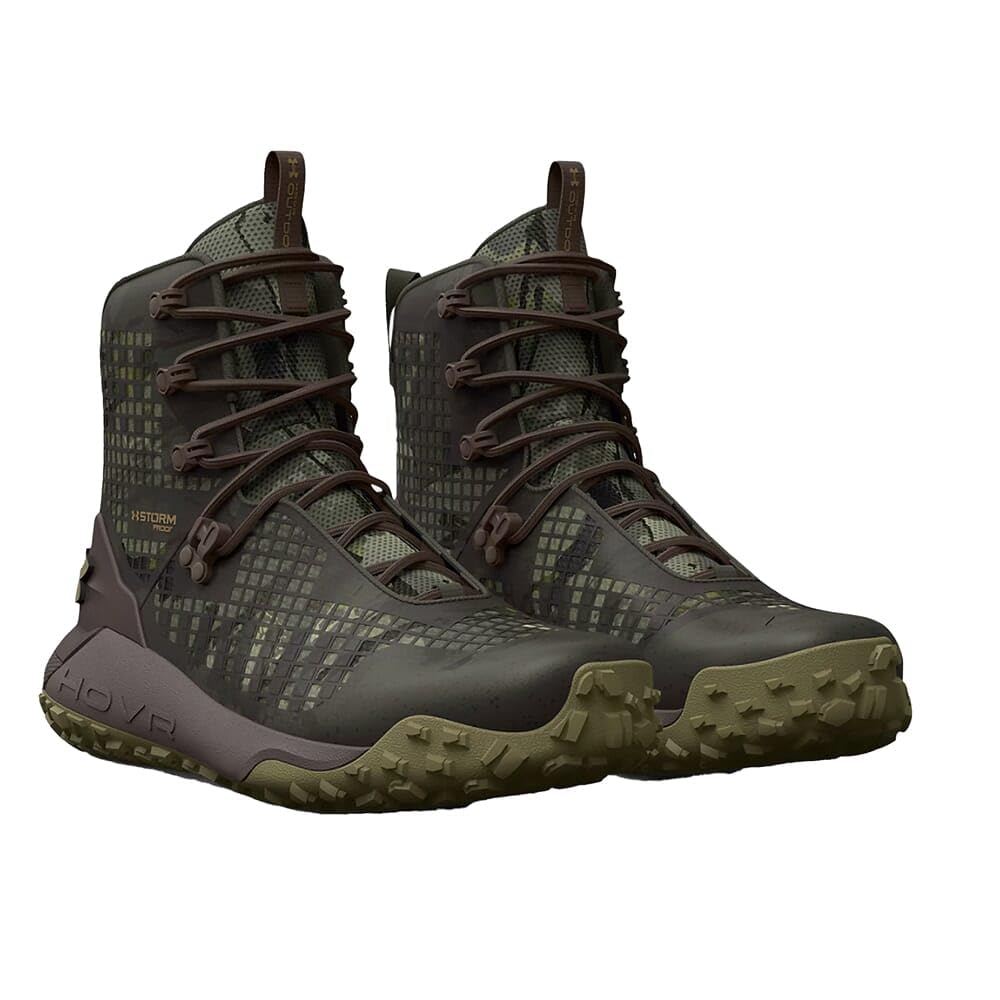
Under Armour built the Hovr Dawn 2.0 for hunters who cover miles before sunrise and need a boot that doesn’t announce their presence with squeaky midsoles or crunchy soles. The Hovr foam cushioning system absorbs shock quietly and returns energy smoothly, which translates to less fatigue on long stalks. The aggressive tread pattern sheds mud quickly and holds in wet grass.
This boot is not insulated — it’s designed as a three-season boot that works between late spring and early autumn. Hunters in northern climates pair these with heavy merino socks and still report comfortable toes down to about 25°F. The waterproof membrane is reliable for creek crossings and steady rain, but the lack of insulation means you feel cold ground through the sole after extended stationary sits.
Some heavy users report the sole edge tattering after a week of hard elk hunting in rocky terrain, suggesting the outsole rubber compound prioritizes grip over abrasion resistance. For whitetail hunters and day hikers, the lifespan is more than satisfactory, but extreme backcountry users may want a boot with a denser lug compound.
Why it’s great
- Extremely lightweight for a waterproof hiker
- Hovr cushioning eliminates break-in period
- Dead-silent sole for stalking game
Good to know
- Not insulated for cold-weather hunting
- Outsole lug durability is mid-range
- Sizing runs exactly true to sneaker size
4. CAT Men’s Invader Hi Steel Toe

The CAT Invader Hi is a classic steel-toe work boot that has been on the market since 2015, and its longevity speaks to its reliability. The steel toe meets ASTM F2413-18 impact and compression standards, making it suitable for most industrial environments. The outsole is oil and slip resistant, with a tread pattern that grips wet concrete and steel grating without clogging.
The leather upper is thick enough to resist abrasion from kneeling on rebar or concrete edges, and the padded collar prevents chafing during twelve-hour shifts. The one consistent weak point is the laces — users report them snapping after a few months, which is an easy fix but an annoying one. Adding a third-party insole with arch support dramatically improves all-day comfort, since the factory footbed is basic.
At just over 4 pounds per pair, these are heavier than many modern work boots, but the weight comes from durable materials rather than pointless bulk. Mechanics, warehouse workers, and construction foremen who replace boots every 12-18 months report that the Invader Hi consistently delivers solid protection without the premium price of heritage boot brands.
Why it’s great
- ASTM-rated steel toe for industrial safety compliance
- Thick leather resists job-site abrasion
- Slip-resistant sole on wet concrete and oil
Good to know
- Stock laces wear out quickly
- Heavier than composite-toe alternatives
- Factory insole needs upgrading for all-day standing
5. ROCKY Men’s Outback GORE-TEX Waterproof Hiking Boots

The ROCKY Outback has found an unlikely second life as a factory work boot despite being labeled as a hiking boot. The full-grain leather upper paired with a GORE-TEX liner creates a genuinely waterproof seal that keeps feet dry through morning dew, rain showers, and puddled factory floors. The moc-toe design gives a more professional appearance than bulkier steel-toe options, which matters in customer-facing industrial roles.
The boot requires virtually no break-in due to the padded tongue and collar, and the polyurethane midsole absorbs shock on concrete without feeling mushy. Some users report water seeping through the leather at the toe seam after prolonged exposure to wet grass, suggesting the GORE-TEX bootie may have a small gap at the very front — this seems to affect a minority of units.
At 4.5 pounds, these are not lightweight, but the weight is distributed well. Factory workers who stand on their feet for entire shifts report that these boots outlast cheaper alternatives by a full season. The tread pattern is moderate — deep enough for light trail use but not aggressive enough to track mud into clean facilities.
Why it’s great
- Genuine GORE-TEX membrane for reliable waterproofing
- Comfortable all day with no break-in period
- Professional moc-toe appearance for work settings
Good to know
- Occasional seam failure at toe leather
- Heavy at 4.5 pounds per pair
- Not insulated for extreme cold
6. ARIAT Men’s Turbo 6” Waterproof Carbon Toe Work Boots

The ARIAT Turbo is a composite-toe work boot that has earned a fiercely loyal following among tradesmen who spend 50-60 hours per week on their feet. The carbon-toe cap meets ASTM safety standards while being significantly lighter than steel and non-conductive for electrical environments. The ARIAT technology includes a shock-absorbing EVA midsole and a Duratread outsole that resists oil and slippage on slick surfaces.
Users consistently praise the Turbo for being the most comfortable boot they’ve worn straight out of the box, though some report two days of ankle chafing that resolves with moleskin. The boot is built around a normal-width, low-arch foot; users with high arches will want an aftermarket insole. The upper leather holds up for about 8-12 months of daily use before showing wear, at which point the outsole still has life left.
These boots have a distinct weakness on ice and packed snow — the tread lacks the aggressive lugs needed for winter traction, making them a three-season work boot. Many repeat buyers replace them annually simply because the uppers wear out while the soles remain functional, which suggests the construction prioritizes cushioning and flexibility over maximum upper durability.
Why it’s great
- Carbon-toe is lightweight and non-conductive
- Excellent all-day cushioning for concrete floors
- Duratread outsole resists oil degradation
Good to know
- Poor traction on ice and snow
- Upper leather wears out before the sole
- Not ideal for high arches without upgrades
7. XPETI Men’s Crest Thermo High-Top Winter Hiking Boots
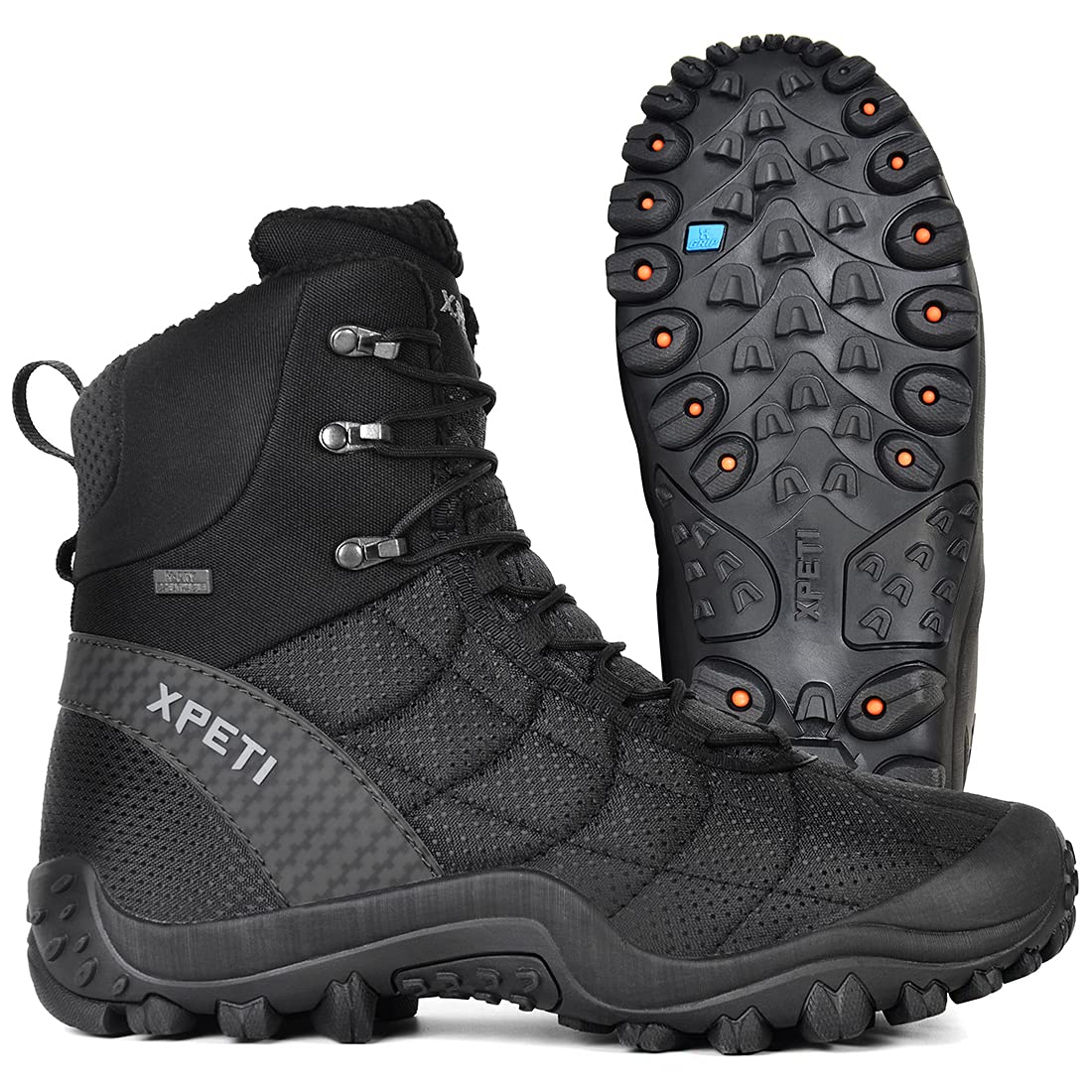
The XPETI Crest Thermo occupies a specific niche: it’s a budget-friendly insulated winter boot for casual cold-weather use that doesn’t try to be a technical hiker. The insulation is effective enough to keep feet warm in temperatures as low as 6°F when paired with wool socks, as reported by users who wore these through snow. The all-rubber construction is easy to clean and stays flexible even in freezing conditions.
The Achilles heel is the waterproofing. While the boot resists light snow and puddles, the membrane is not fully sealed — melted snow can soak through the lace area and the top of the foot after extended exposure. Users who treat the upper with a spray-on waterproofing agent report significantly better performance. The traction on icy grass and mud is good, but the bottom lace hook can press into the ankle bone during deep squats.
For the price, the Crest Thermo delivers warmth and comfort that exceeds expectations. It’s not a boot for serious winter hiking or wet-weather work, but for casual wear, shoveling driveways, and short dog walks in freezing conditions, it punches well above its weight class. Expect to need replacement after one or two seasons of regular use.
Why it’s great
- Excellent warmth-to-weight ratio for the price
- Flexible rubber upper in sub-freezing temps
- Good traction on icy grass and muddy trails
Good to know
- Waterproofing is limited without aftermarket treatment
- Bottom lace hook can irritate the ankle bone
- Durability is modest for heavy use
FAQ
Should I size up or down for men’s boots?
How long do waterproof membranes last in work boots?
Final Thoughts: The Verdict
For most users, the boots for men winner is the KEEN Targhee 4 because it balances trail performance, all-day comfort, and durable construction better than any other single boot in this list. If you want lightweight protection for job-site shifts, grab the ARIAT Turbo 6. And for a budget-conscious hiker who values breathability and a wide toe box, nothing beats the Timberland White Ledge.

Mo Maruf
I created WellFizz to bridge the gap between vague wellness advice and actionable solutions. My mission is simple: to decode the research and give you practical tools you can actually use.
Beyond the data, I am a passionate traveler. I believe that stepping away from the screen to explore new environments is essential for mental clarity and physical vitality.