Our readers keep the lights on and my smoothie glass nicely filled. As an Amazon Associate, I earn from qualifying purchases.
A frozen trail demands more than just a sturdy sole. Winter hiking boots must juggle insulation, waterproofing, and aggressive traction to keep you moving safely through snow, slush, and ice. The wrong pair leaves you with cold toes, wet socks, or a slip that ends your day early.
I’m Mohammad Maruf — the founder and writer behind WellFizz. I’ve spent years analyzing cold-weather footwear, digging into insulation grades, outsole lug patterns, and waterproof membrane performance to separate the winter-ready boots from the fair-weather options.
After comparing nine of the most popular models on the market, this guide will help you find the boots for hiking in winter that match your terrain, climate, and foot shape without wasting money on hype.
How To Choose The Best Boots For Hiking In Winter
Winter boots aren’t just taller, warmer versions of summer hikers. They need specific construction to handle freezing temps, wet snow, and unpredictable ice. Focus on three core areas: insulation, waterproofing, and traction.
Insulation Weight — The Grams That Keep You Warm
Insulation is measured in grams per boot. Light insulation (200g) works for mild winter days just above freezing. Heavy insulation (400g or more) suits deep cold below 20°F. Too much insulation and you’ll sweat; too little and your toes will ache within a mile. Match the gram weight to the coldest temperature you expect to hike in.
Waterproof Membrane — Keep Moisture Out, Let Vapor Escape
Look for boots with a sealed waterproof membrane like B-Dry or Omni-Tech, not just a water-resistant coating. A true membrane blocks snowmelt and puddle water while allowing foot perspiration to escape. A boot that traps sweat inside will make your feet cold faster than a damp sock would.
Traction — Lug Depth and Rubber Compound
Winter outsole lugs should be at least 4mm deep with wide spacing to shed mud and snow. Softer rubber compounds grip better on ice but wear faster on exposed rock. Some boots come with heel cleat ridges for snowshoe straps or microspikes — a useful feature if you frequently transition between deep snow and icy trails.
Quick Comparison
On smaller screens, swipe sideways to see the full table.
| Model | Category | Best For | Key Spec | Amazon |
|---|---|---|---|---|
| Oboz Bridger 10″ Insulated | Insulated Boot | Deep cold hiking | 400g Thinsulate, B-Dry membrane | Amazon |
| Merrell Coldpack 3 Thermo | Insulated Boot | Ice & snow traction | Thermal insulation, waterproof membrane | Amazon |
| MUCK Arctic Pro-U | Tall Winter Boot | Extreme subzero conditions | Knee-high, neoprene upper | Amazon |
| TNF Chilkat V Lace-up | Snow Boot | Lightweight snow hiking | 200g premium insulation | Amazon |
| TNF Bergen Leather | Leather Boot | All-day comfort & style | 4.5mm lugs, leather upper | Amazon |
| Timberland White Ledge Mid | Mid Hiker | Budget all-season hiking | Waterproof membrane | Amazon |
| Columbia Transverse Hike | Low Hiker | Day hikes & snow play | Omni-Tech waterproofing | Amazon |
| Columbia Firecamp | Winter Sneaker | Casual winter wear | Lightweight waterproof construction | Amazon |
| KEEN Revel III Mid | Insulated Mid | Wide toe box & durability | Waterproof, insulated mid-height | Amazon |
In‑Depth Reviews
1. Oboz Men’s Bridger 10″ Insulated B-Dry Waterproof Hiking Boots

The Oboz Bridger 10″ packs 400 grams of Thinsulate insulation, making it one of the warmest boots in this lineup. The B-Dry membrane delivers true waterproofing while remaining breathable enough to avoid clammy feet during sustained effort on snowy climbs. Users consistently report no pressure points and a break-in period that feels immediate rather than painful.
The 10-inch shaft provides exceptional ankle and lower-calf coverage, crucial for post-holing through deep snow. The outsole uses aggressive lugs that bite into packed powder and loose debris, and the laces stay cinched all day. Several reviewers noted the boot runs small — going up a half size accommodates a thick merino sock without crowding the toes.
After four years of heavy use, one reviewer developed a small cut near the sole that was easily repaired with glue, underscoring the build quality. This boot is overbuilt for serious winter hiking and justifies its position at the premium end of the market with measurable performance advantages over lighter options.
Why it’s great
- 400g Thinsulate keeps feet warm well below freezing
- B-Dry membrane is both waterproof and breathable
- No break-in period reported by multiple users
- Excellent traction on rugged terrain and snow
Good to know
- Runs small; order a half size up
- Limited to 10-inch height — may not suit users wanting taller coverage
2. MUCK Men’s Arctic Pro-u Industrial Boots

The MUCK Arctic Pro-u is a different animal. It rises to knee height with a neoprene upper and a thick insulated core designed to handle temperatures as low as -40°F. The wide, roomy toe box allows for sock layering without restricting circulation, and the aggressive tread with a defined heel provides stable footing on slush and packed snow.
Users around the Great Lakes and northern states report these boots kept them warm and dry through blizzards while shoveling or snow blowing for hours. The rubber foot section is rugged enough for industrial use, and the neoprene shaft stretches for easy on-off while sealing out snow. One reviewer noted the boot lacks a heel wedge, which makes removing them slightly harder and doesn’t easily accept snowshoe straps.
If your winter hiking involves standing still in extreme cold — ice fishing, hunting from a blind, or photography — this boot excels where standard hikers fail. But for active mile-pounding on trails, the tall shaft and heavy weight may feel cumbersome. It’s a specialist tool, not an everyday hiker.
Why it’s great
- Exceptional warmth to -40°F
- Knee-high neoprene keeps deep snow out
- Roomy toe box for sock layering
Good to know
- Heavy and tall — not ideal for fast-paced hiking
- No heel wedge for easy removal or snowshoe compatibility
3. Merrell Men’s Coldpack 3 Thermo Mid Waterproof

The Merrell Coldpack 3 Thermo hits a sweet spot between insulation, traction, and price. Users praise its grip on ice — one reviewer who works on rinks called them “excellent ice boots” — and the thermal lining keeps feet warm in 20°F conditions without overheating during active hiking. The waterproof membrane holds up to deep snow, as confirmed by a user who tackled waist-deep powder in Hokkaido without wet feet.
Arch support and cushioning are notably better than many winter boots in this range. Multiple reviewers reported zero break-in time and no blisters. The tread pattern clears mud and slush efficiently, though a few users noted that pure ice still requires microspikes for confidence. Sizing runs true to street shoe size, and the wide option fits similar to New Balance wide.
For the price, this boot delivers performance that rivals boots costing significantly more. It’s a smart pick for anyone hiking in moderate to cold winters who doesn’t want to overspend on overbuilt options.
Why it’s great
- Excellent ice and snow traction
- No break-in needed
- Good arch support and cushioning
- Waterproof in deep snow and heavy rain
Good to know
- Still needs microspikes for solid ice
- Warmth may be insufficient below -10°F for stationary use
4. The North Face Men’s Chilkat V Lace-up Waterproof Snow Boot | 200g of Premium Insulation

The Chilkat V is lightweight enough to feel like a sneaker but built for snow. With 200g of premium insulation, it handles temperatures around the teens without making your feet sweat during active hiking. The heel ridge design accepts snowshoe bindings and microspikes securely, a thoughtful touch for anyone mixing deep powder with icy ridges.
Reviewers stress that sizing is tricky — the boot runs small across the top of the foot, so ordering a full size up is common advice. The boot needs a brief break-in period, and some users reported the top heel pull loops tearing out early, though the bottom loops held. Traction is solid on dirt, mud, and light snow, but it slides on heavier snowpack and uneven terrain, so it’s not ideal for mountaineering.
This boot shines for day hikes, casual snow walks, and travel. If you need warmth and mobility for moderate winter conditions without the bulk of a 400g boot, the Chilkat V delivers a balanced package at a mid-range price.
Why it’s great
- Very lightweight for a snow boot
- Heel ridge works with snowshoes and microspikes
- Warm enough for moderate winter hiking
Good to know
- Runs small; order a full size up
- Slides on heavy snowpack
- Top pull loops prone to tearing
5. THE NORTH FACE Men’s Bergen Leather Waterproof Hiking Boot

The Bergen Leather boot from The North Face combines a full-grain leather upper with 4.5mm lugs for serious traction on mixed winter terrain. It’s insulated for warmth but stops short of the heavy insulation found in dedicated snow boots, making it a good choice for active hiking where you generate your own heat. Multiple users describe it as “extremely comfortable” straight out of the box.
The look is more refined than a typical snow boot — one user’s son liked them so much he started wearing them to work instead of his regular work boots. The waterproofing holds up through snow and slush, and the lugs clear mud effectively. The boot runs true to size for most, but the leather has minimal stretch, so ordering your exact fit is important.
This boot isn’t built for deep cold or alpine conditions. It’s best for mild winter hiking, trail walking, and everyday winter wear where you want warmth, ankle support, and a clean silhouette.
Why it’s great
- Full-grain leather with 4.5mm lug traction
- Extremely comfortable with no break-in
- Versatile for hiking and daily winter wear
Good to know
- Not suitable for extreme cold or deep snow
- Leather requires occasional conditioning
6. KEEN Men’s Revel III Mid Height Waterproof Insulated Hiking Boot
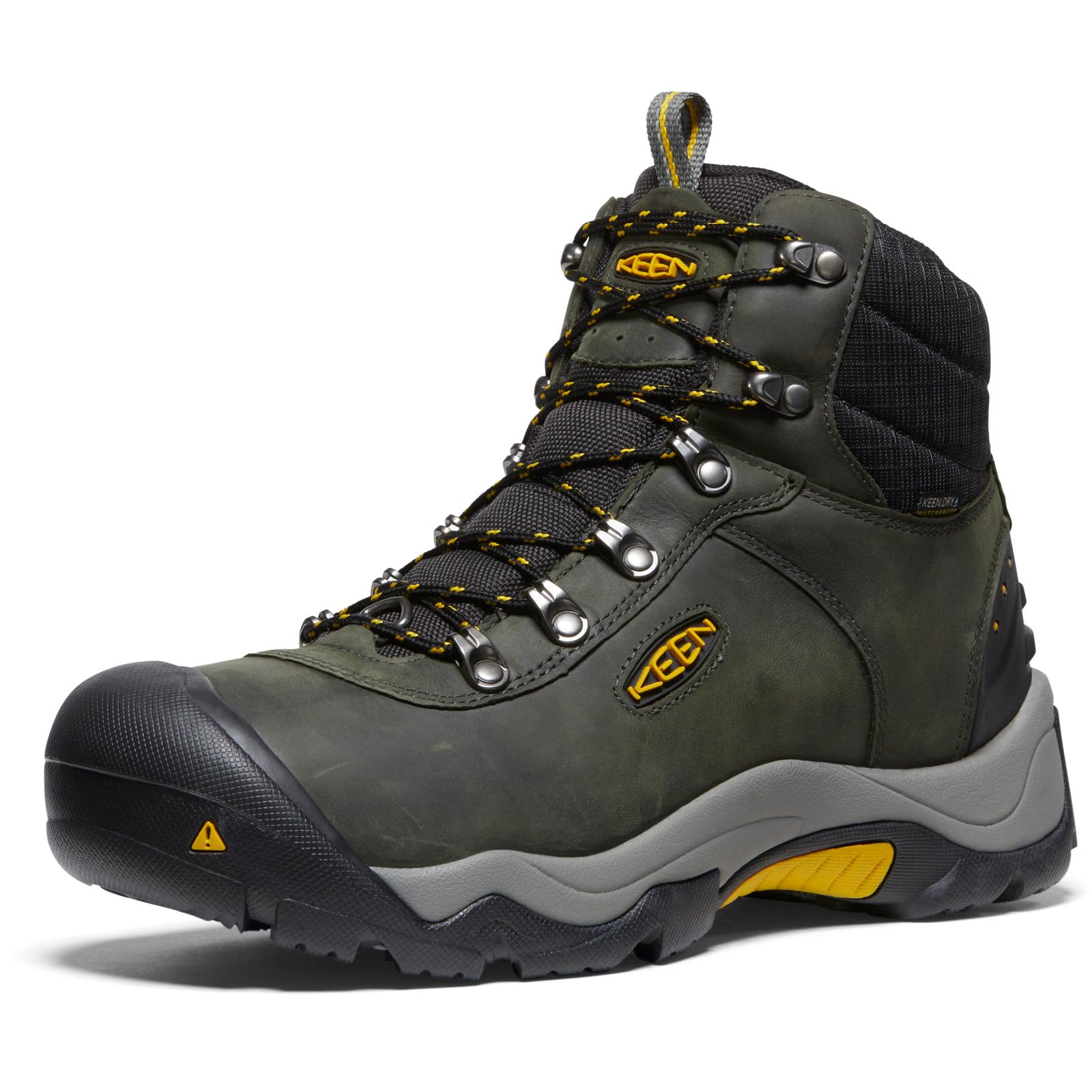
KEEN’s Revel III Mid is built around their signature wide toe box, which is a lifesaver for anyone with wider feet or who needs to wiggle toes for warmth. The boot is insulated and waterproof, and users report it surviving two full winters of 12-hour daily use without losing its seal. The rocker sole design helps roll the foot forward naturally, reducing fatigue on long hikes.
Reviewers who tried over a dozen other boots landed on this one for its combination of arch support, high ankle roll prevention, and immediate comfort. The boot runs large — standard width feels like wide — so sizing down or ordering your regular size with thick socks works well. A few users noted that the ankle support feels softer than rigid boots, and quality control can vary between pairs.
The Revel III Mid is a durable, comfortable winter hiker for people who prioritize toe room and all-day wear. It’s not the warmest option in single-digit temps, but for most winter conditions it holds its own.
Why it’s great
- Wide toe box accommodates thick socks
- Excellent arch support
- Minimal break-in required
- Durable enough for years of heavy use
Good to know
- Runs large — may need to size down
- Ankle support is less rigid than some competitors
7. Timberland Men’s White Ledge Mid Waterproof Hiking Boots

It offers a waterproof membrane, a comfortable mid-height cut, and aggressive enough tread to handle mud, grass, snow, and light ice. Reviewers consistently praise the grip on rocks and trails, noting the boot holds its own against pricier competitors.
The large toe box accommodates thicker socks, but the boot runs slightly larger than expected — many users recommend going a half size down. It requires a brief break-in period and needs mink oil treatment to maintain full waterproofing, as the membrane isn’t sealed at the factory. One reviewer noted that the boot isn’t designed for serious ankle support, making it better for easy hiking trails than technical terrain.
At its entry-level price, the White Ledge Mid delivers reliable performance for moderate winter conditions. It’s a solid choice for occasional hikers or anyone wanting a do-everything boot that won’t break the bank.
Why it’s great
- Excellent grip on rocks, snow, and ice
- Large toe box fits thick winter socks
- Very good value for a waterproof hiker
Good to know
- Runs a half size large
- Needs mink oil for waterproof maintenance
- Not for heavy ankle support
8. Columbia Women’s Transverse Hike Waterproof Hiking Boots

The Columbia Transverse Hike boots feel broken-in from the first wear. The Omni-Tech waterproof membrane keeps feet dry through snow play and puddles, while the flexible construction provides enough ankle support for day hikes without feeling stiff. Users with narrow heels and high arches find the fit particularly good, and the boot’s neutral gray design doesn’t look clunky.
Reviewers wore these on a two-week Acadia trip and reported they cleaned up easily with a spot wash. The boot is warm enough for snow play with kids and moderate winter hikes but lacks heavy insulation for deep cold. Several users noted the boot runs narrow, so those with wider feet should order a wide size.
For the price, this boot offers immediate comfort and reliable waterproofing. It’s a great entry-level winter hiker for women who prioritize fit and don’t need extreme cold protection.
Why it’s great
- No break-in period — comfortable immediately
- Omni-Tech waterproofing works well in snow
- Lightweight and flexible for day hikes
Good to know
- Runs narrow; order wide if needed
- Not insulated for extreme cold
9. Columbia Men’s Firecamp Boot

The Columbia Firecamp Boot blurs the line between a winter sneaker and a waterproof boot. It’s lightweight, flexible, and warm enough for early winter conditions. Users in Wisconsin tested it in mild snow and found it comfortable with no bulky feel. The non-slip sole provides decent grip on wet surfaces, though it’s not aggressive enough for icy trails.
Reviewers warn that the boot runs one full size small, so ordering up is essential. Some found it too warm for indoor wear, causing sweat even with thin socks, which makes it better suited for colder outdoor activity. The ankle is less supportive than taller hikers, more like a high-top sneaker than a dedicated winter boot.
The Firecamp is a budget-friendly option for casual winter walks, errands, and light snow use. If your winter hiking involves maintained trails rather than backcountry terrain, this boot provides warmth and waterproofing at a low entry point.
Why it’s great
- Very lightweight for a winter boot
- Warm and waterproof for casual use
- Non-slip sole works on wet surfaces
Good to know
- Runs one full size small
- Low ankle — not for technical terrain
- Sole lacks aggressive lugs for ice
FAQ
What insulation weight do I need for winter hiking?
Can I wear summer hiking boots in winter with thick socks?
Final Thoughts: The Verdict
For most users, the boots for hiking in winter winner is the Oboz Bridger 10″ Insulated because 400g Thinsulate and the B-Dry membrane deliver uncompromising warmth and waterproofing for serious cold-weather hiking. If you want a balance of ice traction and value, grab the Merrell Coldpack 3 Thermo. And for sub-zero conditions where you stand still, nothing beats the MUCK Arctic Pro-U.

Mo Maruf
I created WellFizz to bridge the gap between vague wellness advice and actionable solutions. My mission is simple: to decode the research and give you practical tools you can actually use.
Beyond the data, I am a passionate traveler. I believe that stepping away from the screen to explore new environments is essential for mental clarity and physical vitality.