Our readers keep the lights on and my smoothie glass nicely filled. As an Amazon Associate, I earn from qualifying purchases.
The transition from a full harness car seat to a booster is a milestone your child will love, but it introduces a new set of headaches for parents: the buckle bury, the sliding seat, the spilled juice from a flimsy cup holder. A booster car seat must solve a specific geometry problem—lifting your child so the vehicle’s lap and shoulder belt cross the correct bony landmarks—without turning your back seat into a carnival of loose plastic. The narrow slot between safety compliance and daily usability is where the best seats live.
I’m Mohammad Maruf — the founder and writer behind WellFizz. I’ve spent years analyzing the engineering trade-offs in child passenger safety, from LATCH connector pull-test resistance to the density of energy-absorbing foams and the long-term durability of fabric after repeated wash cycles.
This guide breaks down the concrete specs that separate a properly engineered booster from one that will frustrate you every morning. If you are looking for a best booster car seat that actually works in your specific vehicle and fits your child’s body type, you need to understand belt guide geometry, anchor stability, and seat width—not just brand names.
How To Choose The Best Booster Car Seat
Choosing a booster means moving from a 5-point harness system to the vehicle’s own seat belt, which shifts the safety burden onto correct belt positioning. The three factors below are where most parents get confused or make a compromise they regret.
The Belt-Fit Triangle: Lap Guide, Shoulder Clip, and Buckle Access
A well-designed booster lifts the child so the lap belt sits flat across the upper thighs—not the soft belly—and the shoulder belt crosses the center of the collarbone. Look for seats with EasyPath-style lap belt guides that keep the buckle stalk accessible even when the child is seated. A buried buckle is the number-one cause of parents giving up on proper belt routing. Closed-loop shoulder belt guides are preferable because the belt cannot slip out if the child leans forward to grab a toy.
LATCH Anchoring: Not Optional for Daily Use
Booster seats do not require LATCH for crash protection in the same way a forward-facing harness seat does, but rigid or premium LATCH connectors make a massive practical difference. Without LATCH, the seat slides forward every time the child climbs out. A seat that shifts position between trips will slowly misalign the belt guides. Choose a booster with lower anchors to lock the seat base in place, ensuring consistent belt routing every time. Quick-release LATCH mechanisms are a bonus for families who transfer the seat between vehicles regularly.
Seat Width and 3-Across Compatibility
The average rear seat of a mid-sized sedan is around 51 inches wide. If you need to fit three boosters across, each seat must be under 17 inches wide at the armrests. Some models feature removable or nestable cup holders that shrink the effective width to allow a true 3-across fit. Pay attention to the contoured base shape—a flat base hugs the vehicle seat better than a bulky curved one and prevents the child from sliding under the lap belt.
Quick Comparison
On smaller screens, swipe sideways to see the full table.
| Model | Category | Best For | Key Spec | Amazon |
|---|---|---|---|---|
| UPPAbaby Alta V2 | Premium High-Back | Maximum side-impact protection and premium build | 7-position headrest, side-impact pods | Amazon |
| Chicco KidFit Adapt Plus | 2-in-1 Premium | Active fabric with 37.5 Technology for temperature regulation | 10-position headrest, DuoGuard protection | Amazon |
| Joie Basil 2-in-1 | 2-in-1 Mid-Range | Lightweight design with memory-foam-like comfort | 7-position headrest, approx. 9 lbs | Amazon |
| Graco TurboBooster 2.0 | 2-in-1 High-Back | Convertible highback-to-backless value | Height-adjustable armrests, open-loop guides | Amazon |
| Baby Trend Protect 2-in-1 | Folding Travel | Fold-flat design for portable use | Folding design, deep cup holders | Amazon |
| Chicco GoFit ClearTex Plus | Backless Premium | LATCH-stabilized backless with flame retardant-free build | Quick-release LATCH, dishwasher-safe cup holders | Amazon |
| Diono Connect3 R Backless | Slim-Fit Backless | Ultra-slim 3-across backless fit | 17-inch width, 2TexFoam base | Amazon |
In‑Depth Reviews
1. UPPAbaby Alta V2 High Back Booster

The Alta V2 addresses the single biggest pain point of high-back boosters: the child’s head should not have to lean forward to rest against a flat padded board. UPPAbaby engineered an Active Support headrest with seven positions that curves around the occiput, keeping the head aligned with the torso even when the child falls asleep. The SecureFit belt routing system uses an integrated lap belt positioner that prevents submarining—the dangerous sliding under the lap belt that can happen on cheaper seats with shallow seating wells.
The build quality is immediately evident in the weight. This is a dense, rigid structure with Side Impact Pods—energy-absorbing foam blocks positioned on the shell that are always engaged, unlike some competitors that require manual deployment. The rigid LATCH connectors have a red-to-green tension indicator that takes the guesswork out of installation. The cup holder is dishwasher-safe and attaches to either side, accommodating wide bottles like Owala and Yeti without tipping. The wide seat base provides a planted feel, though it is noticeable that the padded armrests are not height-adjustable.
For families prioritizing long-term investment and maximum side-impact protection, the Alta V2 justifies its premium tier status through materials and engineering detail rather than gadgetry. The breathable, wipeable fabric is not treated with fire retardant chemicals and zips off for machine washing. The 7-position headrest and 100-lb weight limit give a solid 6–8 years of use, making the per-year cost reasonable for what you get.
Why it’s great
- Active Support headrest keeps sleeping child’s head aligned
- SecureFit belt positioner prevents submarining effectively
- Side Impact Pods absorb crash forces without manual activation
- Rigid LATCH with red-to-green indicator for confident install
Good to know
- Heavier than most boosters, not ideal for frequent vehicle transfers
- Armrests are not height-adjustable for growing children
- Premium price point requires a budget
2. Chicco KidFit Adapt Plus 2-in-1 Booster

Chicco’s KidFit Adapt Plus uses 37.5 Technology—volcanic mineral particles embedded in the fabric that actively pull moisture vapor away from the skin and speed evaporation. For families in hot or humid climates, this is not marketing fluff; it measurably reduces the clammy back that makes kids complain about being in the seat. The 10-position headrest adjusts from the waist level, not the neck, which means you don’t have to reach awkwardly behind a squirming child to make adjustments. The DuoGuard system combines a rigid plastic shell with an EPS energy-absorbing foam liner for layered side-impact protection.
The SuperCinch one-pull LATCH tightener is the best in this class for creating a rock-solid installation. A single yank on the strap pulls both lower anchors tight simultaneously, eliminating the back-and-forth adjustment that frustrates parents on dual-strap systems. The quick-release LATCH removal is genuinely one-handed—a pull tab releases both connectors at once, making vehicle transfers fast. The CupFolders collapse flat when empty, reducing the seat’s effective width for tight 3-across fits.
Convertible from high-back to backless, the seat accommodates children from 40 to 100 lbs. The ErgoBoost seat has double foam padding that maintains its density well after a year of daily use, based on customer feedback. However, the fabric, while highly breathable, is not as easy to wipe clean as a slick vinyl surface—sticky spills may need a pretreat before the machine wash. The cup holders are dishwasher-safe, which is a nice touch for the crumbs-and-sippy-cup crowd.
Why it’s great
- 37.5 Technology fabric keeps child cooler in warm weather
- SuperCinch one-pull LATCH tightener for fast solid installation
- 10-position headrest adjusts from the waist for easy access
- Fold-away cup holders reduce width for tight spacing
Good to know
- Breathable fabric is less stain-resistant than solid plastics
- The high-back mode adds bulk if you need the seat to be as narrow as possible
- Some users reported a learning curve to figure out the belt routing without the manual
3. Joie Basil 2-in-1 Booster

The Joie Basil stands out for its plush, forgiving seat cushion that multiple reviewers have compared to memory foam. This matters on longer trips where a hard plastic base can lead to fidgeting and complaints within 30 minutes. The 7-position headrest adjusts with one hand, and the lower anchor attachments are adjustable, securing the seat firmly in place without requiring the kind of wrestling match some budget seats demand. The belt guides are designed to keep the shoulder belt positioned correctly even when the child leans forward to grab a snack from the two cup holders.
At around 9 pounds, this is one of the lightest 2-in-1 boosters on the market, making it a strong candidate for families who transfer the seat between a primary vehicle and a grandparent’s car. The padded armrests add a degree of comfort usually reserved for higher-priced models. The cover is removable and machine-washable, addressing the inevitable goldfish-cracker-and-juice-box disasters that punctuate booster seat life. The seat works for children from 4 to 12 years old and up to 120 lbs in backless mode, offering a long service window.
The trade-off for the lightweight construction is that the seat does not feel as tank-like as the UPPAbaby or Chicco premium options. The lower anchors hold it in place for entry and exit, but the plastic shell has a bit more flex than the rigid builds of the top-tier seats. The two cup holders are integrated into the side wings and are not removable, which adds about 2 inches to the total width compared to folding designs. For a single-child setup or a vehicle with generous rear seat width, this is a minor compromise for the superior comfort-to-weight ratio.
Why it’s great
- Plush seat padding makes long rides genuinely more comfortable
- Ultra-lightweight at 9 pounds for easy vehicle transfer
- Removable machine-washable cover for easy cleanup
- Adjustable lower anchors stabilize the seat
Good to know
- Plastic shell has more flex than premium rigid seats
- Non-removable cup holders limit tight 3-across configurations
- Headrest adjustment is smooth but the locking mechanism can feel light
4. Graco TurboBooster 2.0 Highback Booster, Declan
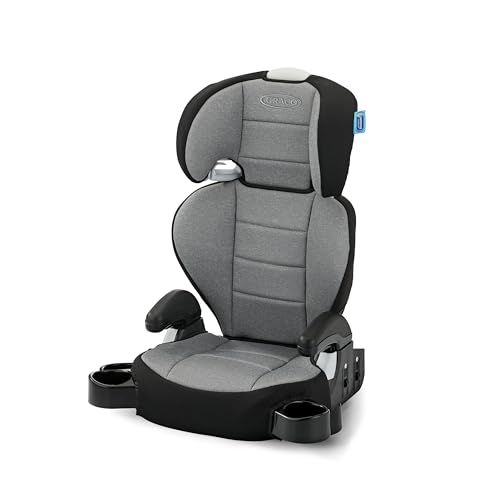
The Graco TurboBooster 2.0 is a no-surprises mid-range option that does exactly what it promises: converts from a high-back to a backless booster as your child grows. The height-adjustable armrests are a feature normally reserved for higher-tier seats and make a genuine difference for kids who complain about hard plastic digging into their elbows. The open-loop belt guides allow the child to self-buckle independently, which speeds up the morning school-run routine. The Graco ProtectPlus engineering means it has been crash-tested for extreme temperature conditions commonly found inside a vehicle during summer and winter.
The hide-away cup holders fold out of sight when not in use, which helps maintain a cleaner visual line in the back seat. The seat is lightweight and easy to move between vehicles—ideal for grandparents who only need a booster occasionally. The assembly is simple; the backrest clicks onto the base without tools, and the conversion to backless mode is straightforward. The seat fits children from 40 to 100 lbs and up to 57 inches tall, covering the standard booster-age window.
Where this seat saves you money, it sacrifices some refinement. The open-loop belt guides work well for proper belt routing but do not prevent the shoulder belt from slipping off if the child slouches or leans dramatically to the side—a risk that closed-loop or deeper guides mitigate. The cushion is thinner than the plush Joie or memory-foam-like options, which becomes noticeable on drives over an hour. For the price, you get a safe, functional seat with good adjustability, but parents seeking premium comfort or advanced side-impact features should look to the top-tier options.
Why it’s great
- Height-adjustable armrests for growing child comfort
- Easy high-back to backless conversion without tools
- Lightweight and portable for multi-vehicle use
- Hide-away cup holders save space when empty
Good to know
- Open-loop belt guides can let the shoulder belt slip on a slouching child
- Seat cushion is thinner and less comfortable on longer rides
- Some retailers sell the same seat for less, so comparison shopping matters
5. Baby Trend Protect 2-in-1 Folding Booster, Aqua Tech

The folding mechanism is the defining differentiator of the Baby Trend Protect. When you need to free up trunk space for a Costco run or stow the seat in an overhead compartment on a road trip flight, this seat folds flat into a compact rectangle. The lightweight build (under 10 pounds) and integrated carry handle make it the most portable option in this lineup. The belt-positioning armrests double as lap belt guides, and the cushioned seating provides enough padding for everyday errands.
The two cup holders are deeper than average and hold standard water bottles without tipping on sharp turns. The seat is designed for children who are at least 40 pounds and can sit still for the duration of the ride—it is not recommended for a child who tends to slump sideways while sleeping because the flat seat base does not have the deep side bolsters that a high-back offers. Installation is straightforward: place it on the vehicle seat, route the lap and shoulder belt through the guides, and buckle.
The armrests are adjustable, though several reviews noted they could be a bit longer for optimal elbow support. The folding design inherently means some structural compromises—the seat does not have the rock-solid feel of a non-folding model, and there is no LATCH system to prevent sliding. For a permanent daily-driver booster, a rigid non-folding option with lower anchors will feel more secure. For a travel or occasional-use booster, the fold-flat design is a genuine space-saving advantage that no other product on this list offers.
Why it’s great
- Fold-flat design is unique and genuinely useful for storage and travel
- Deep cup holders keep bottles secure on turns
- Very lightweight at under 10 pounds for easy carrying
- Adjustable armrests for a custom fit
Good to know
- No LATCH anchors, so the seat slides when the child climbs in and out
- Armrests feel short for full elbow support
- Flat seat base lacks deep side bolsters for a sleeping child
6. Chicco GoFit ClearTex Plus Backless Booster
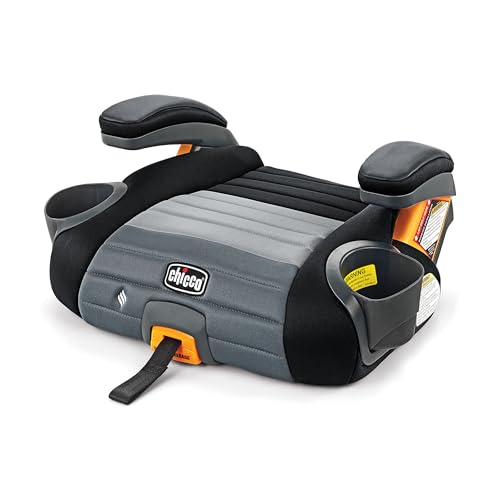
The GoFit ClearTex Plus addresses the two main objections parents have to backless boosters: lack of stability and chemical exposure. The integrated LATCH system anchors the seat to the vehicle, preventing the constant sliding that plagues backless seats in daily use. The quick-release LATCH removal mechanism is genuinely one-handed—pull the red release handle and both connectors disengage simultaneously, which is a massive convenience for families with multiple cars. The ClearTex fabric means the seat contains no added flame retardant chemicals and carries GREENGUARD Gold certification for low volatile organic compound emissions.
The ErgoBoost contoured seat uses double foam padding that provides better thigh support than most backless designs, which tend to be flat slabs of plastic with a thin foam pad. The pop-out armrest covers and the seat pad are machine-washable, and the two cup holders fold away and are dishwasher-safe. Integrated lap belt guides and a shoulder belt clip keep the vehicle belt positioned correctly, though as with any backless seat, the belt relies entirely on the child not slouching. The seat supports children from 40 to 110 pounds and up to 57 inches tall.
Because this is a backless-only design, it does not give the option of a high-back later. For children who have already outgrown the need for a high-back or who are tall enough that the high-back headrest interferes with the vehicle seat, this is an advantage—less bulk and better fit. However, for a 4-year-old who may still fall asleep on longer drives, the lack of head and torso side support means their head will slump forward without the restraint a high-back provides. This is a seat best used after the child has shown at least a year of reliable sitting behavior in a high-back booster.
Why it’s great
- LATCH anchors eliminate the sliding problem common with backless boosters
- Flame retardant-free and GREENGUARD Gold certified for healthier air quality
- Quick-release LATCH removal allows one-handed transfer
- Double foam padding provides better long-ride comfort than typical backless seats
Good to know
- Backless design means no head or torso support for a sleeping child
- Not convertible to a high-back, so only suitable for older children
- Fabric is breathable but not spill-resistant
7. Diono Connect3 R Backless Booster
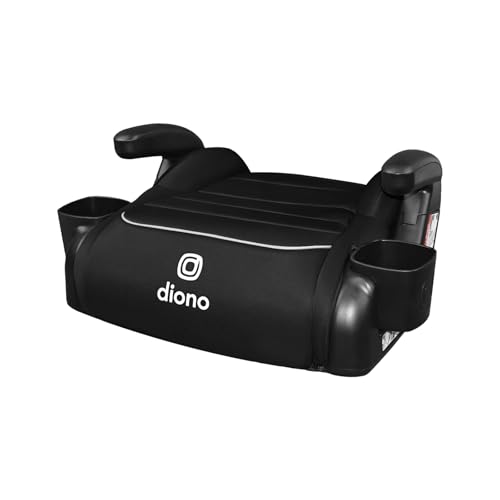
Diono’s Connect3 R is the narrowest booster in this list at under 17 inches wide, and it is designed from the ground up to solve the puzzle of fitting three boosters across a mid-sized sedan back seat. The innovative seat contour around the EasyPath lap belt guides keeps the buckle stalk accessible—a critical detail when three children are climbing in from the same door and fumbling for their own belt. The built-in carry handle makes it easy to grab and go for playdates and carpools, and the 2TexFoam seat base provides more cushion than the typical backless seat.
The two cup holders are removable and nest between adjacent seats to regain the slim width when not in use. This nesting feature is the secret sauce for the 3-across fit: you can install three seats with cup holders only on the outer positions, or stagger them, without the standard width penalty of fixed cup holders. The seat is incredibly light, and the LATCH system (included via the vehicle’s own lower anchors) holds it in place when children are not seated. The weight limit goes up to 120 pounds, giving this seat a longer service life than most backless options that top out at 100 or 110 pounds.
The inevitable compromise with an ultra-slim design is that the seating area is narrower, which may feel restrictive for larger kids—especially those who are near the top of the weight range. The 2TexFoam base is comfortable but not memory-foam plush; the seat is functional rather than indulgent in the comfort department. For families who absolutely need three boosters in a row, the Connect3 R is the only option that truly delivers on that promise without requiring the cup holders to be removed entirely.
Why it’s great
- Under 17 inches wide enables true 3-across fit in many sedans
- Removable nestable cup holders save width when not in use
- EasyPath lap belt guides keep the buckle accessible
- 120-lb weight limit offers longer service than most backless boosters
Good to know
- Narrower seat base may feel tight for larger children
- Cushion is functional but not as plush as premium backless seats
- Backless design lacks side support for sleeping passengers
FAQ
What is the minimum age and weight for a booster car seat?
High-back vs. backless booster: when should I choose one over the other?
Can I use a booster seat with only a lap belt?
How tight should the booster car seat feel against the vehicle seat?
Final Thoughts: The Verdict
For most users, the best booster car seat winner is the UPPAbaby Alta V2 because it offers the best combination of side-impact protection, head support for sleeping children, and honest engineering in the SecureFit belt routing system. If you need a breathable, temperature-regulating seat for warm climates and want the convenience of a high-back-to-backless convertible, grab the Chicco KidFit Adapt Plus. And for the family that must fit three boosters across a tight back seat, nothing beats the Diono Connect3 R and its nestable cup holders.

Mo Maruf
I created WellFizz to bridge the gap between vague wellness advice and actionable solutions. My mission is simple: to decode the research and give you practical tools you can actually use.
Beyond the data, I am a passionate traveler. I believe that stepping away from the screen to explore new environments is essential for mental clarity and physical vitality.